Skip to content
ELCA Blogs

ELCA Advocacy

June Advocacy Update

Lutherans are taking action across the country! Below you will find our monthly State Advocacy Newsletter. Share with your friends!


ELCA Advocacy Office, Washington, D.C.

The Rev. Amy Reumann, director
ELCA.org/advocacy

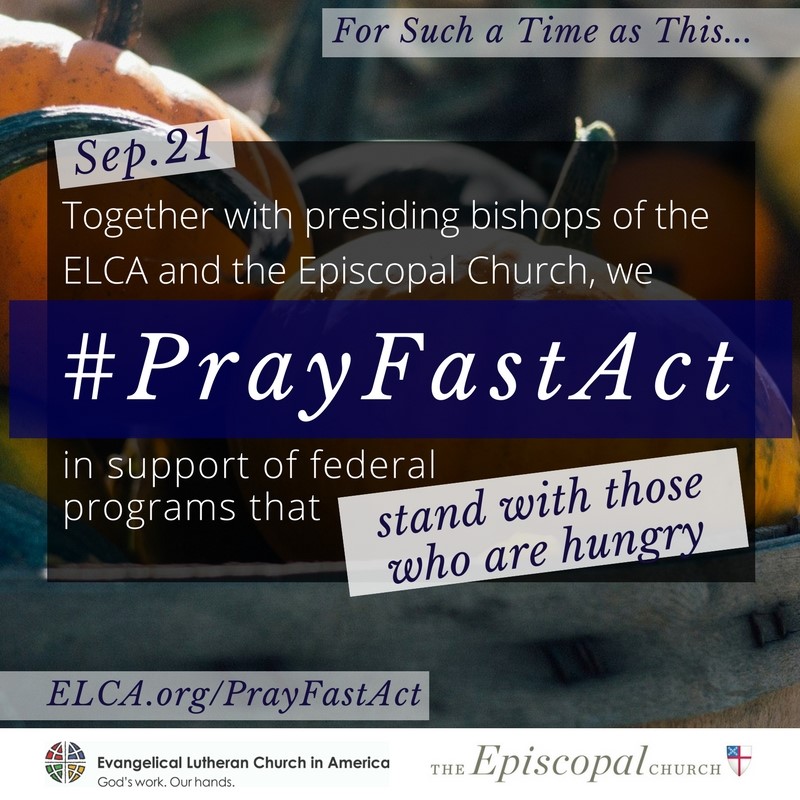
FOR SUCH A TIME AS THIS: Last month, presiding bishops of the ELCA and The Episcopal Church issued a joint invitation to a season of prayer, fasting and advocacy. Concerned about proposed deep cuts to programs that are vital to people struggling with poverty and hunger, ELCA Presiding Bishop Elizabeth Eaton shared a video inviting others to join her in a day of fasting each month, prayer and public witness. ELCA Advocacy and the Episcopal Office of Government Relations will share action alerts, resources, prayers and other ways to take action around the fasting days each month. More resources and information will be shared before the next fasting day on June 21.

NOW ACCEPTING APPLICATIONS FOR THE 2017 ELCA HUNGER ADVOCACY FELLOWSHIP PROGRAM: The ELCA Hunger Advocacy Fellowship, a new program made possible by ELCA World Hunger, is a year-long transformative experience that combines leadership development and faith formation with impactful advocacy that moves us toward an end to hunger and a just world where all are fed. Hunger Advocacy Fellows will actively shape the ELCA’s understanding of what it means to be church as they gain experiences that utilize and develop their leadership abilities and gifts while serving in a Lutheran state advocacy office. 2017 placement sites include:

  • LUTHERAN ADVOCACY MINNESOTA

105 University Ave W, St. Paul, Minn. www.lutheranadvocacymn.org

  • TEXAS INTERFAITH CENTER FOR PUBLIC POLICY

200 E 30th St, Austin, Tex. 78705 texasimpact.org

  • VIRGINIA INTERFAITH CENTER

411 E Grace St, Richmond, VA 23219 www.virginiainterfaithcenter.org

To apply, visit ELCA.org/careers

PRESIDENT’S BUDGET REQUEST: President Donald Trump sent his 2018 budget request to Congress May 23 – a wish list of sorts that shares the administration’s hopes and priorities for the annual budget. The budget blueprint makes many cuts to non-military programs across-the-board, many of which would be devastating to poor and hungry people. Some signature programs, such as the Community Service Block Grants that address long-term poverty in local communities, have been completely “zeroed out” in the budget proposal.

For international development, Trump also proposed a 30 percent cut to foreign assistance programs, with some accounts faring worse than others. If enacted, emergency migration and refugee assistance, global health programs, development and humanitarian assistance would receive the most significant reductions. It’s unlikely that Congress will agree to cut foreign assistance funds by that much, however, because the scale of cuts being proposed is quite big, much advocacy is needed to maintain consistent funding levels. The budget-writers in Congress will be preparing their own plan within the next few weeks. ELCA Advocacy will be preparing action alerts around the appropriations process in the summer and fall.

METHANE SAFEGUARDS UPHELD IN CONGRESS: On May 10, the Senate’s vote to repeal the Bureau of Land Management (BLM) Methane Waste Rule failed on the Senate floor by a vote of 51-49. The BLM methane rule reduces excessive greenhouse gas waste on federal land, requiring oil and gas operators to use up-to-date technologies to better control leaks and emissions. The protection of the methane rule is a legislative victory for care for creation advocates in the faith community. ELCA Advocacy, Lutheran professors and theologians, and other leaders have supported the rule with action alerts and testimonies since 2015. The Trump administration has issued a review of the rule, but it will likely be several years before it is completed.

PARIS AND U.N. CLIMATE CHANGE CONFERENCE: ELCA Advocacy issued a statement June 1, following Trump’s decision to begin the process of withdrawing from the Paris Agreement. As believers in, but not of, the world, we pursue a multifaceted approach to living out our faith – modeling good stewardship of God’s creation through faith, policy, service and change.

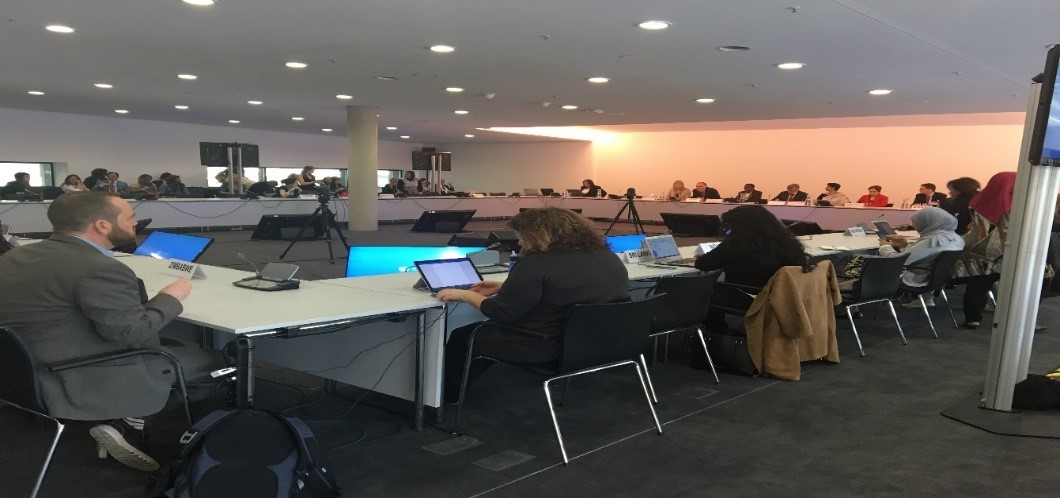
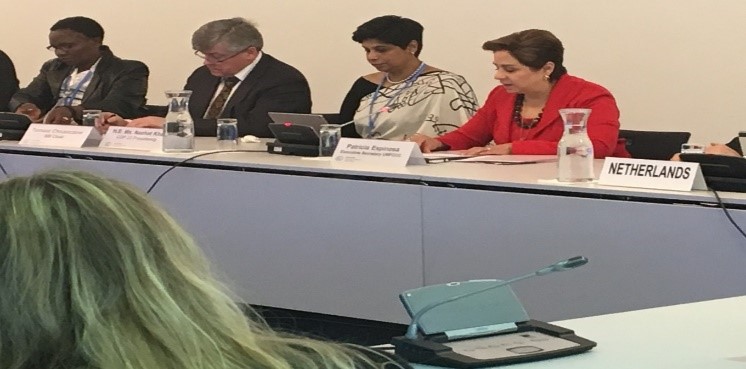
ELCA Advocacy also attended the U.N. Climate Change Conference in Bonn, Germany, earlier this month. Progress was made on continuing the implementation of the Paris Agreement in advance of the COP23 meeting in November. Some of the areas being negotiated include maintaining transparency, climate finance and incorporation of gender policies.

CENTRAL AMERICA PRIORITIES: The U.S. and Mexico will be co-hosting a conference June 14-16 in Miami to discuss private investment and security goals around economic development and governance issues in Guatemala, Honduras and El Salvador. ELCA Advocacy, along with other organizations sent a letter to U.S. Secretary of State Rex Tillerson expressing concern over what appears as a discussion focused only on homeland security and militarization rather than prioritizing human rights and building an inclusive sustainable economy.


Lutheran Office for World Community, United Nations, New York, N.Y.

Dennis Frado, director

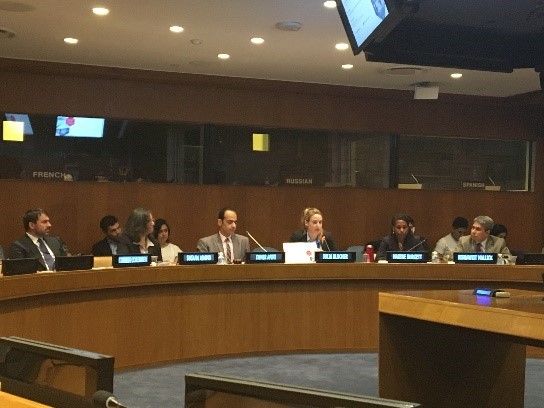
CLIMATE CHANGE, MIGRATION AND DISPLACEMENT – NEW PERSPECTIVES ON REGIONAL APPROACHES TO CLIMATE-INDUCED MIGRATION, DISPLACEMENT AND RELOCATION: On May 22 and 23, U.N. University hosted an event on climate change, migration and displacement. The panel was research-focused, including panelists with scholarly expertise on the issue.

One of the main messages was that seasonal migration is becoming long-term migration, while internal migration is becoming cross-border migration. There exists a vicious cycle between human displacement and environmental degradation. Professor Maxine Burkett, global fellow of the Woodrow Wilson International Center for Scholars, remarked that in her study of indigenous communities affected by climate change, the central tenant is  the community’s decision to migrate together, not as an individual or family decision. Dr. Susana Adamo, from the Center for International Earth Science Information Network at Columbia University spoke of migration as a form of adaptation to climate change.

SECOND INFORMAL THEMATIC SESSION ON THE GLOBAL COMPACT ON MIGRATION: On May 22 and 23, member states held a second informal thematic session on: “addressing drivers of migration, including adverse effects of climate change, natural disasters and human-made crisis, through protection and assistance, sustainable development, poverty eradication, conflict prevention and resolution.” The session included robust participation by member states and members of civil society organizations.

The thematic session consisted of three panels: sustainable development and poverty eradication; human-made crisis as drivers of migration; and climate change as a driver of migration. An emphasis was put on the need for disaggregated data collection to influence global policy decisions and a need to revise national and international frameworks pertaining to migrants. Migration was emphasized as a vehicle for climate adaptation and development; while addressing the root causes of movement was the focus of many interventions. The ambassador of Finland reminded member states that neither the migration nor the refugee compact has a mandate to address the plight of internally displaced people, presenting a legal protection gap.


California

Mark Carlson, Lutheran Office of Public Policy
loppca.org

SYNOD ASSEMBLIES: LOPP-CA Director Mark Carlson attended the Sierra Pacific, Pacifica and Southwest California Synod assemblies with a display and many opportunities for renewing and making new relationships. In Fresno, over 40 people attended a breakfast hosted by LOPP-CA that featured an attorney with the Leadership Counsel for Justice and Accountability, a group working in the San Joaquin and Coachella valleys to promote environmental justice and civic engagement in historically disadvantaged communities.

LEGISLATIVE UPDATE: The deadline for passage of bills out of their house of origin was June 2, and legislation supported by LOPP-CA had mixed results.  Reform of the money bail system, which can drive people into poverty and disproportionately affects people of color, passed the Senate and is pending in the Assembly, where a similar bill failed to meet its deadline. SB 54, the California Values Act (“sanctuary state”) passed the Senate and is pending in the Assembly. A meeting on immigration between faith advocates and leaders and Gov. Jerry Brown’s staff is scheduled for later in the month. The Legislature has augmented what the governor included in his May budget proposal for legal and naturalization assistance for immigrants. The full budget is due on his desk by June 15, subject to line-item vetoes. Legislation to renew and update California’s climate change law has stalled, and the oil industry has launched a media campaign targeting swing legislators.

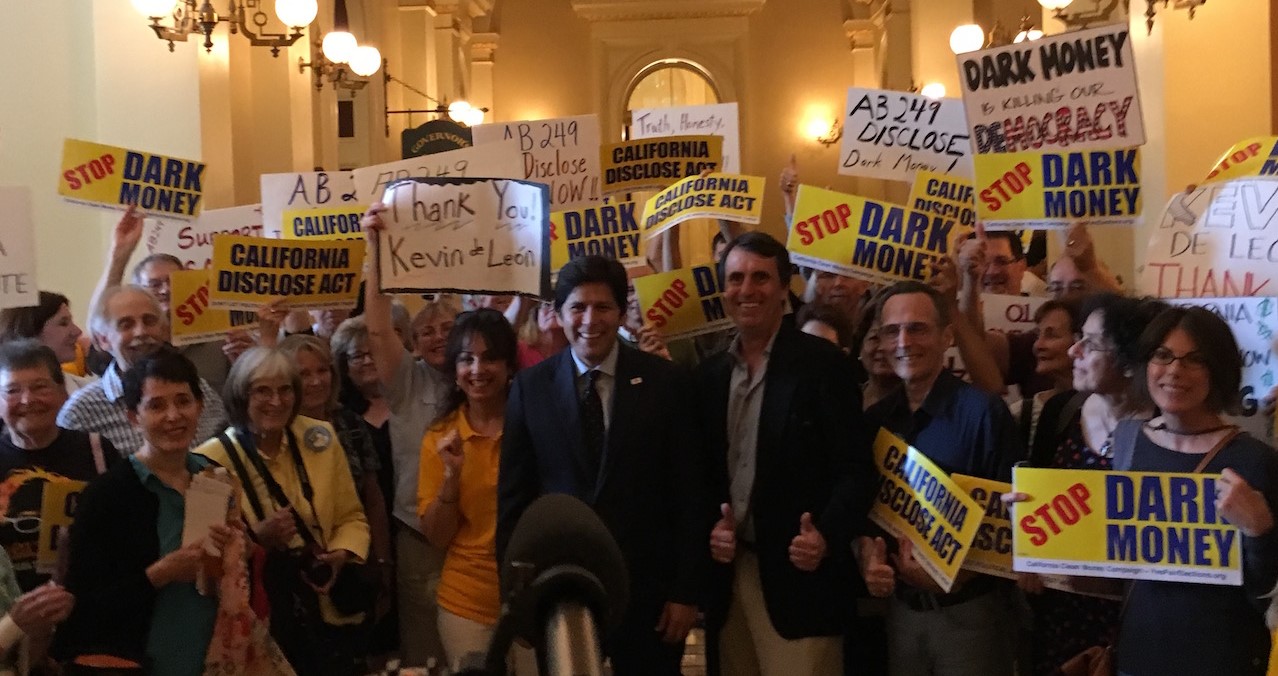
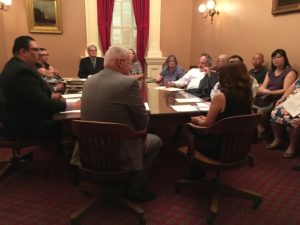
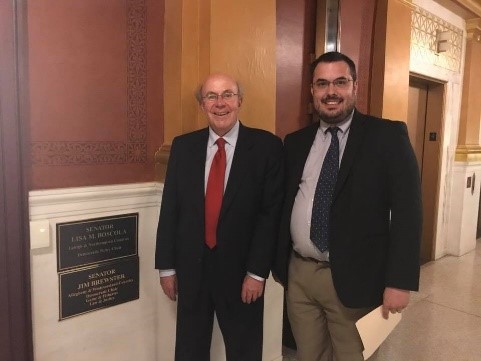
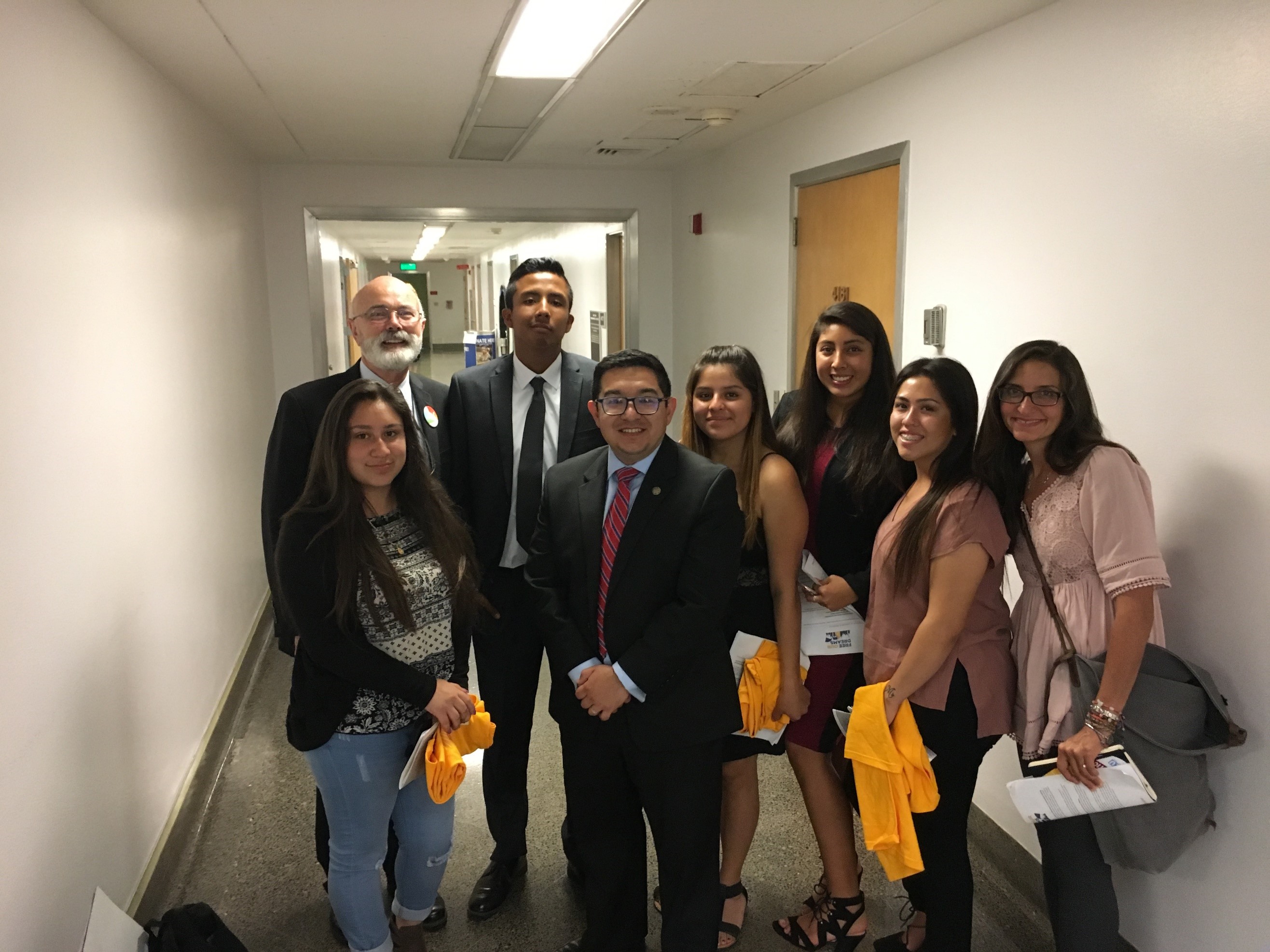
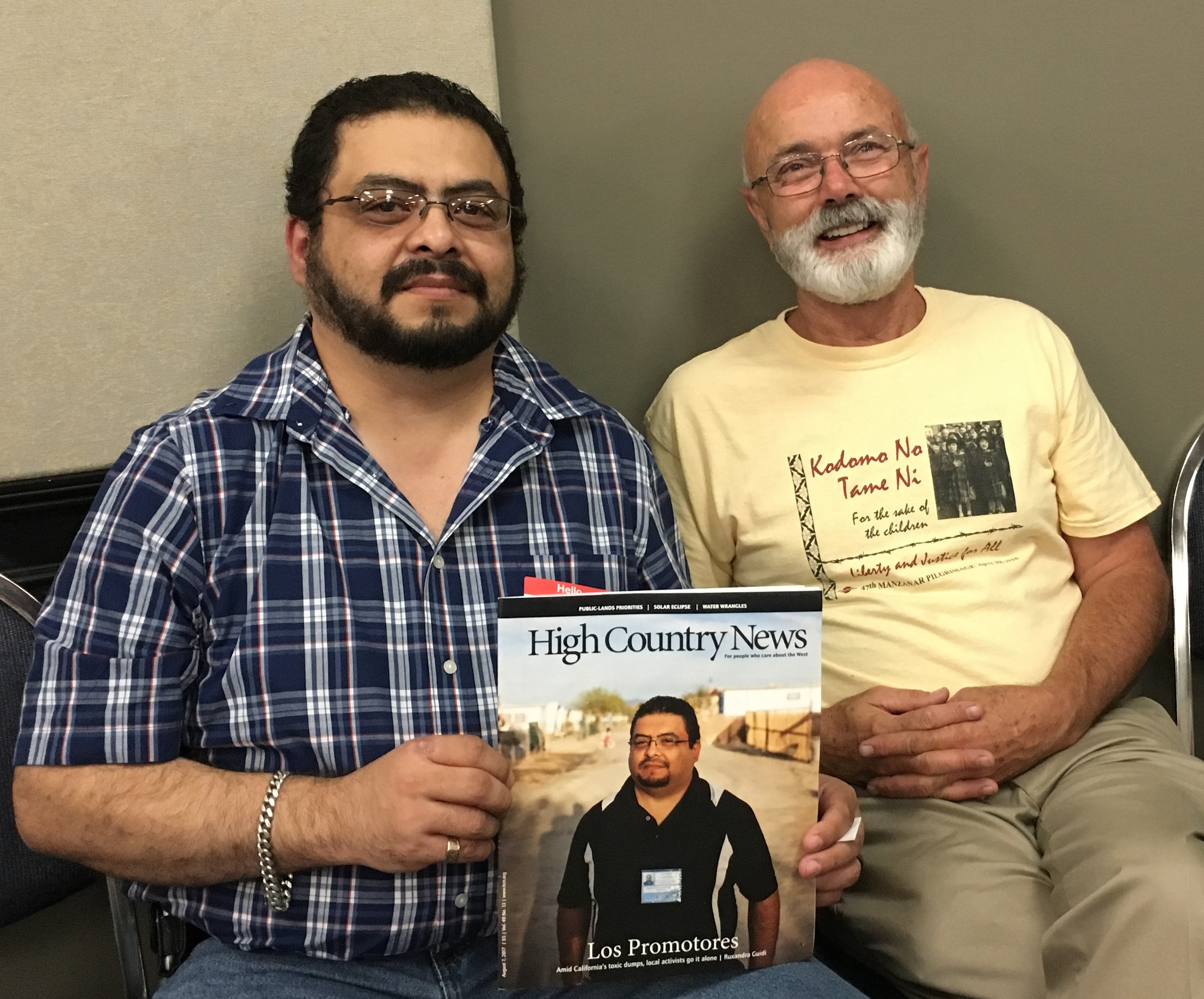
ADVOCACY DAYS: LOPP-CA participated in Early Learning Advocacy Day, LGBTQ Advocacy Day (immigration track), Immigrant Day, ENACT Day (food, health), and Free Our Dreams (Alliance of Men & Boys of Color and others), where Mark was a team “captain” for a group of high school students and their adult companion from San Diego. Mark introduced them to legislative staffer Eric Guerra, who is on the Sacramento City Council and was undocumented as a child (photo right).


Colorado

Peter Severson, Lutheran Advocacy Ministry–Colorado

Lam-co.org

END OF SESSION: The Colorado General Assembly adjourned on May 10. Several LAM-CO supported bills were passed and signed by the governor. These included: HB 1002, Child Care Expense Income Tax Credit Extension; HB 1116, Continue Low-Income Household Energy Assistance; SB 207, Strengthen Colorado Behavioral Health Crisis System; SB 245, requiring landlords to give 21 days’ notice (up from seven days) to residents on leases of less than one year regarding end of lease or rent increases.

All four bills received bipartisan support in both chambers of the Legislature. We also were pleased that a bill we opposed was defeated. SB 003 would have repealed Colorado’s health benefit exchange without replacement. The bill was removed from consideration on the Senate floor, which likely means that it lacked votes to pass. A HUGE thank you to all the advocates who took action to oppose this bill!

IMPACT OF AHCA AND BUDGET PROPOSALS ON COLORADO: LAM-CO is deeply concerned about the American Health Care Act (AHCA) as well as the executive branch’s proposed federal budget. In Colorado, the AHCA would have disastrous effects on Medicaid recipients: nearly 600,000 Coloradans would lose coverage and Colorado would lose $14 billion in revenue by 2030. Budget proposals to shift the cost of food assistance to the states would cost Colorado $1.3 billion over 10 years, money the state does not have. We oppose the suggestion that vulnerable populations can be used as a “bargaining chip” in making severe cuts to our nation’s already feeble social safety net, on which so many hard-working Coloradans rely.


Minnesota

Tammy Walhof, Lutheran Advocacy–Minnesota
lutheranadvocacymn.org

END OF LEGISLATIVE SESSION: Another year ending in chaos! Although both chambers finished their budget bills by Easter, leaders failed to include all parties in final negotiations. So the final weekend ended in a scramble to negotiate bills that could pass and survive veto threats. With a deadline looming, a “special session” was announced, “to start 12:01am Tuesday and end Wednesday at 7am.” It ended at 3:30 a.m. Friday!

AFFORDABLE HOUSING: Lutheran Advocacy-Minnesota supporters made many contacts with legislators (calls, emails, visits, Lutheran Leader Advocacy Day) and a letter from all six bishops (then leveraged by a House champion), that helped defeat attempted housing cuts. Our Homes for All coalition achieved $77 million for affordable housing in bonding, tens of millions higher than in initial bills. The Health and Human Services bill included serious cuts but added a one-time $2.5 million increase for programs we supported. Our action also protected the Minnesota Housing Challenge Fund and secured $2 million for CLASS Act to help homeless children excel in school (called “Homework Starts with Home” in the bill).

CREATION CARE: Clean energy and the environment did not fare as well, and the energy and environment bills took us backwards. Nevertheless, our advocacy combined with our partners, helped prevent some extremely harmful provisions, as the Environmental Quality Board was not eliminated and permit compliance is still under state regulation, rather than allowing polluters to police themselves.

Watch for more information coming soon in a newsletter and on our website!


New Mexico

Ruth Hoffman, Lutheran Advocacy Ministry–New Mexico
lutheranadvocacynm.org/

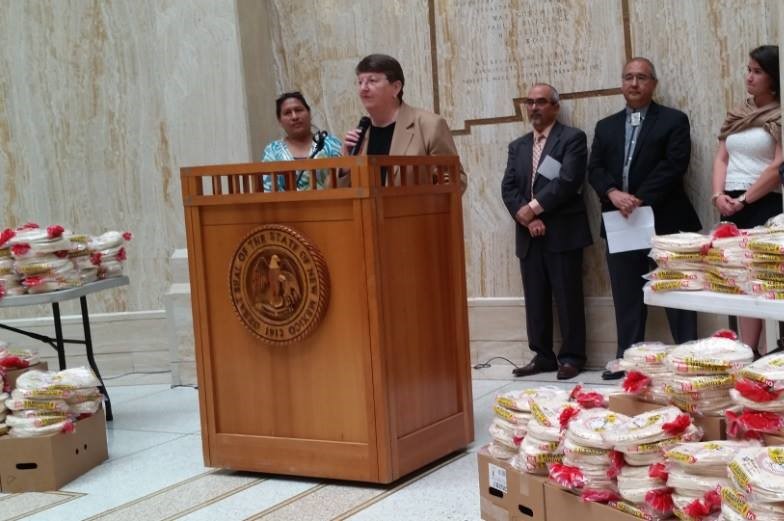
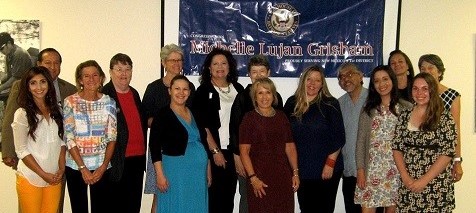
SPECIAL LEGISLATIVE SESSION:  The Legislature met in a special session the final week of May. It passed and the governor signed bills to balance the state budget and restore funding to the legislative branch and all the state’s higher education institutions. The session was brief, about two days, and did not include comprehensive tax reform. LAM-NM joined other advocates in opposing any attempt to impose a tax on food. (Photo right: Ruth Hoffman, LAM-NM director, speaks at a news conference in opposition to a food tax, sometimes called a “tortilla tax.” The tortillas were donated to food pantries.)


North Carolina

GeoRene Jones, North Carolina Justice & Advocacy Ministries

advocacy@NCLutheran.org

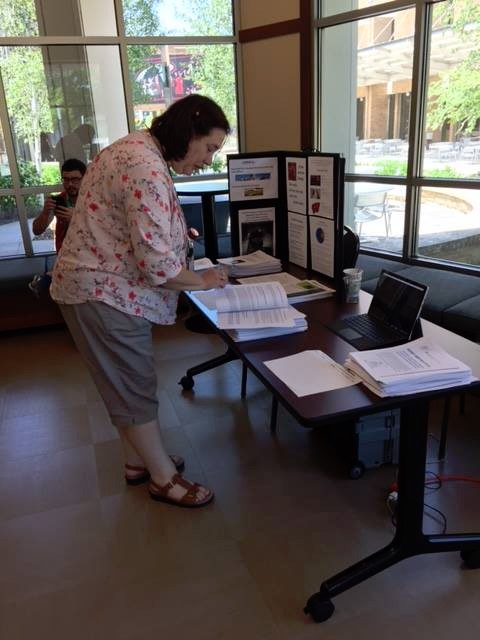
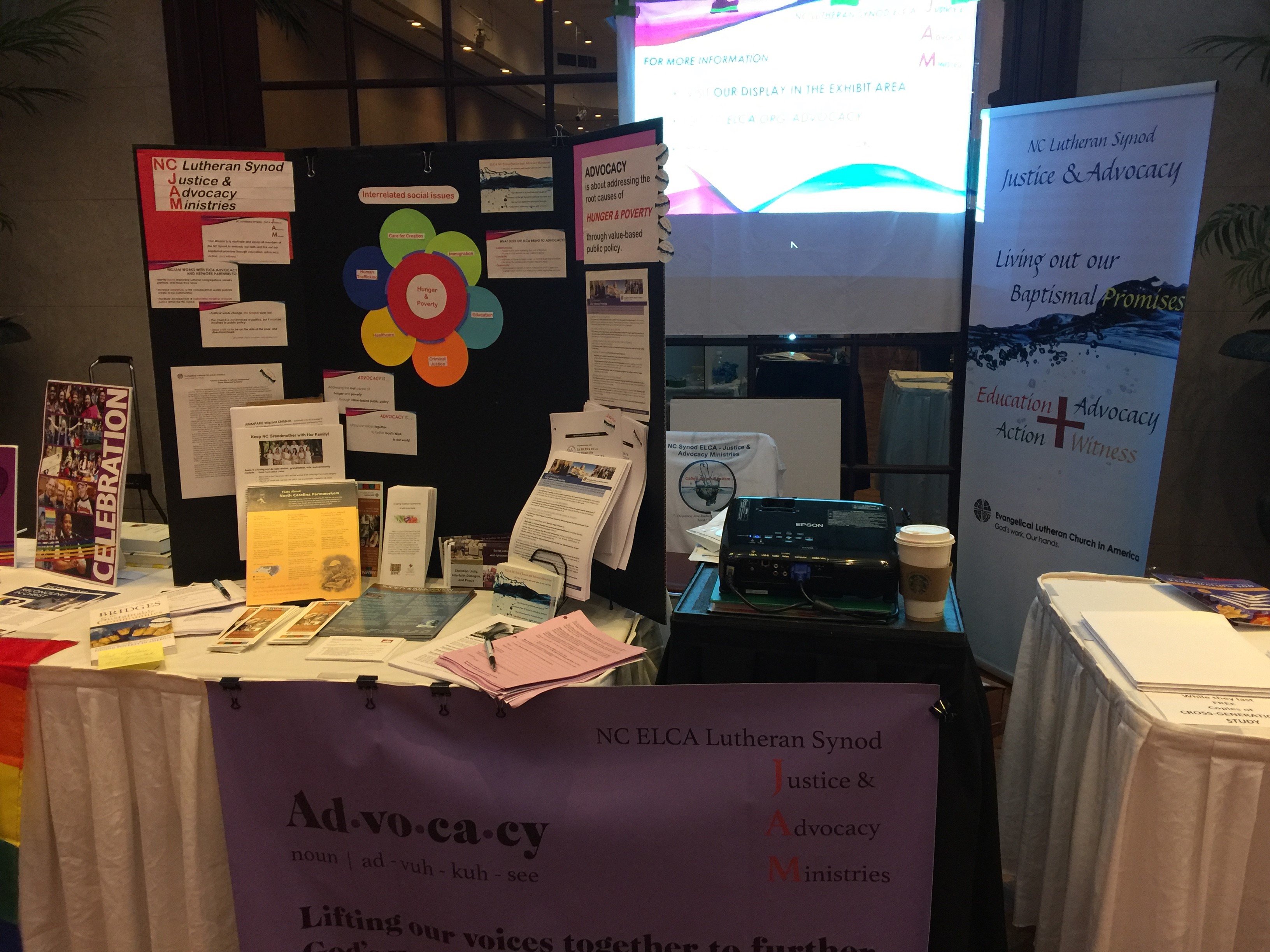
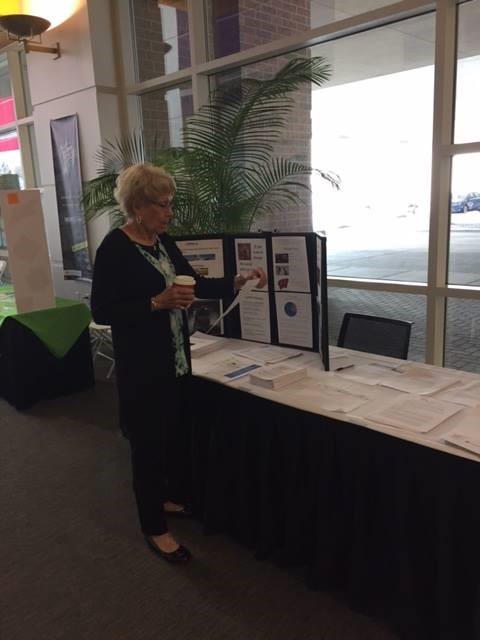
NORTH CAROLINA SYNOD ASSEMBLY: Justice and advocacy ministries were present and active during our 2017 Synod Assembly June 2-3. Voting members and visitors received information packets explaining ELCA Advocacy Ministries and could try out our new “NC Synod’s Got JAM” introductory slogan. Team members made themselves available at their exhibit table (photo right) to hear stories about social justice ministries active in congregations and offer ways to expand those ministries to include faith-based public policy advocacy.

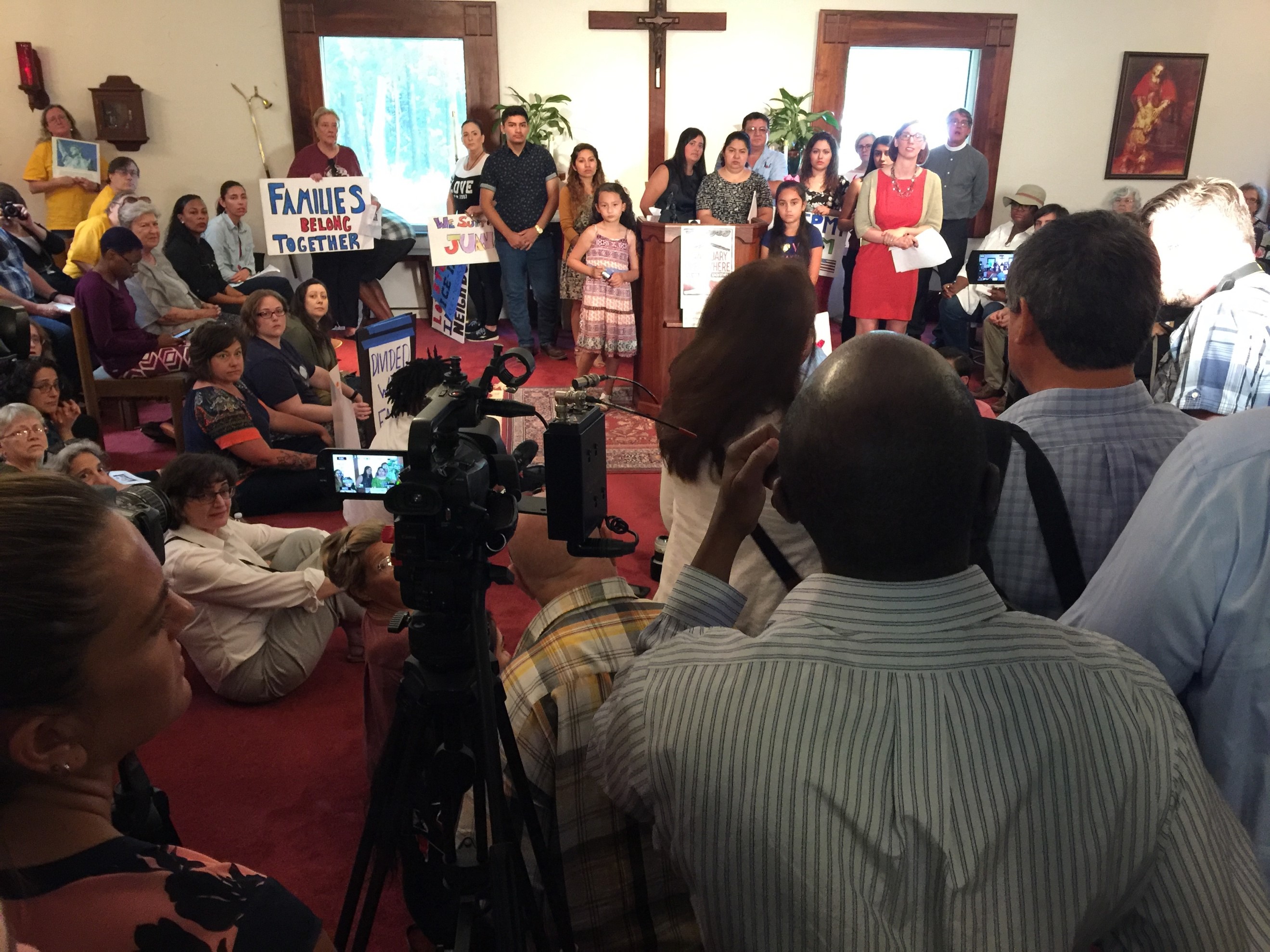
IMMIGRATION: Lutherans are supporting ecumenical efforts for Juana Luz Tobar-Ortega, a wife, mother, grandmother, and North Carolina resident for more than 20 years. In 1993, she came to the U.S. seeking asylum from atrocities to indigenous peoples in Guatemala. Joining in prayers and a brief news conference, Juana entered sanctuary within St. Barnabas Episcopal Church, Greensboro, this year on May 31. Her family and about 150 supporters traveled to the District Office of U.S. Sen. Thom Tillis to implore him to sponsor a private bill on her behalf. Beginning June 1, supporters will contact Tillis on Jueves for Juana (Thursdays for Juana) until the she is granted a stay of deportation. (Photo left: Juana Luz Tobar-Ortega, center, behind the podium, is surrounded by her family and supporters as she enters Sanctuary at St. Barnabas Episcopal Church in Greensboro on May 31.)


Ohio

Nick Bates, The Hunger Network

hungernetohio.com

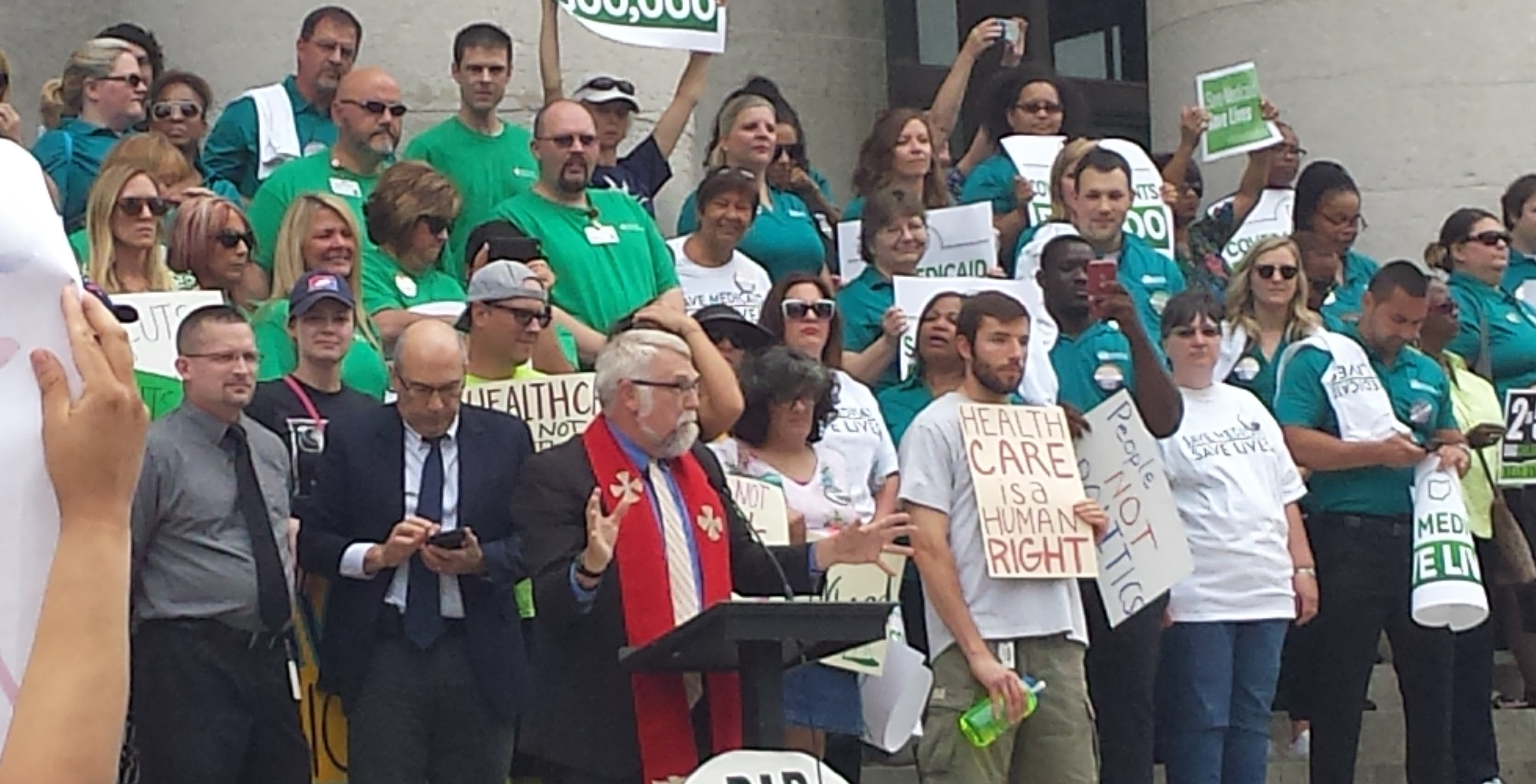
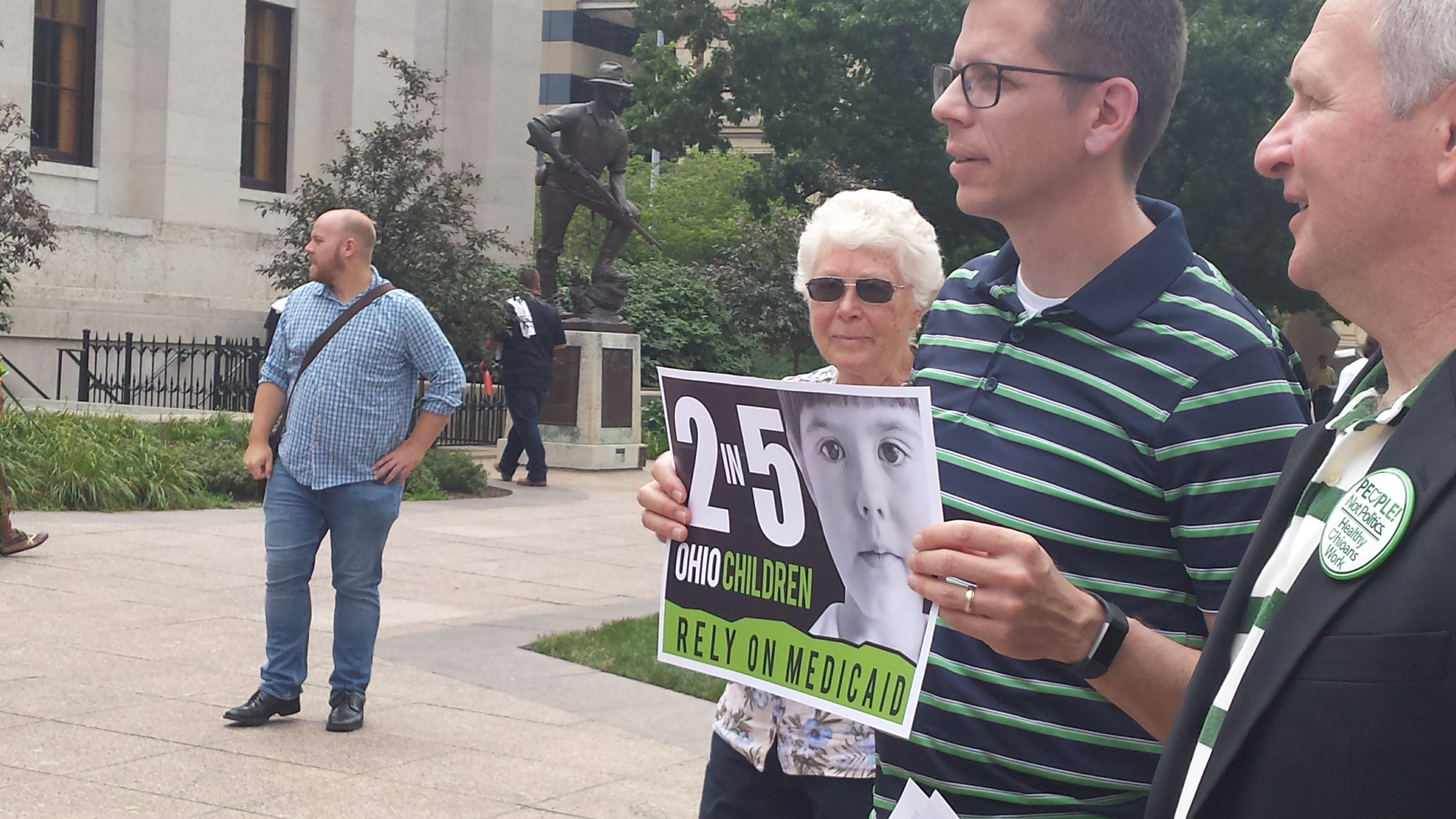
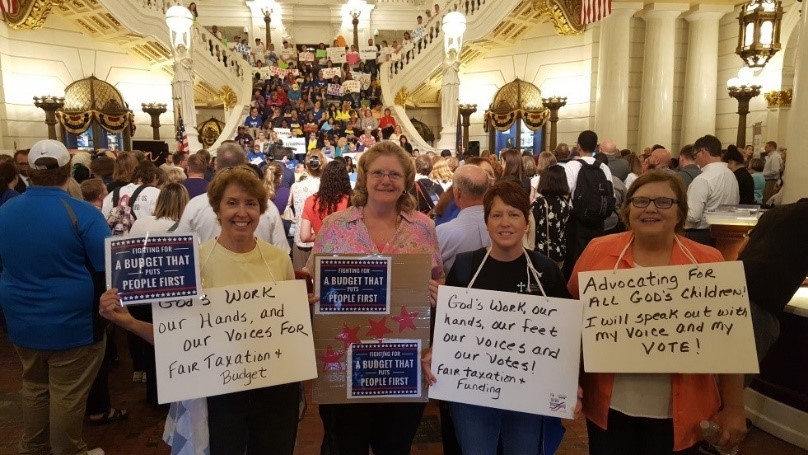
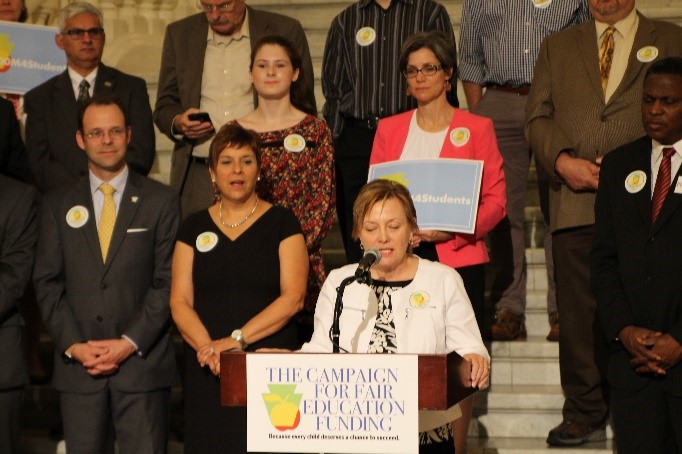
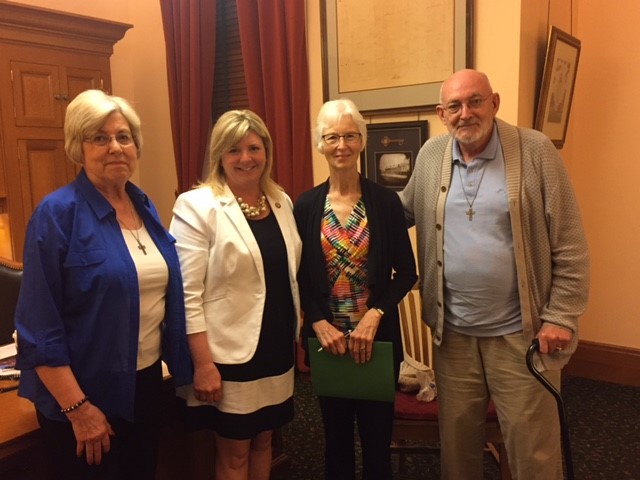
Faith leaders from across Ohio came to the Ohio Statehouse for a second “budget is a moral document” advocacy day. Our teams met with the offices of 13 Ohio senators. We encouraged them to eliminate a proposed funding cut for Ohio’s food banks and increase funding for the food banks. (Photo right: All Saints Lutheran Church members meet with state Sen. Stephanie Kunze, second from left, to discuss hunger issues.)

The Ohio Association of Foodbanks can purchase fruit, vegetables and meat from Ohio farmers at a reduced price and provide these goods to Ohioans in need through an extended network of food pantries. However, the Ohio House proposed a $1 million cut to these programs (over two years). Faith leaders and many others encouraged the Ohio Senate to restore this funding and increase funding by $5 million a year. The Senate and House must agree on a final version of their budget and send it to the governor by June 30.

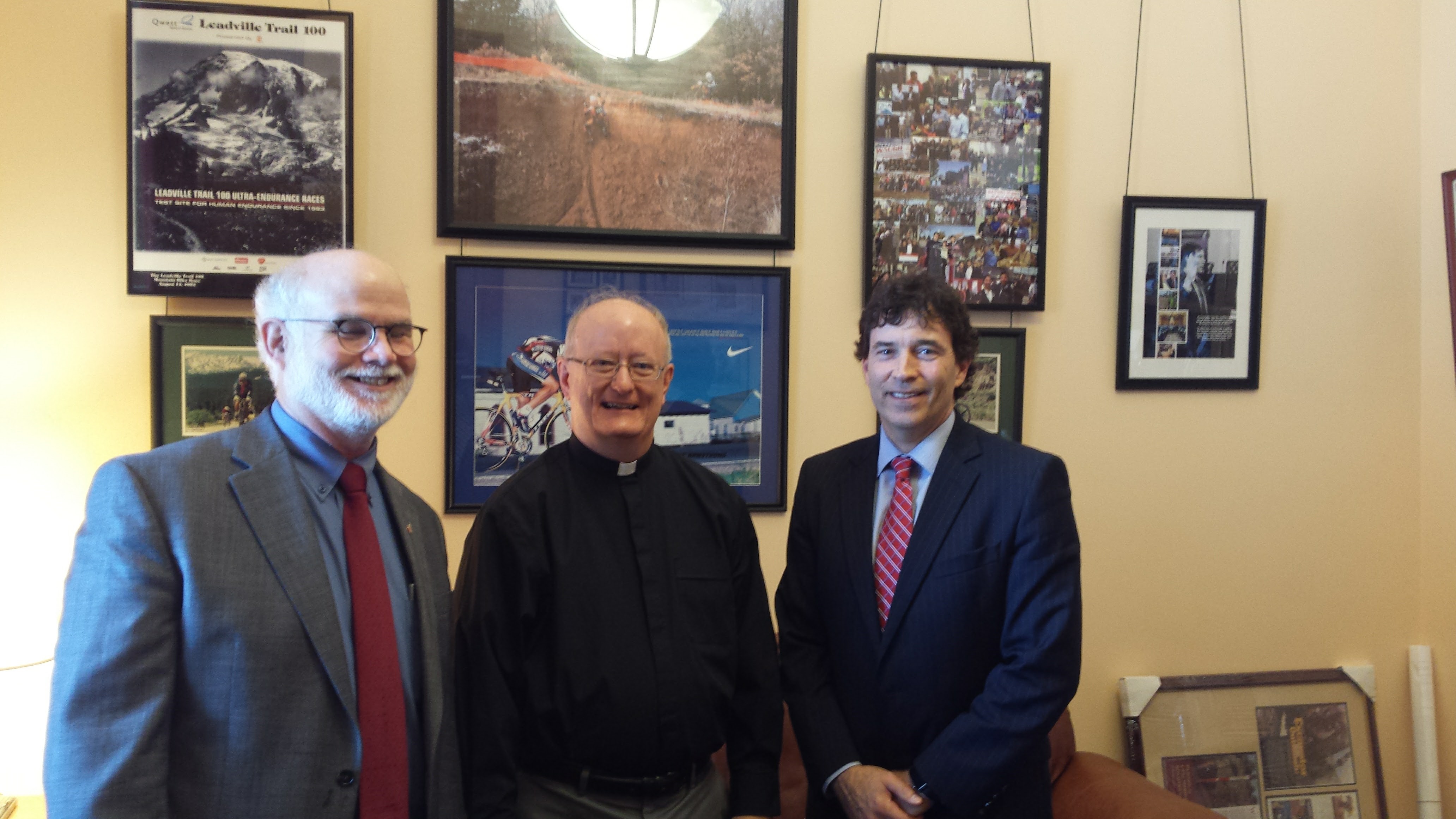
Also, after more than a decade of tax cuts in Ohio, the state is bringing in much less money than expected. The governor has warned legislators that they must cut at least $800 million from his original proposal. It is immoral to balance the budget on the backs of low- and moderate-income Ohioans. We encourage our legislators to find new revenue to fill the budget holes. (Photo left: From left, the Rev. John Wallace, United Methodist Church, and the Rev. Larry Novak, ELCA, meet with state Sen. Troy Balderson to discuss hunger)

Want to get involved? Write a letter to your local newspaper today! You can see more on our website at .hungernetohio.com/letters-to-the-editor/.


Pennsylvania

Tracey DePasquale, Lutheran Advocacy–Pennsylvania

Lutheranadvocacypa.org

Dr. Cynthia Moe-Lobeda spoke of “Hope and Wisdom for Love that Seeks Justice” to a record gathering at Lutheran Advocacy Day in May. More than 170 attendees explored hope and moral-spiritual wisdom for meeting three confounding challenges for the church as it embodies God’s call to love neighbor with a love that seeks justice. Together, with the Pacific Lutheran Theological Seminary theologian and author, we probed the questions of:

  • How do we express, in Lutheran terms, that advocacy for justice is at the heart of being the church?
  • How do we advocate for public policy that supports justice and earth-care while ALSO being a reconciling presence, bringing people together rather than driving them apart?
  • Where is hope in the midst of so many powerful forms of injustice crashing in among us?

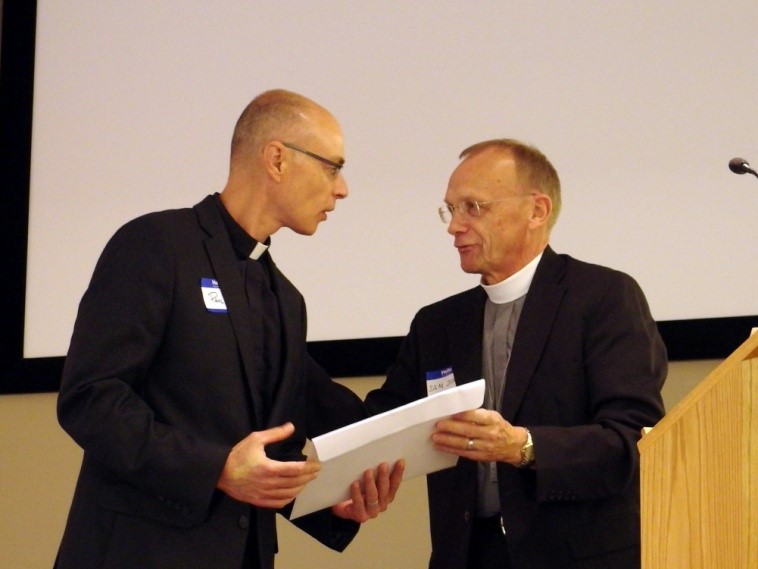
Through the keynote, worship, workshops and a celebration of advocates from each synod, we hope that the fruit of our time together will be increased hope and power for “being church together for the sake of the world.” (Photo right: Bishop Samuel Zeiser, left, presents the “Serve. Pray. Speak” award to the Rev. Paul Metzloff for his advocacy on behalf of the people and environment of the Northeastern Pennsylvania Synod.)

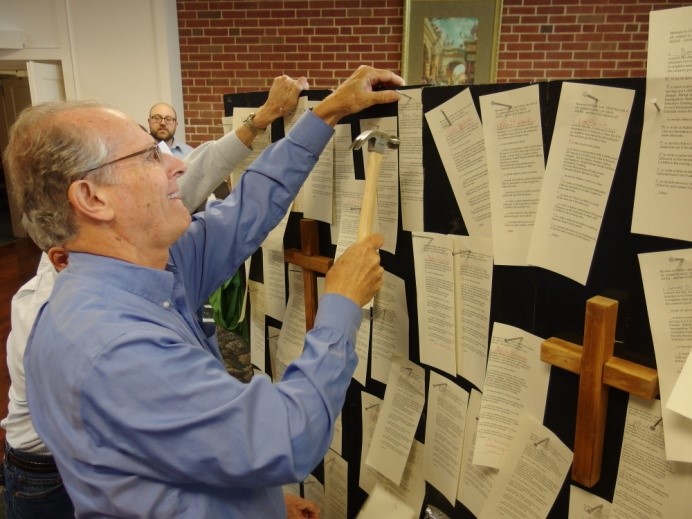
The LAMPa policy council met at the start of Lutheran Day and welcomed a new member, the Rev. Sarah Rossing, from the Southwestern Pennsylvania Synod, as well as two new interns: Travis Woodfield, ELCA seminarian at Wake Forest, and Vicar Ron Costen, who is an ELCA seminarian at the Lutheran Theological Seminary at Gettysburg. The interns enabled LAMPa to have a presence at three assemblies the last weekend in May – as they and Director Tracey DePasquale participated in Lower Susquehanna, Northeastern Pennsylvania and Allegheny synod assemblies. (Photo left: Rev. Blair Morgan nails his advocacy commitment for the coming year to the “Wittenberg Door” at Lutheran Day of Advocacy in Pennsylvania.)


Southeastern Synod

Hilton Austin

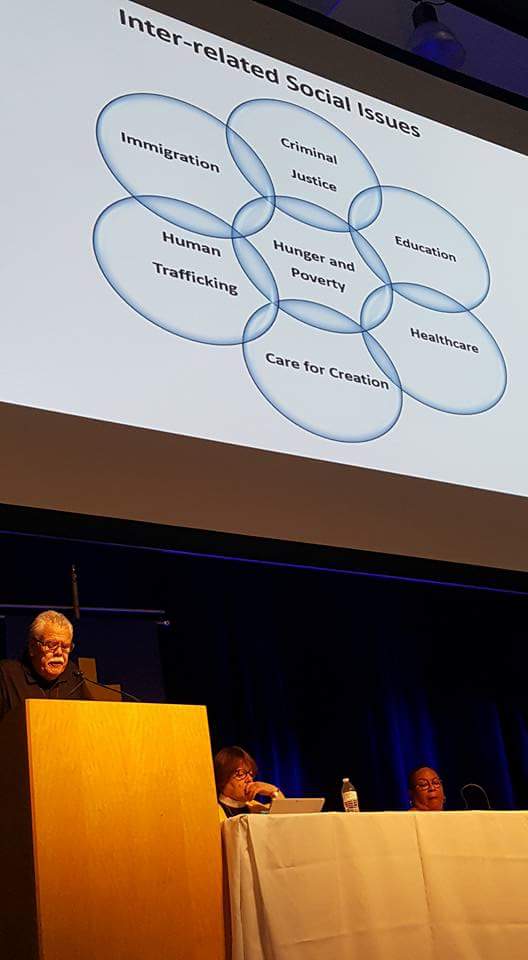
“WE ARE CHURCH FOR THE SAKE OF THE WORLD”: This was the theme of this year’s Southeastern Synod Assembly. The focus was on the many ways that congregations can get involved in advocacy to address the many root causes of hunger and poverty. From Bishop Julian Gordy’s opening in Plenary 1 to worship and workshops, the event was laser-focused on the mission of the church in bringing good news to the poor, proclaiming release to the captives, recovering sight to the blind, and to letting the oppressed go free. (Photo right: A graphic from a synod assembly presentation.)

ugee Service, John Moeller and Melanie Johnson with Lutheran Services of Georgia presented workshops on Circle of Welcome. Mary Campbell with ELCA AMMPARO moved between those workshops to our advocacy workshops to talk about Welcoming Congregations and the Guardian Angels ministries. Our policy council and ready bench leaders helped with our workshops, primarily focused on congregational advocacy, and helped staff our ELCA Advocacy exhibit; three of our synod hunger leaders staffed the ELCA World Hunger exhibit. The synod Green Team had a pre-assembly workshop, an exhibit, and maintained a resource room throughout assembly. We also officially rolled out our Congregational Advocacy Guide and our new database.

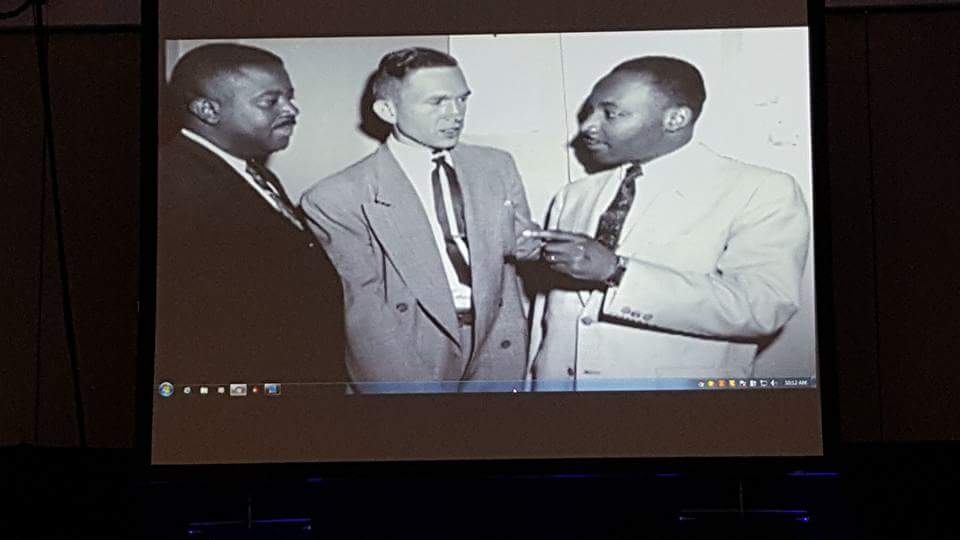
Another highlight of the assembly was the presentation of our new Robert S. and Jean E. Graetz Advocacy Award to Robert and Jean Graetz. Robert is a retired Lutheran pastor in Montgomery, Ala. He and Jean were involved in the Montgomery bus boycott with Martin Luther King Jr. and others. They have continued their work in advocacy over the last 62 years.
(Photo left: Robert Graetz, center, with Martin Luther King Jr., right)


Virginia

Kim Bobo, Virginia Interfaith Center for Public Policy

virginiainterfaithcenter.org

In April, the General Assembly voted against Gov. Terry McAuliffe’s proposal to expand Medicaid to the 400,000 Virginians still left without access to health coverage. The Virginia Interfaith Center for Public Policy was encouraged, however, when Republican leaders expressed willingness to look at ways to “close the coverage gap.” VICPP will encourage the newly formed joint legislative committee to consider how Virginia might tap federal dollars to expand health care access and will continue advocating with Virginia representatives at home and in Congress on health care access.

The center teamed up with the Jewish Community Relations Council of Greater Washington to encourage everyone to hold an Interfaith Welcoming Seder during the Passover season. The center created a model Seder service to use. VICPP is also sponsored a May Day rally for immigration rights and organized a protest of the White House travel ban on outside the courthouse where the Court of Appeals was debating it.

On June 11, Gov. McAuliffe signed into law a bill on driver’s licenses, legislation that the Virginia Interfaith Center worked for in the most recent session of the General Assembly. The Richmond VICPP chapter is partnering with the city’s Office of Community Wealth Building to develop a Living Wage Certification program. This is a voluntary program designed to recognize and promote employers that pay living wages. The Northern Piedmont Chapter hosted a “Removing Barriers to Affordable Healthcare community forum.


Washington

Paul Benz, Faith Acton Network

fanwa.org

STATE LEGISLATURE: The 2017 regular session ended April 23 with no biennial budget agreement, and we are now in our second 30-day special session. A group of 8 to 12 legislative leaders from both parties are working on a revenue solution to fund the state Supreme Court ruling regarding our K-12 public education system, as well as the regular budget.

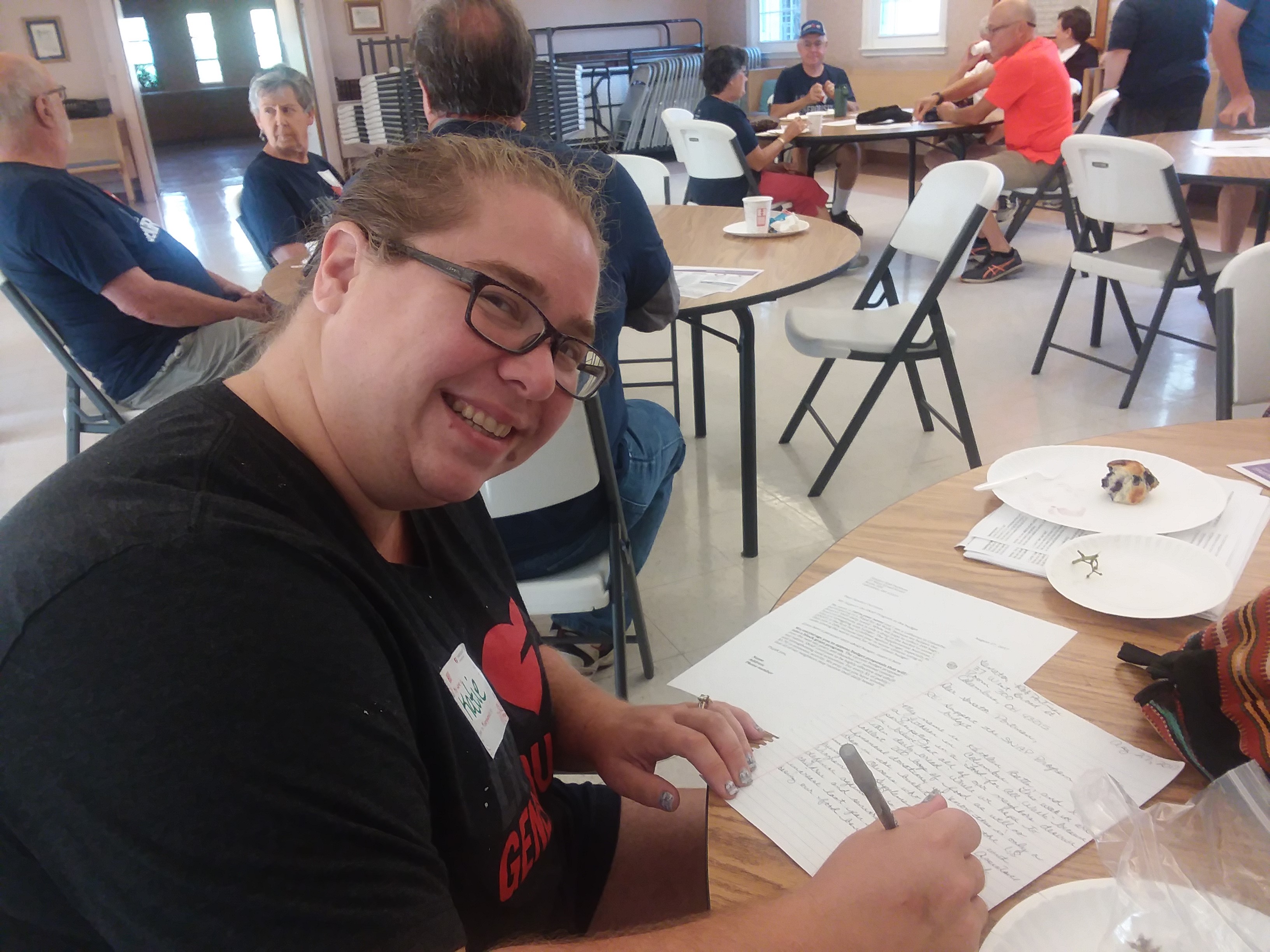
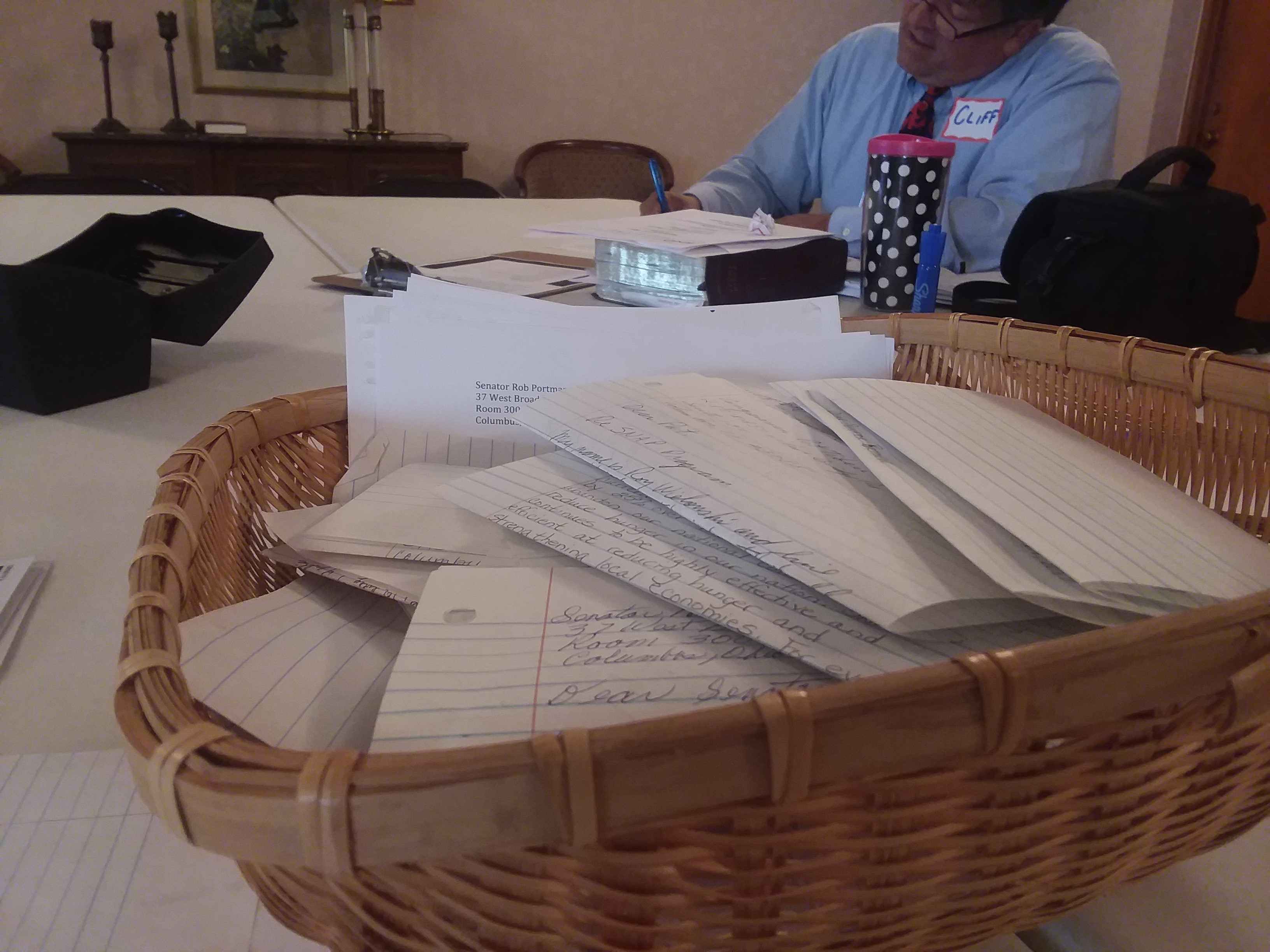
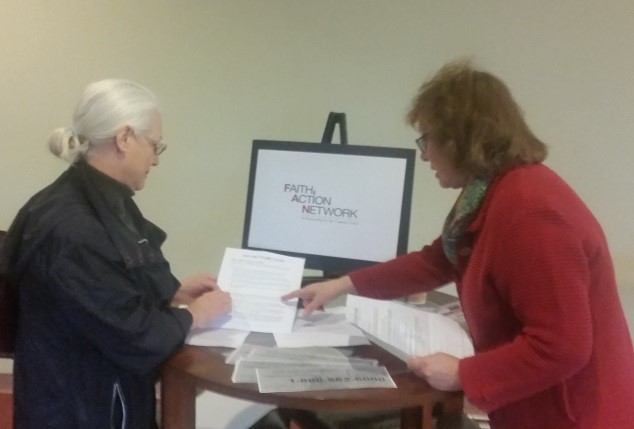
CONGRESS: FAN has been holding letter-writing workshops at faith communities, including one in a Jewish congregation on raising the limit on the number of immigrants and refugees welcomed into the country, one at an urban ELCA congregation, and one at the Pacific Northwest Annual Conference of the United Methodist Church. Our primary issue is opposing President Trump’s proposed budget, as well as asking for co-sponsors for HR1276 to increase SNAP benefits. (Photo below: Members of St. Luke’s Lutheran Church in Bellevue wrote letters to their members of Congress.)

LOCAL (SEATTLE and KING COUNTIES): FAN supported a significant police accountability ordinance, which passed the Seattle City Council last month. The other key local issue is making our juvenile justice system more focused on treatment than on incarceration.

STATEWIDE INITIATIVES: These include: a bathroom-use initiative that discriminates against transgender people, which we oppose; an initiative to reform our state’s statute on the use of deadly force by law enforcement; and an initiative to institute a carbon tax.

REGIONAL SPRING SUMMITS: We were excited to gather with 30 advocates in Yakima and 20 in Spokane for conversations about the legislative session and strategizing for the year ahead. We will soon hold similar events in Vancouver and Seattle.


Wisconsin

Cindy Crane, Lutheran Office for Public Policy in Wisconsin                                    

Loppw.org

CONSTITUTIONAL CONVENTION: A resolution that would call for a U.S. constitutional convention passed through committee and will go to the floor. Only a few more states are needed to pass such a resolution to hold the second constitutional convention in U.S. history. Wisconsin is trying to limit the discussion at the proposed convention to balancing the federal budget.  LOPPW is concerned with two questions: 1) On whose backs would the budget be balanced? 2) How can any state manage how a constitutional convention would operate when there is no blueprint for it?  This is one of several good resources: States Likely Could Not Control Constitutional Convention on Balanced Budget Amendment or Other Issues

Representative Jimmy Anderson, Fitchburg, questioned how people in poverty would fare because of a constitutional convention. He specifically said he was worried that Social Security could be dismantled. He said such a convention would put our country at great risk. 

WATER:  LOPPW continues to work with the League of Conservation Voters and other groups advocating for a bill that would make it easier for public utilities to assist homeowners to remove lead from their pipes.

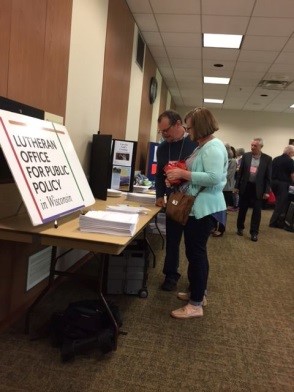
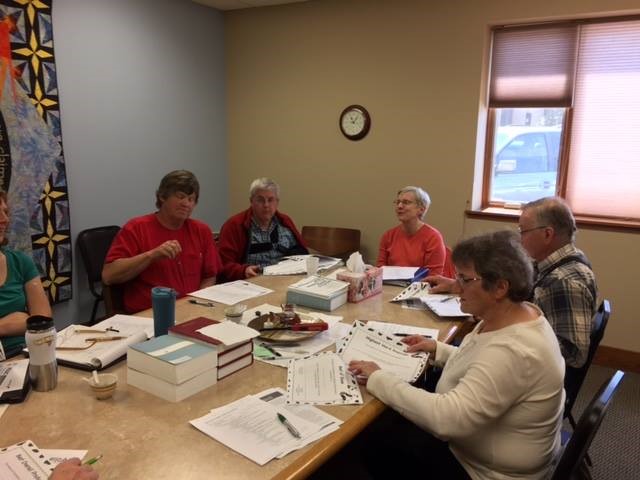
SYNOD ASSEMBLIES: In May, LOPPW had a presence at the Northern Great Lakes Synod Assembly in Marquette (photo, below, left), Mich., and the East Central Synod of Wisconsin Assembly in Green Bay (photo, below, right).

LOPPW met with the La Crosse Hunger team to explore advocacy around the upcoming Farm Bill.

The US Plans to withdraw from the Paris Agreement

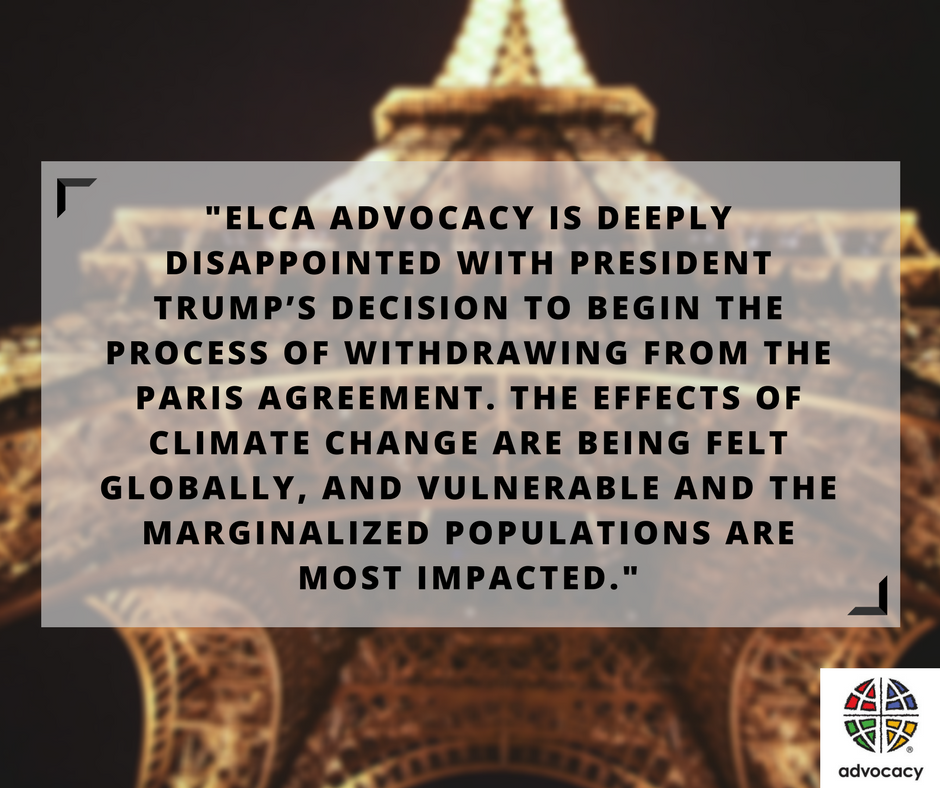
ELCA Advocacy is deeply disappointed with President Trump’s decision to begin the process of withdrawing from the Paris Agreement. The effects of climate change are being felt globally, and vulnerable and the marginalized populations are most impacted. These are communities who have contributed the least to the greenhouse gas emissions and are ill equipped to mitigate or adapt to the impacts of climate change. Our goal must be to develop and forge ahead with policies that safeguard against these impacts. We are called by God to protect all of creation. The Paris Agreement is a key tool in doing this on a global scale. It represents an unprecedented cooperation among world leaders to address one of the direst issues facing humanity and the rest of creation today. The viability of our planet is being threatened in extraordinary ways. Without action, we are relinquishing our responsibilities for the prosperity of future generations.

Overwhelming scientific evidence shows that human activity is contributing to climate change by emitting greenhouse gases that change the earth’s atmosphere. This is causing the earth to warm, which results in climate changes never experienced before.

The stresses of climate change are real, impacting practically every fiber of our existence, including health, food security, water, hunger, agriculture, migration and national security. The Paris Agreement is landmark in international climate policy, and helps to set the agenda for action now and in the years to come.

As a major contributor to greenhouse gas emissions, United States has an obligation to the world to address climate change. But the United States is also in a unique position to maintain its global leadership on international climate action. Inaction will allow the devastating effects of climate disruption to continue.

As disciples of Christ we affirm that we address climate change in a number of ways. While supporting government policies that we believe will help mitigate the effects of climate change we also recognize the importance of individual actions. We as individuals must change, that is, reduce our energy consumption. This will mean lifestyle changes, but as stewards of creation we owe that God and to the future generations. We must live more sustainably. Our children’s future are dependent upon us being stewards of  and protecting the earth.

Many of our daily choices on how we use natural resources play an important role. Lutherans Restoring Creation, one of ELCA’s partners, have a number of resources to help congregations and ministries with modeling good stewardship. As believers in, but not of, the world we pursue a multipronged approach to living out our faith. As ELCA Advocacy we will continue our advocacy efforts.

The requirement for the United States to maintain its global leadership presence could not be more urgent. Withdrawing from the Paris Agreement is contrary to our nation’s principled character.  We urge President Trump to reverse his decision to withdraw from the Paris Agreement.

A Faithful Budget: For Such a Time as This


As disciples of Jesus Christ and citizens, we are immensely concerned about the federal budget. Increases, decreases, and delays in the budget affect all Americans and people around the globe, particularly the most vulnerable members of our society. We commit ourselves as a church to “pursuing policies and practices that will lead to sufficient, sustainable livelihood for all.”[1] This includes educating ourselves and speaking up about the priorities and implications of the appropriations process.

What is the federal budget?

The federal budget is comprised of 12 spending bills for each federal agency. Congress goes through a lengthy process to draft, revise and finally vote on the bills that will then be enacted into law. These bills fund many programs that address the government’s response to the environment, refugees, immigrants, poverty, criminal justice, healthcare, international assistance, housing, and defense. Congress needs to have completed the process of voting on the final bills by October 1, when the new fiscal year begins.

Why should we care?

As Lutherans, we affirm that governmental structures are an important way God is active in the world for justice, peace and stability.  Governing leaders are to be held accountable to God’s purposes: “May [they] judge your people with righteousness and your poor with justice…May [they] defend the cause of the poor of the people” (Psalm 72:2) .”[2]  As members of the ELCA, we affirm our responsibility to hold our government and elected officials accountable to a budget that promotes the common good of all.

Where the process stands

On Tuesday, May 23rd, The White House submitted its budget proposal to Congress. Congressional leaders have largely signaled that they will move ahead with their own budget drafting process. An arduous road lies ahead as Congress tries to work on bipartisan support for the federal budget. The month-long August Recess and the number of legislative work days, are dwindling. This signals that it may be hard for Congress to pass the budget by October 1st.

What happens if the budget doesn’t pass?

If Congress fails to pass all 12 spending bills they will likely pass a ‘continuing resolution’(CR). While giving Congress extra time to finish the remaining bills, CRs keep spending flat across ALL government programs. The consequences often affect the most vulnerable members of society, but even the more affluent can experience economic stagnation. Failing or stalling to pass the federal budget hurts the wellbeing of our nation and most affects members of our community who live in poverty.

Please join ELCA Advocacy in urging members of Congress to pass a federal budget that works to support the following programs that reflect our values that are grounded in love of God and neighbor. 

How the Budget will Affect our Policy Areas:

Care for Creation: The programs currently in place at federal energy and environmental agencies are vital for protecting those who are most vulnerable.  The proposed drastic budgetary cuts would result in significant reduction to the elimination of these programs. There would be curtailment in needed research to address environmental harm and to increase the use of renewable energy sources. Such reduction would stymie the current economic growth in job creation associated with renewable energy; and negate the progress the U.S. has made in being a global leader in addressing environmental harm and for providing for future generations.

Food Security and Healthcare: The budget proposes $193 billion in cuts to the Supplemental Nutrition Assistance Program (SNAP, formerly known as food stamps) over the next 10 years. These cuts would slash SNAP by an unprecedented 25 percent, dismantling a proven and effective program that provides working families and children nutritious food in difficult life circumstances. The budget also cuts $800 billion from Medicaid, $21 billion to the Temporary Assistance for Needy Families program; and a $40 billion reduction to the Earned Income Tax Credit and Child Tax Credit. These and other programs form a common contract Americans have with each other to ensure that we protect the most vulnerable among us.

Foreign Assistance: With 30 million people in Africa and the Middle East facing starvation, 50 million in need of immediate food assistance, and more than 65 million displaced, President Trump’s proposal to cut a third of the foreign assistance budget comes at a time when the need for it could not be greater. Foreign assistance funds provide life-saving health, economic, education, and food assistance to the most marginalized people in developing countries, and help prevent conflict and spread of deadly pandemics. If enacted, the proposed cuts will have devastating consequences on the most vulnerable populations around the world.

Housing: Many of the federal investments made in housing help revitalize struggling communities, rebuild after disasters, and give the people in the direst need the chance to seek better opportunities in an affordable home. Harsh cuts in the budget can increase the already staggering levels of housing poverty across the country, and make it a challenge for churches and service groups striving to end homelessness in their communities.

Immigration/Migration: The budget plays an important role in how immigration policy is implemented and how the U.S. addresses the root causes of displacement in Central America. Budget increases for immigrant detention and deportation fail to account for the pressing need for updated immigration policies, separates families, and create a climate of fear among our communities. These budget increases coupled with cuts in U.S. aid that address the root causes of displacement leave more children and families more vulnerable to human rights violations.


[1] Social Statement, ”Sufficient, Sustainable Livelihood for All” (1999) p. 17

[2] Social Statement, “Sufficient, Sustainable Livelihood for All” (1990) p. 11

Advocacy as a Campus Ministry

By: Rev. Rebecca Seely

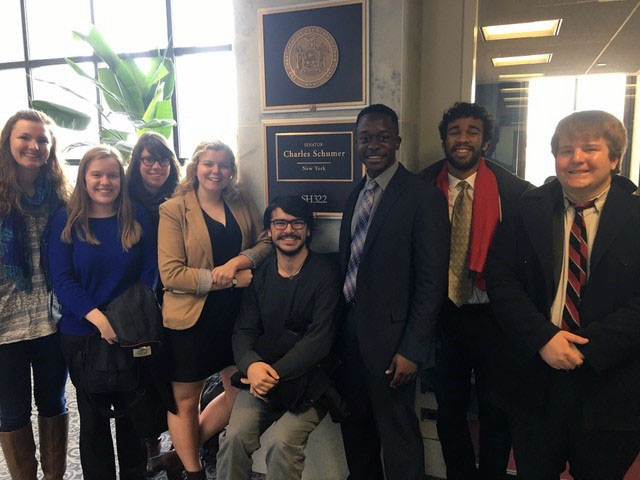
This past March, a group of college and graduate students from the Lutheran and ecumenical campus ministry, which I serve in New York City, travelled to Washington, D.C. on a spring break “faith in action” pilgrimage. While most of our students were familiar with putting their faith into action through direct service to neighbors, our purpose on this trip was to affect change in a different way – through advocacy to elected officials. We are grateful to ELCA Advocacy Washington, D.C. office, who hosted us, taught us about their work, trained us as advocates and set up meetings for us with the offices of our senators from New York. While in Washington, we were able to learn about and advocate for legislation on immigration and food insecurity that would affect millions of people across our country.

Advocacy is not a new concept for our campus ministry. We have regular teach-ins around justice issues, have hosted phone banks to call our elected officials, written letters and signed petitions. Meeting face to face with policy makers on this trip was a first, however, and our students went into this pilgrimage both nervous and excited to make their voices heard for the sake of their neighbors.

Our time in D.C. began with an orientation meeting with Nathan Detweiler at the ELCA Advocacy office. In retrospect, I think the group’s general expectation was that it would be a “training” – that Nathan would equip us with statistics and facts and a script that we would take into our meetings with policy makers, not unlike the form letters that one signs on the internet. We were a little surprised, therefore, when he encouraged us to look inward instead and figure out how these issues impacted our lives and our communities. He told us that our own stories were our most powerful gifts for advocacy and set us to work figuring out what stories God was calling us to share.

As a result, some of the most meaningful work of our trip was the work of reflecting on the human stories – our own, those of our neighbors and those of Scripture – those incarnate “issues” for us. One student shared that a good friend may have to leave her college education behind to take care of her siblings if her mother is deported. Another student talked about his peers routinely going hungry during exam times when they can’t work as many shifts at their jobs. Students reread familiar biblical narratives as “immigration stories” and discovered the humanity of the biblical characters anew.  Most affecting of all, at least for me, was that each student in our group discovered that he or she had a unique story or experience to offer that was vital to shaping our collective witness when we spoke to Senate staffers. Everyone’s voice made a difference.

Reflecting on their advocacy work after the fact, students said that this sharing of stories gave them hope for healing and change in the midst of bitterly divided political landscape. Sitting down and having a real conversation with someone of different political convictions is something that almost never happens among college students today. With the heated rhetoric that flies around social media, students, like many of us, are often afraid to engage with those they assume will disagree. During this trip, however, students had the chance to do just that and it was powerful for them.

Michelle, a sophomore at Columbia University, met with her home state senator’s office to talk about immigration and marveled that, “With empowerment from a great group, I was able to work up the courage to have a meaningful and potentially impactful discussion with someone who probably didn’t agree with me.” In our divided nation, that’s a big deal. Moreover, the students reflected that hearing each other’s stories, building connections across difference and rediscovering each other’s shared humanity and belovedness in the eyes of God is a simple, profound way to begin healing our brokenness and building a better world.

One of the most surprising things that students discovered on our advocacy pilgrimage is that faith can be the means of positive connection with strangers. Christian, a sophomore at NYU, reflected that before this trip, he would intentionally avoid mentioning his faith when he talked about social issues because not everyone believes in God.  Bringing faith into the conversation in Washington, D.C. helped him and other students to realize that talking about faith is not something to be afraid of. In fact, speaking up for justice explicitly as people of faith can be a powerful way to build bridges with others and find points of connection with others, whatever their faith convictions.

Thank you to the ELCA Advocacy for making this empowering, transformational experience possible. In the months and years to come, we look forward to continuing to find ways to serve our neighbors, seek justice and bear witness to God’s love for the whole world through the holy work of advocacy.

May Advocacy Update

Lutherans are taking action across the country! Below you will find our monthly State Advocacy Newsletter. Share with your friends!


ELCA Advocacy Office, Washington, D.C.

The Rev. Amy Reumann, director 

HEALTH CARE: The House of Representatives passed HR 1628, The American Health Care Act (AHCA) by a party line vote of 217-213 on May 4. The bill would dismantle needed support for people with disabilities, the elderly and those facing poverty. With its passage, our work now shifts to the Senate where opportunities to shape the effort have more promise for results. Please continue to stand with us as we make clear to our elected officials that Lutherans support affordable quality health care for all. Read ELCA Advocacy’s full statement here.

ECUMENICAL ADVOCACY DAYS: Ecumenical Advocacy Days, a movement of the ecumenical Christian community, gathered faith leaders in Washington, D.C., last month calling on Congress to “to make budget decisions that advance the common good.” Congregating on Capitol Hill, hundreds of clergy and lay faith leaders from across the U.S. voiced their concern about cuts to programs that address human needs. Seven of the faith leaders were arrested while engaging in group public prayer at the one of the Senate office buildings.

ELCA Advocacy connected with Lutheran participants throughout the event, hosting workshops on issues such as “Christian leadership for climate action,” and advocacy on the root causes of migration, and models for church engagement in advocacy. Collectively, advocacy staff also discussed our denomination’s unique call to public church and witness and to the special importance of Lutheran voices in public dialogue.

CLIMATE CHANGE: ELCA Advocacy co-hosted a joint Sending Prayer Service at the Lutheran Church of Reformation shortly before the 2017 Climate March in Washington, D.C., on April 29, together with the United Church of Christ, Disciples of Christ and Creation Justice Ministries. The D.C. Climate March brought together crowds in the tens of thousands who protested much of the current administration’s actions to roll back strategies against climate change and called for sustainable policies that support ecological justice.

Ahead of the international Science March hosted earlier that week, ELCA Advocacy issued a blog titled “Stewarding God’s Creation: Science Matters.” A key message of the blog is that it “is through our God-given wisdom that we utilize science to be God’s stewards while we are here on earth.” ELCA Advocacy also worked with Living Lutheran magazine to develop a four-part series of articles on the effect of climate change on creation in conjunction with the observance of Earth Day.

AUGUSTA VICTORIA HOSPITAL: The Peace Not Walls program sent an action alert on May 1 in support of East Jerusalem hospitals and for health care needs in the region. Augusta Victoria Hospital, operated by The Lutheran World Federation (LWF) in the Holy Land, is the largest recipient of U.S. health assistance among the East Jerusalem hospitals. The hospitals face continued cash-flow problems in caring for the people in the region. The LWF, member churches, and ELCA Peace Not Walls have advocated for the hospitals’ debt crisis for several years.

The action alert for Augusta Victoria Hospital was launched shortly before President Trump was scheduled to meet Palestinian National Authority President Mahmoud Abbas on May 3. In addition to continued international support, the action alert also encouraged lawmakers to visit hospitals in the region.

FEDERAL BUDGET AND MIGRATION: Congressional leaders at the start of this month came to a compromise on the U.S. budget and sent the spending bill to the president’s desk on May 4. Some controversial subjects, such as a bail-out for coal miner benefits, were included in the final version of the bill. Others, such as funding for a border wall requested by President Trump, were excluded.

Shortly before Congress announced the specifics of their budget proposal, ELCA Advocacy shared a blog on the costs (both fiscally and morally) of increased military spending, migrant detentions and border enforcement. While the deal that came from the negotiations does not include funding for a new border wall, it provides an additional $1.5 billion for immigration enforcement that will continue to separate families.

SOUTH SUDAN UPDATE: At the end of April, the House of Representatives passed a resolution (H. Res. 187) to increase emergency funding to respond to the famine in South Sudan. In addition, the resolution calls upon the government of South Sudan to stop hostilities so that humanitarian aid can go where it’s needed and allow immediate and unrestricted access to the southern part of Unity state, where there is a famine. ELCA Advocacy sent an action alert in support of the South Sudanese in March. Faith advocates can continue to urge Congress to pass this resolution at the ELCA Action Center.


Lutheran Office for World Community, United Nations, New York, N.Y.

Dennis Frado, director

PEACE NOT WALLS CONVENING: Peace Not Walls held its annual gathering in College Park, Md., April 25 and 26. Peace Not Walls, an advocacy campaign of the ELCA, urges peace in the Holy Land through accompaniment, advocacy and awareness-raising. The gathering was attended by members of 15 ELCA synods. Attendees ranged from seminarians, young adults who have served in the Holy Land, companion synods to the Evangelical Lutheran Church in Jordan and the Holy Land (ELCJHL), and many more.

The gathering focused on deepening advocacy understanding and strengthening advocacy skills. The participants spent time planning for the coming year to raise awareness within their synods to increase accompaniment and advocacy efforts. The participants received updates from the region, including reflections from two Palestinian Lutheran members of the ELCJHL (Bassem Thabet and Majd Khoury); an update on the work of the ELCA in the Holy Land, the ELCJHL, and The Lutheran World Federation from Cindy Halmarson; and a situation update on the status of Jerusalem from human rights lawyer Daniel Seidemann (via Skype).

If you are interested in having someone speak with your congregation about peace and justice in Israel and Palestine please, contact peacenotwalls@elca.org.

UNITED NATIONS INDIGENOUS ISSUES: The Permanent Forum on Indigenous Issues took place in the UN Headquarters from April 24th to May 5th. This year, the special theme was on the “Tenth Anniversary of the United Nations Declaration on the Rights of Indigenous Peoples: Measures taken to implement the Declaration”. On Monday, May 2nd, Prairie Rose Seminole, ELCA Program Director of American Indian Alaska Native Ministries spoke at a Forum’s side event panel titled: “Climate Induced Displacement: Realities, Rights, and Responses”. Prairie Rose Seminole discussed the challenges faced by Native Alaskan communities whose land is being threatened by climate change. She outlined the lack of accessibility to public infrastructure that native communities face, and denounced the lack of resources for planned relocation from communities threatened by climate change. She discussed Native cultural identity tied to ancestral land, and the challenges to this identity posed by relocation due to climate change. She concluded by affirming Indigenous people’s role in the fight against climate change, as they are in the front-lines of climate induced displacement.


California

Mark Carlson, Lutheran Office of Public Policy

loppca.org

CARE FOR CREATION:  The Lutheran Office of Public Policy – California is supporting legislation to address the need for safe, affordable water for drinking and hygiene. Affordability is a growing challenge. LOPP-CA was once again invited by the state Water Resources Control Board to have a display table at the CalEPA Earth Day Festival/Bring Your Kids to Work Day. Kids were invited to write notes to the kids in Shishmaref, Alaska, (March 31, Living Lutheran), whose homes are threatened by the rising sea level. A number of Lutherans participated in the March for Science and the People’s Climate March. LOPP-CA is hosting a breakfast at the Sierra Pacific Synod Assembly in Fresno, Voices and Visions in the Valley, with an attorney from the Leadership Counsel for Justice and Accountability, which is a lead organization in bringing $70 million of greenhouse gas reduction funds to the Fresno area through the Transformative Climate Communities Program. The program was created by legislation supported by LOPP-CA.  Besides reducing carbon emissions, it seeks to reduce poverty and promote equity and public health.

UPCOMING:  Immigration (May 15), LGBTQ (May 16), Early Childhood (May 24), and Hunger Action (May 24) advocacy days at the Capitol, with Lutheran participation to help prevent hunger, support economic well-being and inclusion, and challenge discrimination.


Colorado

Peter Severson, Lutheran Advocacy Ministry–Colorado

Lam-co.org

LEGISLATIVE SESSION CONTINUES: The Colorado General Assembly continues to work on creating a budget that is acceptable to both chambers. Lutheran Advocacy Ministry-Colorado has been advocating against budget cuts to programs that aid the most vulnerable Coloradans. The current proposal still contains major cuts to the Hospital Provider Fee, which would significantly affect hospital services in rural areas.

We are supporting several bills that have been introduced late: House Bill 1310 would prevent residential landlords from charging application fees beyond their baseline costs for background checks; House Bill 1307 would create a family and medical leave insurance program to provide partial wage replacement for workers who need to take time off to care for themselves or a sick family member; Senate Bill 207 is a bipartisan bill to strengthen Colorado’s behavioral health-crisis system.

BISHOP AT RED ROCKS: We were delighted to watch Bishop Jim Gonia preach to nearly 11,000 worshipers at Red Rocks on Easter morning. Way to go!

INTERIM COMMITTEE PROPOSALS: The Colorado General Assembly will adjourn on May 10. Before the 2018 legislative session, interim committees will meet to study important issues. LAM-CO supports proposals to create interim committees to study housing and homelessness as well as access to disability support programs.

SYNOD ASSEMBLY: The Rocky Mountain Synod Assembly will be in Colorado Springs May 4-7. LAM-CO will be present to talk with voting members about our important advocacy work.


New Jersey

The Rev. Sara Lilja, Lutheran Episcopal Advocacy Ministry of New Jersey (LEAMNJ)

CRIMINAL JUSTICE REFORM: Our parole system is broken in NJ. A2182/S895 will improve the parole system by rewarding good behavior and encouraging rehabilitation. It would allow low-risk individuals to be released from prison when they become parole eligible, as long as they have no serious disciplinary infractions and have participated in rehabilitation programs while incarcerated.  LEAMNJ is urging congregation to call the Governor to ask him to sign this bill.

ECONOMIC JUSTICE: Heath Care Vigils-  Last Friday NJ’s Congressmen Rep. Tom MacArthur (NJ-3) reported that he and his colleagues are ready to move forward with a vote on repeal next week with amendments to the plan. We fear that the “MacArthur” amendments will do little to fix the problems and still leave millions of persons without health care.  24,000,000 people in the US  – including over a 500,000 here in New Jersey –  would lose their health coverage if this repeal plan takes effect.  LEAMNJ is co-sponsoring vigils around the state to let our law makers know that we understand health care is essential for everyone.

IMMIGRATION JUSTICE: LEAMNJ has been helping to educate congregations and clergy as to the rights of Immigrant persons and how they can stand in support of foreign born residents.  We have developed a power point presentation and held several educational events in Clusters and Districts around the state addressing myths about refugees, asylum seekers, and immigrants.

The picture on the right is of the Synod Council packing “Stamp Out Despair” packets to give to undocumented persons being held in detention centers in NJ.  Packets included:  global stamps, phone cards, and stationary.

SHAPING PUBLIC OPINION: LEAMNJ distributes a Weekly Witness publication each Tuesday focusing on the upcoming lectionary text and public policy.  If you would like to be on our mailing list sign up here.


New Mexico

Ruth Hoffman, Lutheran Advocacy Ministry – New Mexico

lutheranadvocacynm.org 

The last couple of months have been very busy for Lutheran Advocacy-MN!

LEGISLATIVE SESSION WRAPS UP: The 2017 regular session of the Legislature has ended. LAM-NM worked on several bills that passed both chambers and made their way to the governor’s desk for consideration during the 20-day signing period. Those bills included:

  • prohibiting solitary confinement for juveniles, pregnant women, and people with severe mental illness or disabilities;
  • raising the state minimum wage to $9.25; and
  • “Ban the Box” – prohibiting private employers from asking about felony convictions on an initial employment application.

Unfortunately, the governor vetoed all of these bills on April 7. However, in a session that included much defensive work to avert cuts to programs that affect the lives of people living in poverty, many cuts were averted including the elimination of the state SNAP supplement on which more than 12,000 seniors rely.

A special session will be called in the next few weeks since the governor vetoed all of the funding for the legislative branch for of the state’s colleges and universities. The Legislature has challenged the governor’s vetoes as unconstitutional and has filed a motion in the state Supreme Court to overturn those vetoes. Stay tuned!


Ohio

Nick Bates, The Hunger Network

hungernetohio.com

THE OHIO BUDGET: The state House will approve its budget the first week of May and send it to the state Senate for one more month of public hearings and testimony. Faith Leaders are excited that the House added $170 million to address opiate addiction in Ohio and removed a $3 billion tax shift. However, we remain concerned about policies that will impose new bureaucratic hurdles – such as fees and work requirements – to those on Medicaid that will cause thousands of Ohioans to unjustly lose their coverage. This budget also continues to underinvest in Ohio’s response to hunger, despite ranking near the bottom of states for food security. You can read more details here on what is in and out of the budget.

Join our final Faith Community Advocacy Day on May 24 to speak up for health care, housing and hungry Ohioans.

MARIBEL TRUJILLO-DIAZ: We are sad to announce the deportation of Maribel Truijillo-Diaz shortly after Easter. Faith leaders in the Cincinnati and Columbus area responded with vigils and prayers to protect this active, 15-year community member and mother of four. She first was involved with immigration officials after a raid on her employer in 2007. However, she was considered a low-priority, checked in regularly with public officials, had a permit to legally work, and continued to be active in her parish. Immigration officers picked her up one evening with no notice to her or her attorney. In just days she was sent to a detention facility in Louisiana and eventually deported to Mexico. Maribel fears for her safety because she has had relatives kidnapped by the drug cartels in the region.

In Ohio, we are a people of hospitality as Scripture commands of us. It is time that our national officials realize that we welcome people like Maribel who want to offer a safe home for their children and strengthen our state. We will continue to stand with our brothers and sisters around the globe who seek safety and an opportunity for a better life. For when we reject the stranger, it is Christ we reject (Matthew 25)

Pennsylvania

Tracey DePasquale, Lutheran Advocacy–Pennsylvania

Lutheranadvocacypa.org

In May, LAMPa saw positive movement on some issues on which we have been working, including safe harbor for victims of child sex trafficking and the creation of a coalition to work on trauma-responsive schools.

On April 4, LAMPa participated in a planning meeting for the organization of a statewide coalition to facilitate the creation of trauma-responsive schools in Pennsylvania. We were invited because of LAMPa testimony given in 2015 before the Commission on Basic Education Funding, which included in its report a requirement for the Department of Education to develop protocols for creating a trauma-responsive system.

On April 25, SB554, creating a safe harbor for child victims of sex trafficking, unanimously passed the state Senate. LAMPa was a signatory to a letter delivered to House members two days later. Pennsylvania Lutherans have been working on this issue since last term, and more and more Women of the ELCA organizations are getting involved around the state.

LAMPa and Pennsylvania hunger leaders also signed on to a letter delivered to lawmakers April 19 in support of funding to expand school breakfast through alternative models.

On April 24, LAMPa Director Tracey DePasquale participated in a capitol news conference outlining a clean-water agenda for Pennsylvania.

On April 26, DePasquale delivered a presentation at Lutheran Theological Seminary at Gettysburg for the school’s annual Spring Academy Week.  She is shown above with Vicar Ron Costen, center, and the Rev. Holger Roggelin of Messiah Lutheran Church in Harrisburg. Costen begins a dual-site internship with Messiah and LAMPa on May 1.


Southeastern Synod

Hilton Austin

ALABAMA CRIMINAL JUSTICE REFORM: On April 11, her first day in office, Alabama Gov. Kay Ivey signed into law SB16, which says juries, not judges, have the final say on whether to impose the death penalty in capital murder cases. Alabama had been the only state that allowed a judge to override a jury’s recommendation when sentencing capital murder cases.

TENNESSEE READY BENCHES: On April 6, Tennessee ready benches co-sponsored an interfaith training opportunity to engage in discussions based on the teachings of our respective faith traditions and focus on the moral imperative to engage in social justice work and community involvement as central to our ministries, both in our places of worship as well as in the public square. Breakfast and lunch was provided by Southeastern Synod Tennesseans for Criminal Justice Reform, Southeastern Synod Ready Bench for Health Care Reform, and Faith That Heals (United Methodist Church). The coordinating hosts were the Rev. Ken Edwards, Belmont UMC; and Justin Jones, a senior at Fisk University in Nashville. The Rev. William Barber II of North Carolina conducted the training.

CONGREGATIONAL ADVOCACY TEAM: In order to continue to build capacity and support developing congregational advocacy teams, the Rev. Tiffany Chaney, Policy Council member, has developed a database that will enable state advocacy leaders to identify congregational advocates by state and congregation and communicate with them on state and national public policy via email and texts.


Washington

Paul Benz, Faith Acton Network

fanwa.org

LEGISLATIVE REGULAR SESSION ENDS, SPECIAL SESSION BEGINS: The regular session of the Washington Legislature ended officially on April 23 without completing its main task to agree to a 2017-2019 biennial budget. Consequently, the governor called for a 30-day special session that began April 24 and will end May 23. A budget negotiating group from each party caucus of each chamber now meets to work out their differences. That may take a while. FAN is still urging our advocates to send messages to their legislators regarding the need for new revenue to fund our K-12 education system as well as health and human services programs.

VICTORY BILLS! FAN’s advocates and Olympia lobby team supported and worked on the following bills that have passed and are in the process of being signed by the governor:

  • HB 1079 creates a “no contact order” system to protect victims of human trafficking from their traffickers.
  • HB 1501 requires notification of law enforcement and victims when an offender applies to purchase a gun.
  • HB 1713 implements recommendations from the children’s mental health work group.
  • SB 5030 extends the statute of limitations for the crime of human trafficking from three to 10 years.
  • SB 5069 allows the state Board of Community and Technical Colleges to do workforce-type classes in our state prison system that could lead to an associate’s degree.
  • SB 5272 vacates convictions arising from offenses committed as a result of being a victim of trafficking.
  • SB 5347 allows TANF recipients to have a second year of vocational education.

REGIONAL SUMMITS: FAN’s second programmatic season is about to begin with regional gatherings in the four corners of the state. These gatherings bring FAN advocates and allies together to share highlights from the legislative session, hear about local social justice efforts in that region, hear about FAN’s five work groups (Economic Justice, Criminal Justice, Human Trafficking, Health Care and Environmental Justice), and discuss next steps about effective collaboration with FAN.


Wisconsin

Cindy Crane, Lutheran Office for Public Policy in Wisconsin                                    

Loppw.org

ADVOCACY TRAINING: The director met with the global mission committee in the East Central Synod to discuss how their team could approach organizing a synod event on advocacy. We met at Lutheran Church of the Wilderness, a predominantly Mohican congregation, and heard about the congregation’s rich history and work for justice.

CARE FOR GOD’S CREATION: The LOPPW/South-Central Synod Care for God’s Creation team members the Rev. Nick Utphall and the Rev. Mae Jean Zelle led a workshop on climate change for a Women of the ELCA conference and meteorologist Bob Lindmeier gave a presentation on climate change at a community-wide event in Walworth held at an ELCA congregation.

LOPPW’s most pressing legislative efforts have been on a bill that would make it easier for utilities to assist homeowners to remove lead from their drinking water.

NEW RESOURCE: A devotional written by current and past LOPPW advisory council members with an introduction from the director and edited by Bishop Mary Froiland was completed just before the first 2017 synod assembly LOPPW attended: “Called into the World: Devotions on the ELCA Social Statements.”

SYNOD ASSEMBLY: LOPPW Advisory Council Members the Rev. Sue Schneider and Lisa Hassenstab co-led with the director a workshop on Martin Luther and economic justice with an introduction to the new devotional.


AHCA Update: What you accomplished and what’s next on health care

Today, the House of Representatives achieved passage of HR 1628, The American Health Care Act (AHCA) by a vote of 217-213, with no bi-partisan support and little debate.

How much will the AHCA cost? We don’t know. This is because House leadership didn’t wait for the Congressional Budget Office to provide a projection of the cost or impact to American taxpayers.

Who will be impacted most? People with disabilities, the elderly, and those facing poverty. HB 1628 would remove protections for pre-existing conditions, cut Medicaid by $800 billion, and end lifetime limits for coverage.

We know you care about affordable quality health care for all, and are grateful for your passionate calls, letters and emails to lawmakers. The narrow vote margin on the AHCA shows that representatives in Congress heard their constituents’ messages. Thank you for your advocacy and for making such a difference in this national issue.

Our work continues as this legislation now heads to the Senate. Both Republicans and Democrats are signaling the desire to work together to improve health care in the U.S.; not dismantle it. Our voices as Lutherans will be critical when we engage Senators on both sides of the aisle and urge them to guarantee access to health care for millions of Americans—especially for those who had limited access to affordable health insurance or were uninsured prior to the passage of the Affordable Care Act (ACA) in 2010. Congress must continue to hear from constituents that dismantling health care for millions of vulnerable working families does not reflect our values as a nation or as a church.

Voices of faith can, in the words of the prophet Isaiah, be repairers of the breach. (Isaiah 58:12) Let us come together in this important moment to encourage our lawmakers to serve the common good through faithful and civil dialogue.

– ELCA Advocacy

The Federal Budget and migration: What you need to know right now

Shortly after I moved to Washington, D.C., the government shut down due to a disagreement in Congress over healthcare funding. While most of the country didn’t see an immediate change, my friends who work for organizations across the country to provide support for refugees, unaccompanied migrant children, and trafficked people did. Immediately after the budget expired, they were told they would have to halt their work if the shutdown continued for more than a couple of weeks because their organizations would not receive payment for their work.

That was when I realized just how much the federal budget impacts the most vulnerable among us. Every year, the way Congress allocates money influences in programs that impact immigrant communities across the country. Since Congress has failed to update our immigration laws through stand-alone legislation, Members of Congress have the power to stand for policies that welcome vulnerable migrants and refugees through the federal budget.

For our government to function, a federal budget must be approved by Congress every fiscal year (FY). Over the last few years, Congress has been unable to pass a substantial new budget by the deadline, opting instead to pass shorter-term temporary Continuing Resolutions (CR). A CR only authorizes the federal government to operate with the same funding levels as the previous year. If more money is needed for specific purposes not already in the existing year’s budget, Congress decides whether to consider the funding increase.

In January, President Trump signed multiple executive orders that severely limited the ability of individuals to seek asylum, increased the detention of migrants, actively separated children and families, and expanded border enforcement. These executive orders are already being implemented, but continuing to do so in the future will be prohibitively expensive and require cuts to other important domestic or international programs to pay for them.

Members of Congress now have the power ensure funds do not go toward policies that are neither practical nor honor the God given dignity in all of us. As citizens and disciples of Jesus Christ we seek the common good by holding our leaders accountable to good stewardship of public funds.

The budget process is complicated, here are some important things you should know right now:

WHAT IS GOING ON WITH THE FEDERAL BUDGET?

For FY17, Congress passed a short-term Continuing Resolution that funds the government until April 28th. This means Congress must either approve a budget to pay for the rest of this year by that deadline or pass another short-term resolution to avoid a shutdown at midnight.

At the same time as Congress is trying to approve this year’s budget, they are also beginning the process of figuring out the budget for next year; FY18. The process formally begins when the White House sends Congress its budget “wish list.” Earlier this year, the White House sent a short summary of their budget wish list.

HOW IS IMMIGRATION INVOLVED IN NEGOTIATIONS?

President Trump has requested an additional $3 billion this year (FY17) to build a border wall and increase detentions and deportations, which Congress is considering in their negotiations. Churches and faith-based organizations, including ELCA Advocacy, have urged Congress have stood together against approving these funds.

The White House’s wish list for next fiscal year (FY18) outlines its intention to cut funding for poverty-focused programs in the U.S. and abroad while continuing to indiscriminately increase migration enforcement. For example, it includes a 7 percent increase to the Department of Homeland Security’s budget while reducing funding for the Department of State by 28 percent. These requested changes are very concerning because the Department of State houses programs dedicated to addressing the root cause of migration. (The Washington Post put together an overview of all cuts and increases in the White House’s budget request.) People of faith across the country continue to urge Members of Congress approve a moral budget that reflects our values and advances the common good.

WHERE DOES THE ELCA STAND?

As a church called to be a serving presence in society, we serve when we “hold power accountable, advocate justice, stand with those who are poor and vulnerable, provide sanctuary, and meets human need.” (ELCA social statement: “For Peace in God’s World”) We stand firmly against inflicting harm in all communities by cutting funds for programs that serve vulnerable people or defund programs that better the conditions that force people to flee their home countries. We stand for a moral budget that reflects God’s given dignity in all of us.

Last month, Lutherans visited over 130 Congressional offices and urged them to continue investing in programs that address the factors displacing children and families, and to adequately fund the U.S.’s refugee resettlement program.

WHAT CAN I DO?

  1. Keep up with what is going on!
  2. Call your Member of Congress now and urge them to reject additional funding aimed at separating families
    • Take action through the Interfaith Immigration Coalition
  3. Pray every day for all legislators that shape policy and the communities that see its effects.

I WANT TO FIND OUT MORE:

Read the Reuters article highlighting the cost of building a wall

Read about Lutheran Immigration and Refugee Service’s Alternative to Detention programs

Read Politico’s article the costs of hiring more border patrol

Read about the ELCA’s strategy to accompany migrant children and their families

Stewarding God’s Creation: Science Matters

By Ruth Ivory-Moore

“Colliding black holes, dinosaur parts in amber, potentially life-friendly planets: The year in science has at times felt almost cinematic in scope.”- National Geographic 

The year was 2016.  Phenomenal discoveries were made which may have life changing implications that range from better understanding the various forms of waves (i.e. light, x-rays) to finding new extraterrestrial objects to explore, such as the newfound potentially water bearing planet dubbed Proxima b. A global collaboration of scientists measured massive colliding black holes producing gravitational waves. This measurement validated Albert Einstein’s 1916 prediction of the existence of these waves in his General Theory of Relativity.  This collision actually occurred about 1.3 billion light-years away, but by the time the waves reached earth they spread like ripples and washed over earth in September 2016.  Scientists are using this discovery to see if there is any connection between gravitational waves and other waves such X-rays, radio, and light.    

(Photograph Source: http://news.nationalgeographic.com/2016/02/160211-gravitational-waves-found-spacetime-science/ . A computer simulation shows the gravitational waves emitted by two gigantic black holes spiraling around each other. Illustration by C. Henze, NASA)

These discoveries show the importance of science. Unfortunately, the church has not always been welcoming of science. In 1633, Galileo Galilei was convicted of heresy for his teachings on the universe being heliocentric (sun is the center of the solar system) versus being geocentric (earth is center of solar system). The latter was the belief held by the church. As a result, he spent the rest of his life under house arrest.  It took centuries to prove that his theory was correct.

Today we have a better appreciation of the value of science, knowledge, and wisdom. Divine wisdom is apparent in the created order and guides how we are to live in it. “We are called to live according to God’s wisdom in creation (Proverbs 8), which brings together God’s truth and goodness. Wisdom, God’s way of governing creation, is discerned in every culture and era in various ways. In our time, science and technology can help us to discover how to live according to God’s creative wisdom”. (Social Statement, “Caring for Creation: Vision, Hope, and Justice” (1993)).

Human wisdom is primary and fundamental to life.  When Solomon was given the opportunity to ask God for anything he desired, he chose wisdom (1 King 3). Wisdom synthesizes knowledge and experiences into conceptual visions and realities.  Knowledge is a tool while wisdom is the craft in which the tool is used.   God provides humankind with unique abilities compared to the rest of creation, namely to reason, research, analyze, and strategize. Wisdom allows us to make use of God’s gifts and deploy them in ways to give us a better understanding of this world; and to follow through on our mandate to be stewards of all of creation. We use wisdom in science to gather together scientific information and discoveries to further our understanding of our environment.

For example, science is the nucleus of our ability to understand the impact of the warming of the earth due to the accumulation of greenhouse gases such as carbon dioxide in our atmosphere.

  1. It is science that has allows humankind to measure the concentration of carbon dioxide in the atmosphere over time showing the dramatic increase since 1950. (Photograph right: graph displaying carbon dioxide increase over time. Data source: Reconstruction from ice cores. Credit: NOAA. See:  http://climate.nasa.gov/evidence/.)
  1. It is science that allows NASA to pictorially show the impact of the accumulation of carbon dioxide emissions globally over the entire earth. Click this link and view what NASA has been observing for in the span of one year compressed: https://youtu.be/x1SgmFa0r04.
  2. It was science that allowed Tesla’s Solarcity to convert the island of Ta’u in American Samoa from diesel to 100% solar. This seven-acre solar plant now provides all the power used on Ta’u Island.1  Photo by Daniel Lin. (Photograph below:  http://news.nationalgeographic.com/content/dam/news/2017/02/22/Samoa-Island-Solar/solar-energ-samoa-2-GOPR8043.ngsversion.1487791340572.adapt.710.1.jpg)

It is through science that we find the mechanism to alert us of problems that warrant our attention.  It is through our God-given wisdom that we utilize science to be God’s stewards while we are here on earth. Value science. Embrace it. Thank God for the gift of human wisdom that enables us to use science for the benefit of all. Let us pray.

Unison Prayer

Healing God, forgive us that we see dry bones in places where you see the full vitality of life.  Help us to remember that life comes from you alone.  You alone are the Creator of the universe; you alone are the savior of the whole world.  Help to celebrate the vision of life and to tend to the needs of your world.  Amen2

 1http://news.nationalgeographic.com/2017/02/tau-american-samoa-solar-power-microgrid-tesla-solarcity/

2Creation Justice Ministries:  https://salsa4.salsalabs.com/o/50750/images/Gods%20World-1.pdf?key=85797681.


April Advocacy Update

Lutherans are taking action across the country! Below you will find our monthly State Advocacy Newsletter. Share with your friends!


ELCA Advocacy Office, Washington, D.C.

The Rev. Amy Reumann, director

Easter Message: 

“Jesus is Risen!” is an invitation to a new hope. It declares the Good Friday landscape of shadow, suffering and death as a persistent, but not a final, reality. Easter proclaims God’s power to write a new future for our lives and our world, a reality marked by love that transforms and reconciliation beyond what divides us. Advocacy can be an act of this Easter hope, witnessing to the God of resurrection when we speak to new possibilities for our life together. Lutherans highlight this hope in the descriptions below, as we speak to the suffering in the South Sudan, advocate for climate justice and give testimony for just and humane policies towards migrants and refugees.

ELCA.org/advocacy

ADVOCACY CONVENING: ELCA Advocacy hosted our 2017 Advocacy Convening in late March. This event brought together bishops, local community leaders, and faith partners in Washington, D.C. Convening participants, joined by religious representatives attending LIRS’ Lutheran Immigration Leadership Summit, urged lawmakers to welcome and protect vulnerable refugees and migrants. Through ELCA World Hunger and AMMPARO, our church is working for just and humane policies toward migrants in and outside the U.S. You can learn more and send an advocacy message to your elected officials at the ELCA Advocacy action center. (Photograph left)

CLIMATE CHANGE EXECUTIVE ORDER: On March 28, President Trump signed an executive order that calls for the review, repeal, or rescission of various Obama administration’s climate change initiatives, including rescinding the Climate Action Plan (and associated guidance/regulatory items implementing that Plan). This action will likely adversely impact our nation’s progress in combating climate change. The order also calls for the review of the Clean Power Plan (CPP) regulations which was a key part of the Climate Action Plan.

The implementation and objective of the CPP was a top ELCA Advocacy priority in 2014. Last month ELCA Advocacy released a statement on the executive order shortly after it was signed by the president. The statement encouraged the administration to re-examine its actions and remain true to its earlier stated commitments to stewardship, sustainability and justice.

SOUTH SUDAN: The United Nations formally declared that several regions of South Sudan are undergoing severe famine—its first case of making such a declaration since 2011. Across several neighboring countries, an estimated 7 million people are said to be affected by the famine, and more than  100,000 in South Sudan are reported to face imminent starvation.

Famine, coupled with the ongoing civil war, has taken a disastrous humanitarian toll across the region—with countless civilians being displaced or targeted for attack. International aid is essential to address the critical situation in South Sudan. Advocates can  take action on the issue at advocacy.ELCA.org and learn how the ELCA is responding in the region through Lutheran Disaster Response(Photograph right)

HEALTH CARE UPDATE: The work on improving the Affordable Care Act continues. Click here to hear from Presiding Bishop Elizabeth Eaton on this important issue. Thank you for your continued engagement!

STUDENT GROUPS: Throughout March, a number of student groups from campus ministries visited the Advocacy office. After presentations that focused on the Lutheran values that underpin advocacy, groups went on congressional office visits. It has been tremendously encouraging that so many young adults are invested in learning more about what the ELCA is saying about social and political realities.


Lutheran Office for World Community, United Nations, New York, N.Y.

Dennis Frado, director

CSW61: The sixty-first session of the Commission on the Status of Women (CSW) took place at the United Nations Headquarters in New York March 13-24. The theme was “Women’s Economic Empowerment in the Changing World of Work,” with the emerging focus area on empowerment of indigenous women. (Photograph left: group picture)

Our Lutheran delegation consisted of 22 delegates, including a LWF Women in Church and Society representative from the Costa Rican church. From the ELCA, we had representatives from ELCA World Hunger, Justice for Women Program, American Indian and Alaska Native Ministries, International Leaders program and Young Adults in Global Mission.

LOWC participated in the planning and execution of various projects and side-events throughout CSW, including Ecumenical Women’s Orientation Day, a Strategy and Advocacy Roundtable hosted by Faith and Feminism Working Group, and a Public Witness event to link up to end gender-based violence, organized by Ecumenical Women and co-sponsored by U.N. Women, UNICEF and the U.N. Interagency Task Force on Religion and Development.

In an unprecedented move by a U.S. administration, the United States sent controversial delegates to CSW from the conservative Heritage Foundation and the Center for Family and Human Rights (C-FAM), described as “an anti-LGBT hate group” by the Southern Poverty Law Center.

CSW ended with the adoption of  the agreed conclusions. The conclusions highlight barriers women face, such as unequal working conditions, gender stereotypes, occupational segregation, unequal pay, sexual- and gender-based violence etc. Countries committed to implementing economic and social policies that will lead to women’s economic empowerment.


California

Mark Carlson, Lutheran Office of Public Policy

loppca.org

During the ELCA Advocacy Convening in Washington, D. C., the Democratic Women’s Working Group on Immigration and Refugees held a forum at which a representative of LIRS testified about the separation of families, and Bishop Guy Erwin of the Southwest California Synod was introduced.  The photo includes five representatives from California: Nancy Pelosi, Lucille Roybal-Allard, Grace Napolitano, Nanette Barragán, and Zoe Lofgren (a Lutheran). (Photograph left)

Mark Carlson, director of LOPP-CA, found a friendly California office in Washington, D. C.  (Photograph right)

On April 4, the 49th anniversary of the assassination of the Rev. Martin Luther King Jr., Carlson participated in an inspiring event at Miracles of Faith Church in Oakland linking the anniversary of the 95 Theses with a year-long remembrance of King. The Rev. Gregg Brown, center, hands the Rev. Phil Lawson (brother of Rev. James Lawson), right, some theses to nail to the church door. (Photograph left)

LOPP-CA helped welcome CHIRLA, the Coalition for Humane Immigrant Rights of Los Angeles, as it opened an office in Sacramento, a voice for many of the 10 million people who live in Los Angeles County.  In its early days, CHIRLA’s L.A. office was at Angelica Lutheran Church. A priority for immigrant communities is SB 54, the California Values Act, which passed the Senate.  Faith advocates distributed a joint floor alert prior to the vote. (Photograph right)


Colorado

Peter Severson, Lutheran Advocacy Ministry–Colorado

Lam-co.org

LEGISLATIVE SESSION: The Colorado General Assembly has taken up consideration of our fiscal year 2017-2018 budget. The Joint Budget Committee proposed significant cuts to the hospital provider fee in order to deal with a significant shortfall created by automatically-triggered Taxpayer Bill of Rights  refunds. The total shortfall is approximately $264 million. Lutheran Advocacy is speaking out to legislators to say that cuts should not be made on the backs of low-income people. A proposed bipartisan fix to address the hospital funding piece, SB 17-267, is risky because it includes automatic 2 percent cuts across the board for all state departments. We are monitoring that bill and pushing for amendments in the House.

CONGREGATIONAL VISITS: LAM-CO has been on the road, visiting congregations throughout the season of Lent to preach and teach about advocacy and the current legislative session. Recent visits include St. Paul in Calhan, St. Andrew in Arvada, and Spirit of Joy in Fort Collins. Thanks to all who joined us in each congregation!

WASHINGTON, D.C., CONVENING: We participated in the 2017 ELCA Advocacy Convening in Washington, D.C., in March. LAM-CO Director Peter Severson, Bishop Jim Gonia, and community leaders Hendrik Samosir and Josh Stallings made up the Colorado delegation, visiting Capitol Hill offices to talk about refugee and immigration issues. (Photograph right: ELCA advocates visit Rep. Diana DeGette, center.) 


Minnesota

Tammy Walhof, Lutheran Advocacy – Minnesota

tammy@lcppm.org

The last couple of months have been very busy for Lutheran Advocacy-MN!

ADVOCACY EVENTS: Lutheran Advocacy-MN and LSS of MN held Lutheran Leader Day at the Capitol for Minnesota bishops, pastors and church leaders. The advocacy focus was affordable housing, while workshops were also included on immigration, sex trafficking, and clean energy. Minnesota bishops led the opening worship and facilitated the closing reception with legislators, including comments by Rep. Alice Hausman, Sen. John Marty, and a moving childhood affordable-housing story by Sen. Dan Hall. (Photograph below: Sen. Jeff Hayden explains barriers people face in affordable housing due to race and rural workforce issues.)

Four bishops, a grad student, and LA-MN Director  Tammy Walhof represented Minnesota at the ELCA Advocacy Convening, including in meetings with members of the Minnesota congressional delegation about immigration. Earlier in March, Walhof joined other state public policy directors in Washington, D.C., for the National Anti-Hunger Policy Conference and Lobby Day.

CLIMATE, HUNGER, AND CLEAN WATER:  For the Region 3 Hunger Event, Walhof facilitated Bible study sessions on words like dominion, earth keeping, and sabbath and led sessions on climate change basics and hunger, and to introduce LA-MN’s 2017 issue agenda. Ryan Cumming (ELCA World Hunger) introduced ELCA work on creation care, real stories about climate impact on poor people, and activities to increase understanding of climate impact on hunger. Walhof also worked with the Northeastern Minnesota Synod on their Water Summit and presented environmental issues happening at the state Legislature.


North Carolina

GeoRene Jones, North Carolina Justice & Advocacy Team

We are excited about a special opportunity arriving in the form of an anonymous-donor challenge benefitting ELCA World Hunger. Bishop Timothy Smith is preparing and will send details to leaders of our 201 congregations. We give thanks for those loving hearts who respond generously to the prompting of the Holy Spirit for the work God is doing in our synod.


Ohio

Nick Bates, The Hunger Network

hungernetohio.com

State advocates released a new “Report of Reports” on April 3 highlighting how Ohio measures up to the nation on a series of statistics. Each section takes only a few minutes to read – perfect for the busy church professional! Ohio has shown signs of improvement in health insurance access and preschool access but continues to trail the nation on issues of food security and job growth. Read our new report “State of Ohio  2017: A story through statistics.”

Lutheran advocates stormed Capitol Hill for our ELCA Advocacy Convening in partnership with Lutheran Immigration and Refugee Services. Bishop Abraham Allende, the Rev. Carmen Colon-Brown, Nick Bates, and Dr. Rev. Kristine Suna-Koro had the opportunity to speak with Sen. Sherrod Brown and Sen. Rob Portman about the important issue of immigration and how it impacts so many Ohioans. We also spoke with staff from the offices of Rep. Joyce Beatty (Columbus) and Rep. Warren  Davidson (Troy). Also pictured with Sen. Brown is one of Ohio’s favorite children, Presiding Bishop Elizabeth Eaton.

STATE BUDGET:  The Ohio Budget process continues to drudge along. Dozens of sub-committee hearings were held in the House throughout February and March. After the Easter recess, the House will reconvene and present its recommendations. We will host an advocacy day in May to help our state senators understand that the budget is a moral document. Pictured below are faith leaders with Hunger Network in Ohio, Faith in Public Life, and the Ohio Council of Churches meeting with state Rep. Andrew Thompson, a member of St. Luke’s Lutheran Church in Marietta.

Join Our advocacy list! Sign up today at hungernetohio.com.


Pennsylvania

Tracey DePasquale, Lutheran Advocacy–Pennsylvania

Lutheranadvocacypa.org

LAMPa began March by organizing and participating in Ashes-To-Go at the state Capitol. This was the second year LAMPa and partners from the Council of Churches, Episcopal Diocese of Central Pennsylvania and Lutheran congregations offered prayers and anointing to mark the beginning of Lent.  The practice was welcomed inside and outside the building.  Drivers even pulled over and hopped out of their vehicles so that they and/or passengers could participate! (Photograph below)

LAMPa Director Tracey DePasquale was grateful to connect with colleagues from around the state and around the country at the Domestic Mission all-staff gathering in Chicago, followed by a productive ELCA World Hunger team-building day.  The following week, she participated in Trinity Institute 2017: Water Justice, hosted by the Lutheran Theological Seminary in Gettysburg, Lower Susquehanna Synod and the Episcopal Diocese of Central Pennsylvania.  All are eager to work together on water advocacy, which LAMPa will resource and organize.

DePasquale joined ELCA Advocacy staff, bishops and lay leaders from around the country convened in Washington, D.C., the last week of March to advocate with members of Congress in support of refugee resettlement and increased funding for efforts to protect migrant children and address the root causes of migration in Central America. (Photograph right)

March ended with her in Pipestem, W.V., connecting with ELCA pastors, bishops and advocates at the State of Appalachia Conference, organized by Creation Justice Ministries, to support the church’s response to the spiritual, health, economic and environmental  needs in that region. (Photograph above)


Southeastern Synod

Hilton Austin

HUMAN TRAFFICKING: In Georgia, several of us joined 500-600 other advocates for the Anti-Sex Trafficking Lobby Day and were successful in pushing HB341, which adds those who patronize or solicit a person who is the victim of sexual servitude to the offense of sex trafficking, to be considered for passage prior to sine die. The bill was passed and is on the governor’s desk. HB86 adds acts involving trafficking a person for sexual servitude to the definition of sexual abuse in the code section delineating requirements for mandatory reporting of child abuse. The bill was passed and is on the governor’s desk. SB104 adds government buildings to the list of locations required to post the human trafficking hotline notice and requires government entities to have a hyperlink to the human trafficking hotline model notice on their websites. The bill was passed and is on the governor’s desk. (Photograph left)

CRIMINAL JUSTICE REFORM: Joining with our other partners, SB174, which enacts several reforms recommended by the Georgia Council for Criminal Justice Reform, was successfully passed and is on the governor’s desk. The bill clarifies and improves protocols involving family treatment courts; revises provisions concerning non-violent felonies, probation and validation of the Department of Corrections’ Risk Needs Assessment. It also clarifies and revises provisions regarding probation, parole, conditional release and fees. The bill was passed and is on the governor’s desk. HB261 allows certain individuals sentenced to a prison term between March 18, 1968, and Oct. 31, 1982, to petition the superior court in the county in which he or she was convicted for exoneration of guilt and discharge. The bill was passed and is on the governor’s desk.

IMMIGRATION: Many of our folks joined with other partners for the Coalition of Refugee Services Agencies Lobby Day and New American Celebration. (Photograph right)

CONGREGATIONAL ADVOCACY TEAMS: While we are in the early stages of this grass-roots movement, congregational advocacy teams are popping up all across the synod. This past week our new Congregational Advocacy Guide was added to the resources tab on the synod website. This will be the focus of our presence at the Synod Assembly in May; we will be offering numerous ways congregations can be involved in advocacy. It is perfect timing considering the theme of our assembly is “We are Church for the Sake of the World.”


Washington

Paul Benz, Faith Acton Network

fanwa.org

LEGISLATIVE HIGHLIGHTS: We are in week 13 of our 15-week regular session. Most committee-hearing work is done and now the final budget negotiations for our 2017-2019 $42 billion biennial budget begins with a handful of budget leaders from the House and Senate caucuses. FAN testified along with more than 100 organizations in favor of the House Democrats’ revenue package that had three primary funding sources for the budget: instituting a capital-gains tax, increasing our business and occupation tax with a generous exemption for small businesses, and closing a few tax exemptions (of which Washington has close to 700). One bill from FAN’s legislative priorities that is still alive is the WA Kids Ready to Learn Act, which establishes a breakfast-after-the-bell type of policy for our high-poverty schools to increase accessibility for breakfast to be served in a variety of settings. Also, two anti-human trafficking bills have now passed and are awaiting the signature of the governor.

SPRING SUMMITS: As a part of FAN’s regular programming, we are now planning for our four regional summits in Yakima May 7, Spokane May 21, Vancouver June 4, and Seattle June 11. This is a great time to gather FAN advocates and our friends and allies to have table conversations about what the critical issues are for our state and hear and discuss how our state’s regular session went. (Photograph right: FAN advocates gather in issue work groups last year at our Seattle Summit.)


Wisconsin

Cindy Crane, Lutheran Office for Public Policy in Wisconsin                                    

Loppw.org

ADVOCACY DAY IN WISCONSIN:  LOPPW is part of People of Faith United for Justice, an interfaith group that holds an Advocacy Day during state budget years.  We focused on social safety-net programs, anti-sex trafficking, and water. (Photograph right)

ELCA ADVOCACY CONVENING IN D.C.:  LOPPW joined co-workers in Christ from around the country.  The speakers and panels gave us their expertise and their hearts.  LOPPW’s director joined Bishop Jim Arends, La Crosse Area Synod; the Rev. Walter Baires, Greater Milwaukee Synod; and Bishop Jerry Mansholt, East Central Synod to advocate for welcoming refugees and immigrants. (Photograph left)

FRAC IN D.C.:  LOPPW’s director joined colleagues for an informative and inspiring Food Research Action Center (FRAC) conference.  LOPPW will use information especially related to the farm bill and its possible impact on school meals.  We do not want federal funding diminished or turned into block grants.

LETTER WRITING:  The director was invited by Triangle Ministry, which is in a low-income housing complex in Madison, to lead a forum.  She used information from FRAC with an invitation to the residents to write personal notes on paper plates. (Photograph right)

WORKSHOPS:  Advisory Council members the Rev. Diane House and Joyce Anderson led a presentation on Martin Luther and economic justice at a Northwest Synod of Wisconsin event.  The director led the same presentation three times on the same day at an East-Central Synod of Wisconsin event. Meteorologist Bob Lindmeier led workshops on climate change in congregations for the South-Central Synod of Wisconsin/LOPPW Care for God’s Creation Team.

RENEWABLE ENERGY: Our table is planning ways to make local impacts with partners in strategic parts of the state.


“The Power of Women” at CSW61

My name is Charlotte Mildenberger. I am a vicar from Germany and currently interning at the Lutheran Office for World Community at the UN (LOWC).

It was my first Commission on the Status of Women (CSW). CSW has been an amazing experience for me. It was so inspirational and moving to meet women from around the world and to listen to their stories and also to share experiences.

God wants justice in our world. Having the opportunity to be here at CSW and to advocate for what god wants is fantastic.

“The power of women works”, women who worked and believed in their work: continuing the legacy”.

When I return to Germany I will get my first congregation and start working as a pastor.

Rev. Dionne was asking me: Charlotte, you are about to become a pastor, what does it mean for you continuing the legacy. Now after CSW?

So I was reflecting on Rev. Dionnes question: After talking to women from around the world and learning about biblical women and their work, I feel inspired to take concrete actions. So how could these concrete actions look like?

First of all it means to listen back home to the stories of all women and girls. Also to share with them my experiences I made here at CSW. To inform them about the situation of women and girls around the world. It would be great to build possible partnerships worldwide.

I want to encourage women and girls in my congregation to take action. To take responsibility in their congregation and to stand up for their rights in their community. Also I think it is important to talk with people about the Sustainable Development Goals (SDGs) because many people have never heard about them. And especially about SDG 5 – gender equality.

The biblical women have inspired me to follow my own path. To be sensitive for what god wants me to do in our world. How I can help others.

In Germany we currently have a lot of refugees. Many of them are women and children. An issue that is close to my heart is empowering refugee women and children through education and employment.

Congregations are important places also for education. When I go back to Germany I want to make sure that refugee women and children will have access to education in my congregation, for example language courses.

Now being here at the UN during CSW is of course a great opportunity to do advocacy – but it is also extremely important to continue the advocacy work back home at the grassroots level.

During our opening service we saw a play where the biblical women were gathering. They were sharing their stories. It was a very intense scene watching the women sharing their stories, supporting each other, building networks.

This is for me the final frame and also the first step to be able to take concrete actions and to continue the legacy – supporting each other and building networks – because only together we can make a difference!