Skip to content
ELCA Blogs

ELCA Advocacy

Slow-moving Climate Disaster Creates Fast Disappearance of a Village

By Ruth Ivory-Moore, Program Director, Environment and Energy Policy


“Action to counter degradation, especially within this decade, is essential to the future of our children and our children’s children. Time is very short.”

– A Social Statement: Caring for Creation: Vision, Hope, and Justice


The village of Newtok, Alaska, a Yupik Eskimo community of 450 people, is in a battle for survival.  Time is working against them as the village faces certain annihilation from a slow-moving climate disaster.On December 6, 2017, residents of this village shared  brought their stories to the Wilson Center in Washington, DC where they served on a panel entitled, “Fleeing Change: Relocating the Village of Newtok, Alaska.”

The residents delivered vivid testimonies. They told of the village losing 70 feet of shoreline per year; people having to perform sleep watch duty because a shift in winds could have devastating consequences in minutes; floods that produce fertile breeding ground for black mold in structures resulting in respiratory health issues; and waste disposal issues. Images shared by residents are shocking, and powerfully represent the Newtok community’s experiences.

Fly-over of the current village of Newtok, showing the Newtok River to the left and center, and the Ninglick River in the background. (Photo by Sally Russell Cox, DCCED/DCRA)

The impacts of this slow climate disaster are visible in every facet of life. “The banks of the Ninglick River have been rapidly losing ground to erosion. In one year, the river took as much as 300 ft of land.” (Source: https://www.theguardian.com/environment/interactive/2013/may/15/newtok-safer-ground-villagers-nervous)

This photo shows how close the eroding bank of the Ninglick River is to homes and the Newtok School. (2013)

“Human waste, collected in “honey buckets” that many residents use for toilets, is often dumped within eyesight of the village. Historically, Newtok discharged its untreated sewage into the Ninglick River, but with the change in hydrology, the disposed waste has no place to go. When the village floods, as it does most years during sea-ice break-up, the water washes up to the houses, stinking of sewage and waste.” (Susan Goldenberg)

Photo: AP Photo/Al Grillo.

Once the [winter] snow melts, people make their way around Newtok on wooden boardwalks set down on the mud. But the melting permafrost no longer provides stable ground for village buildings or the boardwalks. The boardwalks have also taken a beating over the years due to increasing severe storms that bring flooding from the Ninglick River. (The Guardian)

Photo: DCRA/Alaska Department of Commerce.

The impact of environmental degradation is felt in every aspect of the Newtok residents’ lives. The community has no choice but to relocate, and the cost will be tremendously burdensome both financially and mentally. There is uncertainty about how relocation will be funded, which has heightened feelings of stress and anxiety among residents. However, the true losses go beyond financial demands.

Newtok Village residents are forced to leave behind a place they have called home for many generations; a place that has their culture and way of life woven into it. It will not likely be duplicated in a new village location.

Children at Risk. “Children jump over ground affected by erosion in Newtok. Natural erosion has accelerated due to climate change, with large areas of land lost to the Ninglick River each year. Photo by Brian Adams. Source: https://www.theguardian.com/environment/interactive/2013/may/15/newtok-safer-ground-villagers-nervous

In Dr. Martin Luther King’s speech, “I Have a Dream,” he stated: “I have a dream that my four little children will one day live in a nation where they will not be judged by the color of their skin, but by the content of their character.” One wonders what is the dream of the Newtok Village parents for their children? Could it be simply to live, to survive? The time for prayer for guidance and hope could not be greater.


“Merciful God, when the storms rage and threaten to overtake us, awaken our faith to know the power of your peace.

Deliver us from our fear and ease our anxiety. Help us to endure the time of uncertainty and give us strength to face the challenges ahead.

Give us the assurance of your presence even in this time so that we can cling to your promise of hope and life shown to us through Jesus Christ, our Savior and Lord. Amen.”

(© Evangelical Lutheran Church in America)

Advent Reflection: Rejoice

By Lynn S. Fry, Program Director, Lutheran Advocacy Ministry in Pennsylvania (LAMPa)


Sometimes it’s difficult to find things to rejoice in. We listen to the news; we see the hungry; we walk alongside those who are oppressed; we sit with the lonely in heart and spirit; we advocate for those whose voices are lost in bureaucratic minutia; and yet we move forward in hope as witnesses to the light of Christ. Though the night often seems interminably long, the promised light comes in the morning.  That same light that John the Baptist lifts in the Gospel of John. We, like John, as covenanted in our baptism, testify to the true light, the light of Christ. Even in the darkness, the light of Christ dwells within us.

During this season of preparation, I invite you to reflect on the road of Mary, a young teenager who embraces her prophetic place. Her world was turned upside down with the unexpected visit of Gabriel; yet she accepts her role and “magnifies the Lord, and my spirit rejoices in God my Savior… “Luke 1:46-47. In her song of praise, also known as the Magnificat found in the Gospel of Luke, Mary acknowledges God will put down the powerful, feed the hungry and send away the rich empty handed.

Mary’s life is not easy. She travels pregnant, by donkey, 80 miles to Bethlehem with her betrothed to be registered in accordance with the decree sent out from Emperor Augustus. She’s a pregnant teenager in a foreign land ready to give birth, and still she rejoices! Mary was our neighbor. As we continue to prepare for the celebration of the birth of Jesus, may we be more mindful of our neighbors locally and globally.

We ask for your guidance, Lord, to be more open-minded with our neighbors. Help us to look inward and identify our passions in serving our neighbors. Stir our hearts, O Lord, to assist one another tangibly throughout the year sharing your light and witness through our lives. 

We rejoice in the never-ending love and omniscient presence of God in this broken world as we strive to be Christ’s hands and feet loving our neighbors as ourselves. God for whom we wait, stir up our hearts, to witness to your light and love to all the world. 

Help us find our true passion in assisting neighbors locally and globally. Comfort the broken hearted and oppressed. May your Holy Spirit guide us in helping to fix broken systems.

We rejoice in your abiding presence with us and with all the saints. May we continue to prepare the way of the Lord.

Amen.

I invite you to reflect on an uplifting Youtube video of The Magnificat presented by Trinity Evangelical Lutheran Church, Worcester, MA .


In response to God’s love in Jesus Christ, Lutheran Advocacy Ministry in Pennsylvania (LAMPa) advocate for wise and just public policies in Pennsylvania that promote the common good. Learn more about their work at LutheranAdvocacyPA.org.

Art: “The Canticle of Mary” by Jen Norton

Read more ELCA Advocacy Advent Reflections by visiting blogs.ELCA.org/Advocacy.

December ELCA Advocacy Update

ELCA Advocacy Office, Washington, D.C.

The Rev. Amy Reumann, director

REFLECTING ON ADVENT: Visit blogs.elca.org/advocacy each Friday of Advent to read reflections from our ELCA Advocacy staff on this Holy Season.

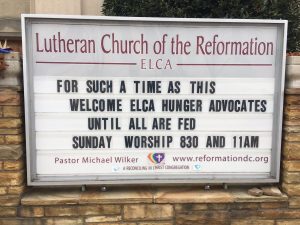
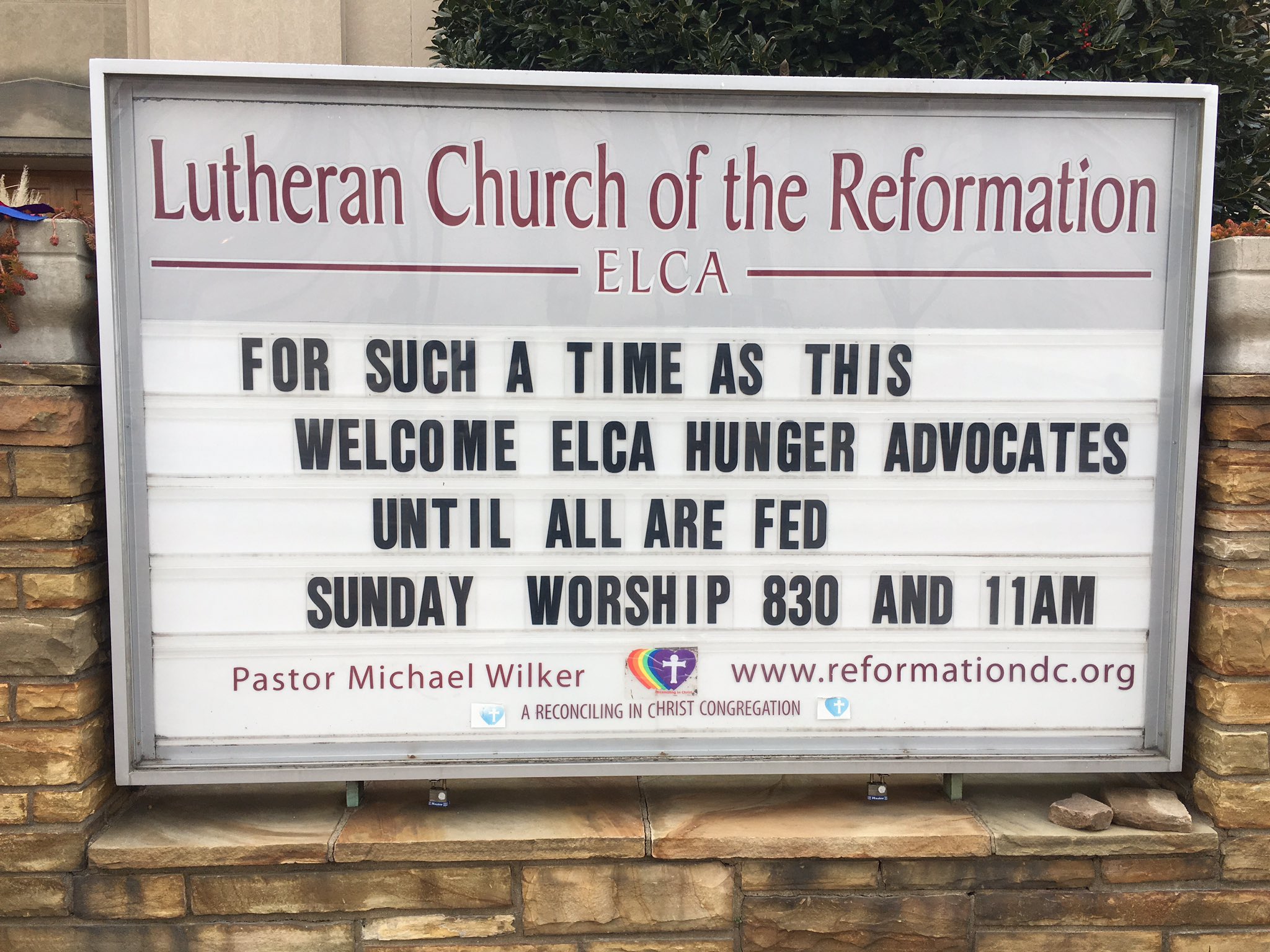
SUSTAINABLE DEVELOPMENT GOALS: The December day to #PrayFastAct is Thursday, Dec. 21! This month, we focus on our commitment to supporting Sustainable Development Goals by engaging in prayer, fasting and advocacy for a just world. During this Advent season, we are directed to God’s steadfast resolve for peace and the signs of God’s reconciling love and restoration at work in our troubled world. As we await the arrival of the Prince of Peace, Lutherans and Episcopalians around the country, alongside churches’ leadership, are praying, fasting and committing to advocate together in support of the U.N.’s Sustainable Development Goals as part of our ecumenical For Such a Time” campaign.

TAX BILL UPDATE: The Senate passed its version of HR 1, the Tax Cuts and Jobs Act, legislation that would cut taxes for corporations and wealthy individuals. This legislation now moves to a conference committee to merge the two versions and will be back in the House and Senate for another vote. The House version includes language, opposed by the ELCA, that would permit houses of worship to engage in electioneering. The Senate version does not include this language, known as “The Johnson Amendment.” ELCA Advocacy will work to prevent inclusion of the Johnson Amendment in a conference of the two versions.

WORLD AIDS DAY: ELCA Advocacy, together with ELCA HIV and AIDS ministries, shared an action alert Dec. 1 in support of public policies and programs that address the spread of HIV and AIDs worldwide. U.S. programs and strategies have been effective in reducing the spread of HIV nationally and across the world. As Congress considers a spending bill to keep the government open after Christmas, it is critical to voice support for programs under consideration for being cut, such as the President’s Emergency Plan for AIDS Relief (PEPFAR), prevention programs and housing for people with AIDS.

MIGRATION UPDATE: Advocates are urging Congress to pass the Dream Act, which provides a pathway to citizenship to young Americans without legal status (Dreamers), before the end of the year. The status of approximately 10,000 Deferred Action for Childhood Arrivals (DACA) recipients has already expired, and 1,000 lose their status every day that a bill is not passed. ELCA Advocacy has updated our action alert to reflect the important deadline and continue to advocate for a bill to pass.

In November, the administration announced that it would shut down the Central American Minors Program (CAM) for refugees, ending all operations by Jan. 31. It is unclear whether this arbitrary deadline will allow the review of all 3,000 pending CAM cases. The program allows children who had a legally present parent in the U.S. to apply for refugee status in their country. Children who arrive in the U.S. could avoid the dangers of traveling through Mexico to request asylum.

INTERNATIONAL GENDER JUSTICE AND HEALTH: The International Violence Against Women Act has finally been re-introduced in the Senate. This bill encompasses a few changes from the version introduced in the last Congress but keeps key pieces intact. Unlike the last time, the current version was re-introduced by a bipartisan group of senators, which increases likelihood of passage.

Another bill to improve maternal and child health outcomes in developing countries has been introduced in both chambers. The Reach Every Mother and Child Act’s goal is to ensure that the U.S. can continue its role of providing critical interventions in an efficient and strategic manner. Advocates can voice support for the bill and other international health goals at the ELCA Action Center.

ENVIRONMENT COP23: ELCA Advocacy attended the United Nations Climate Change Conference (COP 23) in Bonn last month.  Significant outcomes of the conference included: 1) approval and adoption of the Gender Action Plan (GAP); 2) approval and adoption of the Indigenous Peoples Platform; and 3) moving forward with the Talanoa dialogue for implementation of the Paris Agreement. ELCA Advocacy, as a member of the UN Gender team, participated in workshops to help shape the Gender Action Plan, and, along with LWF, hosted a table at the Gender Market Place Event on Gender Day (November 14th) at COP 23.  Find out more at the ELCA Advocacy Blog.


Lutheran Office for World Community, United Nations, New York, N.Y.

Dennis Frado, director


THIRD COMMITTEE OF GENERAL ASSEMBLY CONCLUDES ITS WORK FOR 72ND SESSION:

In late October and early November, the Third Committee of the United Nations discussed eliminating racial discrimination,xenophobia and related intolerance, and promoting self determination. Experts monitoring human rights treaties were especially concerned over increased violence, racist rhetoric and Nazism, calling for targeted efforts to address root causes of discrimination.

Sabelo Gumedze, chair of the working group of experts on peoples of African descent, reported on pervasive structural racism, with people of African descent facing extreme violence, racial bias and hate. He called for an honest debate about history and its connection to modern racism.

Gabor Rona, chair-rapporteur of the working group on the use of mercenaries as a means of violating human
rights, focused on the use of private security personnel, particularly in prisons and immigration-related detention
facilities. Abuses include violence, medical negligence and sexual abuse. He recommended that member states stop
outsourcing, and urged alternatives to detention for undocumented migrants.

On Nov. 21, the committee concluded its 72nd session, having debated and approved 63 draft resolutions,
including children’s rights, assistance to refugees, people with disabilities, human rights defenders, migrants, safe
drinking water, youth policies, glorification of Nazism, eliminating racism, strengthening elections, prison reform
and human trafficking.

UPDATE ON GLOBAL COMPACT ON MIGRATION STOCKTAKING PHASE: The United Nations is now in the stocktaking phase of a process to create a Global Compact for Migration. This compact, mandated by the 2016 New York Declaration for Refugees and Migrants, is to be the first inter-governmentally negotiated agreement designed to address all aspects of international migration. LOWC has been active in a subcommittee of the NGO Committee on Migration which has been focusing on the discussions during the recently completed consultation stage and will continue its activities in relation to the current stocktaking stage. These are steps on the way toward the compact being adopted by the U.N. The committee has provided input to the “Ten Acts for the Global Compact,” a document outlining the essentials for a meaningful compact. The Lutheran World Federation has endorsed it.

The stocktaking phase of the work plan to bring the compact to fruition will be followed by the negotiating and
finalization phase in early to mid-2018. Adoption of the global compact should occur in December 2018 at a special
conference to be convened in Morocco.

The special representative for the Global Compact on Migration, Louise Arbour, recently met with members of the Committee on Migration. She focused on her upcoming official report to the U.N. secretary general, which will set out criteria for safe, orderly, regular migration; look at how the United Nations can work on migration; offer recommendations and a review of the compact for the future.

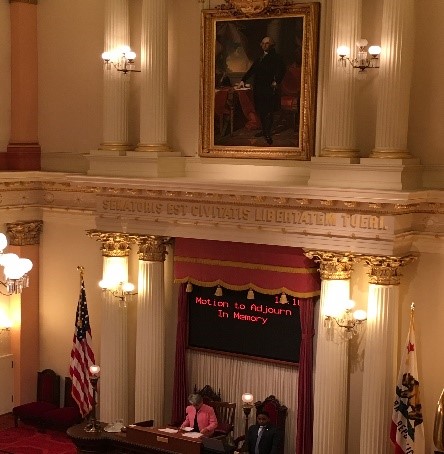
California,Lutheran Office of Public Policy

Mark Carlson,Lutheran Office of Public Policy  loppca.org
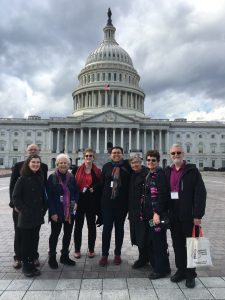
POLICY COUNCIL MEETS: The Policy Council for the Lutheran Office of Public Policy-California met at the Southwest California Synod office in Glendale. Following the meeting, several members went to Palo Verde Gardens, site of a permanent supportive housing community for formerly homeless people, operated by LA Family Housing, with a courtyard named after the late ELCA pastor, the Rev. John Simmons, an original founder of LA Family Housing. A $4 billion housing bond is an LOPP-CA priority for the November 2018 ballot.

CHILDREN’S ROUNDTABLE: The quarterly meeting of advocates, held at the California Endowment, focused on Deferred Action for Childhood Arrivals (DACA) and immigration, with briefings from the state attorney general’s office, advocates and legal experts, all acutely aware that about one-fourth of DACA recipients are in California.

GREEN CALIFORNIA: The Green California network, in which LOPP-CA participates, discussed differences in advocacy styles, internal power dynamics and communication among various organizations, and diverse approaches to social change, including “inside” and “outside” advocacy, transactional and transformational work, and the spectrum of engagement from a “culture of resistance” to “pragmatic problem-solving and compromise.” Some of those tensions were on global display at the Council of Parties meeting in Bonn. Green California is looking at ways to support efforts to change the permissive culture of sexual harassment and abuse in the Capitol community, a topic that will be on the agenda of the Feb. 28, 2018, Green California Summit. #WeSaidEnough. Gov. Jerry Brown’s Sept. 12-15, 2018, globalclimateactionsummit.org in San Francisco was also discussed.


Pennsylvania

Tracey DePasquale, Lutheran Advocacy–Pennsylvania Lutheranadvocacypa.org

In November, LAMPa accompanied the Rev. Jennifer Crist as she testified in support of Safe Harbor legislation that would redirect child sex trafficking victims away from the criminal justice system and toward appropriate services. Crist, a second-career pastor with a degree in neuroscience, spoke as a scientist, a mother and as a minister who works with child trauma survivors through her nonprofit orphanage in Guatemala. Read and watch her testimony here.  Lutherans across Pennsylvania, particularly Women of the ELCA, continue to write and call lawmakers to move SB554 out of the House Judiciary Committee.

LAMPa staff delivered nearly 100 paper plates drawn by children of Trinity Lutheran Church in Camp Hill, Pa., to Gov. Tom Wolf as part of a thanksgiving offering of letters. The plates expressed gratitude to the Governor’s Food Security Partnership for progress toward making Pennsylvania hunger free. Members of Trinity spent three weeks before Thanksgiving learning about the faces of hunger and its roots, signing hundreds of letters to state and federal lawmakers in support policies that address hunger, children’s health insurance and protections of child sex-trafficking victims. Read more.

Lynn Fry dove into her new role as program director at LAMPa, taking on leadership on healthcare and immigration. Director Tracey DePasquale preached and taught at St. Bartholomew’s in Hanover on ingathering Sunday at the invitation of the congregation’s Women of the ELCA group. She also spent several days participating in the Appalachian Ministry Assembly gathered in West Virginia as the body discerned gifts and calling for public witness.


Wisconsin

Cindy Crane, Lutheran Office for Public Policy in Wisconsin

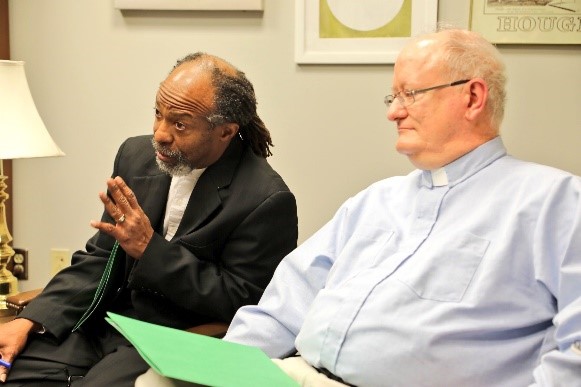
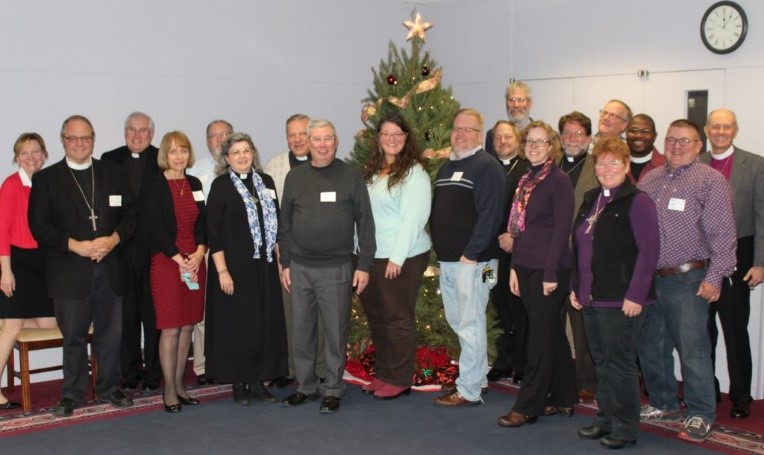
The director accompanied five bishops to visit staff of U.S. Sen. Ron Johnson to encourage him to urge the administration to extend the temporary protective services for Hondurans and El Salvadorans, to ensure the administration reaches the 45,000 refugee goal set for 2018 and to encourage him and his staff to visit local resettlement facilities.


LOPPW and Madison Lutheran Campus Ministry held an overnight advocacy retreat that drew students from three campuses. We heard from special speakers and delved into the civil rights movement, ELCA advocacy, and the advocacy experiences and interests among the partipants, and next steps.


Governance, FoodShare, Water, Trafficking:

  • Discouraged a resolution to call for a U.S. constitutional convention but the resolution passed.
  • Supported a bill that would launch a pilot program to provide discounts to households that are eligible for FoodShare benefits with discounts on fresh produce and other healthy foods. The bill passed the Assembly.
  • Supported a bill that would make it easier for public utilities to assist people with low incomes to get lead out of their pipes. The bill passed the Assembly.
  • A bill formerly called Safe Harbor to decriminalize youth under 18 caught in prostitution was voted out of committee.

Federal legislation:

  • Addressed the Farm Bill at Our Savior’s in Oshkosh, where the director preached and led a workshop, and in a workshop at First Lutheran in Janesville.
  • Addressed how the tax bill would affect hunger and healthcare in an action alert.


Advent Reflection: Hope for a Peaceable Kingdom

By The Rev. Amy Reumann, Director, ELCA Advocacy


The Edward Hicks painting, The Peaceable Kingdom, depicts a scene from the 11th chapter of Isaiah. Lions cozy up to lambs, oxen lie down with bears and children cavort with them all. Predators put aside their natural appetites to pursue harmonious relationships with former prey. Goats and sheep swallow their understandable fear to rest beside carnivores. Each gives up something that they have needed for survival in order to create peace together.

hicks
Edward Hicks [Public domain], via Wikimedia Commons

Hicks, a Pennsylvania artist, also interjects a decidedly non-biblical moment into the scene, showing the Quaker, William Penn, signing a treaty with the indigenous people of the region. He brings together the prophet’s peaceable natural kingdom with an image of societal peace and reconciliation for humans who might otherwise be at war. God’s realm, he suggests, delivers many kinds of peace.

I was recently among faith leaders from multiple nations that possess a history of hostile words and actions toward one another. As we spoke about the religious causes of violence between Muslims, Jews and Christians, we named the ways that sacred texts and theological misunderstandings have sanctioned violence in the name of God and are twisted to support divisive political ends. We also named the deep wellsprings in the three faiths that place a religious obligation of active peacemaking on believers. We affirmed that religion has an essential role in ending violence, with faith leaders often creating the spaces for dialog and reconciliation that resolve hostilities in communities and between nations. We parted with commitments to continue the work of peacemaking in our own nations by challenging misconceptions about one another’s religion and continuing interfaith dialogues at home.

Hicks painted the Peaceable Kingdom scene over 100 times in his life. This says something about the endless task of making peace. We are never quite done. The aggression and fear that humans may think are necessary for survival repeatedly reassert themselves in communities and between nations. We are called to promote and seek peace over and over again as part of our vocation to love and serve God.

This holy season, with wars, and with rumors of war, we await the advent of the Prince of Peace who renews our hope for a Peaceable Kingdom. May these weeks bring about renewed and fervent prayers, action and advocacy for peace in our world.


COP23: An inclusive and intersectional way forward

By Ruth Ivory-Moore, Program Director, Environment and Energy Policy


Talanoa is a generic term referring to a conversation, chat, sharing of ideas and talking with someone. It is a term that is shared by Tongans, Samoans, and Fijians.” It is also a term that will be linked to the twenty-third United Nations Climate Change conference (COP 23) that ended on November 18.

During this conference, Fiji’s Prime Minister and COP 23’s President, Frank Bainimarama lifted up the experiences and voices of Fijians and communities most vulnerable to climate change. Three critical outcomes of the COP meeting include the creation and inclusion of the Gender Action Plan (GAP), an Indigenous Peoples platform, and moving forward in Talanoa dialogue. These three resolutions will help ensure that the Paris Agreement is inclusive and intersectional in its continued planning and implementation. [Right: photo of The Fiji Pavilion at COP 23]

As a global community, we are facing what is likely one of the most serious threats to all creation: climate change. The time for action around climate change has never been more critical. Human activity is greatly amplifying Earth’s rising temperature and environmental degradation due to increased accumulation of greenhouse gases in the atmosphere. The negative consequences of this degradation disproportionately impact the most vulnerable and marginalized communities, even though they have contributed the least to it. They are also least equipped to mitigate and adapt to the changes in our environment.

We must become a global community that works together to ensure the sustainable and peaceful coexistence of all. Climate change leads to increased poverty, food insecurity, migration (due to necessity for survival), and health issues. To lessen these consequences of climate change, we must all work together. As stewards of God’s creation, the only option is to act, to mitigate, to adapt, and to build resilient communities. The simple fact is that we must step up our game and implement the three mechanisms that were produced to facilitate more inclusive and productive planning.

Critical outcomes of COP23:

The Gender Action Plan (GAP) facilitates the implementation of the Paris Agreement by formalizing the role of women in decision making around climate policy and action. While the role of gender and women was acknowledged in the preamble to the Paris Agreement, the GAP includes provisions for: capacity-building, knowledge sharing and communication, gender balance, participation and women’s leadership, coherence (strengthening the integration of gender in all aspects of implementation of the Paris Agreement), gender-responsive implementation and means of implementation, and monitoring and reporting.

The Indigenous Peoples Platform provides a means for native communities, who are often most impacted by climate change, to have a significant voice in all aspects of discussions around solutions. Discussions and resolutions included strengthening the knowledge of indigenous people, enhancing engagement of indigenous people, sharing of best practices and experiences, and providing means to facilitate the operationalization of the Indigenous Peoples Platform. [Right: photo of Indigenous People March at COP22]

The Talanoa dialogue lays a foundation critical for working toward climate resilient communities. The Talanoa dialogue stresses inclusivity of all, upholds communities most vulnerable, and emphasizes the need for fair and balance processes that will create fair and balanced solutions.

The Gender Action Plan, Indigenous Peoples Platform and Talanoa dialogue are key to ensuring the implementation of an inclusive process and that ensures the achievement of sustainable solutions. We celebrate these important successes; and we should congratulate the COP 23 Fiji Presidency on his leadership as well as the significant progress that was made.

We must now move and act with deep intentionality. No one entity is to be vilified, demonized or otherwise disparaged. We need energy companies, civil society, governments at all levels, trade associations, faith-based communities, policy makers, attorneys, researchers, agriculturalists, and people from every discipline working for a sustainable world. As bridge builders, faith-based communities have a tremendous opportunity! In the words of the Fiji youth who delivered a powerful message at the opening of the COP23 plenary, we must “walk the talk.” [Left: photo of World leaders congratulating the Fiji youth after his powerful speech]

We must proceed intentionally to work on implementation of the Paris Agreement. We have hope, and we have faith. But we know “for just as the body without the spirit is dead, so faith without works is also dead.” (James 2:26)

To that end, to the Fiji Presidency of COP 23:


ELCA Advocacy prays for TPS holders today

On November 6, the Administration announced the end of Temporary Protected Status (TPS) for Nicaraguans and took no action to protect Hondurans, automatically extending their designation for 6 months. TPS is a legal immigration status that allows citizens from other countries who are present in the U.S. during a catastrophe in their country to remain in the U.S. until it is safe to return home. As a church guided by Scripture to act for earthly peace that is built on compassion and the dignity of every person, we are disappointed by the Administration’s decision that will separate families and leave people to face an uncertain future.

Through the ELCA’s AMMPARO Strategy, our church strengthened our commitment to walk alongside children and families who are forced to flee their homes in Central America. We did this to respond to the suffering of the thousands of unaccompanied children and families that are displaced from their communities due to violence, lack of opportunities and environmental issues. We are committed to accompany churches and our partners in Central America to address these issues, knowing that today conditions in these countries are still unsafe.

The Administration has already rescinded TPS for over 1,000 people from Sudan, and now hundreds more face an uncertain future. For almost 20 years, TPS holders from Honduras and Nicaragua have worshiped alongside us and brought their gifts to our communities. Without this protection, they will be forced to leave their communities yet again. Children and family members of TPS holders, many of whom are U.S. citizens, will bear the brunt of this Administrative decision. We pray today for all who face an uncertain future due to this decision. We call on the Administration to extend TPS for Hondurans for 18 months and urge Congress to pass timely legislation that protects all TPS holders.

November 2017 ELCA Advocacy Update

ELCA Advocacy Office, Washington, D.C.

The Rev. Amy Reumann, director

FOR SUCH A TIME AS THIS: The November day of fasting and action is Tuesday, Nov. 21. This month, we focus on federal investments that make communities more resilient and better prepared for destructive natural disasters and the consequences of a changing climate. ELCA congregations and community organizations across the country work tirelessly to help when disaster strikes, most recently in Texas, California, Puerto Rico and the Virgin Islands. To prepare our nation for the future, our federal government must invest in research, urban planning and building infrastructure designed for the climate challenges of the next 100 years.

DISATER RELIEF UPDATE: President Trump signed a disaster aid package on Oct. 26 to continue federal relief for hurricane and wildfire affected regions. While the $36.5 billion package included much needed funding for the Federal Emergency Management Agency’s (FEMA) disaster relief and the National Flood Insurance Program, the support package as passed is only a temporary solution, and funding for longer-term recovery programs will be needed soon. ELCA Advocacy and Lutheran Disaster Response shared an action alert last month in support of the bill, with hundreds of Lutherans calling for action. ELCA Advocacy will continue to encourage action for those affected by natural disasters as Congress considers a longer-term spending bill next month.

DACA UPDATE: Last month, the White House released a series of immigration principles and policies outlining immigration recommendations for Congress to consider alongside legislation to protect young “Dreamers.” These principles include policies that take away trafficking protections for children, make it harder for people seeking protection to find refuge in our country, and reduce the ability of families to stay together.

Shortly after the release of the principles, ELCA Advocacy shared an action alert encouraging lawmakers to support protections for young Dreamers without additional provisions.

REFUGEE SCREENING: Lutheran Immigration and Refugee Service (LIRS), alongside ELCA Advocacy, is also continuing its outreach to Congress and the administration on screening procedures for refugees. This comes as the White House announced that only 45,000 refugees will be resettled in the U.S. next year – the lowest level in decades – and proposed other unnecessary screening policies. Five Wisconsin ELCA bishops will present more holistic refugee policy recommendations to Sen. Ron Johnson, R-Wis., later this month.


Lutheran Office for World Community, United Nations, New York, N.Y.

Dennis Frado, director

HUMAN RIGHTS UPDATES: The U.N. General Assembly allocates to its Third Committee agenda items related to human rights issues and social and humanitarian affairs affecting people all over the world. An important part of the work of the committee is focused on examining human rights questions, including reports of the Human Rights Council, established in 2006. During October, the committee heard and interacted with special rapporteurs, independent experts and chairs of the council’s working groups.

UN01
Jenss Modvig, (l) Chair of the Committee against Torture;
Nils Melzer (c), Special Rapporteur on Torture; and
Malcolm Evans (r), Chair of Human Rights Council
Subcommittee on Prevention of Torture

The committee discusses the advancement of women, the protection of children, indigenous people, the treatment of refugees, the promotion of fundamental freedoms through eliminating racism and racial discrimination, and the right to self-determination. The committee also addresses social development issues in such areas as youth, family, ageing, people with disabilities, crime prevention, criminal justice and international drug control.

The committee has heard from more than 60 experts during this year’s session of the General Assembly. Compelling presentations included extreme poverty and human rights, rights of indigenous people and prevention of torture.

In line with General Assembly resolution 66/246, formal meetings of the Third Committee are webcast live on UN Web TV in the six official languages of the United Nations. Past meetings of the session are also available from the committee’s video archives.

SIMPLE, PRACTICAL MEASURES NEEDED: Experts told the Third Committee in October that member states and international organizations must take simple, practical measures to ensure inclusivity, as delegates debated the human rights of people with disabilities.

The chair of the Committee on the Rights of Persons with Disabilities, Theresia Degener, said that budget appropriations were needed to provide such services as international sign language, national sign language interpretation, Braille, captioning, plain language and Easy Read as a minimum. Although the committee has a member with intellectual disabilities, it has not been able to provide that expert person with any information in plain language.

Catalina Devandas Aguilar, the special rapporteur on the rights of people with disabilities, said the sexual and reproductive rights of women and girls with disabilities require urgent action. To identify and eliminate harmful practices, member states must provide families with access to legal mechanisms and, rather than simply facilitating care, consider the opinions of people with disabilities. States have an obligation to protect sexual and reproductive health and rights by ensuring comprehensive sexual education, providing inclusive health services and empowering people with disabilities.

The committee also explored freedom of opinion and expression, among other issues, with the special rapporteur on that topic warning that public trust in information was under attack by political demagogues and those particularly purveying “fake news.” He cautioned governments against making, sponsoring or encouraging statements they reasonably knew to be false.


California

Mark Carlson, Lutheran Office of Public Policy loppca.org

D.C. STAFF VISIT: A highlight of October was the visit of Ruth Ivory-Moore, ELCA program director for energy and environment, for the annual Sierra Pacific Synod Hunger event at Lutheran Church of the Incarnation in Davis, an interfaith climate change symposium, and a forum at St. John’s Lutheran Church in Sacramento, where, with the farm bill getting more attention, she met Karen Ross, California secretary of food and agriculture.

EARLY CHILDHOOD: LOPP-CA Director Mark Carlson participated in the annual Watercooler Conference of early childhood education advocates and providers, sponsored by the Advancement Project, a civil rights organization. Four leading gubernatorial candidates presented their vision for early childhood.  The California First 5 Commission unveiled its resource to help young children feel safe and develop resilience in a time of heightened fear and anxiety fueled by anti-immigrant, anti-Muslim, and militaristic rhetoric and actions.  The resource is available in English, Spanish, Korean and Arabic and has been shared with some church leaders.

THEOASIS: Mark also participated in the Theoasis professional leadership conference for the Pacifica and Southwest California synods. LOPP-CA had a display that included care for creation and racial justice materials and joined a book discussion on “Strangers in Their Own Land – Anger and Mourning on the American Right.” It circulated a sign-on letter thanking Gov. Jerry Brown for approving SB 54, the California Values Act, which limits state and local law enforcement involvement in federal immigration enforcement, as well as other bills with the goal of providing due process and protecting immigrants from overzealous immigration enforcement at schools, workplaces and residences.


Colorado

Peter Severson, Lutheran Advocacy Ministry–Colorado  lam-co.org
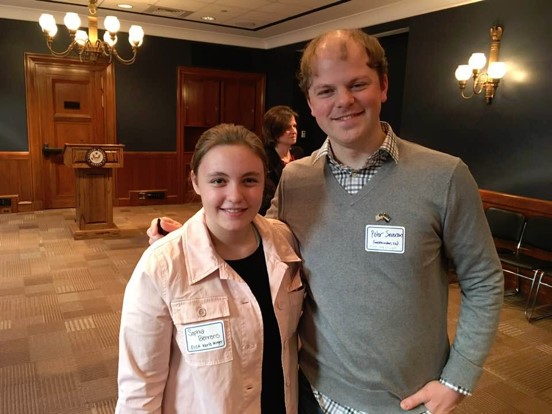
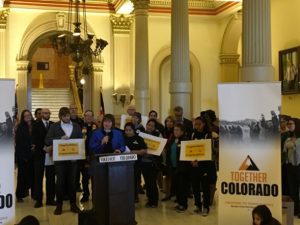
SPECIAL SESSION: The Colorado General Assembly met for a special session at the beginning of October to address the unintended tax impacts of SB 17-267. However, partisan division left HB 17B-1001 dead on arrival in the Senate. We hope that this failure to reach a policy compromise will not portend similar results for next year’s regular session.

HOUSING CONFERENCE: Lutheran Advocacy Ministry-Colorado was present for the Housing Colorado NOW Conference in Vail in mid-October. Affordable housing advocacy, possible budget cuts to the federal Department of Housing and Urban Development, tiny homes, and housing needs for those who’ve experienced trauma from homelessness were among the many topics discussed in workshops and plenary sessions. The event is Colorado’s largest annual housing conference and is invaluable for our upcoming policy work on housing in the 2018 legislative session.

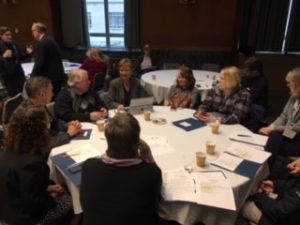
MINISTRY VISITS: We were honored to visit Lutheran Church of Hope in Broomfield and Lutheran-Episcopal Campus Ministry at the University of Northern Colorado in Greeley this month! Pictured are students from UNC and Aims Community College sharing a meal and conversation with LAM-CO Director Peter Severson.

SAVE THE DATE: Colorado Lutheran Lobby Day will be Thursday, Feb. 15. Registration opens Dec. 1.


New Mexico

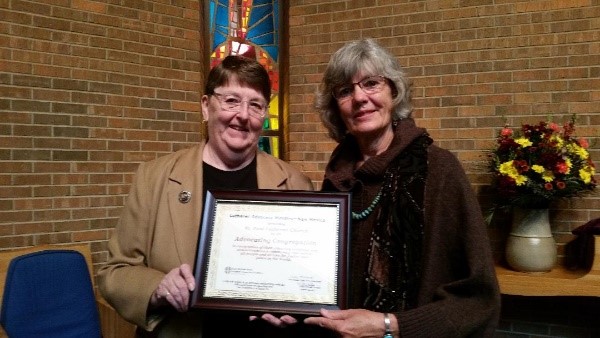
Ruth Hoffman, Lutheran Advocacy Ministry – New Mexico   lutheranadvocacynm.org
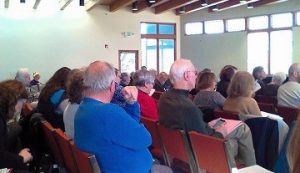
ANNUAL LAM-NM ADVOCACY CONFERENCE: Over 60 Lutheran advocates and their ecumenical partners met on Saturday, Oct. 14, at St. Luke Lutheran Church in Albuquerque.

Dr. Craig Nessan from Wartburg Theological Seminary was the keynote speaker and spoke about “Keeping Heart in Heartless Times.”

Breakout sessions included advocacy basics, tax policy, and hunger in New Mexico. State Rep. Liz Thomson, whose district includes St. Luke, spoke at lunch about her legislative experience.


Ohio

Nick Bates, Hunger Network in Ohio  www.hungernetohio.com

UNEMPLOYMENT COMPENSATION: Last November, faith leaders in Ohio gathered at the Statehouse to discuss a very bad and dangerous proposal that would have gutted our unemployment compensation system in Ohio. Unemployment compensation helps protect victims of corporate downsizing and layoffs from hunger and losing all stability. We need to maintain benefits at an adequate level and long enough to make sure people can get by until a new job is secured. However, legislators are concerned that our system will once again go bankrupt during the next recession. Luckily, our advocacy voices joined many others from around Ohio to stop the bad bill from a quick end of session vote.

Representative Kirk Schuring unveiled a proposal in October that would increase revenue from workers and  employers and adopt some cuts to benefits. While this bill is not perfect and has a long way to go, we appreciate Schuring’s improvements to the bill.

GERRYMANDERING: Also, the General Assembly will consider a fix to gerrymandering in Ohio. Ohio’s 16 congressional seats are safe with 12 Republicans and four Democrats. This is unlikely to change because districts have been drawn intentionally to limit actual competition. The Hunger Network,and faith communities around Ohio are excited to work with the Fair Districts campaign toward restoring electoral integrity to our congressional elections.


Pennsylvania

Tracey DePasquale, Lutheran Advocacy–Pennsylvania Lutheranadvocacypa.org

NEW PROGRAM DIRECTOR: LAMPa welcomes Lynn S. Fry, Chambersburg, the new program director for Lutheran Advocacy Ministry in Pennsylvania (LAMPa). She begins her work with LAMPa Nov. 6. Social ministry and advocacy are at the core of Lynn’s being. “Foundational to my life is my faith in the triune God, the knowledge that God has made us all in his/her image, and everyone is entitled to be treated equally with dignity and respect. Since my teenage years, I recognized and have been passionate about my life making a difference in the world in a positive way,” Lynn said. “I am thrilled to be bringing someone with Lynn’s many gifts and deep roots in Pennsylvania Lutheranism onto LAMPa’s staff and eager to introduce her to our wonderful advocates across the commonwealth,” said LAMPa Director Tracey DePasquale.

Those advocates were particularly busy in October, responding to harmful proposals in the last hectic days of a more than three-month-overdue budget. In addition, hunger advocates signed their feeding ministries on to a letter requesting that Gov. Tom Wolf remember anti-hunger funding in his budget proposal for next year. Hunger leaders also a ccompanied Tracey to a statewide hunger coalition meeting as well as an update by the Governor’s Food Security Partnership on the Blueprint for a Hunger-Free PA. Other Lutheran advocates joined Tracey at a three-day Climate Reality Leadership Training in Pittsburgh. Tracey was also pleased to serve as keynote to the Allegheny Lutheran Social Ministries annual dinner.


Southeastern Synod

Hilton Austin, director              

LEADERSHIP CONVOCATION: This month we attended our Synod Leadership Convocation at Lutheridge in Arden, N.C. Mark Hanson was our keynote speaker; he used a conversational format to talk about how we connect the biblical narrative to our leadership and ministry. Everyone in attendance had the opportunity to re-think and refresh their ministry.

Hilton Austin, synodical director of advocacy, set up our advocacy exhibit with a focus on support for the Dream Act 2017, along with our continued effort to develop congregational advocacy teams across the synod. We also had the opportunity to bring together leaders developing the Gaurdian Angel program for the Atlanta Immigration Court to discuss the path forward and how we might work with Mary Campbell, ELCA AMMPARO, to provide the necessary training.

The weekend following the convocation, Hilton, along with Megan Neubauer, ELCA Domestic Mission, and Everett Flanigan, assistant to the bishop, facilitated a Leadership/Advocacy conversation at Christ Lutheran Church in Nashville, Tenn., with leaders from Christ Kiswahili congregational leaders. This was the second in a series from the ELCA Leadership Initiative.


Virginia

Kim Bobo, Virginia Interfaith Center for Public Policy  virginiainterfaithcenter.org 

IMMIGRATION HEARING: The Virginia Interfaith Center for Public Policy mobilized people of faith to accompany José Luis Lugo Zarco and his family to his hearing in immigration court on Oct. 26. Unfortunately, his case was continued again. He has been in the U.S. since 2002; he is married to a U.S. citizen, Angeles, and they have two U.S. citizen children, 4 years and 6 months old. The only infraction on his record is a ticket for driving without a license. (Virginia does not allow undocumented people to obtain a license.) He unfortunately came into contact with Immigration and Customs Enforcement due to that infraction and has since been in removal proceedings. The Interfaith Center is organizing the Central Virginia Sanctuary Network, a network of congregations that are willing to provide support to neighbors, friends and family who are being detailed, deported or profiled. In the face of hate and discrimination they are committed to showing love, compassion and hospitality. Learn more at here.

The Center is a co-sponsor for the 8th Virginia Immigrant Advocates Summit, which brings together statewide immigrant rights advocates, partners, supporters and allies to learn, discuss and strategize on issues that affect immigrants in the commonwealth. The event will be Nov. 15 from 8:30 a.m. to 5 p.m. at Faith Lutheran Church in Arlington.

VICPP’s Northern Piedmont Chapter hosted a community roundtable discussion on heath care on Oct. 18.


Washington

Paul Benz, Faith Action Network   fanwa.org

FEDERAL: Now that the House and the Senate have passed budget resolutions and committees are working out the details of tax cuts, FAN is focusing on how cuts to federal human-services programs will affect vulnerable Washingtonians. We’re encouraging advocates to gather the stories of those most affected by potential cuts for their members of Congress.

STATE:  FAN and its many policy partners are preparing for the 2018 legislative session, beginning Jan. 8. Some of our key bills will be on voting rights, prison sentencing, revenue and taxation, pesticide notification, and TANF monthly grant restoration. We are also busy scheduling in-district meetings with legislators and our faith advocates.

Washington Rally
FAN joined CAIR-WA and interfaith leaders to stand with our Muslim,
immigrant and refugee neighbors last week at the
U.S. Courthouse in Seattle to say #NoMuslimBanEver!

We’ll also be celebrating the 30th anniversary of the Apology to Northwest Tribes, which has gained national recognition. Learn more at: fanwa.org/inic/.VENTS: At our Annual Fundraising Dinner on Nov. 19, FAN will be giving awards to those who have been indispensable this year in the work for justiceand equity. We’ll be honoring a founding FAN Governing Board co-chair; a network of faith communities that works for immigrant rights, sanctuary and rapid response; two Yakama tribal elders who have been working to dismantle the Doctrine of Discovery locally and internationally; and a Muslim faith community that has been exceptionally active in welcoming and serving their greater community, even in this difficult time for our Muslim neighbors.


Wisconsin

Cindy Crane, Lutheran Office for Public Policy in Wisconsin  loppw.org
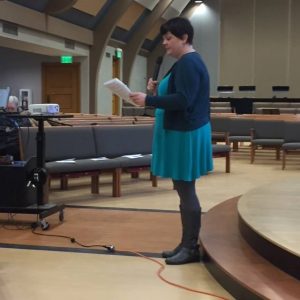
FOODSHARE: LOPPW is supporting a FoodShare healthy eating incentive pilot program that would give discounts on healthy food to FoodShare recipients who volunteer for the program. This would be the first of its kind in the nation. LOPPW does not support another bill that would add more mandatory limits to what FoodShare recipients could purchase.

HUMAN TRAFFICKING: East Central Synod Women of the ELCA President Shirley Paulson and two other Women of the ELCA members, Deb Martin (also an LOPPW advisory council member) and Pam Henkel, testified on a bill that would require education for commercial drivers to include training on recognizing signs of human trafficking. Shirley also testified on another bill that would help trafficked youth.

While the director was attending the installation of Bishop Katherine Finegan of the Northern Great Lakes Synod, former adviser council member, the Rev. Diane House of the Northwest Synod, was a keynote speaker at the Eyes Wide Open Women of the ELCA event in the La Crosse Area Synod.

CARING FOR GOD’S CREATION:

  • The director worked with members form Milwaukee, Madison and other parts of the state to lead a Wisconsin Climate Table retreat in Eau Claire.
  • LOPPW advocated against a bill that would weaken sulfide mining regulations.
  • LOPPW is making one last push to support a bill that would make it easier for utilities to assist low-income residents to get lead out of their pipes for drinking water.


GOVERNANCE: We’re advocating against a bill that would bring us closer to calling for a constitutional convention.


World Food Day 2017: Changing the Future of Migration


International migration reached a total of 244,000,000 people in 2015, while the number of migrants as a percentage of global population remains stable at about 3%. As part of World Food Day 2017 observances, a meeting was held at the United Nations (UN) on 16 October titled “Change the Future of Migration: Invest in Food Security and Rural Development,” focusing on links between migration, food security, and rural development. Speakers included H.E. Mr. Miroslav Lajčák, President of the 72d Session of the General Assembly, and ambassadors from Mexico, Philippines, and Italy, as well as business and UN representatives.

There exists a strong nexus between food security, migration, and global development. Many people move by choice, but a growing number are migrating for myriad reasons. Driving causes of migration include conflict, food instability, climate change, political instability, and poverty. Ms. Coco Ushimaya, World Food Program Director of the UN System (African Union & Multilateral Engagement Division), called for a cross-disciplinary approach to food security that includes local, national, and regional collaboration working toward the possibility of economic growth that will sustain peace.

As God has created us as whole persons, we too must focus on building earthly peace that encompasses all the dimensions of society. We pray for all migrants who have been forced to leave their homes, and for all the leaders locally and internationally working towards strengthening food security and global development.

Congress must work together to improve health care for all


Last week, President Trump signed an executive order directing several federal agencies to develop new regulations impacting the Affordable Care Act (ACA). Those regulations are expected to cause the proliferation of health care plans that, while potentially less expensive for some consumers, come at the cost of mandated coverage and protections that currently exist under the ACA.

The administration also decided to cut off subsidies—made possible under the Affordable Care Act—which helped lower income individuals access insurance. Consumers most affected don’t have health insurance through an employer, their parent’s health insurance, or Medicaid or Medicare. For many, these government subsidies were key to ensuring access to any health insurance at all.

Policy analysts and the non-partisan Congressional Budget Office warn that the Executive order will affect the U.S marketplace by eliminating nearly $7 billion from the individual market causing steep premium increases for many working low-income households across the country.  Congressional leaders on both sides of the isle are expressing concern, but what we need most is bi-partisan cooperation and urgent action.

The ELCA has for many years maintained a clearly defined value around health care:

“We of the Evangelical Lutheran Church in America have an enduring commitment to work for and support health care for all people as a shared endeavor. Our commitment comes in grateful response to God’s saving love in Jesus Christ that frees us to love and seek the well-being of our neighbor.” (ELCA social statement “Caring for Health: Our Shared Endeavor,” 2003)

Over the past nine months, Lutherans—laypersons, pastors and Bishops—have engaged their Senators and Representatives with a simple message: Improve access to health care; don’t tear it apart. During congressional debate this summer, Presiding Bishop Elizabeth A. Eaton issued a statement that resonates today as much as it did then:

“I ask all Lutherans to pray for our leaders and to be advocates with me. Our collective voices make a difference, and we should raise them to call on our [leaders] to stand with the most vulnerable members of our communities. It is time for Congress to work together to find solutions that ensure health care for all in our nation of God’s great abundance.”

As Lutherans we believe that health is central to our well-being, vital to relationships, and helps us live out our vocations in family, work, and community. Caring for one’s own health is a matter of human necessity and good stewardship. Caring for the health of others expresses both love for our neighbor and responsibility for a just society.

We pray for those in our community who will be most affected by these recent actions, as well as for our leaders to work together to protect the most vulnerable in our country.

ELCA Advocacy renews call to protect Dreamers without harming vulnerable migrants


The Evangelical Lutheran Church in America, one of the largest protestant denominations in the United States with more than 3.7 million members and 9,300 congregations nationwide, has a long history of standing alongside migrants and refugees. Every day we see the gifts that young Americans without legal status, also known as Dreamers, and their families bring to our congregations and communities.

Following the Administration’s announcement that it will rescind the Deferred Action for Childhood Arrivals (DACA) program, which gave Dreamers relief from deportation and the ability to work, the Rev. Elizabeth A. Eaton, Presiding Bishop of the ELCA, called on Congress to pass legislation to protect these young people:

“As we lament this change in policy, we call on members of Congress to pass long-overdue legislation to protect young people brought to the U.S. as children… Our churches, our schools, our communities and the country are enhanced by their presence and contributions. It is time that our immigration policy reflects their gifts to all of us.”

Recently released White House  Immigration Principles and Policies  outline changes in immigration policy to be considered alongside legislation to protect Dreamers. These principles take away trafficking protections for children, make it harder for people seeking protection to find refuge in our country, and reduce the ability of families to be unified. We urge Congress to reject these principles and instead pass legislation that provides a pathway to citizenship for Dreamers without creating policies that lead to family separation or crippling the ability for people to seek safety in our country.

Dismantling key pieces of our immigration system is not the way forward. No young person should have to choose between their own future and the safety of their family, friends or community.

As Christians, our call to welcome the stranger, feed the hungry, and care for the sick comes from our desire to carry on Jesus’ faith and practice. With fewer than 6 months until thousands more lose protection, we renew our call to Members of Congress to pass legislation that protects Dreamers without harming other immigrants.


Learn more about the ELCA’s commitment to work toward just and humane policies affecting migrants in and outside the U.S. by visiting ELCA.org/AMMPARO

To learn more about Lutheran Immigration and Refugee Service’s work with refugees and other vulnerable migrants visit LIRS.org.