Skip to content
ELCA Blogs

Lutheran Disaster Response

Situation Report: Türkiye and Syria Earthquake

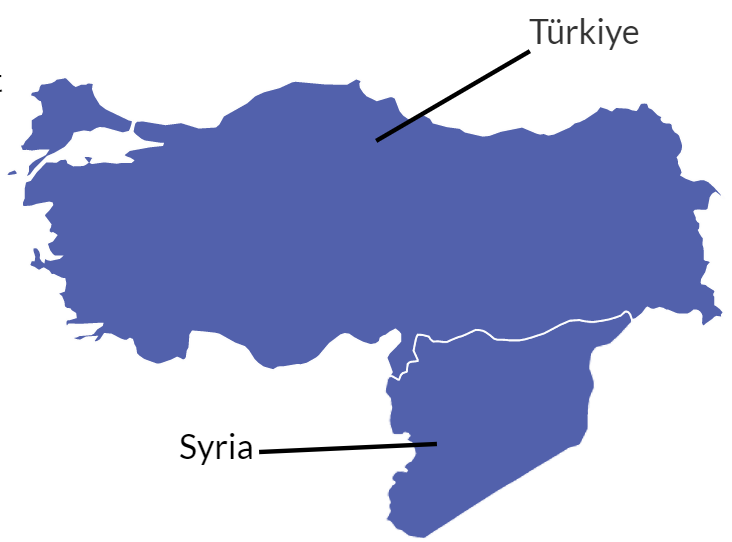
Situation:Map of Türkiye and Syria

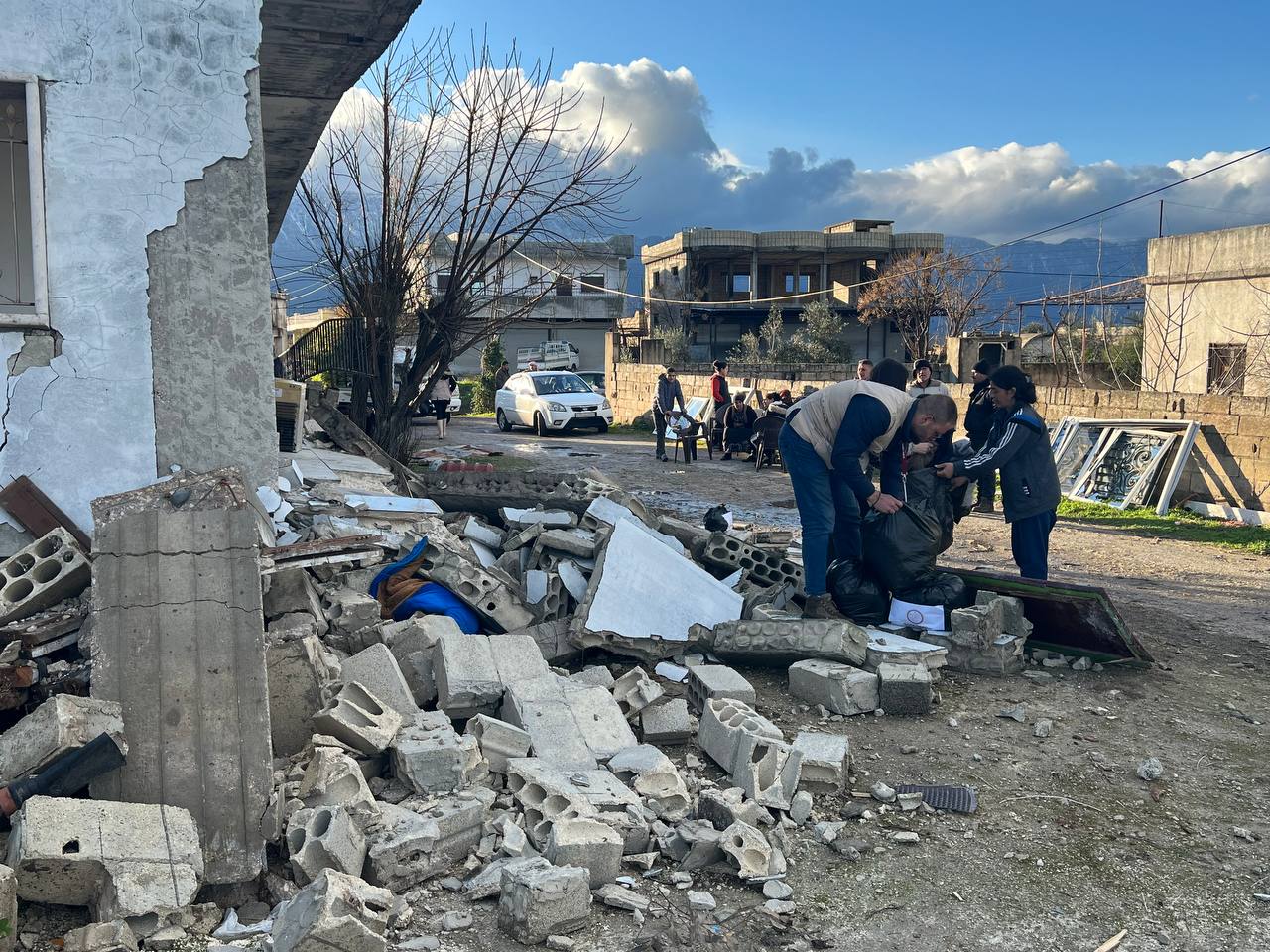
On Feb. 6 two powerful earthquakes hit Türkiye and significantly impacted neighboring Syria. The first was a magnitude 7.8 earthquake in south central Türkiye, followed hours later by a magnitude 7.5 quake in the southeastern part of the country. The two quakes have devastated Türkiye and Syria, collapsing thousands of buildings and damaging infrastructure. Over 41,000 people have been killed, with the count expected to continue rising drastically.

On the left, a crumbled building. On the right side of the building are two people picking up the rubble.

ACT Alliance member organizations are on the ground assisting earthquake survivors. Photo: GOPA-DERD


Response:

Lutheran Disaster Response is contributing to ACT Alliance to address the devastation from the earthquakes. There are several ACT Alliance members already active in the region that are providing immediate aid. These organizations are supplying blankets, mattresses, hot meals and hygiene kits to earthquake survivors. As needs are assessed, the organizations will establish further actions.


Be part of the response:

Pray
Please pray for the people in Türkiye and Syria impacted by the earthquakes. May God’s healing presence give them peace and hope in their time of need.

Give
Thanks to generous donations, Lutheran Disaster Response is able to respond quickly and effectively to disasters around the globe. Your gifts to Lutheran Disaster Response (Middle East Crisis) will be used to assist survivors of the earthquakes and other disasters in the region.

To learn more about the situation and the ELCA’s response:

  • Sign up to receive Lutheran Disaster Response alerts.
  • Check the Lutheran Disaster Response blog.
  • Like Lutheran Disaster Response on Facebook, follow @ELCALDR on Twitter, and follow @ELCA_LDR on Instagram.
  • Download the situation report and share as a PDF.

Lutheran Disaster Response: 2022 in Review

2022 was a full year for Lutheran Disaster Response (LDR). The highest profile event is the ongoing war in Ukraine. Since Russia’s invasion on February 24, more than 7.8 million people have fled Ukraine to neighboring countries in Eastern Europe and another 6.5 million became internally displaced. LDR is accompanying partners in eight countries, including Ukraine. As the war carries on, we will continue to extend our support to these partners

In addition to the war, LDR worked with partners to respond to a wide range of other disasters, including Hurricanes Fiona and Ian, tornadoes, flooding, wildfires and gun violence. Internationally, some examples of responses in 2022 include monsoon flooding in south Asia, migration in Central America and refugees in the Middle East. In 2022, LDR was present in 38 countries and 25 U.S. states and territories.

LDR also is increasing funding for resilience and preparedness projects that seek to address the underlying causes and consequences of climate change and social inequality.

Here are just two stories from our partners in 2022:

Drought in Africa

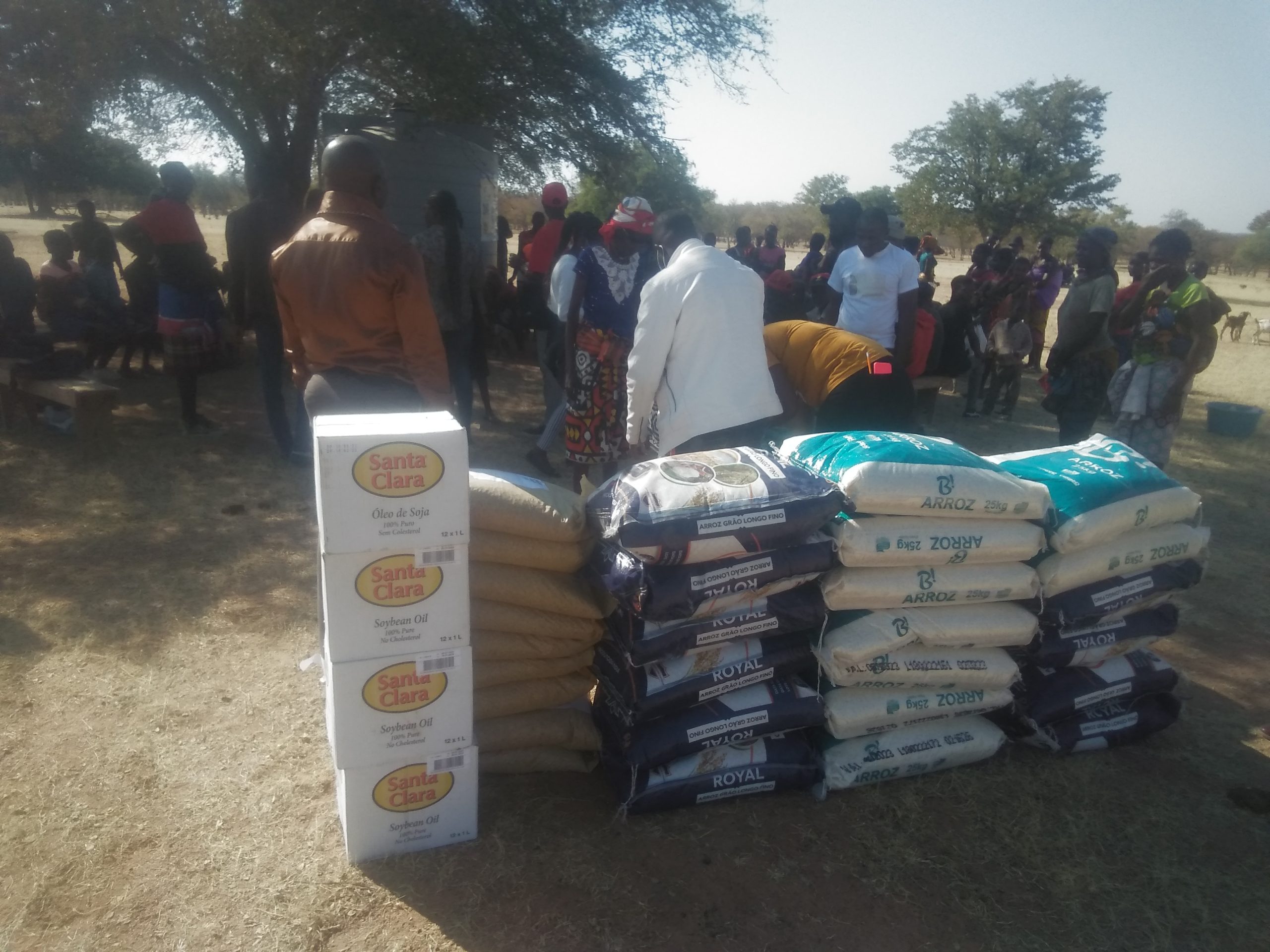
Stacks of food packages in the foreground and a group of people socializing behind them.

The Evangelical Lutheran Church in Angola distributing food to people impacted by a drought in Angola.

The Horn of Africa is currently experiencing its worst drought in recent history, impacting more than 15 million people across multiple countries. Families are displaced and have lost the crops and livestock they need for food and income. Beyond the Horn of Africa, Angola is also experiencing severe drought. LDR is working with partners in the region to provide relief for impacted people in Angola, Ethiopia, Kenya and Somalia.

One of those partners is the Evangelical Lutheran Church in Angola (IELA). With a grant from LDR, the church was able to feed over 1,500 people in the southern provinces of Cunene and Huila. These provinces have lacked rain for the past four years.

IELA has a strong partnership with the Angolan government and they help each other to help people suffering from the drought. One local government official said, “Whenever we receive a phone call from IELA, we know that there is news of social assistance.”

Muteka Hipopi is a recipient of the food support from IELA. He lives in Kandeva, a community impacted by the drought. There has been very little rain for a few years, leading to famine and leaving people unable to support themselves and their families. He said that many younger residents in his community left for Namibia in search of better livelihoods. After receiving food from IELA, Muteka became hopeful and saw there are people around the world that care for him and others affected by the drought and famine.

While the region still waits for substantial rainfall, LDR and our partners will continue to walk alongside our neighbors in southern Africa and the Horn of Africa.


South Dakota tornadoes

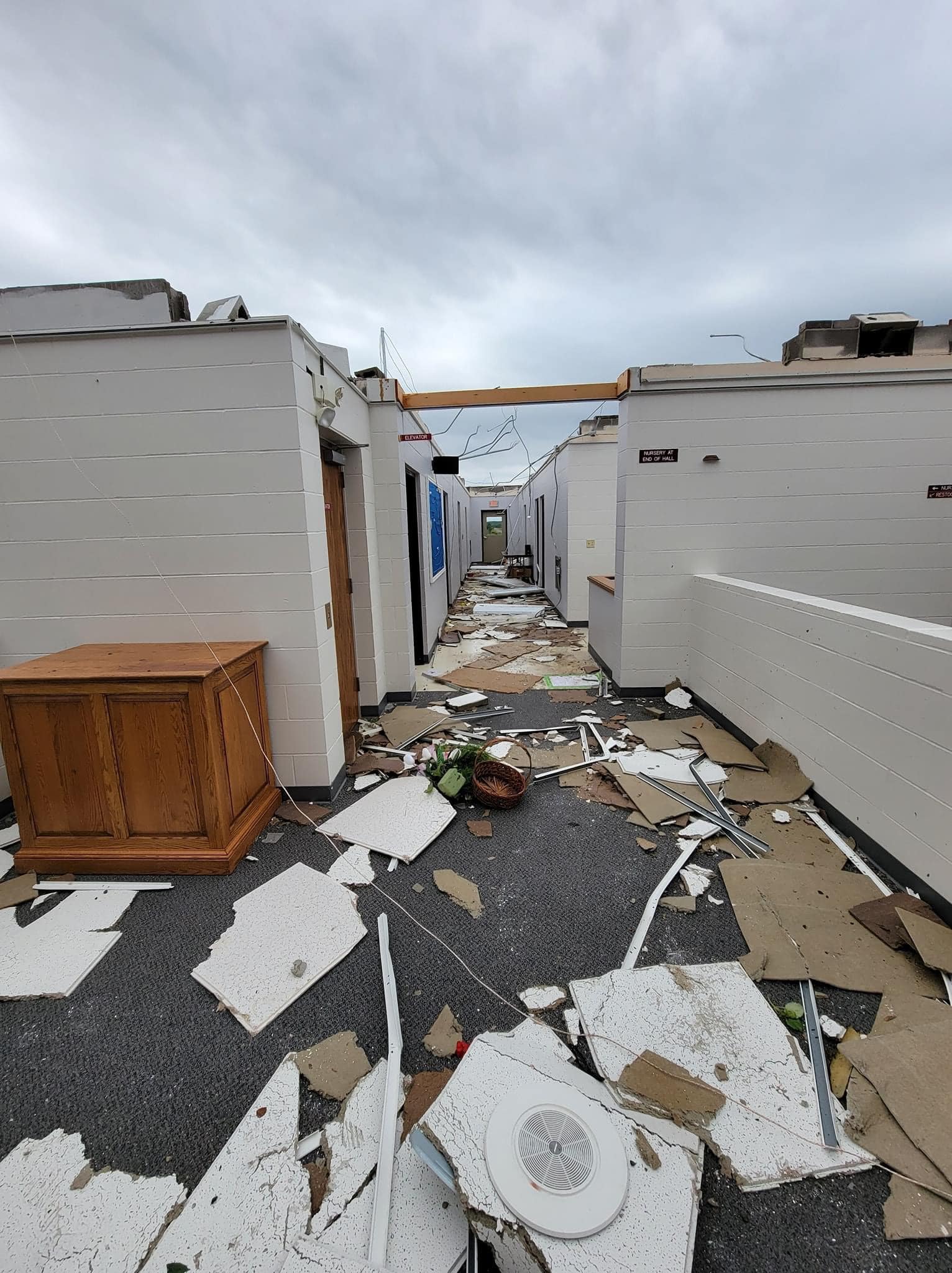
A long hallway scattered with debris and missing the roof.

A tornado destroyed Beaver Valley Lutheran Church in Brandon, SD in May 2022.

Beaver Valley Lutheran Church, in Brandon, South Dakota, was hit by a tornado on May 30. The tornado damaged their building, with the most damage in the church offices and education areas. With a grant from Lutheran Disaster Response, through the South Dakota Synod, the Beaver Valley congregation has been able to continue serving their community despite being displaced from their building. They bought new computers and office equipment, relocated their preschool and created four produce stands to supply their community with fresh fruits and vegetables.

Within the primarily rural community of Brandon, Beaver Valley is very active and visible. Pastor Greg Johnson told the story of a conversation he had with a man near one of the produce stands. The man wasn’t a member of Beaver Valley but had witnessed the work they did for the community. The farmer donated two semi-loads of corn – likely around $10,000 worth – for their produce stands. This is just one example of the impact of the church on their community and, in return, the community’s impact on the ministry of the church during a difficult time of recovery.

The generosity throughout the community, even beyond the work of Beaver Valley, is valued and celebrated by everyone affected by the tornado. Although Beaver Valley’s building was damaged, their ministry was not. If anything, they became more active in the town, showing God’s love when the community was most in need.


Thank you!

All this crucial work is made possible by the partners of LDR, including ELCA synods, social ministry organizations, global companion churches and ecumenical partners. The staff and volunteers of our partners are touching the lives of people impacted by disaster every day, accompanying them through the journey of recovery. Finally, our generous donors follow Christ’s call to share hope with our neighbors in the United States and around the world. We are so thankful for all our partners and donors!

A Therapeutic Camp for Ukrainian Children in Slovakia

When the war in Ukraine started, and thousands of refugees were crossing the border, Lucia Martonová and Jana Tabačková from the Ecumenical Pastoral Service Centre and Evangelical Church of Augsburg Confession in Slovakia, and Marika Géciová from the Reformed Mission and Diakonia met at the Slovak-Ukrainian border. They decided to help the most vulnerable people affected by the war and created the project “You Are In My Heart.” They organized a children’s therapeutic camp for 16 children from Ukraine aged 8 to 14 years who lost one or both of their parents in the war. The camp took place in Zemplínska Šírava, a lake close to the border of Ukraine.
 

Trust in God

Camp leaders, with psychologists and interpreters, prepared introductory games for the children on the first day. On the second day, the campers went on a short trip to Michalovce, where they visited an observatory and attended a police horse demonstration. In the afternoon, the campers enjoyed their time together at the swimming pool in the hotel. Mrs. Masha Rudincová, a Slovak artist and designer, showed the children how to work with the technique of wet felting. Children, with her help, created various colorful and unique pictures.

In the evening, children listened to a Bible story about the healing of the paralyzed. “Don’t be afraid; just believe.” Jesus’s words from the story about the storm at sea were the ones the leaders tried to instill into the hearts of the children. They encouraged the children to trust these particular words of Jesus through all circumstances.

Even though there was a fog in eastern Slovakia, the group trusted in God and, without fear, set out on a trip to the Tatra Mountains. They were amazed and encouraged when the sun and perfect hiking weather welcomed them. The group explored the highest waterfall in Slovakia and visited Tricklandia, the Museum of Illusions.
The love of Jesus

The next day, the campers stayed near Chemes Wellness Hotel. They met with police dog trainers, took rides on the quad bikes with border policemen, and took a trip to the lake. The children crafted cherubs and Christmas ceramic decorations in the afternoon with Mrs. Rudincová.
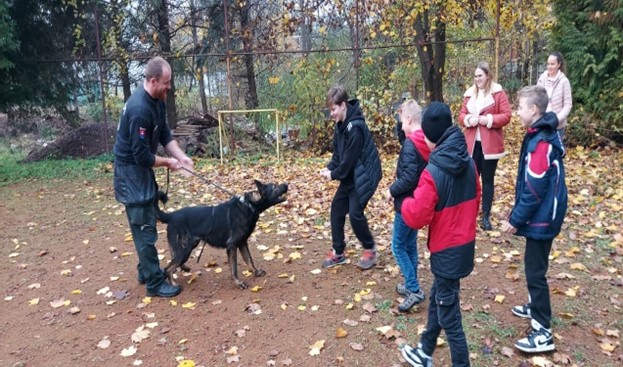
During the evening program, children listened to a story of the healing of a man at the lake in Bethesda. They learned that even if everyone left them and forgot about them, the Lord Jesus is always with them.

The children went to the city of Košice on Friday. They saw the police officers and firefighters, toured the city center, visited the St. Elizabeth Cathedral and explored the Technical Museum. The evening program continued with the storytelling of Zacchaeus. Leaders emphasized that the children, although they are all unique and have their own sorrows and mistakes, are accepted by Jesus Christ and he loves them just as they are.
 

“You are in my heart”

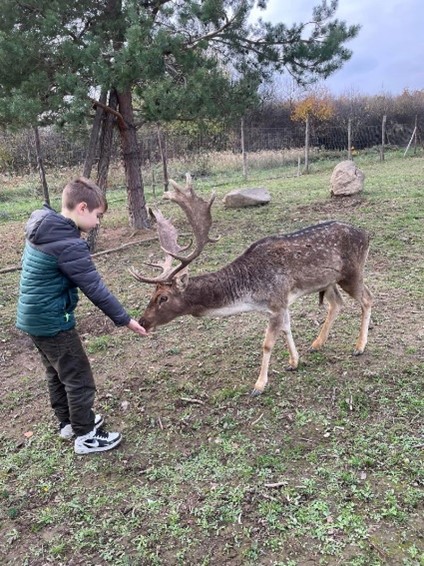
On the last day of camp, the children visited Morské oko – the largest lake in the Vihorlat Mountains. They visited a small family farm where they had the opportunity to see and feed spotted fallow deer. The contact with nature was a great experience for the children. A typical swim followed the afternoon in the hotel pool. The evening program was a big farewell party with the entire camp, and included a great cake at the end. The children received little presents as a memory of the camp, like t-shirts with the program logo and a magnet with a group photo.

All the shared experiences and photos highlight that the timid little children with great sadness and pain in their eyes become CHILDREN again! Children to whom the organizers wanted to return joy and childhood to their lives, at least for a while.


“Do not fear, for I am with you”

On Sunday morning, they went to chapel at the nearby Vinian Castle. Together, they thanked God for the whole week and summarized everything they had experienced and learned.

Police chaplain Janka Tabačková sent them on their way home with these words of a blessing:

We have come here to this place to give thanks for the whole week that we were spent together, that we were able to survive it in good health, and you know that it is not easy to survive. During our week together, we learned more about what the Lord God is doing for us. We opened our arms all week and said  “Stay with us, don‘t be afraid because you are safe here. We said the Lord God is taking care of us, just as he multiplied the fish and the loaves; God will take care of you so that you will have everything you need. Trust Him.” He cares for you. The Lord God puts people in our lives who will care for us, protect us, bring us closer to Jesus. You have friends in Ukraine, and also here in Slovakia. It is good that we know each other, that we are your friends and will do everything you need. Earlier, when we released the balloons into the sky, we wrote our names on them and the names of those we cared about. We could release the balloons with our names because the Lord sacrificed himself for us. He hears and understands. We are in his heart. He died for us, and He laid down His life for everyone. And no one else in the world has done that. We also want to send you home with God’s word from Isaiah 41: “Do not fear, for I am with you, do not be afraid, for I am you God; I will strengthen you, I will help you, I will uphold you with my victorious right hand. Yes, all who are incensed against you shall be ashamed and disgraced; those who strive against you shall be as nothing and shall perish. You shall seek those who contend with you, but you shall not find them; those who war against you shall be as nothing at all. For I, the Lord your God, hold your right hand; it is I who say to you. Do not fear, I will help you.”
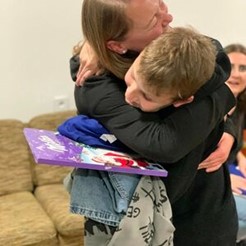
After the blessing and singing of songs, the group returned to the hotel. Then, already packed with many gifts and memories, they started their return journey home to their families, but to a country still in war, chaos, and turmoil. They all hope that they have not seen the last of each other and will be able to continue to meet.


Andrej Kuruc is the ELCA Emergency Response Coordinator for Central and Eastern Europe.

Disaster Response and Human Rights

Eleanor Roosevelt, Chairperson of the Commission on Human Rights, holding the Universal Declaration of Human Rights. Photo: FDR Library

On December 10, 1948, the United Nations adopted the Universal Declaration of Human Rights (UDHR), written to address the atrocities committed during World War II. Since then, the United Nations and other bodies have adopted additional documents on human rights. The International Bill of Human Rights includes the UDHR, the International Covenant on Economic, Social and Cultural Rights and the International Covenant on Civil and Political Rights.

Every year, International Human Rights Day is observed on December 10. To celebrate, we  are reflecting on a few of the articles in the UDHR in the context of disaster response and recovery.


Article 1: All humans are born free and equal in dignity and rights.

Article 2: Everyone is entitled to the rights and freedoms in this document, regardless of gender, sex, race, etc.

When a disaster hits a community, everyone is impacted in some way, but all too often,  some populations, including people of color and people living in poverty, are disproportionately affected by disasters and don’t have the resources to recover in the same way as more privileged communities. But after disasters, every human deserves to be able to recover and live with dignity and security, no matter their situation or background.


Article 13: Everyone has the right to freedom of movement and residence within the borders of each state; Everyone has the right to leave any country, including their own, and to return to their country.

Article 14: Everyone has the right to seek and to enjoy in other countries asylum from persecution.

Lutheran Disaster Response accompanies migrants and refugees around the world. Many are fleeing conflict, local violence, or economic hardships. Additionally, climate change is expected to be the biggest reason for migration this century. When people’s lives are disrupted by drought, constant flooding, hurricane after hurricane, some choose to move to a place less impacted by the intensifying disasters. People have the right to leave their home countries and seek safer lives, whatever the reason.

Alongside local partners, LDR supports refugees in Eastern Europe fleeing countries in the Middle East, Northern Africa and recently, Ukraine. LDR works with AMMPARO to accompany migrants from South and Central America that arrive in the United States.


Article 25: Everyone has the right to a standard of living adequate for the health and well-being of [themself] and [their] family, including food, clothing, housing and medical care and necessary social services, and the right to security in the event of unemployment, sickness, disability, widowhood, old age or other lack of livelihood in circumstances beyond [their] control.

Disasters, whether natural or human-caused, affect the standard of living and quality of life for people impacted. Survivors can lose their home, belongings, jobs and may sustain injury due to disasters. LDR and our partners work to ensure that disaster survivors have the rights of Article 25 upheld. Our partners distribute food, clothing, hygiene supplies and items to ensure an adequate standard of living for disaster survivors. They also provide temporary shelter and repair and rebuild homes. During the COVID-19 pandemic, when many people around their world lost their jobs, LDR and our partners provided for families affected by the economic impacts of the pandemic, so people were able to meet their families’ needs.


Effective disaster response upholds all the rights described in the UDHR and subsequent documents. Even when people’s lives are upended by natural or human-caused disasters, their human rights should not be at stake. That’s why the work of LDR and our local partners in the U.S. and around the world is so important – after a disaster, when our neighbors are living in uncertainty, we walk with impacted communities, responding to their needs and supporting recovery efforts while simultaneously celebrating their strength and resilience.


Get involved


  1. Visit the ELCA Advocacy Action Center to contact your congress members about vital issues impacting our communities, including government disaster response program reform and supporting refugees.
  2. By volunteering in local disaster response through your synod or regional social ministry organization, you can ensure that survivors’ right to adequate living is met.
  3. LDR is a trusted partner in disaster response. Your gifts to LDR help accompany our neighbors when their lives are upended by disaster. 100% of your gifts to a designated disaster go to disaster survivors.

Advent, Disaster and Apocalypse

This past Sunday, across many Christian traditions, the season of Advent began. This season begins with apocalypse, revelation. Contrary to the popular and colloquial use of the term apocalypse, it does not mean “end of the world.”  Quite literally, apocalypse means revelation, pulling [the curtain] away. When a play begins there is an apocalypse – the curtain is drawn, and the show is revealed. When I was a child, every morning was apocalyptic; my mother would pull the covers off me, my day began exposed to the chilling reality of a new day.  

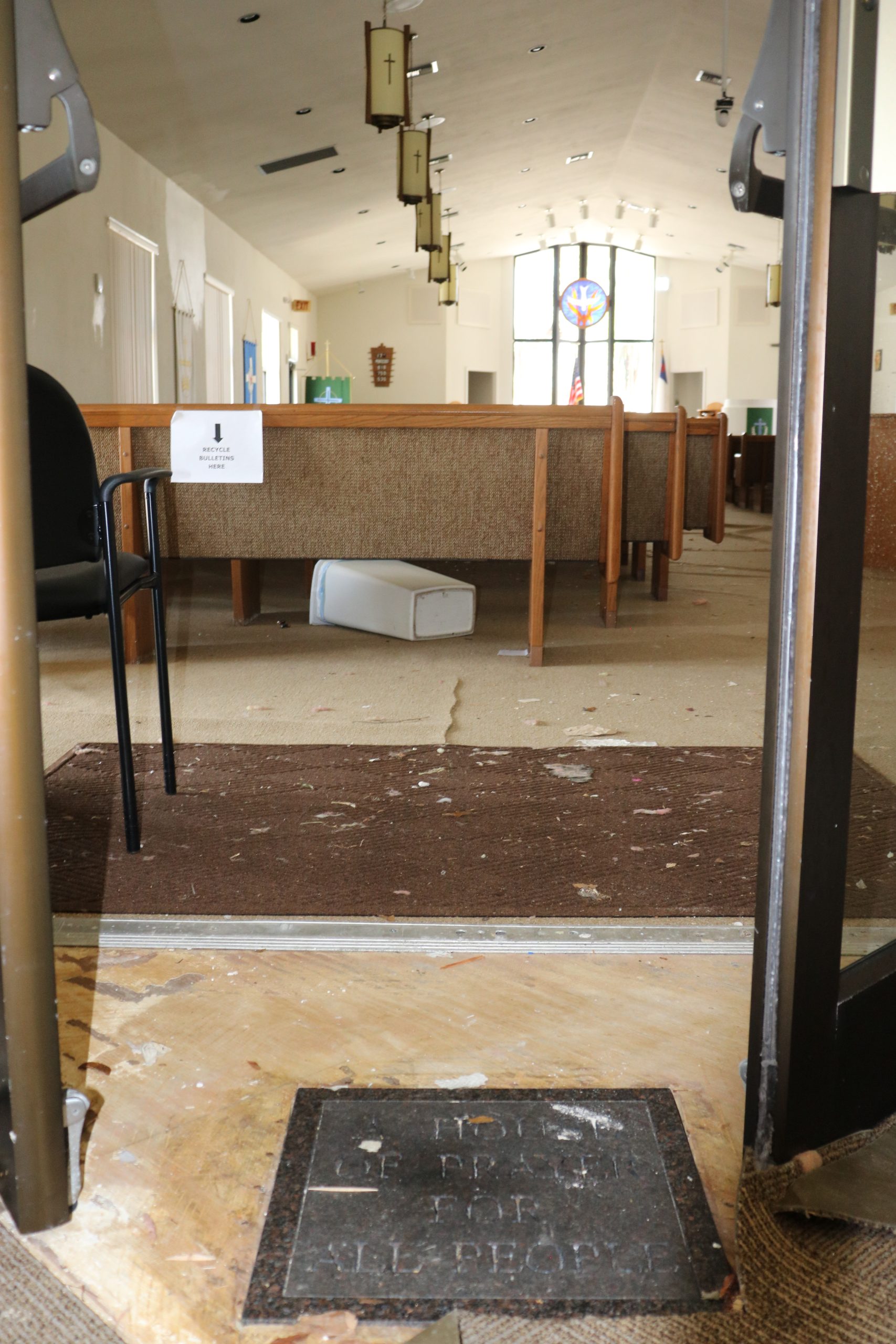
The entrance to a church sanctuary. There is debris across the floor and back pews. At the door threshold, a stone plaque in the ground reads "House of Prayer for All People."

The entrance to the sanctuary of St. Peter Lutheran Church in Fort Myers Beach, Fla. The plaque reads “House of Prayer for All People.”

Recently, I was honored to represent Lutheran Disaster Response alongside Presiding Bishop Elizabeth Eaton and Bishop Pedro Suarez of the Florida–Bahamas Synod in bearing witness to the initial response and relief work in southwest Florida after Hurricane Ian. Many described the scene as apocalyptic – in both senses of the word. The power of creation manifest in a hurricane like Ian is awesome and horrifying. 

Disasters are apocalyptic. The fragility of human society and engineering is revealed in piles of rubble; the disparate impact disaster has on poor and working people, which are disproportionately communities of color. Mansions are left standing among the rubble of the homes of those who could not afford hurricane-resistant architectural upgrades. Those with strained finances fall further and further behind those with ample extra grain silos.  

Advent is also a season of hope. How can we hope in the midst of disaster, apocalypse? Jesus does not promise that his followers won’t be without suffering. In fact, throughout the Biblical witness, God is present in the midst of desolation and destruction. Even last Sunday, Jesus promised to be present during apocalypse, revelations of who we are as people, communities, and a society. The divine is not a source of the destruction, but the source of life which endures in its midst. Among the destruction in southwest Florida, one apocalypse of many, the Fountain of Life is alive and working through aid workers, emergency service providers, and neighbors offering mutual support; God’s voice echoes with those demanding justice; people from around the world are sharing their time and talents. Martin Luther is famed for teaching that humans are “simultaneously sinner and saint.” The apocalypse of disaster reveals both the shocking evil and persistent good. In this season of Advent, I invite you to join me in discerning the ways God is present in the midst of disaster, discerning what God is calling us to do, and participating in God’s saving, healing, feeding presence. 


Pastor Matthew Zemanick (he/they) is the Program Director for Lutheran Disaster Response Initiatives.


Situation Report: Kentucky Disasters

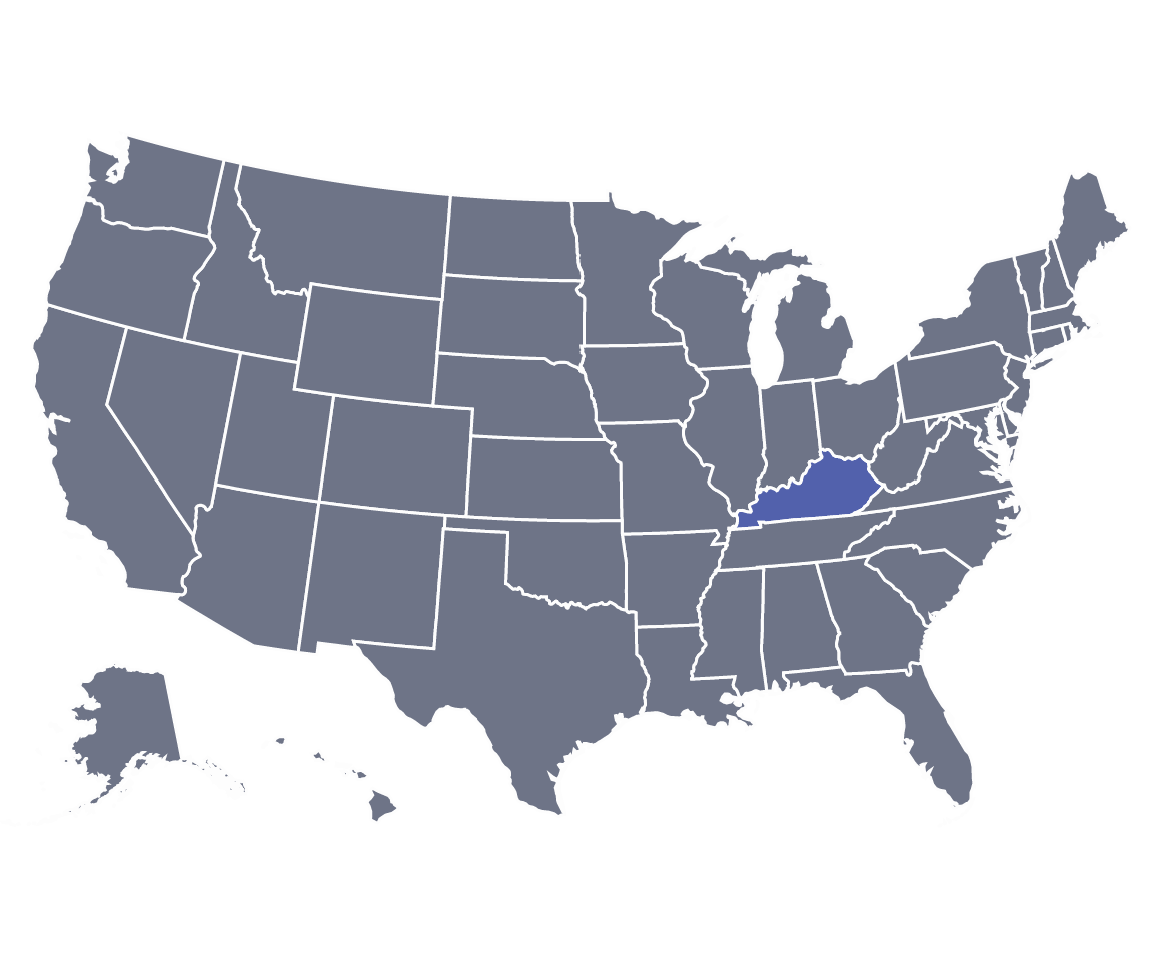
Situation:A map of the United States with Kentucky highlighted in blue.

In December 2021, western Kentucky was hit by a series of deadly and destructive tornadoes, destroying over 1,300 homes. In July 2022, record-setting floods inundated communities in eastern Kentucky. The flooding caused heavy damage to homes and local infrastructure. Recovery in both areas will takes years.

A white house with a black door and a window with black shutters on each side of the door.

A rebuilt house in eastern Kentucky.


Response:

Since December, Lutheran Disaster Response has been working closely with the Indiana-Kentucky Synod in developing long-term recovery plans for each disaster. In each region, the synod is collaborating with local partners to repair and rebuild homes damaged by the tornadoes and flooding. The grants from Lutheran Disaster Response are being used for construction material and labor costs.


Be part of the response:

Pray
Please pray for people who have been affected by the tornadoes and flooding in Kentucky over the past year. May God’s healing presence give them peace and hope in their time of need.

Give
Thanks to generous donations, Lutheran Disaster Response is able to respond quickly and effectively to disasters around the globe. Your gifts to Lutheran Disaster Response will be used to assist survivors in Kentucky and around the world.

To learn more about the situation and the ELCA’s response:

  • Sign up to receive Lutheran Disaster Response alerts.
  • Check the Lutheran Disaster Response blog.
  • Like Lutheran Disaster Response on Facebook, follow @ELCALDR on Twitter, and follow @ELCA_LDR on Instagram.
  • Download the situation report and share as a PDF.