
By Jeffery Jordan II, ELCA Hunger Advocacy Fellow (2025-26 cycle)
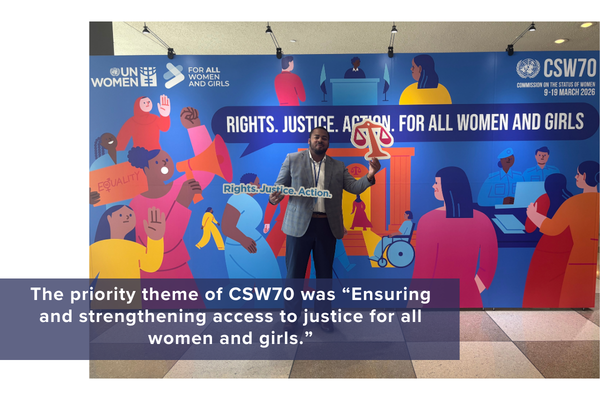 The experience felt both deeply personal and globally significant while at the United Nations Headquarters for the recently-concluded 70th session of the Commission on the Status of Women (CSW70). CSW70 gathered advocates, policymakers, attorneys, faith leaders and young people from around the world, all committed to advancing justice for women and girls. Walking into those spaces each day, I was reminded that justice is not just an idea we debate, it is something we build together, across cultures, languages and lived experiences.
Meaningful Touchpoints
One of the most meaningful moments for me was serving as a panelist during the Ecumenical Women CSW orientation. In that space, we welcomed new advocates into the movement, grounding them in both the purpose of CSW and the role faith communities play in advancing gender justice. I shared reflections on how faith traditions can be powerful tools for dignity, equity and liberation when they are rooted in compassion and accountability. It was inspiring to see so many individuals ready to engage not only with policy, but with the moral call to ensure that women and girls are seen, heard and protected.
 Later in the week, I had the honor of being a panelist for “Youth in Faith Want Justice,” a conversation that centered the voices of young people who are actively shaping what justice looks like today. In that discussion, we explored how youth are reimagining systems that have historically excluded or harmed women and girls. We spoke about the urgency of addressing issues like gender-based violence, economic inequality and access to education, but also about the hope that comes from a generation unwilling to accept injustice as the status quo. For me, it was a powerful reminder that young advocates are not just the future, they are the present.
Another deeply meaningful moment was leading an African libation during morning worship. That act of honoring ancestors, grounding ourselves in history, and recognizing the spiritual dimensions of justice brought a different kind of depth to the week. In a space often focused on policy language and negotiations, the libation created room for reflection, connection, and reverence. It reminded us that the fight for justice for women and girls is not only political, but also spiritual, rooted in resilience and collective care.
Justice as Lived Reality
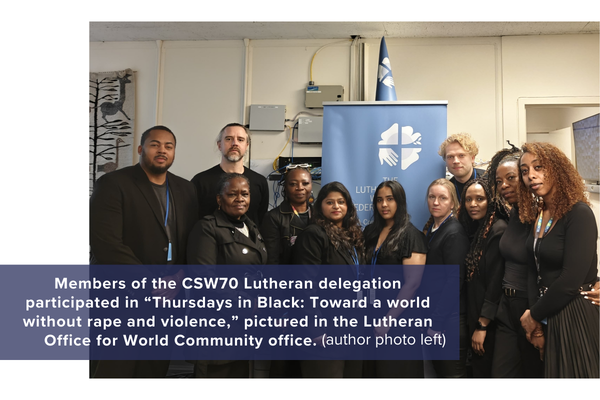 Throughout CSW70, the theme of justice for women and girls echoed in every session, conversation and gathering. But what stood out most to me was how justice was being defined as not just legal equality, but as lived reality. Justice means access to housing, healthcare, education and safety. It means building systems that affirm dignity rather than deny it.
As I left the United Nations at the end of the week, I carried with me a renewed sense of purpose. It was about being part of a movement. That movement is one that continues long after a CSW ends, calling each of us to act, to advocate and to believe that a more just world for women and girls is not only possible, but necessary, and men can support that change.
