Skip to content
ELCA Blogs

ELCA Advocacy

Remembrance of the Gulf Oil Spill

Oiled Brown Pelican upon intake May 20, 2010 at Fort Jackson, Louisiana Oiled Wildlife Center. (Photo: International Bird Rescue Research Center)

Oiled Brown Pelican upon intake May 20, 2010 at Fort Jackson, Louisiana Oiled Wildlife Center. (Photo: International Bird Rescue Research Center)

This week, as we pause to remember Christ’s death on the cross and the redemption and hope of the risen Christ on Easter Sunday, we also mark another anniversary. 

On April 20, 2010 an oil explosion killed 11 people in the Gulf of Mexico and erupted into one of the worst man-made disasters our nation has ever faced.  By the time British Petroleum (BP) managed to cap the oil well located below the Deepwater Horizon rig, more than four million barrels of oil had gushed into the Gulf of Mexico. 

This week we remember our horror at the lives lost, our grief as the oil continuously poured from the broken well to devastate beaches, wetlands and wildlife. We remember the months of waiting—for the well to be capped, for the oil to disperse, for the fisheries to reopen, for damages to be figured and repaid to the suffering people, businesses and communities in the Gulf.

And now, at the one year anniversary, we look for signs of hope: 

  • The tourist industry is anticipating a “modest” increase this summer in the number of vacationers returning to Gulf Coast beaches. 
  • The oil on the surface dissipated more quickly than anticipated and the Gulf has shown greater resilience in the wake of the disaster than was expected.  However, scientists believe much of the oil remains below the surface, and long term impacts on sea life and Gulf fisheries will not be known for years.
  • Following the disaster, the Department of Interior reorganized the Minerals Management Service and divided the responsibility for issuing and monitoring offshore drilling permits and for collecting revenues, which had previously been housed in a single department. 
  • The National Commission on the BP Horizon Oil Spill finished its work and issued a final report with recommendations in January 2011. 
  • The Gulf Coast Claims Facility funded by BP has paid out nearly $4 billion in damages and compensation to more than 175,000 people and businesses, although complaints about the amount of compensation paid and the rate at which claims are processed persist among those applying for funds.

What’s missing from this list?  The United States Congress.

Congress has yet to pass any legislation to deal with the flawed system that allowed this disaster to occur or to deal with the likelihood that many years of funding will be needed to fully deal with the impacts on the Gulf ecosystem and its fisheries. Bills proposed by Gulf State legislators and others to make both small and large changes in response to the Gulf oil disaster have failed to move, victims of the gridlock that more often than not derails legislative action in Washington.

We encourage you to remind your Congressperson to support legislation to fix flaws in our oil leasing and oil spill response systems and to provide a means to fund long term restoration of the Gulf ecosystem and fisheries.

If your congregation would like to mark the anniversary of the Gulf oil disaster, either during this week or in the weeks to come, the National Council of Churches has prayers and stories from the Gulf that can help. Click here to access the NCC resource.

Why the Federal Budget Matters

Click on the links below to view two short YouTube videos from policy directors in the ELCA Advocacy Ministry.

Jennifer De Leon, Advocacy Director for Lutheran Advocacy in Illinois, on YouTube

Andrew Genszler, ELCA Advocacy Director, on YouTube

Supporting the Clean Air Act

The state of our air, land and water is at stakeRecently, ELCA Bishop John Schleicher of the North/West Lower Michigan Synod wrote to the Saginaw (MI) News explaining why, as a person of faith, he supports the Clean Air Act and why, as a church, the ELCA cares about environmental issues. 

He writes, “[t]he ELCA has long lifted up the care of God’s creation as an important component of our reverence and gratitude toward God, and our love and service to those in need. We see this as a moral and justice-laden responsibility, undertaken with humility and hope.” Read the rest of Bishop Schleicher’s letter here.

This week some members of Congress are trying to prevent the Environmental Protection Agency from issuing new rules for industrial sources under the Clean Air Act.  These rules are designed to deal with emissions that are contributing to climate change and poor air quality in our communities. 

The Clean Air Act has made our communities cleaner and safer and has protected our health for more than 40 years. But today we face new challenges such as climate change and rising rates of asthma in our children.

As we face these new challenges, laws like the Clean Air Act are there to help us meet them and develop new technologies for protecting the health of our communities. 

Critics argue the new regulations will harm the bottom line of companies and cost jobs.   This argument is based on the premise that we must choose between economic growth and the health of our communities, a premise that has proven false many times over the 40 year history of the Clean Air Act. 

From scrubbers on power plant smokestacks to catalytic converters on cars, innovations spurred by Clean Air Act regulations have created new business opportunities while allowing industry throughout our nation to thrive.  But even more importantly, our air is cleaner and our people are healthier because of the Clean Air Act.

Willingly Giving Up Food

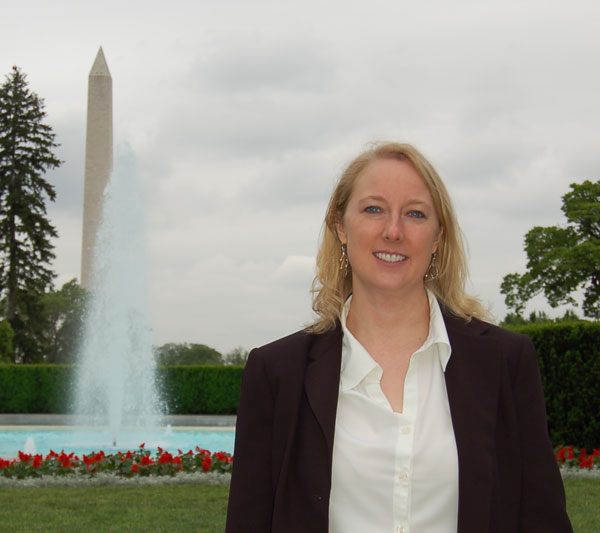
I have only been fasting for a week, but have you noticed we are surrounded by food? It’s available for purchase on myJodi Slattery Deike, director for grassroots advocacy and communication, ELCA Washington Office commute to work, laying out in the kitchen at work, sold by street vendors and advertised on television constantly. Food is tempting us everywhere. It’s no wonder I struggle with my weight.

The point of my fasting, however, is not to lose weight. It’s to participate in a larger effort to bring awareness to federal budget cuts — cuts that would have a devastating impact on poor people everywhere. The sad part is that deep cuts to such non-discretionary spending will have little to no effect on balancing the budget.

I’ve never fasted before and I have learned through this discipline how much food controls me. I now better understand why someone might steal a piece of fruit from a street vendor just to have something in their stomachs to get them through the day.

Most of us can get three meals a day, even if the amount of food isn’t much, it’s more than some people. I can break my fast if I had to, but people who are hungry can’t just start eating again. They have to wait for enough money, an open food pantry or community kitchen to receive a meal.

Along with my fasting, most importantly, I’m praying. I’m praying for our government and our brothers and sisters everywhere who are struggling. I’m praying together, with God’s help, we can stop these proposed cuts that harm vulnerable people.

I encourage you to consider joining the fast in whatever way is most appropriate for you. Learn more at www.hungerfast.org.