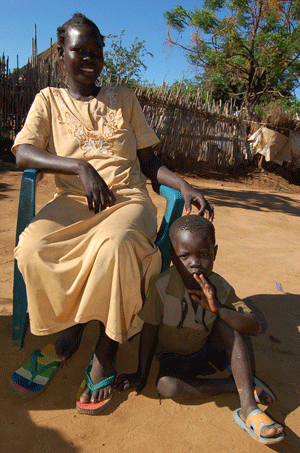
Sudanese woman with her son (Photo Credit: ELCA Washington Office)
Sudan has been plagued by internal conflict for nearly 40 years. A variety of complex factors, including race, ethnicity, religion and economic disparities fueled a 22-year conflict between the north and south and are also largely at the heart of the ongoing humanitarian crisis in Darfur that began in 2003.
Now South Sudan will be embarking on a new era. After a Comprehensive Peace Agreement ended this year, the people of Southern Sudan voted for independence from the rest of Sudan. On July 9, South Sudan will become an independent nation.
Recently, there have been reports of renewed violence in the contested area of Abyei. Abyei was to have its referendum to determine whether to be part of the North or South. However, the people in Abyei were not able to vote.
“Given the ongoing insecurity in Abyei, the Security Council believes that the security and prosperity of both parties would benefit from a continuing UN-mandated presence in Abyei after July 9, as well as from UN assistance for the parties’ management of their border after the independence of South Sudan. In this context, the Council urges the parties to reach agreement on a continuing UN-mandated presence.” (UN Security Council statement, June 3, 2011)
We invite you to pray with us as this ongoing violence continues to threaten humanitarian efforts and as the people of Sudan prepare for a new shift in political leadership. On every Friday from now until July 9, let’s give thanks to God and hope to the people of Sudan as they prepare for this significant step in securing peace for their country. These dates are June 10, June 17, June 24, July 1, and July 8. In the United States, we are called to pray at 11 a.m. (EDT), 10 a.m. (CDT), 9 a.m. (MDT), and 8 a.m. (PDT).
Here is a prayer from the Presbyterian Church (USA):
Our loving Heavenly Father,
We come before you to ask your forgiveness and seek your direction and guidance for South Sudan.
Lord, we know that bitterness and resentment are like toxic thorns in our soul, sapping our mental process, thought-life, will, motivation, and joy of our life.
Remind us that we will be the prisoners of our strongholds if we cannot forgive our brothers and sisters.
Help us to remember that forgiveness is the deliberate act of the will to pardon another individual or self whether we like it
or not.
Thank you for your word that we receive forgiveness in the same manner that we forgive others.
Help us to work out the torments of forgiveness with you alone our God and the other person, we are making the list of persons and situation causing troubles in South Sudan.
Intervene with the formation of the new Government and give us peace in South Sudan.
In Jesus Christ’s name, we pray. Amen.
Aliamma George
Presbyterian Church (U.S.A.) Mission Co-Worker
Malakal