Skip to content
ELCA Blogs

ELCA Advocacy

“I can do all things through Christ that strengthens me”

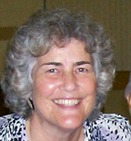
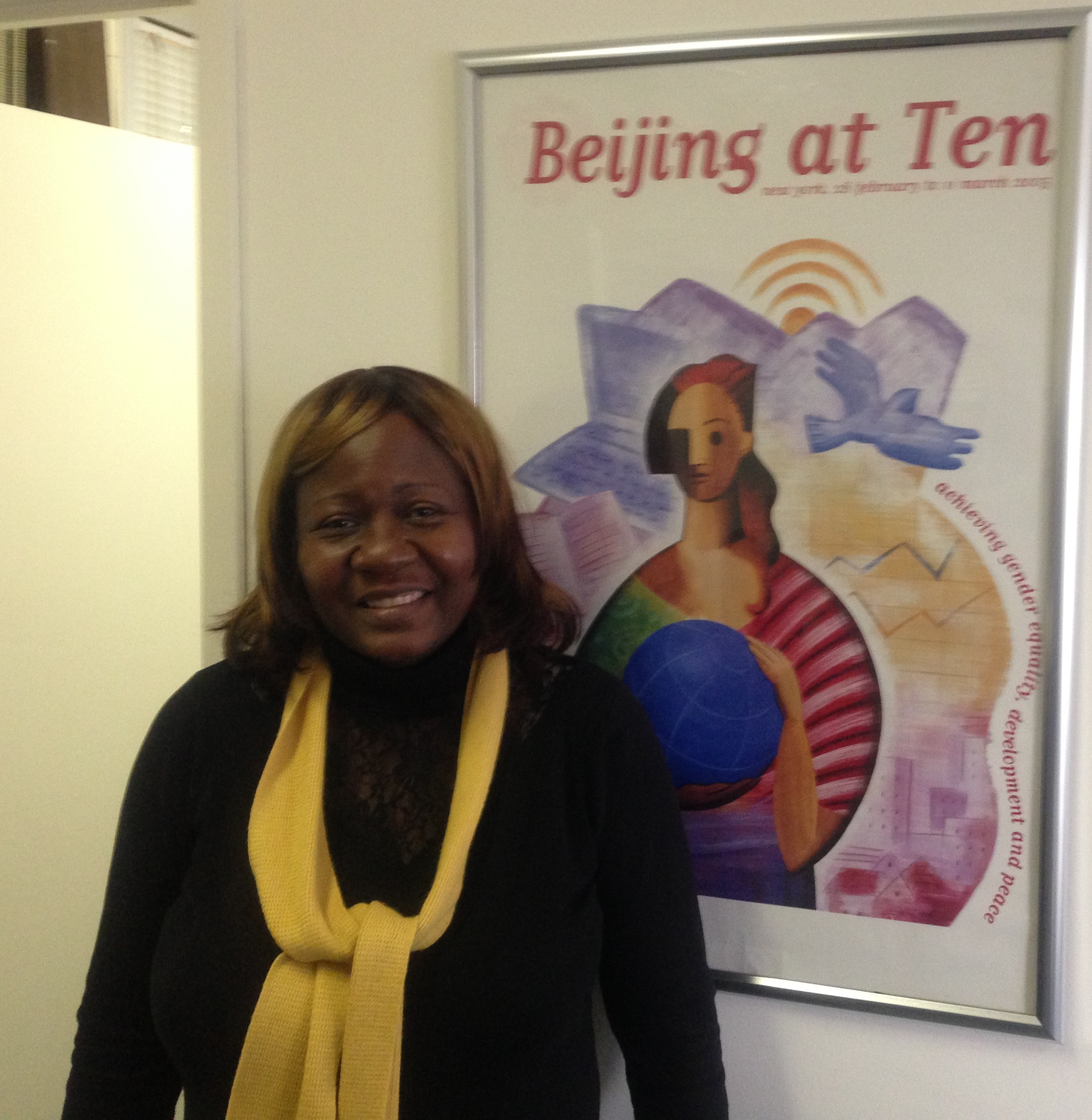
by Candace L. Strand, an ELCA delegate to the 57th Commission on the Status of Women at the United Nations

Candace L. Strand

Candace L. Strand

Philippians 4:13 says, “I can do all things through Christ that strengthens me.” As I reflect upon my life as an African American woman who may have been a statistic of domestic violence myself during 1977 to 1983, I give God the glory, honor and praise for my deliverance. When I think back to that part of my life I know that it could have been worse. But God and the mercy and grace factor stepped in.

I had two wonderful daughters to raise while I went through mental and drug abuse situations. I was married twice. In the first marriage I was young and ignorant. There was fighting and an adulterous situation was present. Sex was often forced. In the second marriage, I came to know the Lord and our relationship went south. At first the drug issue was a part of my life, but when I became saved my ways changed and my companion’s life did not. There were women in the home when I was not there in that drug atmosphere during that time. I prayed a lot during that time period of my life. Life was hard financially and things were cutoff in the home. My two daughters and I were without heat and electricity during those difficult times in my life. Yet, I was very spiritual. This seemed to compensate for the ending of that marriage and that season in my life.

Presently, I am a minister of the gospel of Jesus Christ. I have survived from that sadness and oppression. I have remarried. I have been married for 17 years. My husband is a Christian. My daughters are grown and I have five grandchildren. I feel so blessed. I had to be humble during those years. I am still humble and I believe that the Lord took me through my adventure for a reason.

So many times life throws stumbling blocks into our path. I would have never thought that I would have gone the way that those situations locked me into. I was always a hard worker. I had several jobs and I was also on welfare at different times too. But God —

Oh, by the way, I did not mention that I am a college graduate with two bachelor degrees. I am presently a senior under the Master of Divinity program at Lutheran Theological Seminary at Philadelphia. Thank you, Lord! As you can see, life goes on.

What’s next for me? Well, the leading of the Lord is my guide. I have learned that weeping may endure for a night but joy comes in the morning. Through disappointments, regrets, pain and love, I have endured hardness as a good soldier. I have learned that I have to take one day at a time. Sometimes when I desire to be in a better financial state or be living in a better home or even be rich, I think about Jesus and the life that Jesus lived. How can I complain? God is good. Thank you, Lord! As a 58-year-old woman I feel stronger and wiser each day. Women are powerful too! Peace.

Eliminating violence against women is God’s work

Mary Hansen-Joyce

Mary Hansen-Joyce

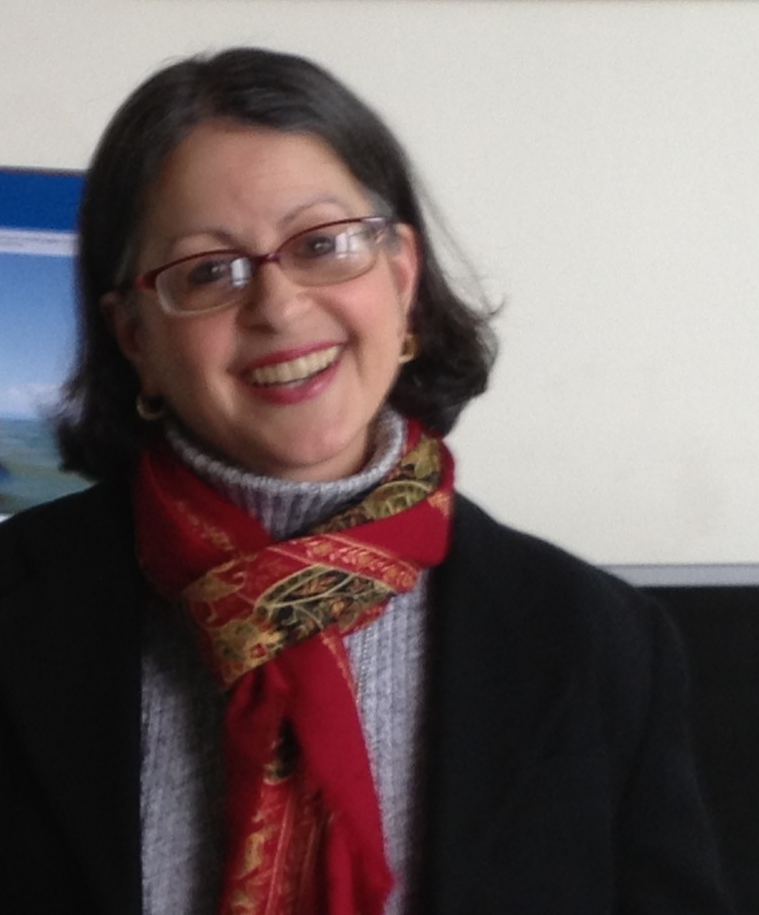
by Mary Hansen-Joyce, ELCA seminarian and delegate to the United Nations Commission on the Status of Women

I am honored and pleased to submit my thoughts and impressions about the 57th United Nations Commission on the Status of Women. Four classmates and I were invited to attend the United Nations Commission on the Status of Women as The Lutheran World Federation delegates during its first week. We are seminary students at The Lutheran Theological Seminary at Philadelphia, taking an elective year-long course in Human Rights that is based on the United Nations Universal Declaration of Human Rights. We five female students of diverse ages, ethnicity and backgrounds chose to attend Commission on the Status of Women because of our individual interests in women’s issues.

As I attempt to say in this space what my experience has been, the words “universal” and “solidarity” stand out. Our unique personal stories and interests are obviously diverse, yet undeniably universal as female children of God. When we come together to share our stories and experiences, as well as our shared prayer for the violence to end, we find solidarity in our commitment to work toward the end of the violence. With one voice, united and emboldened through the history of ecumenism, we seek to remain strong and vocal about the reality of violence again women.

The numbers are staggering to me. Seven in ten women worldwide are affected by some form of violence in their respective cultures and communities. One in three members of every church community in the United States is affected in some way by domestic violence. Women and girls are dying daily because of the violence that has been embedded for generations in the culture and the religious traditions of their communities. No country is immune. This can, and must be, changed.

The facts are often overpowered by culture and faith traditions, social stressors, economic pressures and political tactics. There is clear evidence that the welfare of all individuals is improved when women and girls are educated and treated equally.

Nevertheless, it will take continued courage and determination, which is why I hope that this year is the first of many years that I will travel to New York City for the Commission on the Status of Women. As a result of attending the event this year, I am bringing back the book “When Pastors Prey” (published by the World Council of Churches) to be considered as part of the seminary curriculum in the future. I am bringing into my future ministry as an ordained pastor the undeniable need to remain connected to these issues, and the women and men involved in them. I also bring the belief that anything I can do to inform both men and women, and engage in dialogue and ministry with my community toward the elimination of violence, is God’s work.

Bringing a message home

Maria Murerwa is a young adult delegate from the ELCA to the 57th Commission on the Status of Women at the United Nations. Click here or the picture above to listen to Maria share insights from her experience at the Commission on the Status of Women, and how she can bring back what she learned to her congregation.

Many Stories, One Voice

CSW- Joanna H.

Joanna Hertzog

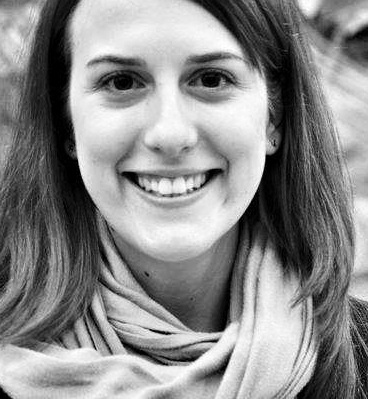
by Joanna Hertzog, ELCA seminarian and delegate to the United Nations Commission on the Status of Women

I came to the United Nations Commission on the Status of Women with my own stories of the way violence and abuse has separated my family. I came with the stories of women I have met and the stories of women I have never met. I came unsure of how my voice, as a Lutheran seminary student, would fit in the midst of the voices of leaders from around the world.

It was during the General Assembly on Tuesday that my uncertainty about where my voice fits was made clear. The representative from Australia during her statement said, “Living free from violence is everyone’s right. Working for freedom from violence is everyone’s responsibility.”

It was at that moment that I took notice of who was sitting beside me: a woman in her twenties from Uganda and a woman in her forties reading a newspaper written in French. I looked at the rows of women and men from around the world: some in black suit coats, some in bright colored scarves, some young and some old.

I realized that I was surrounded by thousands of powerful women from around the world – all of who are speaking out with one loud and powerful voice to end violence against women and girls. I am here with women who are fighting for freedom from violence and oppression. I am here with men who are speaking out with their mothers, wives, daughters and friends. Each speaking in her mother tongue. Each bringing her own stories. Each beautiful in her own way.

And I knew that it didn’t matter where my voice would fit because it was the power of all our voices brought together as one voice. It is the power of the Holy Spirit that continues to move and breathe that unites all of us, despite our differences, as one body — as one voice. It is out of the promises of the gospel that we stand together, hand in hand, no longer focusing on what separates us but on what unites us. The 57th Commission on the Status of Women is a testament of how the Spirit is moving with one voice to end violence against women and girls. As the church, let’s continue to boldly proclaim the radical gospel that all have the right to a life free from violence and oppression.

One prayer

Linda Forsberg is an ELCA pastor and a delegate to the United Nations Commission on the Status of Women this week. The Commission on the Status of Women is an annual gathering that seeks to evaluate progress on gender equality. The 2013 event is exploring the elimination and prevention of all forms of violence against women.

Click on this image or click here to listen to the Rev. Forsberg discuss why she came to the Commission on the Status of Women, her own experience of violence, and how all individuals — boys and men included — share in one prayer of preventing and eliminating violence against women and girls.

Moments of clarity

By Dustin Wright, intern, Lutheran Office for World Community

Having interned here at the United Nations with the Lutheran Office for World Community for almost six months, my friends frequently ask what an average day is like. I usually respond that I am engaged in exciting advocacy work: planning for the upcoming Commission on the Status of Women with ecumenical partners, meeting with amazing people from faraway countries (including speaking with two Nobel Peace Prize winners) and covering the planning process for a new set of global development goals, among other things. Upon hearing about this work, my friends sometimes say it all sounds romantic in a certain way, if not glamorous, to be around global leaders at the United Nations, or that it must feel great to have a job helping people.

What does not always find its way into these conversations is that although I do occasionally meet important leaders and I sometimes feel like I am helping people, that is certainly not always the case. Sure, I get to sit in on all sorts of meetings, but they often involve lower-level diplomats reading a technical report verbatim. I might get to help plan some really powerful events, but that usually looks like waiting for email, updating a website or stuffing folders. Even when it does feel like I am actively working toward creating positive change at the United Nations, that change often seems many years and many obstacles away. In the midst of all these everyday tasks and difficulties, it’s easy to get frustrated and the people we are trying to accompany and empower can seem quite remote.

Luckily, in this advocacy work I have been blessed by moments of clarity, moments where it felt like I knew exactly why I was at the United Nations and exactly what I could do to make a positive impact, even if small. One such moment took place a few weeks ago while taking part in a grassroots advocacy event around recent event. For months I had been learning about the situation in Mali, a landlocked country in West Africa, much of which is covered by the Sahara Desert. In Jan. 2012 an armed conflict broke out in the north, only to be complicated by a military coup the following March. Once the rebels, backed by a number of armed groups, took over a large portion of the country including the ancient city of Timbuktu, French forces, along with troops from elsewhere in Africa, intervened to support the Malian army in recapturing the lost territory. Currently, the international community is dealing with allegations of human rights violations, promoting inclusion of the politically marginalized, humanitarian concerns such as food security and how to keep the peace once the territorial integrity of the country is fully restored.

Given the devastation around this conflict, you can imagine my apprehension when I was asked to accompany a young man to his deportation hearing after the event. This hearing would decide whether he would immediately be sent back to his home country, Mali. After speaking with the man about his persecution and later escape to the United States as teenager, I sat behind him throughout the hearing, an action I was told would encourage his better treatment by the court. I doubt it had much to do with me, but his ruling ended up being postponed a number of months, we formed a relationship, and he will work with my congregation on additional advocacy actions in the future.

I have spent numerous meetings taking notes on violence in Mali, feeling like there was little I could to help. Educating ourselves and working to influence decision makers at the United Nations can help build a more peaceful world; This experience with the young man from Mali reminded me to connect all of the dots between this work in public policy and accompaniment of our struggling neighbor.  In this moment of clarity, I realized that simply accompanying a person through a very difficult circumstance could at least provide temporary support and hopefully make a very big difference.

Excellence at an impasse

Sarah Dreier

Sarah Dreier

By Sarah Dreier, Legislative Representative of International Policy for the ELCA and The Episcopal Church 

The discipline of yoga has taught me to realize that I am whole in God, regardless of what goes on around me — that no experiences I encounter in my worldly life will adulterate that godly wholeness. Drawing on this notion of spiritual wholeness, I have developed and redefined what it means to be excellent in my work as the legislative representative of international policy for the ELCA and the Episcopal Church, even as I tackle worldly injustices that seem utterly impassable.

Every day, I work with Congress and the Administration to challenge them to address and abate global injustices, including hunger, malnutrition, lack of development, violence and other human rights violations. I advocate for U.S. policies that will help eradicate extreme poverty, increase child and maternal nutrition, combat HIV and AIDS, address the atrocities of human trafficking, and hold multinational corporations accountable to the taxes they are so adept at evading. I urge Congress to pass an annual federal budget that is consistent with our church’s commitments to address poverty and support those who are most vulnerable in the United States and around the world.

And I am not alone. I work with a network of professionals in Washington, D.C., and New York — and with engaged Lutherans and Episcopalians all over the country — who are committed to speaking reason to partisanship, justice to power, generosity to profane greed; to confronting poverty, racism, sexism, violence, climate change and all other forces that subjugate rather than emancipate God’s people.

Even working together, these enormous objectives seem insurmountable, impassable.

But this should not intimidate us to respond to worldly impasses by surrendering or lowering our standards of success. Instead, through, with and for God, we may be driven by a different kind of excellence — a spiritual excellence that enables us to overcome even the most challenging worldly impasses.

What does it mean to be excellent servants of God as we face and try to overcome these worldly impasses? Surely, we must not misinterpret Jesus’ warning that the poor will always be among us (John 12:8) as permission to surrender to these impasses of injustice. We are instead commanded to open our hands to the poor and needy in our land (Deuteronomy 15:11).

Two principles have guided my own understanding of excellence, within these worldly constraints:

First, take a leap of faith, and trust that God is working through us to overcome the impassable.

Last week, I heard a representative from the President’s Emergency Plan for AIDS Relief ruminate on the global fight against AIDS in the last few decades — how unbeatable the pandemic seemed at so many critical junctures, and yet the unthinkable progress that our world has seen in the fight against HIV and AIDS. Today, scientists and politicians agree that if countries and international actors maintain a strong commitment to treating and preventing HIV and AIDS, the end of the pandemic is within our reach. Talk about surmounting impasses!

This is just one example, and we have seen, time and again — around the world — that through God, nothing is insurmountable.

Second, redefine excellence, oriented not only toward large accomplishments or measurable changes, but focused instead on the “least of these” — the poor, vulnerable, excluded and weary among us.

When we redefine our own excellence in terms of our service to “the least of these” (Matthew 25:40) — the poor and weary among us — we begin to recognize the unseen vulnerable whose lives are better because we engage them and work with them to lighten their burden (even when we do not overcome the big-picture obstacles), or the contributions that our diverse body of Christ are making to a public dialogue and an evolving public ethic.

We in the church are counter-cultural, tasked to uplift an ethic that prioritizes and exults the “least of these” in a Wall Street, partisan, radically individualistic world. When we remember that we are made in the image of God, this spiritual wholeness frees us from being restricted to worldly impasses. We are freed to reorient our notion of ethics toward those whom society has cast aside. And this leap of faith and redefining of excellence — I believe this is what makes us truly excellent in the eyes of God.

The world we want

By Dustin Wright, intern, Lutheran Office for World Community

Nearly halfway into my yearlong internship with the Lutheran Office for World Community at the United Nations, I have certainly been blessed with a wide variety of powerful experiences. I’ve sat in on meetings with ambassadors, planned for the upcoming Fifty-SevUN flagsenth Commission on the Status of Women with an ecumenical group of colleagues from other advocacy offices and even met two Nobel Peace Prize laureates. Through such experiences however, I’ve been burdened with one central question, “How can ELCA members throughout the country participate in the global conversation I experience everyday in New York?”

On the local, state and federal levels of democratic government, grassroots advocacy is an often difficult but fairly straightforward process. Organizers identify a legislative issue that lines up with the stated values of their organization and then urge others to contact government officials about either voting for or against related pieces of legislation. This process is straightforward because we, of course, elect government officials to represent us in decision-making; we are their constituents and we can hold them accountable by voting them out of office.

On the global level at the United Nations, things work a bit differently. Our Permanent Representative to the United Nations is not elected but appointed by the president and confirmed by the U.S. Senate. Because of this indirect system of representative democracy, our grassroots impact on global decision-making can often seem minimal.

Luckily, there is an exciting new way for Lutherans around the world to directly participate in global-decision making: The World We Want platform. In the year 2000, world leaders gathered to set specific global development goals to be reached by 2015, the Millennium Development Goals. Today the deadline is less than three years away, and we’ve made progress: access to clean drinking water has increased, fewer people live in unhealthy urban slums, and most importantly, the number of people living in extreme poverty worldwide has been cut in half. This success shows us that change is possible, but more must be done: inequality is growing, 950 million people still go hungry each night and climate change threatens the livelihoods of millions more.

When world leaders first met to create the Millennium Development Goals, they left something out, something important: your voice. Without your voice gathered together with others from around the world, without people-power, shaping the world we want is not possible.

This time, you have a seat at the table. Through the World We Want platform, you can participate in a survey on your priorities for the world and your community called MyWorld. Maybe you want to contribute on a deeper level? After creating a profile you can submit directly to consultations sponsored by a United Nations panel of experts. Perhaps you want to share your own story? You can post pictures or even a YouTube video, and share your posts with the Lutheran Office for World Community (lowc@elca.org).

A new world is being created. Whether it’s the world we want is up to us. Participate, contribute and share on the website — the World We Want.


A call to advocacy

By Elise Scott, student at Lutheran School of Theology at Chicago 

tiny EAD- general

Last January, I was literally closing my suitcase to leave for my J-term trip to El Salvador when I decided to check my school email one last time. My timing could not have been better — I had just received an email from the ELCA Washington Office encouraging seminary students to apply for scholarships to attend Ecumenical Advocacy Days. When I read the email, I knew that I had to apply for one of the scholarships. Despite the time crunch, I immediately filled out the application and submitted it. 

Why was I so interested in applying for the scholarship to attend Ecumenical Advocacy Days? The answer is really quite simple — I see advocacy as an essential part of our call to love our neighbors as ourselves. Growing up as the daughter of a Lutheran pastor, I witnessed firsthand how advocating with and for the vulnerable in society revealed God’s love in the world. For instance, one Sunday evening when I was about 10 years old, church members gathered around tables in the church fellowship hall to write letters to their elected officials concerning hunger around the world. Prior to that evening, I had not understood that our individual voices could join together to make a difference. That evening helped me understand the integral role advocacy plays in living out our faith on a daily basis. And from that point forward, I knew I wanted to advocate with and for the vulnerable, the silenced, and the oppressed.

But even then, I did not fully connect a life of advocacy with a life of ministry. Because of my strong desire to advocate with and for those in need, I attended law school and worked in the legal field for several years. But my strong passion for hunger and poverty issues and advocacy continued to find its home in the church, not in my legal work. As I served on committees such as the Social Ministry Committee, the ELCA South Carolina Synod’s Ministry Team for Outreach, and the South Carolina Synod’s Taskforce for Operation, I became very aware that I needed a theological foundation to truly advocate in the way in which I felt called.

The ELCA Washington Office scholarship to attend Ecumenical Advocacy Days provided me with a wonderful opportunity to learn about ways in which I can advocate from a theological lens and also gave me concrete ways in which I can advocate for issues related to hunger and poverty. Through advocacy work, we as Lutherans have the opportunity to live out the very foundation of our faith by helping our government officials remember that all people in society are children of God who deserve to be treated with dignity and respect. Thus, as I read that email last January, I knew with certainty that my last minute trip preparations had to be put on hold — it was far more important for me to apply for the scholarship. For, in my experience, advocacy is where my faith truly comes to life.

The ELCA Washington Office is providing a limited number of scholarships for participants to attend the 2013 Ecumenical Advocacy Days. Click here to apply by February 4. 

Called to Citizenship

by Dustin Wright, intern, Lutheran Office for World Community at the United Nations

In one of the most cherished verses of the Hebrew Bible, the prophet Micah exclaims “What does the Lord require of you, but to do justice, and to love kindness, and to walk humbly with your God?” (6:8). As Lutherans, we simply cannot help but respond to God’s saving love by doing as Micah encourages. We walk humbly with God through prayer and worship, act in kindness by supporting and welcoming our neighbors, and do justice by advocating for and accompanying those who have little voice in our communities and around the world. While it is not particularly controversial that we should do this, discerning how to do justice, love kindness and walk humbly with God can often be difficult — especially in the aftermath of a long campaign season, which left many of us exhausted.

Looking at such a challenge through the lens of Martin Luther and Philip Melanchthon’s theology of vocation can greatly assist us (Melanchthon was a colleague of Luther’s and one of the first Protestant intellectual leaders). Both Luther and Melanchthon believed that all of us, not just pastors, are called to multiple vocations. In a time where the lives of monks and other clergy were deemed more holy than that of the common believer, the reformers argued that even the most mundane ways we serve others were equally important. As Luther states in “The Large Catechism,”

Is it not a tremendous honor to know this and to say, “If you do your daily household chores, that is better than the holiness and austere life of all the monks?”… How could you be more blessed or lead a holier life, as far as works are concerned? In God’s sight it is actually faith that make a person holy; it alone serves God, while our works serve people (LC IV.145-146).
  

We can live out a calling to serve through our chosen careers, and we can also serve through other vocations, like being a loving parent or child, a supportive friend, and even an active citizen.

Living under our contemporary American system of democracy, it’s easy to see our call to citizenship as fulfilled primarily by voting every year. Although voting is indeed a central aspect of active citizenship, our role as citizens didn’t stop last month. Staying informed, contacting our government officials, and encouraging others to do the same through mutual conversation, blog posts or letters to newspaper editors are other important ways to live out our calling. As an intern at the Lutheran Office for World Community at the United Nations, I can certainly say from experience that public officials uniquely value input from people of faith. They want to hear from us. The advocacy ministries of our church help coordinate these efforts, so when we speak out on an issue, we are doing so with a united and orchestrated voice.

Regardless of the specific actions we take, this vocational calling to active citizenship is best carried out when our advocacy efforts reflect both moral deliberation in our faith communities and service to our neighbors near and far. Service efforts often help unify our ELCA congregations, and when service is the basis of Lutheran advocacy, we speak to our public officials with a more cohesive, informed, and faithful voice, urging them to make decisions about laws and resolutions that deeply impact the lives of our neighbors and the vibrancy of God’s creation.