Lutherans are taking action across the country! Below you will find our monthy State Advocacy Newsletter. Share with your friends!
———————————————
Washington, D.C.
Advocacy Director, Stacy Martin
Visits with Lutheran members of Congress:
This year, ELCA Advocacy policy directors continue to work on building connections with Lutheran lawmakers and their staff in Congress. Since the beginning of March, we have had productive conversations with nearly 20 congressional offices from both sides of the aisle and are working to highlight Lutheran policy values and reaffirm the significance of faith-based advocacy.
50th anniversary of Bloody Sunday, the Selma-to-Montgomery march and the Voting Rights Act of 1965: This weekend, thousands from across the United States and around the world will gather in Alabama for the 50th anniversary of Bloody Sunday, the Selma-to-Montgomery march and the Voting Rights Act of 1965. Along with civil rights activists, elected officials and faith leaders, some of our ELCA churchwide staff and young adult leaders will travel from various parts of the country to bear witness to this historic event. Visit our ELCA Advocacy blog to read reflections from these Lutheran leaders as they prepare to make the journey to Selma, including why they feel called to attend and what they hope to gain from this experience. Be sure to follow this event on ELCA Advocacy social media!
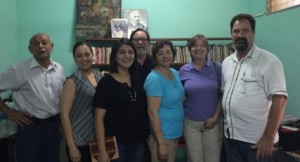
Visit to Central America: In February, staff from our office joined other ELCA churchwide leaders on a trip to El Salvador, Honduras and Guatemala to understand the factors behind increased migration of children and families and to learn about their repatriation process. The trip reaffirmed our commitment to raise our voices together to ensure the stories we heard are not forgotten. Follow our action alerts to learn more about our advocacy efforts for migrants and new initiatives as a result of this trip.
Lenten Reflections: As we journey through this season of Lent, ELCA Advocacy policy staff continues to share weekly reflections on ways in which we can act together to affect long-lasting changes in our communities through self-reflection, forgiveness and reconciliation. Follow our Lenten series by signing up for ELCA Advocacy alerts or by following our Advocacy blog.
———————————————
New York, NY
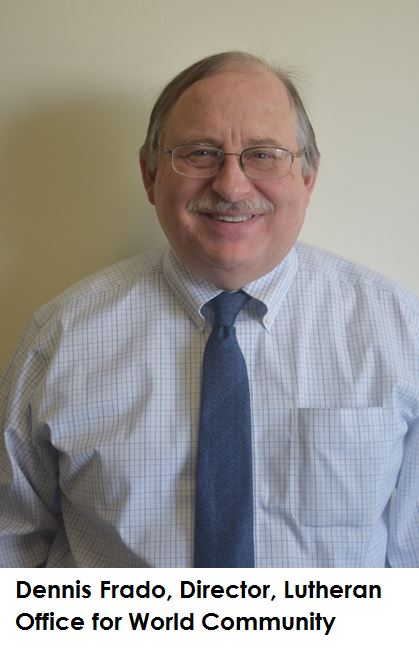
Advocacy Director, Dennis Frado
United Nations: The 59th session of the Commission on the Status of Women will take place at United Nations Headquarters in New York March 9-20, 2015. This is the 20th anniversary of the Beijing Declaration and Platform of Action. The theme will focus on current challenges that affect its implementation and the achievement of gender equality and the empowerment of women. LOWC is expecting to host 31 Lutheran delegates (six international and 25 ELCA members) and two side events.
Augusta Victoria Hospital: LOWC staff has been working with ELCA Peace Not Walls on various advocacy actions related to the financial (cash flow) crisis being faced by The Lutheran World Federation operated Augusta Victoria Hospital. Visit the ELCA Advocacy Action Center to learn how you can take action!
———————————————
California
Mark Carlson, Lutheran Office of Public Policy- CA
Valentine’s Lobby Day: LOPP-CA participated in a Health and Human Services Coalition”Break Up with Poverty” Lobby Day on Feb. 14th, along with a Lutheran lay leader with a chronic diseaseand limited mobility. The agenda included increasing the minimum wage and allowing undocumented immigrants to participate in the Covered California health plans.
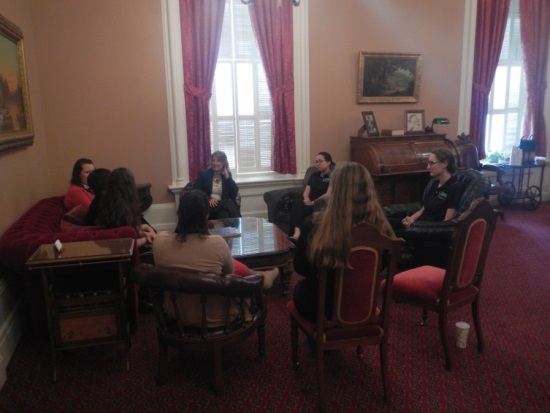 Climate Change: 25% of California’s carbon cap-and-trade funds are allocated to High Speed Rail (HSR). Although it has become politicized, LOPP-CA supported the original HSR bond financing measure approved by voters, a part of California’s climate action plan. (See photo to the right.)
Child Care: Director Mark Carlson participated in a child care rally and a lecture by the author of an award-winning study on the difference between informal and formal child care for children of immigrant families (formal care makes a big difference in school readiness and avoiding an achievement gap).
Looking Ahead: Plans are in the works for a conference of the California Budget Project and the annual in-person meeting of the steering committee for California Interfaith Power & Light.
———————————————
Colorado
Peter Severson, Lutheran Advocacy Ministry – Colorado
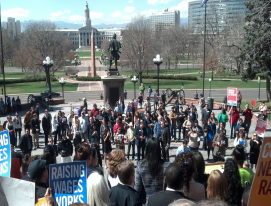 Faith Advocacy Day: Colorado Faith Advocacy Day 2015 took place on Monday, Feb. 16. Nearly 100 advocates gathered to hear keynoter Tom Luehrs (pictured right), executive director of the St. Francis Center, and panelists B.J. Iacino from the Colorado Coalition for the Homeless and Keith Singer with Family Tree House of Hope, a shelter for women and children. Thanks to all who attended for a powerful witness of the Church’s call to advocacy.
Legislation: Several notable hunger and poverty bills have emerged in both chambers. SB 12, which would allow child support payments to be received by families on Colorado Works instead of by county governments, is in Senate Appropriations. SB 79, which would use a county clerk document fee to fund a new Affordable Housing Investment Fund, is awaiting an initial committee hearing. HB 1080, which would have reduced participation in the school breakfast program and was opposed by Lutheran Advocacy Ministry-Colorado and many other hunger groups, was defeated in committee.
 Other issues: Gov. John Hickenlooper’s special task force on oil and gas sent nine recommendations to the governor’s desk. Urban and suburban communities on the Front Range have been battling oil and gas companies over development near homes and schools. Recommendations include incentivizing mediation between the two sides to avert costly legal battles, increasing state health department staff to monitor air quality compliance, and encouraging the Legislature to approve new pollution control measures.
———————————————
Minnesota
Tammy Walhof, Lutheran Advocacy – Minnesota
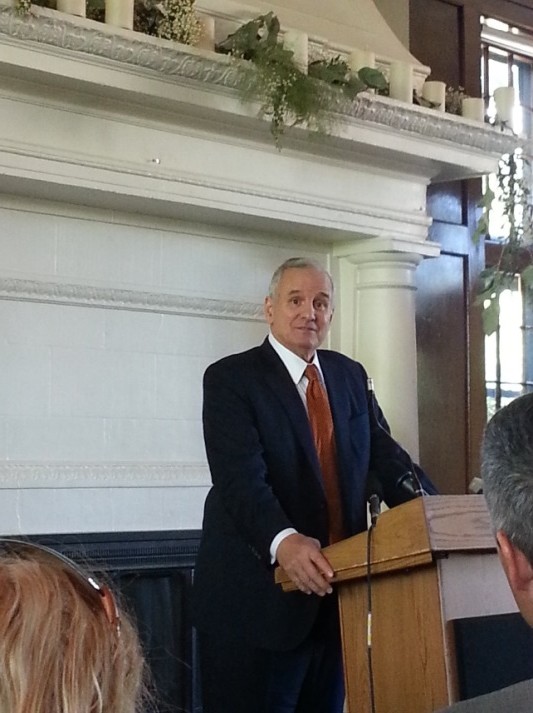 Clean Energy & Jobs Day at the Capitol: Lutheran Advocacy – Minnesota (LA-MN) was host at Christ Lutheran for the many partners and 400+ participants of our Day at the Capitol. The event included briefings, legislator visits, prayer circles, a youth meeting with Gov. Dayton, and a renewable energy study presentation. LA-MN Director Tammy was pleased with Lutheran participation. Many non-faith participants notably commented that they didn’t realize church people cared for the environment.
Bishop’s Breakfast with State Legislators: Though primarily about meeting and relationship building, the bishops also shared Lutheran Social Service (LSS) and LA-MN overlapping concerns related to the Homeless Youth Act and the Homes for All with legislators. Each bishop had a special role during the day, in leading prayer to open of the senate session, opening with prayer for day’s different events, or speaking at a press conference.
Pastor’s Day of Advocacy: The joint LSS and LA-MN event of 30+ pastors and parishioners included briefings on housing, homelessness, youth homelessness, advocacy, a Homeless Youth Act press conference, and visits with legislators. LSS and LA-MN plan to make it an annual event.
Homeless Youth Act Press Conference: Bishop Anderson served as emcee, while Bishop Aitkenshared about the LSS Duluth Homeless Youth Project. House and senate bill authors spoke, and a pastor shared about how churches can help. LSS intern, Ebony, shared her success story of becoming homeless by age 15, landing in an LSS shelter, and now getting a Masters of Social Work.
———————————————
Nevada
“Ashes to Go” at the Nevada Legislature: The Rev. Mike Patterson offered “Ashes to Go” inside the legislative building. Patterson blessed about 50 legislators and legislative staff. “Ashes to Go” is an Ash Wednesday practice of offering in a public place a brief liturgy and the mark of the cross on the forehead with ashes that has gained popularity. “Remember that you are dust, and to dust you shall return” is the phrase with which we begin the season of Lent. Saying “remember you are dust and to dust you shall return” to a politician may sound like the stuff of stand-up comedy, but it is both encouraging and humbling to learn that elected officials came to be blessed.
———————————————
New Jersey
Sara Lilja, New Jersey Synod
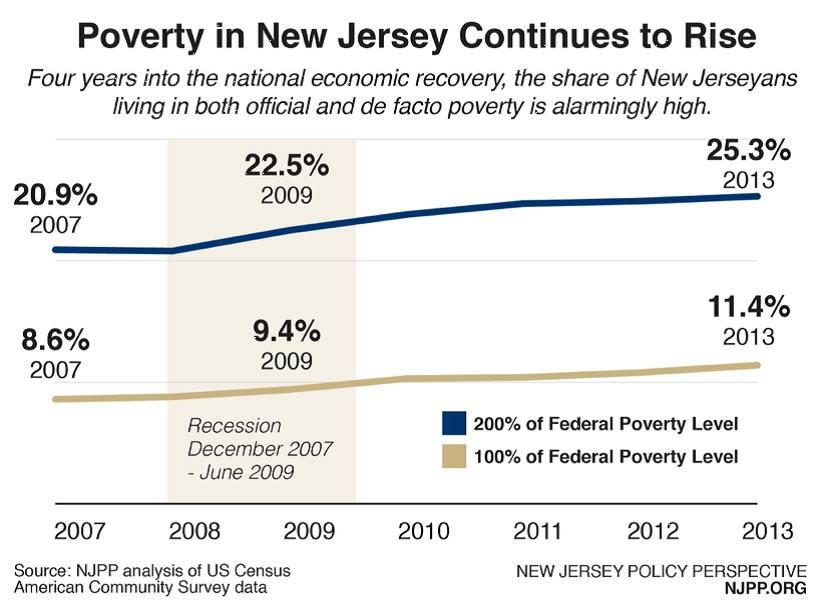 Poverty on the rise in N.J.: New Jersey’s official poverty rate obscures the true scope of the current economic struggle in New Jersey because of the state’s cost of living. An income of 200 percent of the federal poverty level comes closer to the actual income needed to meet basic needs. One in four New Jersey residents is struggling, and this percentage of the population is rising! The governor released his 2016 budget this past week, with seemingly no new plans as to address this growing concern.
Income woes: The state’s high long-term unemployment rate and slow job growth mean that this is still a difficult time for many middle- and low-income families. The Lutheran Office of Governmental Ministry is working to promote policies like restoration of the Earned Income Tax Credit, earned sick days, and food programs to help reduce the pain of this difficult economic situation.
Working for change: We work diligently to change the landscape of the criminal justice system. Currently we are advocating for new regulations on the use of solitary confinement in New Jersey’s jails and prisons.
———————————————
New Mexico
Ruth Hoffman, Lutheran Advocacy Ministry – New Mexico
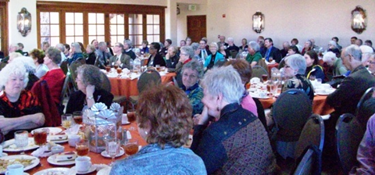 Bishop’s Legislative Luncheon: The 2015 Lutheran Advocacy Ministry-NM Bishop’s Legislative Luncheon & Issues Briefing was held on Feb. 10 in Santa Fe. Advocates gathered at Christ Lutheran Church to hear more about interest rate caps for storefront loans and hunger in New Mexico. Bishop Gonia talked about advocates as “Stewards of the Divine Zoom Paradox.” At the luncheon, 150 Lutheran and ecumenical/interfaith advocates were in attendance. State Sen. Peter Wirth was recognized as “Legislator of the Year” for his many years of good work on fair tax policy. Carlos Navarro, long-time Bread for the World volunteer, received the Chris & John
  Haaland Advocacy Award. Following the luncheon, a number of advocates visited the state Capitol to speak with their legislators.
———————————————
Pennsylvania
Amy Reumann, Lutheran Advocacy Ministry in Pennsylvania
State budget: In February, LAMPa staff, as part of the Coalition for Fair Education Funding, met with the governor’s office and legislative leaders ahead of Gov. Tom Wolf’s inaugural budget address to unveil the coalition’s proposed funding formula. The student-driven formula would direct resources to students and districts with the greatest needs and calls for approximately $3.6 billion in new state investments in public education to be phased in over six to eight years.
School breakfast: LAMPa is also gearing up for National School Breakfast Week with partners in the Pa. School Breakfast Challenge. Relationships built through other work enabled us to bring the Pa. State Education Association to the table around child hunger. They have agreed to promote school breakfast through the statewide challenge and teacher training and have invited LAMPa to school breakfast participation at their annual leadership meeting. In addition, LAMPa and PSEA have both been named to the board of Hunger-Free Lancaster County, which is working through Feeding America with the goal of being the first county in the nation to end the meal gap by 2018.
Housing: Staff also met with the chairman of the House Urban Affairs Committee to encourage his support for expanding the state Housing Trust Fund. Subsequently, a favorable Senate bill was introduced in February and is expected to move out of committee the first week of March. Amy preached and taught at St. James, Gettysburg, to start a Lenten program focused on hunger.
———————————————
Virginia
Marco Grimaldo, Virginia Interfaith Center for Public Policy
40 bills in 45 days: Virginia Interfaith Center for Public Policy worked on more than 40 bills over the course of this 45-day legislative session. All of our major legislation was killed early in the process – some never survived subcommittee. The good news is that we successfully countered anti-immigrant legislation and defeated a bill that would have made the process of executions in Virginia a secret, not even subject to discovery in a court of law. We made some modest gains on the budget, including a bill that will provide school-age children access to an additional $100 from Temporary Assistance for Needy Families for use on school supplies and clothes.
Immigration: Implementation of the DACA/DAPA program for undocumented immigrants is on hold but we are continuing to work on building a strong network to educate potential applicants. We have been working with LIRS at the request of our two bishops to help reach former Rep. Frank Wolf to help weigh in with Virginia Republicans about immigration and that work is ongoing.
———————————————
Paul Benz, Faith Action Network
Legislative session: The public conversation on revenue and the state budget is just beginning. Our state Supreme Court decision, requiring full funding of K-12 public education, is hanging over the Legislature’s head. In terms of Faith Action Network’s (FAN) legislative agenda, some of our key policy bills are: reducing wage theft, increasing our minimum wage, Breakfast After the Bell (increasing school breakfast participation), lifting the prohibition on providing post-secondary education in our state prison system, Family Unity Act (reducing ICE detainers and deportations), preventing human trafficking, and better state regulations to prevent oil train disasters
Faith-based organizing: FAN just completed four legislative forums around our state with good attendance. We are pleased to announce that FAN’s 2015-2016 ELCA intern has been selected and will begin her work in late August. We are also grateful to the ELCA for being approved to be a Horizon Site. FAN participated in and helped coordinate an interfaith press conference recently at a Hindu temple north of Seattle where a hate-crime occurred.
———————————————
Wisconsin
Cindy Crane, Lutheran Office for Public Policy in Wisconsin
 Proposed biennial budget: Funding has been proposed for trafficked youth and six of our bishops sent a letter to Wisconsin legislators and the governor supporting it. Additional financial support for mental health services and transitional jobs has also been proposed. We are challenged by the enormous cuts that would impact education, seniors, people with disabilities and our environment.
Right to work: The senate passed a bill prohibiting as a condition of employment membership in labor organizations. LOPPW was quoted in the Milwaukee Journal Sentinel on the subject. LOPPW’s Statement on Right to Work was edited and revised by the advisory council and Wisconsin bishops.
Safe harbor kickoff: LOPPW and Cherish All Children’s kickoff event drew more than 40 people. Local police and members of our task force led the conference. We wrote letters to legislators and Bishop Richard Hoyme of the ELCA Northwest Synod of Wisconsin blessed those letters.
Other advocacy: The director led a workshop at Midvale Community Lutheran Church in Madison. For information about our rally on human trafficking visit: http://www.loppw.org/events/coming-soon

 At a criminal justice reform briefing in January, Senator Cory Booker (D-NJ) noted that 25 percent of the world’s incarcerated people are in the United States, while we make up only 5 percent of the world’s population. He commented that it is a “great global shame” that this is the case. But incarceration (imprisonment) and exploitation (treating someone poorly in order to reap benefits) aren’t only present here in the United States. The Department of State estimates that there areover 20 million victims of human trafficking across the world, and factors like international trade agreements, environmental degradation, predatory behaviors toward the poor, and labor violence also contribute to exploitation around the world.
 At the same briefing that Senator Booker spoke at, former House Speaker Newt Gingrich called for Christians to take a stance on criminal justice reform, declaring, “if you believe that every person is endowed by their creator, that endowment doesn’t stop at sentencing.” This faithful conviction is echoed in the ELCA’s social statement “The Church and Criminal Justice: Hearing the Cries.” As Lutherans, we recognize that we have yet to respond adequately to the cries of our brothers and sisters facing the criminal justice system.
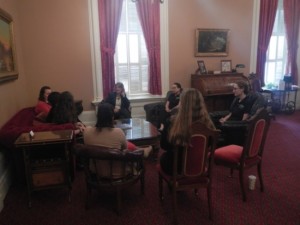 The Policy Council of the Lutheran Office of Public Policy – California met at the Southwest California Synod Office in Glendale with excellent attendance. Discussed was priority legislation related to child poverty (the bill repealing the CalWORKS/Temporary Assistance for Needy Families “Maximum Family Grant” limit for new babies passed its first committee) and care for creation (a new climate change law expanding the renewable energy portfolio, reducing fossil energy in transportation, and improving building energy efficiency faces its first committee April 7). There was moral deliberation on proposed assisted-dying legislation and alarm over the latest bizarre manifestation of direct democracy: initiative language submitted, but unlikely to qualify, that calls for shooting sodomites – recalling for some the murder of a gay couple in Redding in 1999, after which the killer asserted in a TV news interview that “It is not a crime to shoot a sodomite.”
 Lutheran Day 2015: On April 14 join Lutherans from across the state in Springfield to study, pray and take action for greater justice and compassion in Illinois.
 2015 legislative session: The regular session of the New Mexico Legislature came to an end at noon on March 21. This was a difficult 60 days with the Senate controlled by one party and the House by the other. LAM-NM worked on behalf of legislation that reflected our focus on issues that can affect the lives of the many people living in poverty and hunger in our state.
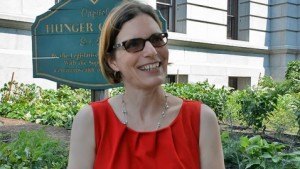 Immigration: Tracey led an advocacy workshop for Dreamers at the first statewide Immigrant and Refugee Rights Convening. As an outcome, LAMPa’s Immigration Leadership Circle is assisting Dreamers in organizing a statewide caravan to tell their stories. In other immigration-related work, we applied to LIRS and the York County Prison Board for funding for the immigration detainee visitation program Walking Together/Caminandos Juntos.
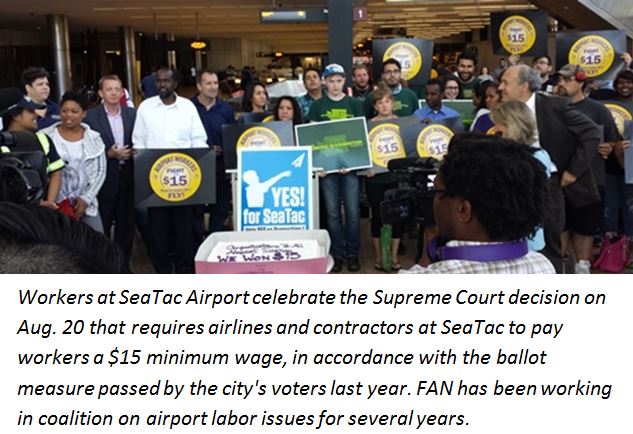 Only Three weeks left to go – so it’s budget time here! Of course, there are bills that are still alive and going through the legislative process, such as reforming our LFO (legal financial obligations) system, an anti-human trafficking bill, and a transportation bill providing more apprenticeships for communities of color and women. Both the House and Senate have approved their budgets, and these will now go to the budget leadership teams for negotiations to form a final budget to be sent to the governor – hopefully by the last day of session, April 26 – but we may need to go in to a special session during May. The House budget has new revenue in it, but the Senate budget does not – that is the main difference in terms of what gets funded and what doesn’t.
 Joint Finance Committee public hearing: LOPPW’s director gave a statement about the governor’s proposed budget. Read the
 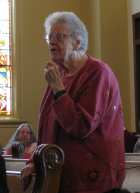 support legislation to help young victims of sex trafficking. The director attended a round table at the Department of Children and Family Services and another at the Department of Justice. She also met with the director of Wisconsin Women’s Council to discuss possible partnerships. June Kjome (see photo at right), age 94, traveled from La Crosse to speak at the rally. When seeking justice “it’s good to be the headlights instead of the tail lights,” she said.
 The Gospel liberates from sin, death, and evil and motivates the Church to care for neighbor and the earth.
  It’s so tempting for me, in my very modern way, to domesticate miracles – like reducing the feeding of the 5,000 miracle to an idyllic picnic or desert potluck. Not that thousands of human beings sharing isn’t miraculous. It is. In the four Gospels, there are six accounts of this miracle. Six! It must be too important a story for it to be about people sharing their lunches. Miracles are tricky that way.
 For many Christians, Lent is a time of spiritual renewal and preparation for the resurrection of Jesus Christ. My preparation had to do with being a witness to the causes of migration in Central America. A few weeks ago, I traveled with ELCA leaders to Guatemala, Honduras and El Salvador to learn more about the reasons why children and families are fleeing their countries of origin and to better understand what happens when they are deported. What we saw and heard continues to stay with me – not only because the violence faced in these countries is worse than I imagined, but also because many of those we met stood with strength and boldness through incredibly difficult situations. We heard over and over how faith and belief that God is with them provides this strength.
 The words “Our Dream is a World Free of Poverty” are enshrined on the walls of the World Bank building in Washington, D.C. Although I had seen them before, the meaning and symbolism of this phrase never truly struck me until a few weeks ago when I attended a meeting there. The slogan represents the overarching mission of the World Bank – the largest multilateral institution tasked with the job of ending extreme poverty globally.
 The penitent thief and second chances