Skip to content
ELCA Blogs

ELCA Advocacy

Breaking down the firewall

 photo 3 (2)

“It always seems impossible until it’s done.”

-Nelson Mandela

It’s midway through the final week at the 20th conference of the parties to the UN Framework Convention on Climate Change (UNFCCC) in Lima, Peru. With a limited amount of time left, it seems impossible that parties will agree on a framework for a new global climate change agreement which will need to be finalized next year in Paris. Countries are very far apart on some key points: will the agreement be a legally binding treaty or something less stringent? What issues will the new agreement cover?  Will adaptation to climate change and the related issue of “loss and damage” (impacts that can’t be adapted to) be accorded as much attention as the all-important issue of emissions reductions?  Will there be sufficient funding to help the least developed nations adapt and adopt low carbon technologies needed to sustainably develop their economies and reduce poverty?

One of the most contentious issues is whether the “firewall” between developed and developing countries will continue to allow countries like China, Brazil and India to shoulder fewer emission responsibilities. The firewall has stood since the beginning of the UNFCCC convention in 1992, and places much of the emission reduction responsibility on historically large emitters such as the U.S. and European Union.  In the original UNFCCC document, large historic emitters of carbon dioxide and other greenhouse gases were listed as “Annex I” nations in the convention, and were designated to take on greater responsibilities for reducing emissions.  Under the Kyoto protocol, for example, Annex I countries agreed to mandatory emissions reductions as part of their ratification of the treaty, while non-Annex I countries were only asked to make pledges for voluntary reductions.

In the years since the UNFCCC first took effect, China, a non-Annex I country, has surpassed the United States as the world’s largest emitter of greenhouse gases (although the U.S. still emits the most per capita). India is now the third largest emitter.  Although both of these countries still have significant levels of poverty, it is hard to see how they can take on less responsibility for reducing emissions if we hope to stabilize global temperatures and stay within the 2 degrees Celsius limit required to avoid the worst impacts of climate change.

Currently, in the draft document that the
UNFCCC Co-Chairs have proposed to govern negotiations over the next year, there are
two versions of the introduction.  One version calls for emissions
reductions to be guided by the “provisions and principles” of the
UNFCCC (including Annex I), and the other refers to “evolving
responsibilities and capabilities.”  This issue may not be resolved
by the end of this week, but if we hope to see a global agreement to tackle
climate change by the end of next year in Paris, the impossible will need to
become possible.


Advocacy Summary of FY15 Spending Package

This week, Congress prepares to pass a bill to fund the government. ELCA Advocacy is working to support funding proposals and legislation focused on justice and love for our neighbor. Together with you, we strive to create room for practical solutions, open respectful bipartisan dialogues, fulfill our Biblical values, and avoid scenarios which foster a government shutdown.  

Appropriation legislators recently released a $1.1 trillion spending agreement on Fiscal Year 2015. This proposal  would fund all of the government, with the exception of the Department of Homeland Security, until September 2015. As legislators work to pass the new budget before December 11, the ELCA remains focused on issues that affect our faith communities and neighbors:

Nutrition: The ELCA has long advocated for food security and access for all. As part of our call to speak for a just society and love for our neighbor, we are pleased to see Congress is isupporting funding that provides supplemental food and nutrition education to new mothers in the WIC program. After facing intense threats of cutbacks, we are also pleased that work requirements for the SNAP nutrition program were not tightened.  However, we are concerned by the implications of a policy rider which would give schools a one year waiver to bypass nutritional meal requirements. Nutrition standards in schools affect children’s health, their educational achievement and economic security. As a church called to strive for justice, we will continue to advocate in 2015 for policies that care for the health and nutrition of all our brothers and sisters, including the Child Nutrition Reauthorization Act..

Environment: In 2014, ELCA Advocacy joined Lutherans in the People’s Climate March in New York and advocated for policies that care for God’s creation. We are deeply concerned by funding cuts that will significantly reduce EPA agency staff to the lowest number since the 1980s and will ban contributions to the international Green Climate Fund for one year. In 2015, we will continue to push for policies that care for the earth, our neighbors and all of God’s creation.  After contentious debates, Senate appropriators succeeded on limiting large cuts to the EPA’s environmental programs, including language for the new proposal on Power Plant Carbon Emissions, which ELCA Advocacy championed over the summer.

Abortion: Appropriation bills maintained nearly all pro-life policy riders, with the exception of a rape and incest exception added to the Peace Corps program. Additional funding was provided to abstinence education. New language was also added which will make the Affordable Care Act disclose abortion coverage.

International Affairs: ELCA Advocacy welcomes the addition of $2.5 billion in emergency funding to help address the Ebola epidemic in West Africa. However, this amount is less than the $6.18 billion needed for immediate needs, as requested by President Obama. Through Lutheran Disaster Response and other partnerships, the ELCA has worked to provide over $100,000 to containing and addressing the Ebola crisis. We will continue to work with Congress and the Administration to ensure that more funding resources are available to help address the Ebola emergency. In the Middle East, Jordan will receive $1 billion to help the country with hosting Syrian refugees and fighting the extremist group calling itself The Islamic State.

Immigration: This summer, ELCA Advocacy took action to support the rights of all migrants– including children and families, and ensure that they are treated with dignity and compassion. We are happy to see Congress acknowledge the need for a holistic approach to the influx of migrant children and families seeking refuge in the United States.  Proposed funding levels will help finance agencies that take care of children, and help the State Department address the root causes of migration. We look forward to continue our work in 2015 with the Administration, Congress, and partner organizations to ensure that the programs and policies supported by these funds acknowledge the humanity in all of God’s children and concentrate in effectively supporting those who are vulnerable.

Money in Politics: Among the other policy riders, a surprise piece of legislation affecting money in politics is stirring new controversy. As it stands, the proposal would increase an individual’s maximum campaign contributions from $64,800 to nearly $1.6 million. If the wealthiest can continue to overwhelm the voices of ordinary Americans, we not only cease to be a democracy, but also  silence the most marginalized members of our communities who cannot afford to make large campaign contributions. This year, hundreds of Lutheran advocates voiced their concerns on the overwhelming increase of money and special interests in politics to the Senate. As advocates who work to empower all voices, we will continue to challenge social systems which weaken our democracy.      


To take action, sign up for ELCA Advocacy Action Alerts (e-Advocacy Network) by visiting: www.ELCA.org/advocacy

Stay up to date on ELCA Advocacy by following us on social media!

Facebook: ELCA Advocacy     Twitter: @ELCAadvocacy


ELCA State Advocacy Update: December 2014

ELCA Advocacy

​Lutherans are taking action across the country! Below you will find our monthy State Advocacy Newsletter. Share with your friends!

———————————————

Washington, D.C.
Advocacy Director, Stacy Martin
www.elca.org/advocacy

1Seeking Justice and Reconciliation in this season of Advent: This month, ELCA Advocacy released two statements expressing our sympathies for the families of Michael Brown and Eric Garner and our grief for our failures to address racism. As a Church, we look to reaffirm our commitment to the hard work of racial justice and reconciliation. Drawing from the biblical witness to God’s rich forms of love and justice for all humanity, the ELCA is compelled by a “holy yearning” to take action and address the need for reforms in policies and practices in the criminal justice system.

The ABLE Act: On Wednesday, December 3, the ELCA Advocacy office urged followers to support the ABLE Act, which passed in the US House of Representatives by a 404-17 vote. The ABLE Act would allow people with disabilities to set up savings accounts for housing, transportation, educational opportunities, and other expenses without jeopardizing their eligibility for Medicaid and Social Security benefits. ELCA Advocacy continues to urge support for this legislation as it moves through the Senate later this month.

Executive action on immigration: President Obama announced historic action late November aimed to stabilize the lives of millions of migrants living in the United States. ELCA Advocacy welcomed the announcement with the firm hope that actions taken by the president do not inhibit the ability of our elected officials to fulfill their call to work across the aisles toward shared values and common ground.

The new Congress: Following Election Day, the number of Lutherans in Congress grew—from 23 members to 28. ELCA Advocacy looks forward to connecting with our new Lutheran public officials and continuing advocacy with the new Republican majority in the Senate. In the lame-duck session, Director of Advocacy Stacy Martin and faith partners visited several congressional leadership offices and head appropriation legislators to discuss budget priorities and prospects in 114th Congress. Visits included meetings with both sides of the aisle, including the office of Speaker John Boehner, Majority Leader Kevin McCarthy, and Dem. Leader Nancy Pelosi.

A message of thanks to Uruguay for opening its doors to Guantanamo detainees: ELCA Advocacy and Lutherans throughout the country give thanks to the country of Uruguay for “welcoming the stranger” by opening its doors to six Guantanamo Bay detainees who, after 12 years of imprisonment without charge, were finally resettled as refugees in Uruguay. Click here to read our message of thanks to Uruguay.

News from the UN Climate Change Conference in Lima, Peru: ELCA Director for Environmental Advocacy, Mary Minette, traveled to Lima as part of a delegation from the ACT Alliance and updated us from the UN Climate Change Conference. This meeting is expected to end with world leaders agreeing to a framework for a global agreement to address climate change. The faith community’s goals for the framework include a strong commitment from parties to reduce global greenhouse gas emissions and address the needs of vulnerable people who are already suffering the impacts of climate change.

———————————————

California
Mark Carlson, Lutheran Office of Public Policy- CA ​
www.loppca.org

A New Legislative Session: The 2015-2016 session of the California Legislature began Dec. 1, with new members comprising over one-quarter of the 120-member body.   Bills getting attention from LOPP-CA for early analysis and possible support include a raise in the minimum wage to $13, expansion of preschool to serve all children from low-income families, eligibility for Covered California (health insurance exchange/Obamacare) regardless of immigration status, and post-2020 greenhouse gas reduction goals.  LOPP-CA is part of California Delivers (on its carbon reduction goals), which will be opposing new legislation to stop the Jan. 1 scheduled inclusion of gasoline and diesel fuel in the existing the cap-and-trade program, which has already generated over $700 million for reinvestment in pollution-impacted disadvantaged communities, transit, clean-fuels, etc.

Embracing the Executive Order on Immigration: On the Monday before a Friday attack on the Mexican Consulate and other targets in Austin, TX, by a right-wing extremist linked to the white supremacist Phineas Priesthood, LOPP-CA Director Mark Carlson and Sacramento Conference Dean Rev. Jason Bense participated in a press event at the Sacramento Mexican Consulate supporting President Obama’s executive order on immigration.  Consul General Carlos González Gutiérrez listed specific actions that the consulate will take to support the process, and warned against scam artists seeking to exploit this opportunity for families to come out of the shadows.  LOPP-CA shared the ELCA Conference of Bishops’ statement, the LIRS response to the Order, and a compelling story of congregational assistance for undocumented families in a mountain resort community.

———————————————

Colorado
Peter Severson, Lutheran Advocacy Ministry – Colorado 

This month, the Policy Committee of Lutheran Advocacy Ministry-Colorado met to discuss and approve the LAM-CO Policy Agenda for 2015. The agenda is focused on hunger, poverty reduction, and affordable housing. Among the agenda items is supporting an increase to the state minimum wage, which is currently set at $8.00/hour for 2014. The rate is below the self-sufficiency standard for one adult in Colorado, and well below the standard for one adult with a preschool-age child. Other items on the agenda include: improving access rates for SNAP and TANF benefits and adding incentives to the Colorado Housing Investment Trust Fund to encourage developers to build more affordable housing.

2

In November, LAM-CO hosted an adult forum at Our Savior’s in Greeley and also visited the campus ministry at University of Northern Colorado. Director Peter Severson preached at the Thanksgiving service for the Prairie Parish, a collection of five congregations on the eastern high plains, held at Eben Ezer Lutheran Care Center in Brush. Peter was also present with colleagues at the national ELCA State Public Policy Office convening in Baltimore.

LAM-CO recently hosted Rep. Dominick Moreno of HD-32, the district encompassing our neighborhood, in a meeting at the Rocky Mountain Synod office. Peter Severson, Bishop Jim Gonia, and other synod staff joined Dominick for a discussion of issues facing the neighborhood and insights into the upcoming legislative session. Rep. Moreno will serve as Assistant Majority Leader in the Colorado House of Representatives for the upcoming session, which begins January 7, 2015.

———————————————
Illinois
Jennifer DeLeon, Lutehran Adovcacy – Illinois

Savings Program: We are happy to report that last week one of the bills we have been working on was approved by the Illinois General Assembly; SB2758 will give millions of private sector workers in our state the opportunity to save their own money for retirement by expanding access to employment-based retirement savings accounts.  More than 2.5 million workers do not have access to a retirement savings account through their employer, according to a report from the Woodstock Institute. The report found lack of access is most serious for low-wage workers, of whom 60 percent lack access, but even for workers making $40,000 or more, 49 percent do not have access to an employment-based retirement savings plan.

Immigration: We have joined the Illinois Coalition for Immigrant and Refugee Right’s “IL is Ready Campaign” to educate and prepare the immigrant community on the administrative relief for undocumented immigrants.  Our first information workshop was held this Sunday at Sagrado Corazon Lutheran church in Waukegan. Thank you to Pastor Hector Carrasquillo Director of Latino Ministries for the invitation. To request an information workshop contact Jennifer.deleon@lssi.org to receive updates and learn more about Il is ready sign up here!

———————————————

Minnesota
Tammy Walhof, Lutheran Advocacy – Minnesota 

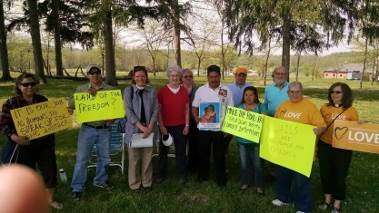
EPA Clean Power Plant Plan: Lutheran Advocacy: Minnesota collected “photo messages” for the EPA and the Minnesota senators in support of the EPA Clean Power Plant Plan. Some of the people participating agreed to allow their photos to be used for media. Some of those photos, with street addresses removed, are available here!

Clean Energy & Jobs Campaign: Given significant changes in the MN House of Representatives following the election, campaign members, including LA-MN, are trying to rework the message points for the Renewable Energy Standard and Energy Efficiency Standard to make them more rural, ag, and small business-focused.

Homes for All Coalition: As part of the Community Engagement Team, LA-MN is involved with some of the other partners in developing some creative tools around which groups & churches can organize and educate. LA-MN Director, Tammy Walhof, and others on the team originally tried to remake a game like Monopoly or Life, but those ideas were dropped upon learning of challenges that groups in other states had with copyright issues. The focus is now leaning toward the development/rewrite of a song & music video.

Payday Lending: Many groups that are part of the Fairness in Lending Coalition, including LA-MN, sent a letter to Minnesota’s U.S. senators encouraging action at the federal level on Payday Lending. The coalition plans to continue the legislative effort in Minnesota. LA-MN will continue to have it as a second tier issue.

———————————————

New Jersey
Sara Lilja, Lutheran Office of Governmental Ministry, New Jersey

Lutheran Office of Governmental Ministry co-sponsors the Anti-Poverty Summit in New Jersey.  Legislatures from both parties, clergy, non-profit organizations and leading policy experts attended a sold out conference on Dec. 4th that was themed, “Changing Attitudes, Changing Laws, Changing Lives.” Rev. Sara Lilja led a standing room only workshop entitled “Community Conversations”, this session was a skill building opportunity that focused on shaping Public Opinion as the beginning place for Advocacy.

Criminal Justice Reform: A bill has just been filed in the Senate (S2588) that would limit the use of Solitary Confinement in New Jersey’s State and Country Jails.  LOGM will be working with other coalition partners to have this bill enacted into law.

Earned Sick Days: LOGM is participating in a statewide campaign that will provide Earned Sick Days for all New Jersey Workers.  This legislation has passed in 7 municipalities, and now is moving on to the entire State.  We will be speaking at a Press Conference this week.

​———————————————

New Mexico
Ruth Hoffman, Lutheran Advocacy Ministry – New Mexico 

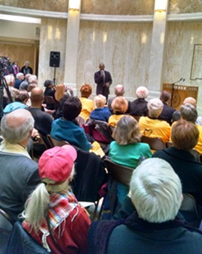
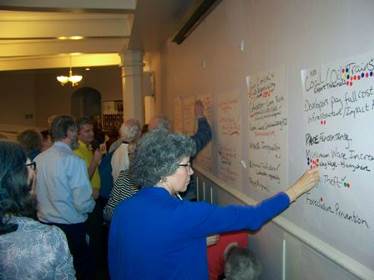
3In early November, Lutheran Advocacy Ministry-NM hosted our annual advocacy conference at St. Timothy’s Lutheran Church in Albuquerque.  Almost 100 advocates from around New Mexico attended.  A number of Lutherans traveled over 600 miles round trip to participate, coming from Las Cruces and from Alamogordo.  All of the current volunteers from the Border Servant Corps, a border ministry of Peace Lutheran Church in Las Cruces, attended.  Pr. David Vásquez, currently a campus pastor at Luther College and upcoming president of Pacific School of Religion, was the featured speaker and lead participants in two bible study sessions relating to faith and immigration. Breakout session topics included hunger in NM, the importance of early childhood education, local immigration issues and the 2015 LAM-NM Advocacy Agenda.  The conference was attended by many of our ecumenical and interfaith partners, including Presbyterians, Methodists, Roman Catholics, Episcopalians, Unitarians and others.

4LAM-NM director, Ruth Hoffman has been busy attending interim legislative committees as they work toward the 2015 legislative session.  The committees are preparing legislation for consideration during the session.  Ruth testified at the most recent meeting of the Economic & Rural Development Committee about the Individual Development Accounts program and need for increased funding for that low-income matched savings account program.

​———————————————

Pennsylvania
Amy Reumann, Lutheran Advocacy Ministry in Pennsylvania 

Access to healthy, affordable food and fair education funding will be top issues for Lutheran Advocacy Ministry in Pennsylvania next year. LAMPa’s policy council and 7 bishops spent a day in early December prayerfully discussing concerns in their communities before adopting an agenda for 2015. The work will be carried out in a capital with divided government following November’s election that saw the nation’s only defeat of an incumbent governor, replacing Republican Tom Corbett with Democrat Tom Wolf. The election also grew Republican margins in the legislature and raised new leadership in both the House and Senate.

5

Environment: LAMPa launched its creation care work group with a statewide conference call that included Mary Minette from the D.C. advocacy office, sharing areas of interest in state environmental issues, with clean water being identified as a primary concern.

Immigration: Following President Obama’s announcement on immigration relief, LAMPa connected our synods and interested congregations with partner organizations looking for sites to provide information and assistance to immigrants who might be eligible.

Service: Lutherans might expect to be approached by housing advocates to connect on the ELCA “Day of Service” in September.  The Center for Community Change recently spotlighted the connection between service and advocacy on the Pennsylvania housing trust fund on God’s work. Our Hands. Sunday.  The network urged its members to reach out to Lutherans to add our voices to the work of our hands on behalf of our neighbors struggling with shelter.  Read the article here.

———————————————

Virginia
Marco Grimaldo, Virginia Interfaith Center for Public Policy 


The Virginia Interfaith Center for Public Policy is working on several bills and policy changes to implementation of SNAP in Virginia. We are working to get a minimum wage bill introduced that would take Virginia up to $10.10 per hour over three years and a bill to make Virginia’s Earned Income Credit at least partially refundable. We are also part of a coalition effort to change the income test for who can qualify for SNAP benefits.

We met this week with faith leaders that are part of the Virginia Council of Churches and the Virginia Interfaith Center who together welcomed First Lady Dorothy McAuliffe to talk about her new role chairing a commission named, “Bridging the Nutritional Divide,” that will help address hunger in Virginia. She announced her push for a pilot program for Breakfast in the Classroom programs in Virginia. Finally, we met with Lutherans from various parts of Virginia as part of Bishop Mauney’s Childhood Hunger Task Force and that work is now underway.

​———————————————

​Washington
Paul Benz, Faith Action Network 

6Policy Updates: Faith Action Network’s (FAN) governing board approved our 2015 legislative agenda. Our five “policy buckets” are: Reducing Wealth Inequality (FAN’s lead issue), Forging a Sustainable Biennial Budget, Dismantling the Culture of Violence, Protecting Housing & Preventing Homelessness, and Sustaining Washington’s Environment

Advocacy Days: FAN will once again sponsor three advocacy days during our legislative session:

  • January 31st in Spokane, with the theme “Raising Prophetic Voices:  Faith Communities Advocate for Justice”
  • February 7th in Yakima, held at the Unitarian church
  • February 19th in Olympia (our main event at the state capital), with the theme “Act on the Dream:  Invest in the Common Good”

Annual Dinner (Nov. 16th): FAN’s annual dinner, Acting on the Dream: The Movement Continues, was a wonderful event where we filled over 40 tables with faith advocates and labor and community allies.  One of the tables hosted ELCA Bishop Kirby Unti, DEM Rev. Jerry Buss, and ELCA DC office’s John Johnson. We exceeded what we raised last year. You can view video clips from the event, including the inspiring keynote speech by travel expert and activist Rick Steves (ELCA—Trinity-Lynwood, WA). Photos from the event are on our Facebook page.

​———————————————

Wisconsin
Cindy Crane, Lutheran Office for Public Policy in Wisconsin 

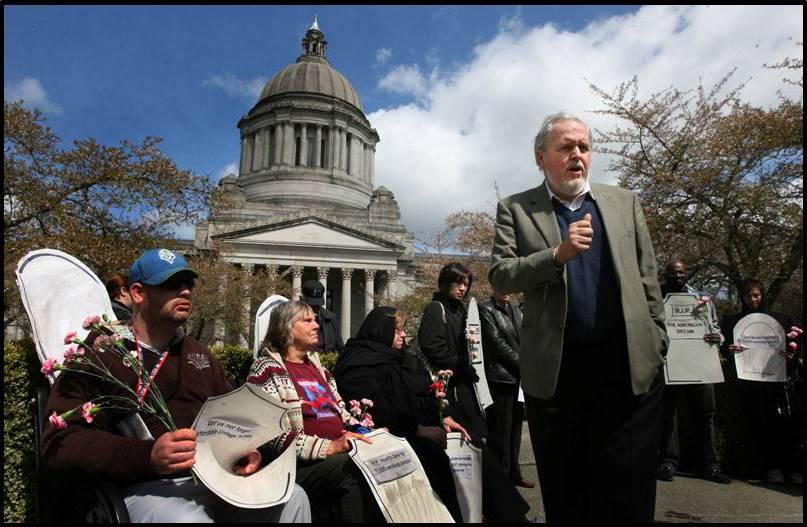
Poverty Summit:  20 ELCA adults and youth gathered in Marinette for an inter-generational poverty summit focused on youth.  In the photo is LOPPW Council Member Eric Larson, who helped to plan and lead the event, and State Representative John Nygren, who 6shared his journey struggling with his daughter’s heroin addiction and moving from his personal experience to advocating for public policies.  LSS Case Manager Mary Busick from Escanaba, MI tied together local youth homelessness, drug addiction and trafficking. LOPPW included an hour of advocacy exercise.  Feedback confirmed that it would be worthwhile to repeat the summit in other locations.

BadgerCare:  LOPPW’s director attended a meeting with partners to discuss next steps for encouraging the Wisconsin legislature to receive federal funding for BadgerCare.  73% of the people who voted in the 20 counties with the referendum said Yes to take the federal dollars.

7Prison Reform for Youth:   LOPPW’s director and Council Member Rev. Jay McDivitt met with Senator Jerry Petrowski’s legislative aid to encourage the senator to again present a bill supporting 17 year old offenders of non-violent crimes to be tried as juveniles.

Anti-Sex Trafficking:  The director made contact with three anti-trafficking groups to help determine statewide coalitions in place and discussed building a campaign with Tia.

Education:  LOPPW’s director met with colleagues from around the country in Baltimore deepening our efforts of working together as a team.

Other Advocacy:  Council Member Rev. Sue Schneider is explaining advocacy to middle school youth in Madison at Confirmation Extravaganza.

From Lima, Peru: The faith community stands ready for a real commitment to addressing climate change

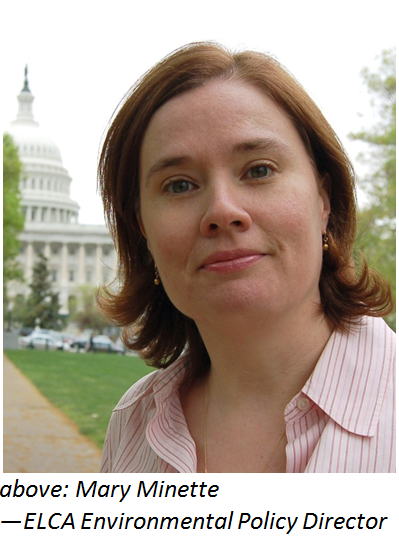
ELCA Director of Environmental Advocacy, Mary Minette
On the eve of the first day of COP20, the UN climate talks in Lima, a Vigil for the Climate was held near the Pentagonito where the UN talks are to be held. Christiana Figueres, the head of the UNFCCC and Manuel Pulgar-Vidal the Peruvian Minister for the Environment and President of the UN meeting, spoke to the crowd and a symbolic lighting of candles began the celebration that marks the end of one year of monthly fasting by religious and environmental groups around the world in the Fast for the Climate.

On the eve of the first day of COP20, the UN climate talks in Lima, a Vigil for the Climate was held near the Pentagonito where the UN talks are to be held. Christiana Figueres, the head of the UNFCCC and Manuel Pulgar-Vidal the Peruvian Minister for the Environment and President of the UN meeting, spoke to the crowd and a symbolic lighting of candles began the celebration that marks the end of one year of monthly fasting by religious and environmental groups around the world in the Fast for the Climate.

Photo courtesy of LWF/Sean Hawkey, ©2014 Sean Hawkey, all rights reserved

In December 2015, the UN Framework Convention on Climate Change (UNFCCC) will meet in Paris to discuss and launch a new international climate agreement. Last week and this week, leaders from around the world gather in Lima, Peru for the last high-level round of negotiations before Paris discussions. Representatives from faith traditions around the world, environmental groups, youth, business representatives, and labor unions are also present in Lima and are working together to ensure that the framework for the new agreement reflects their priorities.

I write today from Lima, where I am representing the Evangelical Lutheran Church in America (ELCA) as part of a delegation from the ACT Alliance– a faith-based global relief and development network. The increasing involvement of people of faith in the UNFCCC meetings each December, as well as the massive presence of people of all faiths at the People’s Climate March in New York this past September, reflects our common concern about the future of the world that we believe God created and calls us to tend. This shared sense of stewardship leads us to be concerned by the changes that all of us can observe, changes that scientists tell us are the result of human-caused climate change. Another common element shared by numerous faith traditions is concern for our neighbors, and particularly for the most vulnerable—children, the elderly, those who live in poverty. We see that climate impacts such as more severe storms, long term drought, flooding and sea level rise are falling hardest on these vulnerable populations.

This meeting in Lima is expected to end with parties agreeing to a basic framework for the new climate agreement which would take effect in 2020. Faith goals for the framework include a strong commitment from parties not only to reduce global greenhouse gas emissions but also to address the needs of vulnerable people who are already suffering the impacts of climate change in the new agreement. Building climate resilience for vulnerable communities, particularly in least developed nations, is a key point for the faith community. This will require that countries with means commit to financial and technical assistance for low carbon development, adaptation to climate change, and climate impacts that can’t be adapted to, such as sea level rise that leads to permanent loss of lands.

Indigenous participants sit in a plenary hall of COP20. The UN climate talks began on Dec 1st in Lima Peru, billed as the most important meeting in the history of the world, mechanisms for reducing climate change are being negotiated. The Fast for the Climate movement, with participation of environmental and faith-based groups such as the Lutheran World Federation, is reminding diplomats of the real dangers of climate change and urging them to take immediate action.

Indigenous participants sit in a plenary hall of COP20. The UN climate talks began on Dec 1st in Lima Peru, billed as the most important meeting in the history of the world, mechanisms for reducing climate change are being negotiated. The Fast for the Climate movement, with participation of environmental and faith-based groups such as the Lutheran World Federation, is reminding diplomats of the real dangers of climate change and urging them to take immediate action.

Photo courtesy of LWF/Sean Hawkey, ©2014 Sean Hawkey, all rights reserved

Before the end of the meeting in Lima, we expect that parties will announce a process for countries to come forward over the next year with their emissions reductions pledges for the new agreement. This action must come with a process to evaluate these pledges for adequacy and long term impact. Some countries have already announced the basic outlines of their pledges. The U.S. made an initial pledge of future action several weeks ago when President Obama announced the terms of a bilateral agreement with China. This agreement will reduce U.S. emissions 26 to 28 percent below 2005 levels by 2025, with China agreeing that its emissions would “peak” by 2030.

Finally, faith communities are looking for significant financial commitments from the U.S. and other developed countries, together with pledges from other parties with means, to fund both low carbon development and climate resilience, particularly in the least developed countries. The recent U.S. pledge of $3 billion over 4 years to the Green Climate Fund is a step in the right direction. Other countries are also slowly announcing their pledges and we hope for more to come.

At the end of the first week, many participants and observers expressed a sense of hope for the process, and a draft text released early Monday morning showed progress on some key points. Significant issues still are unresolved, but as people of faith we agree: this meeting in Lima must set us on the path to a strong, equitable and fair international agreement that will help us to avoid the worst impacts of climate change, for the sake of our children and future generations and for all of God’s creation.

Remembering the Bhopal disaster of 1984

Mary Minette, Director of Environmental Advocacy
​The earth dries up and withers,

the world languishes and withers;
the heavens languish together with the earth.

​The earth lies polluted under its inhabitants;

for they have transgressed laws,
violated the statutes,
broken the everlasting covenant.

– Isaiah 24:4-5

Today marks the 30th anniversary of the worst industrial disaster in history, a disaster that many have forgotten in the years since.

On December 3, 1984 residents of Bhopal, India awoke to a cloud of toxic methyl isocynate gas that had been accidentally released from a nearby pesticide manufacturing plant operated by the Union Carbide Corporation.  

Poor maintenance practices at the barely operational plant led to the release, which ultimately killed more than 15,000 people in the largely low income communities surrounding the plant, and led to severe long-term health consequences for many of the more than half a million people exposed to toxic gas.  Although Union Carbide ultimately paid nearly $500 million in settlement to the Indian government, this has not been adequate to address the continuing health problems of those who lived through the disaster. ​ In addition, the chemical plant, though closed, has never been fully cleaned up and continues to pose a threat to nearby residents.

India is one of the most rapidly industrializing nations on earth, and although the Bhopal disaster led to some reforms of how chemical plants are permitted to operate in that country (and around the world), its policies tend to reflect a greater concern for economic growth than for environmental and public health protections.  More remains to be done, both in India and globally, to ensure that companies that manufacture toxic substances operate safely and to ensure that low income communities do not bear the majority of the risks associated with those manufacturing operations.​

Today, as we remember the dead and the survivors of the Bhopal disaster in our prayers, we also pray for the leaders and advocates around the world who are working hard to ensure that chemical companies operating in our midst are safe and accountable.

Living Earth Reflections: November 2014

Mary Minette, Director of Environmental Advocacy

Happy are those who consider the poor, the Lord delivers them in the day of trouble. The Lord protects them and keeps them alive; they are called happy in the land. You do not give them up to the will of their enemies.” – Psalm 41:1-4

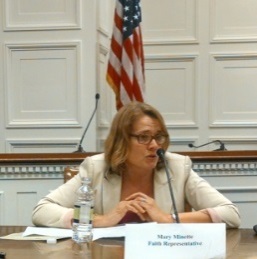
mary1Last week I was invited to speak at a Congressional briefing on the International Climate Negotiations in Lima, Peru, which are set to take place in December 2014. During this briefing, participants discussed the September Climate Leaders’ Summit in New York and looked to future opportunities for governmental, private sector, and civil society cooperation on climate change. I was asked to give the faith community’s perspective on the upcoming meeting in Lima. For this month’s reflection, I would like to share with you my statement from this event:

The faith community is pretty diverse, but one of the things we have in common is an increasing concern about the impacts of climate change. Why? A common element in many faith traditions is a sense that the earth is God’s creation and that we are called to be good stewards—that sense of stewardship leads us to be concerned by the changes that all of us can observe in weather patterns around the world, changes that scientists tell us are the result of human-caused climate change.

Another common element shared by numerous faith traditions is concern for our neighbors, and particularly for the most vulnerable—children, the elderly, those who live in poverty. We see that climate impacts such as more severe storms, long term drought, flooding, sea level rise, are falling hardest on those who lack the means to adapt and recover—people in developing nations and in low income communities in developed nations. People of faith are among the first to respond when disaster strikes, and among the last to leave as lives are rebuilt.  Faith-based organizations are serving in communities in New Jersey where elderly residents on fixed incomes are struggling to rebuild their lives post-Sandy.  Faith-based organizations are working in the Philippines to help communities rebuild from the devastation of Supertyphoon Haiyan.

We know how climate change is impacting our neighbors, and who bears the greatest responsibility—not those who are suffering the most from its impacts, but rather those of us who live in developed countries.

Both our sense of failure as stewards of God’s earth, and our sense of responsibility for those who are suffering from the impacts of climate change and for climate change itself lead us to see this as perhaps the greatest moral challenge of our time.

The faith community has been engaged in the UNFCCC process since the very beginning—the World Council of Churches has sent a delegation to every COP; faith based development 20140921_131146NGOs have been engaged for many years as well. However, with the Climate March in New York this past September, faith engagement and support for a global climate change agreement may have reached a tipping point. Thousands of people marched in NY out of their faith—we crowded into an entire city block during the march staging.  Lutherans and Hindus, Muslims and Methodists, Catholics and Baptists joined together out of a shared concern for our future.

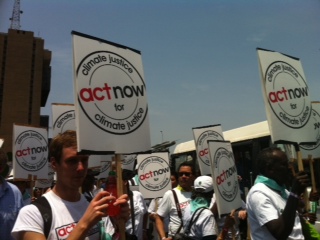
Following the summit, several faith based campaigns were launched to mobilize around the need for a global agreement on climate change: the OneVoice campaign will hold vigils around the world during Lima in a campaign called “Lights for Lima”; the Lutheran World Federation has an ongoing “Fast for the Climate” campaign aimed at the Paris agreement; and ACT Alliance, a faith-based global relief and development network has just launched its “ACT now for climate justice” campaign.

Our concerns for this process are not very different from what you’ve already heard, although we are committed to making sure that the concerns of the most vulnerable are front and center, and in particular that funding for and attention to adaptation is sufficient. The equal division of resources between adaptation and mitigation in the Green Climate Fund is a great start, but we are committed to making sure that financial pledges to the fund are robust and to making sure that adaptation is a prominent feature of the agreement in Paris next year.

As people of faith, we want to see world leaders assume moral leadership in confronting a problem that will impact all of us, but not all of us equally, in ways that reflects shared concerns but differing responsibilities and abilities. The US/China agreement is an example of the type of leadership we believe is necessary—the largest historic emitter joining with the largest emerging emitter to pledge actions that will begin to reduce their emissions in ways that reflect their differing abilities and levels of responsibility.  Another example is contributions to the Green Climate Fund—the US just announced a substantial pledge to the fund; Mexico, an emerging economy, made a smaller pledge to the fund in September during the Climate Summit. Both countries are showing moral leadership by pledging to help more vulnerable countries.

In closing, I offer a question asked by Yeb Sano, a climate negotiator for the Philippines who has become one of the strongest voices for moral leadership within the UNFCCC process, in speeches in both Doha in 2012 and Warsaw in 2013:

​”I ask all of all of us here, if not us, then who? If not now, then when? If not here, then where?”

ELCA State Advocacy Update: November 2014

ELCA Advocacy
 Lutherans are taking action across the country! Below you will find our monthy State Advocacy Newsletter. Share with your friends, and download the document in the PDF version!
 ———————————————
Washington, D.C.
Advocacy Director, Stacy Martin
www.elca.org/advocacy

1Domestic Violence Awareness Month: In cooperation with ELCA Justice for ​Women, ELCA Poverty and Justice Ministries, LSA Advocacy, and Women of the ELCA, ELCA Advocacy released a jointDomestic Violence Awareness Month message and asked Lutherans to act in support of the International Violence Against Women Act (IVAWA). IVAWA, if passed, would make permanent the Office of Global Women’s Issues in the State Department and enable the U.S. government to develop better responses to violence against women in humanitarian emergencies and conflicts.

Clean Water Act: This month, ELCA Advocacy promoted followers to learn more and comment on the EPA’s proposed Clean Water Rule. This past spring, the EPA issued a draft rule that would protect streams and wetlands that connect to larger watersheds ensuring the quality of the water that we depend on for drinking, washing, swimming and fishing. One in three Americans—more than 117 million people—get their drinking water from sources fed by these small and seasonal streams.

2Combating human trafficking and child labor: ELCA Advocacy’s Network congratulated Kailash Satyarthi, founder of GoodWeave, for being awarded the Nobel Peace Prize. GoodWeave has previously received financial support from the ELCA for their efforts to end child labor in the carpet industry. ELCA Advocacy also encouraged Lutherans to urge Congress Members to act on the “Business Supply Chain Transparency on Trafficking and Slavery Act,” which would increase consumer consciousness and address the root causes of child slavery.

Election Day 2014: ELCA Advocacy continued to promote civic involvement and increasing turnout on November 4th for Election Day. As a public church rooted in civic activity and living out spiritual values, the ELCA proudly empowers and supports people to engage with government and policy. Across the country, Lutherans and local religious leaders took the pledge to vote, engaged with their communities through discussion and working to get-out-the-vote. Among the newly elected officials this year is Senator-Elect Joni Ernst (Iowa), a member of the ELCA. Thank you to all who participated in this Election and put their values to work!

———————————————
California
Mark Carlson, Lutheran Office of Public Policy- CA ​
 

3November ballot measures: The focus of the Lutheran Office of Public Policy – California for October was on California’s “fourth branch of government”: direct democracy in the form of ballot propositions.  LOPP-CA director Mark Carlson led forums at four congregations, the Southwest California Synod WELCA convention, and the Sierra Pacific Synod. Proposition 1, a $7.5 billion water bond placed on the ballot by the Legislature, was an LOPP-CA priority that passed by a 2 to 1 margin in the context of “exceptional” drought. Voters also approved of Proposition 47:  an initiative that reduces lower-level drug possession and property crimes from felonies to misdemeanors. State prison cost savings, estimated by the Legislative Analyst at potentially $200 million annually, will be used for mental health and substance abuse services (65%), truancy prevention (25%), and victims’ services (10%). LOPP-CA’s support of this initiative was directly informed by the ELCA’s “The Church and Criminal Justice: Hearing the Cries” social statement.

The Calendar for November includes the annual California Interfaith Power & Light Cool Climate Awards at St. Mary’s Catholic Cathedral in San Francisco on November 12 (3 ELCA congregations recognized), a joint meeting of Pacifica and Southwest California Synod bishops and justice leaders, the LOPP-CA Policy Council, the 50th anniversary of SF Night Ministry, and the 60th of Miracles of Faith Church in Oakland.​

———————————————
Colorado
Peter Severson, Lutheran Advocacy Ministry – Colorado 

World Hunger: Lutheran Advocacy Ministry-Colorado was the official representative for ELCA World Hunger at the Grace Race 5K, presented by Rainbow Trail Lutheran Camp, which took place at Sloan’s Lake in Denver on October 4. It was a banner year for participation in the Grace Race, now in its 8th year, and for funds raised to support ELCA World Hunger, which is a granting underwriter for LAM-CO. Thanks to RTLC staff & all who came out to participate for a great event!

Housing: Affordable housing is a critical issue in Colorado, especially in metro Denver and mountain communities. The 26th annual Housing Colorado NOW! Conference took place in Vail on Oct. 7-10 with a focus on construction of affordable housing, homelessness reduction, and permanent supportive housing services. At the conference, State Senator Jessie Ulibarri was named one of Housing Colorado’s Legislators of the Year. Sen. Ulibarri represents a district that includes the neighborhood in which the Rocky Mountain Synod office is located.

42014 Elections: Colorado voters weighed in on four highly contested ballot measures. Prior to the election, LAM-CO sponsored a voter forum on these ballot measures in partnership with the Colorado Social Legislation Committee and the League of Women Voters. Pro and con sides for each measure were presented by their respective official spokespersons, with time for rebuttals and question-and-answer. The forum was well-attended and well-received.

———————————————
Illinois
Jennifer DeLeon, Lutehran Adovcacy – Illinois

5Immigration was the theme for October. Lutheran Advocacy-IL held an informational workshop on temporary driver’s license for immigrants in Wauconda, IL with Messiah Lutheran Church and conducted presentations on immigration at the Metro Chicago Synod interpreters training and at the Metro Chicago Synodical Women’s convention.  Lutheran Advocacy-IL is also working with The Illinois Faith Leaders for Immigrant Justice in collecting stickers and Spanish language story bibles for the migrant children’s shelter in Chicago. The workshops covered a brief history of US immigration and policy and ways to get involved in advocating for immigration reforms, especially for the migrant refugee children. In Nov. Lutheran Advocacy-IL will cohost two free workshops on Nov 8 at St. John’s Lutheran Church in Bloomington and on Nov. 15 at Gloria Die Lutheran Church in Downers Grove.

6Service: Lutheran Social Services of Illinois (LSSI) & Lutheran Advocacy-IL invites you to participate in the upcoming Hands@Work event, were we will be “getting our hands dirty,” doing the work of the people of God and making lives better for our neighbors in need. We encourage the participation of everyone.

The Hands@Work Event offers five topics intended to appeal to a variety of interests, including: Disaster Preparedness Training, Public Policy Advocacy, Volunteers, Education Resources, and Local Congregation Consultation. For more information or to RSVP, contact Joy Medrano at 847/635-4653 or atJoy.Medrano@LSSI.org

———————————————

Minnesota
Tammy Walhof, Lutheran Advocacy – Minnesota 

Open house & blessing ceremony: On October 9, Lutheran Advocacy – Minnesota hosted an open house for supporters, participants, and partners to celebrate a new name and office space. The accompanying blessing ceremony and prayers not only lifted up LA-MN and its work, but the work of colleagues and partners. It also helped connect people across what sometimes seem like big divides, as Tammy, LA-MN Director, facilitated introductions between affordable housing advocates and environmental groups doing weatherization, or faith folks with science geeks.

Clean energy & jobs: LA-MN is working on a campaign to increase renewable energy standards in Minnesota from 25% by 2025, to 40% by 2030. (This would mostly be through wind, as a later effort will involve increasing solar from 1.5% to 10%). The goal also aims to increase the energy efficiency standard from 1.5% annually, to 2% annually.

Homes for All Coalition: A proposed package for affordable housing will likely come in close to $40 million in Min., and will also include some proposed policy changes to help low-income renters. The details are still being honed.

Elections, candidates education, and voter action – Lutheran Advocacy-MN hosted a candidate briefing on clean energy polling, with the Northwestern Minnesota Synod.  LA-MN participants continue to contact their legislators about both Clean Energy and Affordable Housing.

———————————————
Nevada
Rev. Mike Patterson, Lutheran Episcopal Adovcacy in Nevada

Prisoner re-entry support: In Nevada, the predecessor group (LAMN) worked hard to get the state to provide id to inmates on release from prison; a job well done with support coming from many quarters, including the Chief Justice of the Nevada Supreme Court.

A minor change to legislation in the 2013 session that seemed to enhance the prisoner re-entry program turned out to have tragic unexpected consequences that brought an end to the free id program.  The DMV interpreted the new law to absolve them from the id program and began charging parolees for the cards and the Dept. of Corrections kept issuing inmates paperwork they believed was good for a free id. These issues resulted in finger pointing from various entities. LEAN became aware of the issue and tried to work a solution but in the end both departments refused to absorb the costs.

LEAN has now involved a state Senator who is willing to amend a bill he has sponsored to rectify the issue and LEAN has promised support during the 2015 session.  LEAN is also working with the Chief Justice on this issue and looks forward to a successful conclusion. A lesson learned here in Nevada is to always try to look at the unintended consequences of even minor state laws.

———————————————
New Jersey
Sara Lilja, Lutheran Office of Governmental Ministry, New Jersey

Bail reform: LOGM worked with a coalition of partners to help pass Public Question No. 1, fixing the broken bail system by changing the New Jersey Constitution to allow judges to deny bail to the most dangerous defendants and usher in comprehensive bail reform for all. This new law, in combination with legislation passed earlier this year, means that nonviolent, low-risk people awaiting trial will no longer have to sit in jail simply because they can’t afford to pay their bail. Courts will be able to release nonviolent, low-risk people and focus on dangerous individuals.

Earned sick days: Momentum is building for New Jersey to pass legislation that makes it possible for hourly workers to earn 3-5 sick days a year. Recently, 2 additional municipalities passed this type of law, now 7 cities in the state have similar legislation in place. LOGM will continue to advance this legislation as they work for sustainable livelihood for all.

———————————————

New Mexico
Ruth Hoffman, Lutheran Advocacy Ministry – New Mexico 
7Immigration: On October 22, LAM-NM director, Ruth Hoffman, visited the immigrant detention center in Artesia, NM as part of a group from the New Mexico Faith Coalition for Immigrant Justice. The detention center located at the Federal Law Enforcement Training Center has been detaining refugee mothers and children since this summer. Nearly all of the mothers and their children are from El Salvador, Guatemala or Honduras and are escaping violence in their home countries. The facility is comprised of multiple temporary buildings and there is little or no privacy for the mothers and children.

The American Immigration Lawyers Association is working to provide pro bono attorneys to represent the mothers in the legal proceedings that determine whether or not they can be released on bond and join family members living in the United States or be deported by to the violence in their home countries. Since the Pro Bono Project began, many more mothers and their children are getting good legal representation to protect their human rights and being released on bond. Prior to the pro bono project, 200 families were pushed through the system and deported. The week prior to the visit, LIRS executive director, Linda Hartke and several others, including Pastor Kirsten Sauey-Hofmann of Trinity Lutheran Church in Hobbs, NM also visited the detention center. “As people of faith, we believe that vulnerable newcomers deserve better and will continue our call to end this inhumane and unacceptable practice.”—from an LIRS statement about current detention policy.

———————————————
Pennsylvania
Amy Reumann, Lutheran Advocacy Ministry in Pennsylvania 
School funding: As the 2014 legislative session drew to a close, Lutheran Advocacy Ministry in Pennsylvania participated in the launch of a statewide school funding campaign, helped defeat a tax bill that would have disproportionately burdened the poor and made a final push on a housing trust fund bill that failed but garnered support to try again next term. With voters naming education a top priority, we joined more than 40 organizations inThe Campaign for Fair Education Funding. Pa., 1 of only 5 states without a public school funding formula, is increasingly burdening struggling communities and widening the achievement gap between wealthy and poor.

Hunger advocacy: Pa. Lutherans also stood with 40 organizations to successfully stop SB76, which would have taxed groceries and other necessities in a move to eliminate all property taxes. Passed out of committee in the last weeks, it died without being voted by the full Senate, thanks to strong opposition from hunger advocates and others. LAMPa joined opponents of the bill in a press conference.

8LAMPa is working to inform synods and congregations following the October passage of the last in a package of child protection bills, requiring background checks for anyone volunteering with children. Additionally, LAMPa joined other hunger groups in a letter urging the Secretary of Public Welfare to streamline applications for Medical Assistance and SNAP benefits.

LAMPa welcomes Emma Wagner Nov. 1st as a Field Education student from the MA Program in Public Leadership at the Lutheran Theological Seminary at Philadelphia.

———————————————

Virginia
Marco Grimaldo, Virginia Interfaith Center for Public Policy 

General Assembly: The Virginia Interfaith Center for Public Policy is working this fall to meet with many partners across the state to prepare for the next General Assembly in January. They have met with faith leaders in the context of chapters in various parts of Virginia. Virginia Interfaith Center has also begun meeting in coalition efforts to talk with legislators of both parties who may be important to advocacy work in January.

Hunger task force: Virginia Interfaith Center for Public Policy is beginning to work with Bishop Jim Mauney’s Childhood Hunger Task Force to develop an advocacy message that can reach more Lutherans in Virginia and is well integrated into the broader interests of providing food and help to children in the Commonwealth. The first meeting is planned for mid-November.

———————————————
​Washington
Paul Benz, Faith Action Network 

9Planning policy priorities: FAN had its annual meeting with the governor last week and twelve religious leaders (one ELCA bishop was present, Rick Jaech – SW Washington Synod).  Participants discussed FAN’s 2015 legislative agenda and its five policy buckets: reducing wealth inequality, forging a sustainable biennial budget, dismantling the culture of violence, sustaining Washington’s environment, affordable housing, and preventing homelessness. See the entire legislative agenda by clicking here!

FAN finished six candidate forums with a total attendance of 250, and is still setting interim meetings with advocates and state legislators. FAN will meet its goal of 30 meetings from 22 legislative districts, recruiting just under a total of 120 advocates to participate. FAN’s involvement with Initiative 594 (mandating universal background checks for gun sales) concluded with a “Faith March to the Ballot Box.” Over 200 people gathered to march to a downtown Seattle ballot box. The issue won with a 60% yes vote andInitiative 591 (the opposing initiative which prohibited background checks beyond the federal statute) lost with a 55% no vote.

10Schedule: FAN has concluded its “third” programmatic season with the completion of 14 geographic cluster gatherings around the state, where advocacy stories were shared and relationships deepened. Total attendance was just under 150. FAN is looking forward to its “fourth” and final programmatic season with our Annual Dinner on November 16.  The theme is “Acting on the Dream: The Movement Continues”.

———————————————
Wisconsin
Cindy Crane, Lutheran Office for Public Policy in Wisconsin 

Addressing human trafficking: LOPPW/Cherish All Children advocacy team met a second time in the Northwest Synod to discuss organizing a statewide campaign for churches. Dawn Wicklund of the synod’s WELCA council and LOPPW’s Diane House are part of the team. LOPPW’s director attended a statewide consortium on anti-sex trafficking and joined a sub-committee that addresses federal anti-trafficking efforts. The director prepared a tool kit on advocacy and anti-trafficking for a committee in the LaCrosse Area Synod.

A council member from Northern Great Lakes and the director are organizing a half-day poverty summit with a focus on youth issues (homelessness, trafficking, drugs) in Marinette, where there is an epidemic of heroin addiction.  Rep. John Nygren from Marinette will share his story about his daughter’s heroin addiction, legislation he helped to pass on heroin and the importance of advocacy.  An LSS case manager will connect youth homelessness, trafficking and drug addiction in a brief talk.

Hunger Issues: LOPPW endorsed a referendum about whether Wisconsin should take federal money for BadgerCare (Medicaid). LOPPW’s director led a forum on hunger issues and advocacy at a church in the South-Central Synod and at a synod-wide event in the Northern Great Lakes Synod. Additionally, the director was part of a forum, Faithful Citizenship, hosted by the Lutheran and Catholic campus ministries at UW-Eau Claire.  On a panel she joined the director of the Wisconsin Catholic Conference, the Director of the Twin Cities Jewish Government Affairs Program, and the co-founder of an Israeli/Palestinian reconciliation group. ​

Stand against Domestic Violence this Month!

Tia Upchurch-Freelove, ELCA Advocacy Director of Communications

​​” It is not my enemies who taunt me—I could bear that; it is not adversaries who deal insolently with me—I could hide from them. But it is you, my equal, my companion, my familiar friend, with whom I kept pleasant company; we walked in the house of God with the throng.” 

– Psalm 55:12-14 

This October, as we observe Domestic Violence Awareness Month, we are called as a church “into a mission of love and compassion toward all peoples … to do justice, love kindness, and walk humbly with God” (ELCA social policy resolution: “Violence Against Women,” 1995). Violence against women is a widespread problem both here in the U.S. and abroad. Around the world, one in three women experience physical, sexual or psychological abuse in their lifetime (UNIFEM report, 2003).

We come together as Lutherans to take action by denouncing and combating the beating, sexual abuse, raping and killingthat threaten the life and safety of women everywhere and by encouraging greater awareness among members of our church about all forms of violence that threaten the lives and safety of all women.

Here are some important ways you can join Lutherans this month as we learn, engage with one another, spread awareness, and speak out against domestic violence:

Learn and Engage 

Spread Awareness

Take Action

This Domestic Violence Awareness Month, we remember those impacted by domestic violence and speak out to end all violence against women! Please join us as we seek to do justice and walk humbly with God.

ELCA Advocacy & Lutheran Office for World Community

ELCA Justice for Women

ELCA Poverty & Justice Ministries

Women of the ELCA

Lutheran Services in America/ LSA Advocacy

ELCA State Advocacy Update: October 2014

ELCA Advocacy
Lutherans are taking action across the country! Below you will find our monthy State Advocacy Newsletter. Share with your friends, and download the document in the PDF version!  
 
Washington, D.C.
Advocacy Director, Stacy Martin
​​1People’s Climate March – On Sept. 21, more than 400,000 activists joine​​d together in New York City in what is being called the largest ​climate march in history. The People’s Climate March called on world leaders to support a global climate change agreement and to act on climate change with over 2,700 events in more than 150 countries. In partnership with The Lutheran World Federation, Lutheran Advocacy Ministry in Pennsylvania, and the Metropolitan New York Synod, hundreds of Lutherans assembled for the march.
2The U.N. Climate Summit – The weekend of the People’s Climate March, ELCA Environmental Policy Director Mary Minette attended an interfaith conference on climate change at Union Theological Seminary. Following the summit, a delegation of more than 30 faith leaders created an interfaith statement on climate change at an event sponsored by the World Council of Churches. The interfaith statement was presented to the U.N. secretary general during the U.N. Climate Summit later that week. ELCA Advocacy also joined several other climate events in New York sponsored by the ACT Alliance, including strategies on addressing climate disasters, which included as a speaker a Lutheran pastor from New Jersey speaking about Superstorm Sandy recovery, and limiting climate change with low-carbon development strategies.
Campaign finance reform – On Oct. 1, Advocacy Director Rev. Stacy Martin joined a panel of faith leaders, activists and academic experts to discuss the moral and religious dimensions of the question of money in public life and governance. Sponsored by the Institute for Policy Research and Catholic Studies, the conference included speakers such as Kathy Saile, the associate director for government affairs at the Center on Budget and Policy Priorities, and interfaith partners from across the religious spectrum.
3Preparing for midterm elections – Election Day is one month away, and ELCA Advocacy is sending out resources and guides on how to promote civic engagement in Lutheran congregations throughout the country. The electoral process is one way in which we live out our affirmation of baptism to “serve all people, following the example of our Lord Jesus,” and “to strive for justice and peace in all the earth.” Share our Called to be a Public Church Guide (2014)to learn more about ways you can take action in your community. Tell your friends to “Take the Pledge” by signing our Voter Pledge Form online, and find more resources on our Action Alert Page.​
__________________________________________________________________
California
Mark Carlson, Lutheran Office of Public Policy- CA ​
4On Sept. 30, Gov. Jerry Brown completed his review of hundreds of bills passed by the Legislature after completing its two-year session. As attention shifts to direct democracy in the form of ballot propositions, the Lutheran Office of Public Policy–California is disappointed that the DISCLOSE Act, requiring more transparent information on large originalsource funders of ballot measures, did not pass. LOPP-CA is part of developing strategy for the DISCLOSE Act next session. Among other bills of interest signed were measures that dealt with stronger incentives for electric cars in lower and moderate-income communities, groundwater management, equalizing penalties for possession of crack and powder cocaine, a ban on most plastic grocery bags, and a waiver of birth certificate fees for homeless children and youth.
Firearms – As the ELCA Conference of Bishops participated in a prayer revival in Chicago, LOPP-CA was cheering enactment of a “gun violence restraining order” bill adopted in response to the Santa Barbara
tragedy. This bill allows law enforcement and family members to seek a temporary court order removing guns from a person who is a danger to themselves or others. As the election approaches, LOPP-CA is focusing energy on support for a $7.5 billion water bond and Prop. 47, a criminal sentencing reform initiative supported by the PICO community organizing network and many other community and civil rights groups, seeking remedies for mass incarceration and “The New Jim Crow” racial disparities.
__________________________________________________________________
Colorado
Peter Severson, Lutheran Advocacy Ministry – Colorado www.lam-co.org
5Hunger – The Hunger Free Colorado Summit took place on Sept. 8, featuring Sister Simone Campbell of Nuns on the Bus and NETWORK, the Roman Catholic social justice
organization. Her exhortation about developing a social
justice “for the 100 percent” was powerful and resonant.
LAM-CO has been connecting more intentionally with campus
ministry groups. Director Peter Severson visited both
University of Colorado-Boulder and Colorado State University
this past month. Additionally, the Strengthening Colorado
Families & Communities Summit took place in Keystone on Sept. 15-16, sponsored by the Colorado Department of Human Services-Office of Early Childhood. LAM-CO was able to participate in several
discussions around the formation of a Colorado Child Maltreatment Prevention Plan for 2015-2020.
Transportation – LAM-CO has been partnering with Iliff School of Theology and the Office of the Auditor
for the City of Denver to oppose the Colorado Department of Transportation’s proposal to widen Interstate
70 in vulnerable community areas in north Denver. A meeting with Iliff faculty and students and community representatives has led to the creation of a faith community petition that will be delivered to CDOT in response to the Environmental Impact Statement for the project. The Rocky Mountain Synod Theological Conference (Sept. 22-25 in Colorado Springs) led to great networking with pastors, ministers and other leaders in the synod. Congregations have been faithfully supporting Lutheran Advocacy Ministry in Colorado and New Mexico for 30 years!​
__________________________________________________________________
Minnesota
Tammy Walhof, Lutheran Advocacy – Minnesota 
New name – Lutheran Advocacy – Minnesota replaces Lutheran Coalition for Public Policy in Minnesota (LCPPM) as our name. The Policy Council voted unanimously for the change, and feedback on the new name has been very positive from partners, supporters, participants and others.
Legislative policy development – Tammy continues to be deeply involved in the policy shaping process with the Homes for All Coalition. She is also active with A Minnesota Without Poverty, which has just started thinking about policy options and directions for the 2015 session. The Clean Energy and Jobs Campaign narrowed their focus to two policy objectives for 2015. Tammy is thinking about the materials needed for Lutheran churches to be ready for the key objective, focused on improving the Minnesota Clean Energy standard to 50 percent renewable energy by 2030.
Education and awareness raising – Tammy has been working closely with the Minneapolis Area Synod and the Alliance for Sustainability to find leaders to build a synod chapter of Lutherans Restoring Creation.and is beginning outreach for a similar St. Paul effort. On Sept. 30, Dr. David Rhoads came to the Twin Cities and met with potential leaders for LRC. Tammy has been in various churches talking about the key themes of hunger, poverty, care of creation and advocacy.
Communications/administration – We are deep into the process of rebranding, building our “new” website, and making lots of administrative processes work better. The new office is almost completely furnished now with cubicles and a welcoming area for partners to gather.
__________________________________________________________________
New Mexico
Ruth Hoffman, Lutheran Advocacy Ministry – New Mexico 
Poverty and Hunger Coalition – Lutheran Advocacy Ministry-New Mexico has been an active partner in the newly created Interfaith Hunger Coalition as a part of the advocacy committee by helping to organize several gatherings in the Albuquerque area with coalition members and candidates for election to the New Mexico House of Representatives. The gatherings were opportunities for coalition members to express their concern about the unacceptably high rates of hunger and poverty in New Mexico and to engage in conversation with the candidates about how to address the situation. Eight candidates attended the gatherings, which took place at Albuquerque congregations. Ruth Hoffman, LAM-NM director, also spoke about state public policies that would help address poverty and hunger at a recent education workshop sponsored by the Coalition at Holy Rosary Catholic Community.
Food stamps – In mid-September, Ruth traveled to southern New Mexico and testified before the interim Legislative Health and Human Services Committee in opposition to increased work requirements for SNAP recipients proposed by the state Human Services Department. She also spoke in opposition to the proposed rule changes at a public hearing that was attended by at least 100 people. At the hearing, Ruth also spoke on behalf of the New Mexico Conference of Churches. Ruth’s testimony was highlighted in a recent KUNM radio segment: http://kunm.org/post/faith-leaders-speak-against-new-snap-requirements.
__________________________________________________________________
Pennsylvania
Amy Reumann, Lutheran Advocacy Ministry in Pennsylvania www.lutheranadvocacypa.org

On Sept. 7, LAMPa helped Lutherans add “Our voices” to the theme of “God’s work. Our hands.” with letter-writing and speaking to media in locations around the state on behalf of our neighbors on housing, hunger and immigration.
6At the capitol – LAMPa delivered a letter from Bishop Kusserow, Southwestern Pennsylvania Synod, urging lawmakers to act to end discrimination based on sexual orientation. LAMPa staff brought others engaged in ministry with the homeless to meet with legislative leaders to push for passage of bills to expand the state Housing Trust Fund. The visits were made powerful by the presence of one mother, accompanied by the Rev. Matthew Lenahan, who shared how a Lutheran congregation in Lancaster County is walking with her as she struggles with homelessness. Collaborating with the Lower Susquehanna Synod on a food drive/hunger advocacy project, LAMPa accompanied youth motivated by a synod retreat themed “Hungry” to participate in the “Can Hunger” event at the capitol, where they spoke with the leader of the legislative hunger caucus.
7On the road – LAMPa staff participated in Bishops convocations in the Allegheny and Lower Susquehanna synods, the launch of a hunger team in the Southeastern Pennsylvania Synod, a Lutherans Restoring Creation and training in the Northwestern Pennsylvania Synod and the People’s Climate March in New York City. We conducted our biennial survey to establish LAMPa’s agenda for the next legislative term. The results showed education and health care to be top priorities after hunger and were analyzed at our policy council retreat.
__________________________________________________________________
Virginia
Marco Grimaldo, Virginia Interfaith Center for Public Policy www.virginiainterfaithcenter.org

Civic engagement – The fall continues to be a busy time for educational forums and advocacy training in Virginia. We are also encouraging in-district meetings with legislators in advance of the January legislative session. Most recently we have been offered programs in Charlottesville and Roanoke that allow the immigrant community to better understand their rights and engage decision-makers including local law enforcement in productive discussions about their community. We have also been part of a growing minimum-wage campaign for raising the wage both in Virginia and at the federal level.
Health – Our health care work continues even though there has been no agreement on Medicaid. Small numbers of local leaders join us each Monday for our Moral Monday call for Medicaid, and it continues to be a great way to muster solidarity. As we prepare for the next assembly, we will prepare to also work on legislation related to health equity and network adequacy that can help make sure that low-income and underserved communities, which may already be covered, get the health care that they need with reasonable access.
Our policy priorities have been revised for the year ahead, and we also have a new website so Virginians can better follow our efforts and download the resources they need. We have background papers and talking points on each of our top priorities as a way to jump start those campaigns. Visit us at www.virginiainterfaithcenter.org.
__________________________________________________________________
​Washington
Paul Benz, Faith Action Network 

8Promoting advocacy – Faith Action Network’s 15 geographic clusters convened to discuss effective types of advocacy efforts in faith communities in Washington, share FAN updates, and talk about future collaborations. Meanwhile, ongoing meetings with state legislators and members of congress continued. This month FAN met with multiple legislators, including the state House Republican leader, state Senate Democratic leader and her district House member, and a federal House member meeting with members of an African American Baptist church. FAN is also currently getting ready for our Annual Dinner on Nov. 16 where local philanthropist and travel guide speaker Rick Steves will speak on the importance of faith-based advocacy. U.S. Sen. Patty Murray has also been invited.
Upcoming election and the ballot – FAN has coordinated and sponsored three candidate forums with three more to go. The forums are focusing on state legislative races with each one having three questions coming from FAN – of which one is always on hunger and poverty. Average attendance has been 50. FAN continues be the statewide faith organization coordinating support for Initiative 594 (mandating universal background checks for gun sales). A Faith March to the Ballot Box will occur on Sunday, Oct. 19, in Seattle – local marches/vigils will be encouraged. Two forums on preventing gun violence were sponsored jointly by ELCA Southwestern Washington Synod Bishop Rick Jaech and FAN.
__________________________________________________________________
Wisconsin
Cindy Crane, Lutheran Office for Public Policy in Wisconsin www.loppw.org
Poverty – With secular and faith partners, LOPPW will endorse a referendum on whether Wisconsin should take federal dollars for Badger Care on the November ballot in 20 Wisconsin counties. Although the vote cannot determine a change, it provides an opportunity for citizens to voice concern about 87,000 residents unnecessarily going without health care. LOPPW will work on an op-ed and additional ways to promote a Vote Yes on BadgerCare Nov. 4th campaign initiated by Citizen Action Wisconsin. On Nov. 8, LOPPW will lead a summit on poverty for the Northern Great Lakes Synod in Marinette. Click here to see the flyer​!
Sex trafficking – LOPPW is starting a campaign to pass a Safe Harbor Bill. Recently Women of the ELCA leaders led a workshop with a PPT created by Cherish All Children’s (CAC’s) director and LOPPW’s director in the Northwest Synod. Our new CAC/LOPPW advocacy group will meet for a second time in October with additional members and discussion about how to further include Women of ELCA and involve congregations.
Upcoming events
  • Advocacy and Hunger workshop at synod-wide event in Marquette, Mich. – Oct. 11.
  • ​The director will be the Lutheran representative on a panel at an event hosted by Catholic and Lutheran campus ministries: “Faithful Citizenship: A Christian Perspective on Voting and Political Involvement” on Oct. 21 at UW-Eau Claire

Federal – This month, LOPPW will set a plan to build awareness and advocacy on the Child Nutrition and WIC Reauthorization Act, the EPA rule on carbon dioxide emissions, and other federal issues related to environment. Additionally, LOPPW’s director was at a third 2015 Advocacy Day planning committee meeting organized by the Wisconsin Council of Churches.

Living Earth Reflections: This month we march out of love for our neighbors and God’s earth

Mary Minette, Director of Environmental Advocacy

​”Therefore, since we are surrounded by so great a cloud of witnesses, let us also lay aside every weight and the sin that clings so closely, and let us run with perseverance the race that is set before us, looking to Jesus the pioneer and perfecter of our faith, who for the sake of the joy that was set before him endured the cross, disregarding its shame, and has taken his seat at the right hand of the throne of God.”

Hebrews 12:1

On September 21, 2014, hundreds of thousands – perhaps even millions – of people are expected to gather in New York City for what may be the largest march to date on climate change.  During the upcoming People’s Climate March​, marchers will be asking global leaders, who will meet at the United Nations later that week, to take this issue seriously and to pledge themselves to action on this critical issue that threatens our children’s future and the future of God’s creation.

I’m planning to be there, along with thousands of other people of faith, because I see climate change as a threat to the future of God’s creation and the lives of all those to come. God created the earth and called on us to take care of it and Jesus called on us to care for our neighbors, whoever and wherever they may be.  Stewardship and love of neighbor demand that we act on climate change: ours is the first generation to feel the impacts of a changing climate in the form of more extreme weather and rising sea levels, and ours is the last generation with a chance to do something to stop it.

When I first heard about the march, I was skeptical–I struggled with the idea of thousands of people traveling to New York, emitting carbon into the atmosphere, for a single day’s event.  But we are at a critical moment on a critical issue, and maybe this march will mark a beginning. My hope is that this will be the day that turns the tide and changes the hearts and minds of the cloud of witnesses that surround us, and marks the new beginning we need if we are to protect God’s creation for our children and their children.

This past week the New York Times reported that the Intergovernmental Panel on Climate Change, the group of scientists that periodically comes together to report on the latest science on climate change, will release the final part of its Fifth Assessment report next month. For the first time, this report will include the word “irreversible.”  The draft report outlines a sobering reality – unless all countries act very soon and very deliberately to reduce emissions of carbon dioxide and other greenhouse gases, some of the worst predictions of prior reports will occur; melting ice sheets in the Arctic will raise sea levels by as much as 23 feet, global production of staple grains will see significant drops, and extreme weather events such as heat waves and flooding rains will happen with increased frequency.

In the face of these sobering predictions, some may lose hope.  Some may continue to deny, saying it will never happen, believing that it can never happen.  But we are people of faith and hope, and we know that we can change our ways, and we can prepare for this challenging future.  And so we march, before the great cloud of witnesses, to demonstrate God’s love and hope for each of us and for the world.  We march, marked by the cross, saved by grace, out of love for our neighbors and God’s earth.

If you would like to join us in the People’s Climate March, you can sign up on our ELCA Google Form
 
Want to learn more about ELCA’s commitment to advocating for public policy that supports the care for creation?  
Visit our website
Like us on Facebook
Follow us on Twitter