Washington, D.C.
Advocacy Director, Stacy Martin
www.elca.org/advocacy
Earth Day 2015: ELCA Advocacy took action on Earth Day to support clean water in our communities. The Environmental Protection Agency is working on a rule to protect streams and wetlands that connect to larger watersheds. This rule will ensure the high quality of the water that communities across the nation depend on for drinking, washing, swimming and fishing, while avoiding increased regulations for groundwater and farmland. Learn more about efforts to care for God’s creation and protect clean water on our ELCA Waters of the U.S. fact sheet.
Summit of the Americas: On April 10 and 11, leaders from across the Americas met in Panama City for the convening of the seventh Summit of the Americas. During the triennial event, government leaders discussed plans for advancing international collaborative efforts, working under the theme “Prosperity with Equity: The Challenge of Cooperation in the Americas.” In anticipation of the event, ELCA Advocacy released a statement urging government leaders to address the root causes of migration and violence in Central America through engaging with nongovernmental organizations, faith and affected communities. Shortly after the conclusion of the event, the Rev. Stephen Deal, ELCA regional representative for Latin American and the Caribbean, visited with lawmakers in D.C. to discuss the immediate need for protection of family and children through responsible investment in Central America.
Ecumenical Advocacy Days: Advocates gathered in Washington, D.C., last month for the annual Ecumenical Advocacy Days. This year’s theme was “Breaking the Chains: Mass Incarceration and Systems of Exploitation.” Participants learned about the historical and theological foundations of problems in contemporary criminal justice systems as well as racial and economic exploitation systems around the world. During the conference, advocates met with their members of Congress to encourage criminal justice and sentencing reform. Several workshops and skills sessions were led by Lutherans, and the musical offerings at worship services were provided by ELCA Glocal musicians. Lutheran attendees also had a denominational gathering, where they learned about the ELCA strategy on HIV and AIDS and ELCA actions to challenge racial injustice.
International Violence Against Women Act: In March, the International Violence Against Women Act (I-VAWA) was reintroduced in the House and Senate. The legislation combats gender-based violence by increasing legal protections, victims’ access to health care, and opportunities for women around the world. The ELCA recognizes that violence against women is still a prevalent and pressing problem in modern society, with nearly one-in-three women expected to face abuse in their lifetime. Lutherans can take action to address violence against women at our ELCA Action Center and learn more about this issue on our ELCA I-VAWA fact sheet.
Coming to D.C.: Is your congregation or youth group interested in learning more about advocacy? Consider a visit to Washington, D.C., to learn how we, as a faith community, make a difference in public policy and advocacy! Email washingtonoffice@elca.org to learn more!
New York, NY
Dennis Frado, Lutheran Office for World Community
Promoting tolerance and reconciliation: The president of the General Assembly, in conjunction with the secretary-general of the United Nations and the U.N. Alliance of Civilizations convened on April 21-22 a debate on “Promoting Tolerance and Reconciliation: Fostering Peaceful, Inclusive Societies and Countering Violent Extremism.” The debate provided an opportunity for member states and faith leaders, along with other stakeholders to share experiences and to address key issues and challenges relating to the promotion of tolerance and reconciliation with the aim of fostering peaceful and inclusive societies and countering violent extremism. LOWC attended the debate. More information can be found here.
U.N. post-2015 development agenda: LOWC followed the fourth session of intergovernmental negotiations for the post-2015 development agenda between April 21 and 24 at U.N. headquarters in New York. At this session it was a joint meeting of the negotiators for this process with the participants in the process for the Third International Conference on Financing for Development. The session focused on means of implementation, the global partnership for development, and coordination between the two processes. A summary can be found here. Other resources can be found on the ACT Alliance Post 2015 page and this news release.
Security Council reform: A number of initiatives have added momentum to reforming the Security Council. Among member states, an earlier effort of the “Small Five” (Costa Rica, Jordan, Liechtenstein, Singapore and Switzerland) has evolved into a greater number of countries joining the Accountability, Coherence, and Transparency group, convened by Switzerland. They have outlined several proposals during the past few years. Recently, the chair of the Intergovernmental Negotiations on Security Council reform, Courtenay Rattray, permanent representative of Jamaica, put forward a framework document for further discussion. Meanwhile, a new grassroots-oriented group, Elect the Council, has been formed to solicit public input toward electing new members of the council in the context of council expansion. LOWC has been participating in these initiatives.
Women, peace and security: On April 15, LOWC monitored the U.N. Security Council’s open debate on sexual violence in conflict. It was based on the secretary-general’s annual report on conflict-related sexual violence. The report also focused on non-state actors and extremist groups and sexual violence directed against LGBTQ people. Zeinab Hawa Bangura, special representative of the secretary-general on sexual violence in conflict, and representatives of almost 70 member states emphasized that 2014 was marked by an increase of harrowing accounts of conflict-related sexual violence. Recommendations included: acting on early warning signs, sanctioning perpetrators, identifying better treatment and counseling for survivors, better training and sensitization for U.N. peacekeepers, and monitoring the security situations in conflict-affected countries.
California
Mark Carlson, Lutheran Office of Public Policy
www.loppca.org
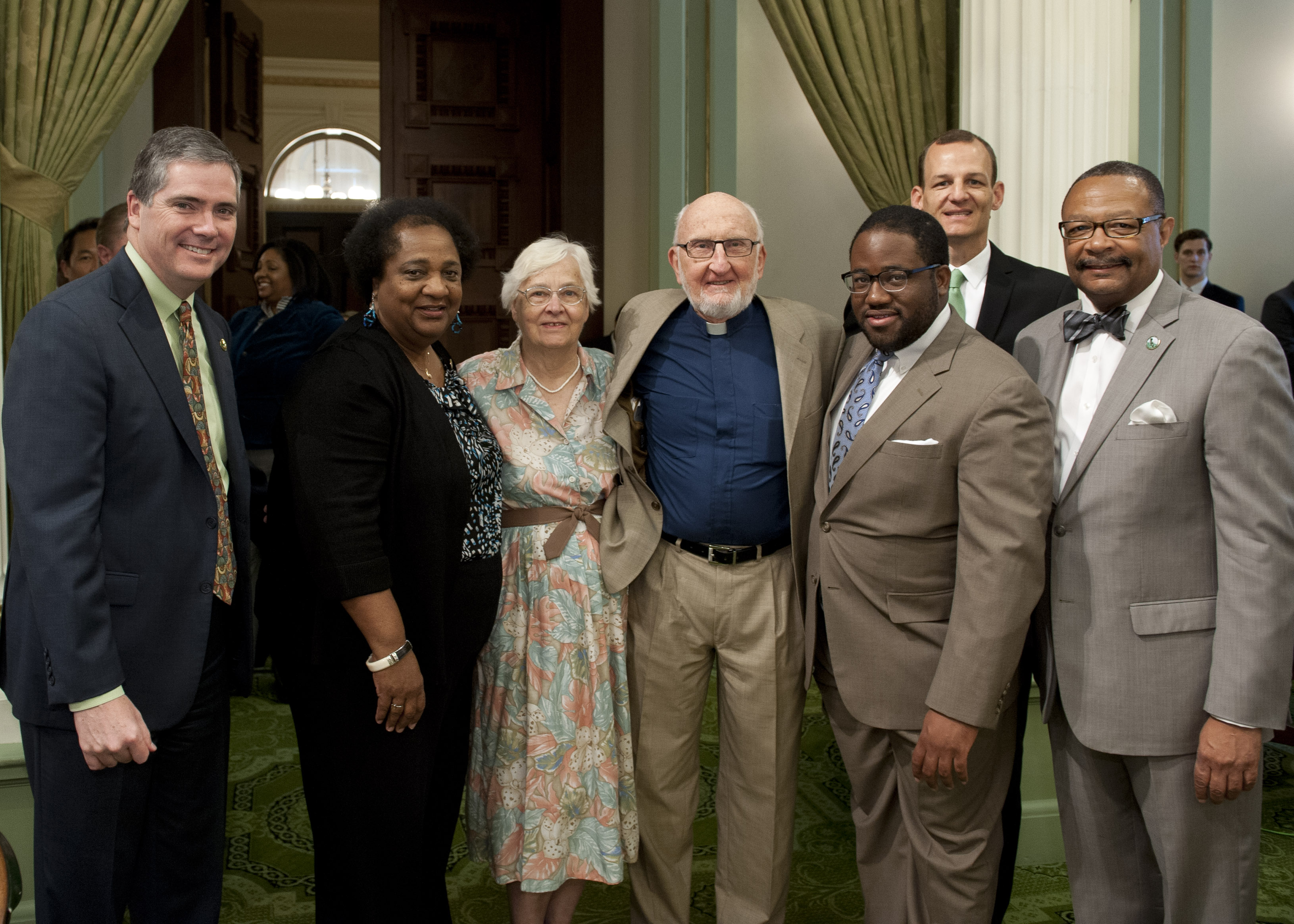
Recent events: April highlights include a visit from a group from the public ministry class at Pacific Lutheran Theological Seminary to the Capitol. Although legislators had returned to their districts, the group was blessed with thoughtful discussion with the communications director for a state senator, a Lutheran woman just elected to her congregational council. LOPP-CA coordinated the Northern California tour for the Rev. Joseph (“Strength for the Struggle,” 2014) and Joyce Ellwanger (Pacific Lutheran Theological Seminary, synod anti-racism training, Sacramento program). At the last minute, LOPP made connections so that they could participate in a Southwest California Synod Justice Team meeting in Glendale and be introduced at an Assembly floor session, where they were welcomed by the three legislators who had been to Selma for the 50th anniversary of Bloody Sunday.
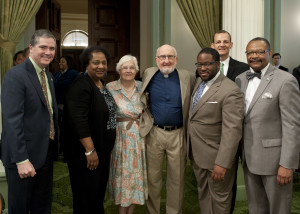 Legislation: Bills are moving through their policy committees. Those supported by LOPP-CA include an expansion of the state low-income housing tax credit, a permanent source of funds for housing in the form of a fee on property recordings other than home sales (similar to the Homes and Jobs Act prominent in 2014 updates), a commitment to provide preschool for all 4-year-olds from low-income families by 2017, a requirement that greenhouse gas emissions be reduced by 80 percent from 1990 levels by 2050; creating an Earned Income Tax Credit; and a new DISCLOSE Act illuminating top funders of ballot measures.
Upcoming events: The Southwest California, Sierra Pacific and Pacifica synod assemblies and the festive Immigrant Day at the Capitol on May 18.
Colorado
Peter Severson, Lutheran Advocacy Ministry – Colorado
www.lam-co.org
Child Support Pass-through: Lutheran Advocacy Ministry-Colorado and several of its partners in poverty-related legislation were thrilled that Senate Bill 12 made it through both the Senate and House, and is currently awaiting a signature from Gov. John Hickenlooper. The bill, which allows families receiving TANF (Temporary Assistance for Needy Families) benefits to also receive child support payments that were previously withheld by county governments, is one of the only measures to survive this year’s split-party-control legislature that will directly benefit families living in poverty.
Other legislation: Several late legislative victories include a bill to extend the life of low-income housing tax credits, as well as a measure to provide an affirmative defense for the crime of prostitution to minor victims of human trafficking. The Colorado House narrowly killed legislation that would have created a paid family and medical leave insurance program for the 88% of Colorado workers currently without access to paid leave during serious illness or the birth of a child. Also defeated in Senate committees were bills to create a state affordable housing investment fund and a rural economic initiative grant program.
Urban Servant Corps: LAM-CO hosted 13 volunteers from Urban Servant Corps for a day at the Capitol on Friday, April 10. The volunteers, who live in intentional community in Denver and work for a variety of social service organizations, learned about the legislative process, met with State Representative Beth McCann, and toured the Capitol.
Illinois
Jennifer DeLeon, Lutheran Advocacy Illinois
www.lutheranadvocacy.org
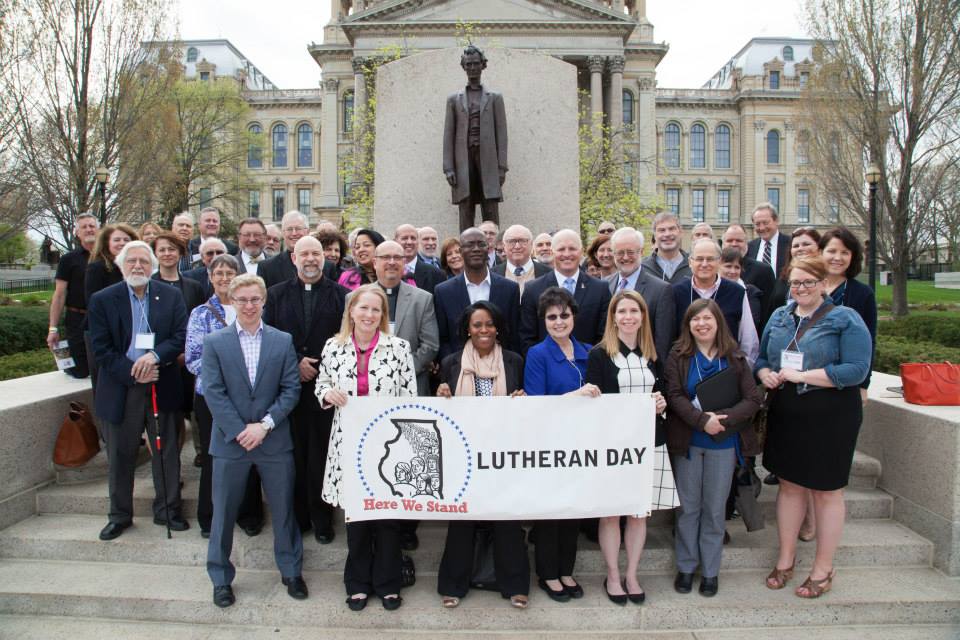
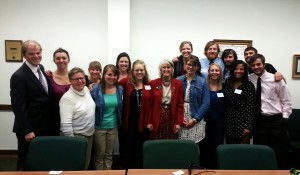
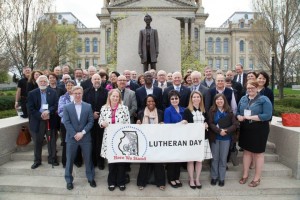
More than 100 people gathered to speak out for justice and compassion for all people in Illinois at Lutheran Day 2015. Participants met with legislators. The day concluded with a prayer service followed by the presentation of the Paul Simon Courage in Public Service Award given to state Sen. Dan Kotowski and posthumously to State Comptroller Judy Baar Topinka, who also had served in the state Senate and House of Representatives. Thanks to the event’s sponsoring organizations: Advocate Health Care, Bethesda Lutheran Communities, Bethel New Life, Concordia Place, Holy Family Ministries, Lutheran Advocacy Illinois, Lutheran Child and Family Services of Illinois and Lutheran Social Services of Illinois.
 The main legislative issue of the day was the Earned Income Tax Credit, which lets low-and-moderate income working families keep more of their earnings to help pay for things that keep them working, like child care and transportation. The tax credit also reduces the number of children living in poverty and improves kids’ chances of success as adults. By helping low-wage workers keep more of their incomes, the tax credit increases consumer spending, which then boosts local economies across Illinois.
Lawmakers can lift working families and boost local economies by doubling the tax credit in Illinois. Click here to let your lawmaker know the time is now!
Minnesota
Tammy Walhoff, Lutheran Advocacy – Minnesota
tammy@lcppm.org
Legislature: With three weeks left, the Minnesota House and the Senate have been passing budget bills, often working past midnight. Due to committee changes and different visions, bills from the chambers are radically different.
Housing and homelessness: House actions cut $20 million from affordable housing and $1.5 billion from services important to people being stably housed. Homeless youth would get $1 million more per biennium but not permanently if the House gets its way. Lutheran Advocacy-MN has been sending letters to legislators.
Clean Energy and Jobs Campaign: The campaign asked LA-MN Director Tammy Walhof to be the faith-based speaker at a House hearing. Despite much testimony, the committee (and full House) voted to roll back Minnesota’s Renewable Energy Standard and cut the energy efficiency program. LA-MN with Minnesota Interfaith Power & Light created a faith-leader letter for Gov. Mark Dayton in support of the Clean Power Plan and clean energy. Walhof’s connections were key to securing more than 300 signers, including bishops and executives from various denominations and 187 pastors.
Payday lending: Lutheran Advocacy-MN participated in a public event in front of a payday-lending business next to Holy Trinity Lutheran Church. Exodus Lending (alternative option) was launched by Holy Trinity at the event.
Synod-related activities: The Minneapolis Area Synod now has a very engaged Eco-Faith Network. Tammy Walhof was a speaker for the Northeastern Minnesota Synod Creation Care Retreat. She was also able to make new connections at the Saint Paul Area Synod Assembly and Luther Seminary events with Larry Rasmussen.
Social media: Follow Lutheran Advocacy-MN on Twitter: @LuthAdvocacyMN
New Jersey
Sara Lilja, Lutheran Office of Governmental Ministry in New Jersey
Visit us on Facebook!
Congregational efforts: Lutheran Office of Governmental Ministry has been focused on three areas of congregationally oriented work this past month:
- Released a human trafficking video
- Gathered leaders to begin to craft the church’s response to the heroin crisis in New Jersey
- Formed a coalition of leaders to develop public policy that will address race and poverty in the state
Legislation: We continue to work on legislation surrounding earned sick days, background checks for people who have been convicted of domestic violence, and reforming the use of solitary confinement.
Budget: Our advocacy efforts continue to address the state budget. In New Jersey, tax subsidies and credits to businesses have resulted in 4 billion fewer dollars in state revenue. The consequence is residents who are vulnerable and struggling economically are suffering at greater rates.
New Mexico
Ruth Hoffman, Lutheran Advocacy Ministry – New Mexico
www.lutheranadvocacynm.org
Legislative session victories: For legislation passed in the final three days of a legislative session, the governor has 20 days after the end of the session to sign, veto or line-item veto bills. LAM-NM encouraged Gov. Susana Martinez to sign SB 42 and not to line-item veto language in the state budget bill relating to the state Temporary Assistance for Needy Families (TANF) program. SB42 requires the Human Services Department to make sure that when someone who is Medicaid-eligible is released from jail, they have Medicaid coverage immediately. The governor signed SB 42 into law and also did not veto language in the budget bill that increases the monthly TANF cash assistance by 5 percent and adds another annual clothing allowance for TANF children.
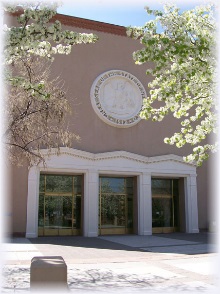 Interim committees set to begin: Much legislative work happens in the “interim,” which is the time between sessions. Interim committees have been appointed and are made up of members of both the Senate and the House. These committees meet from May until December. LAM-NM follows several interim committees closely, including the Legislative Health and Human Services Committee and the Legislative Finance Committee.
Ecumenical partners: LAM-NM Director Ruth Hoffman spoke to three groups at Central United Methodist Church in Albuquerque. She talked about the importance of our ecumenical and full communion partnership and presented a summary of LAM-NM work during the 2015 legislative session.
Ohio
Nick Bates, The Faith Coalition for the Common Good
Email: nick@oneohionow.org
Budget focused on poverty: The Faith Coalition for the Common Good thanks House Speaker Cliff Rosenberger and the House leadership for a budget bill that recognizes — if not fully addresses — the safety, education and public health needs of a growing number of Ohioans. “While specifics on the plan are still emerging, we appreciate acknowledgement in the House that a lot of people are still hurting,” said the Rev. John Edgar of the United Methodist Church for All People.
With a state poverty rate at 16 percent, and some counties nearing 32 percent, more must be done beyond $2.75 million of additional support for food insecurity. Congregations operating food pantries look to the Senate to add an additional $2.75 million to maintain adequate emergency supplies.
We are pleased about a smaller reduction in Ohio’s income tax, yet we remain concerned that our tax policy continues to focus on cuts that primarily benefit the wealthy. We recommend strategies, such as a refundable Earned Income Tax Credit and smart public investments in health care, public assistance and affordable housing.
We also applaud efforts to invest in Ohio’s future through education — particularly rural, low-income school districts. “The Faith Coalition is impressed with the focus in the House on helping all Ohio’s children overcome challenges to poverty by receiving a better education,” said Tom Smith of the Ohio Council of Churches. “Theirs was an open budget process that we hope is followed in the Senate.”
Pennsylvania
Amy Reumann, Lutheran Advocacy Ministry in Pennsylvania
Tracey DePasquale, Associate Director
www.lutheranadvocacypa.org
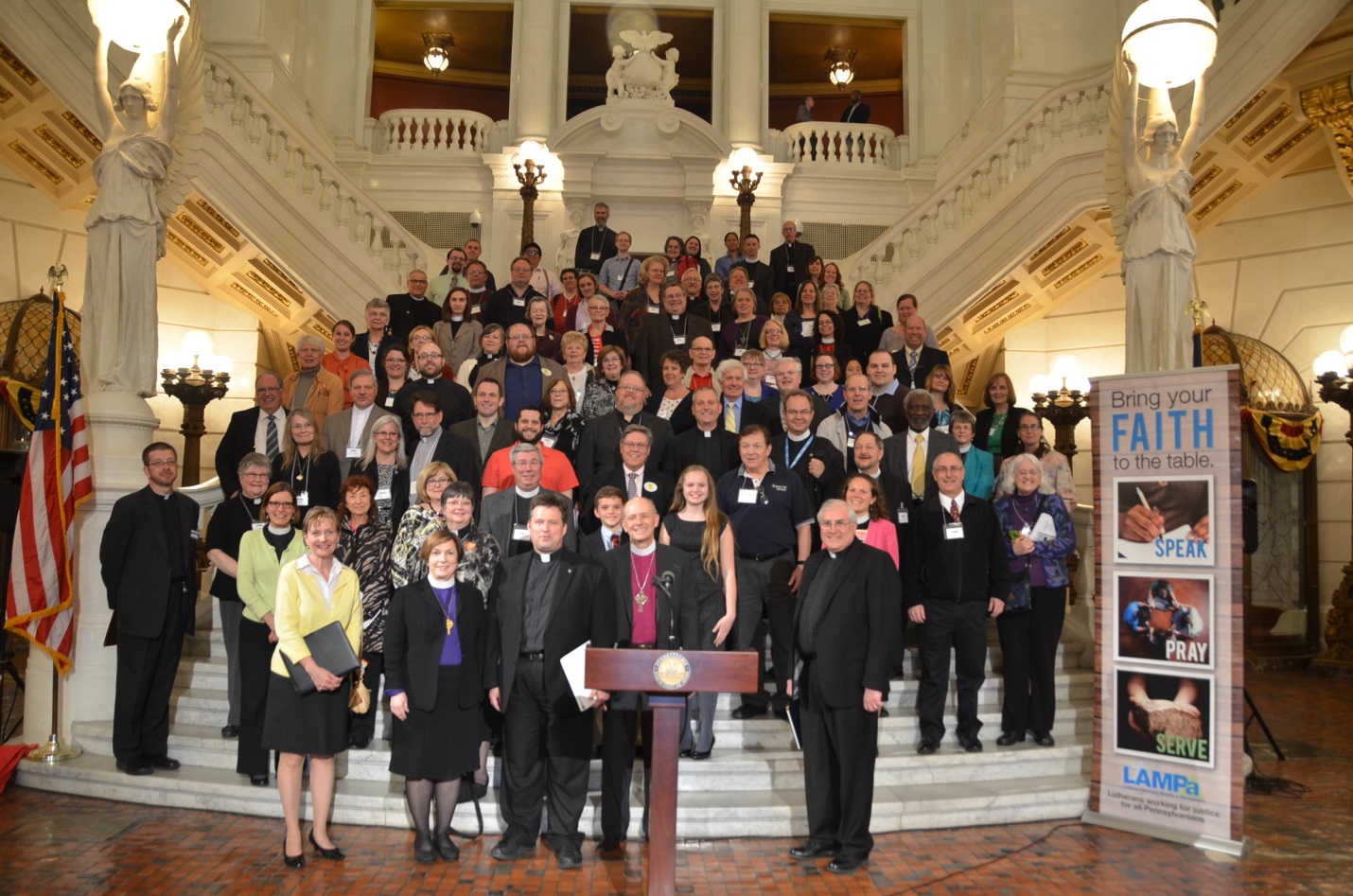
Lutheran Day: 150 people attended Lutheran Day in the Capitol on April 27. Held in conjunction with the Lutheran Theological Seminary in Gettysburg’s Academy Week, the day began with a keynote by the Rev. Dr. Kristin Largen, acting dean, whose remarks established a theological framework for the day. After workshops and worship, advocates traveled to the Capitol for legislative visits on housing and education funding.
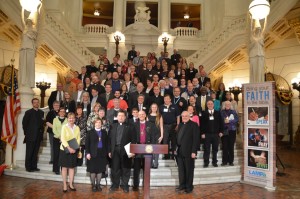 Bishop James Dunlop, Bishop Ralph Jones, Bishop Claire Burkat, the Rev. Scott Schul and Associate Director Tracey DePasquale urged passage of a fair education funding formula at an afternoon press conference. As advocates lined the steps inside, the Rotunda the broke into a beautiful and spontaneous chorus of the Doxology – a true Lutheran Day highlight!
DePasquale made a presentation to a stewardship class and presented workshops on trauma-responsive education during Academy Week.
Payday lending: Our director, Amy Reumann, met with Richard Cordray, director of the Consumer Financial Protection Bureau, on proposed federal payday-lending rules and their impact on Pennsylvanians and led a predatory lending training for Urban Seeds in Philadelphia.
Hunger: We celebrated the end of the Supplemental Nutrition Assistance Program asset test and participated in meetings of the Pennsylvania Food Security Coalition and School Breakfast Challenge workgroup.
Education: We successfully advocated within the statewide school funding coalition for reworking the campaign’s proposal after analysis showed it could continue to drive racial disparity in resources for schools.
Civil rights: Staff participated in a press conference and lobby day supporting amending the Pennsylvania Human Relations Act by adding sexual orientation and gender identity as protected categories.
Washington
Paul Benz, Faith Action Network
www.fanwa.org
Legislative issues: The 2015 Washington state 105-day legislative regular session ended on Sunday, April 26, with no agreement on its three budgets (operating, transportation and capital). The main disagreement is over whether there should be new revenue in the operating budget to meet the critical needs of our state that have been drastically cut over the past several sessions. Another way to look at this stalemate is that there are different perspectives on what the “critical needs” are and the role of state government in meeting those needs. Funding for three food programs are in this scenario (Emergency Food Assistance Program, State Food Assistance, and Breakfast after the Bell). Another food related proviso is funding for a pesticide-drift notification pilot project.
 Policy successes:
HB 1449 – Oil train safety notification and funding
SB 5863 – Pre-apprenticeship programs and jobs for women and communities of color in transportation contracts
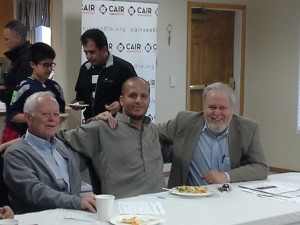
Faith-based organizing: May 4 is a People’s Hearing on the Need for Revenue at the state Capitol. FAN has been collecting signatures on the need for revenue in the budget and will deliver them on the day of this hearing to the budget negotiators and the governor. The regional United Church of Christ annual conference was held in Spokane in April. FAN led workshop presentations on the state budget and economic inequality. The ELCA Eastern Washington-Idaho Synod Assembly was held in the Tri-Cities in April. There was a resolution urging congregational engagement on climate change and energy savings, as well as a memorial urging the ELCA to include climate change in the events for the 500th Anniversary of the Reformation. FAN also met with members of the Islamic Center of the Tri-Cities and their Imam Mohamed El-Sehmawy.
Fundraising: The Seattle Foundation sponsors GiveBIG Day, an annual day to encourage online giving to local nonprofits where the foundation’s partners give a small match to what is raised by each nonprofit that participates. FAN and hundreds of others participate and use this opportunity to raise needed dollars to sustain our programming.
Wisconsin
Cindy Crane, Lutheran Office for Public Policy in Wisconsin
www.loppw.org
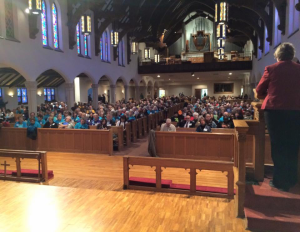
Advocacy Day: LOPPW worked with Wisconsin Council of Churches, Faith Voices For Justice, Interfaith Conference of Greater Milwaukee, Madison Area Urban Ministry, Milwaukee Jewish Federation, Jewish Federation of Madison, Wisconsin Jewish Conference, and WISDOM to organize an Advocacy Day on April 29. About 750 people attended the event to learn about threats to Wisconsin’s safety net programs (drug testing, changes to BadgerCare and long-term care programs, criminal justice reform, driver’s licenses for people who are not documented, and public transit issues including preserving/expanding funding and keeping transit funding in the state budget). LOPPW’s director explained safety net programs during the plenary and at a workshop, co-led by staff from the Wisconsin Council of Churches, discussed an alternative state budget and expanding Medicaid (BadgerCare) with federal dollars.
 Public hearing: On April 30, LOPPW together with the Wisconsin Catholic Conference and Wisconsin Council of Churches, testified on drug testing. Click here to read the statement.
Better choices: LOPPW is working with a coalition of secular and faith-based nonprofits, called Better Choices, to make state budget choices better known. The Wisconsin Budget Project, an initiative of the Wisconsin Council on Children and Families, developed an alternative budget, which would allow us to save and improve our valued safety net programs and keep funding for our schools. We are currently planning press conferences around the state. South-Central Synod of Wisconsin Bishop Mary Froiland will be one of the speakers at our first press conference in Madison on May 4.
What advocacy efforts are going on in your synod or state? We want to hear about it!

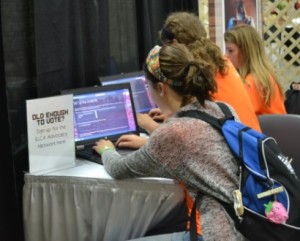 ADVOCACY AT THE ELCA YOUTH GATHERING: ELCA Advocacy joined with ELCA Young Adult Ministry for engagement and action at the ELCA Youth Gathering this July in Detroit. Youth took action in support of Child Nutrition reauthorization, called on the United States to lead in addressing climate change, and learned about how to continue connecting with the ELCA as young adults. We are excited to build our partnership with ELCA Young Adult Ministry by supporting efforts to foster connections and engage on important issues in our communities. Watch for important social media conversations by following @elcayoungadults and #elcayoungjustice!.
 CHILD NUTRITION REAUTHORIZATION: The Senate Finance committee will consider child nutrition program legislation starting Thursday, Sept. 17. This legislation will determine the continuation of cost-effective federal programs that are critical to the wellbeing of children in schools across the nation. Take action today to
 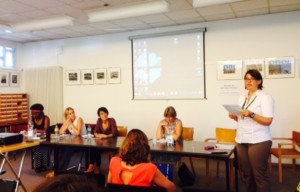 TRAINING WORKSHOP ON ADVOCACY FOR FAITH-BASED ORGANIZATIONS WITH A SPECIAL FOCUS ON WOMEN’S HUMAN RIGHTS: The Lutheran World Federation Women in Church and Society program organized a training workshop from July 6 to July 11 in Geneva on women’s human rights advocacy. It was held jointly with the World Council of Churches, Finn Church Aid, the ACT (Action by Churches Together) Alliance, and the World YWCA. The workshop’s aim was to help participants from member churches or other faith-based organizations to better understand and use U.N. mechanisms and treaties, such as the Convention on the Elimination of All Forms of Discrimination Against Women, the Universal Periodic Review, and the U.N. Commission on the Status of Women to advance gender quality. Submitting “shadow” reports is one of the avenues faith-based organizations can report on human rights situations in the countries being reviewed. The Lutheran Office for World Community’s Christine Mangale presented and moderated a workshop that explored the linkages between Convention on the Elimination of All Forms of Discrimination Against Women, the Universal Periodic Review and the proposed U.N.
 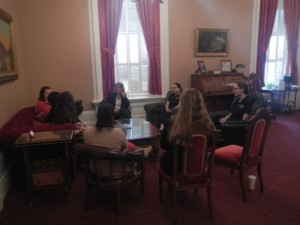 Director Mark Carlson’s activities included a half-day briefing by the California Pan-Ethnic Health Network (focus on health access for undocumented immigrants); attendance at the funeral of the Rev. Richard Bowley, a leader in justice and anti-racism ministry; anti-racism training offered by Faith Lutheran, Meadow Vista, and Bethlehem Lutheran, Auburn; panelist at a forum on police-community relations at Our Redeemer, Sacramento; and hosting a Day at the Capitol for participants in the Lutheran Episcopal Volunteer Network, sponsored by Lutheran Episcopal Campus Ministry at UC Davis (see photo with legislative director for Senate majority leader). A highlight was viewing a Senate hallway press conference by about eight senators who condemned the anti-immigrant rhetoric of Donald Trump.
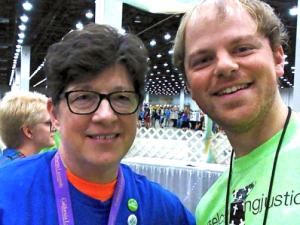 ELCA YOUTH GATHERING: Director Peter Severson was present at the Youth Gathering in Detroit to raise the profile of advocacy, partnering with ELCA Young Adult Ministry and ELCA World Hunger to create action stations in the Interaction Center. The advocacy offices in Colorado, Pennsylvania and Washington, D.C., were represented. Hundreds of youth and group leaders filled out child nutrition postcards for members of Congress and signed the Interfaith Climate Petition, and even Presiding Bishop Elizabeth Eaton came to visit us!
 Lutheran Advocacy Ministry-New Mexico joined with many other groups and individuals to urge that new work requirements not be imposed for families receiving SNAP benefits. The Martinez administration through the New Mexico Human Services Department intends to institute work requirements for recipients from the age of 16 to 60 and for families with children over the age of 5. LAM-NM Director Ruth Hoffman was member of a panel that presented to the Legislative Health and Human Services Committee on July 16 in Las Cruces. Ruth emphasized that over 30 percent of New Mexico’s children live in poverty and that our economy is lagging far behind in the recovery from the great recession. She also stated that there is little or no evidence that the Human Services Department is prepared to or able to administer such a new program that will involve tens of thousands of recipients. Because LAM-NM now is in a covenant advocacy relationship with the NM Conference of Churches, LAM-NM spoke on behalf of that ecumenical organization as well.
 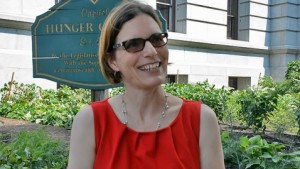 75 other organizations to urge the Consumer Financial Protection Bureau to
  LAMPa connected the State Education Association with the state’s food security coalition, resulting in training more than 100 teacher leaders on poverty and hunger and their connection to learning. That partnership, which will be ongoing, has also yielded the association’s
 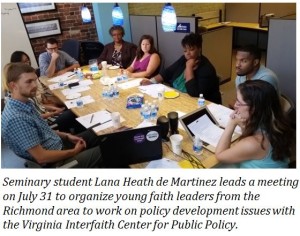 Seminary student and Public Policy Fellow Lana Heath de Martinez is leading VICPP’s organizing efforts to expand ethnic, age and faith diversity through the statewide chapters. VICPP is partnering with a new coalition of agencies called RISE for Youth with the intention of closing juvenile prisons in Virginia. A partnership with the Center for American Progress continues and will culminate with the co-hosting of a Poverty Summit in Hampton Roads in September.
 Vatican Encyclical “Laudato Si”: On June 18 Vatican officials released “Laudato Si,” an
 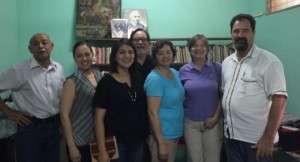 Mexico and Central America: This month, members of ELCA Advocacy and the churchwide organization staff traveled to Mexico to learn about the detainment and treatment of migrant children and families from Central America. Staff met with civil society leaders and government officials to learn more about the ongoing crisis.This visit came in the wake of the Obama administration’s ongoing foreign policy discussion that continues to focus on encouraging increased border security measures by the Mexican and Central American governments without acknowledging the immediate need to protect migrants who are forced to flee. ELCA Advocacy continues to urge lawmakers to
 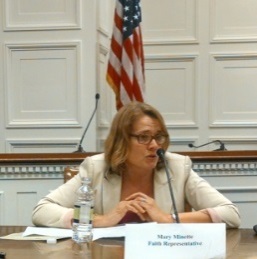 The Endangered Species Act: On June 25, ELCA Environmental Policy Director Mary Minette was on a panel of experts about our moral obligation to care for creation by protecting endangered species. The event was attended by Senate and coalition-partner staff. In her message, Mary reaffirmed our religious calling to be stewards of nature by caring for creatures and the environments around them. To protect God’s creation, we must make environment-friendly choices as well as advocate for continuing the Endangered Species Act, which is, as Mary put it, “a modern-day Noah’s ark.”
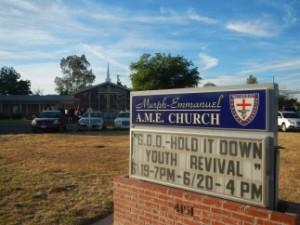 On Friday following the Charleston massacre, LOPP-CA Director Mark Carlson attended a prayer service at Murph-Emmanuel AME (site of a former ELCA congregation) and left Bishop Eaton’s statement and spoke with the pastor of St. Andrew’s AME, the oldest AME church west of the Mississippi.
 Learning about advocacy ministry: Youth from Peace and Trinity Lutheran churches in Las Cruces stopped at the Roundhouse, as the New Mexico state Capitol is nicknamed, on their “mystery trip.” LAM-NM Director Ruth Hoffman spoke to the group about advocacy ministry in a legislative committee room where they were able to sit in the legislators’ chairs and learn about how to be involved in advocacy. Ruth also took them on a tour of the Capitol. Thanks to Laura Carson, AIM and the Christian education and youth ministry director at Peace Lutheran for inviting LAM-NM to be a part of the adventure.
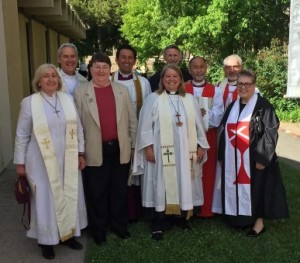 Ecumenical connections: Rocky Mountain Synod Bishop Jim Gonia and LAM-NM Director Ruth Hoffman were part of the ecumenical and interfaith attendees at the installation of the new archbishop of Santa Fe. The Most Rev. John C. Wester comes to the archdiocese from Salt Lake City where he served as bishop and worked in partnership with local ELCA pastors on issues of immigration and poverty. Utah is within the territory of the Rocky Mountain Synod so we look forward to continuing our partnership with Archbishop Wester.
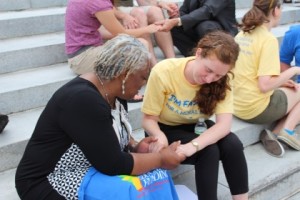 As the July 1 budget deadline looms without promise of being met, Lutheran advocates are making their voices heard in the Capitol.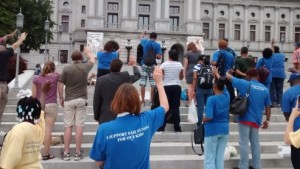
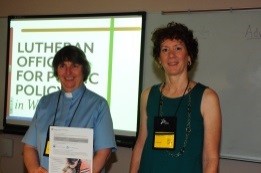
 La Crosse Area Synod: “How to be an Advocate from a Faith Perspective,” co-led by the director and Council Member Bridget Crave.
 Greater Milwaukee Synod: “Human Trafficking in our Backyard,” led by the director. The Assembly was held at Carthage College.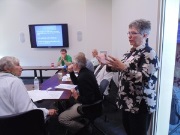
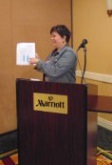 South-Central Synod: “Poverty and our State Budget,” co-led by the director and Council Member Lisa Hassenstab.