Skip to content
ELCA Blogs

ELCA Advocacy

Advent Reflection: Hopeful for families and grateful for my own

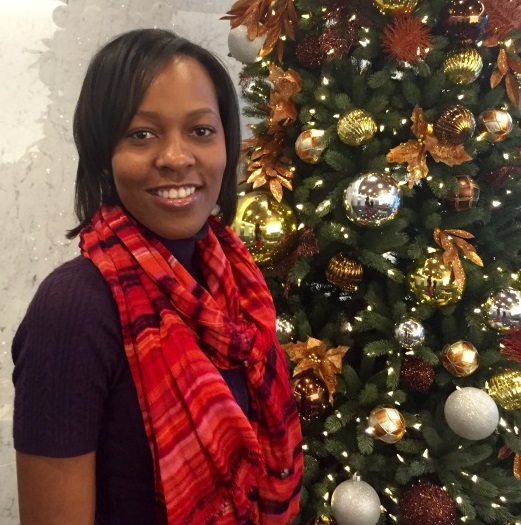
Alaide Vilchis Ibarra, Assistant Director, ELCA Migration Policy and Advocacy

​”The two chief things are faith and love. Faith receives the good; love gives the good. Faith offers us God as our own; love gives us to our neighbor as his own.”  – Martin Luther

​Every year, as Christmas approaches, I begin to worry about budgeting both my time and money for presents while I’m home in Kansas to make sure that neither family members nor friends feel left out. It is a yearly ritual that leaves me feeling stressed. This year feels different. Working with unaccompanied children and their families, and closing a chapter on my own migration story, has given me a new perspective on Christmas and the precious time we spend together with the people we love.

A few months ago I traveled to Mexico with my parents and spent time with my extended family after 15 years of being unable to be together in the same country. As I sat in my grandmother’s dining room laughing with my cousins and aunts, it hit me how much I need those moments just sitting with my whole family. This experience also reminded me what a privilege it is to be able to have dinner with people you love, a privilege I’m well aware not everyone has and, until this year, my own family was denied.

Alaide fam

Alaide and her family in Washingon 

This year, when I visited Central America and Mexico and spoke with unaccompanied children and their families, I was reminded of the importance of family and neighborly love. I heard from many mothers who tearfully recounted why they had been forced to send their child on a dangerous journey or why they had chosen to make the journey themselves. Almost always, they spoke about the pain of separating from their families or communities.

After I returned from my own family trip to Mexico, I reflected on what those 15 years of separation had truly meant for me and my family. I found that the most painful loss was the sense of love and community we had in Mexico. Through family dinners at Christmas we were constantly reminded that we were loved and supported no matter what. Without realizing it, migrating to the United States meant losing that support. I never quite understood the importance of community, family and love until I allowed myself to feel the pain of the 15 years we had lost.

My own story and those I heard in Central America and Mexico makes me wonder if the national conversation on migration would be different if we spoke about family and love instead of border enforcement and security. Although Washington, D.C., can be a hard place to be hopeful, this Christmas season I am determined to concentrate on love, family and community and to remember all who are denied these important things.

Throughout the seemingly endless waves of violence and fear all over the world that force so many to leave their homes, I am still hopeful for positive change. I truly believe that love will conquer fear and violence, as long as we allow it to: “[Love] bears all things, believes all things, hopes all things, endures all things” (1 Corinthians 13:7).​

Alaide photoAlaide serves as Assistant Director for Migration Policy and Advocacy. 

She lives in Washington, D.C.

Love Thy Neighbor: Our Moral Imperative to Support Those Living with HIV/AIDS

By: Nicholas Jaech, Lutheran Office for World Community

“Faith-based organizations are essential partners, particularly in the areas of health service delivery and addressing stigma and discrimination. The partnership with faith-based organizations is critical to ending the AIDS epidemic and making sure that no one is left behind.” – Luiz Loures, UNAIDS Deputy Executive Director, September 27, 2015.

Today we commemorate World AIDS Day – a day to unite in the fight against HIV, show solidarity with people living with HIV and remember those who have died.

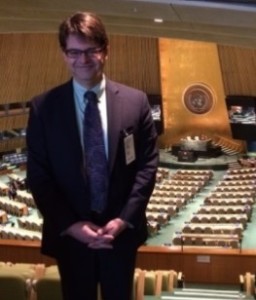
During the General Assembly of the United Nations, the Lutheran Office for World Community (LOWC) staff joined a small group of representatives from civil society, who gathered to have an assessment and planning discussion with UNAIDS regarding the next 15 years of combating the AIDS epidemic. In 2014, UNAIDS drafted and published its Fast-Track strategy, which details the pathway to ending AIDS by 2030. This strategy utilizes the 90-90-90 model, aiming for 90% of all people living with HIV knowing their HIV status, 90% of people who know their status having access to treatment and 90% of people on treatment having suppressed viral loads by 2020. Should this be successful, the strategy then calls for a 95-95-95 model by 2025. If successful by 2030, HIV/AIDS will be so contained that it no longer will be considered an “epidemic.”

However, during this meeting, UNAIDS admitted to a significant funding gap – a $10-15 billion shortfall in the implementation of this “Fast-Track” approach. This gap is largely due to the misconception that the AIDS epidemic is no longer as pressing or dangerous as it once was. This misconception then leads to the under-prioritization of HIV/AIDS, which often results in the unwillingness of governments to legitimately undertake measures to create new revenue specifically for combating the epidemic.

This isn’t to say that national governments are completely shying away from funding the response to the current AIDS epidemic. At a high-level event at the UN held later that day, the United States pledged to fund the life-saving treatment for 12.9 million people living with HIV in 2016-17, as well as funding efforts to reduce HIV among girls in 10 sub-Saharan countries by 40%.1 Additionally, Malawi pledged 14% of its GDP to HIV prevention, factoring out to $148 per HIV positive person per year. This funding comes in the form of the distribution of necessary anti-retroviral drugs .2

But despite these announcements, the $10-15 billion shortfall remains.

So what can we do, as followers of a loving and compassionate God, to bolster the efforts of UNAIDS to end the AIDS epidemic by 2030? First, we can make financial donations to the ELCA HIV and AIDS Ministry, which has established a commitment to support the efforts of ending the AIDS epidemic. This support manifests in the training of pastors for HIV/AIDS counseling, providing necessary anti-retroviral medication to rural communities, and free offerings of HIV testing. We can also support our family, friends, and neighbors living with HIV by providing food, clothes, toiletries, and other specified items to local HIV/AIDS clinics, shelters, and organizations. This can also include volunteering one’s time and energy as well. These two simple yet significant actions not only contribute to efforts to end the epidemic, but also illustrate our ability to manifest God’s love in our daily lives. As written in 1 John 3:17-18 – “How does God’s love abide in anyone who has the world’s goods and sees a brother or sister in need and yet refuses help? let us love, not in word or speech, but in truth and action.” – we are called to love and support those around us. This has to include those living with HIV and AIDS.

Yet, we are called not only to provide financial support or direct donations for local and international efforts to combat this epidemic, but also to combat the stigma that perpetuates and strengthens this epidemic every day. In fact, we cannot even begin to address the issue of HIV/AIDS without addressing the stigma and marginalization of those who are living with it.

Stigma and discrimination in education, health clinics, and general society against people living with HIV/AIDS, and especially against key populations with HIV/AIDS, continues to exacerbate the epidemic. For example, transgender women are 49 times more likely to acquire HIV than all adults of reproductive age.3 However, only 39% of countries have national AIDS strategies that specifically address transgender people (ibid). Additionally, gay men and other men who have sex with men worldwide are 19 times more likely to be living with HIV.4 Furthermore, adolescent girls are eight times more likely to be living with HIV than their male counterparts.5

Stigma and discrimination in societies around the world against these key populations above, as well against many others, are the largest contributors to the AIDS epidemic. It is then our responsibility as people of faith to work to systematically dismantle the oppression that continues to make these populations vulnerable. We are called to extend our love and support specifically to these groups of people. We are called not only to support them in their health, but also to support them in their own agency – bringing them into mainstream dialogue and decision-making regarding HIV/AIDS efforts (see also the ECLA Strategy on HIV and AIDS).6 The ELCA and the Episcopal Church reaffirmed their commitment to supporting these key populations in 2014.7 Also, religious leaders from 18 Eastern and Southern African countries with the Ecumenical Advocacy Alliance, an ecumenical initiative of the World Council of Churches, recently declared that “all human beings are equal before God and should be treated with dignity and respect regardless of age, gender and sexual orientation.”8

We, as church members with global relationships, have the potential to greatly contribute to the fight against the AIDS epidemic. If we are to truly live the message of 1 John 3:17-18, we must support people living with HIV/AIDS by addressing the core issue: stigma and discrimination. This is not simply an act of charity, but a moral calling of our Church by God. World AIDS Day reminds us that we can address this dangerous stigma only by showing unconditional love for all people, for I believe that only unconditional love, unconditional support, and a unified campaign for justice can combat stigma. If we truly want to end HIV/AIDS by 2030, this unconditional love has to continue to be at the forefront of our work, not only as a Church, but in our work as individuals. To echo a central message of the ELCA: “God’s work, our hands.”

For more on the ELCA’s HIV and AIDS Ministry, read here. You can also follow their efforts via Facebook.

For further reading on combating stigma against key populations, see UNAIDS publications here.

  1. http://www.pepfar.gov/press/247338.htm
  2. http://webtv.un.org/meetings-events/watch/action-implementation-ending-the-aids-epidemic-by-2030/4514846194001(7:00)
  3. http://www.unaids.org/en/resources/documents/2014/Transgenderpeople
  4. http://www.unaids.org/en/resources/documents/2014/Gaymenandothermenwhohavesexwithmen
  5. http://www.un.org/youthenvoy/hiv/
  6. http://download.elca.org/ELCA%20Resource%20Repository/ELCA_Strategy_on_HIV_and_AIDS.pdf?_ga=1.201502483.308726961.1447196323
  7. http://download.elca.org/ELCA%20Resource%20Repository/World_AIDS_Day_2014.pdf?_ga=1.206233553.391509662.1441291859
  8. http://www.ipetitions.com/petition/religious-leaders-call-fast-track-agenda

Praying and working for an end to injustice in Minneapolis

ELCA Advocacy

​Today, we highlight reflections from Lutheran leaders in Minneapolis, where five people were shot near a demonstration outside the city’s 4th Precinct station on Monday, and additional shots were fired Wednesday morning. Marches, prayer vigils and rallies began Nov. 15 and continue to occur throughout Minneapolis. These protest actions are aimed at urging accountability in the justice system in response to the death of Jamar Clark, a 25-year-old black man who was shot by a police officer earlier this month.


The Rev. Ann Svennungsen is Bishop of the Minneapolis Area Synod. She reflected on the support provided by Lutheran leaders in Minneapolis and her experience participating in a candlelight vigil last Friday.

“[Earlier this week,] I awoke to news that shots had again been fired in north Minneapolis. Three young men, seeking to protect a system of white privilege, shot five of the citizens who were protesting at the 4th Precinct Police Station in response to the fatal shooting of Jamar Clark.

The protest is now in its 12th day – an encampment of folks keeping vigil both day and night. While some of the demands have been met by officials, the protesters continue to call for the release of tapes that could reveal what actually happened to Mr. Clark.

In addition to those keeping vigil, many more are delivering blankets and hot food and words of encouragement. And dozens upon dozens of Lutheran clergy have shown up – in solidarity with those who suffer and caring for those most traumatized and sorrowful. Our synod – and the ELCA – has seven congregations in the vicinity of the 4th precinct and we continue to pray for their ministries.”

prayer_vigil A candlelight vigil on Friday, Nov. 20, in Minneapolis

“Regardless of the tensions over the details, facts, and specific demands particular to the case; there is profound need for discussion of equity and racial disparities. Pain and frustration over unemployment, affordable housing, education, and basic city services – challenges felt especially in North Minneapolis – are all part of what compels the protesters to keep vigil.

This shared experience will strengthen us all for the long road of seeking justice together. We will pray for the family and community of Jamar Clark. And, we also pray for our mayor, public servants, police officers, the healing of the nation, for justice to be done. I believe we can do better as a city.

The vigil was a powerful experience. A unity of spirit and a sense of determination filled the gathered crowd. Out of this experience, your brothers and sisters in Minneapolis call on Lutherans around the country to enter into discussions about what would happen if a similar catalyzing event occurred in your community. How would your congregations engage those who were suffering? What message would protesters hear from your participation … or lack of participation?

Better yet, we encourage you not to wait for such a time – but to build relationships now, organize vigils now, read about systemic racism now, pray and work now for an end to injustice and the healing of our cities.”

Ian_Louis_Kendrick Ian McConnelll, Louis Tillman and Kendrick Dwight at the demonstration outside Minneapolis’ 4th Precinct station

Louis Tillman, Ian McConnelll and Kendrick Dwight were present outside Minneapolis’ 4th Precinct throughout the week and participated in a number of peaceful demonstrations in the city. Tillman is a vicar, McConnell is a seminary intern, and Dwight is a Lutheran church leader in the Harrison neighborhood of Minneapolis.

Tillman was a few blocks from where five protesters were shot at the demonstration outside Minneapolis’ 4th Precinct station. “I was over on Knox and Plymouth … and I heard the gun shots rolling off. It sounded like the shooters emptied the entire clip! I kept telling myself ‘Lord have mercy!’ Then I called everyone from my church who [were] in the thick of things to ensure that they were all right.”

All three continue to show up at the ongoing demonstrations, with the goals of listening and community building in any way they can. “Even without all the particulars about Jamar Clark, his criminal history, or the release of video evidence from the night he was killed by a Minneapolis police officer, we as the ELCA have a voice that may be stronger than our silence,” McConnelll stated.

“We know something about grace and reconciliation. We pride ourselves on showing up after natural disasters and have the opportunity to show up after tragedies caused by human sin in our own neighborhoods. Our identity is rooted in the experience of being sinners and saints, all the time. And it’s time for us to leave what feels familiar and safe and show up.

We can’t change flawed systems ourselves, but we can listen to and support those who are grieving, struggling and afraid. We may not be able to topple oppressive systems (Jesus struggled with this too), but we can be allies with the oppressed.

We can both support police and hold them accountable, just like we can both confront racism and work for reconciliation.”


The ELCA social statement “Freed in Christ: Race, Ethnicity, and Culture” expresses our spiritual calling to confront racism, to engage in public leadership, and to advocate for justice and fairness for all people.

You can learn more about the ELCA’s commitment to challenging racial injustice at Racial Justice Ministries.

Thanksgiving Reflection: Freedom from Want

John Johnson, ELCA Program Director for Domestic Policy

Thanksgiving is my favorite holiday. For my entire career in Washington, D.C., I have claimed Thanksgiving as the holiday that I would stay in Washington, since I fly home to south Georgia for weddings, funerals, births, baptisms, Christmas and pouting parents when they want me to come home.

As the quintessentially American time of celebration, it represents for me many things – not the least of which is that it has been an important part of my journey to adulthood. Thanksgiving, for me, has always been a time of deepening relationships that comes with sharing a holiday meal with friends, and often, strangers.

ThanksgivingUnfortunately, I think all too often assumed in this gathering of friends and family is the notion that we take a moment to actually be thankful … to take stock of what we are blessed with and how fortunate we are for so much abundance in our own lives – even at times when we live in scarcity. For me, Thanksgiving is a reminder that I may not have everything I want, but year after year, I have everything I need. I am also deeply mindful that my good fortune doesn’t belong to everyone.

I remember my first Thanksgiving in Washington, D.C.: I was a very young Hill staffer living paycheck-to-paycheck and shopping for my first Thanksgiving away from home, with a very tight budget. For whatever reason, I can still vividly see myself standing at one of those large freezer cases in the grocery store, pulling one turkey over another, checking the price of each trying to find the one budget-appropriate turkey with my name on it. After some considerable effort, I found, tucked away in the corner of the freezer case, a small turkey with the right price. Fighting back tears of both joy and humility, I took my humble haul to the checkout stand and paid for my bounty.

I remember the friends that joined me in the small apartment I shared with friends that Thanksgiving of 1993. Since then, I always look forward to Thanksgiving with great joy. This year, I join my goddaughter, her dads, and an abundant assortment of friends young and old. And that wonderful moment with the “guest of honor” is brought to the table with “oohs” and “ahhs.”

This warm and anticipated moment of turkey day was captured many years ago by one of my favorite artists, Norman Rockwell. Following the bombing of Pearl Harbor, President Franklin Roosevelt outlined his vision of the four freedoms in an address to Congress. Printed in four installments on the cover of the Saturday Evening Post was the renowned “Thanksgiving” painting. It is appropriately titled “Freedom from Want,” one of Roosevelt’s four freedoms, which also include freedom of speech, freedom of worship and freedom from fear.

Facing the storms

Sadly, when we turn on the TV, log onto Facebook or grab a newspaper, we see constant fear, want, probably way too much speech, and a lot of worship in response to it all. There are so many storms around us all over the world. There have been storms in the past, and I fear, sadly, there will be storms in the future.

For me, the only way to not be paralyzed by the shock and desperation is to advocate for those ideals Jesus modeled – feeding, healing, showing compassion, praying, suffering and challenging leaders to make difficult decisions. I have the great privilege to do this by representing the ELCA in advocating to our U.S. government and urging decision-makers to address domestic poverty and hunger and to protect vital social services for the most vulnerable among us.

The work we do in Washington is just one small part of a much larger picture of advocacy in the ELCA. Join us atwww.elca.org/advocacy to learn more about how we, as a church, strive for justice and peace throughout the world.

All of us with ELCA Advocacy wish you a wonderful Thanksgiving. We look forward to sharing more reflections during the upcoming Advent season. Thank you for being a part of the work of Advocacy.

God’s abundant blessings to you all,

John Johnson

Living Earth Reflection: Calling on world leaders to protect God’s creation

Mary Minette, Director of Environmental Policy

November, 2015

Let us hold fast to the confession of our hope without wavering, for he who has promised is faithful. And let us consider how to provoke one another to love and good deeds, not neglecting to meet together, as is the habit of some, but encouraging one another, and all the more as you see the Day approaching.

                                                                                                               Hebrews 10:23-25

In less than two weeks, world leaders will gather in Paris to negotiate a new global agreement to address climate change at the annual meeting of the United Nations Framework Convention on Climate Change. Despite the tragic events of this past weekend, the French government has announced that the core meeting will continue as planned, given the importance and urgency of the topic under discussion, although security will be paramount and non-essential events may be cancelled.

The national leaders meeting in Paris will bear not only the hopes and needs of their own people, but also those of the entire creation, suffering from the growing impacts of climate change. Representatives from businesses, environmental groups, relief and development organizations and labor unions will also be in Paris to support the negotiations in various ways. But there will also be hundreds of people of faith attending the meeting who will work and pray for an outcome that protects God’s creation from future harm and helps our global neighbors, particularly those made vulnerable by poverty, to manage the very real impacts of climate change that are already profoundly affecting their homes and livelihoods.

In his recent encyclical on care of creation, Pope Francis called on all of humanity to concern ourselves with the fate of our common home and to “cooperate as instruments of God for the care of creation, each according to his or her own culture, experience, involvements and talents.”

People of many faiths are embracing this common responsibility and calling on our leaders to negotiate an ambitious agreement in Paris that reduces greenhouse gas emissions, encourages development of low carbon technologies, and assists populations most vulnerable to the effects of a changing climate.

Specifically, we seek an outcome in Paris that:

  • requires all nations to work to phase out energy sources that contribute to climate change and phase in more sustainable, renewable sources of energy;
  • requires all nations to improve their nationally determined goals for emissions reductions at frequent intervals, in order to account publicly for their progress and to increase ambition as needed;
  • includes a strong commitment to help the most vulnerable countries adapt to climate change and support for mechanisms that help build resilience and minimize and manage risks and losses; and
  • includes concrete pledges from the wealthiest countries to increase necessary financial support, technology transfer and capacity building for the most vulnerable countries– such as small island states and Least Developed Nations.

You can help support those who are traveling to Paris by:

  • Sending a message to our leaders that you support a strong agreement in Paris.
  • Pledging to reduce your own carbon footprint.
  • Praying for a peaceful meeting, particularly in light of the tragic events of this past weekend in Paris, and for a strong outcome for the meeting.

Can We Change How We Think About Central America?

Patrick Flaherty, Legislative Advocacy Intern

Patrick Flaherty, a recent college graduate from Maryland, recently started an internship in the Washington D.C. ELCA Advocacy Office. As ELCA Policy Directors send out blogs and other alerts on legislative action, we are excited to share new thoughts, stories, and perspectives on the issues from students, leaders, and Lutherans from across the country. Consider sharing your story by clicking here.

As a recent college graduate, I have had a lot of great opportunities to get involved in service and social justice work, two things I am very passionate about. As much as I love direct service I know in order to truly solve major systemic problems, you need long-term solutions. This is what created my interest in addressing issues through policy. I am excited to learn about the different aspects of policy work with the great people at ELCA Advocacy over the next couple months.

During my undergraduate studies I was able to take a number of courses that focused on the history and people of Central America. I became especially interested in U.S. international policies in the region, how they affected the people there, and how these policies continue to impact Central America-U.S. relations today. For me there is a strong connection between immigrant and migrant justice today, and the effects of U.S. policy in Central America. Keeping in mind the livelihoods of immigrants and migrants is even more important as rising violence in Central America has created major forced displacement in and outside the region, and immigration is a central topic of the public, political and presidential discourse. I believe staying informed on these issues and approaching them with compassion for the people they affect is part of our calling as people of faith.

Since starting at the ELCA Advocacy office, I’ve had the chance to go to different coalition meetings such as the Central America & Mexico Working Group and even the United Nations High Commissioner for Refugees’ (UNHCR) office to learn what different organizations are doing on the ground to respond to the forced displacement of Hondurans, Guatemalans and Salvadorans. Currently the three countries, commonly referred to together as the Northern Triangle, are disproportionately affected by violence forcing many people to flee to safety. These people, including children and families, are asylum seekers under international law. However the U.S. government has not recognized them as such.

I often think about how—or more precisely, when— the US will change its relationships with our southern neighbors, recognize those fleeing as needing international protection, and admit our role in some of the current problems the region is facing. Two recent articles by The New York Times highlight the US’s role in deporting General Carlos Eugenio Vides Casanova to El Salvador, and pushing for the deportation of former vice minister of defense Inocente Orlando Montano Morales to face justice in Spain. Both men participated in ordering the 1989 murders of six Jesuit priests, their housekeeper, and her daughter in their home at the Universidad Centroamericana (UCA) in El Salvador’s capital, San Salvador. These extraditions can be seen as step in the right direction for the U.S., which helped fund many of the military operations in El Salvador in the 1980s that killed thousands of innocent civilians and propped up dictatorships under the guise of fighting Communism in the region.

The U.S. should continue on this path of seeking justice in the many cases of human rights violations that occurred with our government’s support in numerous Latin American countries not just El Salvador. Confronting our troubled past and accepting the roles our nation played in harming the people of Latin America should be part of building stronger relations with our neighbors. Unfortunately, at the same time the US supports these high profile deportations they are supporting the detention of thousands of children and families fleeing violence in their home countries by increasing political and financial support for efforts by Mexico to detain and deport these refugees and asylum seekers. Most of these people will be sent back to the violent neighborhoods and cities they left in the first place without ever being offered the proper legal channels to file for asylum.

Last week, I attended a hearing held by the Inter-American Commission on Human Rights, a branch of the Organization of American States that protects and promotes human rights in the Americas, focusing on the illegal practice by governments of stopping asylum seekers from reaching safety. The Northern Triangle countries do not have the institutions or governmental infrastructure to protect people targeted by violent agents in their countries so people are forced to look for safety outside their communities, whether it means inside or outside their country. All of the nonprofit and governmental leaders testified of their work on the ground trying to assist these refugees and the need for better institutions that can comply with international laws. The U.S. is currently the best option for thousands of people who would be harmed if they stay in their home communities. Even while we try to make some amends for past injustices we supported, we cannot ignore the current plights of thousands of Central Americans simply seeking a better life and peaceful communities. As people of faith we should reflect on Jesus’s parable about ‘The Judgment of the Nations’ from Matthew 25. He tells us that when we acted for those of His family we act for Him and here we find our calling to welcome the stranger. Hopefully we can urge our government and our communities to join in this call, especially when people facing danger and violence seek our help.

ELCA Advocacy Update- November 2015

ELCA Advocacy

Lutherans are taking action across the country! Below you will find our monthly State Advocacy Newsletter. Share with your friends!

​​​____________________​

Washington, D.C. – Mary Minette, Interim Director of Advocacy

www.elca.org/advocacy

FEDERAL SPENDING DEAL: This month, members of the U.S. House and Senate reached a bipartisan compromise with the White House on a proposed budget deal. The agreement, signed by President Obama just days before a federal default, will set raised budget limits for both defense and non-defense programs for the next two years, while simultaneously avoiding a government shutdown by raising the debt ceiling. We recognize the need to address long-term fiscal sustainability for the wellbeing of critical U.S. social service programs. However, the deal should be praised for reversing harsh and highly inefficient budget cuts, many of which have crippled programs that benefit working families and our most vulnerable neighbors. Though overall funding levels for the whole government have been decided, Congress now must work to pass a federal spending bill for the remainder of the 2016 fiscal year by Dec. 11 to avoid a government shutdown. Watch for upcoming updates and advocacy opportunities on upcoming budget talks in the coming month!

GREEN CLIMATE FUND: The budget deal that passed in late October did not specifically allocate funds for the Green Climate Fund, so it is important that members of Congress, particularly senators, hear from constituents that a final bill to fund the government through the end of the 2016 fiscal year must include the $500 million requested for the U.S.’s initial contribution to the fund.  We are working with a broad coalition of faith, development and environmental groups to advocate for the funding as an important aspect of our work to support the negotiation of a strong international climate change agreement in Paris in December.

PATH TO PARIS: Negotiators met for their final session prior to the December meeting in Paris in mid-October, and while 155 countries have so far come forward with pledges to reduce their emissions of greenhouse gases beginning in 2020 as part of the new agreement, many significant issues are still undecided. These include details about financial support for emissions reductions and adapting to climate change in low-income countries, how to differentiate between the responsibilities of large industrialized nations like the U.S. and European nations and those of emerging economies like China and India, and less affluent and less developed countries, and how to deal with long-term losses that countries and communities are unable to manage or adapt to. In addition, non-governmental organizations were shut out of most of the negotiating sessions in Bonn, which does not bode well for a transparent and accountable end to the negotiations in Paris.

WORLD FOOD DAY: On Oct. 16, the ELCA joined millions of people around the world to commemorate World Food Day. This is the time to celebrate the progress we have made in reducing global hunger while also recognizing that much work remains. As part of this effort, we asked our Lutheran community to take action to ensure that Congress sustains existing food and agriculture programs that fight global hunger. Click here to learn about the ELCA’s engagement in the week leading up to World Food Day.

INTERNATIONAL HUMAN RIGHTS: Last month, the Evangelical Lutheran Church in America joined other faith and human rights organizations for a hearing at the Inter-American Commission on Human Rights, a regional body addressing human rights in the Americas, on the detention of asylum seekers. The ELCA, together with the Mennonite Social Action Committee in Honduras, provided a document outlining findings from our June trip to Mexico on the detention and deportation of young people seeking international protection. This document also outlined specific stories of young people with legitimate asylum claims who had been deported to Honduras from Mexico despite fearing harm. Despite numerous studies outlining the failure of Mexico to protect those seeking asylum, the U.S. government continues to praise Mexican enforcement efforts.

CRIMINAL JUSTICE REFORM: A bi-partisan coalition of Senate Judiciary members recently introduced and passed out of committee S. 2123, the Sentencing Reform and Corrections Act of 2015. This important legislation is the product of intense negotiations between Judiciary Committee Democrats and Republicans.  Both sides have credited the faith community for creating the political will to negotiate through our advocacy efforts in Iowa – home to Judiciary Chairman Charles Grassley. Companion legislation has been introduced in the House of Representatives with committee action expected soon. The faith community sponsored two Capitol Hill briefings for staff to hear from faith leaders on the importance and moral urgency for criminal justice reform on Nov. 3.

____________________​

New York, NY – Dennis Frado​, Lutheran Office for World Community

WOMEN, PEACE AND SECURITY: On Tuesday, Oct. 13, in commemoration with the 15th anniversary of U.N. Security Council Resolution 1325, an open debate on Women, Peace and Security was convened by the Security Council to discuss the further implementation of that resolution. In his opening remarks the secretary-general reiterated that women’s leadership in peace-building is a top priority and shared his commitment to seeing the resolutions implemented. In addition to the secretary-general, Under-Secretary-General and Executive Director of U.N.-Women Phumzile Mlambo-Ngcuka stressed that the most under-utilized tool in peace-building is women. She also introduced the Global Acceleration Instrument on Women Peace and Security and Humanitarian Engagement. This new fund will accelerate the implementation of UNSCR 1325 as well as channel funds to women’s organizations working on peace building. Directly after this opening segment, Resolution2242 was unanimously adopted by the Security Council. It has two key outcomes: The first is that it outlines actions to improve the implementation of UNSC Resolution 1325; the second is proposing a broader Women, Peace and Security agenda, including countering violent extremism, monitoring sexual violence within U.N. peacekeeping forces, increasing the representation of women in governments, and implementing the gender recommendations of a recently released global study.

A GLOBAL STUDY AND A GLOBAL REPORT:  On Wednesday, Oct. 14, “Preventing Conflict, Transforming Justice, Securing the Peace – A Global Study on the Implementation of United Nations Security Council Resolution 1325” was officially launched. This study is the product of the engagement of member states, U.N. entities, regional organizations and civil society, including research institutes. Primarily, this study revealed that the ability of women to influence negotiations increased the chances of agreements being reached was positively correlated with greater implementation and had a positive impact on the durability of peace. During this time, Radhika Coomaraswamy, lead author of the global study, expressed her opinions of the recently adopted UNSC Resolution 2242. While she was overall supportive of the resolution, she had serious concerns about the mixing of women, peace and security with counter terrorism efforts. She noted the need for a clear, conceptual difference between the two, and that U.N. intentions toward civilians and military forces cannot be blurred. Finally, on Tuesday, Oct. 20, the U.N. Department of Economic and Social Affairs launched the 2015 edition of the World’s Women Report coinciding with the occasion of World Statistics Day. The speakers at the launch emphasized the importance of presenting empirical evidence that connects statistics and policy making. The report analyzes the status of women based on the Beijing Declaration and Platform for Action areas of concern. It looks at both the progress and gaps over the past 20 years.

MIGRATION CRISIS IN EUROPE: On Friday, Oct. 16, Nicholas Jaech with the Lutheran Office for World Community attended an event organized by the International Peace Institute on the migration crisis in Europe. This event featured Ninette Kelley, director of the U.N. High Commissioner for Refugees (UNHCR) Liaison Office in New York and Vincent Cochetel, UNHCR regional coordinator for the Europe Refugee Crisis. Kelley noted the disturbing reality of the current crisis: 42,500 people are displaced every day and 50 percent of the refugees are children, which is the highest level in decades. She went on to explain that if Europe were to take in the same proportion of refugees as Turkey, the world’s refugee crisis would be solved. Cochetel illustrated the current routes that migrants are taking. The first is from North Africa up through Italy, while others enter Europe via Turkey, which he noted was the more popular route. He noted that the current crisis is not about the number of refugees, but rather the lack of responsibility among European states. As for current objectives of UNHCR in the area, he highlighted the continued effort to reduce loss of life along the migration routes, support efforts to reform asylum structures and LOWC1policies in states, maintain strong advocacy surrounding solidarity, and provide a special focus on women and children. To learn more about the ELCA’s efforts in the migration crisis, click here. For a video of the above event, produced by the International Peace Institute, click here.

On Oct. 27, LOWC welcomed Maria Immonen, director of TheLutheran World Federation’s Department for World Service(LWS). In addition to receiving an orientation to LOWC’s work, she had appointments with ecumenical colleagues and staff of the U.N. Office for the Coordination of Humanitarian Affairs where they discussed LWS’ operational field programs in Central Africa and the Middle East.


____________________​

California – Mark Carlson, Lutheran Office of Public Policy

www.loppca.org

CA1The deadline for Gov. Jerry Brown’s action on 2015 legislation passed on Oct. 11, and LOPP-CA was disappointed in the veto of AB 47 (see previous update) that would have accelerated expansion of state preschool to more children from low-income families. Citing budget pressures in the absence of action by the special legislative session on health care funding, he also vetoed an LOPP-CA supported bill expanding the state low-income housing tax credit, which helps leverage federal credits.

October was busy as LOPP-CA Director Mark Carlson used study leave time to participate in the Parliament of World Religions in Salt Lake City; co-hosted a “Not your mother’s church supper – Celebrating women in energy & climate change” for about 45 participants in CA2the Behavior, Energy, and Climate Change Conference, with energy scientist and Lutheran Dr. Kristin Heinemeier of UC Davis; and displayed and spoke briefly at the Sierra Pacific Synod Professional Leadership Conference in Monterey.

Following the Sierra Pacific Synod Hunger event on poverty and incarceration, Mark joined ELCA World Hunger staffer Ryan Cumming and two representatives from the Southwest California  Synod for worship at Trinity Lutheran, Porterville, and a water tour of East Porterville, an epicenter of drought-induced dry wells. The group accompanied volunteers in delivering water to homes, talked with families, and viewed pumps purchased with an ELCA World Hunger grant that brings water from portable tanks into homes.

____________________​

Colorado – Peter Severson, Lutheran Advocacy Ministry Colorado

www.lam-co.org

CO1AFFORDABLE HOUSING: Lutheran Advocacy Ministry-Colorado was present at the 2015 Housing Colorado Now! Conference in Beaver Creek, meeting with policy-makers and other affordable housing advocates to develop strategies for housing low- and extremely low-income families in Colorado. The critical lack of affordable housing touches all corners of Colorado, and several speakers at the conference addressed issues anticipated in the next legislative session of the Colorado General Assembly, including rental vouchers and a renewal of the state Low Income Housing Tax Credit.

ECONOMIC SECURITY: Groups working on legislation dealing with families living in poverty have begun meeting in anticipation of the 2016 session. In particular, LAM-CO has been working with the Colorado Center on Law & Policy as well as the All Families Deserve a Chance coalition to prepare an economic security agenda for the session. Issues that may come up include paid family-and-medical leave, child care for low-income parents in college programs, and a major alteration to the state hospital provider fee, which could secure hundreds of millions of dollars in funding for education.

CONGREGATION VISITS: Director Peter Severson has been on the road visiting congregations all over the state. Pictured here is Zion Lutheran in Trinidad, whose pastor is the Rev. Andrea Doeden. The building is 125 years old and is listed on the National Register of Historic Places as “Zion’s German Lutheran Church.” Built in an eclectic Victorian Gothic style, it’s the oldest Lutheran church building in Colorado!

____________________​

Illinois – Jennifer DeLeon, Lutheran Advocacy Illinois

www.lutheranadvocacy.org

STATE BUDGET: Illinois is now entering its fifth month without a budget! Lutheran Social Services Illinois our partner agency is not receiving funding for a variety of programs that serve some of the most vulnerable people in our communities, including home care for seniors, residential substance abuse treatment, and mental health services. They are doing all they can to keep providing services but they need a state budget now! Please call or write a letter to Gov. Bruce Rauner and to your state legislators by clicking here, asking them to work together to pass a budget now!

Il1ELIMINATION OF POVERTY: Lutheran Advocacy-Il is part of the Illinois Commission on the Elimination of Poverty. The commission is an independent body focused on eliminating poverty in our state in a manner consistent with international human rights standards. As such, the commission’s charge is twofold: 1) To create and monitor a specific, substantive, measurable strategic plan for cutting extreme poverty in Illinois; and 2) To offer advice and comment on state matters that may positively or negatively impact the state’s goal of ending poverty. Studies show that suburban poverty is growing in Illinois. In October the commission held public hearings around the state and we were able to hear directly from advocates and clients served by a broad section of suburban programs. Members of the public had the opportunity to provide their feedback and inform the work plan of the Commission. Click here to learn more about the commission.

____________________​

Minnesota – Tammy Walhof, Lutheran Advocacy Minnesotatammy@lcppm.org

PAYDAY LENDING REFORM: Over the summer, the StarTribune ran reports investigating campaign contributions to state legislators by payday lenders. Embarrassment seems to be opening legislators to reform discussions. With the Joint Religious Legislative Coalition, Minnesotans for Fair Lending and Trinity Lutheran Church, LA-MN is working on a payday education event scheduled for Thursday afternoon and evening, Dec. 3.

mn2AFFORDABLE HOUSING/HOMELESSNESS: The lack of affordable rental housing is one of Minnesota’s greatest challenges, reiterated at a recent event with Julian Castro of the  U.S. Department of Housing and Urban Development, and U.S. Rep. Keith Ellison. LA-MN continues to educate about homelessness, affordable housing, and impacts on food security.

Nativity Lutheran Church (St. Anthony) hosted a weekend conference, benefit concert, and worship services based around concern for homelessness.Tammy Walhof (LA-MN) participated and was guest speaker for all five worship services.

CLEAN POWER PLAN: LA-MN is doing presentations around coal’s impact on health and the benefits of the Clean Power Plan. The encyclical by Pope Francis helps offer alternative paths into discussion. LA-MN is also part of an effort with other faith groups across the Midwest doing “climate conversations.”

IMMIGRATION: The Northeastern Minnesota Synod Immigration Task Force and LA-MN met with Jodi Harpstead, director of Lutheran Social Services of Minnesota, to learn more about how Minnesota has been less welcoming to immigrants in recent months. LA-MN also helped to facilitate an undocumented immigrant interview by high school students. LA-MN hopes to incorporate the immigration story into our upcoming work.

Facebook  Twitter: @LuthAdvocacyMN

____________________​

New Jersey – Sara Lilja, New Jersey Synod

slilja@leamnj.org

LEAMNJ supported Senate bill S2360! The Episcopal Church and the ELCA asked the Legislature to support efforts that reduce violence and keep our communities safe. We called, visited and emailed our senators and prevailed on an override vote. The bill requires local, county and state law enforcement officers to be alerted when people with a history of serious mental illness ask a judge to expunge their record so they may buy a firearm. This bill will provide judges with relevant information regarding a person’s history when they are making important decisions on the expungement of records. It now goes to the Assembly for an override vote after the November elections. Much work to be done!

____________________​

New Mexico – Ruth Hoffman, Lutheran advocacy Ministry New Mexicowww.lutheranadvocacynm.org

NM2Legislative interim work continues as the interim committees work to develop their recommendations for the 2016 legislative session. LAM-NM is closely monitoring the work of the Legislative Finance Committee, which is developing the legislative budget proposal, as well as the Legislative Health and Human Services Committee, which considers legislation affecting low-income people in our state. Interim committees will wrap up their work in early December.

NM1The LAM-NM Policy Committee met on Oct. 24 and adopted the LAM-NM 2106 Advocacy Agenda.  The 2016 Advocacy Agenda continues to focus our work on issues addressing policies that can improve the lives of people living in poverty and experiencing hunger.

____________________​

Pennsylvania – Amy Reumann, Lutheran Advocacy Ministry in Pennsylvania

Tracey DePasquale, Associate Director

www.lutheranadvocacypa.org

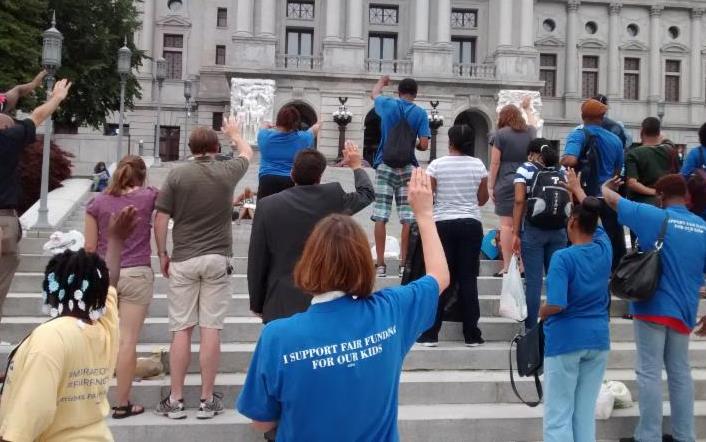
As Pennsylvania heads into its fifth month without a budget, one bright spot is the Legislature’s unanimous passage of the bill to expand the state Housing Trust Fund, which LAMPa’s network has been advocating for two years.  Although Gov. Tom Wolf endorsed the bill months ago, LAMPa is asking Lutherans to urge him to sign it so that it doesn’t get dragged under by the budget battle entering its fifth month. Chief among the sticking points is the education budget, for which LAMPa has been advocating increased funding and a formula to move the commonwealth out of its standing as dead last in the country in terms of equity.

Director Amy Reumann preached, taught and celebrated advocacy in the Northeastern Pennsylvania Synod, where policy council members hosted a fundraiser for LAMPa and a dinner to honor local advocates. She also engaged Lutherans around the state to testify at hearings on the Clean Power Plan and attended the annual meeting of Pennsylvania Interfaith Power & Light.

PA1Associate Director Tracey DePasquale met with policy staff in the Department of Education to discuss trauma-responsive education and ways to build a statewide coalition to enact policy that reflects best practices.  She also taught an adult forum at Christ Lutheran, Gettysburg, about disparities in education and as part of a series on inequality.

LAMPa staff brought together immigration advocates including Lutheran Children and Family Services at a state conference on Welcoming Communities and a Lower Susquehanna Synod information session for refugee resettlement to encourage advocacy on immigration.

As a follow-up to the National Youth Gathering, LAMPa staff participated in RiseUp York —  a weekend service, learning and advocacy immersion youth retreat organized by the Lower Susquehanna Synod.  Both synod and LAMPa staff hope to duplicate this experience and curriculum for other communities.

____________________​

Southeastern Synod, Georgia – Hilton Austin Jr.,

haustin337@att.net

Two members of the Southeastern Synod Advocacy Team attended the Lutheran Immigration and Refugee Service (LIRS) Leadership Summit in Washington, D.C., this month. Bishop Julian Gordy and Patti Austin, national president of Women of the ELCA, visited several members of Congress, along with other ELCA leaders, to support refugee reform legislation, to call for an end to family detention, and to support increased funding for refugee protection and assistance.

gatext2As one of the newest ministries of the Southeastern Synod, we have been busy building our network, organizing, and developing civic and ecumenical partners. We recently added links to the ELCA Advocacy Action Center and the LIRS Action Center to our synod website. We are currently planning an advocacy training event to be held in Atlanta in mid-January; our target date for promoting the training event is Nov. 6.

Our team is organized into various, what we call, ready benches; each ready bench leader develops a network of people who are passionate about a particular issue and remain ready to take action on current state and national legislation as it arises. We currently have three in Georgia, Immigration, Human Trafficking, and Criminal Justice, and two in Tennessee, Health Care and Criminal Justice. We will continue to add ready benches as folks hear God’s call into this important work.

____________________​

Virginia – Charles Swadley, Interim President and CEO

Rob Martin, Director of Programs & Developmenthttp://www.virginiainterfaithcenter.org/

va1HEALTH CARE: Our Virginia Consumer Voices for Health Care program along with our Hampton Roads and New River Valley chapters recently produced forums in Norfolk and Blacksburg, respectively, titled, Health Care Access: a Moral Imperative. The forums included an interfaith panel of faith leaders, testimonies from those who suffered without health care, and a call to action to local faith communities to care for our neighbors through accepting federal Medicaid funds to close the coverage gap.

va2ECONOMIC JUSTICE AND HUNGER:  VICPP’s Northern Piedmont Chapter produced a hunger awareness event, Setting the Table: An Interfaith Event on Ending Hunger, at Germanna’s Daniel Technology Center in Culpeper, Va. Center staff and members attended the 2015 Clergy Convocation in Richmond with the theme “Repair the breach, restore the streets.” The center is partnering in a Hunger Summit with the ELCA Virginia Synod and the Virginia Council of Churches, which will be held at Virginia Union University in Richmond on Nov. 18.

va3CREATION CARE:  VICPP co-sponsored an event with the Chesapeake Bay Foundation titled “Living Waters” to organize statewide advocacy and policy development efforts to preserve clean water in the Chesapeake Bay and its watersheds. Important references to preserving God’s creation were made with many great examples of congregations putting their faith in action through greening programs and advocacy efforts. VICPP joined other creation-care advocacy organizations on the Interfaith Climate Change Impact Tour in Richmond organized by Creation Justice Ministries. VICPP will be propelling creation care from the mountains to the coast in its advocacy action work with congregations this fall.

ADVOCACY TRAINING: Advocacy Training Sessions are being held by our Northern Virginia Chapter in Fairfax and by our Hampton Roads Chapter in Virginia Beach on Nov. 8. Staff is also presenting training “What do we do with the Stranger? A Conversation about Immigration” in Richmond on Nov. 15.

Twitter: @vainterfaith  Facebook: www.facebook.com/virginiainterfaithcenter

____________________​

Washington – Paul Benz, Faith Action Network

www.fanwa.org

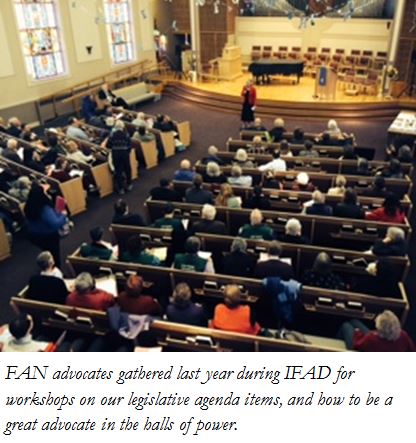
watext1ELECTION: Faith Action Network (FAN) has an annual goal of organizing “interim” meetings between our advocates and their state legislators and members of congress/staff during summer and fall.  So far, we have had 24 meetings with state legislators in 14 districts with 113 advocates, and 12 meetings with members of congress/staff from 10 districts with 50 advocates (including bishops).

FAN has also created a one-page description of four current ballot issues (three initiatives and one local proposition) and FAN’s positions on them. To see that,click here.

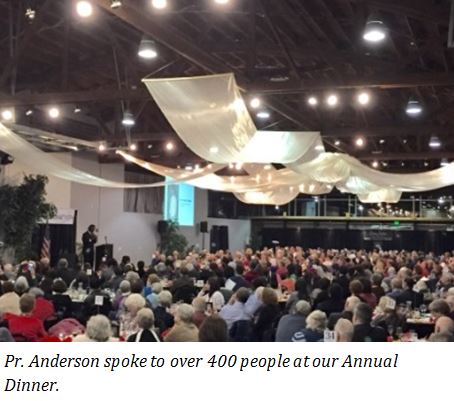
ANNUAL DINNER: FAN will be having its fifth annual dinner/fundraiser on Sunday, Nov. 15 (click here to see our invite). This year’s theme will be “Yes We Can!” focusing on the faith community’s response to racism and violence post-Charleston. The Rev. Dr. Carey G. Anderson, senior pastor at Seattle’s historic First African Methodist watext2Episcopal Church will be our speaker, and we have invited Jennifer Pinckney (widow of the Rev. Pinckney) of Mother Emanuel AME in Charleston, S.C.

FORUMS ON TAXATION: FAN just completed two forums on each side of our state on the issue of taxation (Washington has the most regressive/unfair tax structure in our nation) with the title “What Kind of State Do You Want to Live In? Conversation and mobilization regarding our regressive tax structure.” A state legislator spoke at each event, and we had a local religious leaders’ panel, which had an ELCA and Episcopal bishop present.


____________________​

Wisconsin – Cindy Crane, Lutheran Office for Public Policy in Wisconsin

www.loppw.org

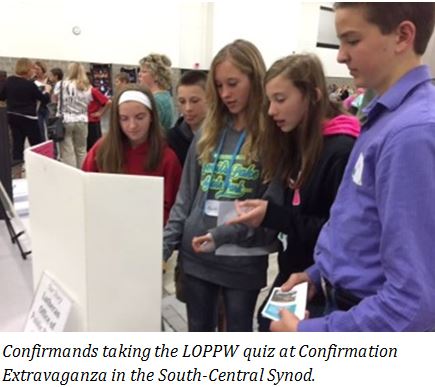
WORKSHOPS AND CONFERENCES: LOPPW’s director led workshops at First United in Sheboygan, Lake Edge in Madison, and at the Northern Great Lakes Festival of Congregations in Minocqua, where LOPPW also displayed a table.

witext1SYNOD TEAMS: LOPPW’s director met with Greater Milwaukee’s director for evangelical mission, The Rev. Sandy Chrostowski, about helping to start a hunger team. The director attended a workshop led by the Northern Great Lakes hunger team. LOPPW was involved in recruiting members for a Care for God’s Creation team for South-Central/LOPPW.  The team will access World Hunger resources. The director has also met with the senior policy director of Clean Wisconsin about relevant state witext2publicpolicy; LOPPW is now on the list of stakeholders for Wisconsin’s Clean Power Plan at the Deparment of Natural Resources.  Wisconsin’s government has threatened to not implement any clean-power plan.

ANTI-TRAFFICKING: The director testified at a hearing on the Safe Harbor bill.  LOPPW/Cherish All Children’s team in the Northwestern Synod began plans for organizing conferences accessible to people in the LaCrosse Area, Northwestern, East Central, and South-Central synods.  Council Member Venice Williams discussed placing a focus on human trafficking for the annual Milwaukee King Day event Venice helps to plan; LOPPW will be a partner in 2016.

____________________​

What advocacy efforts are going on in your synod or state? We want to hear about it!

Contact us at washingtonoffice@elca.org ​​

ELCA Advocacy Update- October 2015

ELCA Advocacy

Lutherans are taking action across the country! Below you will find our monthly State Advocacy Newsletter. Share with your friends!

​​​Washington, D.C.

Mary Minette,

Interim Director of Advocacy

www.elca.org/advocacy


2015 ADVOCACY CONVENING: Last month ELCA, Episcopal and community leaders from around the country met in Washington, D.C., for a two-day advocacy event. The 2015 Advocacy Convening brought together bishops and grassroots leaders in a common call to action the week of Pope Francis’ first papal visit to the United States. Participants of the convening explored the role of deliberative democracy and faith in informing public service and examined the ways our shared faith perspective can cultivate mutual respect, moral reflection, and honest conversation with our government.

On the day of Pope Francis’ joint-address to Congress, convening participants met with more than 60 congressional offices and 24 members of Congress. There, leaders and advocates with first-hand experience urged their lawmakers to pass a responsible budget that provides funding for programs that fight extreme poverty, climate change, and protect children fleeing Central America. At the same time, more than 250 advocates from across the country sent letters to Congress through the ELCA Advocacy Action Center.


DC1 DC2 DC3

ADVOCATING FOR A JUST FEDERAL BUDGET: On Sept. 30, Congress passed a resolution that will fund the federal government until Dec. 11. However, this resolution does not provide necessary increases in funding to address our concerns for environmental issues or vulnerable people. Now, budget talks continue and there is an opportunity once again to influence our members of Congress as they debate how to fund the government for the remainder of the fiscal year ending on Sept. 30, 2016.

In the next few months we will continue to raise our voices in support of a budget that honors our earth and the well-being of all around the world. This includes funding for the Green Climate Fund, health and refugee services, emergency food assistance, and other programs that enhance the lives of families in the U.S. and abroad. Continue to check your inbox for opportunities to join us and faith communities around the country in urging Congress to pass a faithful budget.

LUTHERAN AND EPISCOPAL CHURCH LEADERS’ OPINION COLUMN FEATURED IN USA TODAY: Presiding Bishop Eaton joined leaders of Lutheran and Episcopal churches in Canada and the United States to write an opinion column on uniting to safeguard God’s Creation that was featured in USA Today on September 23. The church leaders described that “our traditions drive us to address the interrelated problems of climate change, environmental degradation, hunger and poverty… Though we represent different religious institutions, we share a common goal, and recognize that time is short to achieve it. We all know that to protect the poorest we must protect the climate.” This piece was published during Pope Francis’ visit to the U.S.

____________________

New York, NY

Dennis Frado​, Lutheran Office for World Community


SITUATION IN THE CENTRAL AFRICAN REPUBLIC: The Lutheran Office for World Community has been following the situation in the Central African Republic (CAR) very closely. On Sept. 26, an upsurge in violence occurred in the previously relatively stabilized capital of Bangui. Only four days prior, a meeting between the U.N. Department of Peacekeeping Operations (DPKO) and nongovernmental organizations highlighted the positive outcomes of the people-centric National Forum in Bangui, which adopted the Republican Pact for Peace, National Reconciliation and Reconstruction. These outcomes, especially free and fair national and legislative elections scheduled for October 2015, have become a high-priority for U.N. agencies, including the Security Council, DPKO and the U.N. Development Programme. However, violence in the country’s capital in the recent days has led CAR’s interim transitional president, Catherine Samba-Panza, to postpone the previously scheduled October elections. In a high-level U.N. meeting on CAR held on Oct. 1, U.N. Secretary-General Ban Ki-moon urged member states to give financial contributions to CAR to fund the priorities of the Bangui Forum and to rally the support of the international community. As for the role of faith-based organizations in CAR, DPKO urges spaces of faith and worship to also be vehicles for reconciliation among marginalized and oppressed peoples. Additionally, The Lutheran World Federation and nine other nongovernmental organizations drafted and signed an advocacy memorandumoutlining the problems in CAR and recommending solutions. For more information on the situation in CAR, read here.

NY1OUTLOOK OF THE HIV AND AIDS EFFORTS AT THE UNITED NATIONS: During the 70th Session of the U.N. General Assembly, Nicholas Jaech with the Lutheran Office for World Community joined activists, health workers and governments to discuss long-term commitments to ending HIV and AIDS by 2030 – an objective outlined in the Fast-Track strategy developed byUNAIDS. On Sunday, Sept. 27, a meeting between UNAIDS and civil society was held to discuss the financial realities of achieving this goal. UNAIDS admitted a $10 billion to $15 billion global shortfall in funds necessary to successfully implement the Fast-Track strategy. On the same day, a high-level event, “Ending the AIDS Epidemic by 2030: Shaping New Models and Means of Implementation,” was hosted by the governments of Kenya and Malawi, in partnership with UNAIDS. At this event, the governments of Malawi, Kenya, Mali, Lesotho, Saint Kitts and Nevis, and the United States pledged their support for the Fast-Track strategy. All governments that spoke highlighted the need to focus on adolescent girls, who are eight times more likely than men to be HIV positive. These governments also acknowledged the importance of concentrated efforts to support and de-stigmatize marginalized groups, specifically men who have sex with men, sex workers, and drug users. For more information on ELCA efforts concerning HIV and AIDS, click here. Additionally, follow them on Facebook and on Twitter at@ELCAHIVandAIDS.

NY2U.N. TURNS 70 AND DISCUSSES REFORMS: The United Nations celebrates its 70thanniversary in October. During the annual General Debate in September, many heads of state used this anniversary occasion to highlight the achievements of the United Nations regarding its three pillars – peace and security, development, and human rights. Nevertheless, voices also gained momentum demanding reforms of current U.N. structures. A growing number of countries support the French-Mexican initiative to encourage the permanent five members of the Security Council (China, France, the United Kingdom, Russia and the United States) to refrain from using the veto in cases of mass atrocities. A similar project was launched by the ACT-Group (Accountability, Coherence, and Transparency). About 60 countries signed a Code of Conductpledging not to vote against any drafts that would deter international action on genocide, crimes against humanity or war crimes. Additionally, many member states demand a more transparent and diplomatic process of the selection, nomination and appointment of the next secretary-general, who will follow Ban Ki-moon in 2017. Many members of civil society supported this demand by joining the 1 for 7 Billion Campaign.

POST-2015 DEVELOPMENT AGENDA; 2030 AGENDA FOR SUSTAINBLE DEVELOPMENT: On Sept. 25, more than 150 heads of NY3state convened for the United Nations Sustainable Development Summit 2015 and adopted the 2030 Agenda for Sustainable Development, Transforming Our World, which is “a plan of action for people, planet and prosperity.” The Global Goals, as they are called in a recently launched campaign, consist of 17 new sustainable development goals and 169 targets. LOWC has been monitoring the negotiations and will continuing to follow the implementation phase including the development of target indicators by 2016 and the establishment of review mechanisms.

____________________​

LOWC Advocacy Blog

Nicholas Jaech, Lutheran Office for World Community

THE CULTURE OF PEACE: This month, Nicholas Jaech reflects on recent developments at the United Nations and the culture of peace in his blog, “Reconciling a Culture of Peace and a Responsibility to Protect.”

“I have been overwhelmed with admiration for how active faith-based groups are at the United Nations. Social justice is at the forefront of all conversations, faith is shared, and ecumenical working groups have formed to promote peace in its many forms – climate justice, gender justice, and hunger relief, just to name a few. These groups, many ecumenical and inter-faith, illustrate how justice and peace can be created in an ever-increasingly diverse world.” Read the full version at the ELCA Advocacy Blog!

____________________​

California

Mark Carlson, Lutheran Office of Public Policy

www.loppca.org


ca1After the DC Advocacy Convening and a stop in Kansas for The Land Institute’s Prairie Fest that included theologians Mary Evelyn Tucker of Yale and John Cobb of Claremont, LOPP-CA director Mark Carlson arrived in Sacramento after flight delays for a press event promoting AB 47, a bill that would move California toward serving all children from low-income families with state preschool by 2018.  The bill is sitting on Gov. Brown’s desk with an Oct. 11 deadline for signature. Due to circumstances beyond his control, Mark was unable to respond to an invitation from Brown’s office to participate in the Los Angeles signing ceremony for SB 350, which sets the goal of doubling energy efficiency in all buildings, and producing half our electricity with renewable sources, by 2030.  Mark also joined a closing Saturday afternoon prayer circle on the day that Gov. Brown signed AB 953, a bill that seeks to reduce racial and identity profiling by law enforcement through expanded training, data gathering, and an ca2advisory board.  The bill’s outcome was very much in doubt, with 24/7 vigilers prepared to launch a hunger strike, “Starved for justice,” the following Monday.  LOPP-CA worked with PICO California to secure St. John’s Lutheran Church for a Sept. 2 briefing, with prayers, music, and blessing, which filled the sanctuary prior to a march to the Capitol that drew 1,000.

Upcoming events include the Sierra Pacific Synod’s annual hunger gathering, featuring ELCA World Hunger’s Ryan Cumming, and a water tour to East Porterville.

____________________​

Colorado

Peter Severson, Lutheran Advocacy Ministry – Colorado 

www.lam-co.org

CO1ELCA ADVOCACY CONVENING: Alongside bishops, community leaders, and other state public policy office directors, LAM-CO Director Peter Severson was in Washington, D.C., for the ELCA Advocacy Convening. After watching Pope Francis’ address to a joint session of Congress from a streaming video feed in the Dirksen Senate Office Building, Peter joined LAM-NM Director Ruth Hoffman and Denver-based community leader Joy Waughtal in visiting congressional offices on Capitol Hill. Productive meetings were held with staffers for Sen. Cory Gardner, Colo., Sen. Tom Udall, N.M., and Rep. Ed Perlmutter, Colo. Peter and Ruth also acted as envoys for Rocky Mountain Synod Bishop Jim Gonia, offering personal greetings to Rep. Cynthia Lummis, Wyo., at the ELCA Advocacy Prayer Brunch (pictured right).

CHILD NUTRITION: LAM-CO was represented at the Hungry for Change Summit 2015, hosted by Hunger Free Colorado. Many critical partners in anti-hunger advocacy and relief attended the conference, whose keynote speaker was Joel Berg, executive director of the New York City Coalition Against Hunger. Advocates are still working with members of Congress to ensure the safe renewal of funding for key anti-hunger programs in child nutrition, including school breakfasts, summer meal programs, and WIC.

____________________

​Illinois

Jennifer DeLeon, Lutheran Advocacy – Illinois 

www.lutheranadvocacy.org


We are now going into the fourth month without a budget! Every day there are people who are going without critical services because providers have had to lay off staff or close their doors entirely.

ACT NOW: Tell your state representative to vote for SB 2046, which funds critical services for Illinois’ most vulnerable citizens and enables the social safety net to remain intact. The bill was approved by the Senate in early September and would give the governor authority to make payments to human services providers not already funded pursuant to court orders. Click here for more information on the bill and to take action!

CERTIFICATE OF GOOD CONDUCT: HB 3475 We also have some good news to share! A bill we worked on was signed into law. HB 3475 expands the eligibility for Certificates of Good Conduct to include people who have committed non-sex-related forcible felonies so that people who have made grave mistakes have at least one avenue beyond clemency to demonstrate they’ve turned their lives around. They may petition the court to receive one of these certificates, which can help them obtain employment or licensure. This and other bills are part of the work we are doing in coordination with the Office of Racial Justice to continue to bring awareness to the criminal justice social statement and provide concrete ways people can take action!

____________________

​Minnesota

Tammy Walhof, Lutheran Advocacy – Minnesota

tammy@lcppm.org  


NEXT YEAR’S PRIORITIES: Since the 2016 legislative session will be only 2.5 months long, the LA-MN Policy Council decided to focus on constituent education, while being prepared to act on a few key issues.

PRIMARY EDUCATIONAL FOCUS: Creation Care, especially climate concerns and clean energy, through frames of 1) global poverty, 2) low income in the state and nation, and 3) clean, accessible water.

NIMBLE ACTION/EDUCATION FOCI:

Payday lending reform: LA-MN has worked on this in the past, and five Minnesota synods have payday resolutions. An ELCA congregation also started a lending program to help people get out from under payday loans.

Affordable housing and homelessness: LA-MN continues active participation in the Homes for All Coalition. The “ask” is still being decided and could include bonding, homeless youth, senior homelessness, families with children, discrimination against people of color, etc..

IMMIGRATION: Lutheran Social Service of Minnesota reports that resettlement of immigrants and refugees is facing pushback in some Minnesota communities. LA-MN will work to change the narrative toward “welcoming the stranger.” LA-MN will also be ready to lend support to state or federal efforts related to immigration and refugees.

MN1ELCA/EPISCOPAL ADVOCACY CONVENING: The convening included numerous speakers, the congressional address by Pope Francis via streaming video to a Senate office building, and advocacy. Representing Minnesota were Bishop Steve Delzer (Southeastern Minnesota Synod), the Rev. Margaret Kelly (Shobi’s Table), and LA-MN Director Tammy Walhof, who met with Rep. Tim Walz, Sen. Amy Klobuchar, and staff from the offices of Sen. Al Franken, and Rep. John Kline.

 Twitter: @LuthAdvocacyMNFacebook

____________________

​New Jersey

Sara Lilja, New Jersey Synod

logm@njsynod.org


LEAMNJ is working to override the Governor’s veto of bill (S2360). This legislation was drafted because the courts here in NJ asked for additional support when making decisions about expungement cases. Simply, local, county and state law enforcement officers to be alerted when people with a history of serious mental illness ask a judge to expunge their record of psychiatric treatment so they may buy a firearm. The bill would provide judges with relevant information regarding a person’s history when they are making important decisions on the expungement of records. This legislation could impact public safety and the safety of the petitioner.

Our challenge is that the NJ legislature has not been able/willing to override a single veto since this Governor has been in office. We are currently mobilizing congregational members, and many have responded! Visits, calls, and emails- the push is on in NJ to help prevent gun violence!

____________________

​New Mexico

Ruth Hoffman, Lutheran Advocacy Ministry – New Mexico 

www.lutheranadvocacynm.org


NM1LAM-NM recently led a forum at Our Savior Lutheran Church in Alamogordo, N.M. The forum explored poverty in New Mexico (which has among the highest rates of poverty in the nation) by putting together a household budget for a family NM2that was headed by someone earning the New Mexico’s minimum wage of $7.50 per hour. The participants estimated the cost of housing, transportation, food, child care, health care, taxes and other expenses. The group quickly concluded that those costs were much more than the gross income of $1,300 per month.  They discussed possible public policies that could address that income gap, such as increasing the minimum wage and making more affordable housing available.

LAM-NM Director Ruth Hoffman was honored as one of 20 leaders in state health care advocacy by Health Action-New Mexico. The recognition was given at a dinner at which Ron Pollack of Families USA was the keynote speaker.  Ruth was congratulated by U.S. Rep. Michelle Lujan Grisham.

____________________


​Ohio

Nick Bates, The Faith Coalition for the Common Good 

nick@oneohionow.org


As a person of faith, I want our elected officials to focus on ending hunger, reducing poverty, and working to improve our communities. I believe Ohio can accomplish these things only when elected officials are responsive to the needs of their constituencies. That is why I am voting YES on ISSUE 1.

When we have fair districts we will have fair elections. A yes vote on Issue 1 will improve the district drawing process, and encourage elected officials to be more responsive to the needs of their communities. Proverbs 31 calls us to speak up for the oppressed. Issue 1 will give all Ohio voters an opportunity to speak up for themselves and make a difference through the electoral process.

Our communities matter and elected officials are charged to represent our needs at the Statehouse in Columbus. Gerrymandering has weakened the voice of the voter and strengthened the voice of money, lobbyists, and ideology. Issue 1 will reform our system to bring the voters back to the center of Ohio’s Statehouse. It is our prayer that Issue 1 will pass on November 3rd and it will be successful in improving the People’s House in Columbus.

____________________

Pennsylvania

Amy Reumann, Lutheran Advocacy Ministry in Pennsylvania 

Tracey DePasquale, Associate Director

www.lutheranadvocacypa.org


LAMPa advocacy helped lead Gov. Tom Wolf to address the serious problem of hunger and inadequate nutrition; he issued an executive order to coordinate Pennsylvania’s food and nutrition programs and revive a hunger strategy for Pennsylvania!Read more about this advocacy success!

PA1Pennsylvania is in its fourth month without a budget, with Gov. Wolf vetoing a stop-gap plan, saying it would just delay progress toward his top priority: adequate and equitable education funding. LAMPa’s network continues to urge lawmakers to approve the fair formula and fund it with a budget that adequately addresses need.

Congregations around Pennsylvania filled out postcards on school funding and child nutrition as an advocacy action on “God’s work. Our hands.”  Sunday.

LAMPa is recruiting and equipping Lutherans to testify on the state’s Clean Power Plan, including this testimony from the Rev. Paul Metzloff.

PA2Tracey participated in the kickoff of a new Welcoming Community in York and the start of the 100 Women/100 Mile March from York’s immigration detention facility to Washington, D.C., protesting family detention.

LAMPa staff accompanied state grassroots leaders to the ELCA advocacy convening in Washington, D.C., meeting with legislative staff on federal policy.

PA3Staff worked with the Gettysburg and Philadelphia seminaries about collaboration on Lutheran Day in the Capitol 2016. It will be part of Gettysburg’s Spring Academy with focus on intersections of faith, science and action.

Our Policy Council held their retreat at Susquehanna University, kicking off with a kayak trip on the Susquehanna River. Playmobil Luther came too!

____________________​

Virginia

Charles Swadley, Virginia Interfaith Center for Public Policy     

www.virginiainterfaithcenter.org


VA1HEALTH CARE: Our Virginia Consumer Voices for Health Care (VCV) program and Northern Virginia Chapter produced a “Medicaid Expansion: Who Benefits” forum in Arlington in partnership with the League of Women Voters. The forum included elected officials and was the first joint function of the League of Women Voters of Falls Church and the Northern Virginia and Fairfax Chamber of Commerce. Prospects are improving with statewide chamber of commerce support for Medicaid expansion. VCV will be producing multiple “Call to Action: Health Care Access as a Moral Imperative” events this month around the state (Norfolk, Newport News and Roanoke). VCV (http://www.vaconsumervoices.org/) has been actively increasing its social media outreach to promote closing the coverage gap during the general assembly session that begins in January 2016. Health care policy content is developed and distributed to thousands of followers in a weekly roundup.

HUNGER:  The Center is planning a Hunger Summit with the ELCA Virginia Synod and the Virginia Council of Churches that will be held in Richmond in November. We will producing 10+ congregation-based Social Justice University trainings for advocacy action on hunger, climate and others issues across the state as part of coordinated organizing efforts with our statewide chapter network. Also, VICPP’s Northern Piedmont Chapter is producing a hunger awareness event Setting the Table: An Interfaith Event on Ending Hunger” at Germanna’s Daniel Technology Center in Culpeper, Va.

VA2GUN VIOLENCE PREVENTION AND IMMIGRATION: The Center has initiated policy development ministries in gun violence prevention and immigration rights with grant support provided to our seminarian and public policy fellow, Lana Heath de Martinez. Lana attended the sixth-annual Virginia Immigrant Advocates Summit of the Virginia Coalition of Latino Organizations and is preparing to work on legislative and policy issues now confronting immigrant communities in Virginia, including closing the coverage gap with Medicaid expansion and access to driver’s licenses for immigrants.

CREATION CARE:  VICPP is co-sponsoring an event with the Chesapeake Bay Foundation called “Living Waters,” which will organize statewide advocates in policy development efforts to preserve clean water in the bay. See our new video of our amazing collaborators and chapter members helping VICPP put its faith in action at http://tinyurl.com/createjustice.

____________________​

Washington

Paul Benz, Faith Action Network 

www.fanwa.org

WA1At the Bishops’ Advocacy Convening in Washington, D.C., Faith Action Network (FAN) was privileged to join all three of our ELCA bishops, who were in attendance. FAN was able to secure meetings with seven of our 10 House members, and one of our U.S. senators. The bishops were very engaged in presenting issues of food and hunger (especially Child Nutrition Reauthorization and the Global Food Security Act), the renewal of the Columbia River Treaty, and federal recognition for the Duwamish Tribe. Follow-up with the staff of those offices will be the next step.

FAN convened interfaith leaders for lunch with Gov. Jay Inslee for conversation about his recently released rulemaking process to curb C02 emissions by our state’s 30 largest emitters. The past legislative session did nothing about meeting our state’s mandated C02 emission goals.  Eleven religious leaders of many faith traditions attended and have since issueda statement.

FAN is sponsoring two forums on taxation called “What Kind of State Do You Want to Live In?  Conversation and mobilization about our state’s regressive tax structure.” ELCA Bishop Kirby Unti will be on one of the panels of local religious leaders.

FAN is preparing for another annual fundraising dinner on Nov. 15 with the theme “Yes We Can!” Our guest speaker will be the Rev.  Carey Anderson, senior minister of Seattle’s historic First AME Church. He will speak on the efforts needed to combat the racial injustices affecting our local communities and nation. To learn more about the event or to register, go toFANWA.org.

____________________

Wisconsin

Cindy Crane, Lutheran Office for Public Policy in Wisconsin 

www.loppw.org

WI1LUTHERAN AND EPISCOPAL ADVOCACY CONVENING SEPT. 22-24 IN WASHINGTON, D.C.: (Left) Visiting Sen. Tammy Baldwin are Melissa and Marquitta Smith of Hephatha Lutheran Church of the Greater Milwaukee Area Synod, Bishop Jerry Mansholt of the East Central Synod of Wisconsin, Bishop Jim Arends of the La Crosse Area Synod, Bishop Mary Froiland of the South-Central Synod of Wisconsin, and LOPPW’s director, Cindy Crane.WI2

(Right) Visiting U.S. Rep. Reid Ribble’s office are Marquitta and Melissa Smith and Bishop Jerry Mansholt.

LOPPW RETREAT: We held an all-day LOPPW Advisory Council/Staff Retreat in Marathon to discuss pressing issues related to hunger in the communities of the council members, hone in our priorities, and make plans for the upcoming months.

ANTI-TRAFFICKING: Our task force met in Rice Lake to discuss upcoming legislation and begin planning conferences around the state.  We are thankful for a grant from the Women of the ELCA to help fund the events.

CONTACT WITH STATE LEGISLATORS: LOPPW’s director was in contact with legislators about the bill to return 17-year-old non-violent, first-time offenders to the juvenile justice system, the Safe Harbor Bill, redistricting, and the possible dismantling of the Government Accountability Board.

INTERNS: The director interviewed a UW-Madison student and a recent graduate of UW-Madison for internship positions at LOPPW and will gladly welcome both.  She has begun creating work plan for them. They will begin their internships in October.

____________________​

What advocacy efforts are going on in your synod or state? We want to hear about it!
Contact us at washingtonoffice@elca.org ​​

Reconciling a Culture of Peace and a Responsibility to Protect

Nicholas Jaech, Lutheran Office for World Community

“In a new millennium, let us rediscover faith. Not in order to use it against others like has happened so many times in our history, but to understand our reason for existing in this world. Peace is the name of God. “ – Professor Dr. Emil Constantinescu

This statement by Professor Dr. Emil Constantinescu, former president of Romania, was made during the United Nations High Level Forum on The Culture of Peace on Wednesday, September 9 .1 The Lutheran Office for World Community had the opportunity to attend this all-day event, which focused on fostering a “culture of peace” in our world today. This concept, “Culture of Peace”, is rooted in A/RES/53/243, a resolution passed during the 53rd Session of the General Assembly in 1999. In this resolution, “Culture of Peace” is a set of attitudes and values based on non-violence, dialogue, cooperation, the promotion of human rights, developmental and environmental needs, gender equality, and the freedom of expression, just to name a few. This resolution was further bolstered by resolution A/RES/56/5 in 2001, which declared 2001-2010 the “International Decade for a Culture of Peace and Non-Violence for the Children of the World.” Similarly, the General Assembly passed a resolution in 2012 (A/RES/68/125) reiterating the original “Culture of Peace” resolution passed in 1999. The Evangelical Lutheran Church in America observed a “Decade for a Culture of Nonviolence” between 2000 and 2010.

The forum on the 9th continued in the tradition of continually reinforcing the “Culture of Peace.” Specifically, panelists, experts and national representatives focused on the upcoming 2030 Agenda for Sustainable Development (Sustainable Development Goals, or SDGs) and the role of the media in creating an international peace culture. Various national delegates also had the opportunity to express their visions of the future. The United States spoke of a future where freedom of expression and journalism contribute to this culture of peace, while Bangladesh spoke fervently about violence that stems from intolerance, as well as the violent division that occurs when walls between peoples are built.  Overall, the energy in the room was optimistic; optimistic for a future devoid of violence and hate.

However, just one day prior, on September 8, the Lutheran Office for World Community also took the opportunity to sit in on a General Assembly Informal Interactive Dialogue on the Report of the Secretary-General on the Responsibility to Protect. “Responsibility to Protect” is a concept that has been developing since 2005, which outlines three methods for dealing with atrocity and violence occurring in our world. The third method, arguably the most contested among Member States, provides the international community the opportunity to take collective action against crimes of genocide, ethnic cleansing, war crimes, etc.2 This third method was most recently utilized by the Security Council in 2011 in the actions it took against authorities in Libya, following the widespread violence against civilians.3

During this dialogue on September 8, the concept of the “Responsibility to Protect” manifesting in collective action was contested. The Russian Federation spoke out against international efforts to intervene. Citing Libya as an example, they argued that the situation in Libya has spiraled into chaos and instability – a direct consequence of this policy.4 On the other hand, the United States praised the “Responsibility to Protect” and invoked the current situation in Syria as reason for further attempts of international collective action.4 While the support for the “Responsibility to Protect” was noticeable, many concerns were voiced over the use of international collective force in the face of atrocity.

These two all-day events, occurring just one day apart from each other, were my first two official experiences in the United Nations. I left the building after the second event and asked myself the following questions: How do we as Lutherans, peacemakers and followers of a loving God, who are eager and willing to build a worldwide Culture of Peace, respond to the current reality of violence and atrocity in some parts of the world? Do we invoke collective action among UN Member States, often times using violence against oppressive regimes? Or do we rely solely on the 2030 Agenda for Sustainable Development, hoping that economic and social development will provide the seeds for peaceful cultures?

As a fresh-out-of-university 22 year old, I cannot begin to answer these questions. National delegates, humanitarian organizations, and international church bodies have been discussing this complex dichotomy for years. However, I have to return to the inspiring words of Professor Dr. Emil Constantinescu about using faith as a means for peace:

“… the world powers, international organizations, the United Nations, the UNESCO, the civil society, try to create a political culture of security through negotiation and cooperation, in order to promote peace and understanding throughout the world. We are looking for the lowest common denominator, on which everybody can agree. My opinion is that we should plan for more. If we want to make real peace and understanding between people, we must focus to identify, not the lowest common denominator, but we should relate ourselves to the highest common denominator – faith.”

I have been overwhelmed with admiration for how active faith-based groups are at the United Nations. Social justice is at the forefront of all conversations, faith is shared, and ecumenical working groups have formed to promote peace in its many forms – climate justice, gender justice, and hunger relief, just to name a few. These groups, many ecumenical and inter-faith, illustrate how justice and peace can be created in an ever-increasingly diverse world.

And while I unfortunately still cannot answer my questions posed above, I will attempt to answer them with another question: How can we use faith in this millennium to reconcile the security-based concept of “Responsibility to Protect” and the development concept of ”Culture of Peace”?

Let us continue to work to bring faith into all conversations here at the United Nations and use faith as a tool for advocacy, partnership, and understanding, not as a tool for division. Through this, I am already confident that change can be made and that people will see peace.

———

To view the recorded webcast of the General Assembly Informal Interactive Dialogue on the Report of the Secretary-General on the Responsibility to Protect, please click here.

To view the recorded webcast of the United Nations High Level Forum on The Culture of Peace, please click here.

  1. http://webtv.un.org/meetings-events/watch/part-2-high-level-forum-on-the-culture-of-peace-general-assembly-69th-session/4474285689001
  2. http://www.un.org/en/preventgenocide/adviser/responsibility.shtml
  3. http://www.un.org/en/preventgenocide/rwanda/about/bgresponsibility.shtml
  4. http://webtv.un.org/meetings-events/watch/part-2-the-responsibility-to-protect-general-assembly-69th-session-informal-interactive-dialogue/4473202361001

ELCA Advocacy Update- September 2015

ELCA Advocacy

Lutherans are taking action across the country! Below you will find our monthly State Advocacy Newsletter. Share with your friends!

​​​Washington, D.C.

Mary Minette,

Interim Director of Advocacy

www.elca.org/advocacy


LOGUM GOD’S WORK. OUR HANDS. OUR VOICES!: “God’s work. Our hands.” Sunday is right around the corner! If your congregation is planning a day of volunteering in your community on Sept. 13, consider advocacy action as one of the ways to put your faith into action! This year, you can help start a letter writing campaign by printing out customizable letters to Congress. These letters will help advocate for justice by educating your representatives about an issue and showing your community’s commitment to compassionate values. Mail your letters to the D.C. Advocacy Office at 122 C Street NW, Suite 125 Washington, D.C. 20001—and we will deliver the letters in bulk to your members of Congress! Click the links below for letters that help support public programs:

FEDERAL BUDGET: This month, members of Congress will return to Washington, D.C., after their summer recess. Looking ahead, there are many competing priorities with which lawmakers will have to grapple. Near the top of their list is the need to pass a federal budget for the 2016 financial year, which officially begins on Oct. 1. As Congress deliberates how to fund programs that help alleviate hunger, poverty, and the impact of climate change both here at home and around the world—now is a critical opportunity to take action. Remind our members of Congress about the policies we must protect by taking action here!

IRAN NUCLEAR DEAL: This month, the House and the Senate will have an opportunity to review the Joint Comprehensive Plan of Action with Iran. The controversial deal remains a key focus in a public relations battle, although there are at least a sufficient number of Senators in support of the agreement to sustain a presidential veto. In a letter to members of Congress on Aug. 5, the Rev. Elizabeth Eaton, presiding bishop of the ELCA, urged legislators to carefully consider ethical solutions that work toward conflict resolution and peace. You can join Presiding Bishop Eaton’s call for a peaceful solution at the ELCA Action Center!

FAMILY DETENTION: On Friday, Aug. 21, U.S. District Court Judge Dolly Gee ordered the Department of Homeland Security to release mothers and children held in detention “without delay.” Gee gave the department until Oct. 23 to comply with the ruling and also addressed the deplorable conditions children face while in Customs and Border Protection custody. This ruling follows her July 24 decision that family detention violates a 1997 agreement protecting children. Lutheran Immigration and Refugee Service called on the Obama administration to abide by the court order in a press statement last week.

GLOBAL FOOD SECURITY ACT: We are excited that a number of Lutheran members in the House and other representatives from many of your districts have signed on to cosponsor the Global Food Security Act—an important bill that will help develop and implement a comprehensive strategy and funding to promote global food security. Many of these members were convinced to support this bill because you took action. However, we still need many more members of Congress to sign on so that there is enough support to pass the legislation. As we continue our advocacy here in D.C., we ask you to take action once again, and  recruit your family, friends and colleagues to do the same. Click here to learn more about the Global Food Security Act.


____________________

New York, NY

Dennis Frado​, Lutheran Office for World Community

POST-2015 DEVELOPMENT AGENDA: Member states of the United Nations concluded their negotiations on Aug. 2 on a proposed 2030 Agenda for Sustainable Development titled Transforming Our World, “a plan of action for people, planet and prosperity.” The document, which sets forth 17 Sustainable Development Goals and 169 targets, is set to be adopted at the end of September when state leaders convene for the United Nations Sustainable Development Summit 2015. LOWC has been monitoring the negotiations and will be continuing to follow the implementation phase, including the development of target indicators by 2016 and the establishment of review mechanisms.

lowcMISSION INTERPRETER COORDINATOR CONFERENCE: LOWC prepared a program and introduction to the work of the office for ELCA Mission Interpreters from across the church who met in New York on Aug. 28. Led by Christine Mangale, the group learned the basics about LOWC’s work and heard presentations from ecumenical colleagues and the International Organization for Migration on sustainable development, gender equality, and migratioGerman 2n and development, and toured the United Nations.

VISIT FROM THE EVANGELICAL CHURCH OF HESSEN AND NASSAU (Germany): At the end of the month, LOWC hosted a delegation from the Evangelical Church of Hessen and Nassau (EKHN) (Germany), led by its president, the Rev. Dr. Volker Jung. In addition to hearing about LOWC’s work, the group met with Ambassador Heiko Thoms (see photo, third from left), deputy permanent representative of Germany to the United Nations, and had lunch with the Rev. David Gaewski, conference minister for New York of the United Church of Christ, and ELCA Metropolitan New York Synod Bishop Robert Rimbo.

____________________​

California

Mark Carlson

Lutheran Office of Public Policy

www.loppca.org


The Legislature returned from a month’s recess and will be completing its business in regular session on Sept. 11. There are also separate special sessions underway on transportation and health care funding. A priority for LOPP-CA is passage of ambitious, and contentious, carbon reduction goals (SB 350 and SB 32), and several Lutherans participated in an Aug. 25 lobby day organized by California Interfaith Power & Light and hosted by LOPP-CA at St. John’s Lutheran Church near the Capitol. The next day, more Lutherans participated in the Stronger California day focused on women’s economic equity and repeal of the Maximum Family Grant rule for CalWORKS/Temporary Assistance for Needy Families. The Rev. Leslie Welton of St. John’s andca JoAnn Anderson of Incarnation Lutheran, Davis, were among those that met with Gov. Jerry Brown’s staff. On Sept. 2, a large Capitol rally and lobby day will show support for AB 953, a bill to address racial and identity profiling by law enforcement.  LOPP-CA worked to connect PICO California, one of the rally organizers, with St. John’s Lutheran, which agreed to be the gathering place for hundreds of participants.

After viewing the webcast on racism by ELCA Presiding Bishop Elizabeth Eaton and William B. Horne II on Aug. 6 at St. John’s, LOPP-CA Director Mark Carlson, Conference Dean the Rev. Jason Bense, outgoing Sierra Pacific Synod Council member Joseph Husary, and synod anti-racism leader Jane Okubo participated in a candlelight vigil at the Capitol marking the 50th anniversary of the signing of the Voting Rights Act (see photo).

____________________​

Colorado

Peter Severson, Lutheran Advocacy Ministry – Colorado 

www.lam-co.org

HUNGER ADVOCACY: ELCA pastors and lay people participated in hearings around Colorado in August to advocate for better funding for child-nutrition programs and other anti-hunger efforts. The Colorado Department of Human Services hosted meetings on a listening tour of nine counties. Lutherans were present at hearings in Logan, Douglas, Kit Carson and La Plata counties to speak up about the realities of hunger in their communities. Lutheran Advocacy Ministry-Colorado is working with a coalition organized by Hunger Free Colorado to raise the profile of anti-hunger and nutrition programs around the state and to encourage people to tell stories about why these programs matter and how they make a difference in the lives of hundreds of thousands of Coloradans.

____________________

​Minnesota

Tammy Walhof, Lutheran Advocacy – Minnesota

tammy@lcppm.org  


AFFORDABLE HOUSING AND HOMELESSNESS: The Homes for All coalition heard proposals by members for legislation focused on seniors (the fastest growing group of homeless in Minnesota), and communities of color (dedicated state funding to increase housing options for households of color).

FINAL CLEAN POWER PLAN ANNOUNCEMENT:  Director Tammy Walhof tweeted during President Obama’s live-stream Clean Power Plan briefing. LA-MN has also been part of many meetings and webinars to learn about and discuss the final plan.

mn3GOV. DAYTON:  Minnesota Environmental Partnership featured the governor (see photo) at its annual meeting. He answered questions, including one from Tammy. He mentioned a Clean Power Plan letter signed by more than 300 faith leaders that LA-MN and MNIPL organized and encouraged continued action.

NORTHEASTERN MINNESOTA SYNOD CREATION CARE TEAM PLANNING DAY:Proposed pipeline routes will cross the synod and endanger water sources, prompting the team to action. They will also be promoting “Graceful Engagement on Difficult Issues” (based on training Tammy provided previously). New subcommittees include a group to help Tammy develop ideas for climate conversations starting from frames of hunger and poverty, water, coal, and clean energy.

mn2PUBLIC HEARING—PUBLIC UTILITLES COMMISSION: Tammy testified at the hearing, as did Diaconal Minister Mike Troutman (see photo). Breaks during the four-hour hearing allowed people to ask Tammy how their congregations can do more.

FACEBOOK: Tammy has been actively trying to increase LA-MN’s Facebook presence and has been testing issues and strategies. Lutherans, Christians of other backgrounds, and others are gradually finding the posts and page.

 Twitter: @LuthAdvocacyMN   Facebook

____________________

​New Mexico

Ruth Hoffman, Lutheran Advocacy Ministry – New Mexico 

www.lutheranadvocacynm.org

oh1Lutheran Advocacy Ministry-NM Director Ruth Hoffman is serving on two task forces that are looking at housing issues. One task force is concerned with making supportive housing more available throughout New Mexico using the Housing First model, a proven approach that places chronically homeless people in supportive housing that is safe and affordable and then works with them to address the barriers that brought them to homelessness. The other task force is discussing alternatives for the mentally ill who have been arrested. Among the approaches that the group is looking at are better screening and treatment, alternative housing, and diversion programs. County jails have become de facto housing for people with mental illness who have been arrested for primarily minor crimes. Both task forces will be reporting to legislative interim committees this fall.

____________________

​Ohio

Nick Bates, The Faith Coalition for the Common Good 

nick@oneohionow.org


Nick Bates, diaconal minister in the Southern Ohio Synod, spoke on behalf of the Faith Coalition for the Common Good on Aug. 26 in support of State Issue 1—an effort to create more fair state legislative district lines. The amendment will require bi-partisan support for a legislative map, establish guiding principles for the maps, and be a more open process.

“We have the capacity in Ohio to do many great things, like end hunger, reduce poverty, and improve education for all of Ohio’s children,” Bates said.

That is why we encourage a YES vote in November to create a fair process for drawing Ohio legislative districts. Fair districts mean fair elections, and in turn that will lead to policies that are fairer to all Ohioans.

The press conference, in the Ladies Gallery at the Ohio Statehouse, coincided with a report released by the League of Women Voters highlighting how gerrymandered legislative districts have predicted nearly every election result in recent history. Ohioans oh2will have the opportunity to vote on the issue in November.

“As people of faith, we value community,” Bates said. “As the community of Ohio, we believe our governmental officials need to be accountable and connected to the community they serve.”

____________________

Pennsylvania

Amy Reumann, Lutheran Advocacy Ministry in Pennsylvania 

Tracey DePasquale, Associate Director

www.lutheranadvocacypa.org

STATE BUDGET: Pennsylvania heads into September without a budget, which is now two months overdue.  Democratic Gov. Tom Wolf and the Republican-led Legislature continue to wrestle primarily over major issues of education funding, public-pension system changes, the state liquor system and a severance tax on shale drilling. Non-profits are tracking the consequences of delay, and many school districts are faced with borrowing as they begin the year without state payments. Pennsylvania Lutherans continue to advocate for fair and adequate school funding and expansion of the state Housing Trust Fund.

PA1HUNGER AND ENVIRONMENT: Lutheran Theological Seminary in Philadelphia featured Director Amy Reumann and the work of LAMPa in an on-line video interview.

LAMPa continued to prepare congregations around the state to add their voices to “God’s work. Our hands.” Sunday with postcard campaigns for childhood nutrition and school funding. LAMPa Director Amy Reumann helped organize and participated in an Interfaith Climate Advocacy Training sponsored by Pennsylvania Interfaith Power and Light.

PA2MIGRATION: Associate Director Tracey DePasquale helped train volunteers for the immigration detainees visitation program, “Walking Together,” and connected LIRS to leaders looking to make York a “Welcoming Community.”

Also in August: Lutheran hunger leaders and pastors from the Allegheny and Upper Susquehanna synods participated in a round table on the Child Nutrition Reauthorization held by congressman Glenn Thompson. Youth from St. Luke’s, Bloomsburg, visited with LAMPa to learn more about advocacy and tour the state Capitol. LAMPa had a display table at the Lower Susquehanna Synod Women of the ELCA gathering in Shippensburg.

____________________​

Virginia

Charles Swadley

Virginia Interfaith Center for Public Policy     

www.virginiainterfaithcenter.org


The Virginia Interfaith Center For Public Policy (VICPP) activities include:

  • Sent action alerts on a number of federal policy issues, including feeding program reauthorization and economic policy, to approximately 10,000 statewide faith-based supporters.
  • Organized and hosted two statewide educational webinars/teleconferences on the topic of redistricting in Virginia that attracted more than 125 participants. The events were produced in partnership with the Virginia Coalition for Immigrant Rights, New Virginia Majority, and One Virginia 2021.
  • Organized and hosted a chapter meeting of American Families United, a national organization of families working to help improve immigration law.
  • Hosted Virginia Department of Health for a policy and grassroots education planning sessions for nutritional and feeding programs.
  • Exhibited at the Interfaith Center of Greater Richmond’s annual meeting.
  • VAHosted a table with our New River Valley Chapter at “Steppin’ Out” in downtown Blacksburg on Aug. 7 and 8 (see photo). Handed out more than 200 “Building Community” stickers. People filled in blanks on the stickers about what builds community. The stickers were intended to counter the pro-gun elements that permeate the event.
  • VICPP and Virginia Consumer Voices for Healthcare (VICPP’s healthcare advocacy program) attended and exhibited at Happily Natural Day on Aug. 29 and presented at the New River Valley Chapter’s annual “Coming Together to Make a Difference” of social justice organizations in Roanoke Valley on Aug. 30.
  • Participated in planning meetings for an Anti-Poverty Summit to be held February 2016 in Hampton Roads in partnership with the Center for American Progress and a number of statewide organizations planning.
  • Virginia Consumer Voices for Healthcare supported our Northern Va. Chapter’s organizing a Medicaid Expansion event on Sept. 10 in partnership with the League of Women Voters.
  • Worked with Virginia United Methodist Conference leaders to plan for seven “Social Action 101: Effective Advocacy with the General Assembly” educational events to be held across Virginia in November.
  • Chapter leaders, including Virginia Union Seminary faculty member, the Rev. Dr. Faith Harris, are working with the center to produce social justice and action coursework and workshops.
  • Virginia Consumer Voices for Healthcare will be participating in Labor Day activities in the Hampton/Newport News area to celebrate the 50th anniversary of the Voting Rights Act.

____________________​

Washington

Paul Benz, Faith Action Network 

www.fanwa.org

POLICY UPDATES:  The lead congressional issue for Faith Action Network (FAN) continues to be the reauthorization of our nation’s child-nutrition programs. We are supporting summer hunger reduction bills and urging support for all of this as we meet with members of congress and their staffs. We are also setting interim meetings with our state legislators in preparation for the next legislative session in January. Additionally, FAN is excited that all three of our ELCA bishops are going to Washington, D.C., for the congressional convocation with bishops of the Episcopal Church USA.

wa1FAITH BASED ORGANIZING:  FAN’s Network of Advocating Faith Communities (now at 101) is divided into 17 geographic clusters around our state. We are in FAN’s third programmatic season of gathering in cluster meetings to build relations between FAN and our advocates and their faith communities. We discuss FAN’s policy work as well as best practices for advocacy at the congregational level.

STAFFING:  FAN is excited about our two new interns. One is an ELCA seminary student at Pacific Lutheran Theological Seminary and will be shared with an ELCA congregation two days a week. Our other new intern is from the United Church of Christ and will be at FAN four days a week. We also sadly say goodbye to Kelle Rose, who is moving on to graduate school—but welcome Erin Parks, who is a Pacific Lutheran University grad and recently spent a Lutheran Volunteer Corp year with the ELCA churchwide organization’s Justice for Women program.

____________________

Wisconsin

Cindy Crane, Lutheran Office for Public Policy in Wisconsin 

www.loppw.org

DIALOGUE WITH BISHOPS: The director met with four bishops at a Region 5 meeting to review LOPPW’s priorities and resources and receive input and ideas for future priorities. They also discussed ways LOPPW could play a role in supporting and rejuvenating ELCA World Hunger teams in their synods.

CARE FOR CREATION/WATER CAMPAIGN: LOPPW and the South-Central Synod of Wisconsin began working together to create a team that will access resources from ELCA World Hunger and the Washington, D.C., Advocacy Office. The team will focus on the impact of climate change on water availability and hunger and the interrelatedness of the three.

TRAFFICKING: LOPPW is working with UW-Madison to secure an intern for 10 hours per week for one semester beginning this fall. The intern will work with the director and the LOPPW/Cherish All Children advocacy team to create resources for congregations.

MONEY IN POLTICS:  The director discussed this as one of the root causes of hunger in relationship to public policy with the bishops and one legislator to prepare for part of the agenda of our September annual Advisory Council/Staff Retreat. More immediately, LOPPW will address the threat of dismantling our state’s Government Accountability Board.

TRAINING: The director participated in a one-week community organizing training hosted by the ELCA.

INTERFAITH: The director met with staff from the Wisconsin Council of Churches to begin discussions about partnering on a future project with a focus on a public policy.

____________________​

What advocacy efforts are going on in your synod or state? We want to hear about it!

Contact us at washingtonoffice@elca.org ​​