Following are updates shared from submissions from ELCA-affiliated state public policy offices (SPPOs) this quarter (formerly shared monthly). Full list and map of SPPOs available.
Florida | Kansas | New Jersey | Pennsylvania | Texas | Wisconsin
FLORIDA COUNCIL OF CHURCHES – The Rev. Russell Meyer, Executive Director
Florida Faith Advocacy Days, Sowing the Harvest, at the Capitol in Tallahassee, will be Jan. 15-16, 2026. We’ll gather at the Florida People’s Advocacy Center for issues training on Jan. 15 and make legislative visits on Jan. 16. High on the list of proposals is ending property taxes, a move sure to cut away the state’s social safety net. Legislators need to hear our stories of service with the vulnerable in our communities so that they can shape public policy according to actual experience. Let’s sow the stories of a harvest of hope. Register at https://floridachurches.org/2026advocacydays.
The 60-day 2026 legislative session begins the second full week of January and concludes the first week of March. Opportunities to address public policy will exist throughout the session. It’s important to have a faith witness every week as well as having a big turnout at advocacy days. Let us know if you want to schedule visits with your state representative or senator at another time.
Throughout 2026, the Florida Council of Churches will focus on three deeply entwined concerns: immigration, climate, and pluralism. Climate change drives immigration. We’re encouraging interfaith prayer vigils for immigrants across the state. As the convener of the Florida Interfaith Climate Actions Network, the next assembly will address climate impacts on life and work. Our Religious Commons Project highlights the common features of healthy religion, exposes in inadequacies in Christian nationalism, and embraces the fullness of human experience and learning.
KANSAS INTERFAITH ACTION – Sagi Rudnick, Program and Administrative Associate
This fall, Kansas Interfaith Action (KIFA) has been continuing our year-round statewide outreach, where we offer a mix of unique worship, education and/or tabling opportunities with member congregations in their communities. We organized “The Times They are Still A Changin,” a bluegrass jam in the city of Winfield, celebrating the music and work of activists and changemakers, shared by people who seek to do justice together as people of faith.
We also relaunched our Voter to Voter program, a get-out-the-vote strategy rooted in the importance of outreach from people you know and trust to boost turnout for elections in our communities. Our dual program consists of volunteers and paid mobilizers. We’ve had great success with this program in the past, and we will increase our efforts for next year’s midterm and statewide elections.
This year, our Fall Forum Series happened in collaboration with the Kansas National Education Association. We toured Kansas together to discuss the importance of people of faith and conscience supporting their neighborhood schools and how we can use our voices to advocate for our students, educators, and communities. We turned people out statewide, making sure this important issue doesn’t get lost in the mix. We stopped in the cities of Prairie Village, Emporia, Topeka, Newton, Manhattan, and Winfield!
We also joined the KS Fair Maps Coalition, a statewide coalition which wants to see an equitable redistricting process amidst a push for our legislators to draw new congressional maps that would split up Johnson County (the most populous county in the state) into multiple districts. We participated in a launch event in the city of Mission with over 200 fired up attendees. We’ve mobilized our base both in and outside Johnson County to sign a petition and contact their legislators via postcard and email. Luckily, we were able to ward off a special legislative session on the matter, but we expect it to come back with a vengeance during the regular legislative session, starting early January next year.
Building off our immigration rights vigil this summer, we have been continuing to organize clergy across the state in support of immigrants who are under attack in our state and nation. Care for refugees and foreigners is one of the most explicit imperatives we find in our sacred texts. God calls on us to protect the most vulnerable. So, we thoughtfully curated liturgy and mobilized over 30 congregations to stand with us on World Communion Sunday and proclaim love and support for communities impacted by unjust immigration enforcement in an Immigration Sabbath.
We are proud to share that by the end of this month, KIFA will have accepted two awards for our work in Kansas communities! First is an award from the Becoming Beloved Community Team of the Disciples of Christ in Greater KC at their 2025 KC Racial Justice Summit. Second is an award from the Mainstream Coalition at their United We Stand: Confronting Christian Nationalism At Home weekend. We are thankful to be recognized for our impact. The work continues!
NEW JERSEY COALITION FOR RELIGIOUS LEADERS – The Rev. Sara Lilja, Director/Coordinator
Advocacy in New Jersey has become an interfaith effort! Beginning July 1st, Lutherans Engaging in Advocacy Ministry New Jersey (LEAMNJ) merged with a large coalition of religious leaders in the state. The New Jersey Coalition of Religious Leaders (NJCRL) comprises over 85 faith leaders representing the Jewish, Muslim, Sikh, Hindu and Christian traditions. This is largely an organization of “grass tops” leaders, including bishops, leading rabbis, the Council of Imams in New Jersey, the United Black Clergy, and many more leaders. Three years ago, the organization adopted a new strategic plan that called for a larger role in advocating for public policies that protect the most vulnerable in our state. The Rev. Sara Lilja, former Director of LEAMNJ, was hired to help the NJCRL coalition grow into this more visible role.
This fall, we have developed administrative and communication infrastructures. We have hosted monthly webinars on topics of concern to our members: The Immigrant Trust Act, Affordable Housing, the Johnson Amendment, and our Lame Duck legislative priorities. We also participated in the launch of “Faith and Education in Housing” legislation. Our December member meeting will focus on EcoJustice and New Jersey’s Climate Super Fund Act.
Our legislative priorities at the state level include: working on passage of the Voting Rights Act (S2352), “rehabilitative release” legislation for older incarcerated individuals in New Jersey (S2338), Use of Force legislation (A4175), Immigrant Trust Act (S3672), New Jersey Climate Super Fund legislation (S3545), and Faith and Education in Housing legislation. To help fund many of these pieces of legislation and other social support programs, NJCRL is working with other advocacy groups in the state to call for an increase in state revenues, including closing corporate tax loopholes and expanding tax brackets for New Jersey millionaires to make tax policy more equitable.
LUTHERAN ADVOCACY MINISTRY IN PENNSYLVANIA – Tracey DePasquale, Director
 Lutheran Advocacy Ministry in Pennsylvania (LAMPa) staff continue to lead and accompany Pennsylvania Lutherans in public witness in the face of policies targeting poor and marginalized communities and the health of our common home.
Amid a federal government shutdown and a five-month overdue state budget. LAMPa equipped congregations with resources for both service and advocacy.
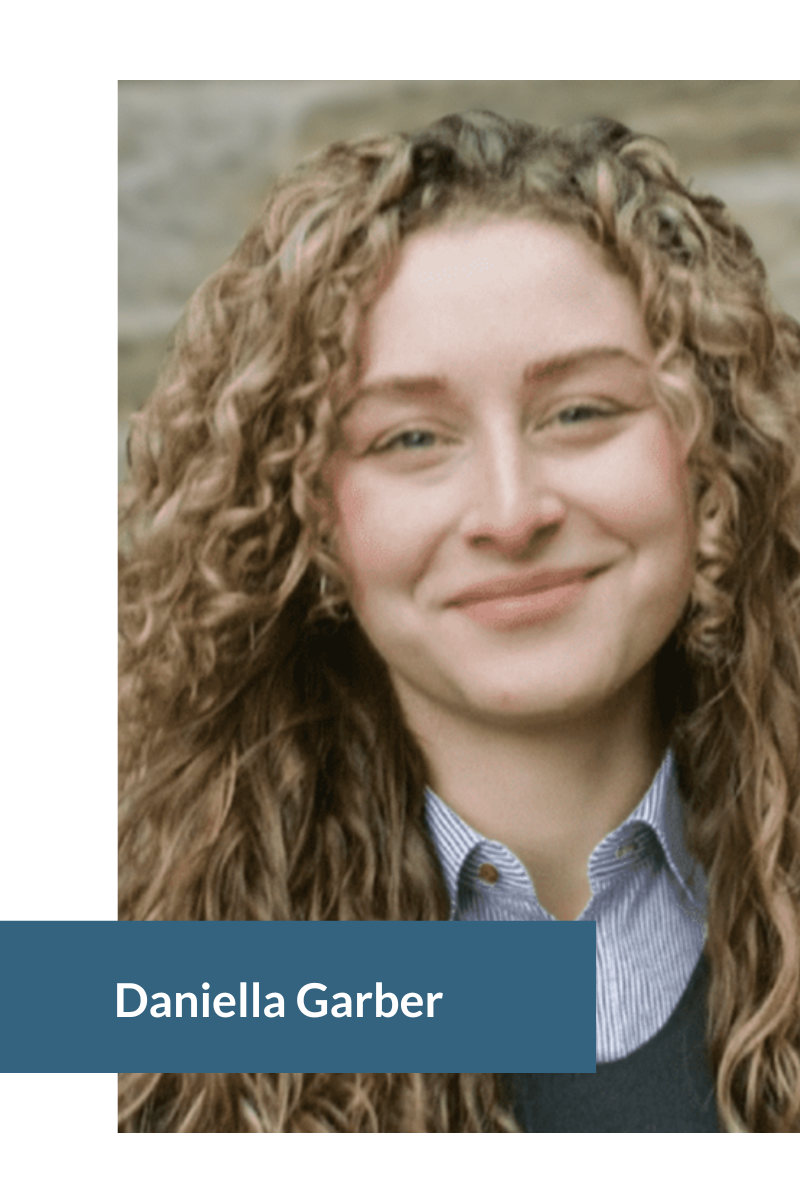
In September, LAMPa helped congregations add advocacy to “God’s work. Our hands” Sunday. We also welcomed Hunger Advocacy Fellow Daniella Garber as well as six new policy council members, adding seats for two young adults, including former racial justice fellow Anna Oslikova.
 One of those new members, Rachel Faulkner, joined LAMPa Director Tracey DePasquale and Pennsylvania hunger and disaster volunteers at the ELCA World Hunger Leaders Gathering in Ohio and the Lutheran Disaster Response Community of Practice and Hill Day in Washington, D.C.
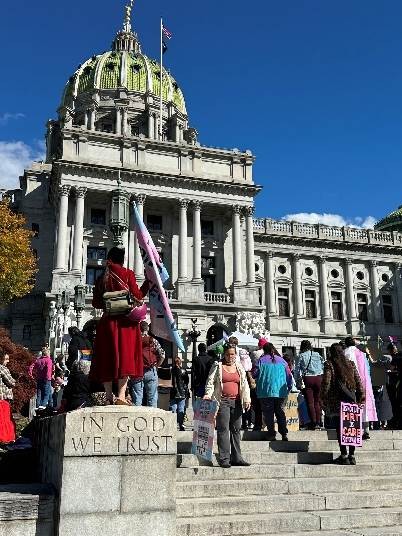
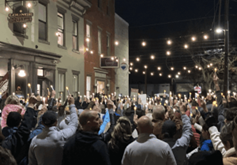
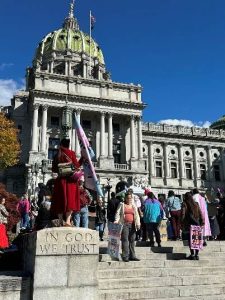
In October, LAMPa staff joined advocates at a state Capitol rally for LGBTQ+ rights and delivered a statement signed by hundreds of faith leaders calling for a more inclusive Commonwealth. The Rev. Erin Jones, LAMPa advocacy engagement manager, led a workshop at Southeastern Pennsylvania Synod’s “In God’s Image” celebration.
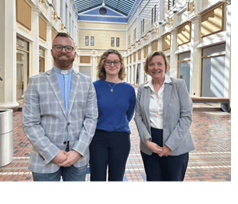 In further public witness for welcome and neighbor-love, the Rev. Andrew Berdahl spoke at a press conference in support of legislation creating an Office for New Pennsylvanians, and the Rev. Elizabeth Peter spoke at a rally against hate before a town hall organized in response to actions by a group affiliated with the Ku Klux Klan.
LAMPa also helped welcome four new Pennsylvania bishops this fall!
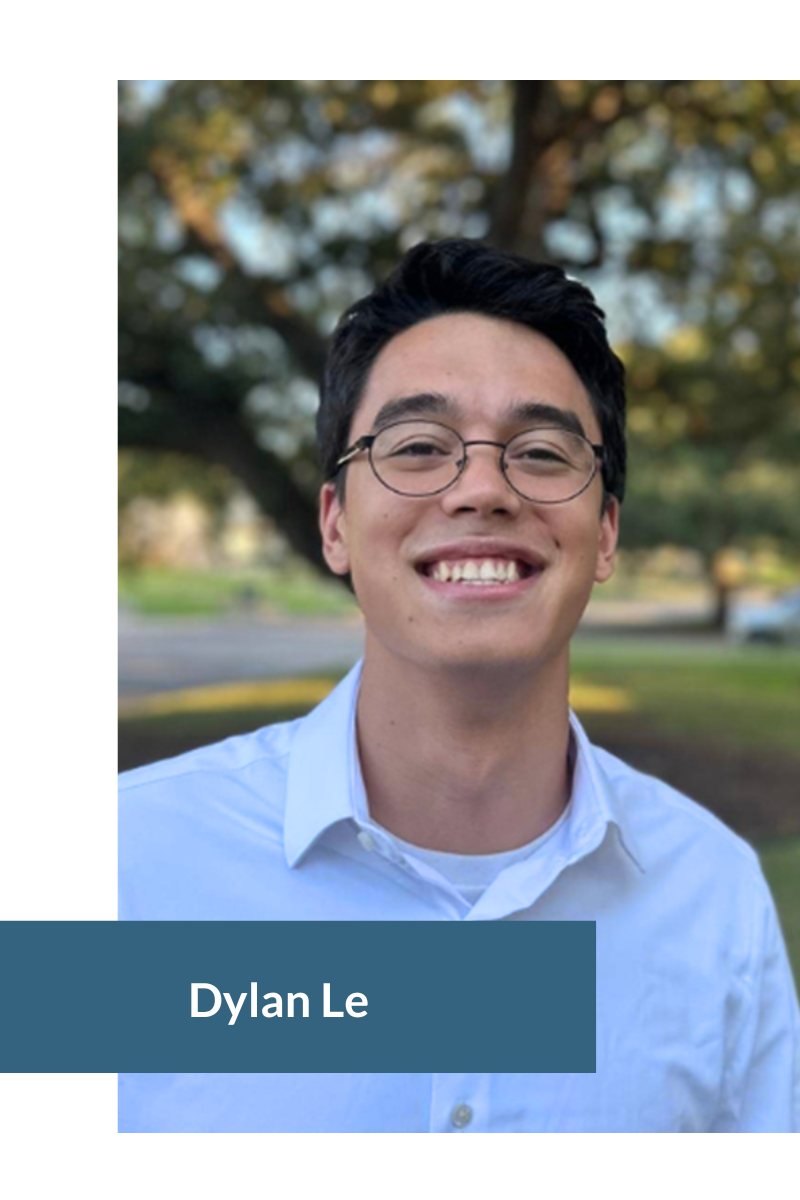
TEXAS IMPACT – Dylan Le, ELCA Hunger Advocacy Fellow
Texas Impact, an ELCA-affiliated state public policy office in Texas, has focused on combatting hunger by connecting faith communities and supporting communities at risk for violence.
Our gun violence prevention campaign, Vidas Robadas, has made strides connecting faith communities with Community Violence Intervention (CVI) organizations.
CVI organizations are often composed of members that have been through the criminal justice system as well as have deep personal connections with members in the community. CVI members serve as mentors for disadvantaged children and help explain the serious consequences of gun violence and incarceration. As members that have a closer connection to areas most affected by violence, we work to redirect the efforts and resources of our hardworking volunteers towards CVI.
Our faith communities help support CVI in a number of ways, one of them being providing food and resources for events where CVI organizations feed and coach children. Providing food and snacks to children served a dual purpose, one providing a meal, another serving as a way to build relationships with children at risk for gun violence.
Vidas Robadas started in San Antonio and has since expanded across Texas to Austin, Houston and Dallas.
We are also in the work of expanding our campaign to the Rio Grande Valley as well as rural areas.
Vidas Robadas is now also nationwide, hosting installations in Kentucky. We hope to continue working to expand the interconnected work of CVI and faith communities.
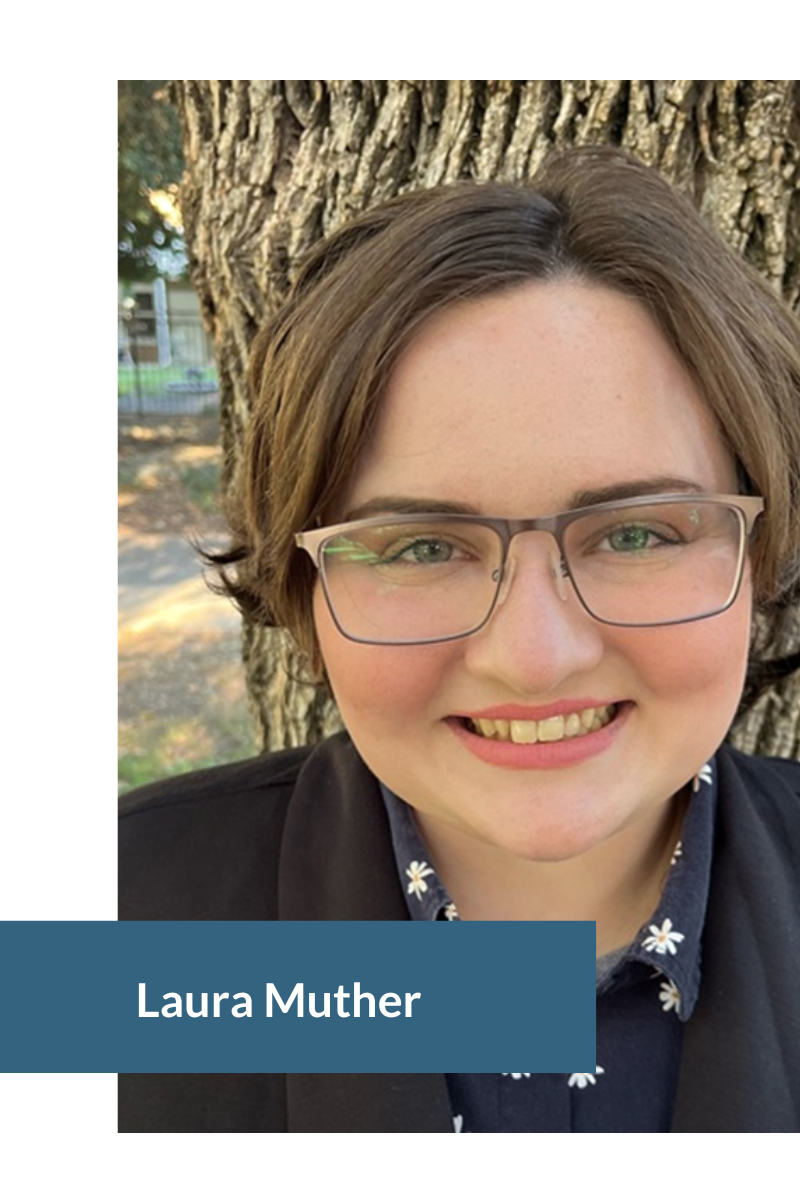
LUTHERAN OFFICE OF PUBLIC POLICY IN WISCONSIN – Kacy Kostiuk, Director
After a brief hiatus following the retirement of the Rev. Cindy Crane in December 2024, the Lutheran Office for Public Policy in Wisconsin (LOPPW) is active once again! New director Kacy Kostiuk began in September and is focusing on laying a strong foundation for ongoing advocacy, outreach, and action.
Operations & Outreach
LOPPW is creating fresh outreach materials and developing a new website to better connect with ELCA members across Wisconsin. Looking ahead, the Policy Council and Director are setting priorities for 2026 and planning listening sessions to hear from congregations statewide. We’re also working to strengthen partnerships with organizations and coalitions committed to justice and care for our neighbors and the environment.
Policy & Advocacy
As LOPPW re-engages in advocacy, we’ve joined efforts focused on hunger, health, and care for creation, including:
-
- SNAP/FoodShare: LOPPW is collaborating as part of a statewide coalition to advocate for measures that would support Wisconsinites’ access to SNAP/FoodShare benefits during the government shutdown and in response to cuts and changes from the “One Big Beautiful Bill Act.”
- Clean Water: LOPPW is advocating for legislation to ensure that private well owners are notified of groundwater contamination.
- Healthcare for Homeless Youth: LOPPW is supporting bipartisan legislation that would allow unaccompanied homeless youth to access medically necessary care when they do not have a parent or guardian in their life to provide consent.

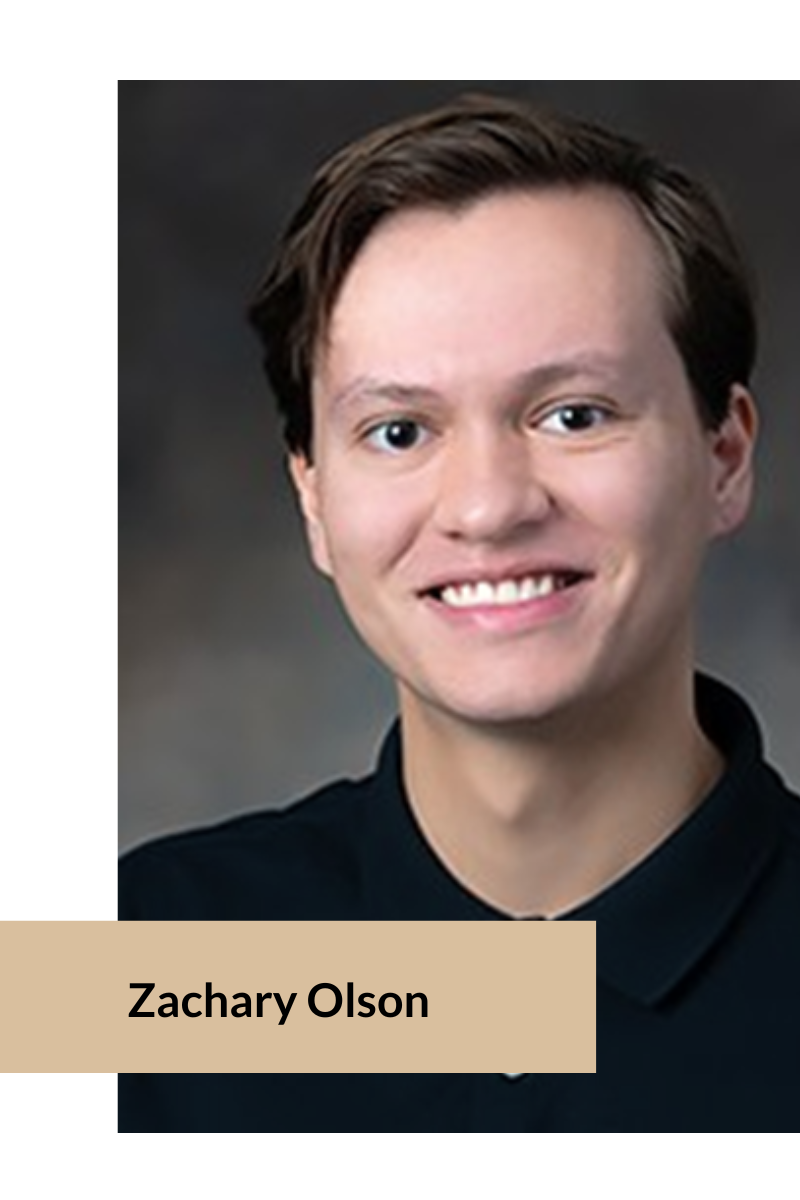 In October 2025, I had the opportunity to take part in a national gathering of the Lutheran Disaster Response (LDR) community of practice in our nation’s capital. Over 70 people from across the country came to Washington, D.C., bringing their stories and their experiences. In the midst of a federal government shutdown, these brave Lutherans were a public witness and shined a light to the members of Congress. They shared their experiences in the offices of Senators and Representatives in boldly advocating for laws that would reform emergency management and disaster response. These Lutherans spoke up to help people in their communities recovering from natural disasters.
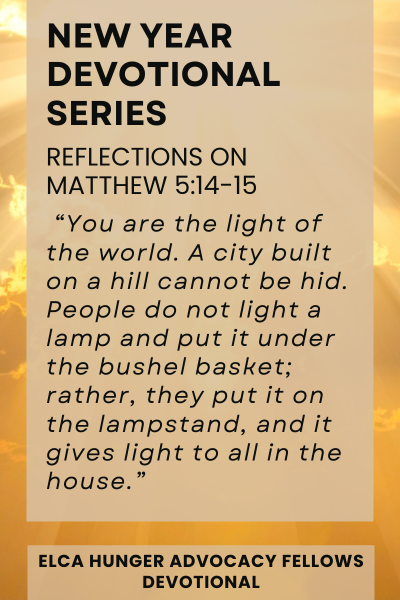 I will always carry this memory with me, and it reminds me of Jesus’ words in Matthew 5:14-15 to be “salt and light” in our Christian walk. Often, we connect these verses with Jesus’ Great Commission [see Matthew 28:19-20] to spread the truth of the Gospel of Christ into the world, but this radical truth possesses implications for us in our public witness before the world in how we move through the world. That can look as simple as talking to a neighbor or as bold as speaking to lawmakers. We are called to be that city on the hill, letting our light shine for others to see.
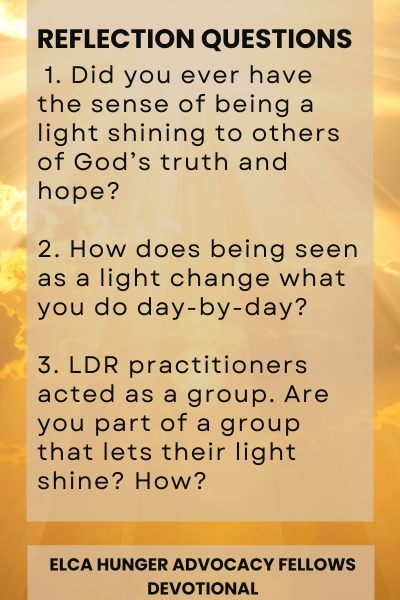 When we are grounded in the truth of the Gospel and let our convictions shape us and our actions, we engage with the world differently. We should be moved towards compassion, doing justice and loving mercy. And that light should flow out into our daily walk in this world.