Following are updates shared from submissions of the Lutheran Office for World Community and state public policy offices.
Find a map and full list of ELCA affiliated SPPOs using our state office map.
U.N. | Colorado | Minnesota | Pennsylvania | Texas | Washington | Wisconsin
U.N.
Lutheran Office for World Community, United Nations, New York, N.Y. https://www.elca.org/lowc –Dennis Frado, Director
Holy Land Bishop Azar discusses inequitable COVID-19 vaccine availability in the Occupied Palestinian Territory: Bishop Ibrahim Azar of the Evangelical Lutheran Church in Jordan and the Holy Land shared a video message recently about the inequitable vaccine distribution situation in the Occupied Palestinian Territory (OPT) in relation to the COVID-19 pandemic. In a briefing on March 25 to the UN Security Council, the UN Special Coordinator for the Middle East Peace Process said “COVID-19 continues to have a devastating effect on Palestinians. In addition to the brutal impact on public health, the recurrent lockdowns, school closures, and reduction of commercial activity have severely undermined living conditions.” He added, “Support to the Palestinian COVID-19 response should be significantly enhanced to ensure that Palestinians throughout the OPT receive a fair and timely share of the distribution of vaccines.” Peace Not Walls has appealed for advocacy with Members of Congress to call upon the Biden administration to urge the Israeli government to ensure free and equitable distribution of COVID-19 vaccines based on its obligations under the Fourth Geneva Convention.
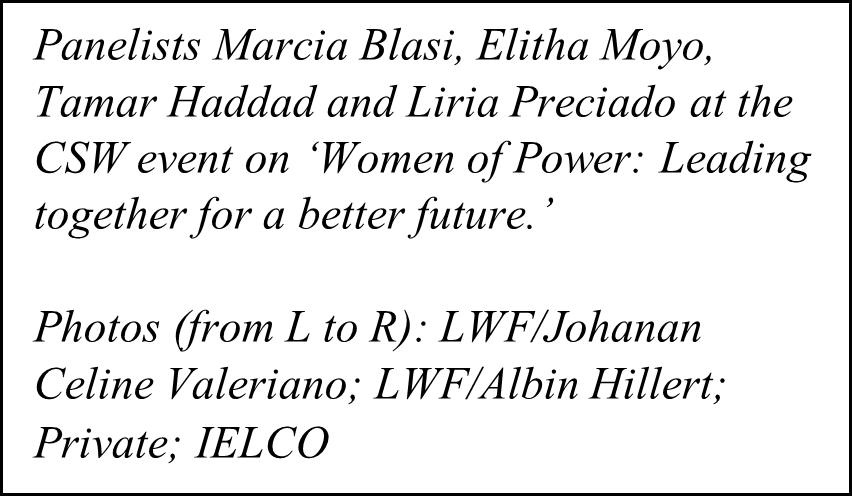
Promoting Gender Justice at UN CSW65: The United Nations’ sixty-fifth session of the Commission on the Status of Women (CSW) took place from 15-26 March 2021. The priority theme was women’s full and effective participation and decision making in public life. This was the first-ever the session of the Commission held virtually due to the COVID-19 pandemic. According to UN Women reporting, speakers included a Prime Minister, 3 Vice-Presidents and 93 ministers. Nearly 70 ministers represented their countries in the ministerial round tables. Vice President Kamala Harris delivered the US official remarks to CSW65.
The Lutheran World Federation, including the ELCA, participated in the two-week event with a delegation of over seventy members from more than 30 countries. They joined more than 10,000 other civil society members online to advocate on the priority theme as well as call for an end to gender-based violence (GBV). LOWC coordinates the presence of Lutherans at CSW.
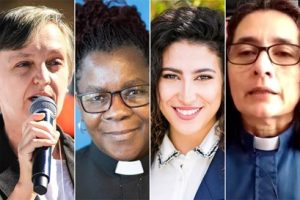
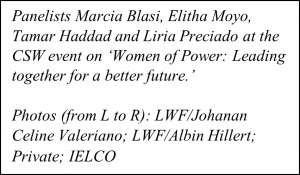
In addition to attending the official sessions, Lutherans organized and as co-sponsored panel events with ecumenical and interfaith partners, namely, Women of Power: Leading Together for a Better Future, Challenge and Change a Social Norm: Sexual and Gender Based Violence, Masculinities, and Leadership, and Faith Forward – Women Brokering Peace in Conflict & Crisis, Girls on Fire part I & part II: An Intergenerational conversation and call to action to end GBV. We also co-sponsored a side event, “In search of a Round Table: Gender, Religion & Decision-making in Public Life”. Lutherans joined Ecumenical Women at the UN orientation day and led one daily morning worship service.
CSW65 ended with the adoption of Agreed Conclusions which contain good recommendations for countries to implement. However, there was opposition and push back by few countries that objected to terms such as gender, sexual and reproductive health and rights, among others. Discussions on gender equality and women’s empowerment continue through the next important forum – the Generation Equality Forum, convened by UN Women and co-hosted by the Governments of Mexico and France.
 Impact of financial and economic sanctions on humanitarian assistance and its delivery: The ELCA recently signed on to a letter to President Biden asking him to consider the effects of sanctions on humanitarian assistance and its delivery as part of a review of existing United States and multilateral financial and economic sanctions. The groups which joined the letter said they “have long considered a review of the impact of sanctions on the global pandemic response and humanitarian
  situations overdue.” They said that “existing sanctions exemptions for humanitarian work are ‘wholly inadequate’ and that current regulations fail to “provide the necessary reassurances to financial institutions that working with humanitarian actors is safe and lawful.” They asked the President “to take immediate emergency measures and consider long-term measures as well, that would allow the peoples of sanctioned countries and locations to respond to the devastating human and economic fallout of COVID-19.”
Colorado
The Colorado Legislature continues their session, and LAM-CO has been participating with partners in advancing important bills on our agenda. Our latest bill sheet can be found online.
Housing: We are working on three bills to enhance renters’ protections, balance responsibility between renters and landlords, cap late fees, and allow local governments to promote affordable housing.
Environment: We support bills to prohibit single-use plastic products & reduce waste and to enhance the power of the Air Quality Control Commission.
Immigration: The Immigration Legal Defense Fund would be created by HB 1194, supporting nonprofits who help provide representation to immigrants undergoing legal proceedings.
Criminal Justice: We support a bill to promote record sealing and another to largely end cash bail in Colorado while increasing the use of summonses versus arrest warrants.
Hunger: Part of a just food system is protections for the workers who grow, harvest, and process food, and so we support SB 087 to add agricultural workers to standard labor protections already on the books in Colorado, enhancing rights to rest breaks, overtime, and other benefits.
Minnesota
The legislative session is down to the final five weeks – unless we end up with special sessions each month like last year. The budget omnibus bills were introduced and marked up the week after Easter.
Clean Energy: We have been working to prevent garbage incineration from being re-classified as clean energy, but opponents to renewable energy focused most of their committee amendments on labeling wind and solar as dirty energy. Thankfully, those amendments failed in the House Energy Committee, but it will be much harder in the next few weeks to prevent legislation damaging to a transition to renewables and a clean energy economy. The current House Energy committee bill could move our state in very positive directions if the Senate could be moved to adopt it. That is unlikely this year, but as people of faith we believe transformations can happen.
Affordable Housing: We remain hopeful that our efforts for more housing stock, and eviction prevention (related to pandemic economic hardship) will make progress. Several Action Alerts have helped to bolster bipartisan support, but Senate leadership is not yet on board. Much more action will be needed in the next few weeks, so continue to watch for alerts and talking points.
Partisan Divisions: Extreme partisanship continues to be the biggest obstacle at the legislature. While various house and senate members are attempting to find paths to work together, some party leaders keep looking for ways to exacerbate differences. Without changes in these partisan attitudes and divisions, Minnesota’s legislature runs of the risk of becoming increasing dysfunctional and ineffective.
Pennsylvania
Lutheran Advocacy Ministry- Pennsylvania (LAMPa) https://www.lutheranadvocacypa.org/ – Tracey DePasquale, Director
LAMPa staff are preparing a statewide marking of rogation in coordination with United Lutheran Seminary’s spring convocation, around the theme “Theology of Gathering.” Staff have been gathering soil samples from Pennsylvania’s seven synods, as well as both seminary campuses. These soils are 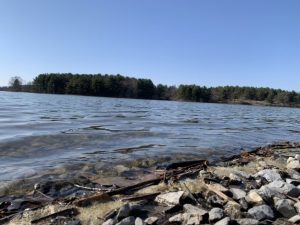 accompanied by photographs of their origins, stories, and prayer requests. We will be helping to facilitate rogation and eco-justice services throughout the spring and equipping Lutherans to advocate on the behalf of creation, for those who “tend the garden,” and for all who depend upon the fruits of their labor.
Hunger Advocacy Fellow Larry Herrold continues developing our database of service and justice-related ministries. His work has connected congregational volunteers to a new Senior Express food box delivery system that takes the nutritional assistance for which we advocate the last mile – getting it safely into the hands of seniors.
LAMPa advocates are reaching out to their lawmakers to urge an increase in the state’s hunger funding.
Director Tracey DePasquale participated in the quarterly state Emergency Food Assistance Advisory Meeting, attended meetings of the state emergency feeding and sheltering task forces and worked with the SWPA Synod hunger team to plan their fall event.
DePasquale and seminarian Margaret Folkemer-Leonard met with representatives of Open Table in preparation for equipping congregations in various models for accompaniment that will deepen their advocacy. Folkemer-Leonard attended the first meeting of advocates around language-access policies and continues to lead weekly compline with a focus on justice.
Texas
The Texas Legislature convened their biennial Legislative Session in January, and Texas Impact immediately began resourcing Texans of faith to engage in the process.
In March, Texas Impact hosted the second annual Texas Interfaith Advocacy Days March 6-9, the largest interfaith advocacy gathering in the state This year, the conference was online and highlighted speakers and advocacy opportunities related to three priority areas: Health Insurance, Climate Resilience, and Elections. The 200 event participants met with over 30 legislative offices to discuss priority issues.
Texas Impact also released three sign-on letters for Texans of faith:
Texas Impact continues to recruit Rapid Response Team members to make time-sensitive calls and Legislative Engagement Group members who commit to meeting and partnering with other advocates in their Texas House district to plan and prepare for monthly meetings with their representative and/or staff.
The Weekly Witness podcast during the Legislative Session features a Texas faith leader providing a “Weekly Word,” a guest advocate discussing the “issue of the week” and Texas Impact staff providing a legislative update and action alert. The March 15 episode featured ELCA pastor, Rev. Jessica Cain from Living Word Lutheran in Buda.
In addition, Texas Impact staff have been invited to present to several congregational events as they increase capacity for online programming. Texans of faith are mobilizing in exciting ways to participate with their representatives during this important season of democracy.
Washington
Faith Action Network https://www.fanwa.org/ – Paul Benz and Elise DeGooyer, Co-Directors
Legislative Successes: The 2021 WA Legislative session has just passed the cutoff date for bills to be voted out of the opposite chamber and onto the Governor’s desk. We are excited that so many important bills are moving forward from FAN’s legislative agenda, including: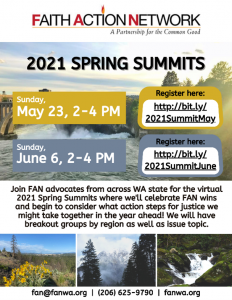
- Temporary Assistance for Needy Families (TANF)
- Emergency cash and food assistance
- Equity and funding for community and technical colleges
- Prohibiting certain police tactics
- Decertification and licensing standards for police officers and Criminal Justice Training Commission reforms
- Eviction reform
- Just Cause Eviction law
- Clean Fuel Standards
- Voting Rights Restoration for people exiting prison
- Post-secondary education in prisons
- Removing the exemption in the Office of Civil and Legal Aid for undocumented workers
- Banning private prisons
- Banning Native American mascots
- Juneteenth paid holiday
- Establishing the Universal Health Care Commission
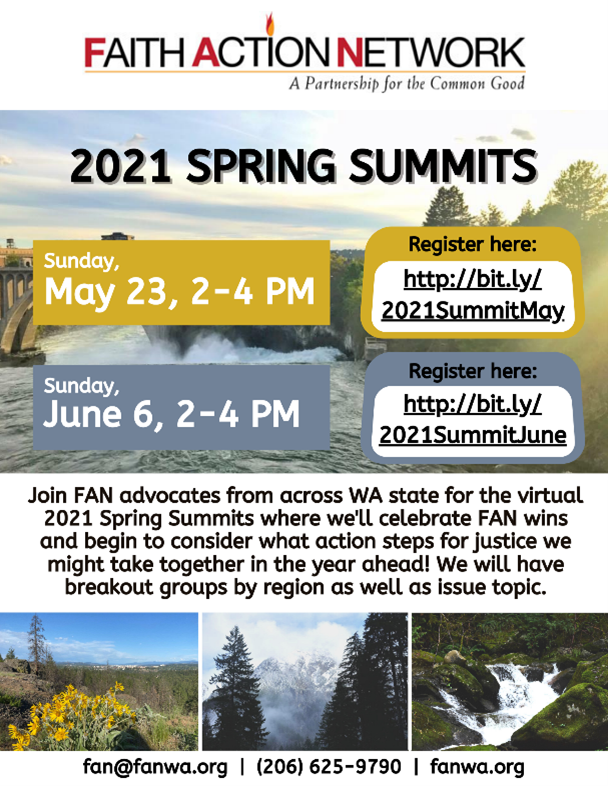
2021 Spring Summits: Each Spring, FAN hosts Summit meetings around WA State to gather faith communities in our networks. We reflect on the past legislative session, strategize on upcoming local actions, and discuss the issue topics that matter most to our advocates. This year we are hosting two virtual Summits – one in May and one in June. We look forward to connecting across the state and envisioning the year ahead!
Wisconsin
Lutheran Office for Public Policy in Wisconsin (LOPPW) https://www.loppw.org/ – Cindy Crane, Director
 Wednesday Noon Live & Juvenile Justice: We discussed our budget priorities with a focus on returning 17-year-old youth to the juvenile justice system. Ramiah Whiteside, who was directly impacted by being tried and sentenced in an adult court offered his personal testimony. We also interviewed Hunger Advocacy Fellow Kyle Minden, who is leading efforts on Raise the Age. View the program here.
Kyle was also a part of a Justice for Emerging Adults Panel, sponsored by Race to Equity, LOPPW, and Youth Justice Milwaukee.
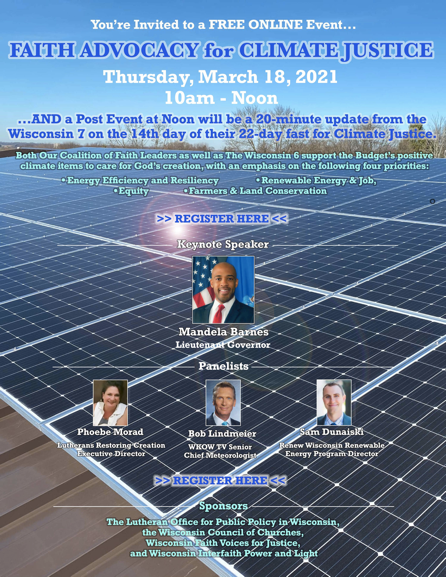
Care for God’s Creation: Our Faith Advocacy for Climate Justice event on March 18th drew 88 participants. Most people stayed for our post event with the Wisconsin 7, who fasted f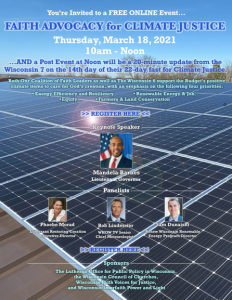 or climate justice for 22 days. Our planning group included ELCA members from each of our six synods and three interfaith groups. The focus was on preparing to advocate on the Wisconsin State Budget with an advocacy action included in during the event.
Event Video: https://www.facebook.com/LOPPW/videos/298535565005324
Event News Coverage: https://wkow.com/2021/03/18/bob-lindmeier-talks-climate-change-during-panel-discussion-with-faith-leaders/
Immigration: LOPPW co-sponsored and event with the South-Central Synod of Wisconsin – Standing with our Neighbors – Conversations on Immigration with Immigration Attorney Erin Barbato.
Hunger: LOPPW is part of the Better Choices Coalition examining issues related to hunger in the Governor’s Budget and strategizing responses.
Human Trafficking: LOPPW has been meeting regularly with the Wisconsin Human Trafficking Consortium and its legislative subcommittee preparing to advocate on the Governor’s Budget and upcoming bills.

 I want to share some of my thoughts about the annual Ecumenical Advocacy Days (EAD) gathering. I’ve been attending these even before EAD came into being! The primary reason I attend is because of our calling as Christians to use our voice for justice – to create the change so many of us desire – to use our voice for love of neighbor.
 Many parts of the family of God were included in the EAD delegation from Washington state. We were Lutherans, Disciples of Christ, Episcopalians, Evangelicals, Presbyterians, Roman Catholics, United Church of Christ, United Methodists, and Sikh. I am in the ELCA and am a lifelong Lutheran. I am deeply appreciative of our religious heritage, but the impact of having many different and diverse faith voices and presence is such an important witness to the member of Congress and their staffs (many of whom have a faith tradition). The impact of ‘who is in the room’ is not even diminished by the virtual meeting era in which we find ourselves. It is important for each of our faith traditions to have and organize its own voice and presence – but we ‘up our game’ and its outcome when we bring together as much of God’s family as possible!