Skip to content
ELCA Blogs

ELCA Advocacy

March Update: Advocacy Connections

from the ELCA advocacy office in Washington, D.C. – the Rev. Amy E. Reumann, director

Partial expanded content from Advocacy Connections: March 2021

AMERICAN RESCUE PLAN  |  GLOBAL COVID-19 VACCINATION  |  PUBLIC CHARGE RULE BLOCKED  |  EVICTION MORATORIUMCOMMUNITY HEALTH CENTERS


AMERICAN RESCUE PLAN:  Passage of the American Rescue Plan Act of 2021, signed by President Biden on March 12, was shaped by input of many constituents, including Lutheran voices. Thank you for your advocacy!

ELCA federal priorities for advocacy action were emphasized through many individual, leadership and coalition actions. Elements in resulting legislation of critical issues, emphasized in our advocacy for a stronger and more equitable recovery, are expanded in “Provisions in the American Rescue Plan.”


GLOBAL COVID-19 VACCINATION: President Biden recently announced the U.S. will contribute $4 billion to COVAX– a global vaccine initiative which is co-led by the World Health Organization. Two billion of those funds were scheduled for distribution at the end of February, the remaining two billion will be distributed in the coming months and through 2022.

ELCA Witnessing in Society advocacy staff have been advocating for increased funding resources to support global COVID relief efforts, including for expanded vaccines access.


PUBLIC CHARGE RULE BLOCKED:  On March 9, the 2019 Public Charge Rule was blocked permanently nationwide. The rule was found to increase the likelihood of families forgoing applying for benefits like SNAP, Medicaid and public housing out of concern for the consequences on a family member’s immigration status application. Many Lutherans shared public comments opposing the rule when it was introduced.

“The 2019 public charge rule was not in keeping with our nation’s values,” said the U.S. Department of Homeland Security secretary. On social media, @ELCAAMMPARO reflected, “No one should have to agonize over whether to apply for needed support, especially during a time like now when we’re steadily working towards a national recovery. Immigrant families can feel safe applying for benefits for which they are eligible.”


EVICTION MORATORIUM:  A federal judge in Texas last month ruled that the Centers for Disease Control and Prevention eviction moratorium issued by Congress is unconstitutional. Though no injunction was set in place, the current moratorium is still set to end this month, impacting millions of families and presenting immense challenge to church shelters already stretched thin nationwide.

The interfaith advocacy community has redoubled efforts. Nearly 2,300 organizations, including the ELCA, and elected officials signed onto a letter urging President Biden to extend the federal eviction moratorium beyond its March 31 expiration and to improve and enforce its protections.


COMMUNITY HEALTH CENTERS:  Community Health Centers (CHC’s) across the country are important access points for affordable and quality healthcare. As part of the federal COVID-19 response, the administration has launched a vaccine distribution program through CHCs to better reach identified individuals experiencing homelessness, migrant and seasonal. farm workers, and people with limited English proficiency.

A list of Health Center COVID-19 Vaccine Program participants near your congregation or ministry is available from hrsa.gov. These health centers provide care to millions of patients annually in medically underserved rural and urban areas in the U.S., including patients who lack health insurance, minorities, and other vulnerable groups of people. The injection of $7.6 billion for CHC in the American Rescue Plan will expand the capacity of these providers to serve in their communities.


Receive monthly Advocacy Connections directly by becoming part of the ELCA Advocacy network – http://elca.org/advocacy/signup , and learn more from elca.org/advocacy .


March Update: UN and State Edition

Following are updates shared from submissions of the Lutheran Office for World Community and state public policy offices.
As the new year begins, these state public policy offices (SPPO) share their annual policy priorities. Find a map and full list of ELCA affiliated SPPOs using our state office map.
Learn more about Lutheran advocacy using our new resource, Advocacy 101 For Young Adults.

U.N. | Arizona | Colorado | New Mexico | Ohio | Pennsylvania | Texas |Washington | Wisconsin


U.N.

Lutheran Office for World Community, United Nations, New York, N.Y. https://www.elca.org/lowc –Dennis Frado, Director

Promoting Gender Justice at UN CSW65: A total of 72 delegates from all the Lutheran World Federation (LWF) regions will participate in the sixty-fifth session of the UN Commission on the Status of Women (CSW65) that will take place from 15 to 26 March 2021. The larger number reflects the fact that the session will be virtual due to COVID-19. The delegates consist of LWF Gender Justice and Women’s Empowerment regional coordinators, staff of LWF World Service country programs, and representatives of ELCA companion churches. Approximately two dozen of the attendees are from the ELCA.

Together with ecumenical and interfaith partners, LOWC staff drafted and submitted three joint statements (E/CN.6/2021/NGO/91, E/CN.6/2021/NGO/117 and E/CN.6/2021/NGO/147) based on the theme, as well as considering the gendered impact of COVID-19.

LWF has organized and co-sponsored five CSW related events. To influence the outcome document known as the agreed conclusions, LOWC staff have been engaging actively within the Faith in Beijing coalition convened by Side by Side.

Humanitarian Assistance to Palestinians: In the coming weeks, ELCA staff, including LOWC, will be encouraging synod bishops and other ELCA members to intensify their messaging to Congress in support of U.S. bilateral humanitarian assistance to the Occupied Palestinian Territory (East Jerusalem, West Bank and Gaza). The assistance, though appropriated by Congress, was not disbursed by the previous Administration for several years. This funding had been an essential part of the annual operating budget of the LWF-owned Augusta Victoria Hospital in East Jerusalem and its absence has resulted in substantial debt. The Biden Administration told the UN Security Council in late January that it wishes to “restore U.S. assistance programs that support economic development and humanitarian aid for the Palestinian people” and renew “U.S. relations with the Palestinian leadership and Palestinian people.” Congressional leaders are being asked to contact the Administration to release those funds as soon as possible.


Arizona

Lutheran Advocacy Ministry Arizona, https://www.lamaz.org – Solveig Muus, Director

Lutheran Advocacy Ministry Arizona is currently tracking 37 bills of interest to people of faith in Arizona. In addition to the bills related to our specified policy priorities – Hunger and associated food security issues, Community-based Senior Support, and Fair and Equitable distribution of COVID-19 vaccines – we are watching movements on child and youth welfare, voting rights and redistricting, and education. We are encouraged to see that SB1176, a nutrition assistance bill to fund the Double Up Food Bucks Arizona program that essentially doubles the value of SNAP/EBT benefits at farmers markets, has a good chance of passing. This provides excellent support for healthy eating and local farmers!

LAMA also co-sponsored a second Advocacy 101 training workshop alongside Arizona Faith Network and Bread for the World to encourage people of faith to participate in their state government by expressing their views online using Arizona’s Request to Speak (RTS) system about the bills they care about.

Lutheran Advocacy Ministry Arizona celebrated its first birthday in February. The LAMA Policy Council recently met to review this inaugural year’s successes and gains as well as its opportunities for improvement. The Council is deeply grateful for the support and mentoring of the ELCA’s state public policy offices, for the partnership of Lutheran Social Services of the Southwest, and for the many ministry partners who do the work of advocacy both nationally and in Arizona. Each partner has generously shared their passion and their experience with LAMA. It has been a very positive and productive first year, thanks be to God.


Colorado

Lutheran Advocacy Ministry-Colorado https://www.rmselca.org/advocacy – Peter Severson, Director

Legislature Resumes: The Colorado General Assembly returned to session on February 16 after an extended recess to allow legislators to be vaccinated against COVID-19. The session is scheduled to proceed for its usual 120 days, ending on June 11.

Housing Bills: Lutheran Advocacy is joining the Renters’ Roundtable to support several housing-related bills in this session. These include:

  • House Bill 1117, a measure to permit local governments to adopt inclusionary zoning ordinances to promote the construction of housing developments for low-income earners.
  • House Bill 1121, a measure to introduce parity between the eviction and rent-relief timelines for renters facing eviction, and to extend notice periods for tenants regarding rent increases and eviction summonses.

Other Priorities: We have adopted support positions on a number of other bills already this session and are gearing up to send out Action Alerts for timely hearings.

Petitions & Letters: Lutheran Advocacy signed a letter urging Gov. Jared Polis to prioritize providers of homelessness-related services in the distribution of COVID-19 vaccines. We also are actively encouraging the Joint Budget Committee to prioritize restoring the funding for application assistance for people seeking Social Security Disability Insurance.


New Mexico

Lutheran Advocacy Ministry- New Mexico
https://www.lutheranadvocacynm.org – Kurt Rager, Director

1st Session of the 55th Legislature races towards the finish. The New Mexico Legislature’s current 60-day session will come to an end on March 20. The last half of the session is characterized by days that start early and often don’t end until close to or after midnight, including weekends. Though down significantly from previous 60-day sessions, over 800 bills have been introduced. Lutheran Advocacy Ministry – New Mexico (LAM-NM) has been tracking just under 90 bills, actively speaking in support or opposition to many.

LAM-NM Advocacy Agenda legislation highlights:

  • Affordable Housing & Homelessness – Support for legislation that would support and assist landlords, tenants, and mortgage holders impacted by the current pandemic and that help mitigate the looming eviction crisis.
  • Family-Sustaining Income – Support for tapping the state’s $22 billion Permanent Fund for increased early childhood education, for capping short-term “store-front” installment loans at 36%, for utility relief and disconnection protection, and the protection of low-income New Mexicans from debt collections due to unpaid healthcare bills.
  • Healthcare – Support for emergency healthcare services and other health-related benefits for non-citizens, for the creation of a Healthcare Affordability Fund that would help offset the cost of health insurance for low-income New Mexicans, for the creation of Prescription Drug Affordability Board, and for legislation that would help identify those uninsured and connect them to free or low-cost health insurance plans.
  • Hunger – Support for additional emergency funding for New Mexico food banks, for studying college student hunger, and for the Food, Hunger, & Farm Act and the Healthy Food Financing Act, both of which would focus on identifying and addressing root causes of hunger in New Mexico.
  • Tax Policy – Support for legislation that would update the Low-Income Comprehensive Tax Rebate program, increases for and expansion of eligibility for the Working Families Tax Credit, for changes to tax policy, that would return progressivity to New Mexico’s tax structure.
  • Criminal Justice – Support for ending the use and operation of private detention facilities, for repealing the cancelation of voter registration for felons after release, for decreasing the overuse of fines and fees in the criminal justice system, and for ending the revocation of driver’s licenses as a penalty.


Ohio

Hunger Network in Ohio https://www.hungernetohio.com – Nick Bates, Director

HNO was pleased to join over 50 other individuals in offering testimony last month against SB 17. This proposal will hurt those who are in poverty and increase hunger across Ohio. It will add photo ID’s to SNAP cards – causing confusion in the check-out line – add additional bureaucracy for counties and families in processing Medicaid and SNAP, punish workers for earning more money, and it will do nothing to reduce the unemployment identity theft that has hit Ohioans hard! Faith leaders across Ohio continue to push against this bill. Please write your Senator today and say NO to SB 17! 

Bishop Eaton to Preach at Ohio Advocacy Day on March 23: Budgets are Moral Documents. The Hunger Network is collaborating with the Ohio Council of Churches for a virtual advocacy day on March 23rd at 9:00am. We are pleased to welcome Bishop Eaton to our convening at 9am. This advocacy day will focus on our key priorities: Hunger, Housing, and Educational equity. Governor DeWine’s budget is still being reviewed in the Ohio House and will move over the Senate shortly. Sadly, this budget is a very ordinary budget while Ohio faces extraordinary needs. During our advocacy day, we will encourage Ohio’s legislators to have a bold vision for the future and craft a budget that will get us there! REGISTER HERE FOR ADVOCACY DAY!!!


Pennsylvania

Lutheran Advocacy Ministry- Pennsylvania (LAMPa) https://www.lutheranadvocacypa.org/ – Tracey DePasquale, Director

In February, LAMPa advocates celebrated and thanked lawmakers for the unanimous passage of emergency COVID relief as Act 1 of the new legislative session. On Feb.  5, Gov. Tom Wolf signed the law, directing more than $900 million in federal pandemic aid to struggling businesses, private schools, landlords and tenants unable to meet rent or utility bills because of economic downturn related to the failure to stop the spread of the disease.  Advocates had pressed for months to alleviate the suffering and anxiety in their communities. LAMPa urged the Public Utility Commission to extend the moratorium on shutoffs for low-income customers.

Hunger Advocacy Fellow Larry Herrold and Seminarian Margaret Folkemer-Leonard began organizing a statewide Rogation observance, gathering soil, stories, prayers, and pictures from sites across all seven synods and the two campuses of United Lutheran Seminary. Lutherans will be praying and acting for one another and their communities across divides of geography, ethnicity, age, race, ideology, wealth, immigration status and more in conjunction with the ULS convocation around “The Theology of Gathering.” LAMPa will resource disciples for advocacy related to hunger, farming, environmental justice, and other concerns lifted in their prayers.

LAMPa hosted a Worship and Wonder Wednesday as part of a justice-related series in Lower Susquehanna Synod. Airing at the start of Lent and tied to the UN World Day of Social Justice, the panel discussion focused on our baptismal call to labor for justice, reflecting on wilderness and what it means to be a disciple in this democracy.


Texas

Texas Impact https://www.texasimpact.org/ – Scott Atnip, Outreach Director

The Texas Legislature convened their biennial Legislative Session in January, and Texas Impact immediately began resourcing Texans of faith to engage in the process.

Texas Impact staff spent the month of February surviving the winter apocalypse and power grid failure while also preparing for the Texas Interfaith Advocacy Days- the largest interfaith advocacy gathering in the state, March 6-9. This year, the conference moved online and will highlight speakers and advocacy opportunities related to three priority areas: Health Insurance, Climate Resilience, and Elections.

Due to COVID-19 restrictions, online engagement will be more important than ever, and we continue to promote online content. This month, we partnered with Texas State Senator Nathan Johnson for a creative ten minute video explaining the importance of Medicaid Expansion in Texas.

Texas Impact continues to recruit Rapid Response Team members to make time-sensitive calls and Legislative Engagement Group members who commit to meeting and partnering with other advocates in their Texas House district to plan and prepare for monthly meetings with their representative and/or staff.

During the Legislative Session, the Weekly Witness podcast features a Texas faith leader to provide a “Weekly Word,” a guest advocate discussing the “issue of the week,” and Texas Impact staff providing a legislative update and action alert. For the second month in a row, February episodes had record numbers of listeners during the live Zoom recording and in downloads for the month.

In addition, our staff have been invited to present to a number of congregational events as they increase capacity for online programming. Texans of faith are mobilizing in exciting ways to participate with their representatives during this important season of democracy.


Washington

Faith Action Network https://www.fanwa.org/ – Paul Benz and Elise DeGooyer, Co-Directors

2021 Advocacy Days: FAN hosted three virtual Advocacy days with two pre-session trainings in January and February in Eastern WA, Olympia, and Central WA. At each event, we gathered inspiration from faith leaders and legislators on the importance of advocacy and putting our words into action, we broke out into groups by issue topic, and in Olympia we scheduled over 110 meetings with legislators by district! Between the three events, we had over 400 advocates attend who were eager to make progressive change in the legislative session and in their local areas. We missed seeing everyone in-person, but we were just as powerful behind our screens!

Legislative Successes: The 2021 WA Legislative session has just passed the cutoff date for bills to be voted out of their house of origin and onto the next chamber. We are excited that so many important bills are moving forward from FAN’s legislative agenda, including:

  • Economic Justice and the Biennial Budget: A tax on Capital Gains, lifting restrictions for Temporary Assistance for Needy Families (TANF), greater equity and access to Community and Technical Colleges, emergency cash and food assistance during COVID, funding the Working Families Tax Credit, free and reduced lunches for all grades.
  • Policing and Criminal Justice reforms: de-escalation training and use of deadly force as a last resort, establishing an Office for Independent Investigations of police officers, prohibiting unnecessary police tactics, decertification and Criminal Justice Training Commission reforms, removing Driving While License Suspended (DWLS-3) as a criminal offense.
  • Housing and Homelessness: Eviction reform, Just Cause eviction reform.
  • Climate Justice: Clean Fuels Standards, the Healthy Environment for All (HEAL) Act
  • Immigrant, Civil, and Human Rights: Voting Rights Restoration for those with felony convictions, removing an exemption for undocumented workers in the Office of Civil & Legal Aid, prohibiting private prisons, prohibiting use of Native American mascots, establishing a paid Juneteenth holiday.
  • Health Care: Establishing a Universal Health Care Commission, creating public health districts.


Wisconsin

Lutheran Office for Public Policy in Wisconsin (LOPPW)  https://www.loppw.org/ – Cindy Crane, Director

Wednesday Noon Live: We received updates on lawmakers’ efforts to limit voting rights, discussed national news, and held a special interview with Ruth Ivory-Moore, ELCA Director of Environmental and Corporate Responsibility.

Care for God’s Creation: LOPPW continued planning for Faith Advocacy for Climate Justice event on March 18, at which time video testimonies on climate change were collected from our coalition members. Cindy spoke at two press conferences in Kenosha to support efforts of an ELCA pastor and six others in their fast for climate justice. She also advised the WI 7 on State Budget priorities. Both staff also helped plan a press conference and rally in Madison.

Trainings (Advocacy & Anti-sex trafficking): Kyle led a workshop on talking to youth about advocacy at a synod clergy conference gathering in the NWSW while Cindy led advocacy trainings- one at a Northwest Synod of Wisconsin-wide event, and another on anti-sex trafficking to a class at Edgewood College.

Immigration: Kyle is helping the SCSW organize Standing with our Neighbors on immigration reform.  The virtual event, taking place March 23 at 7:00 PM, is open to all.
Hunger: LOPPW is part of the Better Choices Coalition examining issues related to hunger in the Governor’s Budget and strategizing responses.

Criminal Justice: Kyle was part of the planning group for “Justice for Emerging Adults – Great Lakes Region: How does Wisconsin Compare,” even helping to facilitate the workshop.


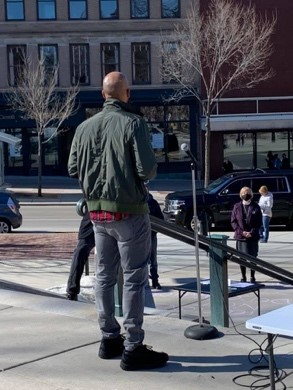
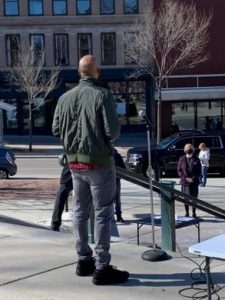
Lt. Governor Mandela Barnes speaking after
Bishop Joy Mortensen-Wiebe led us in an
opening prayer in front of the Capitol.



Provisions in the American Rescue Plan

Passage of the American Rescue Plan Act of 2021, signed by President Biden on March 12, was shaped by input of many constituents, including Lutheran voices. Thank you for your advocacy! There is reason to celebrate the recent, significant supports funded for millions of Americans still struggling from the COVID-19 pandemic. The federal response to the crisis of the pandemic is not only colossal, it is personal: a family has rent for another month, food on the table, required medicine, and in many cases even tools to no longer live in poverty and hunger.

ELCA federal priorities for advocacy action were emphasized through many individual, leadership and coalition actions. Elements in resulting legislation of critical issues emphasized in our advocacy for a stronger and more equitable recovery are briefly shared in this post, recognizing that a piece of legislation this substantial cannot be easily summarized. The ELCA Program Director for Domestic Policy points to an article by Houston Public Media for a more expanded look at “Here’s What’s In The American Rescue Plan.”


DOMESTIC

Provisions through the American Rescue Plan respond to the national and international health and humanitarian crisis as well as devastating economic realities in every community and family—urban, rural, and tribal—across the country.

One of the most direct supports are payments of up to $1,400 per person and $2,800 for a married couple if their income is below $75,000 or $150,000 respectively per year. Each child or dependent also qualifies for a $1,400 payment.

Some $55 billion will go to COVID-19 vaccine funding and continued contact tracing to fully arrest the virus.

The Special Supplemental Nutrition Program for Women, Infants, and Children (WIC) received $3 billion to invest in WIC’s quality nutrition services to improve health outcomes for pregnant and postpartum women, infants and children under age five. This is critical during COVID-19 because so many healthcare services have been suspended or interrupted during the pandemic. The law also supports low-income seniors with $1.4 billion in funding for Older Americans Act programs like nutrition programs, community-based support programs and the National Family Caregiver Support Program. Additionally, there is $37 million for the Commodity Supplemental Food Program for low-income seniors.

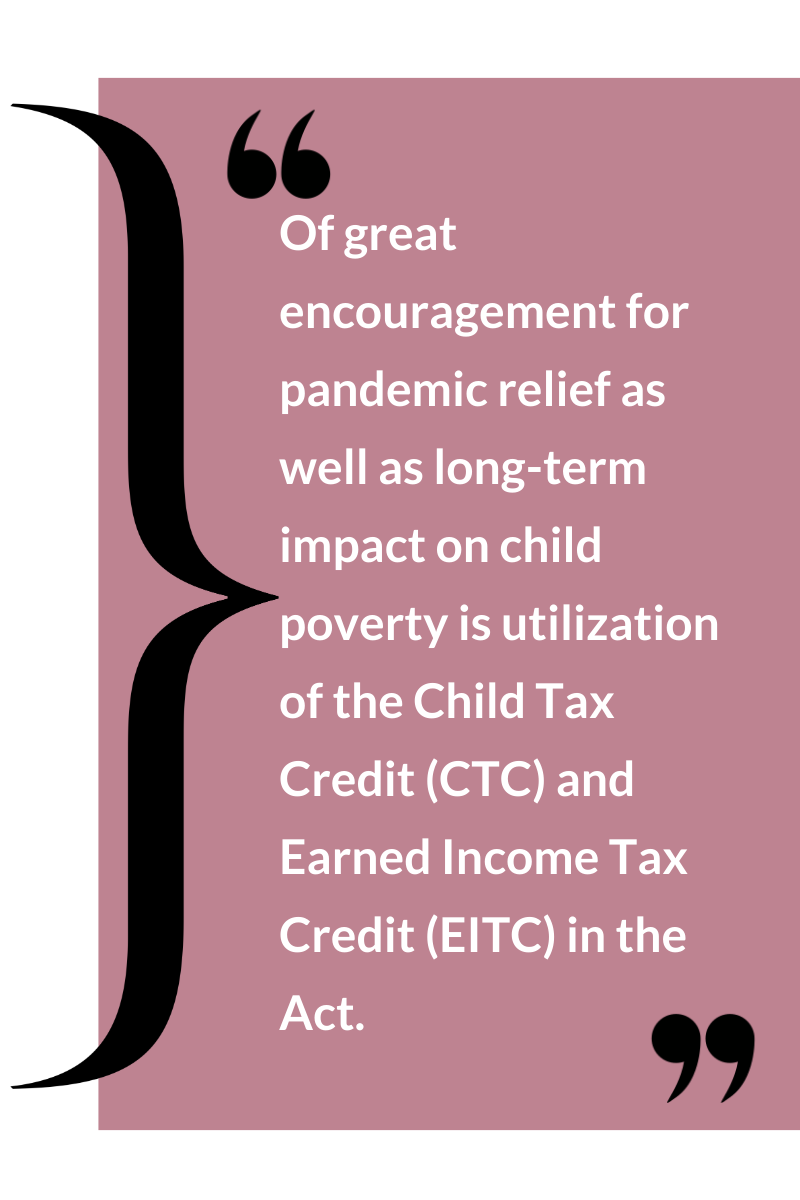
Of great encouragement for pandemic relief as well as long-term impact on child poverty is utilization of the Child Tax Credit (CTC) and Earned Income Tax Credit (EITC) in the Act. “While public safety net programs such as the Supplemental Nutrition Assistance Program (SNAP) or Temporary Assistance for Needy Families (TANF) often get more attention, refundable tax credits actually have a larger positive impact on poverty,” wrote Ryan Cummings of ELCA World Hunger in a recent post to the ELCA advocacy blog. The CTC, for example, was extended to $3,600 per child age six and under and $3,000 per child age six through 18. Practically, this means for example that a working mother with two children ages eight and five would receive $550 per month through the end of this year while the temporary benefit is active. Those dollars could be used to help pay for childcare, food or clothing for the kids to return to school. Those dollars are often spent in local communities, including grocery stores and main street businesses, and support workers, local and state taxes bases, and much more.

Some $5 billion is dedicated to USDA technical assistance, education, and outreach for socially disadvantaged farmers and ranchers, defined as those who have experienced barriers to service due to racial or ethnic prejudice.

Native American and Alaska Native tribal governments will see about $31 billion in support for their communities which have had historically poor health outcomes and have been particularly hit hard by the spread of the virus.

School systems throughout the nation are now eligible for $128 billion in grants to respond to new protocols in classrooms and making education settings safe.

Small businesses now have newly targeted access to the Paycheck Protection Program (PPP) that helps small businesses keep their doors open and their employees paid while many jurisdictions are shuttered. Those who are unemployed can now receive extended Unemployment Insurance payments of $300 per month.


ENVIRONMENT, ENERGY AND INFRASTRUCTURE

The American Rescue Plan addresses home energy by providing $4.5 billion for the Low-Income Home Energy Assistance Program (LiHEAP) and another $500 million for drinking water and wastewater assistance. It also provides $650 million for the Cybersecurity and Infrastructure Security Agency (CISA). The CISA is heading the investigation into the fourth quarter 2020 cyberattack against the company (SolarWind Corp) that hosts servers for the U.S. government and many large companies.


HOUSING

The final version of the American Rescue Plan contained roughly $50 billion in total in response to comprehensive housing needs stemming from the impact of the pandemic. The infusion includes $10 billion for homeowners facing foreclosure and $27 billion for renters facing eviction – very close to the $30 billion figure we advocated for based upon analysis advanced by the National Low Income Housing Coalition and the Interreligious Working Groupon Domestic Human Needs. Additional funding for homeless grants, tribal housing and fair housing counseling were included for comprehensive needs.

This federal investment will proactively prevent the looming mass-eviction crisis and potential second housing crisis that were seething since the start of the pandemic. It is a significant win for congregations and shelters already exceeding capacity – working around the clock to help those of us struggling with homelessness and housing insecurity. The final plan also prioritizes families with the lowest incomes and our siblings who have been impacted by this pandemic the most – marking a step forward in our efforts to address the increasing economic disparities in our communities this past year.


INTERNATIONAL

Congress included nearly $11 billion for international COVID-19 relief. In this amount are funds to help low- and middle-income countries mitigate further spread of the coronavirus in their communities, as well as support them in addressing health, humanitarian and economic needs. While the final bill did not include the $20 billion for which we and coalition partners advocated, this is a step in the right direction. Effective global response to the COVID-19 pandemic requires an enormous amount of resources to which the U.S. and other countries must contribute, and we are grateful to Congress and the president for heeding calls from advocates like yourself to ensure we do not forget our global neighbors.


MIGRATION

Millions of families turned to emergency assistance to put food on the tables and pay for essentials to weather this pandemic, but many mixed-status families received insufficient or no help at all. (A “mixed-status family” is a family whose members include people with different citizenship or immigration statuses, for example in which the parents are undocumented and the children are U.S.-born citizens.) The COVID relief package includes $1,400 in economic impact payments for any qualified adult with a work-valid social security number. Child and adult dependents with a social security number will also be eligible even if their parents are not—meaning that more mixed-status families will receive help where they did not before. The American Rescue Plan’s $7.6 billion in funding for community health centers will go far in promoting equity in access to vaccines and associated services for historically underserved groups, among these farmworkers, and complement the federal government’s vaccine distribution programs to reach these disparately impacted communities. The package also includes $500 million for migration and refugee assistance, along with $110 million in additional Federal Emergency Management Agency (FEMA) funding to help respond to families and individuals encountered by the Department of Homeland Security.

Presence to equal leadership

International Women’s Day (IWD) notes celebrations and challenges of women in the United States and around the globe. Observed March 8, IWD is a global day celebrating the social, economic, cultural and political achievements of women, and also marks a call to action for accelerating women’s equality. The ELCA social statement, Faith, Sexism, and Justice: A Call to Action, says: “The ELCA is grateful for the faithful and courageous witness of our global communion, the Lutheran World Federation (LWF). While this ELCA social statement is situated in the diverse cultural context of the United States, we recognize the biblical rationale, principles, and methodology of the LWF ‘Gender Justice Policy’ as a global benchmark toward conversation and common practice. In a spirit of ‘mutual conversation and consolation,’ the ELCA will continue to accompany and to be accompanied in implementing that policy within the global Lutheran community.”

Our guest blogger picks up the 2021 IWD call, #ChooseToChallenge. Bringing Central European experience to helping forge a gender equal world, Rev. Dr. Marta Ferjová urges women to “start talking.” Coordinated with the Lutheran Office for World Community, Rev. Dr. Ferjová will take part in the 65th session of the Commission on the Status of Women taking place March 15-26, 2021.


By guest blogger Rev. Dr. Marta Ferjová,* pastor in the Evangelical Church of the Augsburg Confession in the Slovak Republic

Since childhood my female friend grew up in the Church. She experienced many beautiful things within the community she went to: trips, camps, skiing, social evenings.

Once she was approached by a churchwoman and told that they needed someone to read the Scripture during a worship service. So my friend offered to come and do it in her free time. However, when she arrived at the church on the day she was supposed to do the reading, that same woman was waiting at the entrance and told her: “I’m sorry, but you can’t read today. The priest who serves today’s service will not stand women at the altar. He said that you can come to the church, even volunteer, but reading the Scripture in front of the people is reserved for men only.“

As an adult, this friend of mine left the church. Still, in the society, in her work and in her daily life, she experiences things similar to this scene until this day.


Present – But Valued?

It is the year 1951, and the Evangelical Church of The Augsburg Confession in Slovakia (ECAV), in the region where I now serve as a Lutheran World Federation coordinator for Women in Church and Society, becomes one of the first churches in the world where a woman is allowed to serve as a priest. Since then, women in my church have the same rights as men to be elected to all positions and functions within the church. They may even be elected as bishops, although this has never happened before. The ECAV has more than 160 women in active service, which is almost 50 percent of all clergy working within our church.

Women are considered to be great in many positions, but according to the opinion of the majority, they have not yet “grown” to be leaders. We can see the similarity of this thinking in other spheres of the society, too. The representation of women has been more or less balanced in all areas of social life. In some departments, the number of women even surpasses the number of men. But getting to a hierarchically higher position is literally impossible for women.


Absorbed Perceptions

For most people, the gender stereotypes, patterns, prejudices, myths and dogmas don’t seem concerning . They intensely surround us from an early age, and we cannot avoid them. When a person since childhood keeps hearing that women have to take care of children and housework, that the role of a woman is to be a mother, that being a woman and having a successful career at the same time is unimaginable, it all affects them.

It takes years to remove the layers and layers of opinions that a person absorbs into their subconsciousness. The consequences of medieval thinking still influence the perception of women and still ascribe behavioral patterns for women, including those who are members of the church. Although the church and culture may officially rate women highly positively, nevertheless approaches may still be patriarchal and convey that women are “the weaker sex.”


Practicing Inward What Church Proclaims Outward

Yet, the role of the Church is to humanize the world and the society. It is supposed to help to make the world better and give it back the seal of God – the Creator.

Therefore, is it absurd when the church still retains the image of a woman which comes from the socio-cultural stereotypes of antiquity or the Middle Ages. Exegesis of many biblical texts takes into consideration the historical, social, cultural and religious context of the time, but it is ridiculous when that principle is forgotten when it comes to biblical texts which speak of the subordination of women in the society.

Although today’s church outwardly proclaims equal opportunities, freedom and tolerance, it does not ultimately practice it. In the Central European churches, voices on the image of a woman of orthodox bishops and believers who are often also engaged in the conservative politics can be heard. Although the Protestant Churches in our region democratically elect their bishops, they have not yet been able to transcend their own shadow and elect a woman to this position. Real debate about the equal status of women and men within the church, and about divorces, abortions or homosexuality, has not even begun.


Start Talking

The only solution for this situation is for women to start talking. They cannot be silent in the church when men preach to them about the traditional domestic role of women. They cannot be silent in the parliament when men passionately discuss abortion laws. They cannot be quiet at home when generations repeat that a woman should unquestioningly obey her husband and should only take care of the household. They cannot sit quietly in a corporation when listening to an exclusively masculine view of the world.

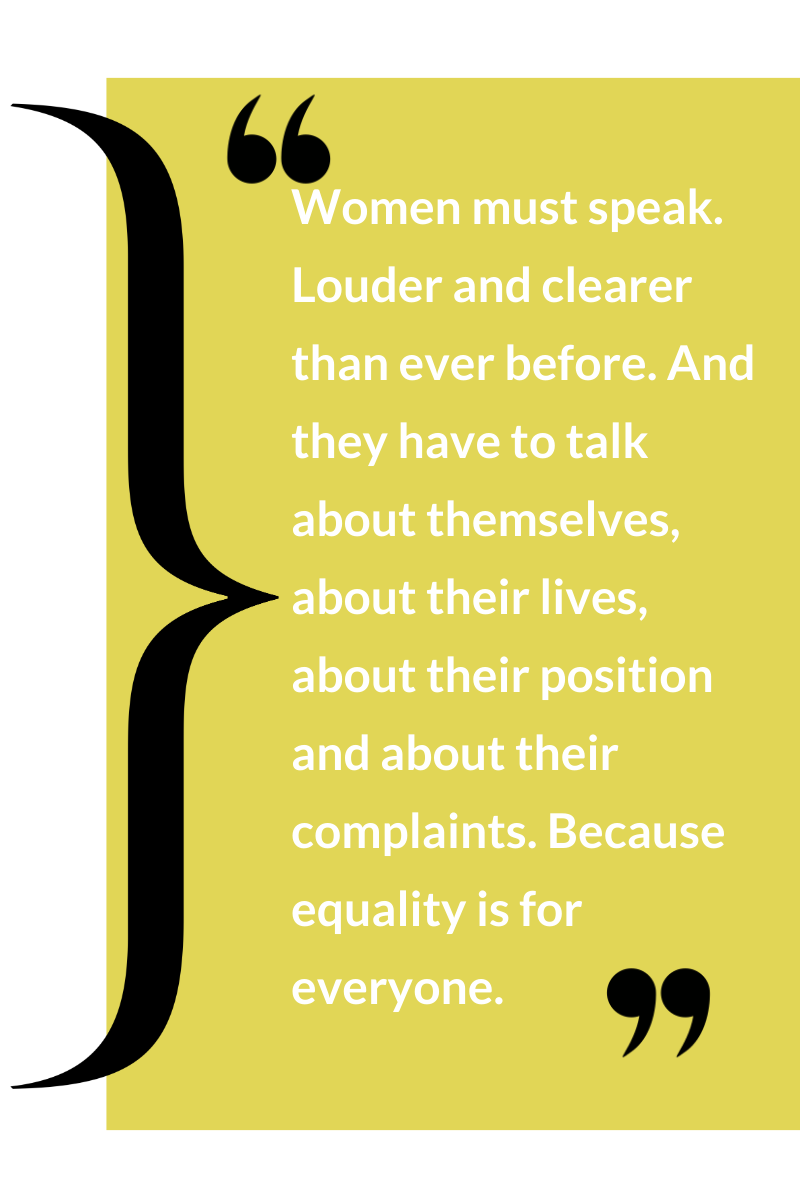
Women must speak. Louder and clearer than ever before. And they have to talk about themselves, about their lives, about their position and about their complaints. Because equality is for everyone.

———————————————————————-
* Rev. Dr. Marta Ferjová is Regional Gender Justice and Women’s Empowerment Coordinator for Eastern and Central Europe with the Lutheran World Federation.

Vaccine confidence guidance

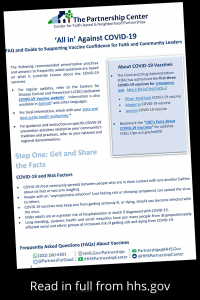
Vaccination hopes, fears and falsehoods are around us in this time of heightened anxiety. A new resource, “‘All in’ Against COVID-19: FAQ and Guide to Supporting Vaccine Confidence for Faith and Community Leaders,” released March 1, 2021 by The Partnership Center, Center for Faith-based & Neighborhood Partnerships of the U.S. Department of Health and Human Services (HHS), was among those highlighted during a Faiths4Vaccines Roundtable Discussion in which ELCA advocacy staff participated.

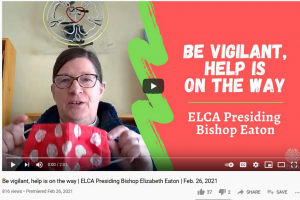
“Many people in this country do not trust either the government or the medical establishment. They fear that this might be an experiment or somehow the government intruding on this. I’ve even heard people say that they’re afraid that a chip is going to be inserted in their arm when they get the vaccine. That’s not true,” says Presiding Bishop Elizabeth Eaton in a Feb. 28 video. “The vaccine is safe, it’s effective, and it’s being made available to many, many, many people. So, I need you to talk to folks in your congregations… to convince them that this is safe, that it’s effective, and it will make it easier for us to return to life in person. …Be well, dear Church.”

The FAQ section of “’All in’ Against COVID-19” is reproduced here, and it can be downloaded and reviewed in its entirety from HHS.gov, including annotated citations. The Partnership Center lists other resources for your review.


‘All in’ Against COVID-19: FAQ and Guide to Supporting Vaccine Confidence for Faith and Community Leaders


Step One: Get and Share the Facts

COVID-19 and Risk Factors
  • COVID-19 most commonly spreads between people who are in close contact with one another (within about six feet or two arm lengths).
  • People with an “asymptomatic infection” (not feeling sick or showing symptoms) can spread the virus to others.
  • COVID-19 vaccines may keep you from getting seriously ill, or dying, should you become infected with the virus.
  • Older adults are at a greater risk of hospitalization or death if diagnosed with COVID-19.
  • Long-standing, systemic health and social inequities have put many people from disproportionately affected racial and ethnic groups at increased risk of getting sick and dying from COVID-19.
Frequently Asked Questions (FAQs) About Vaccines

Vaccines train our immune system to recognize the virus that causes COVID-19 and make cells to fight it. With vaccines, we can build immunity to a disease without getting the disease.

Herd immunity means that enough people in a community are protected from getting a disease because they’ve already had the disease or because they’ve been vaccinated. Herd immunity makes it hard for the disease to spread from person to person, and it even protects those who cannot be vaccinated, like newborns or people who are allergic to the vaccine.

Some people get temporary side effects like fever, headache, or a sore arm after they take the COVID-19 vaccine. Side effects are usually mild and last only a few days. Side effects occur when the body is building protection against the virus.

You cannot get COVID-19 from any of the COVID vaccines now in use nor from those being tested in the United States as none of them contain the live virus that causes the disease.

Clinical trials showed that the vaccines are 94-95 percent effective, meaning they prevent 94-95 of every 100 vaccinated individuals from getting COVID-19.

A vaccine reduces the likelihood that you will get infected, so you’ll be less likely to infect others.

A small number of people have had allergic reactions, called anaphylaxis, after getting a COVID-19 vaccine; but they were treated and have fully recovered. The CDC provides recommendations on what to do if you experience an allergic reaction after getting a COVID-19 vaccination or any other vaccine.

Scientists are studying variants of the virus that cause COVID-19 to see whether existing vaccines will protect people against them. You can track US COVID-19 cases caused by variants.

People of color who get COVID-19 are at much higher risk for severe cases of and even death from the disease. It’s important that they are vaccinated as soon as possible, especially seniors of color.

As larger supplies become available, more people will be able to receive the vaccines. Most adults should be able to get the vaccine later in 2021. Stay tuned to the vaccine program in your state/county by using the locator or through your state or local health department to find out when, where, and how vaccines will be available in your community.

Scientists are still reviewing this question. We don’t yet know how long natural antibodies in people who have had COVID-19, or antibodies created as a result of vaccines, will be effective.

We don’t know how long the vaccine protects people, but clinical trials are actively investigating this. What we do know is that among people who were vaccinated in clinical trials of the vaccines now available, 94 to 95 people out of 100 did not get the disease.

Vaccine doses purchased with U.S. taxpayer dollars and are being given to the American people at no cost. Vaccination providers can be reimbursed for vaccine administration fees by the patient’s public or private insurance company or, for uninsured patients. No one can be denied a vaccine if they are unable to pay a vaccine administration fee.

Yes! Experts need to understand more about the protection that COVID-19 vaccines provide in real-world conditions before they recommend that we stop wearing masks or avoiding close contact with others. In the meantime, it will be important for everyone to continue using all the tools available to help stop this pandemic.

    • Wear a mask over your nose and mouth
    • Stay at least six (6) feet away from others
    • Avoid crowds
    • Avoid poorly ventilated spaces
    • Wash your hands often


Step Two: Get Vaccinated

There is a limited supply of COVID-19 vaccines currently available; however, the supply will continue to increase in the weeks and months ahead. It is expected that most of the American population will have access to the vaccine by fall 2021.

  • When can I get a vaccine?

CDC makes recommendations for who should get the vaccine first, then each state makes its own plan of distribution. http://bit.ly/VaccFacts-5

  • How much do I have to pay?

Vaccines are free to the public. http://bit.ly/VaccFacts-6

  • Where can I get a vaccine?

Use the CDC’s vaccine locator or contact your state or local health department to find out when, where, and how vaccines will be available in your community. http://bit.ly/VaccFacts-7