Following are updates shared from submissions of the Lutheran Office for World Community and state public policy offices.
U.N. | California | Colorado | Florida | Minnesota | Pennsylvania | Washington | Wisconsin
United Nations
Dennis Frado, Lutheran Office for World Community, United Nations, New York, N.Y. https://elca.org/lowc
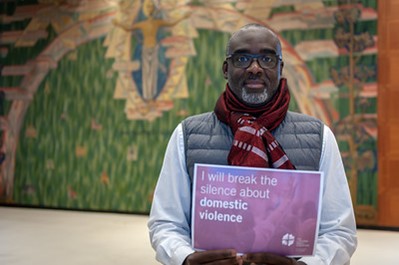
16 Days of Activism Against Gender-Based Violence: Every year, the 16 Days of Activism Against Gender-Based Violence begin on 25 November – on the International Day for the Elimination of Violence Against Women and concludes on December 10 – International Human Rights Day. This year, the 2020 UNiTE Campaign Theme is: “Orange the World: Fund, Respond, Prevent, Collect!”.
LWF’s global communion of 148 churches, representing over 77 million Christians in 99 countries, is joining the UN, Member States, civil society activists and faith-based partners during these 16 Days of Activism to raise awareness and call for action for an end to Gender-Based Violence. It is clear that the COVID-19 pandemic has exacerbated gender inequality and exposed other forms of discrimination and violation of women and girls’ human rights. LOWC’s Program Director has helped organize, together with faith partners, several events including panels on the Shadow Pandemic: Faith actors preventing, responding, and advocating to end gender-based Violence, and A Faith Imperative for Human Rights.
United Nations has released $25 million to UNFPA and UN Women to fund women-led projects fighting gender-based violence. Read UN Women’s call to action to respond to the surge of violence against women and girls. UNFPA has launched its first Intimate Partner Violence (IPV) data dashboard, a helpful resource for prevention and responses efforts.
We must not stay silent. Here are few examples of what you can do: 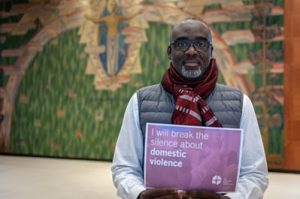
- Support services for survivors of sexual and gender-based violence
- Watch the LWF General Secretary Rev. Dr. Martin Junge about the importance of working to end Gender-Based Violence in our churches and in our societies
- Hold a prayer service. See our suggested worship resources here and here.
- Sign up online for our joint panel discussions on advocacy, theology, human rights, gender justice, engaging men and community responses. See Side by Side – Faith movement for gender justice events here and Ecumenical Women at the UN 16 Days blogs.
- Make the Thursdays In Black pledge
International Migration – An On-going Concern: International migration remains a topic of on-going concern at the United Nations. People continue to be on the move, some driven by climate change or political upheaval, some because they wish or see an opportunity for a better life. These then remain as topics for discussion in various UN fora. A recent overview of many of the issues is contained in the first biennial report, launched on December 1, of UN Secretary-General António Guterres on implementation of the Global Compact for Safe, Orderly and Regular Migration. He noted: “The Compact reflects a growing global understanding of the great benefits of human mobility. But it also recognizes that, if poorly managed, migration can generate huge challenges, from a tragic loss of life to rights abuses and social tensions. COVID-19 has heightened those challenges and had negative effects on more than 2.7 million migrants, particularly on women and girls.”
He concluded with several recommendations: “First and foremost, we must embrace the spirit of collaboration. No country can address migration alone. Second, the pandemic has highlighted the value of migrant labor,” observing that many of those providing essential health and care services are migrant women. “Third, we must address discrimination and foster social inclusion and cohesion between host communities and migrants. Migrants should not be stigmatized or denied access to medical treatment and other public services. We must strengthen the immunity of our societies against the virus of hate.” Earlier this year, the UN Special Rapporteur on the human rights of migrants issued a “report on ending immigration detention of children and seeking adequate reception and care for them.” The report took up a wide variety of situations, including that in the United States, and was discussed in mid-October in the Third Committee of the General Assembly. Another key, unresolved issue related to climate-induced migration is its relationship to international peace and security and, thus, the purview of the Security Council. Small Island states, such as the Marshall Islands, have noted the irony of the Council’s involvement in approving the admission of Member States while being unwilling to take up the security and other risks to their very existence.
On December 18, several nongovernmental organizations — with whom LOWC has been collaborating in a civil society action committee on migration – will host an online event “International Migrants Day: Global Celebration of Our Rights and Our Struggle for Justice” to discuss key migration issues including wage theft, detention and climate justice and mobility.
California
Tracking Legislators: The office in California has begun work on tracking legislators and their staff, in connection with various coalitions, for the purpose of keeping lawmakers accountable. LOPP-CA is helping organizations keep track of changes in seats after California’s November election, as well as mapping the political landscape for an upcoming 2021 advocacy year.
Post-election Coalition moments: LOPP-CA is doing meaningful work with their partner coalitions; alongside California’s Food and Farming Network, the office is in conversation to set strategy for next year’s advocacy, as well as continuing the commitment of racial justice within food advocacy. The Building the California Dream Alliance, of which LOPP is a member, is also having strategy meetings for the coming year, as well as creating new tools to communicate with legislators who have been hard to reach during the COVID-19 pandemic.
Colorado
Election Results: Coloradans voted on 11 statewide ballot measures in November. Lutheran Advocacy took a position on six of these measures. All three of the ones we supported were passed on November 3!
- Proposition 118will create a paid family and medical leave program. After many years of supporting creative but unsuccessful legislative efforts, we are thrilled that voters made it abundantly clear that Coloradans want paid leave. The measure passed with 57% Yes.
- Amendment Bwill repeal the Gallagher Amendment, a provision dating to the early 1980s which fixed the ratio of residential and commercial property tax revenue. The net effect in the last decade was ratcheting down residential property tax revenues every year, meaning less revenue for schools, libraries, parks, fire and water services, and other needs.
- Proposition 113approved the National Popular Vote Compact. Coloradans support a presidential election system that will bypass the outdated, inequitable Electoral College in favor of a popular vote.
In addition, three measures we opposed also passed, including a flat tax cut that will benefit median taxpayers in a small way but will enrich the wealthiest taxpayers significantly, requiring $160 million in budget cuts in 2021. We anticipate continuing to advocate on these issues in the coming session.
Special Session: A special legislative session took place from November 30 through December 2, supporting small business, arts organizations, renters, the unemployed, and other groups needing immediate support in the wake of federal inaction.
Policy Agenda Passed: The Policy Committee of Lutheran Advocacy Ministry-Colorado passed our 2021 agenda on November 13. Find out more at lam-co.org.
Florida
The Florida Faith Advocacy Office of the Florida Council of Churches (FCC) will hold its online assembly on Jan. 7, 2021. See https://floridachurches.org/flash2020.
The assembly will bring together mainline, Black, and Latinx church leaders to develop a jubilee movement in the state capitol. The FCC along with local partners has trained 40+ community leaders in World Café hosting in St. Petersburg as part of an initiative to reimagine civic engagement. Logistic support for Black Lives movement is ongoing, with a current focus on the death of a Black vet while in custody of the Brevard sheriff. Along with many partners, we are questioning proposed anti-protesting legislation which brings back the horrors of the Black Codes. We urge health protocols, wearing of masks, and the necessity of a statewide response to pandemic. In pressing for a second COVID-19 relief package. We also seek robust support for international humanitarian assistance. The successes of ending poverty that kills have been reversed under the pandemic. The world needs a big American heart now. We have the resources for helping hurting people both here and abroad. Faith leaders need to say this clearly and publicly. It is the high calling of our spiritual work. The Florida legislature takes up its pre-assembly work in mid-January, for the March-May session. A new alert system will be rolled out in 2021 to keep advocates advised of where their voices are most required.
Email advocacy@floridachurches.org for more information.
Minnesota
Legislative Session 2021: Along with our partners, we have been considering, debating, and deciding on priority issues for the 2021 session. The LA-MN Policy Council will be meeting soon to determine our foci amid many needs.
Election 2020: The balance in the legislature has not changed dramatically. The most important change is that the balance of power between the political parties is even tighter than it was before the election. To accomplish our agenda, we need our advocates to build strong relationships with their legislators, especially in Greater Minnesota. While many relationships already exist, remote legislative work means legislators are less accessible in St. Paul. 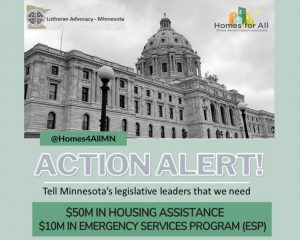
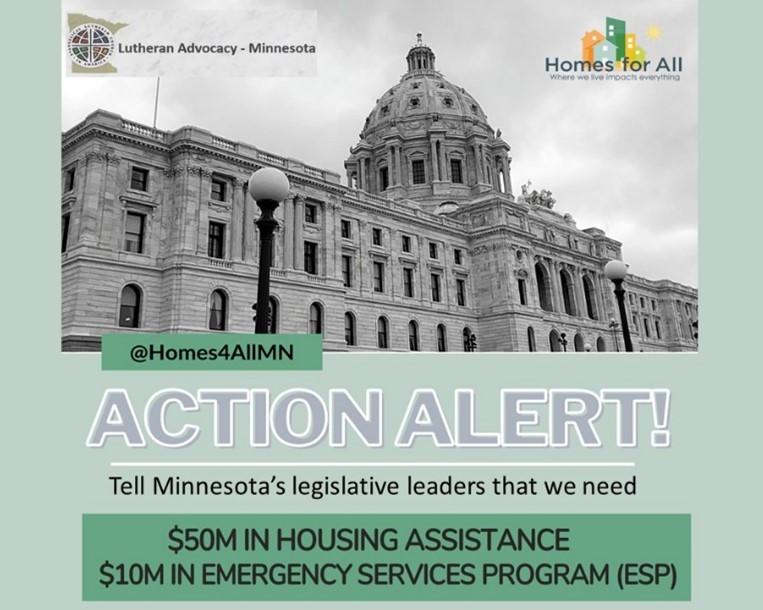
COVID-19 Housing Relief: Minnesota cannot wait for Congress and the Federal Government to act. It was hoped that a package could be negotiated and ready by early December. Unfortunately, some leaders are calling for narrow business relief, but are not addressing other relief.
If housing aid is not passed, Minnesota will soon face a grave housing crisis! Hundreds of thousands of Minnesotans are behind on rent and mortgages. Without aid, we could have a housing crisis worse than the 2008 crash. This would cause unprecedented homelessness and even deeper affordable housing issues than we have already faced for more than a decade.
Businesses will not recover if people are struggling with basic housing and food stability. Our state economy will take much longer to recover from COVID-19 if families cannot meet their basic needs! Take Action Now! Find your MN State Senator & Representative and their contact info at https://www.gis.leg.mn/iMaps/districts/.
Pennsylvania
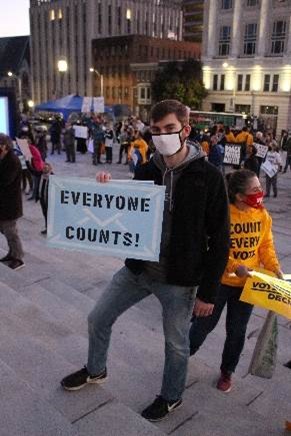
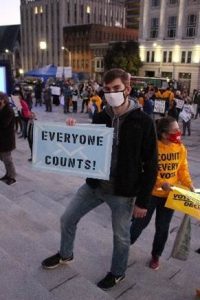 ELCAvotes: LAMPa staff encouraged and provided information for advocates to be trained and serve as nonpartisan poll monitors, as well as shared an ongoing social media presence on election day to be able to respond with information and assistance in cases of voter confusion or potential voter suppression. Lutheran advocates joined demonstrations around the commonwealth to protect the vote count in the days following the election. LAMPa staff and volunteers had contacted election offices in all 67 counties, to assess their preparedness and identify opportunities for our congregations to help, particularly as polling sites or as poll workers and volunteers. LAMPa followed up after Nov. 3, thanking elections workers for their service under tremendous pressure.
Civic Engagement: Discipleship in a Democracy: LAMPa Director Tracey DePasquale participated as a state policy office adviser in the first working session of the task force developing the new ELCA social statement. Earlier this year, LAMPa held an official listening session in the development of the newly adopted social message on the same topic. The development of the social statement will be a five-year process. 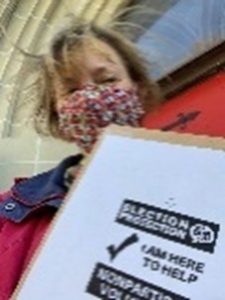
Addressing Homelessness, Looming Eviction Crisis: As the federal eviction moratorium deadline draws near LAMPa shared an alert and survey with congregations and constituents seeking their input. Congregations and groups providing sheltering programs were asked to respond to a survey lifting the voice of those facing or experiencing homelessness. LAMPa shared alerts seeking constituents’ voices to speak up for vulnerable neighbors as state lawmakers finalized the budget for the remainder of the fiscal year. Advocates were asked to contact their state lawmakers to ask them to fix and fund a rental and mortgage assistance program to keep PA residents in their homes. Read more. 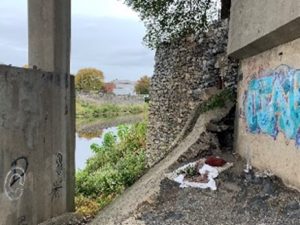
Washington
Paul Benz and Elise DeGooyer, Faith Action Network https://fanwa.org/
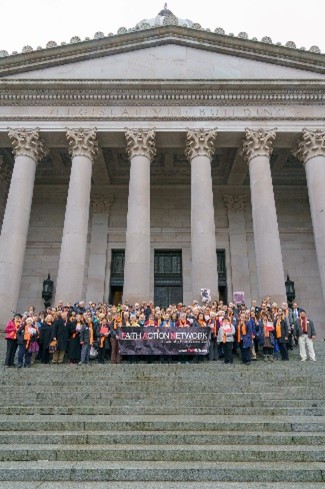
FAN’s 2021 State Legislative Agenda: With approval of our Governing Board, FAN announced our 2021 State Legislative Agenda. Our six main topics this year are Advocating for a Biennial Budget that Reflects Our Values as a State; Reforming our Policing and Criminal Justice Systems; Creating Housing Opportunities and Preventing Homelessness; Addressing Climate Change; Protecting Immigrants, Civil and Human Rights for All; and Ensuring Health Care and Mental Health Access. See the full list of bills at fanwa.org/advocacy/legislative-agenda/. We will be holding three virtual Advocacy Days in Olympia, Central WA, and Eastern WA as well as sharing weekly action items in our E-News as ways for advocates to use their voices in the 2021 legislative session.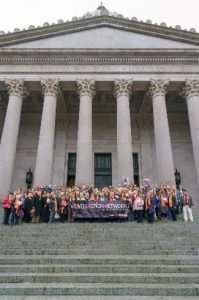
Faith Leaders Speak on COVID Safety: ELCA Bishop Shelley Bryan Wee from the NW WA Synod shared an idea for faith leaders to make a COVID-19 safety video, similar to FAN’s Census video we made earlier this year. These trusted messengers remind us of the important role faith leaders and communities must play in keeping EVERYONE safe by wearing a mask, keeping distance, and ensuring COVID-19 is not passed on in our communities. See their video on YouTube: youtu.be/OvX6_kdT6hQ
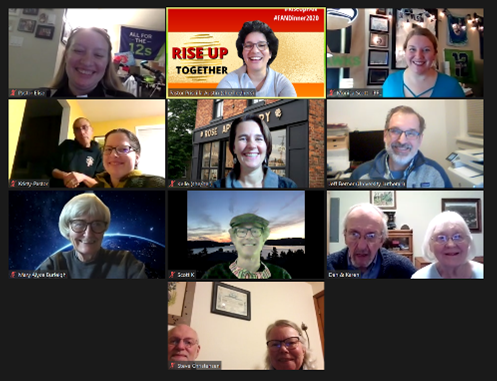
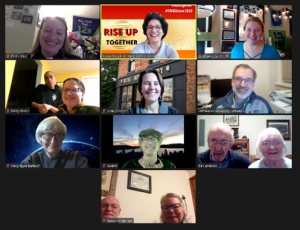 FAN Annual Dinner 2020: On November 15, FAN hosted our first virtual Annual Dinner fundraiser, “Rise Up Together,” and exceeded our goal of $130,000! Advocates met in local Zoom pre-parties, then joined us on YouTube for an evening of statewide calls to action, a look at the 2021 legislative session, a special appearance by our friend and matching donor Rick Steves, and beautiful music and poetry. Read our event recap at fanwa.org/annual-dinner/.
Wisconsin
The Rev. Cindy Crane, Lutheran Office for Public Policy in Wisconsin (LOPPW) https://www.loppw.org/
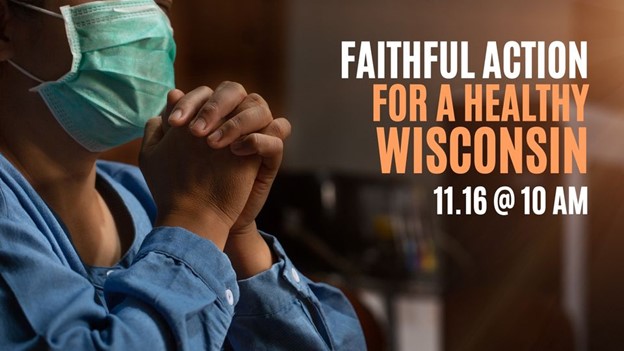
This month, LOPPW was busy preparing our advocacy priorities for the next legislative session while also rebuking our state’s inadequate response to the COVID-19 pandemic. On November 16th, LOPPW, in collaboration with our interfaith partners, hosted our “Faithful Action for a Healthy Wisconsin” event, a virtual rally urging lawmakers to take substantive action to protect frontline workers, take additional pandemic mitigation steps, and show support and solidarity for the religious and government leaders boldly trying to protect their communities. This event had hundreds of attendees and was picked up my numerous local news stations. We are using the momentum from this event to conduct virtual meetings with leadership in the State Legislature to push for additional action.
Outside of COVID-19 advocacy, Kyle is helping kickstart work within our criminal justice and immigration reform priorities. He is working towards a coalition to raise the age of juvenile jurisdiction in Wisconsin and institute other reforms to the juvenile justice system. While the coalition is still in its infancy, he is confident that LOPPW can be a voice for juvenile justice reform in the future. Kyle is also starting advocacy efforts with our local synod immigration & refugee task forces to advocate locally for immigration reform to their county sheriffs. 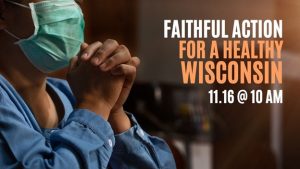
As we approach the end of the year, Cindy will hopefully be able to provide a sturdier foundation for the above initiatives and build active coalitions and campaigns to address these important policy reforms.

 SPENDING DECISIONS: It is decision-making crunch time for federal FY21 budget considerations before the 116th Congress adjourns for the holidays and furthermore concludes on Jan. 3, 2021. Congress approved $900 billion of relief late on Dec. 21, providing desperately needed aid for Americans after months of gridlock on Capitol Hill. The bill now heads to the White House, where President Trump is expected to sign it into law.
 CENSUS CHALLENGE: On Dec. 18, the Supreme Court dismissed one of the challenges to President Trump’s memorandum ordering the U.S. Census Bureau to discount undocumented immigrants from the final census, which is to be reported by the Census Bureau by Dec. 31, 2020. Failing to count every person who lives in each state would affect the process of apportionment which decides congressional seat allocation for states.
 CLIMATE CHANGE CONNECTIONS: The incoming Biden Administration indicates that it will make climate change an unprecedented high priority. Addressing climate change will be done in concert with addressing the economy, yoking as essential growing the economy simultaneously with addressing climate concerns.