Skip to content
ELCA Blogs

ELCA Advocacy

November Update: UN and State Edition

Following are updates shared from submissions of the Lutheran Office for World Community and state public policy offices.

U.N.| California | Minnesota | Ohio | Pennsylvania | Washington | Wisconsin

United Nations

Dennis Frado, Lutheran Office for World Community, New York, N.Y. ELCA.org/lowc

Women’s Human Rights Advocacy Training: The Lutheran World Federation in collaboration with Church of Sweden, Finn Church Aid, Mission 21, the World Council of Churches and ACT Alliance is holding an advocacy training on women’s human rights (26 October – 13 November 2020). The training is usually held annually in person, and this year, due to COVID-19 it is being held virtually.
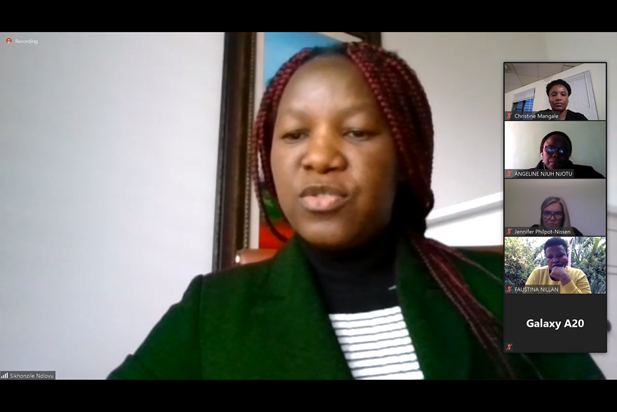
Topics covered include introduction to the Convention on the Elimination of all Forms of Discrimination Against Women (CEDAW), tools and opportunities for engaging in preparing for parallel (also known as “shadow”) reports to CEDAW, the intersection between human rights, faith and gender, Gender-Based Violence prevention and responses, the role of men and boys in gender justice advocacy among others. LOWC is involved in the planning and facilitation of some sessions during the training. A resource for faith-based organizations on affirming women’s human rights can be found here.

General Assembly’s Third Committee Has Dialogues with Human Rights Mandate Holders: As it has done for some years, the General Assembly’s Third Committee has been having dialogues in recent weeks with various persons holding human rights mandates from the Geneva-based UN Human Rights Council. While LOWC has been monitoring quite a few of these discussions on topics such as racism and racial discrimination, advancement of women, rights of indigenous peoples, and internally displaced persons, it took special note of the discussion with the Special Rapporteur on the situation of human rights in the Palestinian territories occupied since 1967, Professor S. Michael Lynk.  His report this year reviewed the situation of human rights in the West Bank, including East Jerusalem, and in Gaza and focused on accountability related issues. Lynk also held a separate virtual discussion with the UN NGO Working Group on Israel-Palestine, of which LOWC is a member, as he has in previous years on this occasion.


California

Regina Q. Banks, Lutheran Office of Public Policy- California https://lutheranpublicpolicyca.org/

Getting ready for the election: The Lutheran Office of Public Policy in California (LOPP-CA) has been working diligently to prepare for the upcoming election. The staff did work around building patience and an understanding of the process. In the weekly Advocacy in Quarantine meetings, LOPP-CA worked with constituents to talk through the timeliness of the election while holding space for further learning on the state’s Proposition.

Prop 16 Text Banking: LOPP-CA went forward this month in continuing to text bank with the Prop 16 coalition. The office has been reaching out to California voters through a texting platform called Thru Text in hopes of overturning the state-wide ban of affirmative action, something that has been in effect since 1996. There has been a committed group of parishioners and advocates meeting every Monday to push this outreach, and so far the office has reached more than 600,000 voters in the state.

Partnering with California Food and Farming Network: Continuing the office’s commitment to advocate for food and farming, LOPP-CA has begun working closely with the California Food and Farming Network (CFFN), a coalition of around 40 advocacy organizations such as food banks, legislative advocacy, farming service organizations, and partners from across both the food and farming sectors. The Network has begun its strategic process for the year 2021, centering racial justice and equity in their approach. LOPP-CA has joined CFFN for this visioning process, and has given financial contributions toward centering racial justice through committing funds to CFFN’s community Engagement process. Specifically, CFFN will be reaching out into communities of color, finding leaders and advocates within food sectors, and providing compensation for their expertise. This listening campaign will take the expertise learned and structure CFFN 2021 priorities.


Minnesota

Tammy Walhof, Lutheran Advocacy- Minnesota http://www.lutheranadvocacymn.org/

State Legislative Elections: Although the Minnesota Democratic-Farmer-Labor Party lost some seats in the House, it retains control of the chamber. In the Senate, some flipped districts occurred, but the balance remains the same. Unfortunately, at least one of the Republicans that was ousted was one who was helpful to our housing agenda. All the main leaders from both parties and both chambers retain their positions.

Minnesota U.S. Elections: Rep. Colin Peterson was ousted from Minnesota’s 7th congressional district seat and replaced by former State Senator/Senate President Michelle Fischbach, who also served briefly as Lt. Governor when Tina Smith was appointed to the U.S. Senate. Representative Peterson served as the long-term chair of the Agriculture Committee, a committee Fischbach hopes to serve on as it also addresses nutrition issues.

Update on Special Session #5: A carefully negotiated $1.36 billion bill including bonding, supplemental appropriations, and “tax  relief” for farmers and small businesses was finally passed when House Minority Leader Daudt let his caucus vote their conscience. Freed by Daudt, many House Republicans joined the bipartisan bill. Thanks for your hard work on the housing pieces!

Included in the bill were

  • $100 million in Housing Infrastructure Bonds
  • $16 million in General Obligation Bonds for Public Housing
  • A large amount for transportation including roads and bridges, some public transportation, and electric vehicle charging infrastructure
  • Bonds for public facility projects, public safety, the University of Minnesota, and other various public works, including municipal water infrastructure & solar projects
  • $31 million in a supplemental appropriation (added to last year’s biennial budget)


Ohio

Deacon Nick Bates, Hunger Network in Ohio hungernetohio.com

Hunger For Justice Conference: On November 9th the Hunger Network sponsored the Hunger for Justice Conference featuring theological reflection on the election and analysis of what is to come so that faith leaders across the state can identify opportunities for successful advocacy!

Visit www.hungernetohio.com/summit for links to our plenary panel, theological reflection and musical reflection of what the election means to our communities


Pennsylvania

Tracey DePasquale, Lutheran Advocacy Ministry–Pennsylvania (LAMPa) www.lutheranadvocacypa.org

Shaping Hunger Policy in PA: LAMPa Director Tracey DePasquale participated in the quarterly meeting of the state’s Emergency Food Assistance Advisory Committee, where the state Department of Agriculture and charitable feeding organizations assessed the current response to emergency nutrition needs during COVID-19, mapped likely needs and set goals for meeting those needs in the upcoming state budget.

LAMPa Participates in Virtual Human Trafficking Rally: LAMPa participated in a Pennsylvania Anti-Human Trafficking Advocacy Work Group sponsored Advocacy Day lifting legislation that provides definitions and the offense of trafficking individuals; repealing provisions relating to patronizing a victim of sexual servitude; promoting prostitution and living off sexually exploited persons; commercial sexual exploitation; and providing for Safe Harbor for Sexually Exploited Children Fund.

Workshop presented at We Love: LAMPa Program Director Lynn Fry shared a workshop titled : Take a Stand: Advocacy & Equality in Pennsylvania at the second ELCA NEPA Synod We Love Event – Building Safer & More Welcoming Congregations for LGBTQ+ Youth and Families.

Equipping leaders and vital congregations for discipleship in a democracy: LAMPa continued to disseminate election information to congregations, synods, and leaders regarding election security, poll watching, and voter safety. DePasquale and ELCA Advocacy Director Amy Reumann presented to leaders in the NWPA Synod Bishop’s Convocation.

Responded to Legislative threats to Medicaid: LAMPa worked to successfully stop legislation that threatened Medicaid provisions and funding.

Advocacy and Faith Formation: DePasquale taught a virtual adult faith formation class at Holy Spirit, Emmaus, SEPA Synod.


Washington

The Rev. Paul Benz and Elise DeGooyer, Faith Action Network fanwa.org

Election Successes: WA state passed Referendum 90 for Safe and Healthy Youth, a bill the legislature passed in the 2020 session mandating sex education in our K-12 school system with age-appropriate stages. This referendum was supported by sexual assault and domestic violence advocates, as well as a broad coalition of faith leaders who signed this letter, in contrast to opposition from the “religious right.” FAN was very involved in the campaign to secure the 60% approval. We also secured funding for our Long-Term Care Trust Fund via constitutional amendment – among the first of such funds in the nation.
New Regional Organizers: We are excited to share that our organizing team is expanding! FAN is able to fulfill one of our dreams of having a stronger presence statewide by hiring part-time Regional Organizers in Western, Central, and Eastern Washington as well as two social work interns from the University of Washington. We look forward to building deeper relationships with our Network of Advocating Faith Communities (NAFCs) and local organizations statewide.


Wisconsin

The Rev. Cindy  Crane, Lutheran Office for Public Policy in Wisconsin (LOPPW) loppw.org

ELCAvotes: Wisconsin had a record turnout of voters! Since March, LOPPW placed major emphases on encouraging people to vote, especially absentee, and on countering misinformation. We often worked in coalition with ELCA partners and a statewide voting coalition. October efforts included interviewing a Wisconsin Elections Commission representative for Wednesday Noon Live and creating six Ballot Box FAQs videos, including one with an interview with the ACLU.

Care for God’s Creation: LOPPW’s statewide task force, so far with members from five synods, began planning a Care for God’s creation virtual advocacy day to coincide with an emerging new WI State Budget.

Trainings: LOPPW helped in organizing an advocacy webinar, co-hosted by ECSW WELCA. We also led discussions on voting and advocacy with adults and confirmands in LAS and in SCSW.

COVID-19: Participated in meeting with Lieutenant Governor on health mandates challenged by courts and possibly the legislature. I was then in dialogue with the bishops about drafting a statement, which can be found here. LOPPW also joined an interfaith group to organize an action to address the problem.

New Resource: Read our new resource, “Advocating Locally,” for information about engaging your community!

Criminal Justice: We’ve begun reviving efforts to return 17-year-olds to juvenile courts, led by our Hunger Advocacy Fellow, Kyle Minden.

Anti-Racism: We offered consultation to ECSW’s Global Missions Committee on integrating anti-racism efforts into their work. I invited Regina Banks to give a presentation at one of their meetings.

Immigration and Refugees:  We offered consultation to the SCSW Immigration Task Force and created a video to address decreasing number of refugees in U.S. for the national, “Lift the Torch of Welcome” vigil.

November Update: Advocacy Connections

Partial content* expanded from Advocacy Connections: November 2020

ELECTION 2020 AND ELCAvotes  |  COVID-19 STIMULUS AND OTHER “LAME DUCK” SESSION ACTIVITY  |  OFFICIAL PARIS CLIMATE AGREEMENT WTIHDRAWAL  |  ATROCITY PREVENTION  |  PRESIDENTIAL DETERMINATION ON REFUGEES


ELECTION 2020 AND ELCAvotes:  In synods and congregations, through leaders and members, and with ELCA advocacy tools, faith-informed civic engagement has been lively in this unique 2020 election season. ELCA Advocacy staff continues monitoring post-election activity as states with narrow margins could see recounting efforts, protests or litigation over the coming days. Following election season, staff will prepare engagement plans with newly elected members of Congress and will finalize policy priorities for the 117th Congress in 2021.

In social media, blog posts and webinar participation, the ELCAvotes initiative with various collaborators has shared important, non-partisan sourced messages, including encouraging young adult voters, raising awareness of state deadlines for registering and early voting, promoting healthy polling practices, providing response tools for potential voter intimidation and lifting up counting every vote.


COVID-19 STIMULUS AND OTHER “LAME DUCK” SESSION ACTIVITY:  An additional COVID-19 relief package urgently must be decided by lawmakers before the holidays and adjournment as a bulwark against economic and health hardships for vulnerable and hungry people. Use our Action Alert to use your voice! All appropriations bills are also now being considered by the Senate.

The clock is ticking to see if appropriation decisions will be moved to the 117th Congress by continuing resolution. Another notable to-do item for the 116th Congress to be revisited before the end of the 2020 session is passing a budget by Dec. 11 to avoid a government shutdown.


OFFICIAL PARIS CLIMATE AGREEMENT WTIHDRAWAL:  On Nov. 4, the U.S. officially left the Paris Climate Agreement. “By exiting the Agreement, the current administration has abdicated its responsibility to work with the rest of the world to tackle the climate crisis,” reads a statement from We Are Still In with which the ELCA participates.

We regret the U.S. decision but resolve to be accountable to God and continue our work as stewards of creation. The incoming Biden Administration has announced its intention to rejoin soon after the inauguration.


ATROCITY PREVENTION:  The ELCA continues to advocate within the U.S. government for strengthening of atrocity prevention programs. Use your voice to advocate for the Safe from the Start Act particularly, which expands the ability of the U.S. government to prevent gender-based violence at the onset of humanitarian emergencies.

Recently, advocacy staff participated in a consultation with the Principal Deputy Assistant Secretary for the Bureau of Conflict and Stabilization Operations, where we provided feedback and key issue recommendations. Use Action Center tools to urge advancement of policy pieces like the Safe from the Start Act.


PRESIDENTIAL DETERMINATION ON REFUGEES:  President Trump signed a Presidential Determination on refugees on Oct. 27, authorizing a goal for FY21 of only 15,000 people. The new admissions goal is an 18% reduction from the FY20 goal of 18,000, an 80% cut from the historic norm and the lowest target in the history of the U.S. Refugee Admissions Program.

The formal identification followed a Sept. 30 announcement. The new goal was set after significant commentary from refugee advocates and resettlement agencies, including Lutheran Immigration and Refugee Service and the ELCA, which implored the president to raise the ceiling and allow for greater numbers to be admitted and resettled in the U.S. An Action Alert from LIRS is available at votervoice.net/LIRS/campaigns/77949/respond to add your voice to those objecting to the figure and the impacted lives it represents. More at blogs.elca.org/advocacy/raising-the-refugee-ceiling/.


Receive monthly Advocacy Connections directly by becoming part of the ELCA Advocacy network – http://elca.org/advocacy/signup , and learn more from elca.org/advocacy .


From ELCAvotes to discipleship in a democracy

By the Rev. Amy E. Reumann, ELCA Advocacy Director

ELCA Lutherans have taken to heart “that energetic civic engagement is part of their baptismal vocation, both as individuals and through the church’s corporate witness” (ELCA social message on “Government and Civic Engagement in the United States: Discipleship in a Democracy,” pg. 14). Enthusiasm and responsibility for voting were relayed in the 2020 election, as in this social media post from Christopher Vergara of the ELCA Metropolitan New York Synod:

“Guess who voted in their first presidential election!?!? we were reminded throughout the whole experience – especially on this Día de los Muertos – of all those who have gone before, those who have fought for a long time and those who keep fighting, keep inspiring, keep kicking… We were going up the stairs to the voting area, when this older woman was barreling down the stairs. Her aide was chasing after her telling her to slow down. She said ‘I just voted, I feel so good my knees don’t even hurt!!!’”

Americans turned out to vote in record numbers last week, reaching the highest voting rate in 120 years. About 160 million people, 67% of eligible voters, participated despite long lines and extensive misinformation campaigns about when, where and how to vote. This extraordinary election took place under the health and safety challenges posed by a pandemic, calls for long overdue racial equity and the sometimes-disturbing discourse of a deeply polarized public.


GRATITUDES AND CONCERNS

There is much for which we can be grateful. Threats of targeted violence and extensive intimidation did not materialize. Americans stepped up to serve as election officials, poll workers, get-out-the-vote organizers and election monitors. We experienced exuberant and robust participation that exemplifies what the social message describes, that “U.S. Lutherans have learned that their neighbors are best served by a government in which supreme earthly power is held publicly by the people (a democracy) and they are governed by representatives chosen in fair elections in which each person is assured of their vote (a republic)” (pg. 9).

There are worries, too. President Donald Trump continues to assert, without providing evidence, allegations of widespread voter fraud. Although the Department of Homeland Security has called the 2020 election “the most secure in American history,” the president has not yet conceded, raising concerns for an orderly transfer of power with worrisome implications for national security and pandemic response. Election season continues in Georgia, with two runoff elections that will determine the composition of the Senate. As a nation, the post-election result is that we are still fractured by divisions that must be addressed.


RAMPING UP OUR WITNESS

It is time for Lutherans to claim as a vocation in daily life their identity as disciples in a democracy. ELCAvotes has been a well-received initiative providing resources and community for Lutherans to be involved during the run up to elections and in voting rights work. The 2020 election shows us why seasonal engagement is not enough. “The ELCA holds to the biblical idea that God calls God’s people to be active citizens and to ensure that everyone benefits from the good of government” (pg. 14). Elections are not the end but a beginning. On Nov. 4, Vergara posted:

“I was reminded repeatedly yesterday how precious democracy is, and that protecting and engaging in it is not something to just take on every 4 years or, worse yet, outsource to others, but a solemn responsibility we as citizens must undertake individually, collectively, and continuously.”

Serving God and neighbor through civic engagement means our witness in society ramps up after an election to ensure that the values expressed, promises made and communal discernment undertaken continue and bear fruit. We now have the opportunity to build on the energy emerging from this election and push for meaningful reforms in the next Congress. This includes making our democracy work better, addressing distortions in power and access based on our national history of racial and economic exclusion, and implementing reforms that will ensure all voices are heard and have equal access to power structures.


LAME DUCK SESSION OPPORTUNITIES

As election results are finalized, there are several notable to-do items in the “lame duck” session that need our advocacy. Congress will have to pass a budget by Dec. 11 to avoid a government shutdown, and ELCA Advocacy is actively speaking to the appropriations bills now before the Senate. Our advocacy is needed in COVID-19 relief [use the Action Alert now to contribute your voice emphasizing urgent, just and compassionate response], for a robust package to serve as a bulwark against additional economic and health hardships for vulnerable and hungry populations. We are braced for a federal evictions moratorium that ends on December 30, and advocate for its renewal [use the Action Alert now for background and to spotlight the need for policy action]. God’s work continues through our hands and our voices.


If you haven’t already signed up, consider being part of the ELCA Advocacy Network through ELCA.org/advocacy/signup to receive Action Alerts at impactful moments and monthly advocacy updates.


Election fears and global church wisdom

“Fear not, for I am with you, do not be afraid, for I am your God.” Many of us rehearse these words from Isaiah not only for their instruction, but because we need to remind ourselves of God’s presence and peace to push against contrary voices setting off anxiety. Anxiety is aroused around this election. The agitation is rational: pandemic realities and opportunistic impulses in electoral mechanisms, white supremacy and Christian nationalism stepping out of shadows, election results potentially unclear or contested and threats of violence.

“The political polarization in this country is making the temperature ripe for possible election violence,” says Christine Mangale, ELCA Program Director with the Lutheran Office for World Community. “This is the time for ELCA members to draw lessons from the ecumenical movement, in particular the Lutheran churches worldwide that have been promoting peace and working to prevent conflict for more than six decades. As churches, we have always been inspired by the rich tradition of peace, love, reconciliation and justice.”


FACED BY ZIMBABWEANS

On July 30, 2018, Zimbabwe held its first free elections after the almost 30-year rule of Robert Mugabe, prime minister then president of that nation. Until election results were announced on August 3, 2018, protests flared, including the death of six people in violent clashes on August 1. The Rev. Dr. Kenneth Mtata, General Secretary of the Zimbabwe Council of Churches and pastor of the Evangelical Lutheran Church in Zimbabwe, said then, “What is really required in the long-run, if we going to have a deep cohesion among Zimbabweans, is to address the deep-seated anger, frustration and dissatisfaction on our land, which get an opportunity to manifest in such violence whenever there is an opportunity.”

In a letter of solidarity, the Rev. Dr. Martin Junge, General Secretary of the Lutheran World Federation, wrote of the hope for a country flourishing “with the contribution of each member of the society, regardless of political identity.”


SUPPLIES STOCKPILED BY THE CHURCH

The ELCA social message “Community Violence” conveys a practical appreciation of what many are feeling in 2020. “Violence breeds more violence. Incidents of violence stir up anger and a craving for vengeance. Fear festers an attitude of ‘we’re not going to take it anymore.’ Increasingly, our national mood has been described as one of ‘getting mad and getting even’” (pg. 2). But this response should not be indulged by Christians. The message continues: “The Holy Spirit works among us to wrench us from violence, hate, greed, and fear, and transforms us into people who are called to trust God and live in community with one another. In doing so, we need to confront the violent tendencies within ourselves and our society, and find ways to cultivate the practice of nonviolence” (pg. 2).

While evidence suggests toilet paper is again being stockpiled and security checks for gun purchases are on the rise, churches can position themselves to declare God’s peace, marked by relationships that are just, harmonious and free from violence. “The Church as a community for peace is also to be a deliberating presence in society. As a community of moral deliberation the Church is a setting of freedom and respect where believers with different perspectives may learn from one another in the unity of faith,” says the For Peace in God’s World social statement (pg. 5). “We also advocate an early peace that provides security from violence and aggression, seeks just order in place of tyranny or anarchy, checks unrestrained power, and defends and enhances the life of people who are poor and powerless” (pg. 7).


MOVING TOWARD HEALING

Whether violence mars this election or not, we are a nation in need of healing. One model for local congregation leadership in this healing is available in “With Malice Towards None,” a program of Braver Angels that increases capacity for working together to address our common challenges. After the election has been decided, the initiative suggests healing through organized online or in-person gatherings where “red and blue Americans consider how they want to regard their fellow citizens who voted differently and begin building the capacity of We the People to forge ‘a more perfect union’ moving into 2021.”

As the global ecumenical communion urges us, our Christian community can hold forth a light in anxious times and not be subsumed by fear. In Zimbabwe, Junge wrote of the church’s strong commitment “to walk with… all the people of Zimbabwe in prayers for peace and stability in the country in order for all to enjoy the fruits of their land.” Spurred by the God of peace, we can address the deep-seated anger, frustration and dissatisfaction in our land and tend to our divisions by coming together to encounter, listen and learn about one another across differences.