Skip to content
ELCA Blogs

ELCA Advocacy

August Update: U.N. and State Edition

United Nations | California | Colorado | Florida | Kansas | Minnesota | New Mexico | Ohio | Pennsylvania | Southeastern Synod | Texas | Washington | Wisconsin


Lutheran Office for World Community, United Nations, New York, N.Y.

Dennis Frado, director
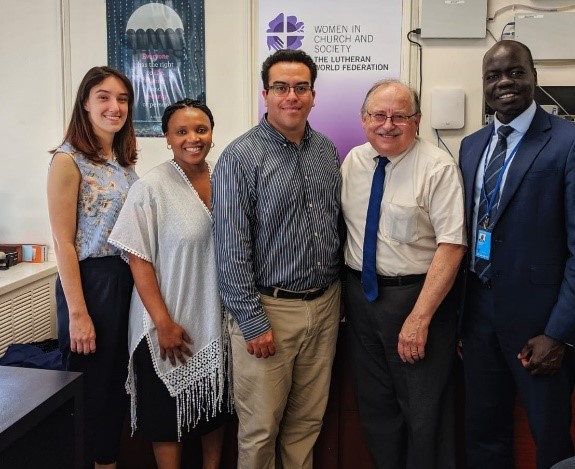
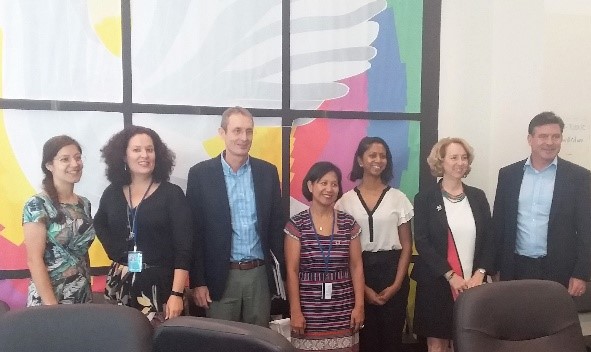
LOWC Staff, Rev. Fabian Wilches (middle) and Dr Ojot Ojulu (far right).

HIGH-LEVEL POLITICAL FORUM ON SUSTAINABLE DEVELOPMENT: The seventh session of the UN High-Level Political Forum on sustainable development (HLPF), held under the auspices of the Economic and Social Council, took place in New York City July 9-18 under the theme “Empowering People and Ensuring Inclusiveness and Equality”. The forum reviewed set of sustainable development goals 4 (quality education), 8 (decent work and economic growth), 10 (reduced inequalities), 13 (climate action), 16 (peace, justice and strong institutions) and 17 (partnerships for the goals), with 47 countries presenting their voluntary national reviews on these goals. During the HLPF, the LOWC office welcomed three delegates from the Lutheran World Federation: Ojot Ojulu, assistant general secretary for international affairs and human rights; the Rev. Fabian Wilches, senior advocacy officer; and John Hillary, national coordinator for LWF’s Waking the Giant program in Tanzania. The LWF co-
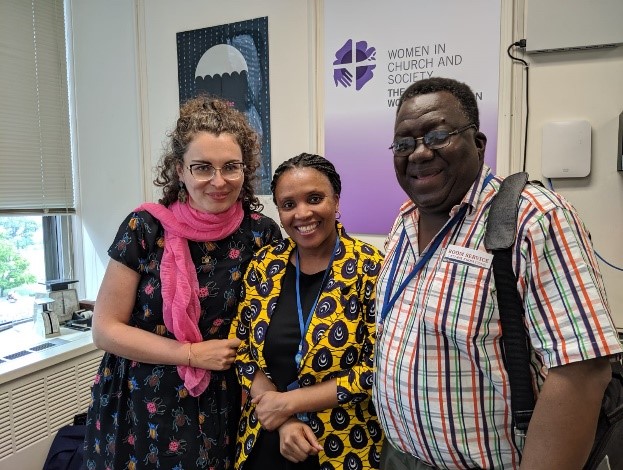
LOWC Staff and Dr. John Hillary (far right)

organized two side events during the HLPF, titled “Taxation & Reparation: Tools for Promoting Equity, Climate Justice and an Economy of Life” and “The Role of Faith Communities in Building Peaceful, Just and Inclusive Societies in Latin America and the Caribbean.” For more information on these events, see below. For more information on the HLPF, click here. A one-and-a half-days session of the HLPF will be held under the auspices of the General Assembly with heads of state and government on September 24-25 in New York City.

TAXATION & REPARATION: TOOLS FOR PROMOTING EQUITY, CLIMATE JUSTICE AND AN ECONOMY OF LIFE: On July 11, during the HLPF the World Council of Churches and the Lutheran World Federation co-hosted an event alongside the World Communion of Reformed Churches, the Council for World Mission and the United Methodist Church, during the High-Level Political Forum. The event, “Taxation & Reparation: Tools for promoting Equity, Climate Justice and an Economy of Life” focused on the need for justice and reparation for exploitation.
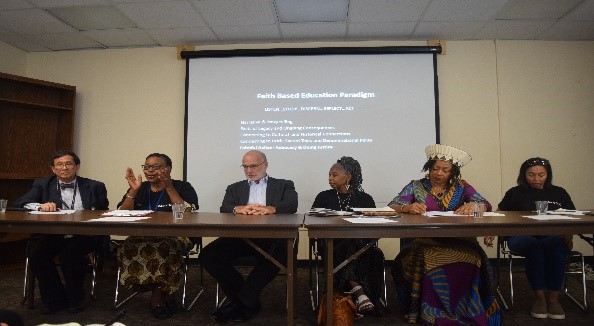
Panelists James Henry, Manuel Montes, and the Rev. Suzanne Matale spoke about the current tax system, urging greater transparency concerning investors and emphasizing the need for people of faith to become more involved because “taxation is no longer a matter for the privileged few.” Montes discussed the history behind the United Kingdom’s tax evasion, the Rev. Matale spoke of her experience in Africa and the unnecessary taxes, including those for digging one’s own bore holes to access clean water, whereas Henry explored the types of tax evasion taking place in the world, including offshore taxation. Raveen Shepherd shared her knowledge of the desperate need for reparation needed in the Caribbean and Iva Karuthas emphasized the need for reparations, calling them a necessary tool for healing rather than a fight for money arguing that there is “not enough money to pay back for the violence, racism, exploitation and cheap labor experienced.”

To conclude the event, the sponsors launched the Zacchaeus Project, part of the “New International Financial and Economic Architecture initiative” (NIFEA), modeled on the transformation of the tax collector, Zacchaeus, in the Gospel of Luke. This campaign’s purpose is to advocate for tax justice, address social & ecological debts, while also educating churches about the issues involved when advocating for tax justice and reparation. For more information, click here.
“ENDING VIOLENCE AGAINST CHILDREN IN THE PACIFIC AND TIMOR-LESTE”: During the HLPF, World Vision, the ChildFund Alliance, Save the Children and Plan International co-hosted an event titled “Australian Coalition of Child-Focused INGOs: Unseen and Unsafe: The Underinvestment in Ending Violence Against Children in the Pacific and Timor-Leste.” This event, held on July 12, emphasized the “normalization” of violence within the home, highlighting that while “1.7 billion people experience some form of violence every year”- childhood trauma, including brain shrinkage in children that have experienced or been exposed to violence, is preventable. The event presented two reports, including in-depth country case studies and an “INSPIRE Framework” with seven strategies for ending violence against children.

THE ROLE OF FAITH COMMUNITIES IN BUILDING PEACEFUL, JUST AND INCLUSIVE SOCIETIES IN LATIN AMERICA AND THE CARIBBEAN”: On July 17 the Inter-Religious Alliance for the 2030 Agenda together with such other organizations as Religions for Peace Latin America and the Caribbean, the Action by Churches Together Alliance (ACT Alliance) and the Lutheran World Federation (LWF) co-hosted an event during the HLPF on Sustainable Development concerning “The Role of Faith Communities in Building Peaceful, Just and Inclusive Societies in Latin America and the Caribbean”.

The event opened with remarks by Rabbi Elias Szcztnicki, who emphasized the importance of the Inter-Religious Alliance for the 2030 Agenda as a platform of faith across Latin America and the Caribbean, helping to connect and coordinate religious networks in their advocacy work with governments and others in civil society.

Panelists Juan Carlos Navarro, Secretary General of Cáritas Madre de Dios, in Peru and Karina Gerlach, senior adviser of Pathfinder for Peaceful, Just and Inclusive Societies, shared their experiences in Latin America and the Caribbean and connected their work to the sustainable development goals.

Sarah de Roure, country manager of Christian Aid in Brazil, mentioned the high number of homicides throughout of Latin America and the problem of threats and attacks on journalists and civil activists by the government. Fundamentalist voices are getting louder and she highlighted proposed alternatives as provided by the ACT Alliance or Christian Aid.

Laurie Smolenski, outreach and development officer at the Institute for Economics & Peace (IEP), argued that religious networks play an important role. Because they serve even remote and under-sourced communities, they can promote unity and build linkages between religions and different communities to foster achievement of SDG 16.

Find the event agenda here.


California

Regina Q. Banks, Lutheran Office of Public Policy- California (LOPP-CA) lutheranpublicpolicyca.org
SUMMER RECESS: The Legislature for the state of California is in Summer Recess and slated to return August 12. Fiscal Committees will have roughly 3 weeks, until August 30, to hear and pass the remaining fiscal bills to the floors of the respective houses. The remaining two weeks of session, until September 13, is reserved for floor sessions. This first year of a two-year session adjourns at Midnight on Friday, September 13, 2019.

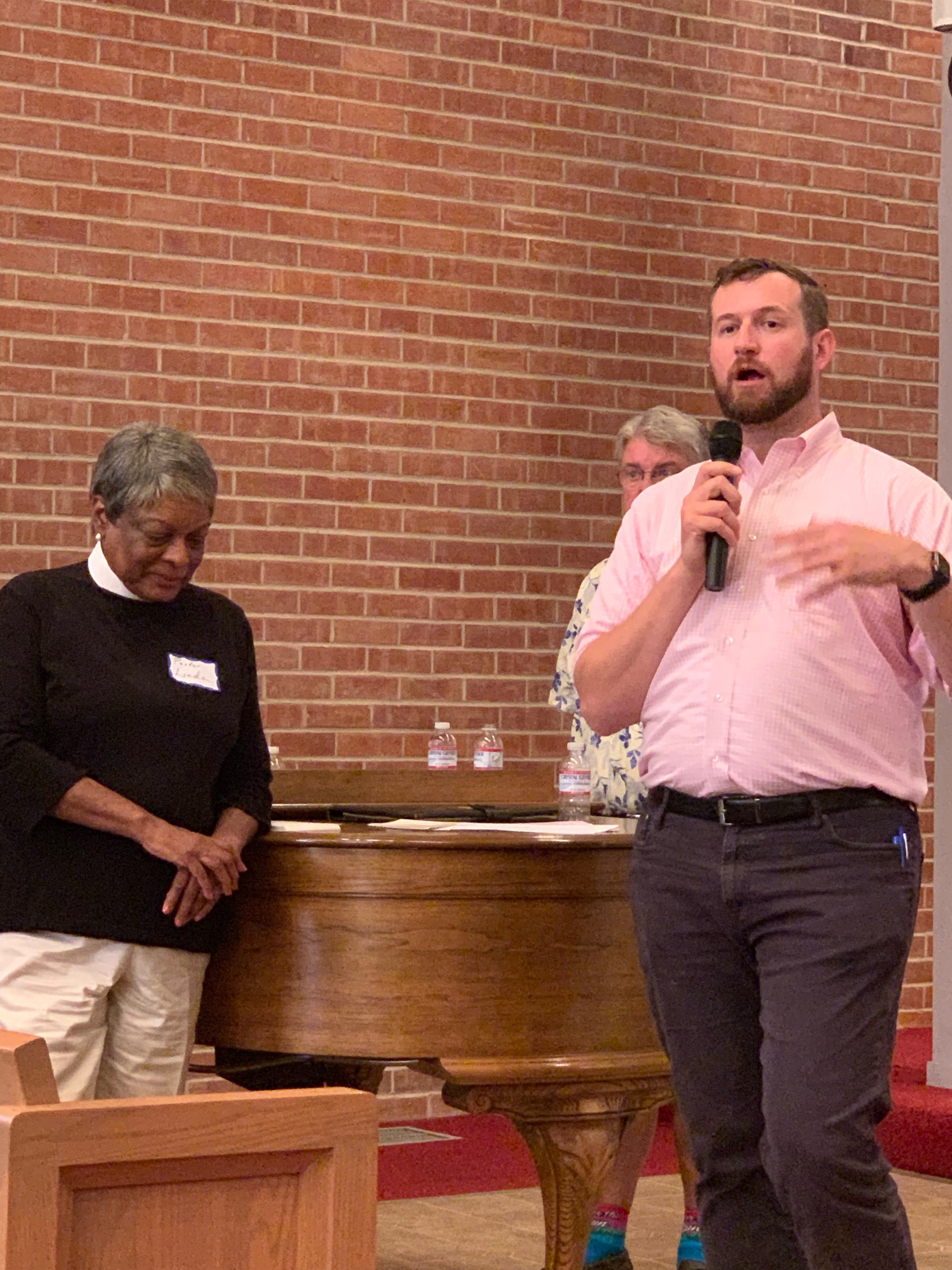
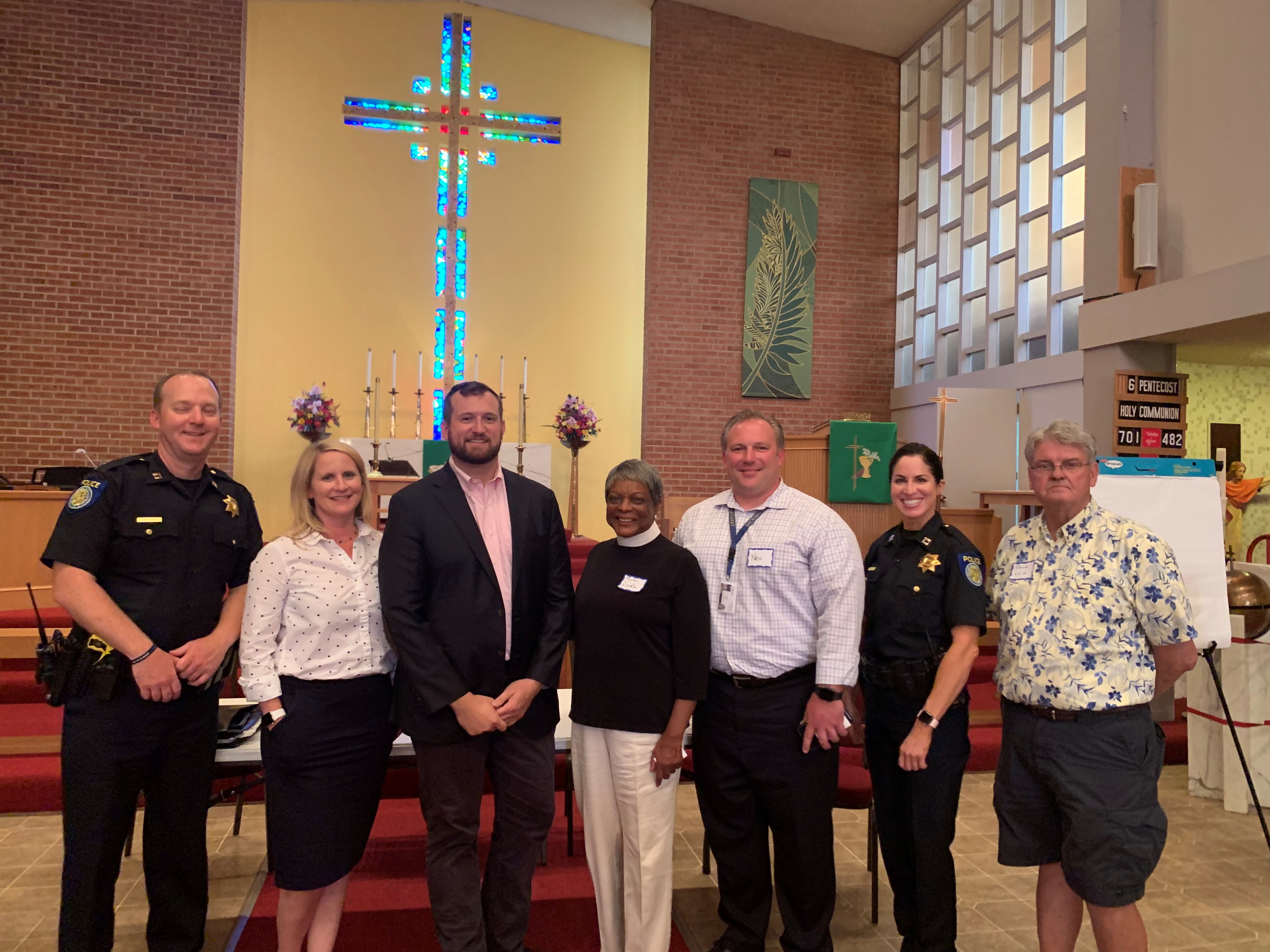
SUMMER LEGISLATIVE VISITS: Summer is an excellent time to meet with federal, state and local policy officials while they are back home in their districts. LOPP-CA would like to highlight just such an opportunity taken. Lutheran Church of the Master in Sacramento, CA hosted a beautiful community meeting with elected officials on the Sacramento City Council and command representatives from the Sacramento City Police Department and local social service agencies to address the homelessness issue in their South Land Park community. Pr. Linda Boston and Councilman Steve Hansen did a great job of engaging the nearly 100 participants who came out on a hot Wednesday evening on July 24th. It is a beginning to their local advocacy and LOPP-CA has vowed to walk with them. Is your congregation interested in beginning an advocacy project? Contact us and we would be proud to walk with you.
HUNGER LEADERS’ GATHERING 2019: LOPP-CA participated with ministries across the country (and touching locations across the globe) in the Hunger Leaders’ Gathering hosted by Central Lutheran Church of Minneapolis, Minnesota July 18-21. The Hunger Leaders’ Gathering is a conference of ELCA World Hunger Grant recipients. ELCA World Hunger Grants amount to LOPP-CA’s single largest funding source and a source of ministry support and guidance. It was a blessing to get together with fellow recipients and World Hunger staff to share best practices and network. Standby for word on new initiatives from California!

MISSION SUPPORT LETTER: Be on the lookout for a letter going to congregations asking for additional mission support. The work we do here at LOPP-CA is dependent upon you and your congregation’s generosity. Please consider blessing our ministry with an additional gift today. Instructions can be found in the mail, or at our website: www.lutheranpublicpolicyca.org

CONGREGATION VISIT THANK YOU’S: A sincere Thank You goes out to congregations that have welcomed LOPP-CA into their Sunday worship experiences recently. They were truly blessed times in the Lord, and we look forward to coming back soon. Specifically, St. Mark’s Lutheran Church (Fairfield) Pr. Karen Stetins Sr. Pastor, Peace Lutheran Church (Grass Valley) Rev. Bill Wong Interim Pastor and Lutheran Church of the Master (Sacramento) Pr. Linda Boston Sr. Pastor.


Colorado

Peter Severson, Lutheran Advocacy Ministry–Colorado                                    lam-co.org
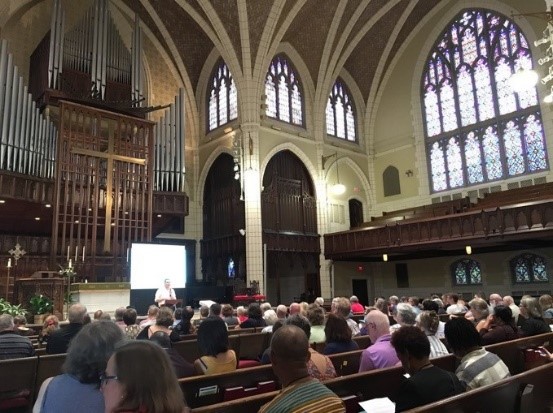
The World Hunger Gathering took place at Central Lutheran Church in downtown Minneapolis

CONGREGATION VISITS: July, Peter Severson, director of Lutheran Advocacy Ministry-Colorado, was invited to present at Trinity Lutheran Church, Boulder, and First Lutheran Church, Colorado Springs. Thank you for the invitations!

WORLD HUNGER GATHERING: Severson and other hunger leaders from the Rocky Mountain Synod took part in the ELCA World Hunger Leaders Gathering in Minneapolis, in mid-July. The event featured speakers ranging from recipients of Domestic Hunger Grants to partners in ministry from the ELCA churchwide organization, and included various training sessions and educational opportunities. We are grateful for our partnership with ELCA World Hunger, a grant from which sustains LAM-CO’s work in Colorado. The creative and courageous work being done by our faithful hunger leaders is inspiring!


Florida

Russell Meyer , Florida Faith Advocacy Office/Florida Council of Churches (FFAO/FCC) floridachurches.org

EDUCATION ROUNDTABLE: Working with the Real Talk Coalition for Education Equity, FFAO/FCC participated in the roundtable “Grading Education” at the Florida PTA Office, Orlando, on July 31. This gathering of stakeholders and researchers will begin developing a tool for grading the capacity of legislation to close disparity gaps in education.

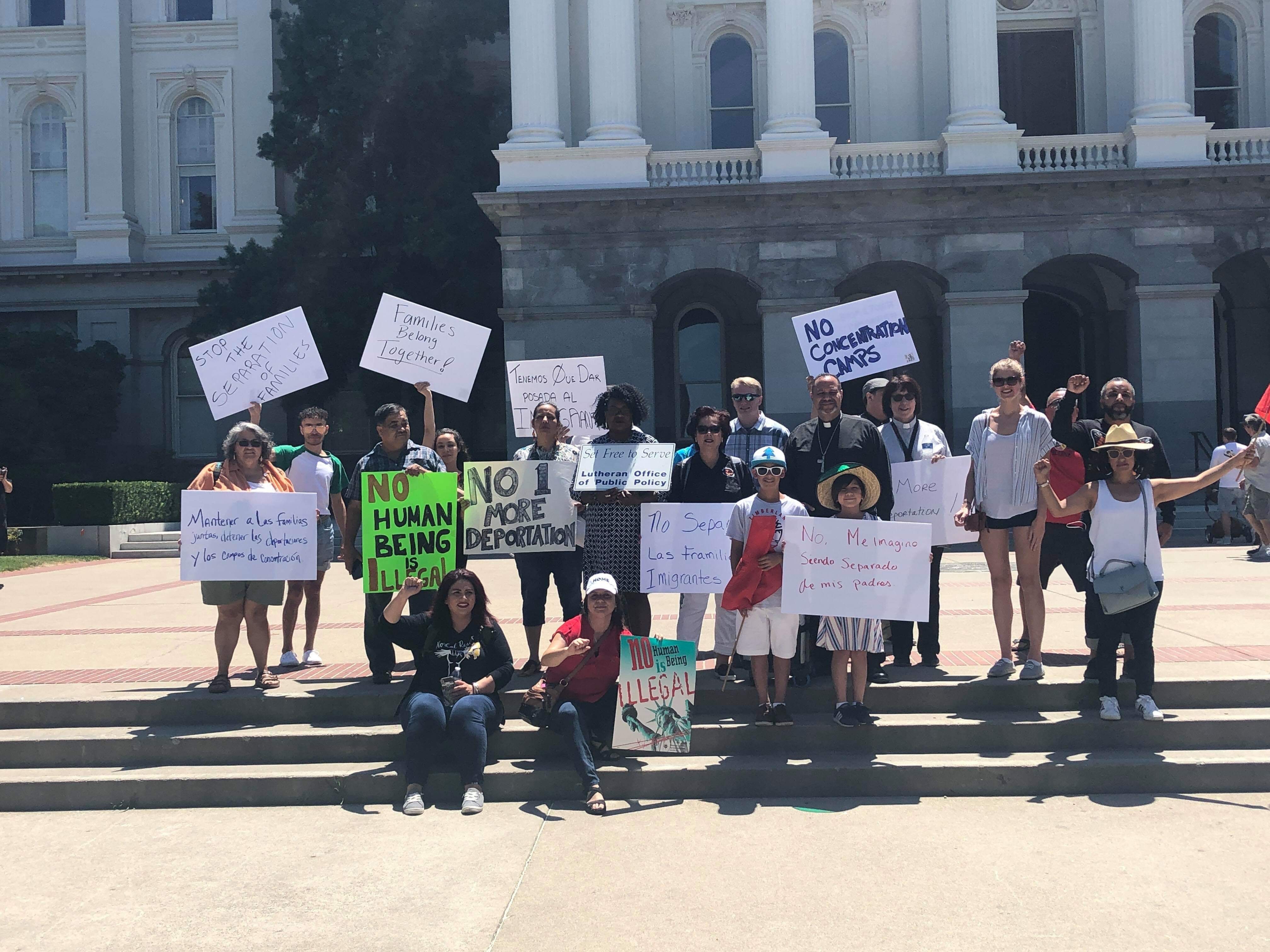
RISE FOR REFUGEES: With national attention on detention centers, FFAO / FCC will be supporting Rise for Refuge on August 3 around the state. A number of clergy will deliver Spanish Bibles to the Homestead Detention Center on August 25 and 26.

OCEAN CARE: In cooperation with Creation Justice Ministries, FFAO / FCC is co-sponsoring an ocean care deep dive training event at St. Armands Lutheran Church on August 29 for younger clergy to help network climate action. Members of Congress and their staff have also been invited.

STATE CLERGY CONVENING: The FFAO / FCC State Clergy Convening will be at the Florida Hotel and Convention Center in Orlando on September 12 and 13. Major legislative advocacy issues will be presented.

NO-CALL LIST SIGN-ON LETTER: The FCC executive committee sent a letter to State Attorney Brad King, 5th Judicial Circuit, urging him to establish a “no-call list” of police officers who have made racist and violent remarks on social media and therefore would not be called as prosecution witnesses. A broad coalition co-signed the letter. https://floridachurches.org/establish-a-no-call-list-in-lake-county/

Information on all of these events can be obtained by emailing advocacy@floridachurches.org


Kansas

Moti Rieber, Kansas Interfaith Action (KIFA)                               kansasinterfaithaction.org

The Kansas Legislature is out of session, but Kansas Interfaith Action keeps working!

MEDICAID EXPANSION: Expansion will be discussed by two interim committees prior to the 2020 session. The members have been named but no hearing dates have been set. Since conservative (anti-expansion) leadership is running the process we expect there to be significant proposals to limit expansion: work requirements, state spending caps, and the like. Our messaging is that expansion is meant to give more people access to health care, and that should be the focus, not figuring out ways to take it away.

CLIMATE AND HEALTH: This week saw the publication of a report from the Kansas Health Institute on likely impacts of climate disruption in Kansas. Called Policy Brief: Health and Climate Change in Kansas, the report states, “climate change is a substantial concern in Kansas” and that “projected climate changes are likely to have negative impacts on human health,” including increasing temperatures and more variable precipitation; hotter, drier conditions affecting air quality; increased rates of cardiovascular diseases, respiratory diseases and other chronic conditions; expanded seasons for allergies; increased length of season for insects and insect-borne illnesses, etc.

CLIMATE AND HEALTH DECLARATION: KIFA is one of the initial signatories of a climate and health declaration being rolled out next week by its long-time partner Climate and Energy Project. We will be sharing this important information with our supporters and partners and developing opportunities to deliver our message: that climate disruption is a pressing concern – not in the future, but today; and care for creation, for human health, and for the poor – who are being affected first and worst by climate change – are obligations for people of faith!


Minnesota

Tammy Walhof, Lutheran Advocacy- Minnesota (LA-MN)               lutheranadvocacymn.org

RENEWABLE ENERGY: Does your church have a solar array? (Or do you have one at home?) Send pictures and a short description! Also, send those pictures and description to your state legislators and tell them that Minnesota and the country need to move faster to more clean energy!
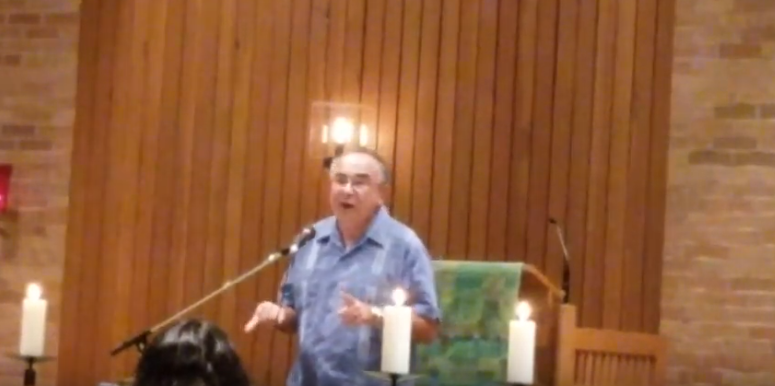
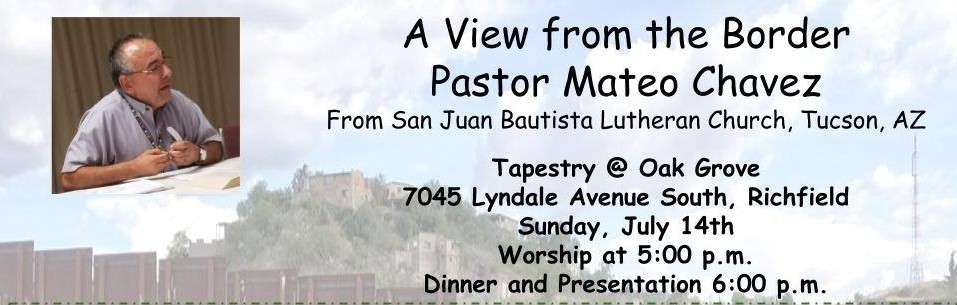
IMMIGRATION: Lutheran Advocacy-MN extensively publicized an immigration program with the Rev. Mateo Chavez of San Juan Bautista Lutheran Church in Tucson, Ariz., presented at Tapestry Lutheran in Richford, Minn. The Gospel reading, Luke 10:25-37, was the Good Samaritan story. Listen (below) as he connects the Bible passage to the situation of immigrants and asylum seekers at the U.S. border. (The Rev. Melissa Melnik Gonzalez of Tapestry does great translation). Mateo, with others from his family, also told stories of people arriving at the Nogales border crossing area. We hope to share some of those stories soon. Many Lutheran Advocacy-Minnesota advocates appreciated the hospitality (including dinner) of the Tapestry congregants. Good Samaritan/immigration sermon video is 15 minutes long and only his message, not the whole worship.

AUGUST RECESS: Visit members of Congress over their August recess and/ or have a letter-writing activity at your church or group. Find a sample letter on our website and call Tammy at 651-238-6506 for talking points to use in visits.

UPDATES AND ACTION ALERTS: LA-MN has been sending three to four action alerts, updates, or event notices per month. Are you getting them? If not, be sure to sign up on our website! (If you’ve signed up and still aren’t getting them, let us know).


New Mexico

Ruth Hoffman, Lutheran Advocacy Ministry—New Mexico (LA-MN)   lutheranadvocacynm.org

LAM-NM director, Ruth Hoffman (right), joins fellow advocate, Bill Jordan, and former state senators Michael Sanchez and Dede Feldman at the gathering.

10TH ANNIVERSARY CELEBRATION OF DEATH PENALTY REPEAL: New Mexico repealed the death penalty on July 1, 2009. Lutheran Advocacy Ministry-New Mexico was an active partner in the New Mexico Coalition to Repeal the Death Penalty, which worked for 12 years to realize its goal. On June 30, the coalition held a gathering in Albuquerque to celebrate the 10th anniversary. Memories of the coalition’s work were shared and two leaders of the coalition who have since passed away were remembered. The legislation’s prime sponsor, Rep. Gail Chasey, was honored as were several other legislators instrumental in the bill’s passage. When the death penalty was repealed in New Mexico, two men remained on death row. A few days prior to the anniversary gathering, the New Mexico Supreme Court vacated their death which permanently shut our state’s death row!


Ohio

Nick Bates, Hunger Network Ohio                                                             www.hungernetohio.com

OHIO HAS A BUDGET! YOUR ADVOCACY MADE A DIFFERENCE: Seventeen days late, Ohio’s legislative leaders reached an agreement on our state budget that includes more money for the Ohio Housing Trust Fund and Ohio’s food banks. The Legislature also increased funding for wrap around services for students and for other programs. While these increases should be celebrated, we cannot forget that they do not alone solve the problems of poverty, hunger and homelessness in Ohio. After years of tax cuts and underinvestment, we have a long way to go toward adequate investment in solutions.

VOTER REGISTRATION GRANTS: The Hunger Network is offering $200 grants to Ohio hunger ministries if they are willing to help us collect voter registrations before the November 2019 elections. As people of faith, called to love our neighbor, we should seek all of our neighbor’s voices in our democratic process. If you have a food ministry, and would like to receive a mini-grant please fill out the application form here.


Pennsylvania

Tracey DePasquale, Lutheran Advocacy Ministry–Pennsylvania (LAMPa) lutheranadvocacypa.org
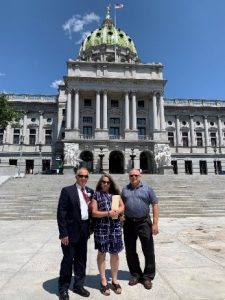
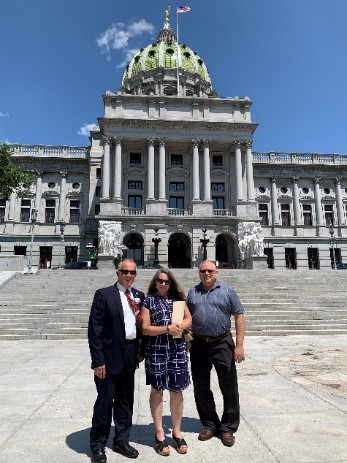
CLIMATE AND DISASTER RESPONSE: LAMPa accompanied Lutheran Disaster Response (LDR) coordinators and a Lutheran meteorologist to meet with Sam Robinson, Gov. Wolf’s Deputy chief of staff, about the administration’s Restore Pennsylvania proposal to impose a severance tax on natural gas to back a bond that could, among other things, be used to mitigate flooding and respond to climate-related disasters. Julia Menzo, LDR coordinator for eastern Pennsylvania, and the Rev. Glenn Beard, LDR coordinator for the Lower Susquehanna Synod, shared stories from their work to underscore the growing need related to more frequent disasters not covered by federal aid. Meteorologist Joe Stepansky, Lower Susquehanna Synod Treasurer, and LAMPa Director Tracey DePasquale questioned Robinson about the proposal’s lack of strong measures to transition to renewable energy. Our delegation agreed to keep working to improve the proposal, stressing that we would rather invest in a solution than borrow for a bandage.

HUNGER: After years without an increase in the State Food Purchase Program, DePasquale met with several leaders of the Pennsylvania Hunger Action Coalition to assess our advocacy, share feedback from lawmakers, evaluate our networks and begin to develop a new strategy based on emerging health-related partners and focus on local agriculture. We are laying the groundwork for a potential campaign to revamp the state’s largest anti-hunger program. LAMPa will be looking to our ELCA World Hunger leaders in Pennsylvania to champion this change.

GOD’S WORK. OUR HANDS: LAMPa is resourcing congregations to add advocacy to their day of service on Sept. 8.


Southeastern Synod

Hilton Austin, Southeastern Synod advocacy team

 GEORGIA INTERFAITH PUBLIC POLICY CENTER: We continue work on the new Georgia Interfaith Public Policy Center. We are in the process of incorporation and filing for our 501(c)(3) status. We have an impressive interfaith board of directors with contacts throughout the state. We are very excited about this expansion of our base and the opportunity to work together.

CRIMINAL JUSTICE REFORM: Over the past eight years, Georgia has transformed its criminal justice system. Reforms aimed at cutting prison costs while improving public safety, have encouraged other states to enact similar measures and helped prompt the Trump administration to take action on the federal level.

Now the state will serve as a hub, pushing criminal justice issues nationwide with a newly formed nonprofit based in Atlanta. Members hail from across the political landscape. The nonprofit’s advisory board includes such prominent Democrats, as former California Gov. Jerry Brown and ex-Philadelphia Mayor Michael Nutter, and such prominent Republican as, U.S. Senator Mike Lee of Utah and Gov. Matt Bevin of Kentucky.

Former Gov. Nathan Deal and former Acting Attorney General Sally Yates — both Georgians — will also play key roles in the effort.

“It’s the right idea at the right time,” said Adam Gelb, founder and CEO of the Council on Criminal Justice. “There’s a real thirst across the political spectrum and across the country for sound data and research on strategies that work to cut both crime and incarceration… We’re going to be a catalyst for policy that’s factual, not just fashionable.”

SOUTHEASTERN SYNOD HUNGER FELLOW: August will be Jordan Slappey’s last month as a Hunger Fellow for the synod and will be greatly missed. Slappey is currently wrapping up his fellowship by writing a teaching document for the ELCA’s social message on immigration. This has been an adventure and we hope to be able to roll out a meaningful and reconciling document late this fall.

WORLD HUNGER: The World Hunger Leadership Gathering was most informative and inspiring. Four leaders from the Southeastern Synod had the opportunity to develop a plan to coordinate our future hunger ministry throughout our four-state synod.


Texas

Bee Moorhead, Texas Interfaith Center for Public Policy/Texas Impact texasinterfaithcenter.org

IMMIGRATION: Texas Impact is focused on the immigration crisis. We continue to take groups every week to the border, to monitor federal deportation hearings and cross the bridge into Mexico to meet with asylum-seekers. More than 250 folks have participated so far. Find out more here: https://texasimpact.org/courts-ports/

DISTRICT MEETINGS: We are facilitating district meetings with constituents in all 38 of Texas congressional districts. So far we have about 80 folks signed up to attend. Next week we will be releasing an interfaith worship resource packet for congregations to use during the August recess (and beyond).


Washington

Paul Benz, Faith Action Network (FAN) fanwa.org
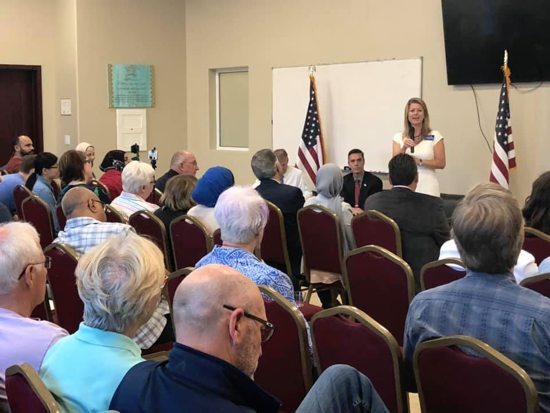
INTERIM TIME: FAN has been busy during the legislative interim: hosting our regional summits in June, sponsoring local candidate forums for upcoming elections, leading trainings with our faith community liaisons, meeting with legislators and members of Congress and their staffs, and planning for our fall cluster gatherings and our end of the year annual fundraiser in November!

POLICE ACCOUNTABILITY: FAN is involved in the ongoing issue of community-police accountability.  The city of Seattle is under a federal court consent decree.  FAN is part of the community coalition that has been in meetings this past month with city council members, the community police commission, and a new mayor-appointed panel of modern-policing experts from around the country. The next court deadline we are working on is to come up with a methodology by which to address the current police guild contract and the accountability issues contained therein.

JOSE ROBLES: We stand in solidarity with Jose Robles, who had been living in sanctuary at Gethsemane Lutheran Church in Seattle for the past year. On July 17, he was detained by Immigration and Customs Enforcement after leaving sanctuary to file a stay of removal with his attorney. He is currently being held at the Northwest Detention Center in Tacoma, Wash. Jose has a U-Visa pending and a judicial stay in place, he should be released immediately and allowed to return home to his family. You can sign this petition demanding that ICE stop tearing Jose from his family: https://www.actionnetwork.org/petitions/freejose
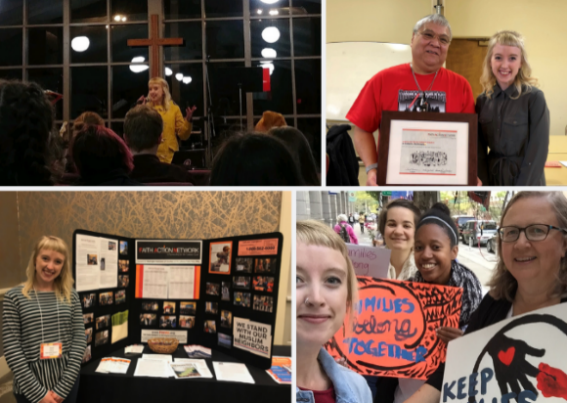

GOODBYE AND HELLO: ELCA Hunger Advocacy Fellow Sarah Vatne finished her year with Faith Action Network on July 31st. She will begin at Gonzaga University School of Law in August. We welcome Kevin Holtz who is joining FAN as a practicum intern through the Masters of Social Work program at the University of Washington. He is excited to work to end oppression with a vision of a just and free world. Welcome, Kevin!


Wisconsin

Cindy Crane, Lutheran Office for Public Policy in Wisconsin (LOPPW)           loppw.org
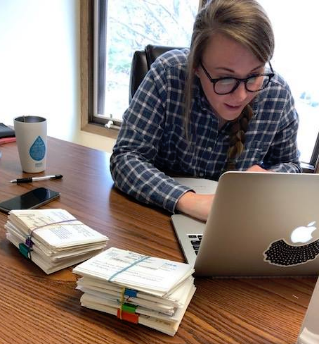
GOOD-BYE AND THANK YOU TO KELSEY JOHNSON, LOPPW’S 2018/19 HUNGER ADVOCACY FELLOW: We have been proud to have Kelsey Johnson as a part of our full-time staff for one year. She has made connections with ELCA members, coalition partners, and legislators that have greatly benefited our ministry. We are excited for her and the church as she prepares to begin a Master of Divinity program at the Lutheran School of Theology at Chicago this fall.

IMMIGRATION: Following up on the panel discussion on immigration we held in June, LOPPW met with the Rev. Walter Baires, director for evangelical mission to explore creating a resource that includes materials from ELCA Advocacy and the LOPPW, which Kelsey is taking the lead in organizing during her last few weeks with us.

CARE FOR GOD’S CREATION:

  • For our Wisconsin climate table, the director organized a breakout group on the powers of the executive office in addressing climate change utilizing an environmental attorney from Clean Wisconsin and a WISPERG (Wisconsin Public Interest Research Group) Foundation resource, Climate Solutions From Day One: 12 Ways Governors Can Lead on Climate Now.
  • LOPPW joined Cassandra Carmichael of the National Religious Partnership for the Environment and local faith leaders to visit staff from the governor’s office to discuss climate change and the Endangered Species Act.
  • LOPPW and the South-Central Synod of Wisconsin are leading an effort to gather information on ELCA congregations in the state that are using solar power and gather stories about how they decided to do so and resources they used. We will then create a workshop based on our findings with resources we already have on solar grants for Wisconsin churches. LOPPW will make linkages to public policy.

HUMAN TRAFFICKING:

  • We are working with Women of the ELCA to organize another rally in September.
  • LOPPW is working with University of Wisconsin-Madison to bring on a part-time intern who will focus on trafficking issues and assist with our rally.
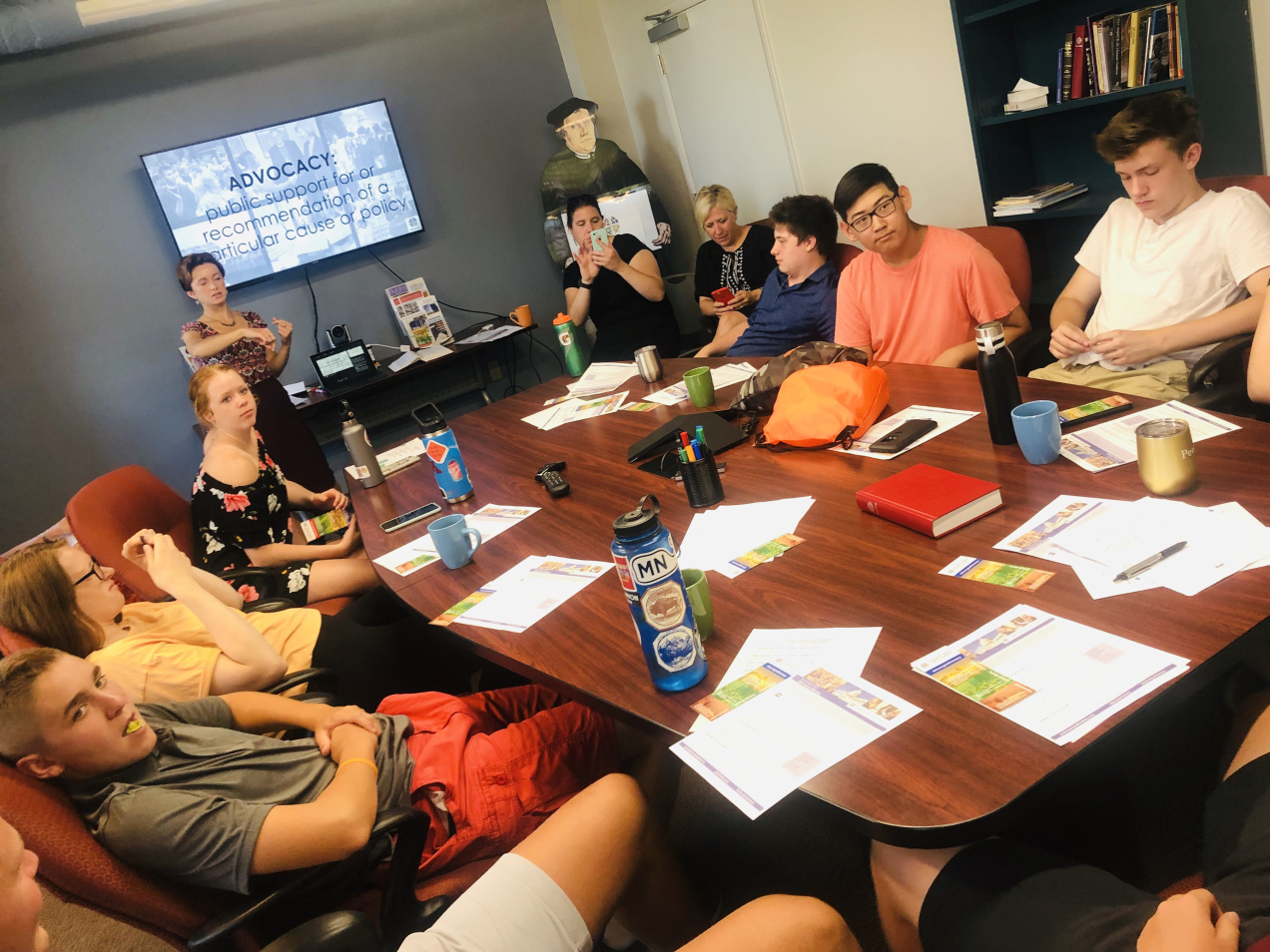


Building bridges through advocacy

Orignally Posted on the Zumbro Lutheran Church Blog on July 17, 2019: https://zumbrolutheranblog.wordpress.com/2019/07/17/building-bridges-through-advocacy/

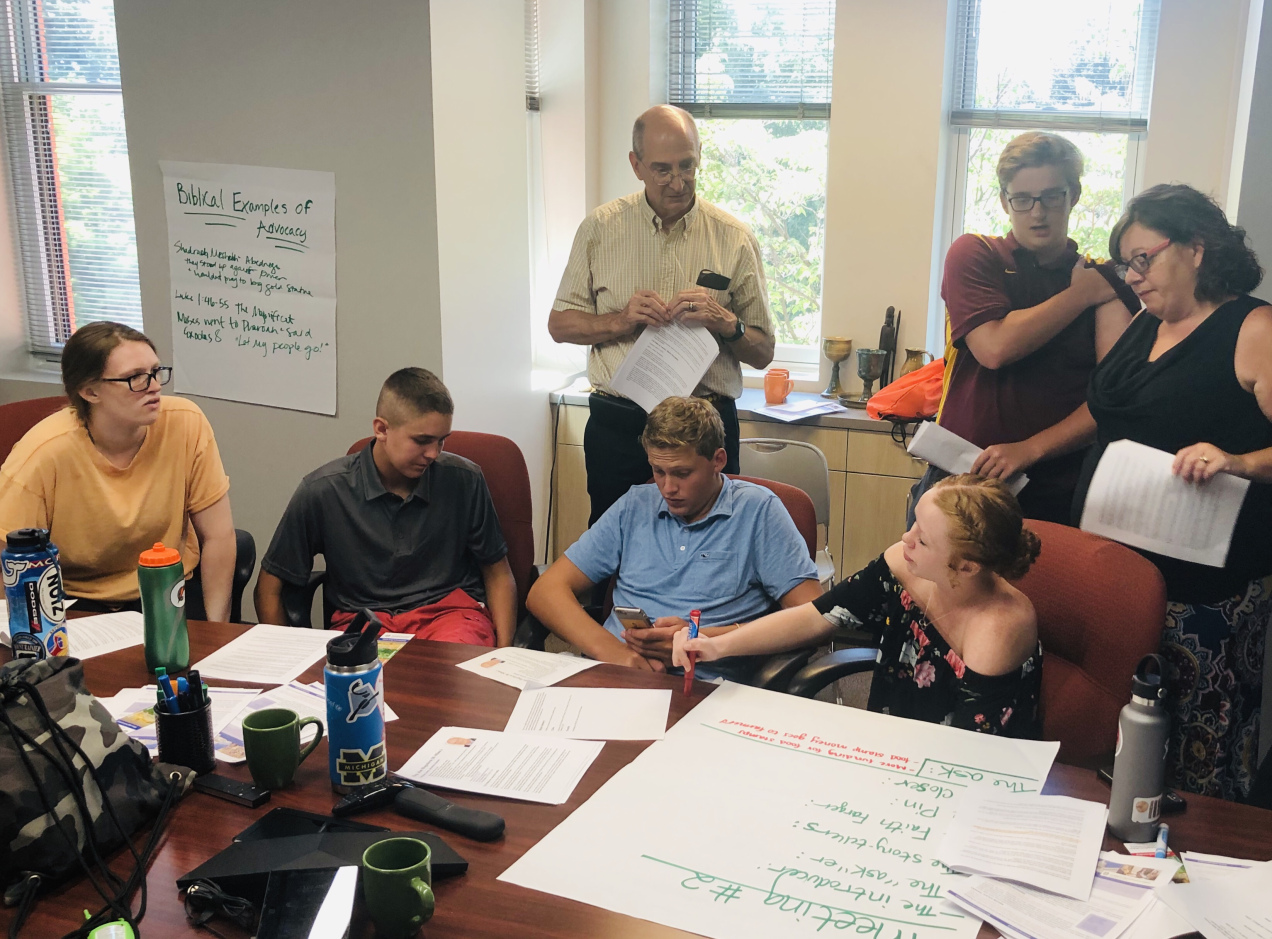
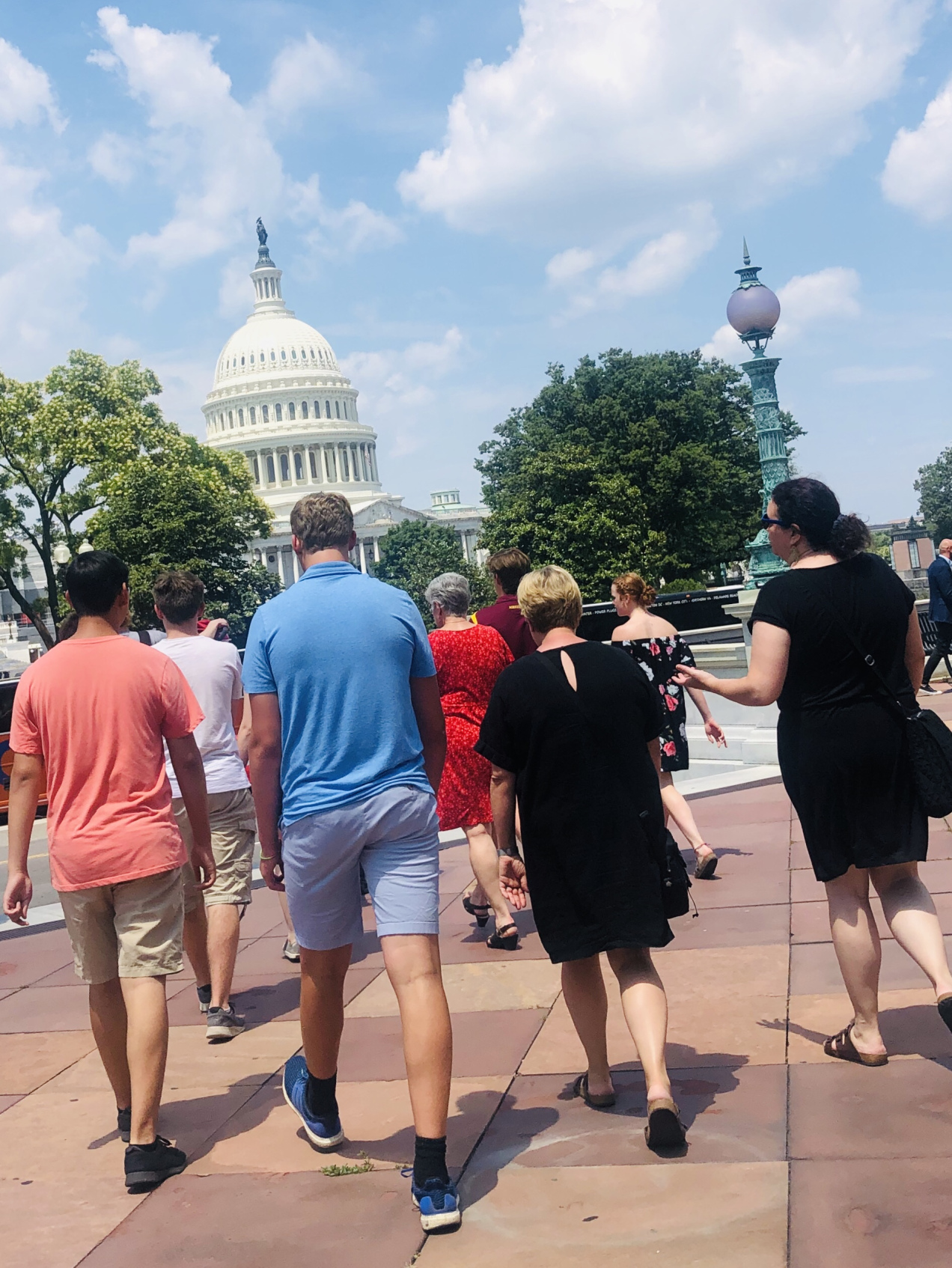
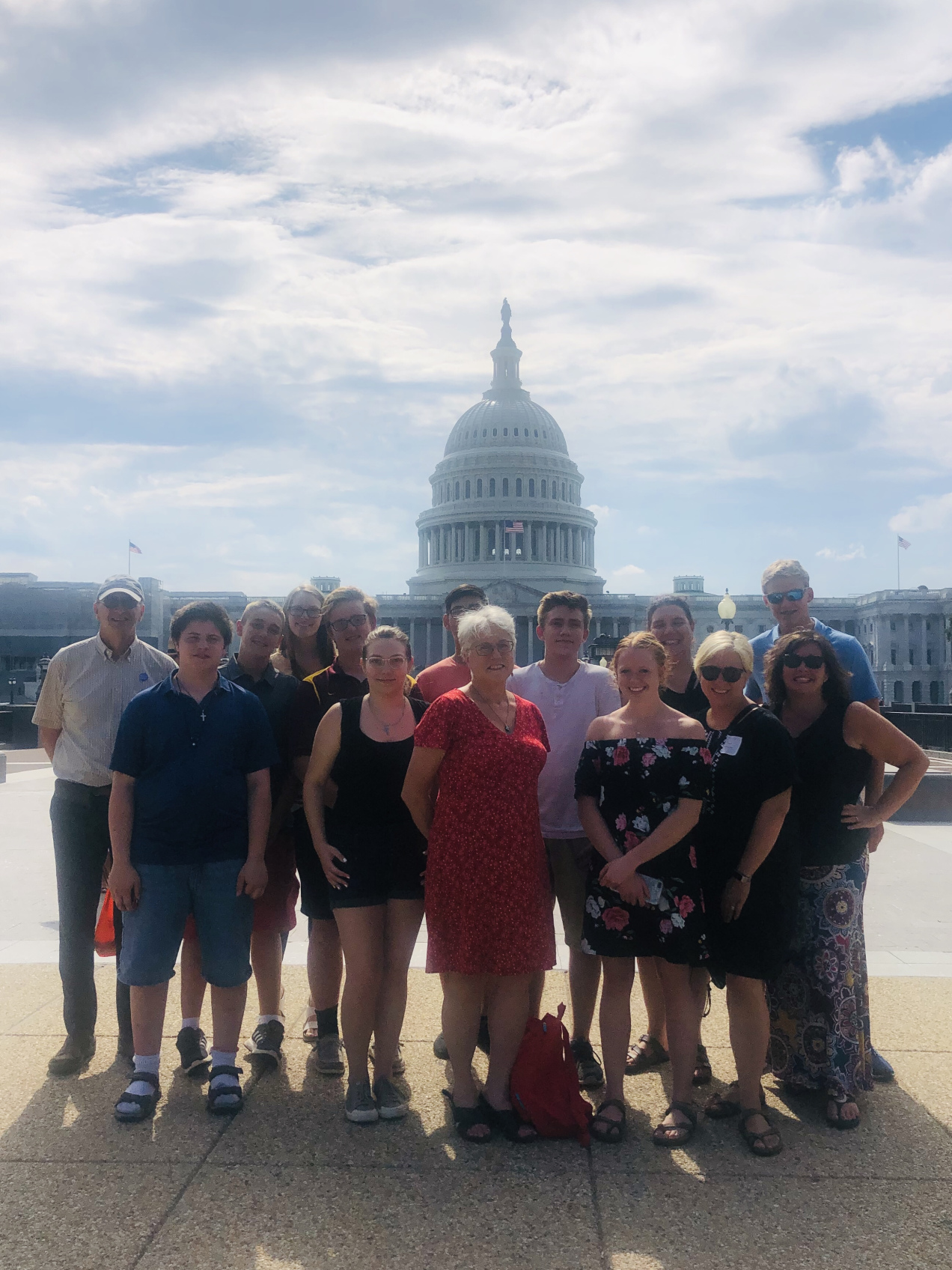
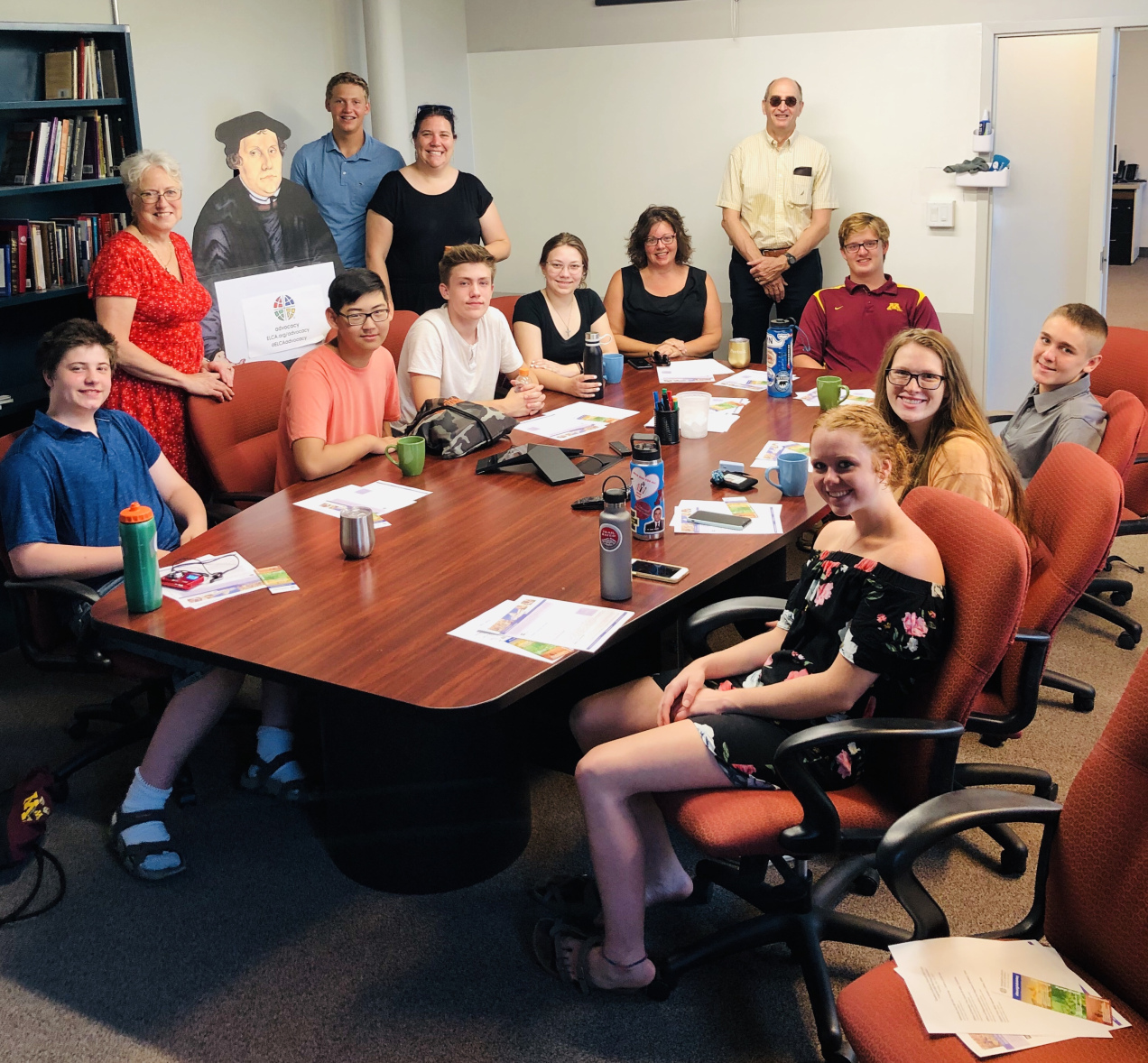
On Tuesday, we had the pleasure of learning from and being accompanied by Abbigail Hull of the ELCA’s Advocacy office. We began the day in the ELCA’s office learning about advocacy, how it ties directly into our baptismal promises and confirmation commitments, where the ELCA’s advocacy office direction comes from, and how to advocate for others (and ourselves) with our elected officials.


At the beginning of the morning, the majority of us in the group shared that we had limited experience with advocacy and weren’t necessarily comfortable with it. Abbi gave us an approach to use and coached us as we prepared to meet with the MN congress members that the office had made appointments with for us.

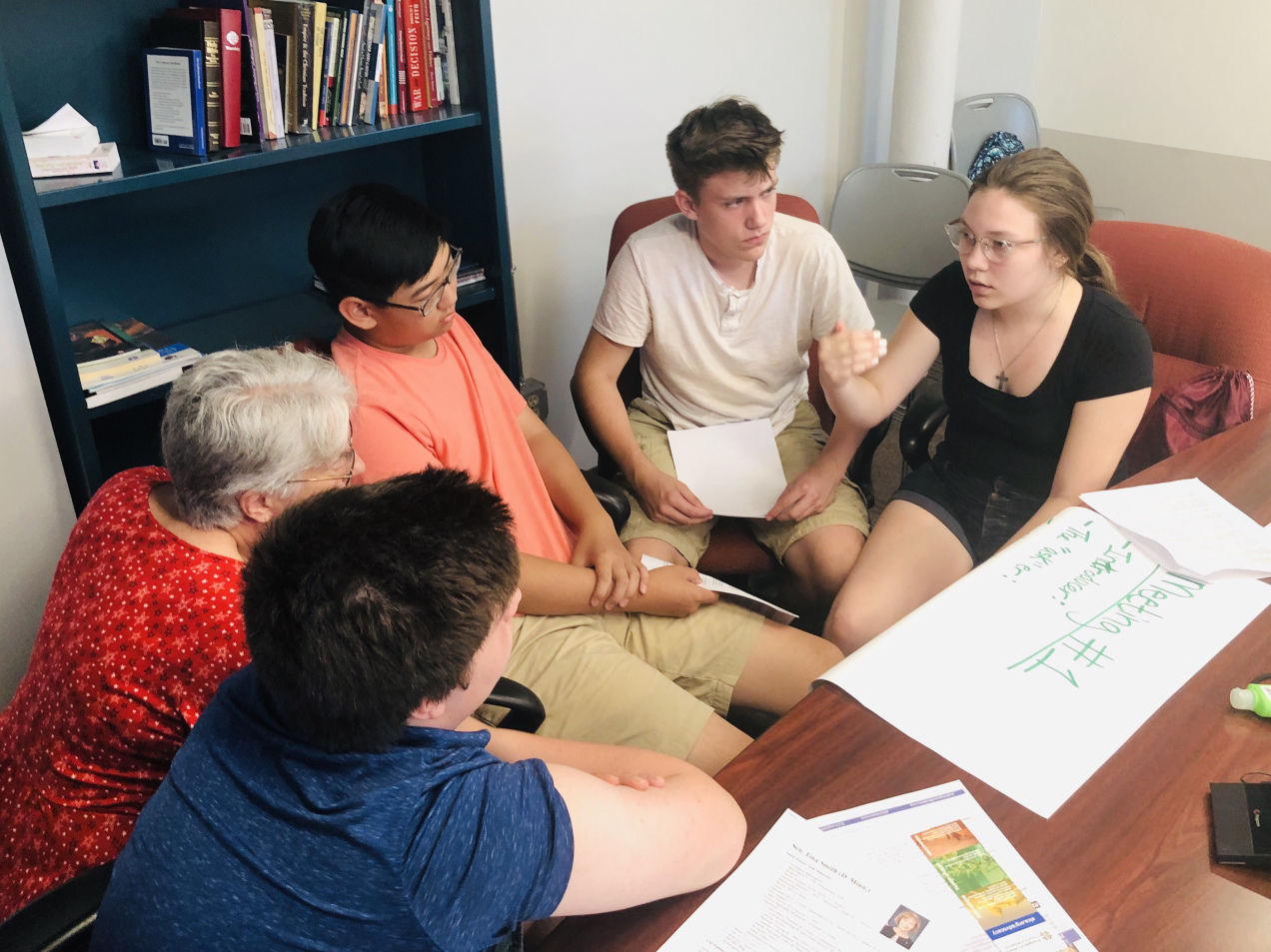
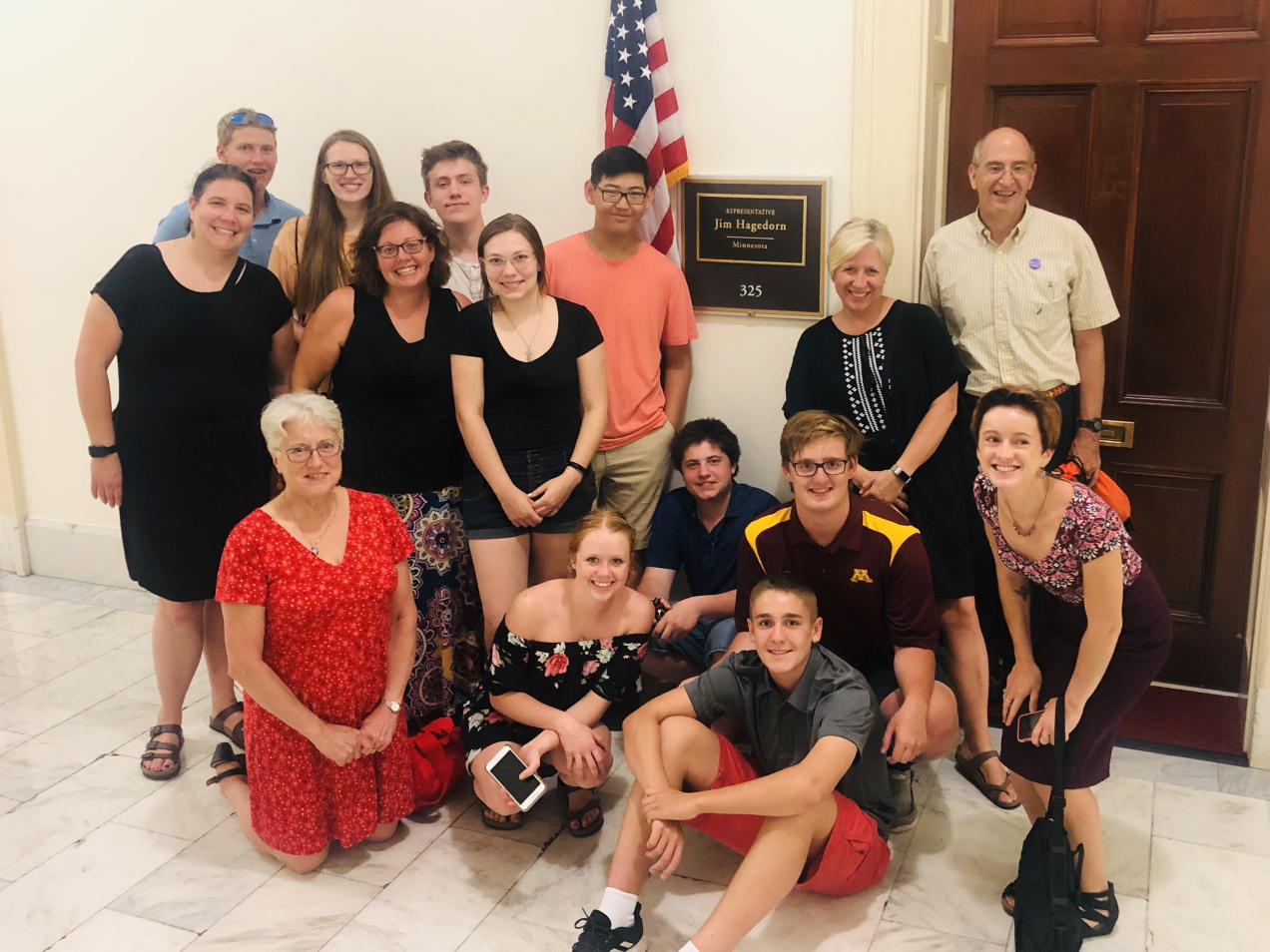
We split into two groups as we prepared for our visits. We read bios about the two congress people we would meet, paying careful attention to the committees they served on and had a better chance to influence decisions. Half of our group prepared to discuss the great need for mental health services in our public schools with Senator Tina Smith. The other group prepared to ask Representative Jim Hagedorn to support the Child Nutrition Reauthorization bill currently before the House. By the end of our planning session, the group was excited (with a healthy dose of anxiety) as we made our way to meet with our politicians.


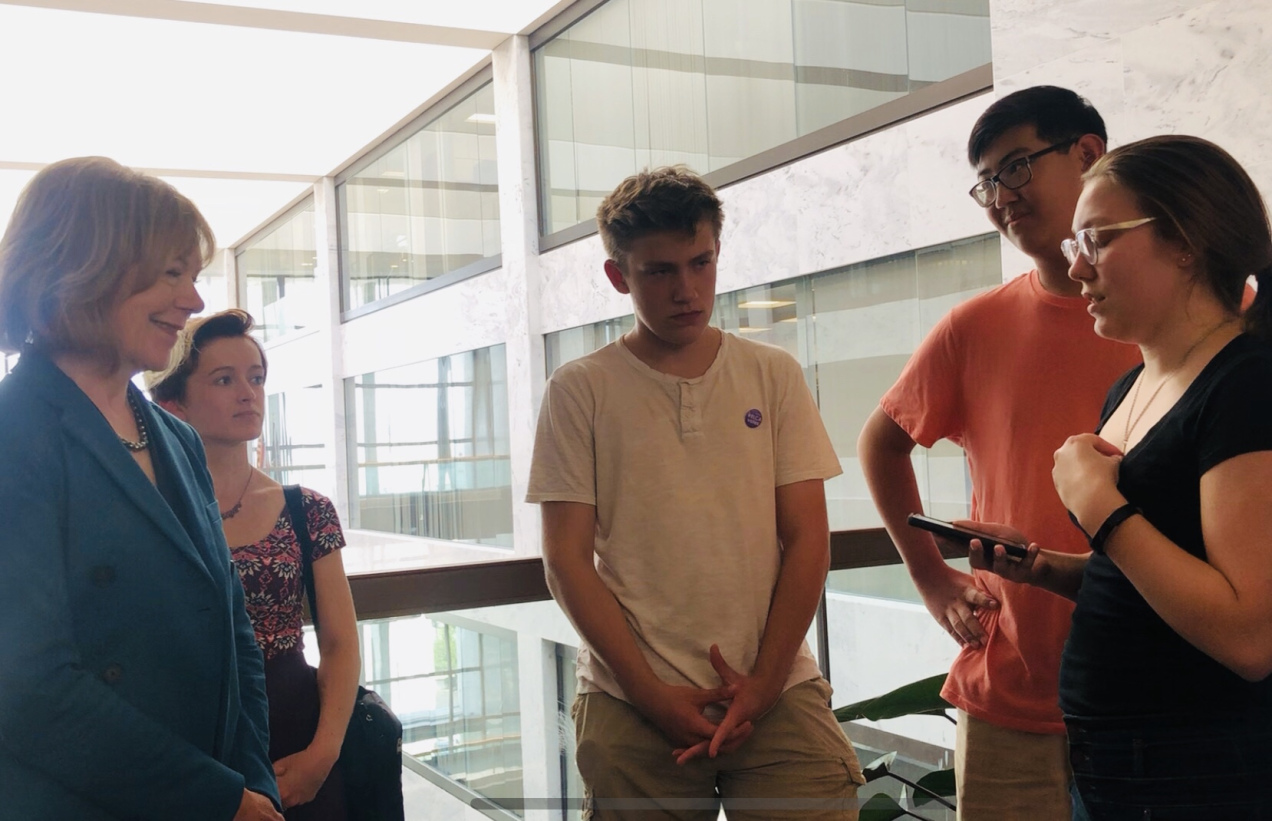
Our afternoon experience was incredible, to say the least. With just a few exceptions, it was the young people on our trip who did all of the talking.

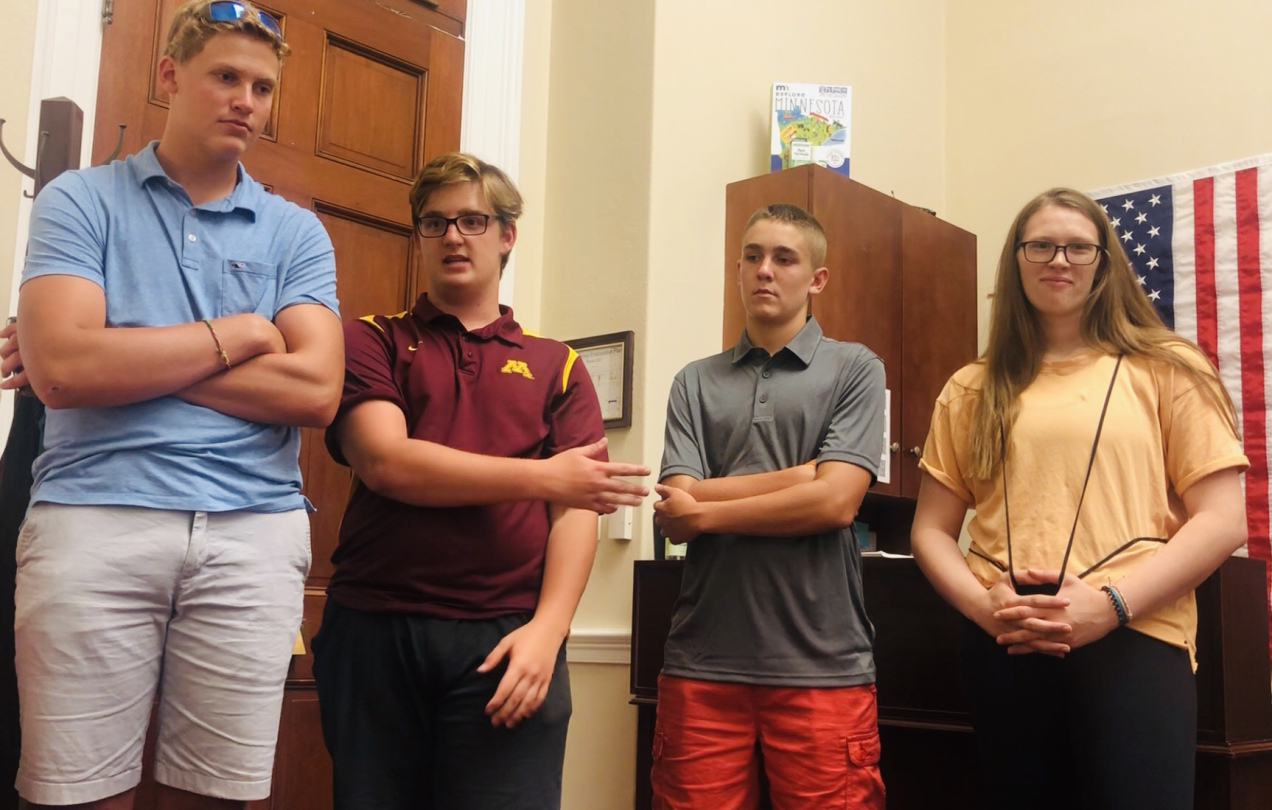
Parents, grandparents, Zumbro members — you should be so proud of the way in which our youth represented our congregation and community. They spoke with clarity and confidence. They took risks and practiced vulnerability as they spoke from their hearts. And they articulated their faith as the basis for their convictions. From stories ranging from personal experiences of struggling with depression and needing the mental health help provided in our schools, to speaking with passion about the summer meal programs needed by the children they work with at Rochester’s summer school age child care program, our young people had every adult in the room in tears.


The experiences with Senator Smith and the staff member from Representative Hagedorn’s office were vastly different. We experienced empathy and compassion. We experienced what it felt like to be listened to, and what it felt like to be disregarded. We experienced authenticity, and political guardedness. I suspect that all of us formed opinions for how we might vote in future elections. Simply put, we experienced being a part of our nation’s governmental process … and we all learned a lot.


Marcus C. shares: “I leaned how much you can do before you turn 18 in the political system. I learned that you have a chance to talk to your representative (or some one who works with them) to let them know how you feel about what they are doing. I was shocked when we did this, that you could do this. This experience taught me a lot and that we can do more in mission that just serving.”


Jack K. also shares what he learned: “Today I learned that I really don’t want to be a politician at all (politics is confusing!). The most powerful moment was just listening to Tina and Ashley talk and realizing that even though she’s a U.S. senator, she is still just a person amongst us.“

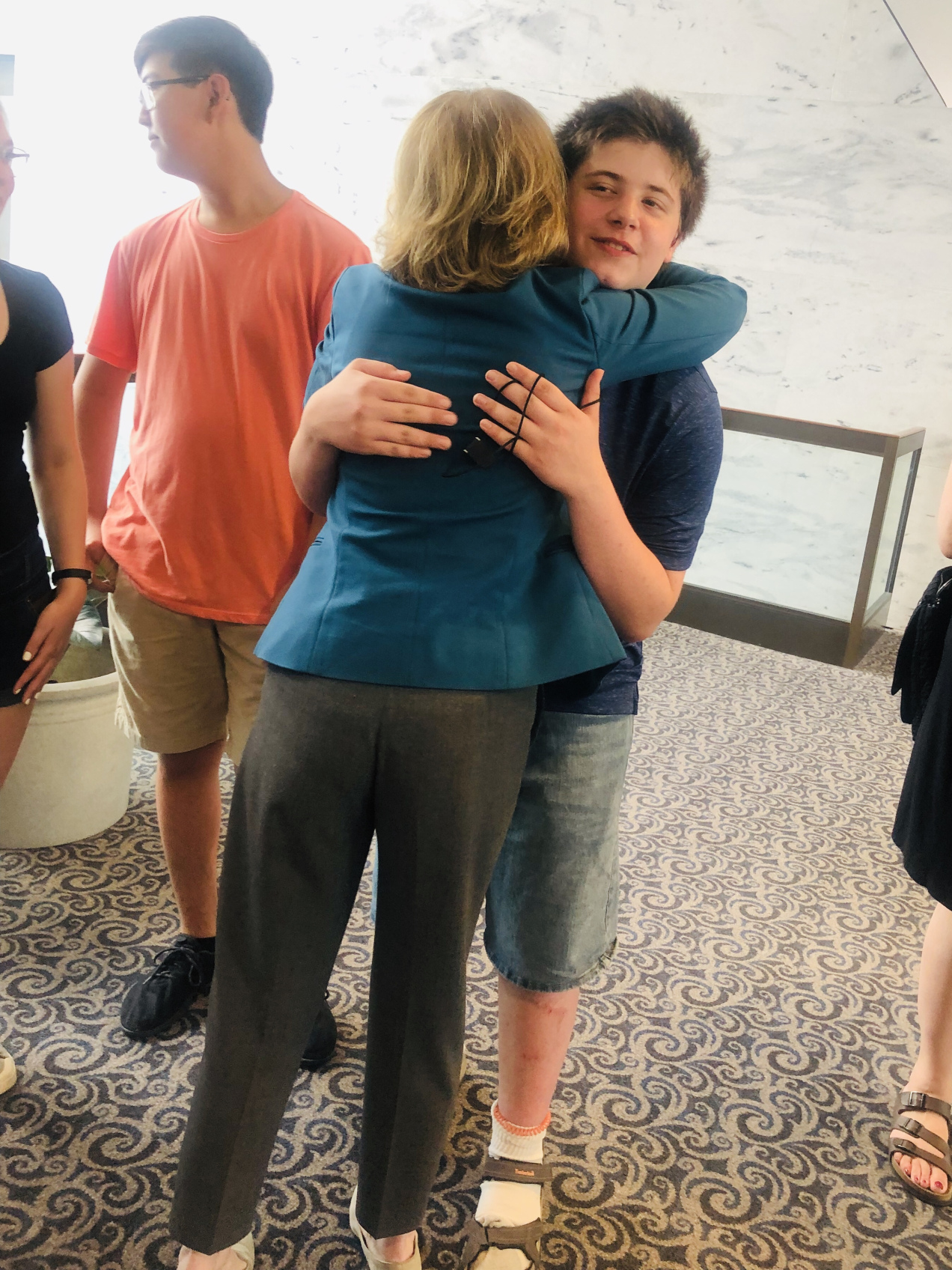
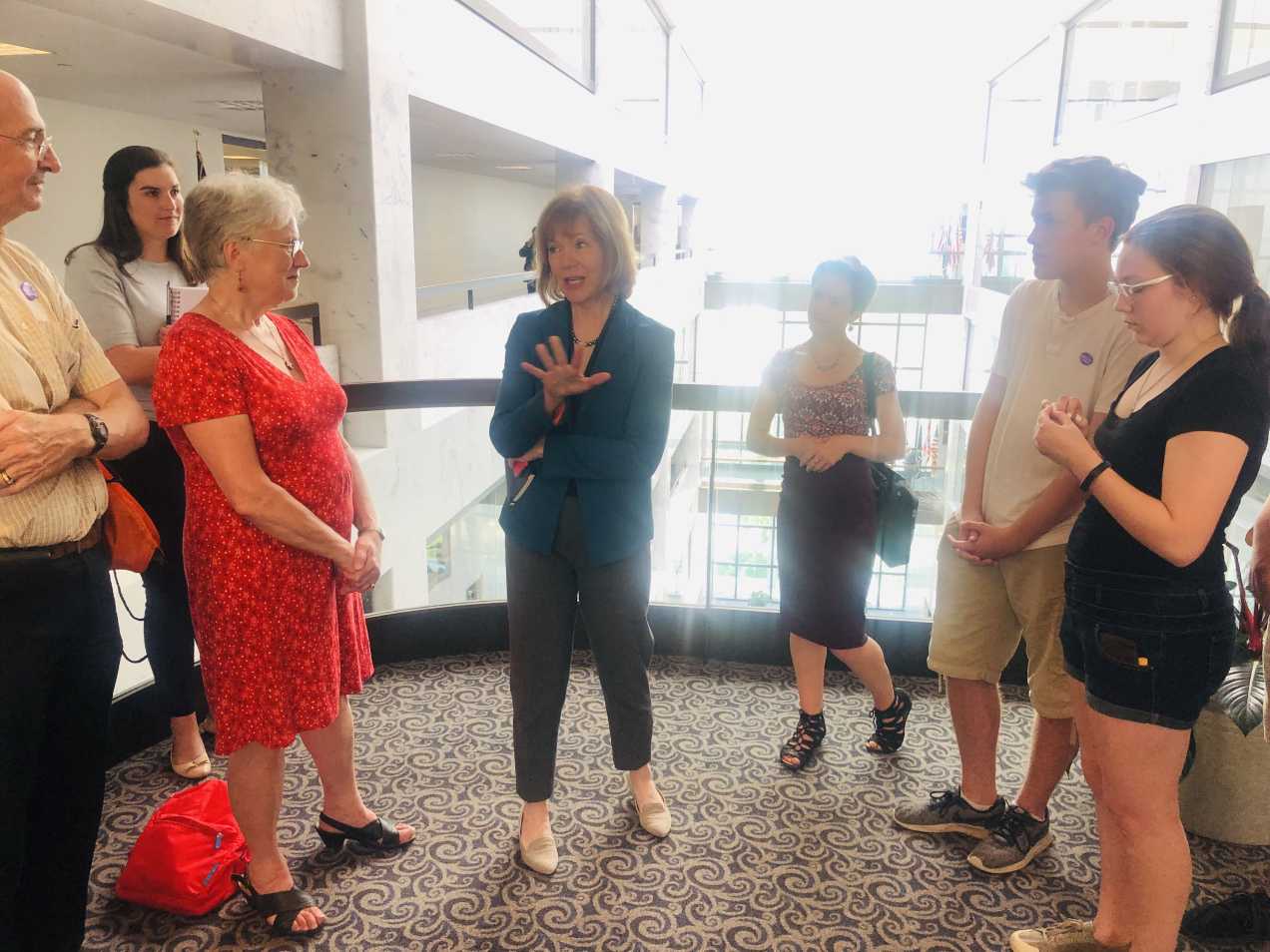
Chaperone Sue Jenkins shares: “Meeting Tina Smith was powerful for me. I was impressed by how special she is, and also how ordinary. She impressed me with the importance of giving her information and motivation, through emails and phone calls, to work for justice.”

Ashley S. agrees with Sue. “Meeting with Tina Smith was incredible. She impressed me by how she hung on to every word we said, especially the more difficult aspects, and she listened and heard what we were saying.”

We couldn’t agree more with Bob Jenkins’ reflection: “Today our Zumbro young adults did a Holy Spirit-led job presenting issues of importance to them to Representative Hagedorn’s staff and to Senator Smith. It was such a blessing for me to be able to watch and hear them speak.”

Thank you, parents, for raising such wonderful people. We are honored to experience this with them.


– Jen and Pastor Lisa

p.s. Zumbro members, parents, and friends — we have found a wonderful gift in adding Jen Gruendler to our staff team. I hope you’ll find some time in the coming months to get to know her. She’s incredible … and that’s a feeling shared by all of us on the trip. -Pastor Lisa

August recess opportunity

Most years, Congress recesses for the month of August. Legislators return to their home states and congressional districts and connect with constituents.

This is a great opportunity for local advocates to engage with elected officials, ask questions and share concerns. Our August Recess Guide contains tips for communicating with your elected officials and candidates this month.

Here are some timely questions and talking points based upon ELCA Advocacy priorities.


ADDITION 8/8/2019

The ELCA is saddened by the all-too-frequent occurrences of gun violence in the U.S. In 1994, the ELCA adopted the social message Community Violence, calling for advocacy to end the cycle of violence in the U.S. Twenty-five years later, this message is still relevant. Our baptismal covenant calls us to strive for justice and peace in all the world.

THIS MOMENT IN TIME: Gun violence

Some 40,000 people died in 2018 from gun violence in the U.S. Somewhere in our country, gun violence daily shatters a community, a neighborhood, a family. Whereas advocacy and the application of ELCA gun-violence positions in the public square are most visible when prompted by mass shootings, such incidents generally reveal the need for sustained spiritual and political response.
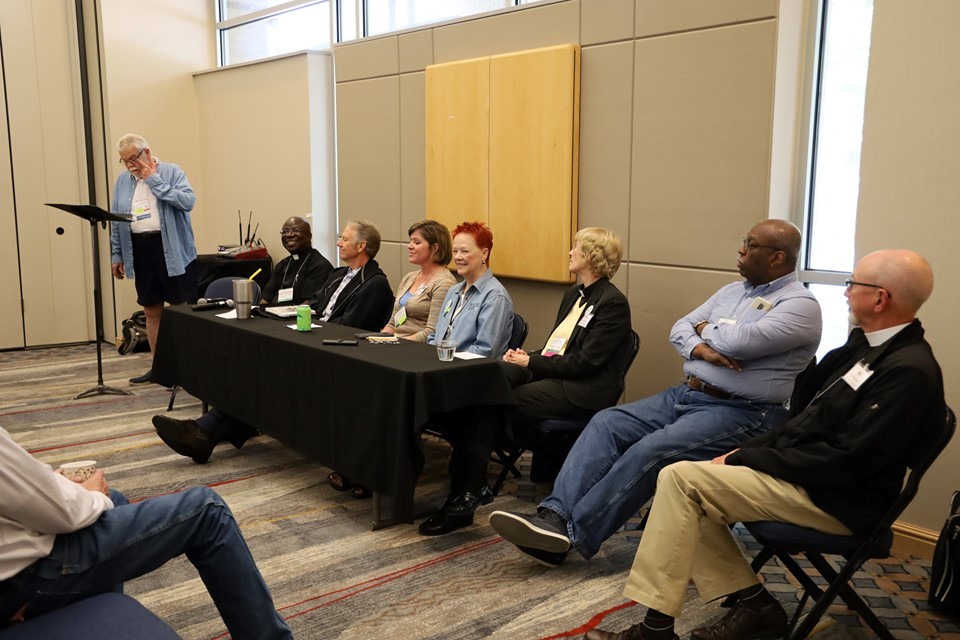
Only a small start has been seen in the 116th Congress of legislative response to this need. The House passed the bi-partisan Background Check Act of 2019 (H.R. 8) in February which would close loopholes for certain kinds of guns sales, such as those at gun shows and over the internet, by only allowing person-to-person gun sales if background checks could be conducted. Senate leadership has blocked consideration of this important legislation in that body [update 8/9/2019 – There has been movement on this issue]. Legislation such as the 1994 Assault Weapons Ban that would ban military assault weapons and Ethan’s Law that would require safe storage of firearms should be debated and passed. Policy consideration of high capacity magazine access and gun lock policies is needed as well as investment in domestic violence prevention.

QUESTION:

  • As a member of Congress, what are you doing to address the proliferation of guns in our society, the use of military grade weapons in mass shootings, and protection of our children in schools?


ORIGINAL POST 7/25/2019

God richly provides for our daily bread — the earth can produce enough food for everyone. Yet, many of our sisters and brothers still go hungry.

THIS MOMENT IN TIME: Child nutrition programs
Child nutrition reauthorization is in discussion in the 116th Congress. Right now, the Senate Agriculture Committee is working to write bipartisan child nutrition legislation that would continue the advances made in recent years in child nutrition, add flexibility to the programs, ensure community eligibility for high-poverty school districts and protect progress toward making these meals healthier. The Senate bill could be introduced as soon as Labor Day. The House is behind but could take up a Senate bill quickly.
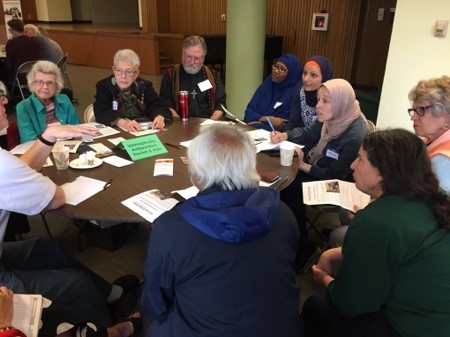
Child nutrition programs expired in 2015 and must be renewed through congressional action called reauthorization. These programs — school lunches, breakfasts, after-school snacks and summer meals, as well as the Women, Infants, and Children (WIC) program — prevent hunger and a host of educational and health-related deficiencies for children in nearly every community throughout the country. On an average day during the 2017-’18 school year, 12.5 million low-income children received free or reduced-price breakfasts and 21.9 million received free or reduced-price lunches According to the latest U.S. Department of Agriculture data in 2017, 12.5 million (17%) children lived in households facing a constant struggle against hunger.

QUESTION:

  • Renewing strong child-nutrition program reauthorization before the end of this year is crucial, but time is short. What are you doing to bring bipartisan legislation to a vote?


Secure shelter is a critical component of the foundation of the human person, the absence of which can contribute to hunger and challenges in health care, education, job prospects and more.

THIS MOMENT IN TIME: Affordable housing and homelessness
In the 2019 congressional spending deal, housing programs saw some of the smallest increases compared to other federal programs, and many state budgets face similar circumstances. Because many Lutherans are involved in sheltering and lifting up people who struggle with poverty, many of us would like to see greater investment in and focus on affordable housing.

Lack of affordable housing and rising costs are gaining more attention within local communities. Only an estimated one-third of citizens eligible for affordable housing actually receive assistance, and nearly 11 million families spend over half their income on rent. Skyrocketing housing costs force many to decide between paying for food or settling their other bills, leaving many with the constant threat of eviction and losing their home.

QUESTION:

  • Support for housing programs and funding for people facing homelessness are too often a low priority for elected officials. As a national leader, will you work to make access to housing programs a top priority in Congress?


As stewards of this world, we are called to care for the earth and examine our behavior toward creation. While we need to take from the land for food and sustainability, we also need to be careful that we maintain good stewardship and do not exploit the wonderful things the earth provides.

THIS MOMENT IN TIME: Renewable-energy tax credit
The current renewable-energy tax credit bill does not prevent the phaseout of a number of crucial renewable-energy tax credits, which have helped to catalyze significant investment in renewable energy development and are beneficial to the environment in lowering emissions and thereby providing for cleaner air. There is discussion around a comprehensive green energy package. Efforts to salvage the tax extensions on wind and solar are critical, so that the progress made thus far is not eroded.

QUESTION:

  • How does Congress start to address the tax credits and a green energy package in bipartisan manner?

THIS MOMENT IN TIME: Environmental ills
The 2018 Intergovernmental Panel on Climate Change (IPCC) report and the United States’ own National Climate Assessment report clearly show the state of environment degradation and the harm being caused by emission of greenhouse gases. Additionally, we continue to see a growing number of severe weather events related to the earth’s warming that are causing unprecedented damage and affecting everyone. Congress must begin to address these environmental ills in a bipartisan manner, ensuring that the poor, the elderly — the most vulnerable — are not harmed and do not shoulder the costs of reaching a carbon-neutral society.

QUESTION:

  • Where does the Congress stand on developing legislation to mitigate and adapt to the effects of climate change and to produce resilient communities here in the United States, such as: building resiliency against disasters; leveraging funding for community investments; upgrading and repairing infrastructure; and reaching net-zero greenhouse gas emissions?


Concern for the well-being of others lies at the very heart of Christian faith. Christians have a variety of social identifications through their nation of origin, race, ethnicity or political affiliation, but all Christians have a common identity as children of a loving creator.

THIS MOMENT IN TIME: Foreign assistance
The international affairs budget constitutes just 1% of the federal budget. The U.S. has a rich history of providing humanitarian and development assistance to countries experiencing humanitarian emergencies and extreme poverty. We must protect and sustain our development and humanitarian programs to avoid more costly interventions in the future.

With so many complex challenges in our world, through these programs the U.S. government is able to provide treatment for HIV/AIDS, tuberculosis and malaria; address food insecurity and malnutrition; and provide care for mothers and children. We know, for example, that even short bouts of hunger and malnutrition in the critical 1,000 days between a woman’s pregnancy and her child’s second birthday can lead to needless death and have devastating lifelong consequences for children who survive — reducing their overall health, learning ability and earning potential. Millions of lives have been saved over the years because of U.S. support. But we cannot stop now. This work must continue, especially because more people need assistance due to global instability and ever-increasing humanitarian crises.

QUESTIONS:

  • How important do you think it is to provide foreign assistance to low-income countries?
  • What would you do to address global health challenges such as Ebola, TB, HIV/AIDS and malaria?
  • The needs of women and children are often relegated to the margins when it comes to economic and social advancement programs. What kind of policies and accountability measures can you suggest to address this inequality? Will you commit to working on this issue?


Our Lutheran faith calls us to see our neighbors as ourselves. As people flee their communities, the ELCA will continue to stand alongside its immigrant neighbors.

THIS MOMENT IN TIME: Migration
Lutherans have a deep-rooted history in refugee and immigrant issues. The God-given dignity of all people and the value of family unity have been cornerstones of ELCA faith-based advocacy, and we understand that many immigrants, as well as their families, are both frightened and confused by recent developments. We are mindful of those on the forefront, including ELCA congregations in U.S. border communities who are providing spiritual and physical sustenance, as well as border patrol officers, resettlement staff and many others charged with implementing our nation’s policies compassionately. The daily experience of ministries, Lutheran organizations and members “keep before us — so that we do not forget — the grim realities many immigrants face and the strength of character and resourcefulness newcomers demonstrate,” notes the ELCA social message “Immigration.”

Recent policies and practices, including restriction of asylum access, expanding expedited deportations, and conditions in detention centers could prevent many of the most vulnerable asylum seekers from entering the U.S. at ports of entry or going through due process in a U.S. court based upon their legal rights.

QUESTIONS:

  • What are you doing to make our broken immigration infrastructure more humane and just?
  • What are your views on recent unilateral actions to sequester asylum seekers? What is your plan to address heightened tensions on our southern border?

Reach out to your ELCA state public policy offices in more than 16 states or to the ELCA Advocacy national office at washingtonoffice@elca.org. We are available to answer your questions and aid you in the process.

Your question can spark an important conversation and provides an opportunity to hold your elected official publicly accountable. Thank you!

July Update: Advocacy Connections

from the ELCA Advocacy office in Washington, D.C. – the Rev. Amy E. Reumann, director

BORDER SUPPLEMENTAL SIGNED | DREAM ACT | UN CLIMATE CHANGE SESSION | FY20 FOREIGN ASSISTANCE BUDGET | SUMMER MEALS

BORDER SUPPLEMENTAL SIGNED: President Trump signed a $4.59 billion border aid package July 1 as border agencies such as Customs and Border Protection (CBP) have been under increased scrutiny for the treatment of migrants in detention facilities. The majority of the package ($2.88 billion) will go to the Department of Health and Human Services’ (HHS) Office of Refugee Resettlement, which takes custody of migrant children from CBP and Immigration and Customs Enforcement (ICE) before releasing them to the care of family members or other sponsors. Other notable provisions include: · $1.34 billion provided for the Department of Homeland Security, including $905 million for CBP; · $209 million for ICE accounts, including $20 million for alternatives to detention; · $155 million to reimburse the U.S. Marshals Service for housing and transportation of federal detainees; and · $30 million for Federal Emergency Management Agency (FEMA) reimbursements to local jurisdictions and nonprofits for the care of homeless migrants. Use an active Action Alert from ELCA Advocacy to urge lawmakers to support just immigration and asylum policies.

DREAM ACT: The Supreme Court said in June that it would review the Administration’s decision to end the Deferred Action for Childhood Arrivals (DACA) program in its next term which begins in October. The DACA program, which affords protections to nearly 800,000 undocumented immigrants brought to the country as children, has been in temporary limbo as the case proceeded through the courts. The House of Representatives recently passed H.R. 6, the American Dream and Promise Act, which would codify protections for Dreamers and other immigrants with temporary protections. Many Lutherans took action as the House voted in support of the bill and urged the Senate to do the same.

UN CLIMATE CHANGE SESSION: ELCA Advocacy attended the Bonn Climate Change Conference (SB50) in June. The UNFCCC Executive Secretary highlighted four numbers in her Global Climate Briefing: ▪ 1.5 or less – the degrees Celsius to which we must limit global warming; ▪ 2050 – the year by which the world must reach carbon neutrality; ▪ 2030 – the year by which we must limit global emissions by 35-40 percent; and ▪ 2020 – when new and revised Nationally Determined Contributions (NDCs), quantifying commitment for greenhouse gas reductions, must be issued by countries. SB50, an (intersessional) meeting of the United Nations Framework Convening on Climate Change (UNFCCC), saw some progress in moving forward with the implementation of the Paris Agreement, but much work remains to be done.

FY20 FOREIGN ASSISTANCE BUDGET: The House of Representatives passed the International Affairs budget, which funds international anti-poverty programs. Compared to the Fiscal Year 2019 enacted budget, the Fiscal Year 2020 House bill increases by $2.2 billion (four percent). The House rejected President Trump’s proposal to cut this budget by 24 percent. Many of the anti-poverty programs either saw a small increase or were funded at levels similar to those in the FY19 budget. This includes funding for malaria, HIV/AIDS, child/maternal health, food and nutrition, and other humanitarian and development programs.

SUMMER HUNGER: Federally funded Summer Meals begin this month and are served in local communities all over the country to low-income children who could lose reliable and healthy food during the school year. ELCA Advocacy will use this summer to bring awareness to the importance of the Summer Food Service Program and other hunger issues that affect our communities.


Receive monthly Advocacy Connections directly by becoming part of the ELCA Advocacy network – http://elca.org/advocacy/signup , and learn more from elca.org/advocacy .


Responding to our sorrow with action

UPDATE 7/12/2019 – Our communities are bracing for nationwide raids by U.S. Immigration and Customs Enforcement (ICE) to begin on Sunday. Planned raids are reported to focus on 10 major cities where the Department of Justice has sped up immigration cases for thousands of recent arrivals.

Mindful of the biblical call and our strong Lutheran history of welcoming the stranger, our faith community strives to love our neighbors as ourselves. Since original posting, additional ways to respond include:

  • A SIGN-ON LETTER
    • ELCA AMMPARO is collecting signatures on a letter addressed to Acting Department of Homeland Security Secretary Kevin McAleenan. It opens: “We are faith leaders from all across the country who are deeply troubled by the implementation of inhumane border policy by the Department of Homeland Security (DHS). Today, we call on you to respect asylum law and protect the rights of asylum seekers and children.” Read the letter in full and consider adding your name as a faith community member (clergy or lay), from Facebook.
  •  CONTACT QUICK SHEET
  •  SACRED RESISTANCE MOVEMENT
    • ELCA partner Church World Service offers the #SacredResistance network for houses of worship that are willing to resist the raids on the local level through rapid response, creating safe spaces to accompany partner organizations in deportation defense, accompany undocumented community members through public facing safe spaces that can provide shelter, food, clothing, legal service and assistance in family reunification when possible. More information online.
  •  ADDITIONAL PRAYER RESOURCES

ORIGINAL POST 6/28/2019 – Recent news stories of appalling conditions at immigrant detention centers and of deep human sorrow on our country’s southern border have many of us desperate to be part of change.

Lutherans have a deep-rooted history in refugee and immigrant issues. One of every six Lutherans in the world was a refugee or displaced person after WWII. The God-given dignity in all people and value of family unity have been cornerstones of ELCA faith-based advocacy, and we understand that many immigrants, as well as their families, are both afraid and confused by recent developments. Daily experience of ministries, Lutheran organizations and members “keep before us – so that we do not forget – the grim realities many immigrants face and the strength of character and resourcefulness newcomers demonstrate,” notes the ELCA social message, “Immigration.”

OUR PUBLIC VOICE

At the meeting point of our knowledge and values, here are some ways Lutherans have acted and can continue to respond.

  • JOINT STATEMENT – Ecumenical and inter-religious partners joined the Rev. Elizabeth A. Eaton, ELCA presiding bishop, in a joint statement addressing concerns over the well-being of children who cross the U.S. border seeking safety from danger and threats in their home countries (6/6/19). Read at elca.org/News-and-Events/7982 .
  • LETTER TO ELCA COMMUNITY – Earlier, Bishop Eaton wrote to our ELCA community (5/28/19). Read at elca.org/Resources/Presiding-Bishop-Messages . In part, it said:

“We follow a Lord who instructed, ‘Let the little children come to me, and do not stop them; for it is to such as these that the kingdom of heaven belongs’ (Matthew 19:14). As we continue to serve and love our neighbor, we pray for the well-being of children and families in detention, and we urge the presidential administration to seek alternatives to the detention of children.”

  • AMMPARO – Ministry through the ELCA Accompanying Migrant Minors with Protection, Advocacy, Representation and Opportunities (AMMPARO) strategy is present in countries of origin, transit, and the U.S. with our neighbors in Central America. Actions include presence of pro bono lawyers who provide services and monitor detention center visits, and resourcing people in their countries of origin with proven programs that result in fewer choosing to take a difficult migration journey. Consider a gift to ELCA AMMPARO. Donate to this ministry from community.elca.org/donations/ammparo-donate.
REACHING OUT

In the ELCA Advocacy Action Center, Action Alerts are available for you to customize with your message to your member of Congress. Begin from the following.

  • Take action to secure funding for humane and just immigration system” – Use your voice as funding decisions are made.
  • UPDATE 7/12/2019 – Comment period has closed. “Protect the housing rights of mixed-immigration status families” – In a tight timeline before July 2, consider using this Action Alert facilitating public comment to the Department of Housing and Urban Development (HUD), on a proposed rulemaking that would prohibit mixed-immigration status families from living in federal affordable housing programs.
  • Other ways to urge U.S. immigration enforcement policy to recognize human dignity, uphold human rights, ensure the safety and well-being, and treat all individuals and families fairly and with respect, are to:
    • Call your Member of Congress at (202) 224-3121 to connect with your two Senators and one Representative. Find our who represents you from govtrack.us/congress/members .
    • Tweet, and tag @DHSgov and @POTUS or other official.
GOING FURTHER

Additionally, congregations and individuals may want to take further steps.

  • WELCOMING CONGREGATION – Consider becoming a Welcoming Congregation in the ELCA AMMPARO network, making a commitment to spiritually and pastorally accompany migrants in our community congregation; physically accompany migrants as needed to medical, legal and pastoral resources; pray for the children and families; and prayerfully consider participation in ELCA advocacy.
  • GUARDIAN ANGEL PROGRAM – Consider participating in the Guardian Angel Program of ELCA AMMPARO, providing spiritual and physical accompaniment of unaccompanied migrant children and families through their immigration court process. More at vimeo.com/157458987 .
  • CORPORATE SOCIAL RESPONSIBILITY – Check your investments. Private companies are managing the detention of children.
    • The ELCA Private Prison Screen “recommends no investment in private, for-profit prisons including firms involved in prison privatization of the criminal justice system.”
  • KNOW YOUR RIGHTS – Share “Know Your Rights” information, providing critical facts about legal rights during encounters with law enforcement.
    • Cards give quick tips and can be printed in Arabic, Chinese, English, French, Hmong, Korean, Spanish and Vietnamese from www.ilrc.org/red-cards .
    • In Spanish and English, resources about rights at home, in public, and in the workplace are available from elca.org/Resources/AMMPARO .
  • FIRST STEPS GUIDE – In English and Spanish, the First Steps Guide from Lutheran Immigration and Refugee Services (LIRS) helps refugees, asylum seekers, and migrants navigate the complex system of laws, agencies, and public and private systems they must master by providing important information on legal rights, responsibilities, and eligibility for services and benefits such as healthcare and education, according to immigration status.
  • SANCTUARY MOVEMENT – The Sanctuary Movement is a growing movement of immigrant and faith communities in the current political climate. “Sanctuary: A Discernment Guide for Congregations” from the Presbyterian Church USA may facilitate discussion of this possible involvement in your congregation.
  • SHARE STORIES AND PRACTICE ACCOMPANIMENT – Create opportunities to gather and hear the stories of immigrants and migrants in your congregation and community and respond to their requests for partnership and solidarity.
CENTERED IN OUR FAITH

We hold in prayer the many migrants imperiled and struggling. We also pray for those on the forefront including ELCA congregations in U.S. border communities who are providing spiritual and physical sustenance, as well as border patrol officers, resettlement staff and many others charged with implementing our nation’s policies compassionately. During Sunday worship, in personal devotions, or by hosting a prayer service with faith partners to generate awareness within your local community, here are some resources as we turn to God for wisdom and strength.

From the ELCA social message on “Immigration,” incorporating affirmations from the social statements For Peace in God’s World and Freed in Christ: Race, Ethnicity, and Culture.

Not waiting for the next tragedy

By John Johnson, Program Director for Domestic Policy

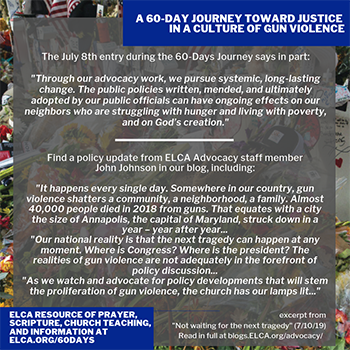
It happens every single day. Somewhere in our country, gun violence shatters a community, a neighborhood, a family. Almost 40,000 people died in 2018 from guns. That equates with a city the size of Annapolis, the capital of Maryland, struck down in a year – year after year.

Although written in 1995, the ELCA social message on “Community Violence” reads as if describing today.

“For some women and children, home is less safe than the street. Hate crimes continue. Neighborhood, schoolyard, workplace, or family disputes spark into violence and become lethal. They become headline news, reinforcing the atmosphere of violence and inspiring profitable entertainment media” (page 1).

Access to a lethal weapon intensifies the situation. Gun violence disproportionately impacts communities of color. Guns figure prominently in domestic violence and have been used to terrorize our children in schools. The proliferation of guns, assault weapons and the violence that ensues around these weapons is a thief in the night.

Our national reality is that the next tragedy can happen at any moment. Where is Congress? Where is the president? The realities of gun violence are not adequately in the forefront of policy discussion.

Congress and the administration should be debating and passing legislation now like:

  • 1994 Assault Weapons Ban – legislation introduced that would ban military assault weapons like the AR-15 used in many recent mass shootings.
  • Ethan’s Law – introduced legislation, originating in Connecticut, that would require safe storage of firearms.

The sad reality is that in the current polarized political climate, the likelihood of meaningful legislation passing Congress is remote.  Nevertheless, the values of our faith tradition compel us to keep pressing forward. “Community Violence” adopted in 1994 states that the ELCA advocates in favor of gun control on the basis of the resolution on community violence adopted by the 1993 Churchwide Assembly, which called for “passage and strict enforcement of local, state, and national legislation that rigidly controls manufacture, importation, exportation, sale, purchase, transfer, receipt, possession and transportation of handguns, assault weapons and assault-like weapons and their parts, excluding rifles and shotguns used for hunting and sporting purposes, for use other than law enforcement and military purposes” (page 4 and footnote).

Legislatively, this means we particularly look for measures that will curtail the violence, including

  • Limit of high capacity magazines and require gun locks; and
  • Invest in domestic violence prevention.

As we watch and advocate for policy developments that will stem the proliferation of gun violence, the church has our lamps lit – like those waiting and ready in Luke 12:35. Our support and leadership can bolster our communities as we

  • Build strong anti-violence coalitions in neighborhoods;
  • Encourage peer mediation skills in our schools;
  • Call out the culture of violence that pervades our national culture and media; and
  • Proclaim spiritual and moral resources for replacing fear and violence with hope and reconciliation in our homes, communities and nation.

July Update: UN and State Edition


United Nations | California | Colorado | Minnesota | Nevada | Ohio | Pennsylvania | Southeastern Synod | Washington | Wisconsin


Lutheran Office for World Community, United Nations, New York, N.Y.

Dennis Frado, director

GENERAL DEBATE ON HIV AND AIDS: On June 3, the annual debate took place in the General Assembly concerning the Implementation of the 2001 Declaration of Commitment on HIV/AIDS and the 2011 Political Declaration on HIV/AIDS. The UNAIDS target of reducing HIV by 2020 is just a year away — 90-90-90 (diagnose 90% of all HIV-positive people, provide antiretroviral therapy to 90% of those diagnosed and achieve viral suppression for 90% of those treated by 2020). This target is in line with Sustainable Development Goal 3 target 3:3 of ending the AIDS epidemic by 2030.

As Maria Luiza Ribeiro Viotti, chef de cabinet of the secretary general’s executive, pointed out, when AIDS was first identified more than 30 years ago, suffering and death seemed unstoppable.  Years later, nearly 8 million deaths have been averted since 2000 and three-quarters of people living with the virus now know their status. Unfortunately, this progress remains uneven. Since 2010, Eastern Europe and Central Asia have witnessed a 30% increase in HIV infections.

Ten years ago the ELCA Church Council adopted the ELCA Strategy on HIV and AIDS and called on the ELCA to respond faithfully and effectively to this pandemic. Find information concerning the ELCA’s HIV and AIDS Ministry, worship resources and more here.

Read the secretary-general’s report: “Galvanizing global ambition to end the AIDS epidemic after a decade of progress”. Read the full report with short summaries of the statements here.

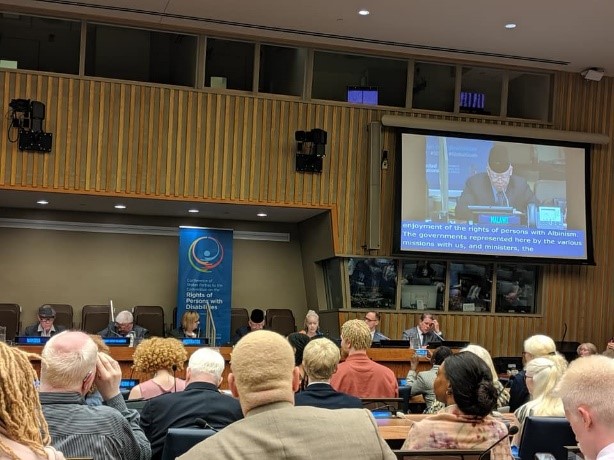
STILL STANDING STRONG – INTERNATIONAL ALBINISM AWARENESS DAY : On June 13, the U.N. celebrated International Albinism Awareness Day. The theme “Still Standing Strong” encourages the international community to “recognize, celebrate and stand in solidarity with persons with albinism around the world”. On this day, everyone is reminded that people with albinism deserve to have their rights to life and security protected.

Different speakers shared their work on awareness-raising and the challenges that people with albinism face. Senator Isaac Mwaura from Kenya pointed out how important it is to be innovative and create spaces where people with albinism feel secure, beautiful and seen. This message was also shared by Diandra Forrest, the first woman with albinism to sign with a major modeling agency.

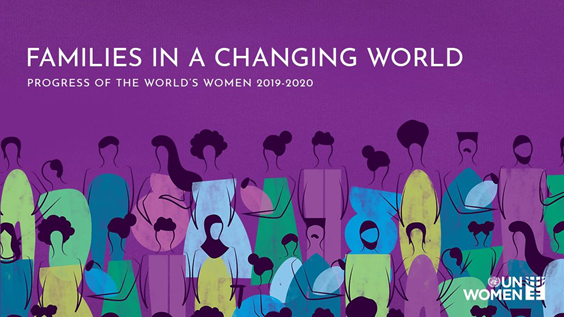
 PROGRESS OF THE WORLD’S WOMEN REPORT LAUNCH: On June 25, U.N. Women launched a 2019 report titled “Progress of the World’s Women 2019-2020: Families in a Changing World,” which highlights the diversity of families. Families “can be places of love and affection” however, women and girls “too often face violence and discrimination” within the home. The report includes a comprehensive policy agenda with eight recommendations, calling on governments, civil society and the private sector to safeguard women’s and girls’ rights. You can read the online report here and a blog post on the report by Joanna Lilja, Church of Sweden.


California

Regina Q. Banks, Lutheran Office of Public Policy- California (LOPP-CA)           loppca.org

BUDGET GAINS AND LOSSES: During our Lobby Day last month we advocated for a Medi-Cal (California’s low-income health care program) expansion that would cover all income-eligible people independent of immigration status. We, and our allies, were partially successful in spurring an expansion that will cover those up to age 26.  We also talked to legislators about the establishment of a clean, safe and affordable drinking water fund. The Legislature agreed and chose to finance the measure with cap-and-trade funds as opposed to the governor’s proposed new fee on polluters. Finally, the Legislature approved a significant expansion to the California Earned Income Tax Credit. This is a tent post for the End Child Poverty coalition to which we belong and was a huge win. Unfortunately, the expansion will not include those who file taxes with an ITIN, whose filers are primarily undocumented workers. Thank you to everyone who came to Lobby Day, made calls, wrote e-mails and prayed. We got both some significant wins and a clearer roadmap of the work ahead!

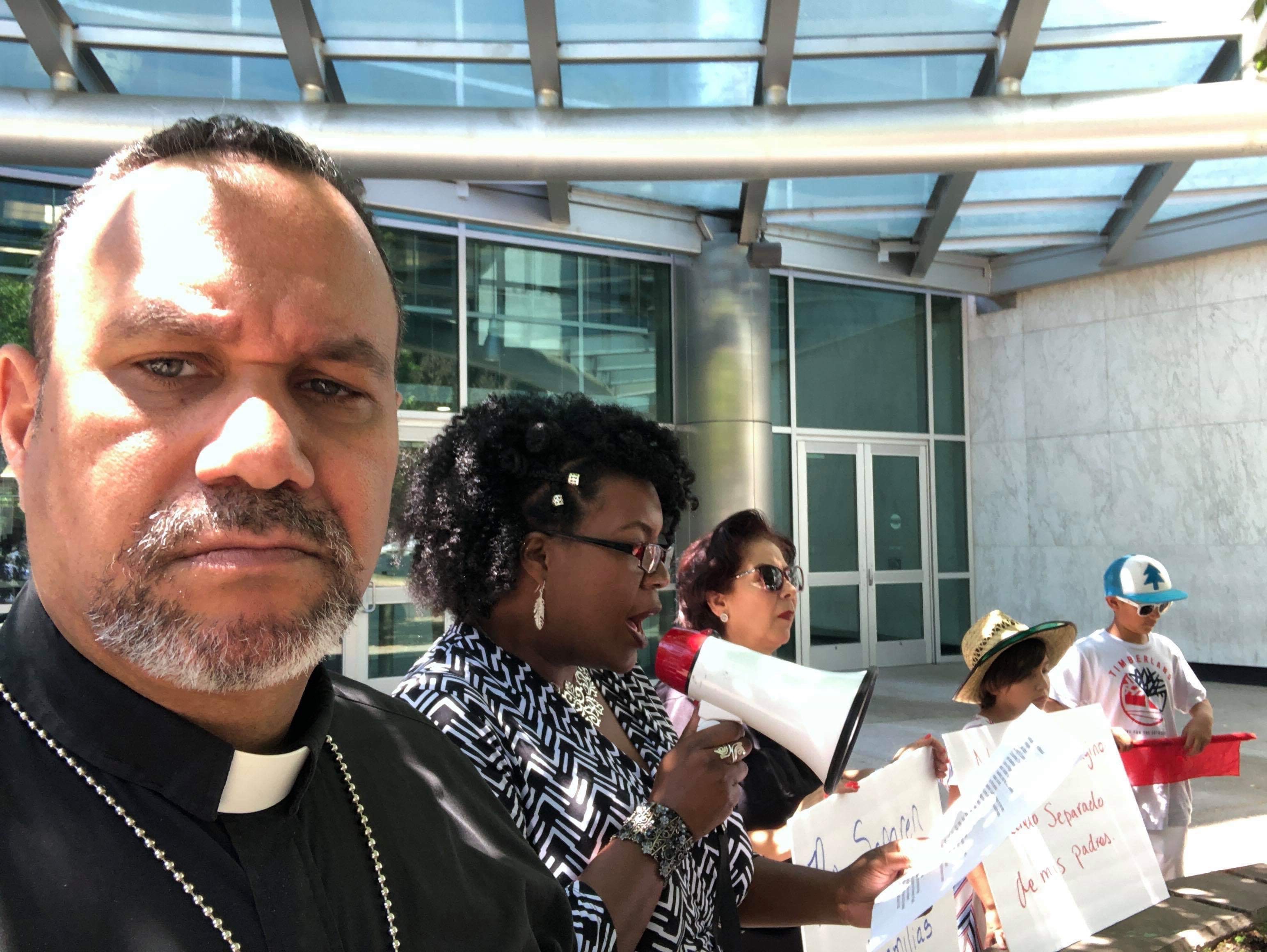
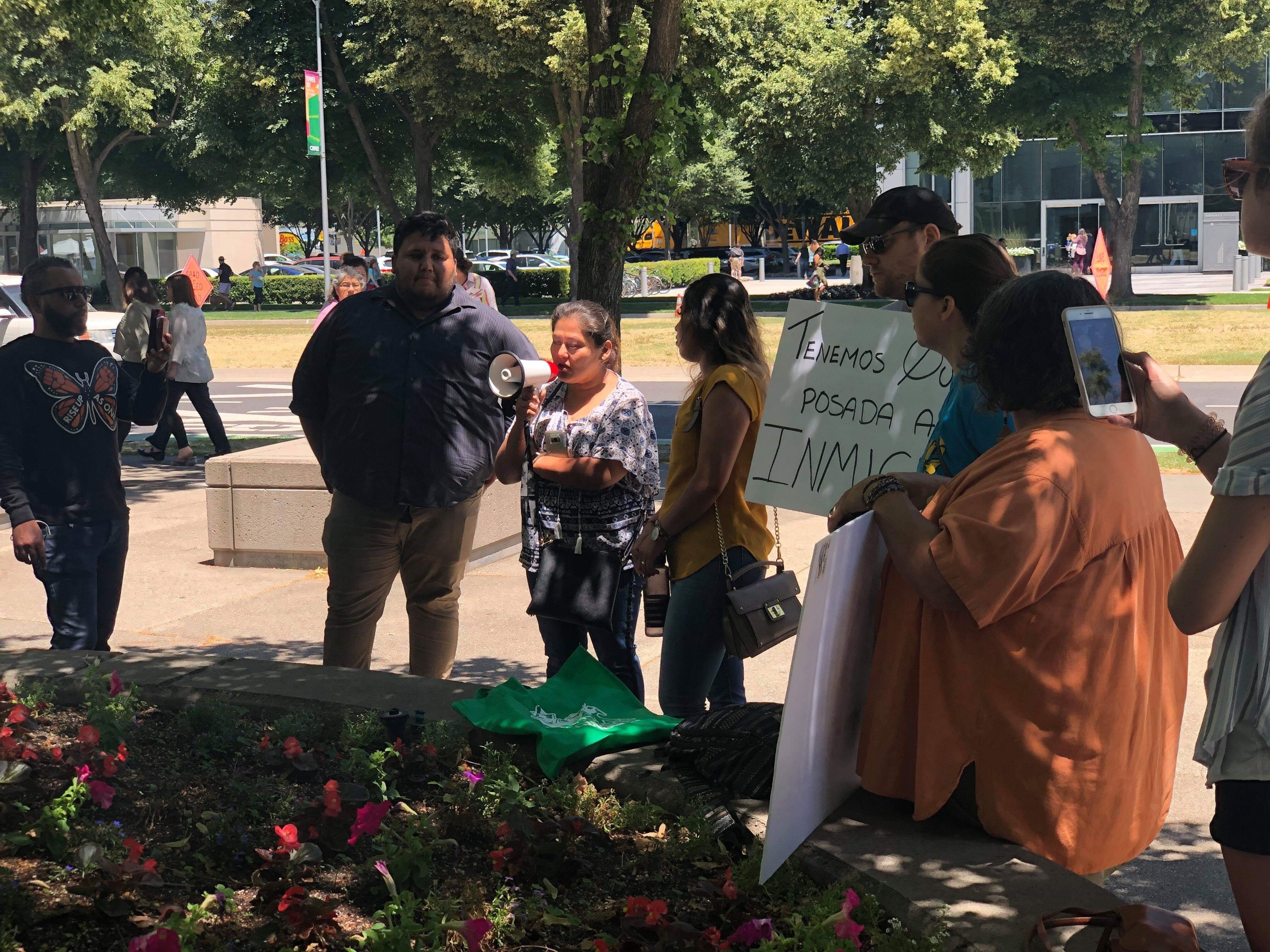
WORLD REFUGEE DAY ACKNOWLEDGMENT: June 20thmarked U.N. World Refugee Day. LOPP-CA acknowledged the day with partners such as St. Paul Lutheran Church of Lodi, Calif; Organizacion de Trabajadores, Fuerzas Unidas and others in a march and prayer circle for the reunification of families being callously held in US detentions. We prayed together and then marched to the U.S. General Services Administration building in Sacramento where we prayed for the employees and our policy makers.

SECOND-MILE GIVING: Thank you so much to everyone, congregations and individuals alike, who participated in the Sierra Pacific Synod’s second-mile giving support of LOPP-CA in June. We are humbled by your generosity.


Colorado

Peter Severson, Lutheran Advocacy Ministry–Colorado                                                  lam-co.org

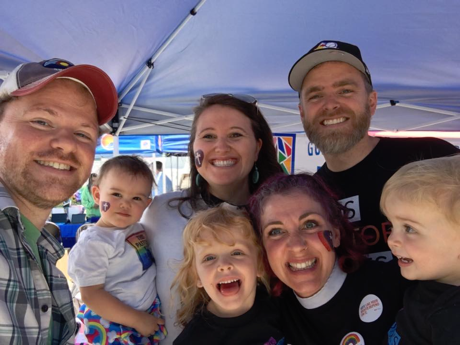
MINISTRY VISITS: Peter Severson, director of Lutheran Advocacy Ministry-Colorado, visited Shepherd of the Valley Lutheran Church in Grand Junction in late June to preach, present, and march in the Colorado West Pride Parade (alongside American Lutheran Church too). The two congregations joined Pride along with other faith communities that participate in the Grand Valley Interfaith Network.

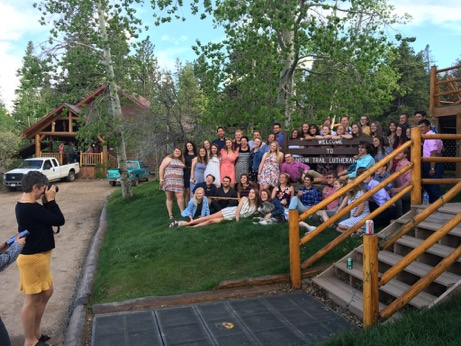
Severson also visited Rainbow Trail Lutheran Camp in Hillside, in early June for the commissioning service at the end of staff training. Congratulations to these great counselors and staff, who are having a great summer in the mountains as they faithfully lead campers!

In July, we look forward to visiting Trinity Lutheran Church, Boulder; First Lutheran Church, Colorado Springs; and the ELCA World Hunger Leadership Gathering in Minneapolis!


Minnesota

Tammy Walhof, Lutheran Advocacy- Minnesota (LA-MN)               lutheranadvocacymn.org

UPCOMING EVENT – A VIEW FROM THE BORDER/UNA VISTA DESDE LA FRONTERA: The Rev. Mateo Chavez, pastor of San Juan Bautista Lutheran Church in Tucson, Ariz., is a board member of Cruzando Fronteras, a collaborative ministry between Episcopal, Lutheran, and Anglican communities on of borders with Mexico, Latin America, and elsewhere. A free will offering will support ministries of Tapestry and San Juan Bautista, which accompany immigrants, asylum-seekers and refugees.

  • 5:00 p.m. – Worship service, with Chavez preaching
  • 6:00 p.m. – Dinner (suggested donation $10/adult) and Stories of sorrow, hope, determination, and love, as Chavez shares about ministry and work with immigrants and asylum seekers at the Nogales border crossing.
  • Dinner RSVP: Lidia@oakgrovelutheran.org or on Tapastry (Richfield) Facebook page
  • Questions: The Rev. Melissa Melnick Gonzalez, pastormelilymel@gmail.com

ASSESSING & PLANNING: The Legislative session is barely over, but Lutheran Advocacy-MN is meeting with coalition partners to review 2019 accomplishments and prepare for 2020. On both housing and clean energy, it is clear that we need more grassroots action, especially with senators. Housing did better than other issues, but Senate leadership blocked additional needed funding. Housing supportive services fell way short, despite bipartisan co-sponsorship and support! Clean Energy ran into many roadblocks in the Senate, and it’s clear that some senators in key committee positions are 8-10 years behind in their knowledge and understanding of clean energy technologies and possibilities. Now (and throughout the fall) it will be crucial to meet with your legislators to educate them on issues and get them pushing their leaders to do more! 


Nevada

William Ledford, Lutheran Engagement and Advocacy in Nevada (LEAN)     leanforjustice.org

With our legislative session officially over and the governor done signing bills, we are happy to report that almost all of the legislation we were supporting has passed. Suffice it to say, this was a successful session for LEAN. Going into our long offseason means that we are strategizing ways to increase buy-in from our represented churches and to increase awareness in our state of the work we do.


Ohio

Nick Bates, Hunger Network Ohio (HNO)                                               www.hungernetohio.com

AND WE DO NOT HAVE A BUDGET: Speaker Larry Householder (R-Glenford) and Senate President Larry Obhof (R- Medina) were unable to reach an agreement to pass a budget by the June 30th deadline. There are many issues at play – school takeovers by the state, school funding, tax policy, and other issues. During the final hours of June, the Legislature voted for temporary funding bills to keep the state government open for a few more weeks. HNO will continue to work with community groups and legislators to lift up our top issues, including the wealthiest Ohioans paying their fair share and investments in food and housing security.

STEPS BACKWARD FOR ENVIRONMENTAL STEWARDSHIP & OHIO’S ENERGY ECONOMY: HB 6 will bail out nuclear power plants in Ohio with a guaranteed $150 million state subsidy. The bill will also reduce (Senate version) or eliminate (house version) Ohio’s renewable energy goals. This will hurt our clean energy economy and also leave Ohio behind a growing number of states that realize that renewable energy is a smart investment. We encourage our Lutheran partners to follow Ohio Interfaith Power and Light for updates on these policy issues.

VOTER REGISTRATION PLAN – EARN $200 FOR YOUR PANTRY: Are you a food pantry in Ohio and want to earn $200 (or more)? Be on the lookout for our upcoming voter registration campaign where we will pay partner pantries $200 if they incorporate voter registration into their pantry. Sign up form will be rolled out by the middle of July! 


Pennsylvania

Tracey DePasquale, Lutheran Advocacy Ministry–Pennsylvania (LAMPa) lutheranadvocacypa.org

LAMPa director Tracey DePasquale accompanied general assistance recipients and housing and domestic violence services advocates to urge lawmakers to preserve the life-saving program for the most vulnerable in times of crisis.

On June 28, Pennsylvania adopted a $34 billion budget that includes no new taxes but socks $330 million away in rainy day fund. Highlights include increases for housing; basic pre-kindergarten and special education; services for disabled Pennsylvanians and domestic violence victims; election security; and help for a struggling agricultural industry. Anti-hunger funding was held level, and a General Assistance (GA) program re-instated by the state Supreme Court last year was eliminated. LAMPa staff delivered about 100 letters in support of increased funding for anti-hunger programs that were gathered at synod assemblies. This followed more than 100 legislative visits made on Lutheran Day as well as other outreach by Lutheran advocates to let lawmakers know that, in spite of what seem like good economic statistics, our feeding ministries have not seen decreased demand.To protect GA, program director Lynn Fry met with the governor’s staff, and director Tracey DePasquale made rounds of Senate offices with recipients and advocates, including a press conference where the Rev. Timothy Seitz-Brown spoke. The battle over ending the program erupted into chaos on the Senate floor as seen in this video, highlighting growing divides in our commonwealth.

ALSO IN JUNE:

  • Staff led workshops at the Upper and Lower Susquehanna synod assemblies.
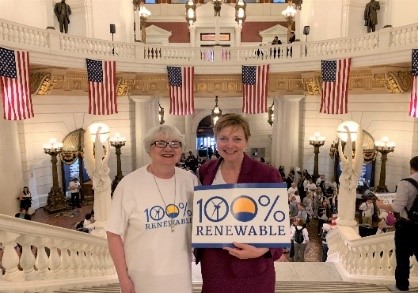
  • Lutheran advocates joined approximately 400 in urging lawmakers toward the goal of 100% renewable energy by 2050.
  • DePasquale taught post-confirmands at Camp Nawakwa how they can engage their faith in climate change advocacy.
  • DePasquale visited lawmakers urging rejection of bill reducing clean-water protection.
The Rev. Timothy Seitz-Brown urges lawmakers and citizens to see God in the faces of the poor.
Kathie Westman, a member of the Southwestern Pennsylvania Synod’s Church and Society Committee, joined Lutheran advocates from around the state in a rally for legislation to get Pennsylvania to 100% renewable energy


Southeastern Synod

Hilton Austin, director

SOUTHEASTERN SYNOD ASSEMBLY: We had a great assembly this year. There were three workshops that reflected our work as advocates for the common good: “Disaster Preparedness and Mitigation in the Age of Climate Change”; “Welcoming the Stranger”; and “Who is My Neighbor: A Prophetic Vision”, our ‘Advocacy Policy Council’ workshop. The latter was a seven-person panel answering how Jesus’ question “which of these three do you think was a neighbor to the man?” speaks to their ministry of advocacy. It was awesome. We also gained significant support in Alabama. Kevin L. Strickland is the new bishop-elect of the Southeastern Synod.

CARE FOR CREATION: “Faithful Climate Conversations: Public Forum on Faith, Science, & Climate Solutions” was sponsored by Interfaith Power and Light and held at the Jewish Federation of Greater Atlanta. Speakers were the Rev. Susan Hendershot, president of IPL, and Dr. Kenneth Kimmell, president of the Union of Concerned Scientists. Kait Parker of the Weather Channel was the panel moderator; the Rev. Gerald L. Hurley, chair of the IPL Board of Directors, joined the panel discussion.

CRIMINAL JUSTICE REFORM: The leader of our Criminal Justice Reform “Ready Bench” and I attended a three-day conference on “Ending Mass Incarceration” at Ebenezer Baptist Church. We made several new inter-faith connections and had the opportunity to collaborate with many of our current ecumenical partners. Michelle Alexander, Esq, author of The New Jim Crow, was the speaker at the first plenary.

IMMIGRATION AND REFUGEE RESETTLEMENT: World Refugee Day in Clarkston, sponsored by the Coalition of Refugee Services, was a great event, lifting up and celebrating the contributions of refugees in Georgia.

2019 ALABAMA LEGISLATIVE REPORT: The legislative session for Alabama officially drew to a close at the end of May, passing very few of the bills for which we were advocating. However, there is still plenty to celebrate from this session!
The state of Alabama seems to have had a great fiscal year, bringing wonderful benefits to several of the state’s governmental systems.

  1. The Education Trust Fund (EFT) was among the systems that received benefits. The surplus in funds allowed legislators to approve a 4% increase in teacher pay, make increases to most K-12 programs, and provide a 6% increase in funds allocated to state four-year colleges and public universities.
  2. Legislators also approved a $40 million increase to the state’s prison system. It is speculated that a special session may be called later in the year to address specific problems with the system as a whole.
  3. A victory for care for creation was won with the passage of a gas tax. Between now and 2021, the tax on gas will rise 10 cents, 6 in the first year, and 2 more cents each subsequent year, bringing the total tax from 18 to 28 cents. Money provided in this bill will also be used to aid the Port of Mobile and create a charging station for hybrid and electric vehicles.

As far as bills we supported are concerned, HB176 was the only one that did not die in committee. With this bill’s passage, legislators ensured that many of Alabama’s hospitals will continue to receive the funding they need to keep their doors open.

On to the less than favorable bills that were passed, Alabama was one of a few states that passed an infamous heartbeat bill, banning pregnant people seeking an abortion from obtaining one if a fetal heartbeat can be detected.
Thank you to everyone who has been involved in all of the ups and downs associated with state advocacy this year. Now that all normal state legislative sessions in the synod have ended, we can rest (for just a moment!) and enjoy what has been done. Be sure to look for our special session updates and legislative posts for next year’s sessions, and don’t forget to vote!


Washington

Paul Benz, Faith Action Network (FAN)                                                                                 fanwa.org

REGIONAL SUMMITS: FAN wrapped up our spring summit meetings with our fourth and final gathering in Spokane on June 30. We are working to pull together notes from all of the attendees who shared their policy recommendations for the 2020 legislative session. Once we compile the notes from our network of advocates, our program committee will review them this summer. The results of that review will then be formulated into a draft legislative agenda for our board to review later in the year. Our goal is to have a board-approved draft for our legislative agenda by our annual dinner on Nov. 17! It’s important to shape this agenda with the guidance of our network and advocates from all around Washington state.


ELCA HUNGER ADVOCACY FELLOW: Sarah Vatne has spent the past year working at FAN as an ELCA Hunger Advocacy Fellow. Below she shares a reflection as she begins her final month with FAN and prepares to start law school at Gonzaga University School of Law in August:

“Throughout this year with FAN, I’ve attended rallies and marches, met with elected officials, led advocacy and educational events, spoken at youth gatherings, and worked with faith communities from a multitude of different backgrounds. I’ve really loved getting to know the other fellows in this program and talk about what brought us to this work. I’ve appreciated having the opportunity to advocate for bills that I really care about or that I think would be good for the people in our state. I’ve gotten to see real change take place in our state along the way.

It’s so important for faith communities and people of faith to get involved in policy and advocacy. I believe justice work is part of our religious calling that we are called to act with justice; to love and care for our neighbors around us. It’s not enough to say good words each Sunday, we need to actually get out and be part of the good fight, to advocate for a more just and sustainable world. It is so important for the church to continue to invest in young leaders. We need to see our church having a voice for change in our world, and I truly believe that will come from leadership from youth and young adults. Thank you all!” 


Wisconsin

Cindy Crane, Lutheran Office for Public Policy in Wisconsin (LOPPW)                           loppw.org

IMMIGRATION: About 140 people attended our panel discussion with Bishop Viviane Thomas-Breitfeld, Bishop Paul Erickson, Dr. Stephanie Mitchell, Tim Muth, the Rev. Walter Baires, the Rev. Nick Utphall, and Mary Campbell. We are strategizing follow up. Watch the video here. We also participated in an interfaith rally in front of an Immigration and Customs Enforcement detention center.

EMANUEL MOVIE: Over 60 people joined LOPPW and the South-Central Synod to view Emanuel on two different nights. Several attended conversation sessions afterward. We suggested our members around the state also organize people to attend the documentary.

SYNOD ASSEMBLIES: We managed a display table at the La Crosse Area Synod Assembly and were present at the Greater Milwaukee Synod Assembly.

BUDGET: We’re involved in a state budget coalition. LOPPW sent out individual e-mails about BadgerCare (taking federal dollars for Medicaid) to every Assembly and Senate member and shared responses with the coalition.

CARE FOR GOD’S CREATION:

  • Participated in a gathering for Midwestern environmentalists and funders with the common goal of diminishing carbon dioxide emissions.
  • Initiated a group to lead a breakout session on what our governor can do about climate change and how we can support his current efforts, for a Wisconsin Climate Table meeting with the hope of creating a policy advisory committee as a follow-up.
  • LOPPW was invited to register on a bill related to buying and selling water pollution credits by one of the Republican authors.

HUMAN TRAFFICKING: LOPPW updated Women of ELCA on three bills.