Lutherans are taking action across the country! Below you will find our monthly State Advocacy Newsletter. Share with your friends!
____________________
Washington, D.C. – Amy Reumann, Director of Advocacy
Earlier this week, President Obama gave his final State of the Union address to Congress. As lawmakers across the political spectrum prepare their 2016 legislative agendas, we urge our elected officials to ensure that our nation’s public policies embody biblical values of peacemaking, hospitality to our neighbors, care for creation, and concern for our brothers and sisters facing poverty and struggling with hunger. Among other advocacy priorities, we urge Congress to:
REFORM OUR CRIMINAL JUSTICE SYSTEM: In early 2015, the ELCA, alongside our faith community partners, demanded criminal justice sentencing reform to restore a common-sense approach to nonviolent drug sentencing. We know that excessively high mandatory minimum sentences over-crowd federal prisons, unfairly punish our brothers and sisters living in poverty, and do little to reduce crime. We are pleased that Congress responded! The Sentencing Reform and Corrections Act of 2015 (S.2123) is bipartisan legislation that makes modest reforms to the federal criminal justice system by restoring the ability of federal judges to determine fairer and more realistic sentences and by reducing mandatory minimums for nonviolent drug offenses. This call is shared by both sides of the isle in Congress, and now the president has joined. We are pleased by the momentum this important legislation is gaining, and we will continue our advocacy efforts until common-sense reforms are made.
COMMIT TO REDUCING EXTREME POVERTY: Millions of people around the world continue to suffer from extreme poverty. Food insecurity, lack of medical services, gender-based violence, and humanitarian crises are some of the issues we will continue to focus on this year. The U.S. government plays a critical role in improving the lives of our brothers and sisters in need. It is imperative that we hold our government accountable to its commitments to reducing extreme poverty. A big part of this work is to ensure that Congress allocates funds for existing relief and development programs, as well as to advocate for systemic reforms so that these programs are more efficient.
PROTECT THOSE WHO SEEK SAFETY: ELCA Advocacy will continue to focus on ensuring that U.S. policies protect those who must leave their homes in search of safety. In 2015, we joined with faith leaders across the country to speak out against religious discrimination in our refugee system and asked for a compassionate investment in Central America to address the displacement of unaccompanied children and families. This year, we will continue to urge the U.S. government to ensure that funding recently allocated for Central America is spent in ways that protect those fleeing violence and persecution. In addition, we will work to make sure that refugees coming through Europe receive appropriate humanitarian protections. Refaai Hamo, a Syrian refugee present at the State of the Union, was fortunate to find safety in the United States and a new home through Lutheran Social Services of Michigan, but thousands continue to risk their lives to find safety or live in refugee camps.
FULFILL OUR PROMISE TO CARE FOR GOD’S CREATION: In 2015 the Obama administration issued two final rules under the Clean Air Act that restrict carbon dioxide emissions from new and existing power plants. Coal-fired power plants are the single largest source of emissions of carbon dioxide, one of the primary causes of climate change. The carbon rules are the centerpiece of the administration’s strategy to carry out pledges made in Paris toward a new global climate change agreement that will go into effect in 2020. Although the carbon rules are now final, Congress has the ability to challenge them under the Congressional Review Act (CRA). The House and Senate held a CRA vote on the rules last fall but failed to get enough votes to override a presidential veto. This spring, ELCA Advocacy will take action as Congress again considers use of the CRA to block these rules and will continue to build upon last year’s legislative successes, such as protecting U.S. contributions to the Green Climate Fund.
____________________
New York, NY – Dennis Frado, Lutheran Office for World Community
A DISCUSSION ON ‘FORCED DISPLACEMENT, REFUGEES, AND MIGRATION’: On Dec. 16, Dennis Frado and Nicholas Jaech with the Lutheran Office for World Community participated in a public consultation on the discussion paper “Forced Displacement, Refugees, and Migration” produced by the Independent Commission on Multilateralism (ICM). This paper highlighted the current migration crisis, citing 230 million current migrants, which includes 59.5 million displaced persons. ICM, which is affiliated with the International Peace Institute, writes that this is the “biggest humanitarian crisis in the history of the United Nations.” This paper also offers recommendations for “an improved multilateral response” including convening a global summit on the issue, strengthening international coordination among key agencies, organizations and U.N. member states, and strengthening the 1951 Refugees Convention. During a question and answer period, Dennis inquired about the negative impacts of climate change on migration and displacement, citing the current and future crises of island nations facing rising ocean levels. He asked about the probably inevitable need to resettle the populations of these island states and its implications for national sovereignty and preservation of cultures.
Two days later, on Dec. 18, International Migrants Day was recognized at the United Nations. During an event held by the International Organization for Migration (IOM), William Lacy Swing, director general of IOM, stressed the need to recover from the “amnesia” about historic patterns of migration, citing the migration patterns in and out of the United States. At this event, the Population Division of the U.N. Department of Economic and Social Affairs reminded the audience of the connection between migration and the recently adopted Sustainable Development Goals, referencing goal 10.7, which calls on countries to “facilitate orderly, safe, regular and responsible migration and mobility of people, including through the implementation of planned and well-managed migration policies.”
A U.N. BRIEFING ON EL NIÑO: On Jan. 7, the Lutheran Office for World Community attended a briefing on “The Humanitarian Consequences of El Niño and the Need for Urgent Action,” organized by the U.N. Office for the Coordination of Humanitarian Affairs (OCHA). This event informed member states and U.N. organizations about the current and potential effects of this season’s El Niño weather pattern. Consistently reinforced was El Niño’s connection to climate change – El Niño is not a product of climate change, but occurring in a world with a changing climate makes El Niño’s effects more extreme and unpredictable. The 2015-2016 El Niño pattern is already one of the three strongest since 1950, with models predicting that it could become the strongest on record. Various reports were made on the already damaging effects of the 2015-2016 El Niño – major droughts in Eastern and Central Africa, Central America, and the Pacific region, among others. As the rainy seasons return, the risk of flooding, landslides, and waterborne diseases significantly increase in these drought-ridden regions. Key messages issued by OCHA and other speakers centered on two actions: 1) an urgent response by the international community to address the current humanitarian needs caused by El Niño, and 2) investing in long-term risk and vulnerability reduction, which is critical and needs to be increased. For further analysis of El Niño’s effects by region, please click here.
____________________
California – Mark Carlson, Lutheran Office of Public Policy
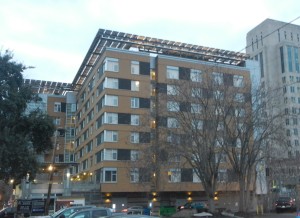
STATE LEGISLATURE: California’s legislators reconvened Jan. 4 for the final year of its two-year session, and nearly one-sixth of them gathered that afternoon at Mercy Commons (see photo), a newer permanent supportive housing site in the block next to the county jail and Matsui Federal Building, to launch a bi-partisan effort to generate new resources and redirect existing resources to address our state’s homelessness crisis. The focus will be on “housing first” and mental health services, and the proposal becomes part of budget priority debates that are underway following Gov. Jerry Brown’s Jan. 7 release of his fiscal year 2016-17 budget proposal. With healthy growth in revenue, the governor is still wary of future recessions, the expiration of temporary recession-era sales and income taxes, the need to invest in deteriorating infrastructure, and the challenge of paying for MedicAid/Cal, which now covers one-third of Californians and half its children. California’s first Earned Income Tax Credit is funded into its second year, and there is a small cost of living allowance for elderly and disabled assistance, but an LOPP-CA priority, eliminating the CalWORKS/TANF maximum family grant rule that contributes to child poverty, was not in the proposal.
CLIMATE CHANGE PRIORITIES: Defending California’s climate change laws and advocating for equitable investment of cap-and-trade funds, now growing into the billions, will continue to be a LOPP priority. We joined a letter initiated by the Trust for Public Land calling for a Community Greening Fund focused on green infrastructure and forestry in urban communities. LOPP also participated in an interfaith post-Paris briefing.
____________________
Colorado – Peter Severson, Lutheran Advocacy Ministry Colorado
The Colorado General Assembly convened on Wednesday, Jan. 13, to begin its 2016 legislative session. Lutheran Advocacy Ministry-Colorado was on hand for the opening ceremonies and is ready to dive in for a busy year of public policy advocacy.
As we celebrate the arrival of the new year, we also reflect on where we’ve been. In the past year, LAM-CO has been deeply involved in congregational-level education about advocacy, with a particular focus on how advocacy fits into the life of discipleship to which we are called as people of faith. Besides visits to Colorado ELCA congregations to preach and teach, presenting at the Rocky Mountain Synod Assembly and Theological Conference, addressing the many coalitions in which we participate, and sending e-newsletter updates, LAM-CO is connecting with thousands of people across Colorado and beyond. We hope to see even more of this in 2016, which will be an important election year in our state and nation.
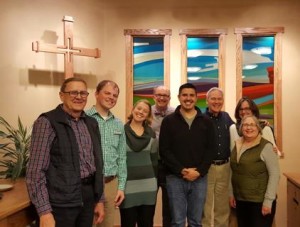
State Sen. Jessie Ulibarri (center, front) visits the RMS Office of the Bishop and staff in December. Sen. Ulibarri represents the neighborhood in which our office is located.
Our priorities remain steadfast in the coming year: a better and more robust social safety net for those living on the margins, improved access to anti-hunger and anti-poverty programs for those who need them, a higher minimum wage that is commensurate with the actual cost of living, consistent shelter and support services for those without a home, an end to denial of dignity and needless taxpayer expense in the criminal justice system, and a higher standard of environmental protection that shows real care for creation.
____________________
Minnesota – Tammy Walhof, Lutheran Advocacy Minnesota tammy@lcppm.org
CAPITOL RENOVATIONS: Continuing capital renovation will keep the capitol closed through 2016. The session will begin Tuesday, March 8, and will be only 11 weeks long. Access to legislators in St. Paul will be very difficult. It will be challenging to know how fast legislation will move, how to best access legislators, and how many decisions will be made in advance or around the edges of session by committee chairs and leaders.
EXPECTED DISTRACTIONS: In addition to the upheaval of renovations, House and Senate leaders agreed in 2015 to address tax reform in 2016. Although the Legislature will be addressing bonding bill requests, differing perspectives on tax reform may tie up most non-tax efforts.
RAPID ACTION NETWORK: Lutheran Advocacy-MN continues to build its network to be ready for nimble rapid action. Willing to be part of the network? Please send your contact information to LA-MN Director Tammy Walhof, at tammy@lcppm.org or 651-238-6506. LA-MN may even need to activate the network in January or February if decisions are being made by leaders in advance of session.
2016 ISSUES FOR EDUCATION AND ACTION: (click here for one-page description of 2016 agenda)
- Affordable housing and homelessness: The lack of affordable housing is causing families and individuals to spend too much income on housing, taking from other family needs, especially food. In addition, once a person or family becomes homeless, food security no longer exists.
- Payday lending/alternative lending: People caught in the debt trap of payday loans are spending thousands of dollars on interest and fees. This is taking food off their table. Additionally, many people taking payday loans are doing so to cover basic needs but find that they are worse off after the loan(s).
- Refugees and immigrants: Children and families are forced by violence, hunger or poverty to flee their countries. They face huge threats, including hunger and trafficking, while trying to get to a safe place. If they successfully arrive in the United States, additional barriers exist. The nation and Minnesota need to be welcoming of the stranger/immigrant in our midst as they seek security and stability.
- Creation care through clean energy, the Clean Power Plan, and climate concerns addressed through the frames of: 1) vulnerable and low-income Minnesotans and U.S. residents, 2) health, well-being and economic growth, 3) clean, accessible water (tying into the ELCA World Hunger’s water focus), and 4) global poverty.
Facebook Twitter: @LuthAdvocacyMN
The 2016 session of the New Mexico Legislature convenes on Jan. 19 at noon. This session is a so-called “short” session of 30 days. That’s 30-straight calendar days (including weekends) not 30 legislative days. Such sessions are intense and jam packed with legislation. Already more than 120 pieces of legislation have been filed in anticipation of the session and about 1,000 pieces are expected to be introduced. The LAM-NM Policy Committee adopted our 2016 advocacy agenda at its November meeting and that agenda guides LAM-NM’s advocacy activity throughout the year and particularly during legislative sessions.

This session will be focused on budgetary concerns and LAM-NM and other advocates will be working to ensure that human services programs are not cut. State revenues are way down due to the drop is the price of crude oil. New Mexico is overly dependent on oil and gas revenue. LAM-NM is supporting full-funding for Medicaid expansion. More than 250,000 low-income New Mexicans have been added to Medicaid under the Affordable Care Act and about 40 percent of New Mexicans are now enrolled in Medicaid.
LAM-NM is also supporting the passage of a constitutional amendment to reform the state bail system. Of particular concern to LAM-NM is changing the constitution so that non-dangerous defendants cannot be detained before their trial solely because they lack the money to post a cash or surety bond.
____________________
Pennsylvania – Tracey DePasquale, Interim-Director
Even as Pennsylvania begins 2016 six months into a budget standoff, LAMPa looks back on 2015 with gratitude for the opportunity to witness to the love of God and stand together for justice in the state capitol.
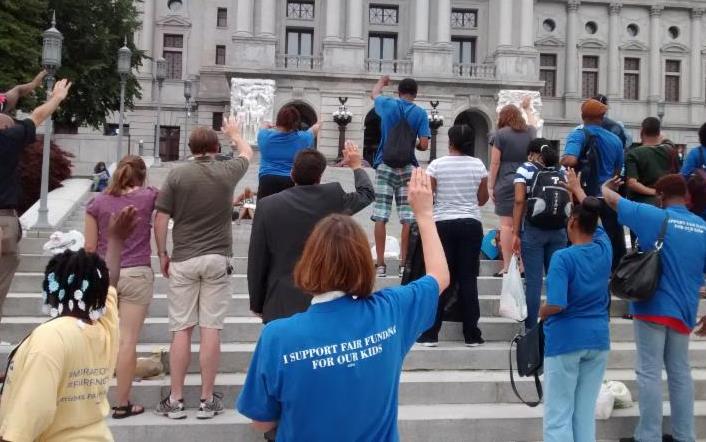
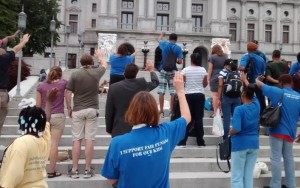
Among the highlights: LAMPa and the Lutheran Theological Seminary at Gettysburg partnered, bringing together Lutheran Day in the Capitol and Spring Academy Week. The venture led to plans for more collaboration in 2016. LAMPa brought Lutherans together with partners from around the state for a rally for fair education funding, featuring a prayer service on the front steps of the capitol. (See photo.) As 2015 closed, we celebrated the signing of the bill to expand the state Housing Trust Fund, which will improve access to safe, affordable housing and eliminate blight.
Tracey DePasquale is serving as LAMPa’s interim director as Amy Reumann takes the reins at the ELCA Washington office. In light of the temporary staff reduction, the policy council adopted a revised agenda for 2016 at its December meeting. Hunger and education funding remain top issues. LAMPa will continue to fight payday lending and has added electoral reform to the agenda. Our annual Lutheran Day of Advocacy in Pennsylvania will be an official part of the Gettysburg seminary’s Spring Academy Week, with a theme of “Science, Faith and Action,” on April 17 and 18. The week will begin with an ELCA Glocal Event, including an interpretive paddling trip, interfaith blessing of the waters and community meal at City Island in Harrisburg.
____________________
Virginia – Charles Swadley, Interim President and CEO
Neill Caldwell, Communications Director
On Wednesday, Jan. 20, the Virginia Interfaith Center for Public Policy will host the 2016 “Day for All People,” an opportunity to learn about some key issues facing the Virginia Legislature and then speak to delegates and senators about those issues. This is an annual event that invites participation of multi-faith communities in the process of advocating for issues that impact the most vulnerable and voiceless in the state. The theme for 2016 is “Racism, Beyond the Confederate Flag.” The keynote speaker will be the Rev. Dr. James Forbes of New York City, recognized as one of the best preachers in America.
The event will start at 9 a.m. at the Claude G. Perkins Living and Learning Center on the campus of Virginia Union University and move to the General Assembly building and the state Capitol. The day will conclude at 3 p.m. Tickets are $30 for the event, $15 for students, which includes continental breakfast and lunch. Transportation to and from the VUU campus and the General Assembly will be provided. For more information or to register, go to www.virginiainterfaithcenter.org/.
Regional legislative public hearings are scheduled for Jan. 7 in Fredericksburg, Wytheville, Chesapeake and Richmond. The hearings will receive comments on the governor’s proposed amendments to the 2016-18 biennial state budget. Gov. Terry McAuliffe introduces his proposed two-year, approximately $100 billion spending plan on Dec. 17. That will be the starting point for the House Appropriations and Senate Finance committees, which are tasked with presenting a budget before the end of the 2016 General Assembly session.
Virginia Consumer Voices for Healthcare staff are thinking of friends and neighbors who still don’t have access to quality, affordable health care. Gov. McAuliffe has included a proposal to take the federal dollars that would fund that access for Virginia’s working poor, including many veterans and/or their families, whose income is too low to qualify for tax credits for coverage on the Healthcare.gov marketplace and who don’t have health benefits through their employers. Taking the federal dollars would pay for 90 percent of the bill. With the savings from covering some state expenditures with these new dollars and hospitals willingness to contribute, Virginia would save more than the 10 percent.
The proposed spending plan does include money for a universal breakfast program for elementary school children, something that is a new advocacy effort for the Virginia Interfaith Center in partnership with the Virginia Poverty Law Center and Virginia Hunger Solutions.
____________________
Washington – Paul Benz, Faith Action Network
The Washington state legislature will begin its 60-day session on Monday, Jan. 11. Faith Action Network’s (FAN) legislative agenda will have five policy “buckets”:
1) reducing wealth inequality (our lead area); 2) fully funding and protecting health and human services, mental health programs and public education; 3) dismantling the culture of violence; 4) protecting housing and preventing homelessness; and 5) sustaining Washington’s environment.
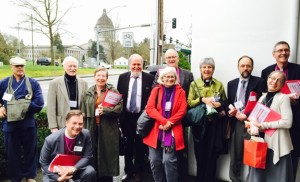
FAN will have a three-person part-time lobby team to do our advocacy at the state capitol, covering four of the five week days. FAN’s annual Interfaith Advocacy Day will be Thursday, Feb. 4, in addition to two other sponsored legislative conferences around the state (in Spokane on Jan. 30 and in Yakima on Feb. 6). FAN will be sending its regular weekly alerts to our network of individual advocates and partners. We will also be sending targeted alerts to any of our 49 state districts, where a particular legislator needs the focus of our advocates.
____________________
Wisconsin – Cindy Crane, Lutheran Office for Public Policy in Wisconsin
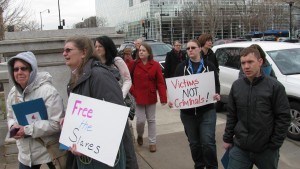
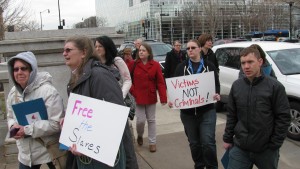
A 2015 REVIEW: LOPPW was the only Wisconsin group to hold a Safe Harbor rally to support legislation and funding to assist youth victims of sex trafficking.
Bishops, grassroots leaders and LOPPW staff visited legislators on the Hill for the ELCA/Episcopal Advocacy Convening.
LOPPW worked with two synods to help initiate a hunger team in one, and a Care for God’s Creation team linked to ELCA World Hunger in the other. We also participated in the Region 5 hunger gathering in Dubuque, Iowa.
LOPPW is a part of People of Faith United for Justice, a group that organized the 2015 statewide Advocacy Day focused on poverty.
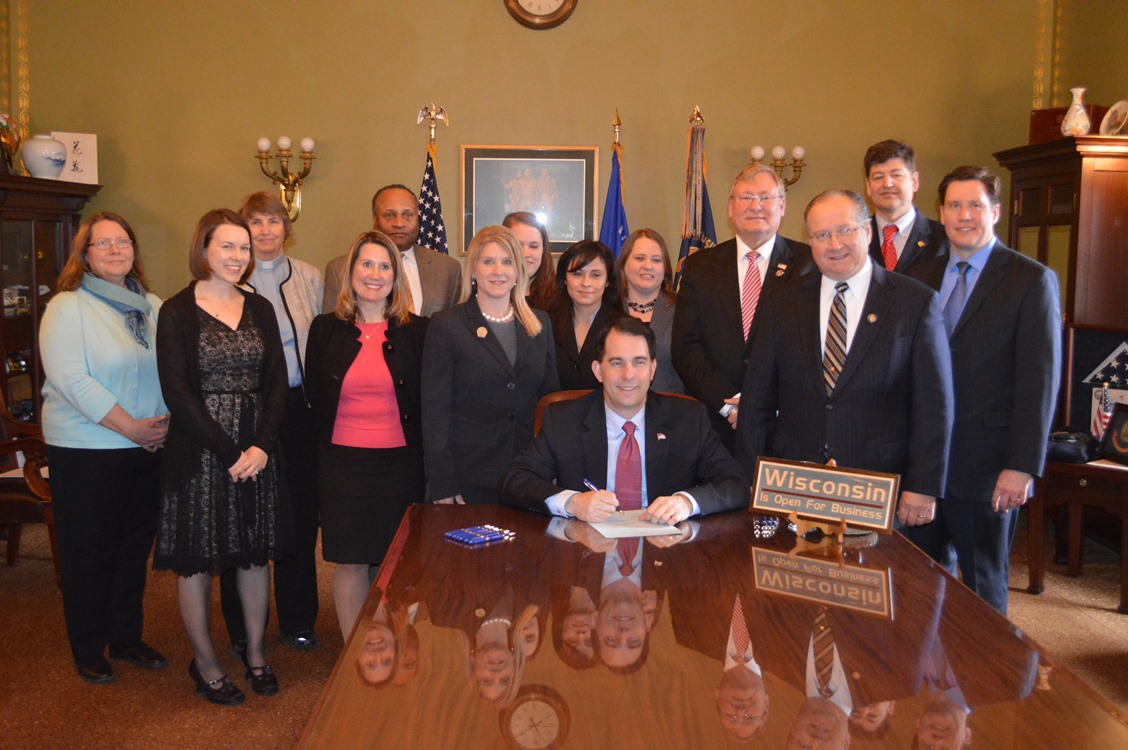
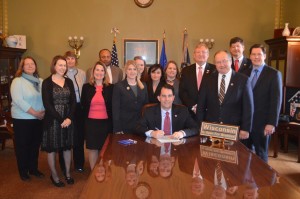
LOPPW staff was present at the governor’s signing of an anti-trafficking bill that we supported.
____________________
What advocacy efforts are going on in your synod or state? We want to hear about it!

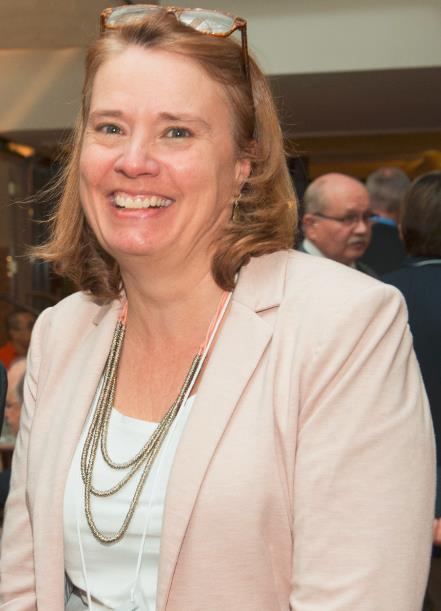 After nearly 10 years of service as ELCA Advocacy director for Environmental Policy and Education, Mary Minette has completed her work with the ELCA Advocacy Office and is moving to a new position.