Lutherans are taking action across the country! Below you will find our monthly State Advocacy Newsletter. Share with your friends!
____________________
Washington, D.C. – Mary Minette, Interim Director of Advocacy
FEDERAL SPENDING DEAL: This month, members of the U.S. House and Senate reached a bipartisan compromise with the White House on a proposed budget deal. The agreement, signed by President Obama just days before a federal default, will set raised budget limits for both defense and non-defense programs for the next two years, while simultaneously avoiding a government shutdown by raising the debt ceiling. We recognize the need to address long-term fiscal sustainability for the wellbeing of critical U.S. social service programs. However, the deal should be praised for reversing harsh and highly inefficient budget cuts, many of which have crippled programs that benefit working families and our most vulnerable neighbors. Though overall funding levels for the whole government have been decided, Congress now must work to pass a federal spending bill for the remainder of the 2016 fiscal year by Dec. 11 to avoid a government shutdown. Watch for upcoming updates and advocacy opportunities on upcoming budget talks in the coming month!
GREEN CLIMATE FUND: The budget deal that passed in late October did not specifically allocate funds for the Green Climate Fund, so it is important that members of Congress, particularly senators, hear from constituents that a final bill to fund the government through the end of the 2016 fiscal year must include the $500 million requested for the U.S.’s initial contribution to the fund. We are working with a broad coalition of faith, development and environmental groups to advocate for the funding as an important aspect of our work to support the negotiation of a strong international climate change agreement in Paris in December.
PATH TO PARIS: Negotiators met for their final session prior to the December meeting in Paris in mid-October, and while 155 countries have so far come forward with pledges to reduce their emissions of greenhouse gases beginning in 2020 as part of the new agreement, many significant issues are still undecided. These include details about financial support for emissions reductions and adapting to climate change in low-income countries, how to differentiate between the responsibilities of large industrialized nations like the U.S. and European nations and those of emerging economies like China and India, and less affluent and less developed countries, and how to deal with long-term losses that countries and communities are unable to manage or adapt to. In addition, non-governmental organizations were shut out of most of the negotiating sessions in Bonn, which does not bode well for a transparent and accountable end to the negotiations in Paris.
WORLD FOOD DAY: On Oct. 16, the ELCA joined millions of people around the world to commemorate World Food Day. This is the time to celebrate the progress we have made in reducing global hunger while also recognizing that much work remains. As part of this effort, we asked our Lutheran community to take action to ensure that Congress sustains existing food and agriculture programs that fight global hunger. Click here to learn about the ELCA’s engagement in the week leading up to World Food Day.
INTERNATIONAL HUMAN RIGHTS: Last month, the Evangelical Lutheran Church in America joined other faith and human rights organizations for a hearing at the Inter-American Commission on Human Rights, a regional body addressing human rights in the Americas, on the detention of asylum seekers. The ELCA, together with the Mennonite Social Action Committee in Honduras, provided a document outlining findings from our June trip to Mexico on the detention and deportation of young people seeking international protection. This document also outlined specific stories of young people with legitimate asylum claims who had been deported to Honduras from Mexico despite fearing harm. Despite numerous studies outlining the failure of Mexico to protect those seeking asylum, the U.S. government continues to praise Mexican enforcement efforts.
CRIMINAL JUSTICE REFORM: A bi-partisan coalition of Senate Judiciary members recently introduced and passed out of committee S. 2123, the Sentencing Reform and Corrections Act of 2015. This important legislation is the product of intense negotiations between Judiciary Committee Democrats and Republicans. Both sides have credited the faith community for creating the political will to negotiate through our advocacy efforts in Iowa – home to Judiciary Chairman Charles Grassley. Companion legislation has been introduced in the House of Representatives with committee action expected soon. The faith community sponsored two Capitol Hill briefings for staff to hear from faith leaders on the importance and moral urgency for criminal justice reform on Nov. 3.
____________________
New York, NY – Dennis Frado, Lutheran Office for World Community
WOMEN, PEACE AND SECURITY: On Tuesday, Oct. 13, in commemoration with the 15th anniversary of U.N. Security Council Resolution 1325, an open debate on Women, Peace and Security was convened by the Security Council to discuss the further implementation of that resolution. In his opening remarks the secretary-general reiterated that women’s leadership in peace-building is a top priority and shared his commitment to seeing the resolutions implemented. In addition to the secretary-general, Under-Secretary-General and Executive Director of U.N.-Women Phumzile Mlambo-Ngcuka stressed that the most under-utilized tool in peace-building is women. She also introduced the Global Acceleration Instrument on Women Peace and Security and Humanitarian Engagement. This new fund will accelerate the implementation of UNSCR 1325 as well as channel funds to women’s organizations working on peace building. Directly after this opening segment, Resolution2242 was unanimously adopted by the Security Council. It has two key outcomes: The first is that it outlines actions to improve the implementation of UNSC Resolution 1325; the second is proposing a broader Women, Peace and Security agenda, including countering violent extremism, monitoring sexual violence within U.N. peacekeeping forces, increasing the representation of women in governments, and implementing the gender recommendations of a recently released global study.
A GLOBAL STUDY AND A GLOBAL REPORT: On Wednesday, Oct. 14, “Preventing Conflict, Transforming Justice, Securing the Peace – A Global Study on the Implementation of United Nations Security Council Resolution 1325” was officially launched. This study is the product of the engagement of member states, U.N. entities, regional organizations and civil society, including research institutes. Primarily, this study revealed that the ability of women to influence negotiations increased the chances of agreements being reached was positively correlated with greater implementation and had a positive impact on the durability of peace. During this time, Radhika Coomaraswamy, lead author of the global study, expressed her opinions of the recently adopted UNSC Resolution 2242. While she was overall supportive of the resolution, she had serious concerns about the mixing of women, peace and security with counter terrorism efforts. She noted the need for a clear, conceptual difference between the two, and that U.N. intentions toward civilians and military forces cannot be blurred. Finally, on Tuesday, Oct. 20, the U.N. Department of Economic and Social Affairs launched the 2015 edition of the World’s Women Report coinciding with the occasion of World Statistics Day. The speakers at the launch emphasized the importance of presenting empirical evidence that connects statistics and policy making. The report analyzes the status of women based on the Beijing Declaration and Platform for Action areas of concern. It looks at both the progress and gaps over the past 20 years.
MIGRATION CRISIS IN EUROPE: On Friday, Oct. 16, Nicholas Jaech with the Lutheran Office for World Community attended an event organized by the International Peace Institute on the migration crisis in Europe. This event featured Ninette Kelley, director of the U.N. High Commissioner for Refugees (UNHCR) Liaison Office in New York and Vincent Cochetel, UNHCR regional coordinator for the Europe Refugee Crisis. Kelley noted the disturbing reality of the current crisis: 42,500 people are displaced every day and 50 percent of the refugees are children, which is the highest level in decades. She went on to explain that if Europe were to take in the same proportion of refugees as Turkey, the world’s refugee crisis would be solved. Cochetel illustrated the current routes that migrants are taking. The first is from North Africa up through Italy, while others enter Europe via Turkey, which he noted was the more popular route. He noted that the current crisis is not about the number of refugees, but rather the lack of responsibility among European states. As for current objectives of UNHCR in the area, he highlighted the continued effort to reduce loss of life along the migration routes, support efforts to reform asylum structures and 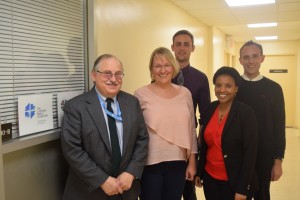 policies in states, maintain strong advocacy surrounding solidarity, and provide a special focus on women and children. To learn more about the ELCA’s efforts in the migration crisis, click here. For a video of the above event, produced by the International Peace Institute, click here.
On Oct. 27, LOWC welcomed Maria Immonen, director of TheLutheran World Federation’s Department for World Service(LWS). In addition to receiving an orientation to LOWC’s work, she had appointments with ecumenical colleagues and staff of the U.N. Office for the Coordination of Humanitarian Affairs where they discussed LWS’ operational field programs in Central Africa and the Middle East.
____________________
California – Mark Carlson, Lutheran Office of Public Policy
 The deadline for Gov. Jerry Brown’s action on 2015 legislation passed on Oct. 11, and LOPP-CA was disappointed in the veto of AB 47 (see previous update) that would have accelerated expansion of state preschool to more children from low-income families. Citing budget pressures in the absence of action by the special legislative session on health care funding, he also vetoed an LOPP-CA supported bill expanding the state low-income housing tax credit, which helps leverage federal credits.
October was busy as LOPP-CA Director Mark Carlson used study leave time to participate in the Parliament of World Religions in Salt Lake City; co-hosted a “Not your mother’s church supper – Celebrating women in energy & climate change” for about 45 participants in 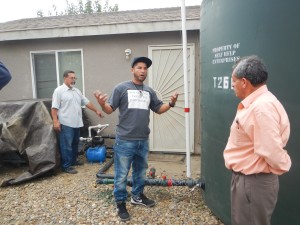 the Behavior, Energy, and Climate Change Conference, with energy scientist and Lutheran Dr. Kristin Heinemeier of UC Davis; and displayed and spoke briefly at the Sierra Pacific Synod Professional Leadership Conference in Monterey.
Following the Sierra Pacific Synod Hunger event on poverty and incarceration, Mark joined ELCA World Hunger staffer Ryan Cumming and two representatives from the Southwest California Synod for worship at Trinity Lutheran, Porterville, and a water tour of East Porterville, an epicenter of drought-induced dry wells. The group accompanied volunteers in delivering water to homes, talked with families, and viewed pumps purchased with an ELCA World Hunger grant that brings water from portable tanks into homes.
____________________
Colorado – Peter Severson, Lutheran Advocacy Ministry Colorado
 AFFORDABLE HOUSING: Lutheran Advocacy Ministry-Colorado was present at the 2015 Housing Colorado Now! Conference in Beaver Creek, meeting with policy-makers and other affordable housing advocates to develop strategies for housing low- and extremely low-income families in Colorado. The critical lack of affordable housing touches all corners of Colorado, and several speakers at the conference addressed issues anticipated in the next legislative session of the Colorado General Assembly, including rental vouchers and a renewal of the state Low Income Housing Tax Credit.
ECONOMIC SECURITY: Groups working on legislation dealing with families living in poverty have begun meeting in anticipation of the 2016 session. In particular, LAM-CO has been working with the Colorado Center on Law & Policy as well as the All Families Deserve a Chance coalition to prepare an economic security agenda for the session. Issues that may come up include paid family-and-medical leave, child care for low-income parents in college programs, and a major alteration to the state hospital provider fee, which could secure hundreds of millions of dollars in funding for education.
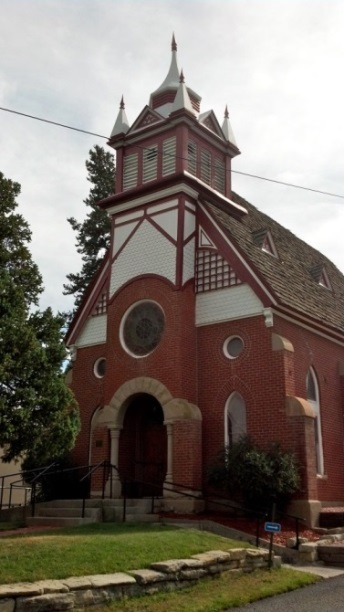
CONGREGATION VISITS: Director Peter Severson has been on the road visiting congregations all over the state. Pictured here is Zion Lutheran in Trinidad, whose pastor is the Rev. Andrea Doeden. The building is 125 years old and is listed on the National Register of Historic Places as “Zion’s German Lutheran Church.” Built in an eclectic Victorian Gothic style, it’s the oldest Lutheran church building in Colorado!
____________________
Illinois – Jennifer DeLeon, Lutheran Advocacy Illinois
STATE BUDGET: Illinois is now entering its fifth month without a budget! Lutheran Social Services Illinois our partner agency is not receiving funding for a variety of programs that serve some of the most vulnerable people in our communities, including home care for seniors, residential substance abuse treatment, and mental health services. They are doing all they can to keep providing services but they need a state budget now! Please call or write a letter to Gov. Bruce Rauner and to your state legislators by clicking here, asking them to work together to pass a budget now!
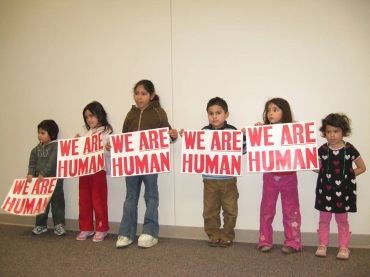 ELIMINATION OF POVERTY: Lutheran Advocacy-Il is part of the Illinois Commission on the Elimination of Poverty. The commission is an independent body focused on eliminating poverty in our state in a manner consistent with international human rights standards. As such, the commission’s charge is twofold: 1) To create and monitor a specific, substantive, measurable strategic plan for cutting extreme poverty in Illinois; and 2) To offer advice and comment on state matters that may positively or negatively impact the state’s goal of ending poverty. Studies show that suburban poverty is growing in Illinois. In October the commission held public hearings around the state and we were able to hear directly from advocates and clients served by a broad section of suburban programs. Members of the public had the opportunity to provide their feedback and inform the work plan of the Commission. Click here to learn more about the commission.
____________________
Minnesota – Tammy Walhof, Lutheran Advocacy Minnesotatammy@lcppm.org
PAYDAY LENDING REFORM: Over the summer, the StarTribune ran reports investigating campaign contributions to state legislators by payday lenders. Embarrassment seems to be opening legislators to reform discussions. With the Joint Religious Legislative Coalition, Minnesotans for Fair Lending and Trinity Lutheran Church, LA-MN is working on a payday education event scheduled for Thursday afternoon and evening, Dec. 3.
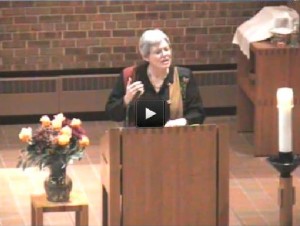 AFFORDABLE HOUSING/HOMELESSNESS: The lack of affordable rental housing is one of Minnesota’s greatest challenges, reiterated at a recent event with Julian Castro of the U.S. Department of Housing and Urban Development, and U.S. Rep. Keith Ellison. LA-MN continues to educate about homelessness, affordable housing, and impacts on food security.
Nativity Lutheran Church (St. Anthony) hosted a weekend conference, benefit concert, and worship services based around concern for homelessness.Tammy Walhof (LA-MN) participated and was guest speaker for all five worship services.
CLEAN POWER PLAN: LA-MN is doing presentations around coal’s impact on health and the benefits of the Clean Power Plan. The encyclical by Pope Francis helps offer alternative paths into discussion. LA-MN is also part of an effort with other faith groups across the Midwest doing “climate conversations.”
IMMIGRATION: The Northeastern Minnesota Synod Immigration Task Force and LA-MN met with Jodi Harpstead, director of Lutheran Social Services of Minnesota, to learn more about how Minnesota has been less welcoming to immigrants in recent months. LA-MN also helped to facilitate an undocumented immigrant interview by high school students. LA-MN hopes to incorporate the immigration story into our upcoming work.
Facebook Twitter: @LuthAdvocacyMN
____________________
New Jersey – Sara Lilja, New Jersey Synod
LEAMNJ supported Senate bill S2360! The Episcopal Church and the ELCA asked the Legislature to support efforts that reduce violence and keep our communities safe. We called, visited and emailed our senators and prevailed on an override vote. The bill requires local, county and state law enforcement officers to be alerted when people with a history of serious mental illness ask a judge to expunge their record so they may buy a firearm. This bill will provide judges with relevant information regarding a person’s history when they are making important decisions on the expungement of records. It now goes to the Assembly for an override vote after the November elections. Much work to be done!
____________________
New Mexico – Ruth Hoffman, Lutheran advocacy Ministry New Mexicowww.lutheranadvocacynm.org
 Legislative interim work continues as the interim committees work to develop their recommendations for the 2016 legislative session. LAM-NM is closely monitoring the work of the Legislative Finance Committee, which is developing the legislative budget proposal, as well as the Legislative Health and Human Services Committee, which considers legislation affecting low-income people in our state. Interim committees will wrap up their work in early December.
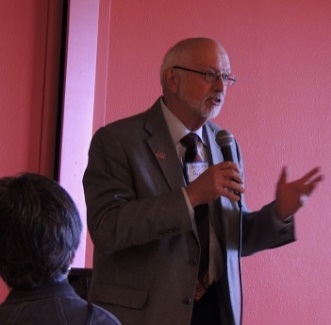 The LAM-NM Policy Committee met on Oct. 24 and adopted the LAM-NM 2106 Advocacy Agenda. The 2016 Advocacy Agenda continues to focus our work on issues addressing policies that can improve the lives of people living in poverty and experiencing hunger.
____________________
Pennsylvania – Amy Reumann, Lutheran Advocacy Ministry in Pennsylvania
Tracey DePasquale, Associate Director
As Pennsylvania heads into its fifth month without a budget, one bright spot is the Legislature’s unanimous passage of the bill to expand the state Housing Trust Fund, which LAMPa’s network has been advocating for two years. Although Gov. Tom Wolf endorsed the bill months ago, LAMPa is asking Lutherans to urge him to sign it so that it doesn’t get dragged under by the budget battle entering its fifth month. Chief among the sticking points is the education budget, for which LAMPa has been advocating increased funding and a formula to move the commonwealth out of its standing as dead last in the country in terms of equity.
Director Amy Reumann preached, taught and celebrated advocacy in the Northeastern Pennsylvania Synod, where policy council members hosted a fundraiser for LAMPa and a dinner to honor local advocates. She also engaged Lutherans around the state to testify at hearings on the Clean Power Plan and attended the annual meeting of Pennsylvania Interfaith Power & Light.
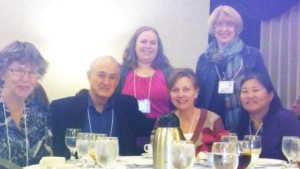 Associate Director Tracey DePasquale met with policy staff in the Department of Education to discuss trauma-responsive education and ways to build a statewide coalition to enact policy that reflects best practices. She also taught an adult forum at Christ Lutheran, Gettysburg, about disparities in education and as part of a series on inequality.
LAMPa staff brought together immigration advocates including Lutheran Children and Family Services at a state conference on Welcoming Communities and a Lower Susquehanna Synod information session for refugee resettlement to encourage advocacy on immigration.
As a follow-up to the National Youth Gathering, LAMPa staff participated in RiseUp York — a weekend service, learning and advocacy immersion youth retreat organized by the Lower Susquehanna Synod. Both synod and LAMPa staff hope to duplicate this experience and curriculum for other communities.
____________________
Southeastern Synod, Georgia – Hilton Austin Jr.,
Two members of the Southeastern Synod Advocacy Team attended the Lutheran Immigration and Refugee Service (LIRS) Leadership Summit in Washington, D.C., this month. Bishop Julian Gordy and Patti Austin, national president of Women of the ELCA, visited several members of Congress, along with other ELCA leaders, to support refugee reform legislation, to call for an end to family detention, and to support increased funding for refugee protection and assistance.
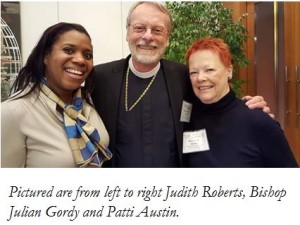 As one of the newest ministries of the Southeastern Synod, we have been busy building our network, organizing, and developing civic and ecumenical partners. We recently added links to the ELCA Advocacy Action Center and the LIRS Action Center to our synod website. We are currently planning an advocacy training event to be held in Atlanta in mid-January; our target date for promoting the training event is Nov. 6.
Our team is organized into various, what we call, ready benches; each ready bench leader develops a network of people who are passionate about a particular issue and remain ready to take action on current state and national legislation as it arises. We currently have three in Georgia, Immigration, Human Trafficking, and Criminal Justice, and two in Tennessee, Health Care and Criminal Justice. We will continue to add ready benches as folks hear God’s call into this important work.
____________________
Virginia – Charles Swadley, Interim President and CEO
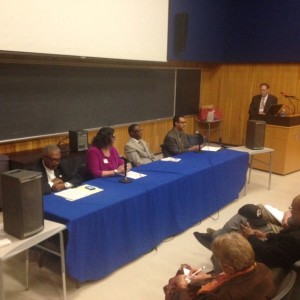 HEALTH CARE: Our Virginia Consumer Voices for Health Care program along with our Hampton Roads and New River Valley chapters recently produced forums in Norfolk and Blacksburg, respectively, titled, Health Care Access: a Moral Imperative. The forums included an interfaith panel of faith leaders, testimonies from those who suffered without health care, and a call to action to local faith communities to care for our neighbors through accepting federal Medicaid funds to close the coverage gap.
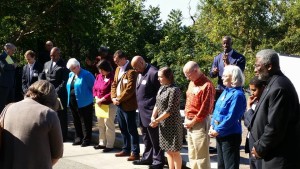 ECONOMIC JUSTICE AND HUNGER: VICPP’s Northern Piedmont Chapter produced a hunger awareness event, Setting the Table: An Interfaith Event on Ending Hunger, at Germanna’s Daniel Technology Center in Culpeper, Va. Center staff and members attended the 2015 Clergy Convocation in Richmond with the theme “Repair the breach, restore the streets.” The center is partnering in a Hunger Summit with the ELCA Virginia Synod and the Virginia Council of Churches, which will be held at Virginia Union University in Richmond on Nov. 18.
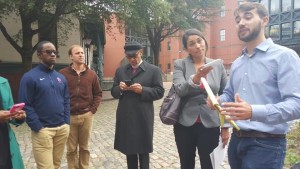 CREATION CARE: VICPP co-sponsored an event with the Chesapeake Bay Foundation titled “Living Waters” to organize statewide advocacy and policy development efforts to preserve clean water in the Chesapeake Bay and its watersheds. Important references to preserving God’s creation were made with many great examples of congregations putting their faith in action through greening programs and advocacy efforts. VICPP joined other creation-care advocacy organizations on the Interfaith Climate Change Impact Tour in Richmond organized by Creation Justice Ministries. VICPP will be propelling creation care from the mountains to the coast in its advocacy action work with congregations this fall.
ADVOCACY TRAINING: Advocacy Training Sessions are being held by our Northern Virginia Chapter in Fairfax and by our Hampton Roads Chapter in Virginia Beach on Nov. 8. Staff is also presenting training “What do we do with the Stranger? A Conversation about Immigration” in Richmond on Nov. 15.
Twitter: @vainterfaith Facebook: www.facebook.com/virginiainterfaithcenter
____________________
Washington – Paul Benz, Faith Action Network
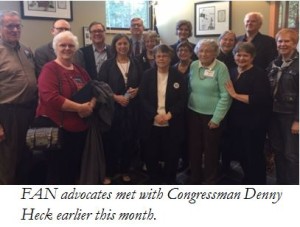 ELECTION: Faith Action Network (FAN) has an annual goal of organizing “interim” meetings between our advocates and their state legislators and members of congress/staff during summer and fall. So far, we have had 24 meetings with state legislators in 14 districts with 113 advocates, and 12 meetings with members of congress/staff from 10 districts with 50 advocates (including bishops).
FAN has also created a one-page description of four current ballot issues (three initiatives and one local proposition) and FAN’s positions on them. To see that,click here.
ANNUAL DINNER: FAN will be having its fifth annual dinner/fundraiser on Sunday, Nov. 15 (click here to see our invite). This year’s theme will be “Yes We Can!” focusing on the faith community’s response to racism and violence post-Charleston. The Rev. Dr. Carey G. Anderson, senior pastor at Seattle’s historic First African Methodist 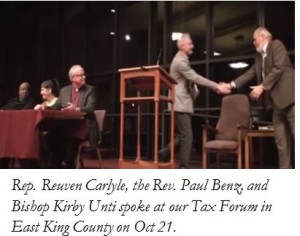 Episcopal Church will be our speaker, and we have invited Jennifer Pinckney (widow of the Rev. Pinckney) of Mother Emanuel AME in Charleston, S.C.
FORUMS ON TAXATION: FAN just completed two forums on each side of our state on the issue of taxation (Washington has the most regressive/unfair tax structure in our nation) with the title “What Kind of State Do You Want to Live In? Conversation and mobilization regarding our regressive tax structure.” A state legislator spoke at each event, and we had a local religious leaders’ panel, which had an ELCA and Episcopal bishop present.
____________________
Wisconsin – Cindy Crane, Lutheran Office for Public Policy in Wisconsin
WORKSHOPS AND CONFERENCES: LOPPW’s director led workshops at First United in Sheboygan, Lake Edge in Madison, and at the Northern Great Lakes Festival of Congregations in Minocqua, where LOPPW also displayed a table.
 SYNOD TEAMS: LOPPW’s director met with Greater Milwaukee’s director for evangelical mission, The Rev. Sandy Chrostowski, about helping to start a hunger team. The director attended a workshop led by the Northern Great Lakes hunger team. LOPPW was involved in recruiting members for a Care for God’s Creation team for South-Central/LOPPW. The team will access World Hunger resources. The director has also met with the senior policy director of Clean Wisconsin about relevant state
  publicpolicy; LOPPW is now on the list of stakeholders for Wisconsin’s Clean Power Plan at the Deparment of Natural Resources. Wisconsin’s government has threatened to not implement any clean-power plan.
ANTI-TRAFFICKING: The director testified at a hearing on the Safe Harbor bill. LOPPW/Cherish All Children’s team in the Northwestern Synod began plans for organizing conferences accessible to people in the LaCrosse Area, Northwestern, East Central, and South-Central synods. Council Member Venice Williams discussed placing a focus on human trafficking for the annual Milwaukee King Day event Venice helps to plan; LOPPW will be a partner in 2016.
____________________
What advocacy efforts are going on in your synod or state? We want to hear about it!

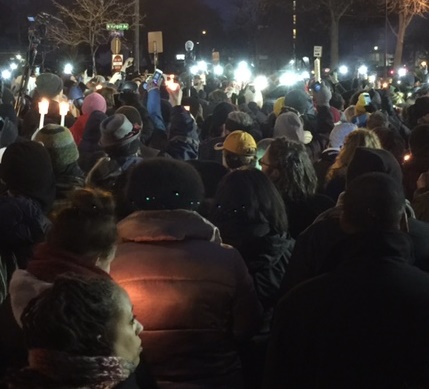 A candlelight vigil on Friday, Nov. 20, in Minneapolis
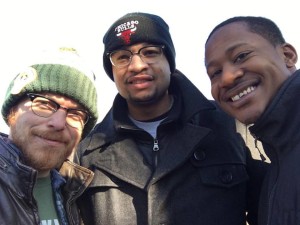 Ian McConnelll, Louis Tillman and Kendrick Dwight at the demonstration outside Minneapolis’ 4th Precinct station
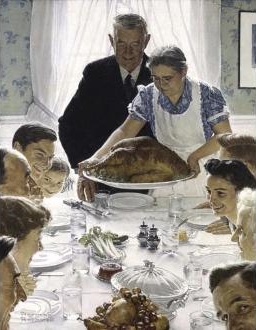 Unfortunately, I think all too often assumed in this gathering of friends and family is the notion that we take a moment to actually be thankful … to take stock of what we are blessed with and how fortunate we are for so much abundance in our own lives – even at times when we live in scarcity. For me, Thanksgiving is a reminder that I may not have everything I want, but year after year, I have everything I need. I am also deeply mindful that my good fortune doesn’t belong to everyone.