———————————————
Washington, D.C.
Advocacy Director, Stacy Martin
 We are a church energized by lively engagement in our faith and life. Informed by our Lutheran heritage and theology, the ELCA works for change in public policy based on the experience of Lutheran ministries and programs in communities around the world. We work to create and influence public policies that embody the biblical values of peacemaking, hospitality to our neighbors, care for creation, and concern for our sisters and brothers facing poverty and struggling with hunger or disease. As we engage with our elected officials in Congress and the administration in 2015, we work with a focus on the following advocacy priorities:
Addressing root causes of poverty and injustice internationally. This year, ELCA Advocacy will work to pass the Food for Peace Act, the International Violence Against Women Act, and will address funding needs for humanitarian relief and promote peace in the Middle East. In 2015, we will improve the treatment of migrants in-transit and seek opportunities to address the root causes of migration in Central America by ensuring policies uphold human rights and dignity. “Our calling to love of neighbor obligates us to act to prevent wars and seek alternatives to them” (ELCA Social Statement, “For Peace in God’s World”).
Caring for all of God’s creation. We look forward to gathering support for a strong Endangered Species Act, working to protect water and air standards, and continuing to encourage a strong and proactive U.S. position in the negotiations for the Paris climate change agreement. “Made in the image of God, we believe that we are called to care for the earth as God cares for the earth” (ELCA Social Statement, “Caring for Creation”).
Standing with our communities facing poverty and struggling with hunger and disease. Advocacy will work to help end hunger by enhancing domestic programs, including reauthorizing the Child Nutrition and WIC Act, supporting older Americans, establishing a sufficient living wage, securing funding for low-income housing, caring for veterans, ensuring a fair tax policy, and reforming education systems. “Out of deep concern for those affected adversely by poverty, we find it a moral imperative to seek a sufficient, sustainable livelihood for all” (ELCA Social Statement, “Sufficient, Sustainable Livelihood for All”).
———————————————
New York, NY
Advocacy Director, Dennis Frado
At the United Nations: This past January, LOWC collaborated on various documentary screenings at the U.N. Church Center and in New York focusing on detention facilities throughout the United States. Students from the University of Maryland visited LOWC on Jan. 16 to learn about the U.N.’s structure and focal points for the work of our office.
Hunger Leadership Gathering: ELCA Advocacy staff from our New York and Washington offices also participated and collaborated with Global Mission and ELCA World Hunger to lead workshops about proposed U.N. sustainability goals and action through advocacy at the ELCA World Hunger Leadership Gathering in San Francisco.
———————————————
California
Mark Carlson, Lutheran Office of Public Policy- CA
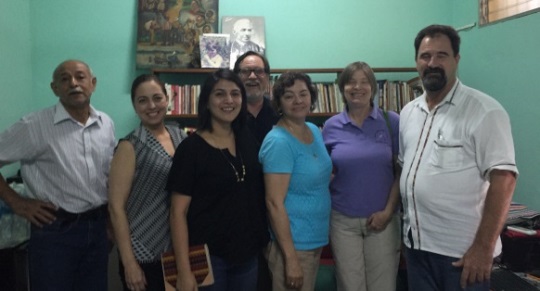 ELCA Hunger Leadership Gathering: The Lutheran Office of Public Policy – CA, as a participant in the Sierra Pacific Synod Hunger Team, helped welcome participants to the San Francisco area, including several advocacy colleagues. LOPP-CA Director Mark Carlson, in cooperation with ELCA World Hunger staff and Oakland congregations, helped initiate site visits and neighborhood walks in Oakland. We walked to the Remember Them monument, and returned to San Francisco past BART’s Fruitvale Station, the location of the Oscar Grant shooting. Later, ELCA Director of Domestic Policy John Johnson joined Mark in Sacramento for the annual MLK365 march, which drew an estimated 29,000 walkers.
Sustainable Development Goals and the U.N. 70th anniversary: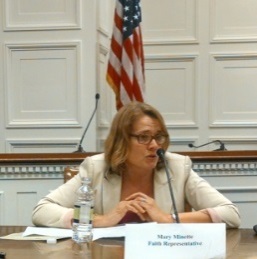 Mark joined ELCA pastors and community representatives in an initial planning meeting for a Swedish church choir visit to California. A focus of the event will be celebration of progress made on the Millennium Development Goals and call to action on the new Sustainable Development Goals.
———————————————
Colorado
Peter Severson, Lutheran Advocacy Ministry – Colorado
Families living in poverty: Lutheran Advocacy Ministry-Colorado Director Peter Severson testified before the Senate Health and Human Services Committee in support of a bill to allow child-support payments from non-custodial parents to “pass through” to the child in cases where the custodial family is also receiving benefits from the Colorado Works program (SB15-012). LAM-CO supports this change to allow children living in poverty to gain the benefit of child-support payments that are owed to them, overwhelmingly used for basic medical, educational and food expenses.
Affordable housing: LAM-CO is supporting a bill to use money from a surcharge increase on county documents for an affordable housing fund administered by the Colorado Housing Finance Authority (SB15-079).
Events: Lutheran Advocacy Ministry-Colorado will host its 2015 Faith Advocacy Day on Feb. 16 under the theme “Homelessness and Justice.” Register by clicking here. Director Peter Severson was present at the 2015 ELCA World Hunger Leadership Gathering in San Francisco to lift up the critical role of advocacy in the domestic work of ELCA World Hunger.
———————————————
Minnesota
Tammy Walhof, Lutheran Advocacy – Minnesota
State Legislature: The Legislature is in full swing with new legislators and with quite a shake-up of several House committees bringing a new rural-urban divide. Perceptions are that rural legislators were left out of all major decisions, so the educational focus needs to emphasize Greater Minnesota. In addition to coalition efforts to educate legislators, Lutheran Advocacy-MN Director Tammy Walhof is working to bring Lutheran advocates up to speed.
Housing/homelessness: At a hearing last week, it became clear there is an effort by some legislators to direct new funding to higher income renters/owners. Lutheran voices focused on “the least of these” will be especially important in this context. In collaboration with Lutheran Social Services and Catholic Charities, Tammy met Republican Rep. Anna Wills of St. Paul. She agreed to be lead author of the House Homeless Youth Bill.
Clean energy and jobs campaign: Efforts are underway to secure lead authors. Lutheran Advocacy – Minnesota was a key player with other partners in planning Clean Energy Day at the Capitol on Feb. 2 at Christ Lutheran on Capitol Hill (location of Lutheran Advocacy – Minnesota).
Payday lending: We are building from previous efforts.
Upcoming advocacy days: Thursday, Feb. 19 – Lutheran Bishop/Legislator Breakfast and Lutheran Pastor’s Day for Advocacy Day; Tuesday, March 10 – Day on the Hill with Interfaith Partners (Joint Religious Legislative Coalition).
———————————————
Nevada
Legislative forum on MLK Day: Lutheran Episcopal Advocacy in Nevada held the first legislative forum event on the Martin Luther King holiday to learn about issues that will be coming up in the 2015 legislative session. James Hardesty, chief justice of the State Supreme Court, was the featured speaker. He gave credit to the faith community for its advocacy in past years for rehabilitation and re-entry programs, saying it has changed the culture at the Nevada Department of Corrections. Other speakers spoke about the needs of the hungry in our state, education, and the continued need to work for the rights of all minorities in Nevada.
Backpacks for a cause: Also on the holiday legislators joined in the “Backpack Challenge.” Legislators were allowed to pack school supplies for Title 1 schools in their respective districts. The challenge was designed to demonstrate to legislators that our schools need proper funding. Supplies came for donations by member churches and a special price break from an office supply company.
———————————————
New Mexico
Ruth Hoffman, Lutheran Advocacy Ministry – New Mexico
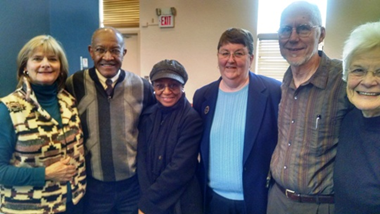 Commitment to hunger: The legislative session is off to a rocky start as the Republicans took control of the state House of Representatives for the first time in over 60 years. The first week was taken up with reorganization of the House and the House standing committees. LAM-NM has been working to introduce our work to the many new House members.
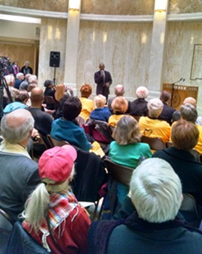 Prayers for leaders: On opening day, LAM-NM Director Ruth Hoffman joined other faith leaders in offering prayers for the people of our state and for elected leaders to have the political will and courage to stand with our many neighbors living in poverty and hunger. Ruth was also invited to join faith leaders in an informal conversation with the Rev. James Forbes about the nature of and need for public witness.
———————————————
Pennsylvania
Amy Reumann, Lutheran Advocacy Ministry in Pennsylvania
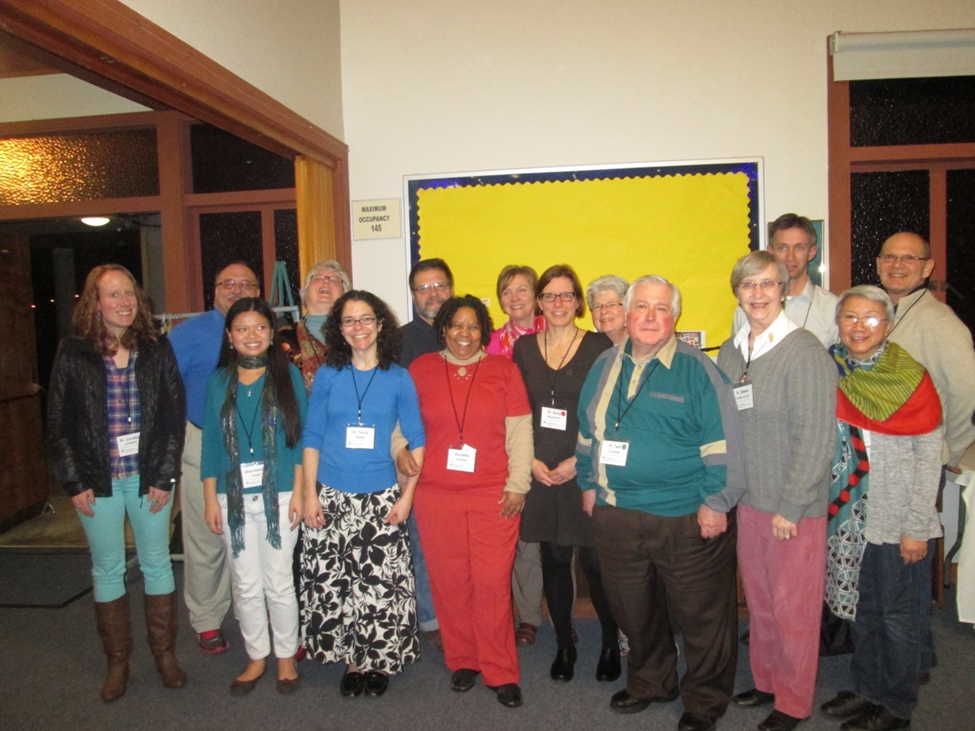 ELCA World Hunger Leaders: LAMPa staff met in San Francisco, including a dinner with Pennsylvania hunger leaders (pictured), where six synods shared the effort in their part of the state and learned how we can collaborate, connecting our work, particularly around the churchwide Day of Service and Advocacy.
Education: LAMPa advocates called lawmakers for a statewide day of action on education funding. LAMPa voted as part of the Campaign for Fair Education Funding on a proposed formula as recommendation. LAMPa Associate Director Tracey DePasquale met with the incoming governor’s policy director to advocate for trauma-informed education and later traveled to Glade Run Lutheran Services to see work they are doing in education with victims of childhood trauma.
Immigration: Amy addressed an Immigration Forum at Trinity, New Holland, and Tracey met with a York County commissioner about funding for an immigration detainee visitation program.
Hunger: LAMPa staff met with leaders of Hunger-Free Lancaster County about the church’s leadership in hunger work. We met with the new chair of the House Housing and Urban Affairs Committee about expanding the state Housing Trust Fund. LAMPa is partnering with social ministry organizations in an access to benefits training in Philadelphia.
———————————————
Virginia
Marco Grimaldo, Virginia Interfaith Center for Public Policy
Little agreement in legislation: Virginia is in the middle of a 45 day legislative session and so far very little legislation has been agreed to. While there is an agreement in principle for the governor’s budget amendments to the biennial budget, the bills we support, including raising the minimum wage, making Virginia’s Earned Income Credit refundable, and a range of bills to offer protection from predatory lending and gun violence, have had a much more difficult time.
Day for All People: On Jan. 20, 2015, we hosted 250 advocates, including 90 leaders supporting just immigration policies, who visited with legislators as part of our Day for All People advocacy day. Many had previously met with their legislators prior to the session and now returned to stress their support for specific bills.
Synod-wide Childhood Hunger Task Force: Bishop Jim Mauney of the Virginia Synod has convened a Childhood Hunger Task Force, and we are supporting him in his work to call other faith leaders to address policies that will help hungry children. Bishop Mauney now serves on the Governor’s Commission to Close the Nutritional Divide. We were also pleased to recently work with Bishop Mauney on an article for the Richmond Times Dispatch’s editorial page.
———————————————
Paul Benz, Faith Action Network
FAN-WA is busy in the third week of a 15-week legislative session. Here are some of the key issues we are working on this month:
Reducing wealth inequality: A Wage Theft package of four bills: wage recovery for employees, anti-retaliation protections, employee misclassification by the employer, triple damages/penalties for unscrupulous employers. A minimum wage bill would increase the minimum wage to $12 in four years.
Education for inmates: Lifting the state prohibition on the Department of Corrections to use public funds for post-secondary educational programming. Currently our state cannot educate inmates beyond a GED.
Immigration: Establish a “bright line” between federal immigration enforcement and local law agencies (county sheriffs and municipal police chiefs). The goal is to reduce federal detentions and deportations – called the Family Unity Act.
Building our networks: FAN is busy with legislative and advocacy forums in eastern and central Washington and the Capital. Our staff will be hosting guest sermons and educational forums at churches in Seattle, Pullman and Spokane, as well as at the ELCA Bishop’s Southwestern Washington Synod Convocation.
———————————————
Wisconsin
Cindy Crane, Lutheran Office for Public Policy in Wisconsin
Bishops and LOPPW: At the beginning of this biennial budget season, all Wisconsin bishops and LOPPW sent a letter to the governor and to each state Senate and Assembly member.
Letter writing on prison reform: At the annual Epiphany Celebration at Redeemer Lutheran Church in Stevens Point, LOPPW gave a presentation and organized a letter-writing table (focus on prison reform for 17-year-old youth). Check out a great letter written by one of Redeemer’s high school students.
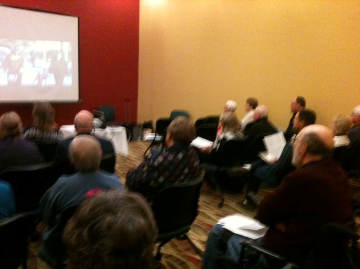 Human trafficking: LOPPW/Cherish All Children’s kickoff event for our Safe Harbor Campaign on Feb. 7 in Menomonie received Eau Claire television coverage. Our task force members, Robbie Joern and the Rev. Diane House (also LOPPW council member) were interviewed. Also, Wisconsin Faith Voices for Justice, Wisconsin Council of Churches and Fierce Freedom are now sponsoring our March rally.
FoodShare and minimum wage: The director is in dialogue with members of the ELCA who work directly with FoodShare recipients who have lost benefits and is planning meetings with representatives to make the problems known and to share our concerns about further barriers placed in front of FoodShare recipients. We will also discuss a drafted bill on minimum wage.

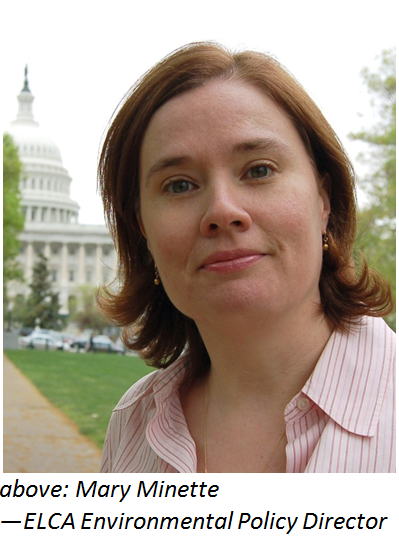 If you’ve been reading the “Living Earth Reflections” I send each month, you probably know that I get a little obsessive about food waste. I lay that at the feet of my depression-era mother, who never had a leftover too small to stick in a little plastic container against some future need. For her to do otherwise would have gone against what she was taught during her childhood. Food was a gift and a blessing, especially in times of scarcity. To waste it was wrong.