
Skip to content
ELCA Blogs

ELCA Advocacy

EPA Clean Power Plan Hearings: Day 1

Mary Minette, Director of Environmental Advocacy

This week, several ELCA Lutherans have testified before the Environmental Protection Agency about the proposed rule to cut carbon emissions from power plants. Together, they affirmed why they believe protecting the earth and fighting climate change is a spiritual and moral issue. From concerned pastors to professors and engaged congregants across the U.S., their testimonies demonstrate why we all should be concerned about climate change.

Rev. Robert Moss, ELCA Lutheran

7/29 Denver, CO Hearing

“For us as Lutheran Christians, addressing environmental concerns is part of what it means to live as responsible caretakers of the earth. We are pleased to join the conversation from an economic, scientific, political, and spiritual perspective, as these are all aspects of joining God in God’s mission of caring for and renewing the earth. I believe that support for the Clean Power Plan Proposed Rule to regulate and reduce carbon emissions is part of our responsibility.

In addition to so many other reasons why this matters, I want to remind you that climate change is already affecting global agriculture, and therefore food supplies and prices. Through no fault of their own, impoverished people, who are the most vulnerable because they rely solely on growing and selling a small crop for daily life, are losing their ability to do so. Alleviating hunger and global poverty are major concerns for me as a person of faith. Carbon emissions directly and adversely affect the hungry and poor we are so deeply concerned about. Continued climate change makes hunger and poverty issues an even larger challenge to deal with.”
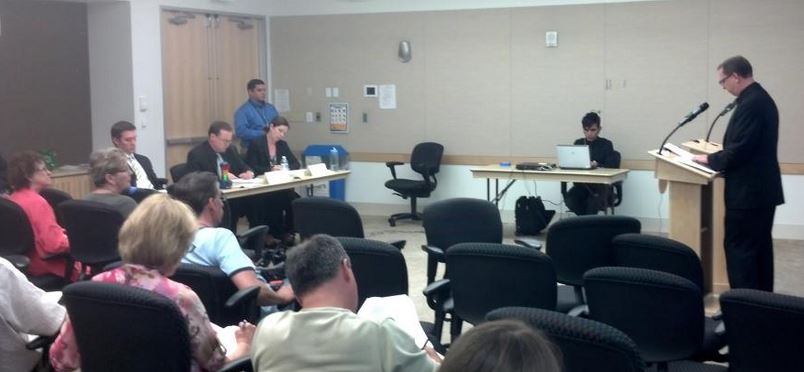
EPA Moss

Rev. Moss testifies before the EPA pannel

Dr. James W. C. White, University of Colorado-Boulder

7/29 Denver, CO Hearing

“…at its core, climate change is a moral issue, and it is to this that I wish to speak. The first moral issue is how we treat our children. We live on a water planet, and again simple physics tells us that it will take decades for the ocean to warm and fully express the climate that goes with our current, high levels of greenhouse gases. This creates an intergenerational inequity. What we do, our children will have to deal with, and what they do, their children will have to deal with, and so forth. We all say that we love our kids. But how do we truly show it? Until one generation can set aside the lure of short-term gains for the long-term profit of our children, the cycle will never be broken. We need to express our love for our children in the very tangible way that this regulation provides. A second moral issue to consider is the disproportional impact that climate change has on the poor, both internationally and here in the US. Poorer nations and poorer people have less capability to adapt to issues such as sea level rise, access to clean water, and access to secure food supplies, as well as dealing with obvious problems such as heat waves and droughts. How do we, the rich, square this with our ethical obligation to those in need? Christ was clear: “…whatever you did not do for one of the least of these, you did not do for me.”

The proposed regulations will not fully address the problems that create the moral struggles we now face. But they are a start, a start that is achievable and promises to break the current stranglehold that keeps us from facing our obligations, both to our fellow humans, and to our God. And let us briefly ponder the moral costs. By taking action we show our love for children and grandchildren, we care for those in need, and we care for God’s creation that He has lovingly provided for us. Not bad outcomes for doing the right thing. So let’s do it.”

​Rev. Edward Wolff, ELCA Lutheran (TN)

7/29 Atlanta, GA Hearing

“What is happening to the earth, and therefore to us, cannot be explained in a brief period of time.  Suffice it to say, briefly:

  • Last April, the average CO2 concentrations in the earth’s atmosphere exceeded 400 parts per million on a sustained basis for the first time in 800,000 years.
  • Thirteen of the fourteen hottest years ever measured with instruments have occurred in this century.
  • A trigger of the civil war in Syria has been identified as the drought from 2006 to 2010, where sixty percent of the farms and eighty percent of the livestock were destroyed.
  • A Pentagon advisory committee has described the climate crisis as a “catalyst for conflict” that may cause governmental and societal collapse.

Honestly and personally, I’m scared, but the fear is not about me.  I will not be here to see the results of a scarred earth if we continue down the same path.  I am concerned for my grandchildren, all seven, and the great grandchildren that will come after.  I am also concerned for this great nation.  Catastrophic events, caused by climate change, can weaken and/or destroy any democracy, for all democracies are fragile, at best.”
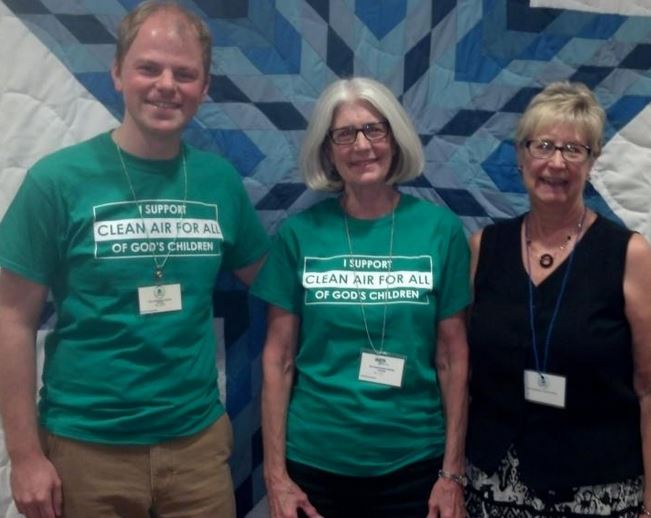
​​EPA2

​You can add your voice to the conversation too! Send your comments to the EPA through our Action Center, and tell them that you support the new Carbon Rule on Existing Power Plants to protect our children’s future! ​

Veterans: Breaking the Gridlock

Rev. Stacy Martin, Director of Advocacy

Isaiah 41:18
I will open rivers on the bare heights,
and fountains in the midst of the valleys;
I will make the wilderness a pool of water,
and the dry land springs of water.

I believe it’s safe to say that hope does not abound in Washington, DC. Partisan gridlock has produced a desert of sorts, for Members of Congress and advocates alike, in which no change can be accomplished and no hope resides. But, as the book of Isaiah reminds us, God’s promises extend far beyond our inability to imagine springs of water bursting forth in the desert.

At a time when many of us considered Congressional compromise a veritable relic, this week a spring of water burst forth from the desert of vitriol and gridlock that has, regrettably, come to define Congress.

On Monday afternoon, Senator Bernie Sanders (I-VT) and Representative Jeff Miller (R-FL), the chairpersons of their chambers’ respective veterans’ committees, announced a $17 billion compromise bill to address many of the problems that appear to affect the U.S. Department of Veterans Affairs (VA). ​

This bill, a compromise between opposing philosophies about the role of government as well as government spending, would allow veterans, who either live far away from VA facilities or who are unable to secure an appointment with the VA within a certain number of days, to access medical services beyond the VA system. The bill attempts to further address the VA’s issues by:

  • Including funding for additional doctors and facilities
  • Extending a treatment program for veterans with traumatic brain injuries.
  • Extending the GI Bill, which would help veterans more easily access and afford college tuition.

The bill appears to be a good first step in ensuring that veterans receive the kind of care that individuals who sacrifice so much should receive. And for that, Sen. Sanders and Rep. Miller should be commended.

However, that the bill was introduced – even after much wrangling – as a bi-partisan compromise is worth more than mere commendation; it is worth celebrating. Rep. Miller commented Tuesday that he expects the House to support it with “a wide bipartisan vote,” and the Senate is expected to quickly sign off on the House’s vote if scheduled quickly enough.

In the desert of impasse and contempt that for too long has defined this town, there is hope that this beacon of cooperation and compromise can extend beyond the VA. Senator Sanders and Representative Miller have given us a long-awaited sip of the waters of cooperation and compromise we have so long thirsted for. They have given us reason to hope. We may still be in the desert, but springs of water are beginning to burst forth.

Living Earth Reflections: Called to Action

Mary Minette, Director of Environmental Advocacy

July 2014

​”We are called to act with justice,

We are called to love tenderly,

We are called to serve one another,

To walk humbly with God.”

                        David Haas, “We Are Called”, Evangelical Lutheran Worship, p. 720

​​​As Christians, we think and talk about what we may be “called” to do out of faith for our families, ourselves, our neighbors and our communities.  You may be called to work against poverty and hunger, and out of that call you might work in a food pantry or send a letter to your member of Congress about cuts to federal nutrition programs. You likely signed up for these emails in part because you feel a call to care for God’s creation.

If you are concerned about the future of God’s creation, and in particular about the threat of climate change to our planet and to future generations, and if you feel called to act out of that concern, this summer offers a number of opportunities to act and to advocate.

Here are just a few:

Send your comments on the EPA’s proposed carbon rule today!  The EPA’s proposed rule will limit emissions of carbon dioxide and other pollutants from power plants, improving public health in our communities and protecting future generations and God’s earth from the threat of climate change.  If you’d like to comment, our action center has tools to help you. If you’d like more information about the rule, here’s a link to fact sheets that may help.

​Write a letter to the editor of your local paper in support of the EPA’s proposed rule (or if you’re feeling really ambitious, write an op ed for the opinion page).  For help in writing a letter to the editor, click here and for fact sheets on the proposed rule click here.  If your letter gets published, let us know!  Send a note to washingtonoffice@elca.org and include a link to your letter if you can.

Sign a global climate change petition.  This September, world leaders will gather in New York City for a Climate Summit in preparation for a year of international negotiations on a new global climate change treaty.  Sign an interfaith petition on climate change asking our leaders to take strong action to combat climate change before it’s too late. Add your voice to a growing chorus of people of faith who are holding our leaders accountable on this critical issue.

Join the People’s Climate March Sept. 21, 2014 in New York City. Join thousands of other concerned citizens marching to ask world leaders to act on climate change.  If you can’t make it to New York, find (or plan) an event that weekend in your own community (here are some tools to help you plan a prayer vigil or other event in solidarity).

Want to learn more about ELCA’s commitment to advocating for public policy that supports the care for creation?  

Visit our website

Like us on Facebook

Follow us on Twitter