Skip to content
ELCA Blogs

ELCA Worship

Arabic Joint Liturgy: Translation and Contextualization

This blog post was co-written by Rev. Charbel Zgheib of the ELCA and Rev. Hakim Shukair of The Episcopal Church. 

Our faith is shaped by our prayer. For Arabic-speaking Christians in the Evangelical Lutheran Church in America (ELCA) and The Episcopal Church, worshiping in their native language deepens this connection. As the number of Arabic speakers grows in the U.S., creating a meaningful Arabic liturgy has become more than a translation task—it’s a vital step toward honoring and empowering faith communities.

The Power of Language in Worship
When Immigrant Christians in the United States pray in their native language, they engage with their faith at a deeper level, allowing worship to resonate in personal and culturally relevant ways. Arabic has become one of the most widely spoken languages in the United States, with over 1.4 million people now speaking Arabic at home, according to Pew Research. [1] Recognizing this, leaders in the Episcopalian and Lutheran traditions saw the importance of translating liturgy into Arabic. This translation ensures that Arabic-speaking members can pray, learn, and connect in a language that speaks directly to their hearts.

The Art and Challenge of Faithful Translation
Effective translation of liturgical texts is more than word-for-word substitution. Literal translations can feel rigid or unnatural, often failing to capture the original essence of the prayers and rituals. Collaborating with Arabic-speaking translators with theological backgrounds and editors who understand church language helped ensure that these translations are not only accurate but also spiritually meaningful.

The main resources used for translation were The Episcopal Church’s Book of Common Prayer and Evangelical Lutheran Worship, particularly focusing on the Eucharist, which is central to both traditions. This careful approach aimed to bring the richness of these texts to life for Arabic-speaking worshipers, crafting liturgical resources that feel at home in their cultural and linguistic context.

A Tangible Outcome: Arabic Resources for Worship
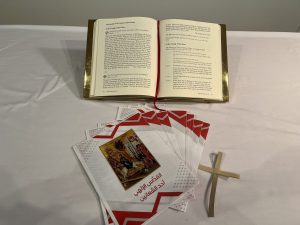
The work resulted in essential Arabic-language resources for significant parts of Christian life and worship. These include:

  • Seasonal Bulletins and Feast Days: Liturgical bulletins for different seasons of the Church year and key festivals/feasts.
  • Life Passages: Liturgies for Baptism, Marriage, and Funerals, which are foundational rites in the Christian journey.

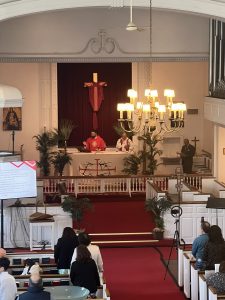
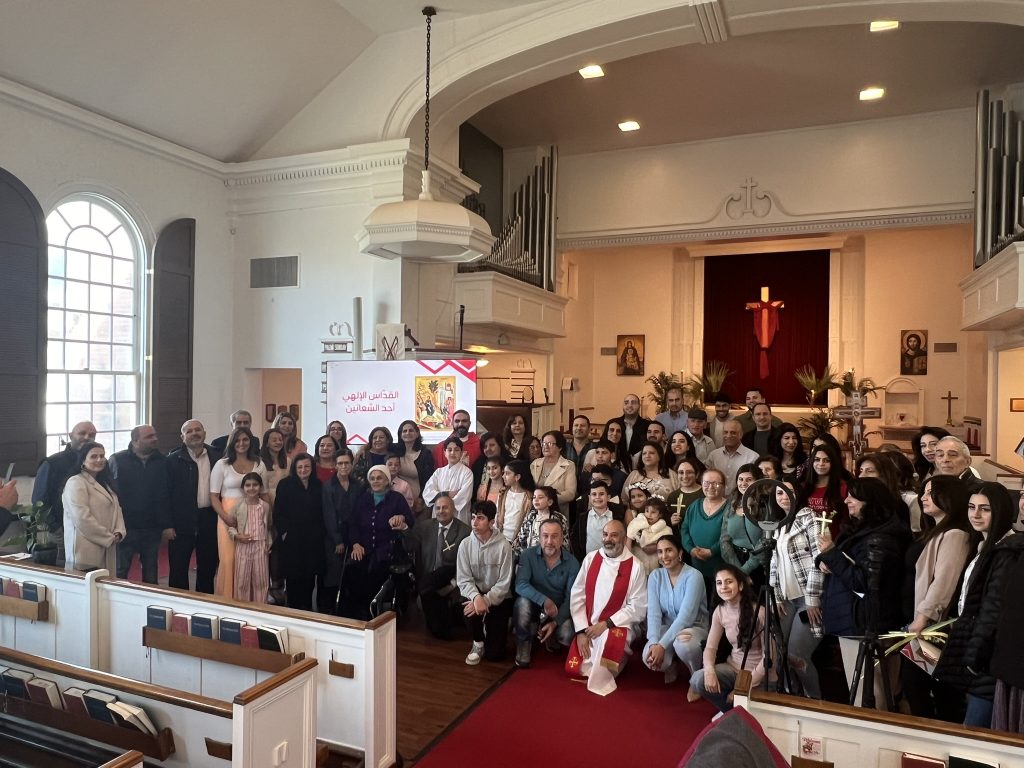
These resources are currently used by two Arabic-speaking communities within the Episcopal and Lutheran churches: Salam Arabic Church in Brooklyn, New York, and Mother of the Savior Church in Dearborn, Michigan. For these communities, having an Arabic liturgy is not only a means of worship but a message that their culture and language are valued within these churches.

Building Bridges Through Language
By investing in Arabic liturgical resources, the Episcopal and ELCA churches demonstrate a commitment to cultural inclusivity. For Arabic-speaking members, this work communicates a sense of belonging and acknowledgment that their mother tongue, traditions, and identity are respected and integrated into the fabric of worship. This liturgical translation project fosters unity, bridges cultures, and makes the Church a welcoming home for all, no matter their native language.

In this way, the Arabic-speaking communities not only receive spiritual nourishment but also find a voice within the broader Church.

The Rev. Charbel Zgheib – Evangelical Lutheran Church in America

The Rev. Halim Shukair – The Episcopal Church

[1] Pew Research Center. “5 Facts About Arabic Speakers in the U.S.” Pew Research Center, May 18, 2023. https://www.pewresearch.org/short-reads/2023/05/18/5-facts-about-arabic-speakers-in-the-us/

Worship Resources: Anniversary of the Ongoing War in the Middle East

As we approach the anniversary of Oct. 7, 2023, we remember a day of heartbreaking grief for the people of Israel and Palestine, devastated by Hamas attacks on civilians and by the bombardment of Gaza. Mindful that the people of the Holy Land are still living in anguish and in war one year later, congregations may consider incorporating prayers and laments in worship on Sunday, October 6 or at other times near the anniversary, in public worship or for devotional use at home or in other settings.

ELCA Worship Resource: Crisis in the Holy Land (as PDF).
Also available as a Word Document.
This resource created at the onset of the war includes several prayers and suggested hymns and songs. A model for a Prayer of Lament adapted from All Creation Sings is included that may be especially helpful this week.

Selected Prayers from ELCA Worship Resources

Additional options are included in the above worship resource.
Time of War
Eternal God, whose steadfast love never ends, we ask that you look upon the nations now engaged in war and hasten the day of peace. Look in mercy on those exposed to peril, conflict, sickness, and death; and show compassion to the dying. In your good providence, remove all causes and occasions of war. Incline the hearts of all people to follow the path to peace and concord, that war may cease and the day of reconciliation may come quickly, through Jesus Christ our Lord. Amen. (Prayer Book for the Armed Services, p. 71)
For Peace
You calm and quiet us, eternal God, as a mother holds her children close; all people have refuge in the shadow of your wings. Spread over us the shelter of your peace. Hold before us the wisdom of your cross, where we are drawn to you not by might or power, but by your boundless love and forgiveness in Jesus Christ, our Savior and Lord. Amen. (All Creation Sings, pg. 48)

O God, it is your will to hold both heaven and earth in a single peace. Let the design of your great love shine on the waste of our wraths and sorrows, and give peace to your church, peace among nations, peace in our homes, and peace in our hearts; through your Son, Jesus Christ our Lord. Amen. (Evangelical Lutheran Worship, p. 76)

Petition for the Prayers of Intercession
O God, as war in the Holy Land rages, we pray:
For all trapped by blockades…
For all living in fear of attack…
For all in need of basic necessities and their safe transport…
For those who are hospitalized and all who provide care…
For all who search for safety elsewhere and are separated from loved ones…
For children surrounded by confusion and chaos…
For those consumed by the lure of terrorism and control, that they are filled with compassion for all people…
For the difficult work of diplomats, world leaders, and international organizations in this prolonged conflict …
For the longing of people of different faiths to live together peaceably…
For all grieving those who have died…
Other intercessions related to the crisis in the Holy Land may be added.
In your mercy, receive our prayer.

Prayers from The Evangelical Lutheran Church in Jordan and the Holy Land

Prayer for Peace
God of peace, we pray for an end to violence in our world. We bring to you our hope that human rights, justice, and your love will triumph, and that power, destruction, and death will not have the last word. On the one-year mark of the war in Gaza, we pray for an end to massacres and destruction. In the name of your son, Jesus Christ, bring your healing spirit upon your children of Palestine and Israel, that all who live in your Holy Land might know true justice and the peace that passes all understanding. We ask this in your holy name and find hope in the resurrection always. Amen.

Prayer for Justice
God of justice, we pray for safety for those living in times of war. As the church we are your hands and feet in this world. Bring to our hearts and minds the courage to speak out against injustice. Give us the strength to break down the walls that divide us and help us build tables long enough for all. We pray for world leaders, that hearts may be changed, and international law and human rights may be upheld. In Palestine and Israel, we pray that justice may be reached, so all throughout the region can live in peace. Amen.

Prayer for ELCJHL Congregations
God of comfort and strength, we pray for the faithful Palestinian Christians of the Evangelical Lutheran Church in Jordan and the Holy Land. We ask that you give them “sumud,” steadfastness, in this time of incredible sorrow in their communities. Bless the pastors who are shepherding congregations in this unimaginable situation. Bring your comforting spirit to all, that they may continue to worship, minister, and above all remain steadfast in your Holy Land. Amen.

Prayer for Education
God our protector, we pray for the teachers, students, and staff of the educational ministry of the Evangelical Lutheran Church in Jordan and the Holy Land. Bring safety and security to those who seek learning. Protect students who must cross checkpoints to reach their schools and bring your spirit of peace to those who cannot access schools at all. We pray for an end to the violent targeting of educational institutions, and we lift up our hopes for a world where all children can learn and grow in safety. Amen.

Worship Resources from Partners

Churches for Middle East Peace resources for a “Solidarity Sunday”
On Sunday, October 6th Churches for Middle East Peace and its 35 member denominations and communions call upon congregations in the U.S. and worldwide to pray for peace in Gaza and the broader Middle East as part of Solidarity Sunday. Resources to shape Sunday include prayers, worship, liturgy, and other aspects of Solidarity Sunday services, including videos from Palestinian Christian voices in the region and are varied, allowing each community to shape their Solidarity Sunday around their own traditions and commitments. This day of prayerful solidarity and calls for justice comes just as we prepare to mark the one-year anniversary of the horrific October 7th attacks and subsequent bombardment of Gaza.

Churches for Middle East Peace Ecumenical Online Prayer Service on October 7
Join Churches for Middle East Peace at 2:00 PM EST on October 7th, for a communal space of worship, lament, and prayer.

The Southeastern Iowa Synod Sumud working group and Pastor Peter Pettit have developed worship resources for use on Sunday, October 6. They are available on the synod worship page.

Global Sunday of Mutual Flourishing
A call for all Christian ministers to join in centering Mutual Flourishing this October 6.

Additional Information

A Church Festival to Celebrate the Goodness of Creation?

This blog post is written by Dr. Benjamin M. Stewart. Stewart is Distinguished Affiliate Professor of Worship at the Lutheran School of Theology at Chicago and pastor to Emmanuel Lutheran Church in Two Harbors, Minnesota.

A view of Assisi the day before the Feast of Creation Ecumenical Seminar began in March 2024

A view of Assisi the day before the Feast of Creation Ecumenical Seminar began in March 2024


With growing mainstream awareness of environmental crises, several experiments with a liturgical “Season of Creation” have emerged. Now, a significant ecumenical movement is championing the inauguration of a liturgical “Feast of Creation” to be shared across Eastern and Western branches of Christianity. The possibility of the new festival is being discussed by church leadership in the major global denominations and is being considered for introduction as part of the commemoration of the 1700th anniversary of the Council of Nicea in 2025.

The potential new feast would likely be associated with the time between September 1 and October 4, already observed by some as a season of creation. The dates have ecumenical significance: September 1 is the beginning of the Orthodox liturgical year, and in recent decades the date has become associated with care for creation among the Orthodox. It has even more recently been adopted as a day of prayer and action for creation by the World Council of Churches and the Roman Catholic Church – though usually without a liturgical celebration. October 4th is the commemoration of St. Francis of Assisi, one of the most popular occasions on the church calendar associated with care for creation.


Photo of the in-person participants at the Feast of Creation Seminar in Assisi, March 2024

Photo of the in-person participants at the Feast of Creation Seminar in Assisi, March 2024


An ecumenical conference – with participation by LWF and ELCA theologians – convened in March 2024 in Assisi, Italy, to study the possibility of a new liturgical festival of creation. (A report designed for wide readership about the conference and next steps is available online here as a PDF.)

There was considerable enthusiasm at the Assisi conference for the new ecumenical festival. Some ongoing questions included:

  • How would the potential feast balance the emphases on creator, creation, and creation’s woundedness/healing?
  • What would the festival be called? (e.g. “The Feast of Creation” or “The Feast of the Mystery of Creation” or “The Festival of God the Creator,” etc.)
  • Would the date of the festival be associated with September 1st or with the September equinox, a day of global balance between light and darkness? Would the festival be marked on a precise date or the Sunday following?
  • Which scriptural themes – and specific readings – should anchor the festival? (This is where the first question above gets very real!)
  • How might the festival be introduced in the relatively short time before September 2025, and to what extent is ecumenical consistency important in the introductory process and in the liturgical practice of the feast?

It is worth remembering that our existing chief festivals already include creation themes at their heart: the chief gospel reading at Christmas is John 1 (“In the beginning was the Word”), and the first reading of the Easter Vigil is from Genesis 1 (“In the beginning, when God created the heavens and the earth”). As early as Justin Martyr some Christians have noted that every Sunday is a feast of creation as much as it is a feast of the resurrection:

“We hold this meeting together on the day of the sun since it is the first day, on which day God, having transformed darkness and matter, made the world. On the same day Jesus Christ our savior rose from the dead.” (1 Apology 67. Translation in Lathrop, Holy Things, 45.)

The most recent feast to be introduced ecumenically was Reign of Christ / Christ the King, in response to rising fascism in the 1920s (though it was only adopted by Western churches). The possibility of a new Feast of Creation being inaugurated across the global church in both Eastern and Western Christianity holds profound theological promise – even as it too comes at another moment of global crisis.

ELW Christ. Sundays and Seasons.

“Drawn In! Moving Out!” at the 2024 ELCA Youth Gathering

Created to Be

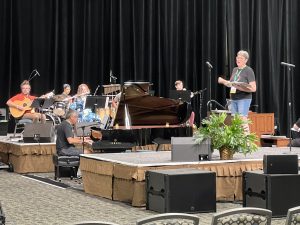
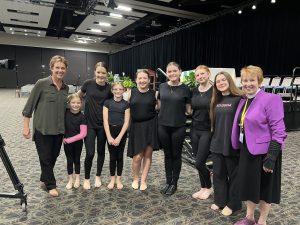
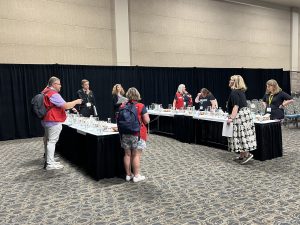
At the 2024 ELCA Youth Gathering where the theme “Created to Be” inspired young people to be their brave, free, authentic, disruptive, and discipling selves, there was a place in the Interactive Learning space that invited them to be “Drawn In! Moving Out!” It was an absolute joy to once again bring the vision of a worship learning experience I brainstormed in 2016 to life for the 2024 ELCA Youth Gathering in New Orleans. We staffed the booth with an incredible team from the ELCA Worship Staff, Lutheran Summer Music, the Association of Lutheran Church Musicians, and the ELCA Spiritual Renewal Team.  

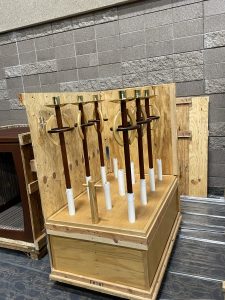
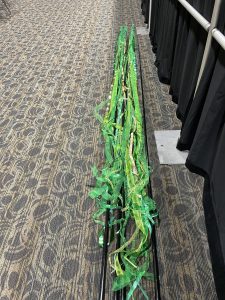
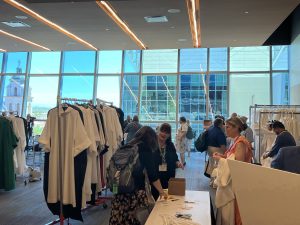
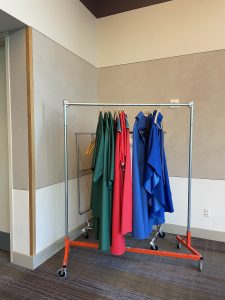
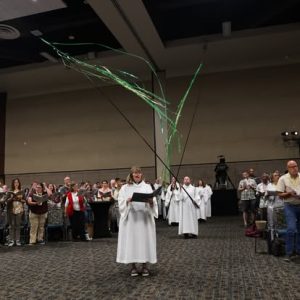
Activities included the ever popular “Acolyte Olympiad” with new competitive categories for pastors and bishops. The “Vestment Photo Booth” was, once again, a youth favorite as we witnessed so many young people seeing themselves in church leadership no matter how many silly poses or creative vestment combination choices they made. In the “Music Corner,” (where we always clap on 2 and 4), youth could show off their musical skills or learn how to use a new percussion instrument. We even had a few spontaneous hymn sings! The ELCA Spiritual Renewal Team brought new ways to pray with fun things like Jenga, coloring, and labyrinths. Before youth left our area, we encouraged them to grab a button to write their own dismissal with the encouragement to take them home and use them in worship. Additionally, we had a baptismal remembrance table, information about Lutheran Summer Music, and even the tall twirly poles with ribbons to try out. 

Welcoming Youth Fully

Worship belongs to everyone; it is our collective work to glorify, praise, pray, and receive the love and grace of God. The goal of this space was to welcome youth in and give them permission to try everything. From wearing vestments to learning a new way to sing a familiar hymn, we welcomed exploration and encouraged youth to claim their place in worship both at the Youth Gathering and at home. Youth love to help and should be encouraged in their gifts to be fully part of worship wherever they find themselves.

I thank the team that came together to make it happen even when travel snags had us working late. The team included John Weit, Jennifer Baker-Trinity, AJ Olson, Omaldo Perez, Lawrence Clark, Becca Ehrlich and myself. I do hope we will get to it again! 

 With gratitude,
Annemarie Cook
Interim Pastor
Prince of Peace Lutheran Church, Marlton, NJ

All Creation Sings Resources for Time after Pentecost-Autumn, Reformation, and All Saints


As you make plans for worship in the autumn months, consider the following ways to explore All Creation Sings.

Time after Pentecost-Autumn

Sing “God’s Work, Our Hands” (ACS 1000) on September 8 in worship or at other congregational service events. Set to the tune EARTH AND ALL STARS, singers will readily learn this new text by Wayne Wold. Learn more about the hymn at https://elca.org/dayofservice.

Explore the many creation-care activities in Kids Celebrate Creation. This is especially fitting if your congregation is focusing on care for the earth leading up to the commemoration of St. Francis on October 4.

Read or re-visit the 2020 Augsburg Fortress blog post, “The Animals Will Teach” for more creation-themed song ideas in ACS.

Reformation

Sing one of two short songs based on Psalm 46 as a psalm refrain on Reformation Sunday: “Though the Earth Shall Change” (ACS 1035) or “Be Still and Know” (1083). The verses of the psalm can be sung on a tone or spoken by all or a leader(s) while the whole assembly sings the song as a refrain.

Introduce two new songs with reformation themes, “By Grace We Have Been Saved” (ACS 1006) and “Born, Reborn.” (ACS 956). The introductory videos will assist you with learning and teaching in your context.

Teach your choir a setting of “God Alone Be Praised.” (ACS 1023).  Commissioned for the 30th anniversary of the Association of Lutheran Church Musicians and the 500th anniversary of the reformation, this anthem setting includes a part for the assembly and violin. You can listen to it as well.

All Saints

Learn the hymn “Death Be Never Last.” This video provides an introduction. If you’d prefer to have a choir sing it first, consider this anthem arrangement. Find additional anthem suggestions for several hymns in All Creation Sings in this curated PDF.

Remember a loved one by purchasing copies of the pew edition in their memory. What a gift it is for people of all ages to open a hymnal, read the name of a fellow child of God, and be connected to the community of saints through song.

Familiarize yourself with several prayers in ACS that address loss and times of transition (see pages 52–55 in the pew edition). As we remember those who have died or those near death, these prayers can give us words when we are struggling to name what is on our hearts.

Consultation on Common Texts April 2024 Update

worship bibleThe Consultation on Common Texts (CCT) is a joint American and Canadian ecumenical body that is responsible for the Revised Common Lectionary, a schedule of biblical passages read on Sundays and major feasts in congregations of multiple denominations in North America and other parts of the world. The ELCA is one of more than 20 member denominations.

The CCT held its annual meeting in April. See the full press release below. Of note is continued work on Anti-Jewish interpretations in the common lectionary. The CCT conversation is one way that the ELCA continues to respond to a synod resolution to Church Council to consider such matters (see II.A, pg. 7 in the attachment). Several ELCA resources are available to help guide worship planners and preachers in navigating these important concerns. Preaching and Teaching “With Love and Respect for the Jewish People” is available from the ELCA Consultative Panel on Lutheran-Jewish Relations. An essay titled, “The Jews” in John’s Passion, was published in the 2020 edition of the Sundays and Seasons worship planning resource from Augsburg Fortress. This essay includes an emended translation of the passion according to John for use on Good Friday. This essay and emended text are available both on SundaysAndSeasons.com and on ELCA.org.

The Consultation on Common Texts Press Release

April 16, 2024—The Consultation on Common Texts (CCT) concluded its annual meeting at St. Andrew’s United Church, Bloor Street in Toronto on April 16.  The Consultation is a joint American and Canadian ecumenical body that is responsible for the Revised Common Lectionary, a schedule of biblical passages read on Sundays and major feasts in congregations of multiple denominations in North America and other parts of the world.  Denominations and church bodies represented at the recent meeting included the Anglican Church of Canada, Canadian Conference of Catholic Bishops, Cooperative Baptist Fellowship, Evangelical Lutheran Church in America, Evangelical Lutheran Church in Canada, Mennonite Church Canada and Mennonite Church USA, North American Lutheran Church, Presbyterian Church (U.S.A.), The Episcopal Church, The United Church of Canada, The United Methodist Church, and United Church of Christ.

The CCT received a draft statement about the use of passages of Scripture in John and Acts of the Apostles that have historically been used to justify discrimination and violence against Jews; a further draft of that statement is expected in August and will be circulated to member denominations for comment.  The CCT also established a committee to consider lessons for a feast celebrating God’s work in creation. The idea of such a festival, proposed by the Ecumenical Patriarch Demetrios in 1989, has gained support in recent years from western churches.  An ecumenical seminar held in Assisi earlier this year endorsed the idea of adding such a feast to the Church calendar, but inclusion of the festival will be dependent on the actions of individual denominations.

The CCT heard reports on use of the Revised Common Lectionary and on the activity of member denominations in relationship to worship. It learned that a recent project, the Revised Common Lectionary: Expanded Daily Readings is scheduled for print release this summer; it increases the number of daily lessons to include a psalm and three other biblical readings, matching the Sunday pattern.  The CCT also elected the Rev. Dr. Eileen Scully as Treasurer for the CCT in Canada and elected representatives to the English Language Liturgical Consultation (ELLC), an international body composed of representatives of churches in the English-speaking world.

Finally, the CCT celebrated the work of Dr. Fred Kimball Graham, who has been a participant in the CCT for 35 years and was one of the drafters of the Revised Common Lectionary.  Fred announced that this year would be the last meeting in which he would be able to participate in person,  but indicated that he would join in later meetings remotely.

The CCT meets in person annually. Next year’s meeting is scheduled for Louisville, Kentucky on April 7th and 8th.

Deacon John Weit, Executive for Worship represents the ELCA on behalf of the Presiding Bishop to the CCT. Deacon Jennifer Baker-Trinity, Program Manager for Worship Resource Development is also a member of CCT in her joint role with the ELCA Worship team and 1517 Media/Augsburg Fortress.