Skip to content
ELCA Blogs

ELCA World Hunger

Reflections on the 2017 U.S. Conference on AIDS


December 1 is World AIDS Day, an important time to learn, advocate, and pray. It is a time to celebrate how far we have come in the fight against HIV and AIDS – and how far we have yet to go.

This September, six ELCA Young Adult delegates, supported by ELCA World Hunger and Lutheran Campus Ministries, attended the United States Conference on AIDS (USCA) in Washington, DC. The USCA is a key event for activists, medical professionals, non-profits organizations and others to learn about the latest challenges and opportunities in the fight against HIV and AIDS. ELCA delegates heard from leaders in a variety of fields and engaged in conversations around connections with their faith. Below, Yen Tran and Richard Adkins, attendees at this year’s conference, share their reflections on the event.
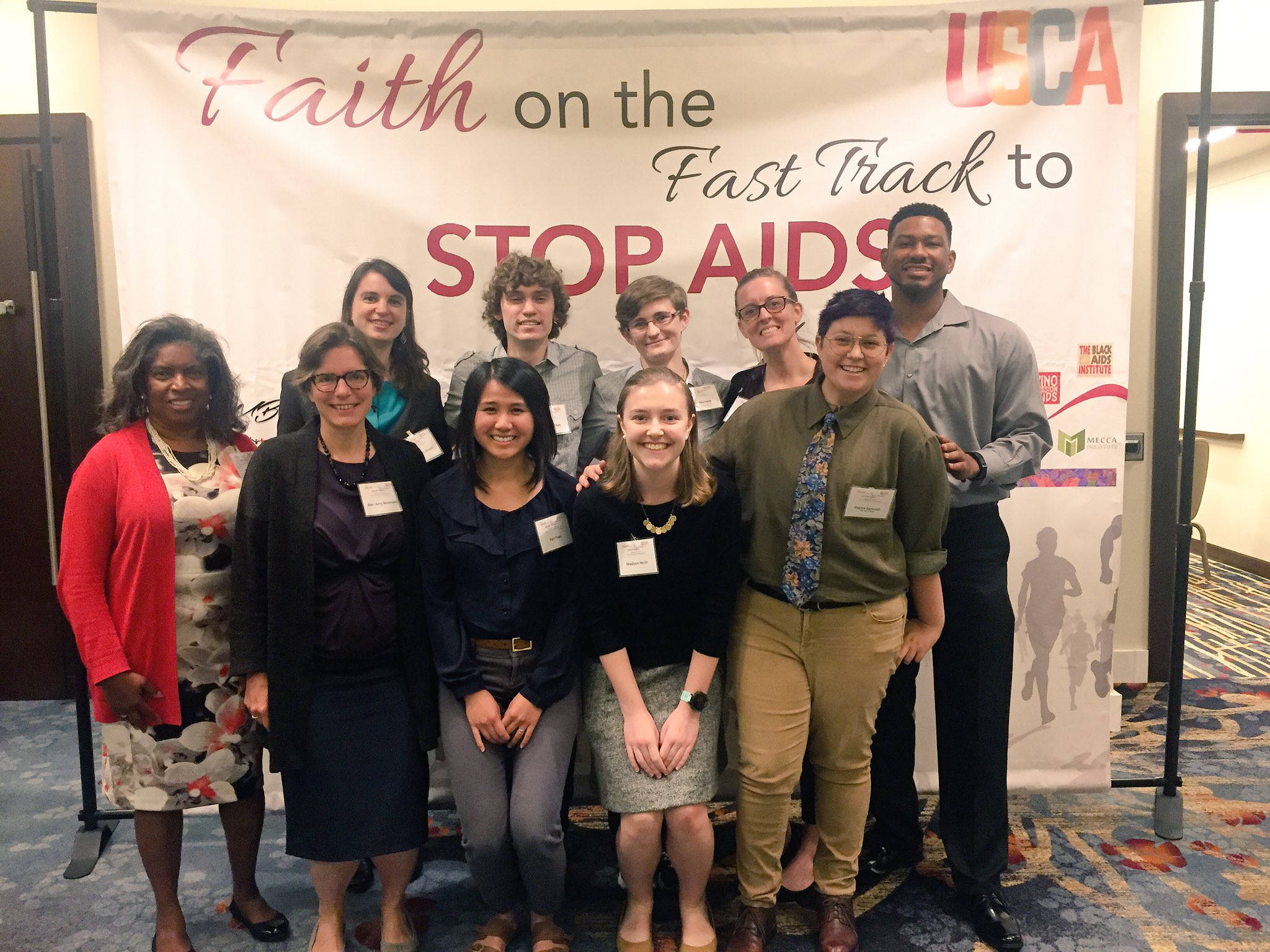
ELCA staff and delegates at the United States Conference on AIDS

Richard Adkins – “The stigma is real”

Richard Adkins has over 10 years experience involved in HIV and AIDS. He has led numerous workshops around stigma reduction. He has been a member of the ELCA’s Young Adult cohort, an ambassador for ELCA World Hunger, and a youth delegate for the 2014 International Aids Conference.  

One of the most dangerous obstacles in the fight against HIV and AIDS is stigma.  Yes stigma. The medical treatment of the disease has come a long way and HIV is no longer the death sentence it was in the early 1980s. In fact, the United States Centers for Disease Control and Prevention (CDC) recently agreed with the science from the U = U campaign, that if a person is on treatment and virally suppressed, they cannot transmit the virus. The medical community has provided the knowledge and treatment to keep people alive and reduce the spread of HIV.

Antiretroviral therapy (ART) preserves the health of people living with HIV…When ART results in viral suppression…it prevents sexual HIV transmission. CDC, 2017

Despite these medical advances, the rate of annual infections only decreased 10% in 2014.  What is the reason? Stigma.

Stigma is a mark of disgrace associated with a particular circumstance, quality, or persons. The stigma surrounding HIV is unique in that part of it comes from the history. In the early 1980s and 1990s, people were dying, little could be done, and little information was known about the disease. The stigma also comes from how it’s transmitted, through injection drug use and through bodily fluids exchange through sex, both highly taboo subjects. The population that HIV disproportionally affects are gay males and people of color, so HIV is further stigmatized through homophobia and racism. There is an intersectionality of stigma experienced that can be made worse by race, class, sexual orientation, gender identity and/or other factors.

The cycle of stigma is a vicious one that can reinforce negative beliefs and behavior. HIV stigma leads to discrimination, which can affect the ability of people living with HIV to find work or housing, which in turns contribute to a lower self-esteem. This can even cause a person to avoid doctor’s appointments, which leads to poorer health outcomes and more stigma. The stigma is then reinforced through negative or false beliefs or even stigma from enacted laws. The end result of stigma is that fewer people get tested, and those living with the virus live in secrecy and silence.

If stigma feeds on shame and isolation, the key to overcoming stigma, is community and understanding.  It starts with information, knowing how the virus is transmitted and how it is not. The next step is acknowledging HIV. The United States currently ranks 9th for most people living with HIV at 1.1 million people. These are people in our communities, in the same neighborhoods, attending our faith communities, the same schools. They are often in the shadows for fear of not being accepted and of facing discrimination. Ending stigma means seeing people for more than their status, and creating a safe and welcoming environment for all.

Yen Tran – “We Are Family”

Yen Tran is a Public Health Professional. She implements sustainable practices and promotes healthy living environments for the St. Paul Public Housing Agency in Minnesota. She enjoys collaborating with diverse populations, who have a common mission to flourishing equitable communities. Yen resides in Wisconsin with her partner, who is an ELCA Pastor for North Beaver Creek Church.

This upbeat, make-you-want-to-groove song by Sister Sledge, was played continually throughout the U.S. Conference on AIDS. Community members from across the country have united for more than two decades now at these important events. The annual frequency has transformed the gathering into something like a “family reunion.” A time to catch up with familiar faces, welcome new arrivals, to share and listen to numerous stories of triumphs, challenges, and hopes, and to be re-energized in the mission to end to this HIV and AIDS epidemic.

Reunions of any sorts always stir a spectrum of emotions. Whether it’s feeling excited to reconnect with distant friends or feeling dreadful to encounter new faces or re-encounter a particular person who drove you to the edge. During the reunion, I experienced both ends of the spectrum. I felt nervous, excited, amazed, saddened, disappointed, hopeful, empowered, and many times, hangry when I didn’t get a snack in between the workshops. However, at the end of this particular reunion, I felt overwhelmed with love and filled with inspiration.

As a Midwestern, first-generation, Asian-American, Catholic, cisgender, ‘negative-status’ person, I was welcomed open-armed into this diverse family. I felt privileged to be trusted and to hear personal struggles of how the social, environmental, and political systems have hurt or failed to protect the most vulnerable populations. I saw how various determinants of health, such as education, economic stability, society, access to health care, and the physical environment, have tremendously impacted a persons’ mental and physical well-being. Though there were many lessons I learned from the stories shared, but these three facts have blown me away:

  1. There has been immense progress in medicine (like PrEP[1]) to help a positive-status person prevent the transmission to their partner(s), and innovative technology has improved access to health centers and resources.


  1. Social stigma has been one of the primary culprits in hindering the end to the HIV and AIDS epidemic.


  1. There are unjust laws that have incarcerated many populations based on their health status. Policies need to be re-evaluated, adapted, and implemented to prevent and address inequities.

Overall, the conference created a sanctuary, an environment that was inclusive and encouraged all voices to be heard. A community where I felt so at home. It would be wishful thinking that all communities – schools, workplaces, spiritual centers, healthcare clinics, public centers, etc. – can be just as inviting and supportive. I know not every community (and not every families) may have similar priorities, support systems, resources, values, and policies that may promote such environments.

However, we are equipped to learn open-mindedly, to love unconditionally and to listen humbly to diverse perspectives. We can set aside our differences or claimed identities and realize that we are not perfect human beings. We do wish to do good, to be valued and for our voices to be heard. Most importantly, we have the ability to unite as a family and to uplift each other.

The missions to end epidemics, stigmas, and inequities are attainable:

Here’s what we call our golden rule

Have faith in you and the things you do

You won’t go wrong, oh no,

This is our family jewel….

WE ARE FAMILY!

Yen and Richard at USCA

[1] https://www.cdc.gov/hiv/basics/prep.html


Congregational Resources for World AIDS Day 2017


Today’s post is from Megan Neubauer, Program Associate for the ELCA Strategy on HIV and AIDS. This post originally appeared on the ELCA Worship blog.

Spirit of the living God, you breathe on all that is. You lead us from the places of pain and difficulty to your cool living waters of health and wholeness. Through you every tear is wiped away and we are transformed by your wellsprings of life.

-Litany from ELCA worship resources for World AIDS Day

December 1st is quickly approaching. Each year, this is a day set aside to commemorate World AIDS Day; a day of remembrance, awareness, and commitment to action.

In 2009, the ELCA Churchwide Assembly passed the ELCA’s Strategy on HIV and AIDS, outlining where the ELCA is being called in the response:

  • Called to biblical and theological reflection in community
  • Called to effective prevention, treatment, and care
  • Called to eradicate stigma and discrimination
  • Called to walk with companion churches and partners in other countries
  • Called to advocate for justice
  • Called to build institutional capacity and make strategic choices

The ELCA and each of its members have the opportunity to speak out powerfully against all forms of stigma, discrimination and systemic inequality. Together, we can be affirming communities and engage in open conversations. Collectively, we can raise our voices in advocating for just policies. And as a community of faith, we can begin in worship and prayer.

Coming together on Dec. 1st, or at our usual worship times on Sunday, Dec. 3rd, we join our neighbors around the world as we honor all who have lost their lives to AIDS-related illnesses; we seek encouragement to take bold action; we rejoice in scientific advances in effective prevention, treatment and care; and we are sent out in peace, freed to act.

As we gather this World AIDS Day, remember that on this and every day, we are called to respond.

You can find ELCA Worship resources here. The full ELCA Strategy on HIV and AIDS, along with other resources for World AIDS Day can be found here. You can also stay connected with the ELCA’s Strategy on HIV and AIDS on social media @ELCAHIVandAIDS, and can share what your congregation is planning for World AIDS Day 2017.

We thank you that by the life-giving power of your spirit you bestowed upon us, your people, such gifts as are needed to respond to the situation at hand. Pour on us all that we need to stop AIDS and reach out to everyone affected with compassion, healing and hope.

May we know your call to be leaders in this struggle and employ the courage, wisdom and resources you have given to respond to HIV and AIDS.

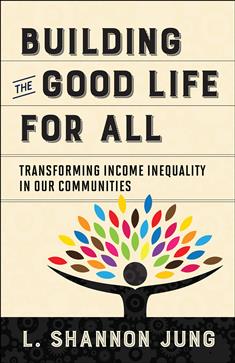
Building the Good Life for All: A New Book from a Familiar Voice


Many folks passionate about hunger issues are familiar with Shannon Jung’s work. He has written extensively on the topics of food and eating from a faith-based perspective. His books include Food for Life: The Spirituality and Ethics of Eating (2004), Sharing Food: Christian Practices for Enjoyment (2006), and Hunger and Happiness: Feeding the Hungry, Nourishing Our Souls (2009). In addition to his perceptive writing on these topics, Dr. Jung is a Presbyterian pastor and professor who has taught at Concordia College (Moorhead, Minn.) and Wartburg Theological Seminary (Dubuque, Iowa) as well as Dubuque Seminary and Saint Paul School of Theology. Below, Jung introduces us to his newest book, Building the Good Life for All: Transforming Income Inequality in Our Communities, available this year from Westminster/John Knox.

We hear a lot about the gap between the economically secure and those just getting by. What we wonder is, “How can we transform this gap in our communities?” We know that this is the sort of neighborliness Christ commended. But still the question: How can we build the good life for all?

Sometimes that neighbor is working hard to get by but seems to be falling behind and going further into debt. Many times, a single expense (doctor’s bill, car accident) will shatter a tight budget and force a family to choose between food or medicine or a house payment. “Getting by” can often be a pretty precarious way to live.

We see the devastation that natural disasters can wreak on vulnerable communities. Yet the income inequality we see now can leave communities vulnerable as well – to hunger, poverty, homelessness, and disease. What can we do about this?

In this new book, Building the Good Life for All: Transforming Income Inequality in Our Communities, the focus in on those who are working but find themselves struggling to get by, including those whose income already leaves them living in poverty.

As I contended in Hunger and Happiness: Feeding the Hungry, Nourishing our Souls, I argue here that our own happiness depends not on the quantity of goods we have stored up, but rather on our efforts to eliminate hunger and to ensure that all have access to the resources for a “good life”. Indeed, our own flourishing is tied into the flourishing of our neighbor. Thus, alleviating suffering and enabling long-term well-being is spiritually uplifting for the receiver, but even more so for the giver.

Building the Good Life for All maintains that our work at enabling all our neighbors to enjoy a good life will enrich our spiritual life. We are interdependent. God creates us like that. Striving to empower all people to have a sufficient and secure life–free from hunger and want–is one step towards recovering what God intended for the world.

This isn’t an attempt to harangue Christians into “doing more.” Instead, the book moves by way of stories from one strategy to another. People and churches are already working to feed the hungry and clothe the naked. They are also engaging in efforts to help people develop skills and abilities that will enable them to feed and clothe themselves. So, what the body of the book contends is that this effort is already underway and that Christians could enrich themselves by joining them or initiating similar efforts in their communities.

The beginning focus is on the specific community of Manatee and Sarasota counties in Florida, but many of the efforts there (advocacy, food pantries, tutoring programs, congregational-based community organizations) have branches around the country. So, the question is, “What fits your community?” There will be other similar efforts in your community. Many of the chapters in the book focus on one of four strategies:

  1. Relief: This is the sort of program that a crisis like a hurricane calls for–feeding the hungry, finding clean water for the thirsty, making sure people are free from illness.
  2. Self-Development: Here, churches can come alongside the working class and poor to assist them to learn English, to learn household management, to develop job skills, to get a job or to get a better job. People are thus able to feed themselves.
  3. Public opinion formation: The church’s hunger ministries are efforts to shape public opinion in such a way as to see hunger as a scandal in the land of the free.
  4. Public policy advocacy: This is the sort of work that ELCA Advocacy does with its partners, including Bread for the World, to influence legislation that will guarantee an income floor for all people and to support the rights of workers. It also includes such efforts as Fight for Fifteen – the movement to raise the minimum wage, and working to make affordable housing more accessible.

I strongly hope this book will be used by adult Christian education groups in churches. Each chapter has a list of discussion questions to spark conversation, and the last chapter encourages churches to develop or extend their own work. It is helpful that the operating assumption is that churches and other organizations are already doing this and the encouragement is to develop efforts that fit one’s own context.

In addition to the discussion questions in the book, there will be a video series to accompany the text, to help facilitate use by congregations.  Building the Good Life for All: Transforming Income Inequality in Our Communities is now available on sale from the Presbyterian Church (USA) store at https://www.pcusastore.com/Products/0664263186/building-the-good-life-for-all.aspx.