Skip to content
ELCA Blogs

ELCA World Hunger

Vocation in a Time of Famine


Mikka McCracken

On February 20, 2017, the United Nations formally declared a famine in South Sudan. According to the UN, 4.9 million people, more than 40 percent of the country’s population, are in need of urgent food, agriculture and nutrition assistance. By July, at the height of the lean season, this number could grow to 5.5 million people or about 47 percent of the national population. One million children are already acutely malnourished.

The declaration of famine means people have already started to die from hunger.

In addition to South Sudan, the UN is warning of looming famine in three other countries, as well: Yemen, Nigeria and Somalia.
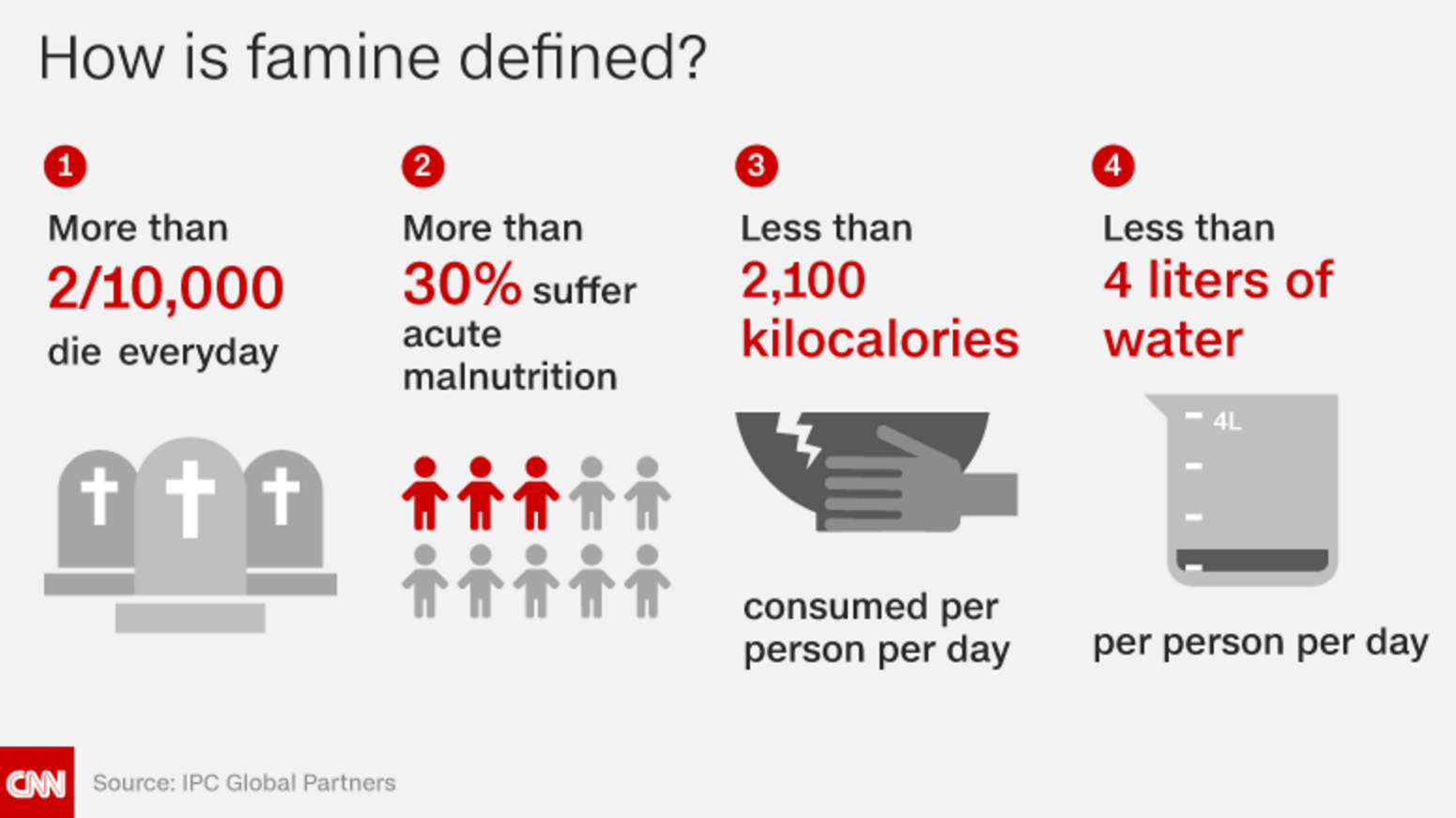
 

CNN/IPC Global Partners

This famine brings up memories of famine seasons past and is interconnected with other challenges in the region. Just last week, the UN warned of the greatest refugee crisis in Africa, the 1.5 million people fleeing the increasing conflict in South Sudan bound for Uganda, which will triple Uganda’s refugee population in just six months.

This weekend, I’m headed to the Sierra Pacific Synod’s high school youth event under the theme verse Psalm 27:14 –  “Wait for the LORD; be strong, and let your heart take courage; wait for the LORD!”

As people of faith, we can take comfort and refuge in this familiar psalm, and yet, we see the ever-present reality of bodily and spiritual hunger. So what are people of faith to do in the “in-between times?”

One of Martin Luther’s many Reformation contributions was to redefine “vocation” as more than just a 9-to-5 occupation. For Luther, according to Swedish theologian Gustaf Wingren, “vocation belongs to our situation between baptism and the final resurrection.” American theologian Frederick Buechner further defines vocation as “where your greatest gifts meet the world’s deepest needs.”

Friends of ELCA World Hunger, what is our vocational call in the face of despair and famine? How might our greatest gifts come to bear to meet the world’s deepest needs? Let us gather, pray, break bread and go out to serve in the many ways God has gifted us — for such a task as this and time as ending hunger.

Mikka McCracken is Director of Planning and Engagement for ELCA World Hunger. This post originally appeared in ELCA World Hunger’s “Go and Do News,” a monthly publication for ELCA World Hunger Leaders.

Rocky Mountain Synod Youth Lead the Way in Reformation 2017 Year

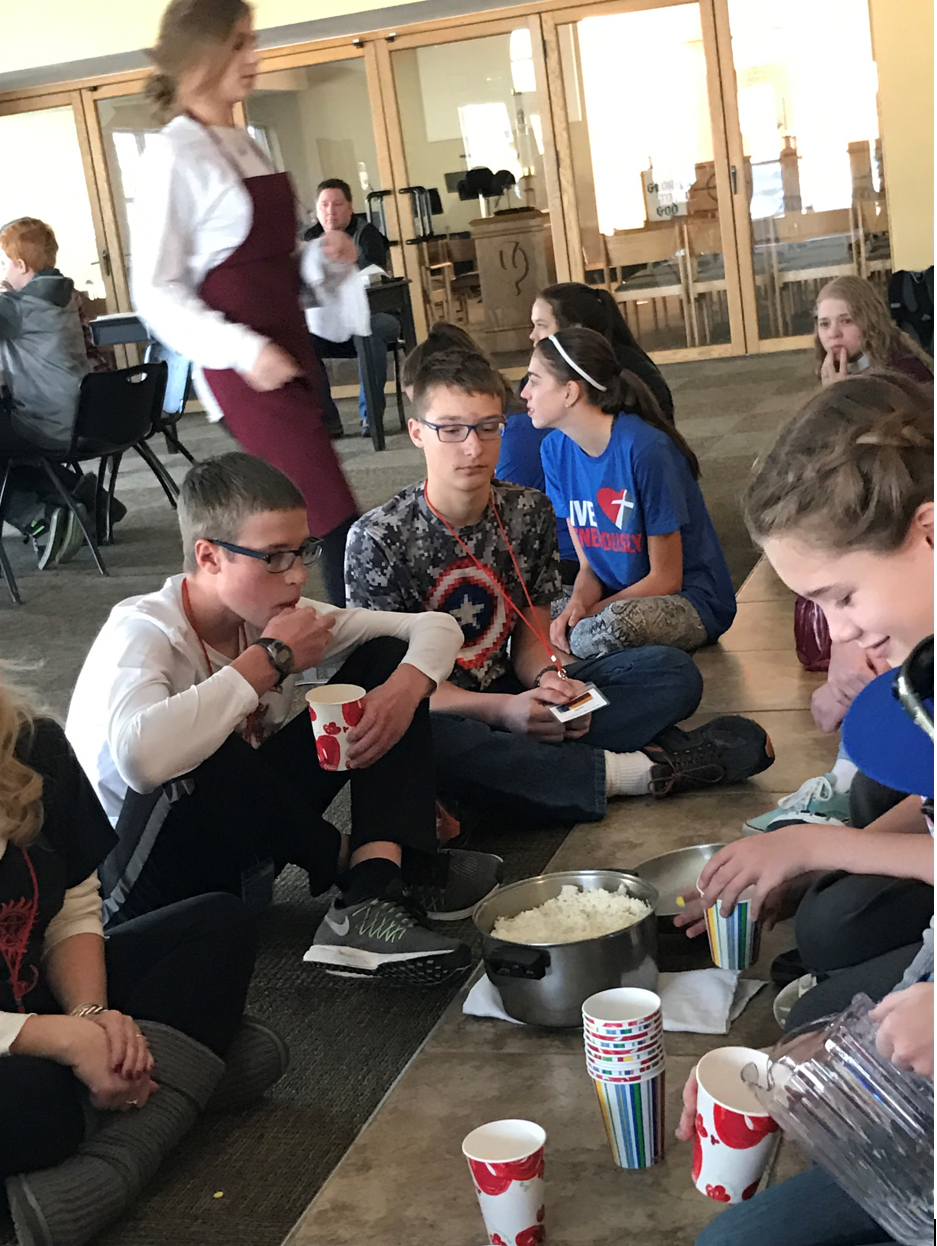
Modeled partially after a similar activity hosted by hunger leaders in the Florida-Bahamas Synod, Rocky Mountain Synod youth participate in a “hunger meal” hosted at Spirit of Joy Lutheran Church in Fort Collins, Colorado.

On a cold January weekend this year, the Rocky Mountain Synod was a buzz with 400 middle school youth, adults and peer ministers gathered for fun, fellowship and formation under the theme “Reform.” From participating in ELCA World Hunger’s “Act 2Day 4 Tomorrow” activities to sharing a hunger meal and food packaging, hunger was at the forefront of the Rocky Mountain “reforms.”

“We put on a hunger meal to raise awareness,” said Sophia, a sophomore and peer minister from Our Saviour’s Lutheran Church in Fort Collins, Colorado.

“The kids are divided into different groups with different social classes, and they get different amounts of food. As you go up [the classes], there are fewer people in each class. I was the cook for the meal,” said Anand, a classmate of Sophia’s at Poudre High School. “I volunteer at the foodbank a lot, and many times, even though they were getting food, it wasn’t always the best or healthiest. That inspired me,” Anand went on to share.

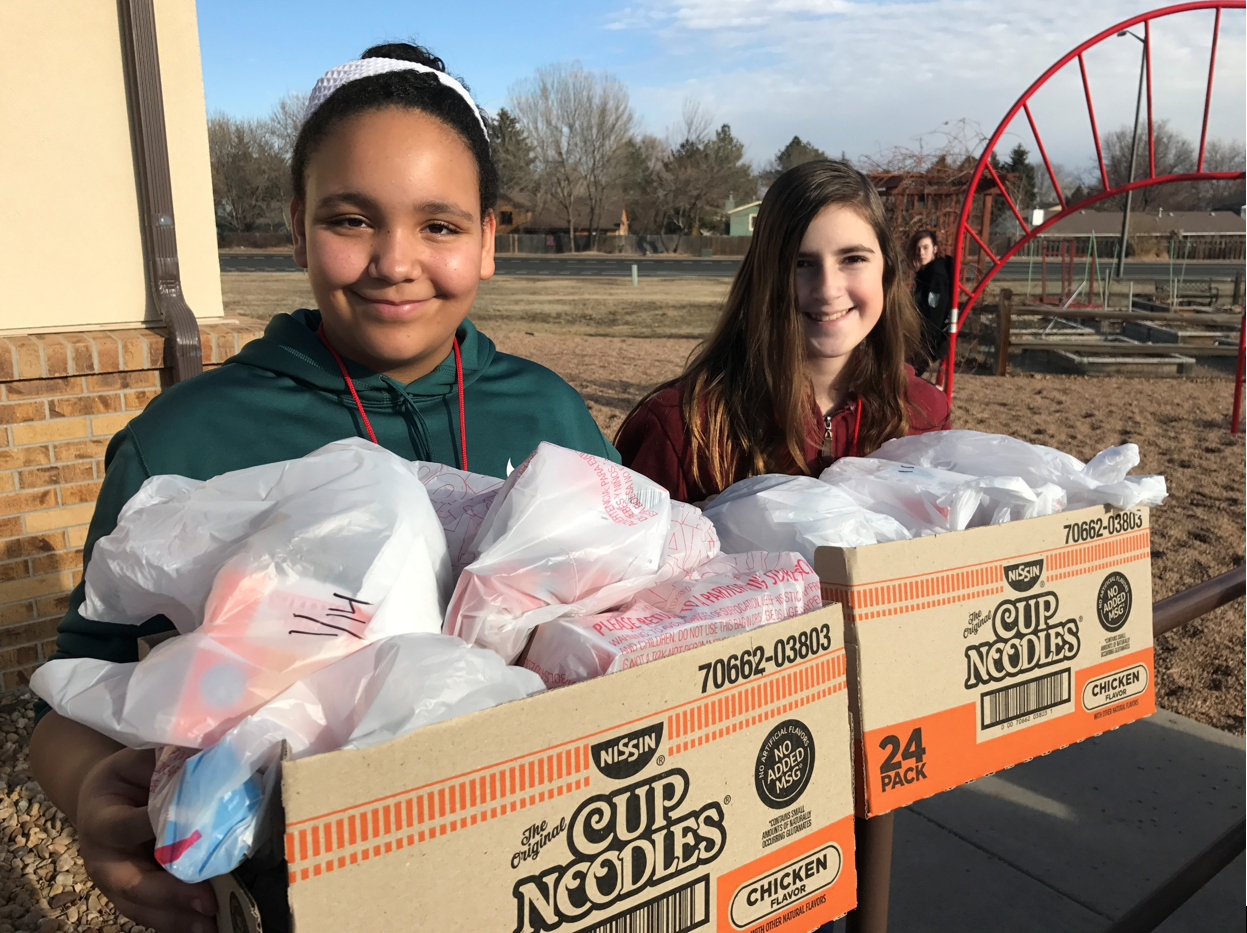
Sophia [left] and Anand [right] are friends from Poudre High School. Sophia is a peer minister and member of the Rocky Mountain Synod hunger team. She and Anand both used their unique skills to raise awareness to end hunger — together.


The youth also took part in packing food kits for local non-profits that help feed people experiencing homelessness and hunger in the area. Rocky Mountain Synod hunger leader Carol McDivitt from King of Glory Lutheran Church in Loveland did the pre-work of calling local agencies and cleared the local food packing projects to make sure the food was usable for the groups.

When asked what message she hopes the hunger meal conveys to the youth, Sophia responded, “I want people to realize that they can make such a huge difference, that they are making a difference. World hunger is being solved; it’s actively being solved. It’s important to remember that even if it does feel hopeless, it’s not.”

Two youth from Lutheran Church of Hope in Broomfield, Colorado, with the prepared packages.

Way to go, Rocky Mountain Synod youth! #untilallarefed


Attitude of an Overcomer

Teen pregnancy is both a personal and a social issue, and teenage mothers often must face personal, psychological effects as well as social stigma.  In the Kakuma refugee camp in Kenya, managed in part by the Lutheran World Federation (LWF), most of the teenage mothers have experienced familial rejection and sexual- and gender-based violence. In the long term, many may also face depression, forced marriage and social rejection.

The LWF child protection department plays a major role in minimizing the factors that lead to teen pregnancy and in working to ensure the well-being of teenage mothers and their children.  The intervention and psychosocial support LWF provides is critical to their safety, health, and wellness. This program at Kakuma is supported in part by ELCA World Hunger.

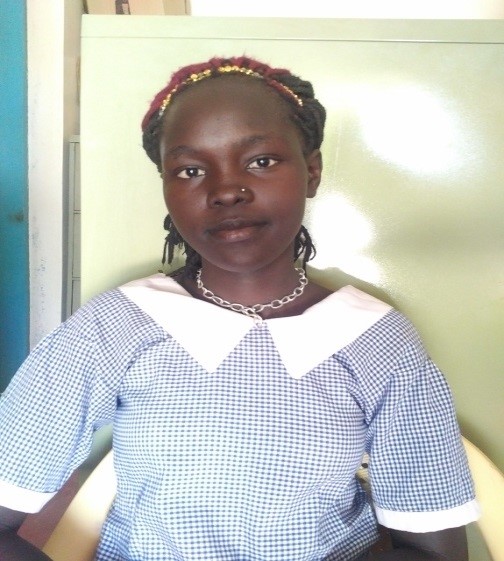
Nyamok was only three years old when she and her siblings fled violence in South Sudan in 2002. They eventually made their way to Kakuma. Nyamok’s older sister, Nyaduk, cared for her until 2014, when Nyaduk left the camp to return to South Sudan.

In 2013, when she was 14, Nyamok was impregnated by a 25-year-old man from her tribe at the camp.  The man ran away after learning about the pregnancy, despite attempts by the community to arrest him. Nyamok faced both the personal effects of sexual violence and the social stigma of teenage pregnancy.  Shortly after finding out she was pregnant, Nyamok dropped out of Unity Primary School in Kakuma, losing hope of ever being able to finish her education.

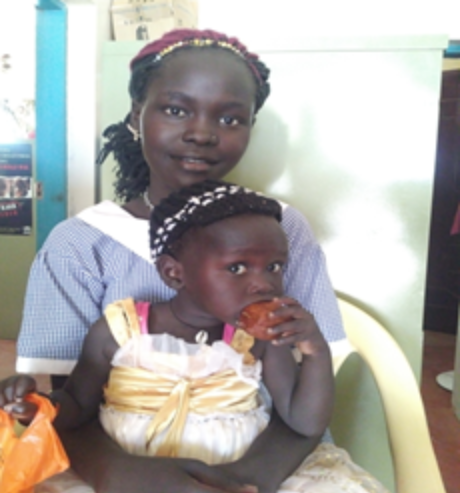
Nyamok received counseling support from LWF Child Protection and enrolled in a support group for teenage mothers. This support helped her feel encouraged enough to return to school in 2015, one year after her daughter was born. Returning to school was not an easy choice. According to Nyamok’s cultural traditions, once a girl is pregnant, she is expected to marry. Nyamok did not marry, though, and faced stigma and isolation from other students her age. Still, she remained determined to continue her education.

In 2016, Nyamok sat for examinations for her Kenya certificate of Primary Education and did excellently, scoring in the top two percent of students. She is now trying to enroll in secondary school to pursue her dream of protecting girls and women as a lawyer.

Because of the support she received, Nyamok can now see a bright future for herself and her daughter. “God has a plan for each one of us,” she says. “I can tell that one’s attitude toward education is an important factor to success.” Her message to other child parents is hopeful: “Many people have gone through many hardships, but they have accomplished in life. You, too, can do that.”

Despite the challenges that refugees like Nyamok face, their resilience and hard work and the support of LWF make it possible for them to thrive. Through the LWF child protection department, ELCA World Hunger continues to accompany Nyamok and other teenage mothers as they pursue their dreams at Kakuma.

Photos: Lutheran World Federation