Skip to content
ELCA Blogs

Faith Lens

January 25, 2026 – Repentance as Fulfillment

Prepare

In today’s gospel lesson we find Jesus “withdrawing” to Galilee. This happens right after Jesus’ temptation in the desert. Jesus often withdraws in order to pray or be alone. This time, we can assume that this is not only a departure toward a new place, but also leaving a situation with Herod that may have been dangerous for him. By Matthew’s account, today’s reading is the introduction to Jesus’ ministry. Pay attention to his movement. What is Jesus up to, and how can we think about this in terms of our own ministry?

When we read scripture (or anything, really), we often imagine ourselves as the main character. There’s a temptation to read and identify as the “good” individuals, consuming good news as if it is the story of our own victory. In some ways, this may be true and helpful in times of deep sorrow. This week, attempt to read the lessons and listen for a story of someone else’s. Think of those in your community who are struggling. Maybe it’s unhoused neighbors you drive by, immigrants who no longer feel safe to go to work or school, or anyone who might be feeling hopeless. Imagine how the scripture this week might read to them.

A note for the closing activity: you’ll need a ball or skein of yarn.

Opening Exercise

Think about a favorite saying, phrase, or quote and share it with the group. Is there a story behind why this stands out to you? How does it make you feel when you hear it? How have these words shaped you or impacted you, and why? Why do you think we are so deeply impacted by song lyrics, poetry, words, or sayings?

Texts to Read Aloud

Isaiah 9:1–4

Matthew 4:12–23

Repentance as Fulfillment

In today’s Gospel reading, Jesus is quite active. Jesus hears, travels, fulfills a prophecy, preaches, walks, calls people into ministry, teaches, and heals. For the author of Matthew, it is important to begin the story of Jesus’ ministry with a declaration of who this ministry is for. Maybe the traveling and Jesus’ call for repentance feel like a few dots on the plot line moving the story forward, but really they are a recalibration for the reader to understand what Matthew is setting them up for.

Professor Eugene Park describes this in his commentary in a helpful way. He explains that, “[w]hen this vision of the ‘Rule/Kingdom of God’ was not realized, and when the earthly rulers, be they Israelite kings or rulers of foreign empires colonizing Israel, abused their power and committed various forms of injustice against the people of God, prophets arose and proclaimed the forgotten vision of ‘What would it be like if God directly ruled?’ In this context, the kingdom of God has an inherently anti-imperial and anti-establishment ethos. It reflects an intense yearning for a sociopolitical order based on the will of God for justice and fairness.”*

In other words, Jesus was not a new king coming to overthrow and then keep business as usual. He was not interested in the status quo of power. Rather, Jesus brought hope and the promise of justice to those who were deep in the despair of injustice. This promise was not just for a specific people, but for everyone.

In the calling of the disciples, we witness a ministry that even Jesus could not carry on alone. We are reminded that on this faith journey, we need others—especially those who experience things differently than we ourselves do. We need their hurts, their celebrations, and their gifts. As Jesus began gathering his fellow leaders, who would continue bringing the “Rule of God,” he did not gather the community’s powerful, but rather their common folk and the often overlooked.

In previous weeks, we read about John the Baptist, who paved the way for Jesus’ ministry, and his call for repentance. “Repent, for the kingdom of heaven has come near”—Jesus not only takes on John’s message, but also makes the shift into ministry. The light that John spoke about is now alight in the land and on the move.

Repent may feel icky or seem strange, but it doesn’t have to be. Consider how it is used in this lesson. It is a call of invitation. Come and follow. Come and join this community. Come and heal. Come and tell the good news. The disciples leave their families and sources of connection to go and start a new community, one that will change the world as they, and we, know it.

Reflection

  • How does today’s reading change your perception of the word repent? Share why or why not.

  • Who is someone, or a group of people, you think might find hope in the Isaiah and gospel lessons?

  • Who might be intimidated by it?

  • If you were to keep this story close to you this week, how might it change your actions?

  • What is something about today’s reading that challenges you?

  • What is something about today’s reading that brings you hope?

Closing Prayer & Activity

For our closing prayer, we’re going to “net” our prayers together. The person who opens will hold the end of the yarn and then toss the ball to the next person. When you receive the ball, you’ll hold the “end” before tossing it to the next person as we “weave,” or make, a net with our prayers.

Three rounds of sharing as prayer:
  1. Something you’re thankful for

  2. A prayer concern

  3. Something you want to be a part of this week

At the end of the prayer, take a look around. We bring all kinds of things with us when we come into places of worship. Some of us bring doubts, and others bring joy. Some of us have had the best week, and others aren’t sure where we will find the energy for another one. When we share the load, and when we allow our joys, sorrows, and hopes to be woven together, we create a web of love that is stronger together. As we go into our week, may we be reminded that we are not alone.

Biography

Ashley Hamel serves as the Director of Discipleship at St. Mark’s United Methodist Church and runs the Young Professional group, The Epworth League, in Houston, Texas. She loves curating spaces of belonging where people can experience their belovedness. When not working, you can find her taking her dogs on walks around the bayou, scoping out antique shops, and taking photos of the beauty in the world around her.

*https://www.workingpreacher.org/commentaries/revised-common-lectionary/third-sunday-after-epiphany/commentary-on-matthew-412-23-7


 

March 30, 2014–Was Blind But Now I See

Contributed by Dennis Sepper, Tacoma, WA


Warm-up Question

Have you ever seen a miracle happen?  What was it and how did it change you or your view of God and/or the world?

Was Blind But Now I See

At 14 years old, Lisa Reid and her family had a hard decision to make.  Lisa had a cancerous brain tumor that was causing her headaches, vomiting and loss of coordination.  Her only choice was a delicate operation to remove the tumor and save her life.  However, as a consequence of the surgery Lisa’s optic nerves were damaged and she became blind.

shutterstock_110721512editDeciding not to let her blindness hold her down, Lisa became a poster child for children with cancer.  She appeared on television shows and in documentaries across New Zealand.  She also made promotional appearances to help raise money for the organization that trained her seeing-eye dog, Amy.

Ten years after her sight was taken away by cancer, Lisa tripped and fell hitting her head on a coffee table and on the floor.  She got up, as she had done before, and went to bed.  The next morning when she opened her eyes she could see the white of her ceiling.  Looking around she saw light shining through the curtains and then she looked and saw her beloved dog Amy.  Lisa’s sight had come back, not perfectly, but it was back.

The doctors were skeptical.  There was no medical explanation for how Lisa regained her sight.  Her optic nerves, which have no power to regenerate themselves, were still damaged.  The doctors tried to explain her sight by saying that Lisa may have recovered from a blindness that had been more psychological rather than physical from the start.  “I don’t believe in miracles,” said Dr. Ross McKay.  That doesn’t matter to Lisa, all she knows is that once she was blind but now she sees.

In this week’s gospel text we meet a man blind from birth who is given back his sight by Jesus.  The religious leaders are skeptical and try to find excuses for the healing.  However, the man knows that it was Jesus who healed him and he knows, like Lisa, that once he was blind but now he sees.  His only response is to worship Jesus.

 More on Lisa Reid’s story

Discussion Questions

  • What do you think of Lisa’s story?  Was it a miracle?  Why or why not?
  • Do you think people are open to miracles or are they skeptical like Dr. Ross?
  • Some would say that miracles are in the “eye of the beholder”.  What do you think that means? Do you agree with that statement?

Scripture Texts (NRSV) for Sunday, March 30, 2014 (Fourth Sunday in Lent)

1 Samuel 16:1-13

Ephesians 5:8-14

John 9:1-41

(Text links are to Oremus Bible Browser. Oremus Bible Browser is not affiliated with or supported by the Evangelical Lutheran Church in America. You can find the calendar of readings for Year C at Lectionary Readings.)

For lectionary humor and insight, check the weekly comic Agnus Day.


Gospel Reflection

The Gospel writer John is a great storyteller.  In this story of the encounter of Jesus and the man blind from birth, John’s major point is that Jesus is the “Light of the World” and the Messiah (here noted as the “Son of Man”).  In order to make his point, John uses a storytelling trick whereby the blind man gains his physical sight and then as the story progresses his eyes of faith become more and more clear until he sees Jesus as the Messiah and worships Jesus.  At the same time, the spiritual eyes of the religious leaders are beginning to dim and finally Jesus hints that the Pharisees are blind to God’s work in the world.

Along the way in this story there are several things that are unique to John and John’s gospel which speak to us today.  Among them are the following:

Notice that Jesus was walking along, saw the blind man and went over to heal him.  In the other Gospels people need to have at least a little faith for the miracle to happen.  In John the miracles happen first and then people are moved to faith.  At first all the blind man knew was that “some guy by the name of Jesus put mud on my eyes and now I see.”  The good news here is that God comes to people even if they do not, at first, have any faith.  God’s love touches all people not just those who are with the “in” crowd.

Next, the blind man’s faith grows as a result of being questioned by the religious leaders (he “sees” even more clearly).  In this story the man goes from calling Jesus just “some guy” to calling him a prophet and then finally seeing Jesus as the Messiah and worshiping Jesus.  There are some Christians in our day who see questions as a bad thing.  However, I would note that Jesus never scolded anyone for asking a question…even when the question seemed to signify that the person did not understand what Jesus was saying.

As Lutherans we welcome questions and discussions and even debates as a way of searching for the truth and growing our faith.  Also note that the man’s faith grew slowly as he came to understand who Jesus really was and what that meant for his life and for the world.  We have to respect the fact that we and others can be at different places along the line of gaining faith and an understanding of Jesus.  Some might say Jesus is person, others that he is a good teacher, some that he is a prophet and then others who say “You are the Christ, the Son of the living God.”  It’s okay to have your faith in Jesus grow slowly.

Finally in John’s gospel miracles are called “signs”.  In John’s gospel the miracles are never an end to themselves but point to something beyond the miracle itself.  Here the healing of the blind man is a sign that points to Jesus as the Light of the World.  Today Jesus is still the Light of the World shining into the dark places of our lives, the lives of those we love and into the life of the world.  By faith we can clearly catch a glimpse of God’s reign and of Jesus’ presence in the world today.

Discussion Questions

  • We often see the Lenten season as a journey of faith.  Given the story of the man born blind where do you see yourself on this journey?  Who is Jesus to you?
  • Do you think questions about faith and religion are a good thing or not?  Why?
  • I did not mention it in the Gospel Reflection but as noted in verse 16 Jesus must have done this miracle or sign on the Sabbath and the Pharisees were not happy about it.  What is your opinion?  Was it okay for Jesus to heal on the Sabbath even though there were rules about working on the Sabbath day (healing would be considered work)?  Why or why not?
  • Since Jesus is the Light of the World, what are some ways we can reflect that light of Jesus into the lives of our friends and neighbors?

Activity Suggestions

If you have midweek Lenten services and maybe soup suppers before worship, take a moment to interview an older adult.  Ask them about their faith journey, how did they come to believe that Jesus is the Messiah and the Light of the World.  Then, next time your youth group or bible study meets, compare notes.  What are the similarities?  Are all of the faith journeys alike?  What do the different stories tell you about how we come to faith in God and Jesus?

Closing Prayer

Amazing God, open the eyes of our faith so that we may come to see clearly that Jesus is the Christ and the Light of the World.  May the light of Christ shine brightly into our darkness and the darkness of the world.  Strengthen and empower our faith so that we might serve you and our neighbors in need by reflecting the light of your Chosen One, Jesus the Christ.  Amen.

April 28, 2013–Lesson Before Dying

Contributed by Paul Baglyos, St. Paul, MN


Warm-up Question

Whose are you?  Who are yours?

Lesson Before Dying

shutterstock_94130377editLt. Col. Mark Weber lives with his wife and their three sons near the Twin Cities in Minnesota.  Recently, Lt. Col. Weber published a book called Tell My Sons, which is a collection of personal stories and life lessons that he wanted to pass on to his sons before he dies from the intestinal cancer with which he was diagnosed in 2010.  In a newspaper interview and on a YouTube video, Lt. Col. Weber has talked about his reasons for writing the book.  Watch the news video and/or read the news article and consider the following discussion questions.


Discussion Questions

  • How do you think being a father helps Lt. Col. Weber to face his illness and impending death with courage, humor and hope?
  • Do you think it’s a good idea for Lt. Col. Weber and his wife to discuss his terminal illness openly with their sons?  Why or why not?
  • What do you think is the most difficult and painful aspect of this story?
  • What do you think is the most hopeful and inspiring aspect of this story?

Scripture Texts (NRSV) for Sunday, April 28, 2013 (Fifth Sunday of Easter)

 Acts 11:1-18

Revelation 21:1-6

John 13:31-35

(Text links are to Oremus Bible Browser. Oremus Bible Browser is not affiliated with or supported by the Evangelical Lutheran Church in America. You can find the calendar of readings for Year C at Lectionary Readings.)

For lectionary humor and insight, check the weekly comic Agnus Day.


Gospel Reflection

Here Jesus is speaking to his disciples shortly before his arrest and crucifixion.  The “he” at the very beginning of verse 31 (“When he had gone out . . .”) refers to Judas Iscariot, who has just left the supper table in order to betray Jesus to those who wanted to arrest him.  Jesus speaks about his impending suffering and death as his being “glorified.”  This might seem odd to us because there is nothing “glorious” about the humiliation and agony Jesus is about to face.  Jesus makes it clear, however, that he is not glorifying his impending death but rather glorifying God to whom his entire life is devoted.  Not even the certainty of his own death dissuades Jesus from his devotion to God.  Jesus testifies that his life belongs entirely to God and not to the power of death; death cannot extinguish his life, even though it will take him away from his disciples to where they “cannot come” (verse 33).

Jesus calls his disciples to share his life of devotion to God through their love for one another.  His glory becomes also their glory when they love one another just as he has loved them.  Love is the sacred purpose of human life in the image of God; love is the power of God that overcomes all suffering and death that afflict human life.  There is nothing glorious about suffering and death, but there is glory – God’s glory – in life lived in love for others even in the face of suffering and death.  To live in love for others even in the face of death is to share Christ’s victory over the power of death.  Our lives, after all, do not belong to us alone but to God who has created us to love one another, and to love all others, as God in Christ loves us.

Discussion Questions

  • How does the story of Lt. Col. Weber provide an example of what Jesus calls us to, loving others even in the face of death?
  • What do you think Jesus means by loving one another “just as I have loved you”?
  • Who do you love just as Jesus loves you?  Who loves you just as Jesus loves you?  Whose love do you count on each day?  Who counts on your love each day?

Activity Suggestions

Within a group discussion share one example of how, in the past week, you have loved another person as Jesus loves you, or how someone else has loved you as Jesus loves you.  If you can’t think of a good example from the past week, try to anticipate a good example that might occur in the coming week.  Discuss how love for others can be a defiance of the power of death.

Individually, write an intention to love another person as Jesus loves you.  Using the closing prayer below, pray as a group that each of you might be able to fulfill the intentions you have written.  Keep your intention with you throughout the coming week for your own personal prayer and as your own personal reminder to love that other person as Jesus loves you.

Closing Prayer

Pray together the prayer attributed to Francis of Assisi on page 87 in Evangelical Lutheran Worship or page 48 in the Lutheran Book of Worship.  If you do not have access to ELW or the LBW, you can find the text on the internet.

February 24, 2013–Daring Danger

Contributed by Erik Ulstead, West Des Moines, IA


Warm-up Question

What’s the most heroic thing you’ve seen someone do?

Daring Danger

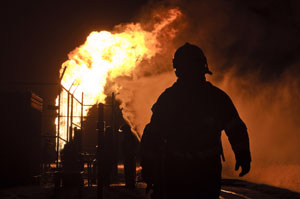
shutterstock_90565891editFirefighters are often called into dangerous circumstances.  Typically, they are asked to rescue people from burning buildings and fiery explosions.  Earlier this month, local firefighters in Kokomo, Indiana found themselves trying to extract a dog from a partially frozen creek.

Like most dogs, Chancellor (or Chance, for short) loved to chase squirrels.  “He’ll chase anything with fur or feathers, but he always comes back,” remarked owner Jimmy Prestler.  Chance pursued the squirrel to a nearby park and onto a patch of ice.  “I’m guessing the squirrel made it across the creek, but the dog didn’t,” said Dave King, battalion chief with the fire department.  A person driving through the park saw the dog fall through the ice and stopped to help, but he was unable to save Chance and called the fire department.

Firefighter Derek Pounds was given the chilly task of rescuing Chance.  After a few minutes Pounds was able to slide across the creek pull the dog out of the water, with the aid of a cold-water rescue suit and an ice sled.  Chance was shaking violently and had icicles frozen to his face.  Pounds wrapped him in a blanket to warm and dry the dog.  King said the dog likely would have died if he’d been in the creek much longer.  “It’s lucky someone saw what happened and called,” he said. “Had he not seen him, the dog would have frozen to death.”

Prestler expressed gratitude to everyone involved in the rescue.  “I think I would have to get therapy if he didn’t survive,” Prestler said.  “Whenever I come home, it’s like seeing my brother after five years.  Chance just goes nuts every time.  They not only saved his life, they saved mine, too.”


Discussion Questions

  • When have you seen public servants (firefighters, police officers, road construction workers, etc.) in action?
  • What do you think about the owner’s comments about his dog?
  • Have you ever been asked to help someone in need? How did you respond?

Scripture Texts (NRSV) for Sunday, February 24, 2013 (Second Sunday of Lent)


Genesis 15:1-12, 17-18

Philippians 3:17-4:1

Luke 13:31-35

(Text links are to Oremus Bible Browser. Oremus Bible Browser is not affiliated with or supported by the Evangelical Lutheran Church in America. You can find the calendar of readings for Year C at Lectionary Readings.)

For lectionary humor and insight, check the weekly comic Agnus Day.


Gospel Reflection

There’s a lot going on in these few verses in Luke 13.  Jesus had just wrapped up a teaching and healing spree in various communities outside of Jerusalem.  With each stop along the way, the crowds grew larger.  Everyone wanted to see this Jesus they had heard so much about.  However, not everyone was a fan of Jesus.

Herod, the ruler of that region, recently beheaded John the Baptist, Jesus’ friend and mentor.  Many Pharisees (the nice ones, not the mean ones) were concerned that Herod would come after Jesus next.  They told Jesus to leave Jerusalem and go into hiding.  However, Jesus was defiant, insisting that the work of casting out demons and performing cures was too important for him to hide.

He also pauses for a moment to express his dismay for the whole city of Jerusalem.  Jesus is sad for the way Jerusalem has treated the people God has sent there as prophets and ministers.  Furthermore, he knows that he will suffer a similar fate when he returns (for what we now know as Palm Sunday).

We learn a lot about Jesus in this passage.  First, it’s clear that Jesus is one who protects and heals people who are sick or broken.  Second, we see that Jesus is committed to complete the tasks to which he was called.  Finally, we discover that, regardless of their past, Jesus still has concern for the well-being of the entire community.  Through all of this, Jesus reveals that God has a heart for particular places and times.  God cares about your town…your school…your family…your church.  Like a mother hen covering her chicks, or a firefighter rescuing a dog,  Jesus seeks to protect us – and calls us to shelter others in need.

Discussion Questions

  • Why do you think the Pharisees are warning Jesus about Herod’s plot?
  • Did Jesus make the right choice to stay in Jerusalem?
  • Who are some people God is calling you to protect and care for this week?

Activity Suggestions

  • Grab some craft sticks and glue.  Attempt to build a building that can’t be knocked over by someone blowing on it.  Talk about how different structures are used to protect people from bad weather or evil people.
  • Contact a local animal shelter.  Offer to bring your group to learn about the work they do.  Consider volunteering some time to care for animals or do repairs around their facility.

Closing Prayer

God, we thank you for sending your Son to care for us.  May we provide comfort, hope, and peace to the people we encounter this week.  In Jesus name, amen.

November 4, 2012–Rumors of Death…and Life!

Contributed by Sylvia Alloway, Granada Hills, CA


Warm-up Question

Suppose you got off the plane after a long vacation and saw a headline announcing your death. Someone had started this rumor and gotten others to believe it. How would you go about proving that you are still alive?

Rumors of Death…and Life!


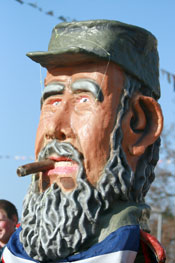
“I don’t even remember what a headache feels like!” So declared Fidel Castro in an article published on Cubadebate, the state news website. The purpose of the article, titled “Fidel Castro Is Dying,” was to assure the Cuban people that the old revolutionary was still alive and healthy at 86. Rumors that the former dictator had suffered a severe stroke and was barely hanging on had been swirling around in the world press for days.

Photos of Castro strolling around his farm using a metal cane, taken by a visiting Venezuelan dignitary, appeared with the article. The South American politician said he talked with the notorious Communist strongman for five hours and was then escorted to his hotel by Castro in a chauffeur-driven minibus.

Castro’s article also tore into the “imperialist propaganda” spread by the non-Communist media. The rumor was traced to a Venezuelan doctor in Miami, who claimed to have heard that the Cuban leader was near death.


Discussion Questions

  • Why do you think rumors of Castro’s death spark such interest!
  • How do rumors get started? Why do people believe them?
  • How do you personally decide what to believe and what not to believe when you hear a rumor?
  • Think about one time when you believed a rumor that wasn’t true and another time when you did not believe something and it turned out to be true. What happened? What if anything, did you learn?

Scripture Texts (NRSV) for Sunday, November 4, 2012 (All Saints Sunday)

Isaiah 25:6-9

Revelation 21:1-6

John 11:32-44

(Text links are to Oremus Bible Browser. Oremus Bible Browser is not affiliated with or supported by the Evangelical Lutheran Church in America. You can find the calendar of readings for Year C at Lectionary Readings.)

For lectionary humor and insight, check the weekly comic Agnus Day.


Gospel Reflection

Raising from the dead is a tough sell. Everyone knows that there’s no getting around death. It takes a lot of proof to convince any sane person that someone could conquer this greatest enemy of humankind.

There are always rumors, of course. Jesus raised several people from the dead, and word must have gotten around. But people were just as skeptical in those days as they are now. The person wasn’t really dead, they would say. Jesus is a fake, and intelligent people don’t put any stock in such foolishness.

But Lazarus was different. A whole crowd of people had been weeping over him for four days. Some of them probably helped to wrap the body in the grave clothes. His sister Martha was certain there would be a terrible stench if the grave was opened. Death was as ugly then as it is now. Even Jesus wept at the sight of it.

Wait, what it this? Open the grave? Call on God to hear? And what is this “Lazarus, come out”? What does this man think he’s doing?

Raising Lazarus from the dead.

Oh.

There was nothing especially glorious about it. A man trying to walk while stuck in a shroud was just as scary then as it is now. And cutting him free couldn’t have been very pleasant. Yet all those repellent practicalities drove home the point. This man really was raised from the dead. Those who doubted had only to look.

Word got around and is with us today:   Jesus has power over death – Lazarus’ death, his own, and finally, ours as well. Some stand and say, “Prove it!” Some sit and say, “Forget it.” Some turn away and say, “It’s just a rumor.” And some fall to their knees before Jesus Christ and say, “My Lord and my God!”

Jesus has the words of eternal life, the power to conquer our most fearsome enemy, and we know we can trust in him. That is why we are called “believers.”

Discussion Questions

[Note: Talking about death is not easy. It may help students to be more comfortable, if the teacher “breaks the ice” and gives a personal answer to the first question. Be sensitive to students’ feelings.]

  • Have you had any experience with death? Did your Christian hope of eternal life help you in this situation? Why or why not?
  • Everyone has fears and uncertainties, especially concerning death. How can we help each other to overcome those fears?
  • Look carefully at John 11:25-26 (“I am the resurrection…”). What did Jesus mean by this? What meaning does it have for us today?

Activity Suggestions

  • Turn the raising of Lazarus into a play. Ask to perform it for a class of younger students.
  • In groups or as a class, use a concordance or online Bible to look up verses on resurrection. Who talked about it? Why is it important? How does it fit into our faith? (Consider the Apostles’ and the Nicene creeds)

Suggested songs: He Lives, The Solid Rock

Closing Prayer

Almighty God and Conqueror of death itself, we thank and praise you for the death that gives us life – Christ’s crucifixion – and the resurrection that was his and will someday be ours. Fill us with your holy joy at this good news and help us to share it with those who are fearful and doubting. In the all-powerful name of your Son, Jesus Christ Our Lord, Amen