Skip to content
ELCA Blogs

Faith Lens

January 1, 2012–Speaking Up

Contributed by Seth Moland-Kovash, All Saints Lutheran Church, Palatine, IL


Warm-up Question

Do you know why your parents chose the name that you have?

Speaking Up

The New Year is a time when we get inundated with lists. You’ve probably seen lots of them: best/worst dressed of 2011; the most influential people of 2011; the best books/movies/sons of 2011. You can even find lists where experts predict the most influential people or best books of 2012. Lists are a way we look back and remember what has happened in the past year. While the turning of one calendar year to another may seem arbitrary, it’s good to take stock and look back.

One of the lists you’ll often find is a list of the most popular baby names for any given year. According to babycenter.com (http://www.babycenter.com/top-baby-names-2011) the most popular boys’ name of 2011 was Aiden and the most popular girls name was Sophia. This website and others also have charts available where you can track name choices and popularity over time. You can see spikes where children were named after fictional characters, celebrities, or world leaders. The names we choose can be an interesting window into the lives we live.


Discussion Questions

  •  Do you know what your name means?
  • If you could choose, would you want a different name? Would you choose one that is more popular (common) or less popular?

Scripture Texts (NRSV) for Sunday, January 1, 2012 (Name of Jesus)

Numbers 6:22-27

Galatians 4:4-7

Luke 2:15-21

(Text links are to Oremus Bible Browser. Oremus Bible Browser is not affiliated with or supported by the Evangelical Lutheran Church in America. You can find the calendar of readings for Year C at Lectionary Readings.)

For lectionary humor and insight, check the weekly comic Agnus Day.


Gospel Reflection

Today is the Christian festival of the Name of Jesus. We celebrate the name that Jesus was given. This date is set because it is the 8th day after Christmas, the date of birth, which is when Jewish male babies are traditionally circumcised. At times, there is a naming ritual that goes along with this. Of course, we don’t know historically whether Mary and Joseph did things in exactly that way for their baby. You may recall, they had lots of visitors and fleeing to Egypt to take care of.  But it is good to mark this day anyway.

So today we remember the name of Jesus, and we remember why it was given to this particular baby. We read again the story of the angel Gabriel’s visit to Mary before Jesus was born. We remember that this name was chosen not by Mary or Joseph but by God: “And now, you will conceive in your womb and bear a son, and you will name him Jesus.” Jesus means “God rescues.” Knowing what we know about the rest of Jesus’ life, that’s a good name for this baby, isn’t it?

Discussion Questions

  •  How and why does Jesus’ name matter to you? Would anything be different about the gospel story if he was named Bob or Joe or Sam? What about Helen or Sophia?
  • Why do we often end prayers “In the name of Jesus, we pray…” What significance does the name have?

Activity Suggestions

Look up the meaning of your name. Ask friends whether they think the meaning fits you or not.

Closing Prayer

Good and gracious God, we thank you for sending Jesus to rescue the entire world. We thank you for his faithful parents, Mary and Joseph. In Jesus’ name we pray. Amen.

May 4-10, 2011–Everyone is Talking About It

Contributed by Angie Larson, Clive, Iowa

Warm-up Question

What is the biggest story that has been in the news lately?

Everyone is Talking About It

On Friday, April 29th at Westminster Abbey, Prince William of England and Miss Catherine Middleton were married.  The Royal Wedding consumed much of the media coverage over the past month.  It seems that everyone was talking about it.  Pre-wedding details were scrutinized by the media.  How will the couple process?  What will the dress look like?  Who will be invited to the ceremony?   The wedding was discussed on talk shows, news programs, and even included in sit-coms in the preceding weeks. Wedding memorabilia was sold, websites popped up featuring the couple, comparisons were made to previous royal weddings, and some websites even published appropriate vocabulary to use at the royal wedding.   It seemed every question surrounding the couple’s wedding was looked into by the media.  How much pressure did the florist feel?  What training will the police have to accommodate the wedding?  What does the prince feel about those who have turned down their invitations, like the prince of Bahrain and Ireland’s rugby captain Brian O’Driscoll? The Royal Wedding became the spotlight of media attention; it seemed that everyone was talking about it.

Discussion Questions

  • Did you tune in for the Royal Wedding?
  • What do you think about the amount of media coverage for the  ceremony?
  • How do you think the Prince and new Princess felt about the speculation and expectations leading up to their wedding?  How would you feel if you were them?

Scripture Texts (NRSV) for Sunday, May 8, 2011 (Third Sunday of Easter)

Acts 2:14a, 36-41

1 Peter 1:17-23

Luke 24:13-35

(Text links are to Oremus Bible Browser. Oremus Bible Browser is not affiliated with or supported by the Evangelical Lutheran Church in America. You can find the calendar of readings for Year C at Lectionary Readings.)

For lectionary humor and insight, check the weekly comic Agnus Day.

Gospel Reflection

A mournful pair walks down the road to Emmaus talking about all the things that had just happened in Jerusalem. Everyone was talking about Jesus’ crucifixion and the events that followed. They met a man on the road who appeared to not have heard the story of Jesus.  They did not know that that man was Jesus.  He asked them why they seemed so sad.  They replied, “Are you the only visitor to Jerusalem who does not know the things that have happened there in these days?” Jesus, keeping up the conversation, asks them to explain what has happened.  The pair explain to him everything that  happened and how suddenly three days after the crucifixion some women they know claim to have seen a vision of angels, telling them that Jesus is in fact alive.  Jesus takes this opportunity to open up the scriptures to them. He shares with them the prophecies and how they have been fulfilled in his actions.  The pair invites Jesus, still not knowing it was him, into their home to stay.  At dinner time, Jesus takes the bread and blesses it.  This is a strange event, as it is usually the homeowner who blesses and breaks the bread.  At that event, the breaking of the bread, the pair realizes that it is Jesus.  Then, interestingly, Jesus disappears.  They reflect on their feelings of what it was like to talk to him and are so excited and invigorated that even though it is late they run seven miles back to Jerusalem to find the disciples.

It seemed that everyone was talking about Jesus. The road to Emmaus couple was astounded to find that this supposed stranger had not heard about the death and resurrection of Jesus.  If it were in today’s world there would have instantly been websites, memorabilia, and newscasts of the events of Jerusalem.  People would be interviewed, scandals made up, and speculations intertwined with the facts.  It seems that everyone would have known about the event, like it seems that everyone knows about the royal wedding.  However, Jesus took this opportunity to provide some clarity for the pair consumed in grief.  He keeps his identity from them so that he can open up the Scriptures to them and show them all they ways in which the prophecies came true in his actions.  He shows them why the Son should suffer death and be raised, and that the events had a purpose.

Discussion Questions

  • How do you think the couple responded when they realized it was Jesus after he disappeared?
  • In your mind, was the pair consoled from their grief before they knew it was Jesus?
  • What are some ways that Jesus has been known to you unexpectedly?

Activity Suggestion

Create some resurrection memorabilia.  Either gather or purchase smooth stones.  With a paint marker, write “He is Risen” on one side of the stone.  Encourage those who you give them to use them as a reminder of the biggest news to ever come across the world, that Jesus has risen from the dead and that the tomb’s stone has been moved away.

Closing Prayer

Dear Lord Jesus, You are the biggest news that has ever happened.  Help us to talk about your life, death, and resurrection as much as we talk about other things going on in the world.  We are curious about your life. Open our hearts to your scriptures and our eyes to your presence. Help us to be continually surprised by who you are. Thank you for being present in our hearts. Amen.

April 20-26, 2011–Aftershocks

Contributed by Scott Mims, Good Shepherd Lutheran Church, Virginia Beach, VA


Warm-up Questions

  • What is the most exciting, captivating, or important thing about Easter to you?  Why?
  • Does your family have any special Easter rituals or traditions?  If so, how have these rituals or traditions helped to shape your experience/understanding of Easter and your faith?

Aftershocks

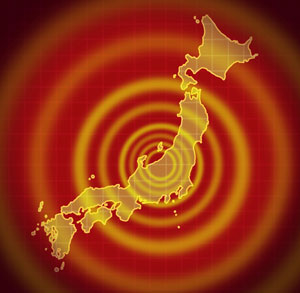
On March 11, 2001 a massive earthquake struck off the coast of Japan triggering a devastating tsunami that swept over cities and farmland in the northern part of the country.  The earthquake, whose magnitude was measured at 9.0 on the Richter scale, is one of the most powerful ever recorded.  Adding to the catastrophe, critical cooling systems at the Fukushima Daiichi Nuclear Power Station were severely damaged, triggering explosions, partial core meltdowns, and releases of radioactive material directly into the atmosphere and ocean. In all, over 27,000 people were either killed or are still missing.

A month later, the aftershocks continue.  On April 11, a magnitude 7.1 earthquake—just one of hundreds of smaller, related quakes—rattled the northeastern coast of Japan triggering tsunami warnings and renewed fears.  Not all of the “aftershocks” have been physical, however.  From the sheer effects of this event in human terms, to falling stock markets, the loss of production from the world’s third largest economy, and the renewed concerns about the safety of nuclear power, the impact of this disaster is being felt the world over…and will be for a long time to come.

Discussion Questions

  • Do you know anyone who has either personally been affected by this event, or who knows someone who has been affected?  If so, what has this experience been like for them?
  • What fears, issues, questions, or concerns – if any – does this event, or similar disasters, raise for you?
  • How connected do you feel to events that are happening in other parts of the country or in the world?  Do you think what happens to other people, perhaps even people who live thousands of miles away, impacts your life?
  • Does the way that you live your life impact the lives of others?  How so?

Scripture Texts (NRSV) for Sunday, April 24, 2011 (Resurrection of Our Lord)

 
Acts 10:34-43
Colossians 3:1-4
Matthew 28:1-10

(Text links are to Oremus Bible Browser. Oremus Bible Browser is not affiliated with or supported by the Evangelical Lutheran Church in America. You can find the calendar of readings for Year C at Lectionary Readings.)

For lectionary humor and insight, check the weekly comic Agnus Day.

Gospel Reflection

We come today to the very epicenter of our Christian faith.  Everything that we do as Christians, from our worship life, to our evangelism and service, to the promise of God’s love and grace which sustains us, is rooted in Jesus’ resurrection.  This is ground zero.  Without the resurrection, Jesus’ death on a Roman cross would have been a tragedy at best. Yet in the resurrection, we see God’s affirmation of who Jesus is as Lord and Savior; in the resurrection we see God’s ultimate victory.

Yet, it is important to remember that, even though Jesus had tried to prepare his disciples and friends, the resurrection was initially a tremendous surprise!  Matthew, like all of our gospel writers, tells of certain women coming to the tomb of Jesus early, “as the first day of the week was dawning.”  Having seen Jesus laid to rest on Friday, they are coming expecting that the tomb would be occupied.  It was a Jewish custom in that day to watch the tomb until after the third day in order to make sure premature burial had not taken place.  Perhaps they were approaching Jesus’ well-guarded burial place as early after the Sabbath as they dared in order to offer this last act of devotion.  What they encountered shook them to the core, turning their world upside down.

“And suddenly there was a great earthquake; for an angel of the Lord, descending from heaven, came and rolled back the stone and sat on it.”  Matthew’s account leaves no doubt as to who is ultimately behind the empty tomb.  While the other gospels have the women wondering who has already rolled away the stone, there is nothing ambiguous in this week’s gospel.  From the shaking ground, to the blazing angelic messenger, to the guards fainting away from fright, we know that it is none other than God who is at work here.  And though the angel’s message fills them both with fear and great joy, it is their encounter with the Risen Christ that convinces them that things would never be the same!

And of course, things haven’t been the same.  The earthquake in today’s gospel underscores Jesus’ resurrection as an apocalyptic, world-changing event.  It is an event whose aftershocks continue even today as hundreds of millions of people worldwide proclaim with great joy, “Alleluia! Christ is risen!  He is risen indeed, alleluia!”

Discussion Questions

  • How do you think you might have reacted had you been with the women on that first Easter Sunday?  What might it have felt like to encounter Jesus as they did?
  • What difference does it make that God raised Jesus from the dead?
  • What difference does Jesus’ resurrection make to you personally?
  • The earthquake that struck Japan and its aftershocks are forces of devastation.  In what ways are the “aftershocks” of the resurrection forces for healing and life?  Or put another way, in what ways does our faith lead us to impact our world for God’s glory and for good?

Activity Suggestions

Bible Study: As a group, consider the question:  “Does the fact that the tomb was empty necessarily mean that Jesus was resurrected?”

  • See if your group can come up with other possibilities.  Several that have been suggested include: the women went to the wrong place, Jesus wasn’t really dead and somehow revived and escaped, the disciples stole the body, someone else (the Jewish or Roman authorities) stole the body.
  • Dig deeper into the gospel.  Beginning with the Crucifixion in Matthew 27: 32 and going through Matthew 28:15, what are the aspects of the story that would make these other possibilities highly unlikely?
  • What other “evidence” do we have that Jesus is alive and the Resurrection is true?

Service Project:  Consider how your group might be an “aftershock” of God’s victory and life during the 50 days that make up the Easter Season.  Could you organize an event or service project to raise money for victims of earthquakes, floods, or other natural and man-made disasters?  Is there an opportunity or need in your local community that your group can help address as a way of witnessing to the gospel?

Closing Prayer

Gracious and loving God, we are mindful today of all who suffer, and especially of those who are most vulnerable and in need.  Through your Spirit, let the power and promise of the Resurrection take root in our lives, that we may live as vibrant and faithful witnesses to your love; through Jesus Christ, our Risen Lord.  Amen!

March 10-16, 2010

Contributed by Joycelyn Breeland, Fairfax, VA.


Warm-up Question

How much do the adults in your life trust you?

I Spy


The FBI is investigating the claim of 16-year-old Blake Robbins that his high school illegally spied on him using the webcam in his school-issued computer.

Robbins says his school’s assistant principal accused him of selling drugs and popping pills in his bedroom. He says she backed up the accusation with a photograph taken by the laptop’s built-in webcam.  Blake denies dealing or using illicit drugs.  He says the images show him eating candy. 

The Lower Merion School District issued laptop computers, equipped with webcams, to all of the approximately 2,300 high school students in the district.  School officials deny any wrong doing.  They say they are not spying on students and only activate the webcams to help locate missing laptops.


Discussion Questions

  • Is it OK for the school district to use webcams to locate school property?
  • Why would it be a problem for the school to activate the webcams on laptops they own?
  • Does it matter how the school got the evidence if Robbins was engaged in illegal activity?


Scripture Texts (NRSV) for Sunday, March 14, 2010 (Fourth Sunday in Lent)

(Text links are to Oremus Bible Browser. Oremus Bible Browser is not affiliated with or supported by the Evangelical Lutheran Church in America. You can find the calendar of readings for Year C at Lectionary Readings.)

For lectionary humor and insight, check the weekly comic Agnus Day.

Joshua 5:9-12

2 Corinthians 5:16-21

Luke 15:1-3, 11b-32

Gospel Reflection

Today’s Gospel is a well-known story. The generous father reminds us that God’s love is extravagant to the point of seeming  reckless.  We go astray.  But no matter how far we go, how unworthy our behavior, God longs to welcome us back into the fold. 

The waiting father models how we are called to behave toward each other.  We pray, “forgive us our debts, as we forgive our debtors,” but our forgiveness is often grudging.  In contrast, the father clearly yearns to welcome his son back home.  He sees the boy while he is far away and runs to him.  The son can not even get out his well-rehearsed apology before the party is on.  Following the father’s example, we strive to forgive absolutely, rejoicing at the restoration of a relationship with someone who has wronged us. 

Sometimes we are like the younger son, striking out on our own, overly confident in our abilities.  We forget how much we need the father.  This inevitably leads to trouble.  When that happens, we, like the prodigal, need to remember that our father is merciful and compassionate.  No matter how far we go down destructive paths, we can find our way home.  Mistakes are painful and costly.  Our poor decisions cause a lot of suffering. The certainty of God’s care is no excuse for failing to weigh our choices carefully.  Still, when we find ourselves staring at a dead end, Jesus reminds us that the long journey we begin with repentance in the pig sty ends with a welcome, a ring, and a fatted calf.

Discussion Questions

  • If the father in the story represents God, what is the inheritance we might each expect? 
  • The family in today’s Gospel is clearly wealthy.  What could have motivated the son to leave this comfort in the first place? 
  • Verse 17 says the younger son came to his senses.  What does this mean?  Has this happened to you? 
  • Can you identify with the older son’s reaction in verses 28 ­– 30? 
  • What does the father’s answer to his older son say to us about God’s love?

 Activity Suggestion

Design a t-shirt which communicates your understanding of this week’s lesson.  Think beyond simply picturing a scene from the biblical story.  Use words and graphics which would grab the attention of folks in your school.

Closing Prayer

Loving and forgiving Father God, we thank you for the rich inheritance you offer each of us.  Help us not to squander your gifts, remembering that all we have and are comes from you.  Call to us when we stray and bring us quickly back to our senses.  In the name of Jesus, whose sacrifice has secured for us eternal life and a home with you, Amen.


February 24-March 2, 2010–Accepting the Challenge

Contributed by Daniel Wiessner, Tacoma, Wash.

Warm-up Question

Have you ever done something that you knew was dangerous?  Why did you do it?  Some possibilities: peer pressure, standing up for a friend, pride in your own accomplishments, just for the thrill.

Accepting the Challenge

A number of sports carry hazards. (Football comes to mind.) This year’s Winter Olympics reminds us of the inherent dangers of a person traveling at 90 miles per hour. The luge track at the Whistler Sliding Center, in British Columbia, was touted as the fastest course around, but speed and a small misstep in practice proved fatal for Georgian Olympian, Nodar Kumaritashvili.

While the only other luge-related death in the Olympics was way back in 1964, Kumaritashvili’s death has raised the more general issue of athletes’ safety in professional sport competitions such as the Olympics.

Kumaritashvili had apparently expressed concerns about the safety of this particular track, but he, like his fellow sliders, took on the risk. In the same way, we all accept challenges which pose some sort of danger, be it social, emotional, or even the possibility of physical harm. Even with the risk, the goal of succeeding in our ventures drives our ambition to go for the gold.

Article source:
http://www.cnn.com/2010/SPORT/02/15/winter.sports.dangerous/index.html

Discussion Questions

  1. Do you know anyone who has ever been hurt in a sport? Do you think the growing intensity of sports today makes them too dangerous?
  2. If the chances of serious injury (or even death!) from participating in your favorite leisure time activity increased 5%, would you still do it? 15%? 40%?

Scripture Texts (NRSV) for Sunday, February 28, 2010 (Second Sunday of Lent)

(Text links are to Oremus Bible Browser. Oremus Bible Browser is not affiliated with or supported by the Evangelical Lutheran Church in America. You can find the calendar of readings for Year C at Lectionary Readings.)

For lectionary humor and insight, check the weekly comic Agnus Day.

Genesis 15:1-12, 17-18

Philippians 3:17-4:1

Luke 13:31-35

Gospel Reflection

In the gospel lesson this week, Jesus is about to enter Jerusalem and begin the climax of the Gospel story.  The Pharisees are warning Jesus about Herod. This is the same Herod who, not long before, was responsible for the death of John the Baptist. Rather than turning tail, however, Jesus gave the messengers another message to deliver: Jesus was going to cure illness and cast out demons like he had been doing the whole time, and then “on the third day” (soon) he will finish his work. Finish his work? Jesus knew exactly what was coming. In the church year, this journey to Jerusalem marks the beginning of the season of Lent, and on Good Friday Jesus will give his life to pay for the sins of the whole world.

Athletes may train their entire lives with dreams of competing at the Olympic Games, despite the dangers of their craft. Similarly, Jesus’ life of selfless acts of saving and healing culminates with his trip to Jerusalem. In the same way that past hazards had not changed his message or direction, Jesus would not be swayed by warnings about a murderous Herod. Athletes risk life and limb for a shot at the gold; Jesus went to Jerusalem knowing that he would give himself as the ultimate sacrifice for us all.

Discussion Questions

  1. What are some of your personal goals? What are you doing to reach them? What “dangers” are you facing in your pursuit of these goals?
  2. Have you ever walked into a situation knowing that it wasn’t going to end well, but also knowing that good was going to come out of it?


Activity Suggestion

Talk to someone you know and greatly respect. Ask what hurdles he or she crossed in order to accomplish major life goals.

Closing Prayer

Dear Lord, thank you for the talents you have given us, and our ability to meet life’s tough challenges head-on. Please watch us and keep us safe as we venture through this week. Amen.