Skip to content
ELCA Blogs

Faith Lens

April 20-26, 2011–Aftershocks

Contributed by Scott Mims, Good Shepherd Lutheran Church, Virginia Beach, VA


Warm-up Questions

  • What is the most exciting, captivating, or important thing about Easter to you?  Why?
  • Does your family have any special Easter rituals or traditions?  If so, how have these rituals or traditions helped to shape your experience/understanding of Easter and your faith?

Aftershocks

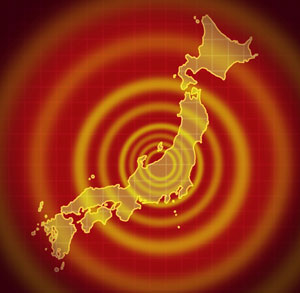
On March 11, 2001 a massive earthquake struck off the coast of Japan triggering a devastating tsunami that swept over cities and farmland in the northern part of the country.  The earthquake, whose magnitude was measured at 9.0 on the Richter scale, is one of the most powerful ever recorded.  Adding to the catastrophe, critical cooling systems at the Fukushima Daiichi Nuclear Power Station were severely damaged, triggering explosions, partial core meltdowns, and releases of radioactive material directly into the atmosphere and ocean. In all, over 27,000 people were either killed or are still missing.

A month later, the aftershocks continue.  On April 11, a magnitude 7.1 earthquake—just one of hundreds of smaller, related quakes—rattled the northeastern coast of Japan triggering tsunami warnings and renewed fears.  Not all of the “aftershocks” have been physical, however.  From the sheer effects of this event in human terms, to falling stock markets, the loss of production from the world’s third largest economy, and the renewed concerns about the safety of nuclear power, the impact of this disaster is being felt the world over…and will be for a long time to come.

Discussion Questions

  • Do you know anyone who has either personally been affected by this event, or who knows someone who has been affected?  If so, what has this experience been like for them?
  • What fears, issues, questions, or concerns – if any – does this event, or similar disasters, raise for you?
  • How connected do you feel to events that are happening in other parts of the country or in the world?  Do you think what happens to other people, perhaps even people who live thousands of miles away, impacts your life?
  • Does the way that you live your life impact the lives of others?  How so?

Scripture Texts (NRSV) for Sunday, April 24, 2011 (Resurrection of Our Lord)

 
Acts 10:34-43
Colossians 3:1-4
Matthew 28:1-10

(Text links are to Oremus Bible Browser. Oremus Bible Browser is not affiliated with or supported by the Evangelical Lutheran Church in America. You can find the calendar of readings for Year C at Lectionary Readings.)

For lectionary humor and insight, check the weekly comic Agnus Day.

Gospel Reflection

We come today to the very epicenter of our Christian faith.  Everything that we do as Christians, from our worship life, to our evangelism and service, to the promise of God’s love and grace which sustains us, is rooted in Jesus’ resurrection.  This is ground zero.  Without the resurrection, Jesus’ death on a Roman cross would have been a tragedy at best. Yet in the resurrection, we see God’s affirmation of who Jesus is as Lord and Savior; in the resurrection we see God’s ultimate victory.

Yet, it is important to remember that, even though Jesus had tried to prepare his disciples and friends, the resurrection was initially a tremendous surprise!  Matthew, like all of our gospel writers, tells of certain women coming to the tomb of Jesus early, “as the first day of the week was dawning.”  Having seen Jesus laid to rest on Friday, they are coming expecting that the tomb would be occupied.  It was a Jewish custom in that day to watch the tomb until after the third day in order to make sure premature burial had not taken place.  Perhaps they were approaching Jesus’ well-guarded burial place as early after the Sabbath as they dared in order to offer this last act of devotion.  What they encountered shook them to the core, turning their world upside down.

“And suddenly there was a great earthquake; for an angel of the Lord, descending from heaven, came and rolled back the stone and sat on it.”  Matthew’s account leaves no doubt as to who is ultimately behind the empty tomb.  While the other gospels have the women wondering who has already rolled away the stone, there is nothing ambiguous in this week’s gospel.  From the shaking ground, to the blazing angelic messenger, to the guards fainting away from fright, we know that it is none other than God who is at work here.  And though the angel’s message fills them both with fear and great joy, it is their encounter with the Risen Christ that convinces them that things would never be the same!

And of course, things haven’t been the same.  The earthquake in today’s gospel underscores Jesus’ resurrection as an apocalyptic, world-changing event.  It is an event whose aftershocks continue even today as hundreds of millions of people worldwide proclaim with great joy, “Alleluia! Christ is risen!  He is risen indeed, alleluia!”

Discussion Questions

  • How do you think you might have reacted had you been with the women on that first Easter Sunday?  What might it have felt like to encounter Jesus as they did?
  • What difference does it make that God raised Jesus from the dead?
  • What difference does Jesus’ resurrection make to you personally?
  • The earthquake that struck Japan and its aftershocks are forces of devastation.  In what ways are the “aftershocks” of the resurrection forces for healing and life?  Or put another way, in what ways does our faith lead us to impact our world for God’s glory and for good?

Activity Suggestions

Bible Study: As a group, consider the question:  “Does the fact that the tomb was empty necessarily mean that Jesus was resurrected?”

  • See if your group can come up with other possibilities.  Several that have been suggested include: the women went to the wrong place, Jesus wasn’t really dead and somehow revived and escaped, the disciples stole the body, someone else (the Jewish or Roman authorities) stole the body.
  • Dig deeper into the gospel.  Beginning with the Crucifixion in Matthew 27: 32 and going through Matthew 28:15, what are the aspects of the story that would make these other possibilities highly unlikely?
  • What other “evidence” do we have that Jesus is alive and the Resurrection is true?

Service Project:  Consider how your group might be an “aftershock” of God’s victory and life during the 50 days that make up the Easter Season.  Could you organize an event or service project to raise money for victims of earthquakes, floods, or other natural and man-made disasters?  Is there an opportunity or need in your local community that your group can help address as a way of witnessing to the gospel?

Closing Prayer

Gracious and loving God, we are mindful today of all who suffer, and especially of those who are most vulnerable and in need.  Through your Spirit, let the power and promise of the Resurrection take root in our lives, that we may live as vibrant and faithful witnesses to your love; through Jesus Christ, our Risen Lord.  Amen!

March 10-16, 2010

Contributed by Joycelyn Breeland, Fairfax, VA.


Warm-up Question

How much do the adults in your life trust you?

I Spy


The FBI is investigating the claim of 16-year-old Blake Robbins that his high school illegally spied on him using the webcam in his school-issued computer.

Robbins says his school’s assistant principal accused him of selling drugs and popping pills in his bedroom. He says she backed up the accusation with a photograph taken by the laptop’s built-in webcam.  Blake denies dealing or using illicit drugs.  He says the images show him eating candy. 

The Lower Merion School District issued laptop computers, equipped with webcams, to all of the approximately 2,300 high school students in the district.  School officials deny any wrong doing.  They say they are not spying on students and only activate the webcams to help locate missing laptops.


Discussion Questions

  • Is it OK for the school district to use webcams to locate school property?
  • Why would it be a problem for the school to activate the webcams on laptops they own?
  • Does it matter how the school got the evidence if Robbins was engaged in illegal activity?


Scripture Texts (NRSV) for Sunday, March 14, 2010 (Fourth Sunday in Lent)

(Text links are to Oremus Bible Browser. Oremus Bible Browser is not affiliated with or supported by the Evangelical Lutheran Church in America. You can find the calendar of readings for Year C at Lectionary Readings.)

For lectionary humor and insight, check the weekly comic Agnus Day.

Joshua 5:9-12

2 Corinthians 5:16-21

Luke 15:1-3, 11b-32

Gospel Reflection

Today’s Gospel is a well-known story. The generous father reminds us that God’s love is extravagant to the point of seeming  reckless.  We go astray.  But no matter how far we go, how unworthy our behavior, God longs to welcome us back into the fold. 

The waiting father models how we are called to behave toward each other.  We pray, “forgive us our debts, as we forgive our debtors,” but our forgiveness is often grudging.  In contrast, the father clearly yearns to welcome his son back home.  He sees the boy while he is far away and runs to him.  The son can not even get out his well-rehearsed apology before the party is on.  Following the father’s example, we strive to forgive absolutely, rejoicing at the restoration of a relationship with someone who has wronged us. 

Sometimes we are like the younger son, striking out on our own, overly confident in our abilities.  We forget how much we need the father.  This inevitably leads to trouble.  When that happens, we, like the prodigal, need to remember that our father is merciful and compassionate.  No matter how far we go down destructive paths, we can find our way home.  Mistakes are painful and costly.  Our poor decisions cause a lot of suffering. The certainty of God’s care is no excuse for failing to weigh our choices carefully.  Still, when we find ourselves staring at a dead end, Jesus reminds us that the long journey we begin with repentance in the pig sty ends with a welcome, a ring, and a fatted calf.

Discussion Questions

  • If the father in the story represents God, what is the inheritance we might each expect? 
  • The family in today’s Gospel is clearly wealthy.  What could have motivated the son to leave this comfort in the first place? 
  • Verse 17 says the younger son came to his senses.  What does this mean?  Has this happened to you? 
  • Can you identify with the older son’s reaction in verses 28 ­– 30? 
  • What does the father’s answer to his older son say to us about God’s love?

 Activity Suggestion

Design a t-shirt which communicates your understanding of this week’s lesson.  Think beyond simply picturing a scene from the biblical story.  Use words and graphics which would grab the attention of folks in your school.

Closing Prayer

Loving and forgiving Father God, we thank you for the rich inheritance you offer each of us.  Help us not to squander your gifts, remembering that all we have and are comes from you.  Call to us when we stray and bring us quickly back to our senses.  In the name of Jesus, whose sacrifice has secured for us eternal life and a home with you, Amen.


February 24-March 2, 2010–Accepting the Challenge

Contributed by Daniel Wiessner, Tacoma, Wash.

Warm-up Question

Have you ever done something that you knew was dangerous?  Why did you do it?  Some possibilities: peer pressure, standing up for a friend, pride in your own accomplishments, just for the thrill.

Accepting the Challenge

A number of sports carry hazards. (Football comes to mind.) This year’s Winter Olympics reminds us of the inherent dangers of a person traveling at 90 miles per hour. The luge track at the Whistler Sliding Center, in British Columbia, was touted as the fastest course around, but speed and a small misstep in practice proved fatal for Georgian Olympian, Nodar Kumaritashvili.

While the only other luge-related death in the Olympics was way back in 1964, Kumaritashvili’s death has raised the more general issue of athletes’ safety in professional sport competitions such as the Olympics.

Kumaritashvili had apparently expressed concerns about the safety of this particular track, but he, like his fellow sliders, took on the risk. In the same way, we all accept challenges which pose some sort of danger, be it social, emotional, or even the possibility of physical harm. Even with the risk, the goal of succeeding in our ventures drives our ambition to go for the gold.

Article source:
http://www.cnn.com/2010/SPORT/02/15/winter.sports.dangerous/index.html

Discussion Questions

  1. Do you know anyone who has ever been hurt in a sport? Do you think the growing intensity of sports today makes them too dangerous?
  2. If the chances of serious injury (or even death!) from participating in your favorite leisure time activity increased 5%, would you still do it? 15%? 40%?

Scripture Texts (NRSV) for Sunday, February 28, 2010 (Second Sunday of Lent)

(Text links are to Oremus Bible Browser. Oremus Bible Browser is not affiliated with or supported by the Evangelical Lutheran Church in America. You can find the calendar of readings for Year C at Lectionary Readings.)

For lectionary humor and insight, check the weekly comic Agnus Day.

Genesis 15:1-12, 17-18

Philippians 3:17-4:1

Luke 13:31-35

Gospel Reflection

In the gospel lesson this week, Jesus is about to enter Jerusalem and begin the climax of the Gospel story.  The Pharisees are warning Jesus about Herod. This is the same Herod who, not long before, was responsible for the death of John the Baptist. Rather than turning tail, however, Jesus gave the messengers another message to deliver: Jesus was going to cure illness and cast out demons like he had been doing the whole time, and then “on the third day” (soon) he will finish his work. Finish his work? Jesus knew exactly what was coming. In the church year, this journey to Jerusalem marks the beginning of the season of Lent, and on Good Friday Jesus will give his life to pay for the sins of the whole world.

Athletes may train their entire lives with dreams of competing at the Olympic Games, despite the dangers of their craft. Similarly, Jesus’ life of selfless acts of saving and healing culminates with his trip to Jerusalem. In the same way that past hazards had not changed his message or direction, Jesus would not be swayed by warnings about a murderous Herod. Athletes risk life and limb for a shot at the gold; Jesus went to Jerusalem knowing that he would give himself as the ultimate sacrifice for us all.

Discussion Questions

  1. What are some of your personal goals? What are you doing to reach them? What “dangers” are you facing in your pursuit of these goals?
  2. Have you ever walked into a situation knowing that it wasn’t going to end well, but also knowing that good was going to come out of it?


Activity Suggestion

Talk to someone you know and greatly respect. Ask what hurdles he or she crossed in order to accomplish major life goals.

Closing Prayer

Dear Lord, thank you for the talents you have given us, and our ability to meet life’s tough challenges head-on. Please watch us and keep us safe as we venture through this week. Amen.

January 6-12, 2010–Awaiting the Big One

Contributed by Claudia Bergmann, Eisleben, Germany


Warm-up Question

What does being in an earthquake feel like?

 
Awaiting the Big One

“Did you feel it?” That is the question everyone asks whenever the news in California reports a small earthquake. Most California quakes do not do any visible damage, and only a small percentage are actually felt or heard by the people living in the region. But seismologists predict that there is a 63 percent chance of a strong and destructive earthquake within the next 30 years in the area of San Francisco. Taking all of California together, the chances for what’s called “the Big One” are 99.7 percent.


san francisco earthquakeCalifornia will probably experience a strong earthquake in the future because of movement in the earth’s crust. The Pacific and the North American Plates meet there and grind against each other for hundreds of miles. This is even visible to the naked eye and is called the San Andreas Fault. The movement of the earth’s crust slowly builds up pressure and energy, which is, at some point, released in an earthquake. On April 18, 1906, such a pressure release killed 3000 people in San Francisco and destroyed large areas of the city.  Seismologists from the University of California in Berkley have found that the earth, although solid on the surface, reacts to the movements of sun and moon, just as water does. These mini-tides can be recorded as tremors which make areas like the San Andreas Fault move. Scientists write in the current issue of the magazine Nature (December 2009) that such small tremors do not cause big earthquakes but increase the strength of the movements happening in the San Andreas fault.


Did you feel it? Californians hope that this question will always be answered with “no”. But chances are that one day soon an earthquake and its aftermath cannot be missed. Learning more about how earthquakes originate and what makes them stronger might help us take better precautions. Unlike other animals, which sometimes sense impending earthquakes better than humans, we have to rely on scientific data to have an idea when one might be imminent.


Discussion Questions

1. Do you live in an area where earthquakes are likely? If so, do you ever talk or think about measures which you and your family can take to protect yourself from the effects of an earthquake? If not, would you worry if your parents wanted to move the family to an area where earthquakes are likely?

2. Have you ever experienced an earthquake or another natural catastrophe? Could you sense it coming? What did it feel like?

3. Some people experience pain when the weather changes or say that they can “smell” coming rain. Are you able to predict such changes? If not, do you think that some people are actually able to do it?


Scripture Texts (NRSV) for Sunday, January 10, 2010 (Baptism of our Lord)

(Text links are to Oremus Bible Browser. Oremus Bible Browser is not affiliated with or supported by the Evangelical Lutheran Church in America. You can find the calendar of readings for Year C at Lectionary Readings.)


For lectionary humor and insight, check the weekly comic Agnus Day.

Isaiah 43:1-7

Acts 8:14-17

Luke 3:15-17, 21-22


Bible Reflection

The story we hear today from the Gospel of Luke is one that describes an early part of Jesus’ life. Luke has portrayed the pregnancy of Mary and the birth of Jesus and has continued with the events in the temple when Jesus was just 12 years old. We now meet a new character. John the Baptist, whose mother visited Jesus’ mother when they were both pregnant, begins to baptize people in the wilderness. People flock to John and some even wonder whether he is the long-expected Messiah. But John shatters these hopes and points to the Messiah coming after him. John was not much liked by the government. He was put in prison and later killed. But, before his life came to an end, one of the people he baptizes is Jesus of Nazareth.


Something amazing happens at that particular baptism. Imagine what it must have been like for Jesus. As an adult, he decides to receive the baptism by John, which is supposed to free from sins. He steps down to the river or creek, feeling rocks and sand beneath his worn shoes. He feels both John’s strong hands as the Baptist dunks him into the water and a sense of trust that John will lift him back out. He feels the water—cold and refreshing—cleansing his body and also, in a way, his mind. Then, he sees the heaven open. He sees a dove, the Holy Spirit, coming down towards him.  Maybe he feels and hears the flapping of her wings. Jesus  hears God speaking, telling him that he is the  beloved son with whom God is well pleased. Feeling the water, touching it, being touched by John’s hands, seeing the heavens, hearing God’s voice – Jesus’ baptism addresses most of his senses and, because of it, envelopes him entirely. Unfortunately, Luke does not tell us what it is like for Jesus to hear God and to see the Holy Spirit at his baptism. But he records the effect that this sense-filling event has on Jesus:  right after the baptism, Jesus begins his work.


When the early church began to baptize people into a Christian life, they modeled their practices after the story of Jesus being baptized by John. Of course, there were proclamations of what baptism means, that it is an act of repentance and causes the forgiveness of sins. But more than is often the case in modern churches, baptisms in the early church also addressed the senses of the baptismal candidates. Days of fasting prepared them for their baptism. Several times before and during the baptismal ceremony, the baptismal candidates were anointed with oil. In what was called the “ephphata ceremony”, a mixture of dirt and spittle was put upon their ears and nose to symbolize the opening of ears in Mark 7:33-34. And when the actual baptism happened, a lot of water was used so that the baptismal candidates could be fully immersed. Baptism back then could be truly felt, truly seen, truly heard. It could be experienced with most of the  senses.


In Luther’s day the church had already moved away from some of these more sensual experiences of baptism. The church performed many remaining actions in almost magical ways, as if baptism was not valid unless all of these rituals were performed. While Luther tried to rid the church of some of the more magical looking rituals, he strongly felt that the sensual aspects of baptism should remain. In his early writings about baptism, he even demanded that baptism should be by immersion to symbolize that our old sinful self is drowned and our new baptized self is resurrected. Luther asserted that baptism should be experienced with all our senses, just as God wants to be in our minds, spirits, and body – in all of what makes us human. 


Discussion Questions

1. Are there experiences in life where the senses of smelling, tasting, and feeling might enhance your perception or help you remember? Do you have an early childhood memory which is connected to one of these senses?

2. What senses (hearing, seeing, smelling, tasting, and feeling) do we use in worship and at what parts in the liturgy?

3. Which do you prefer, a worship service where the pastor speaks and the people listen or a worship service where all or most of our human senses are addressed? Why?

4. What are, in your opinion, the pros and cons of worship that addresses our senses?

5. Have you experienced worship in a congregation other than your own? If so, did that service address the human senses more or less than is done in your church?


Activity Suggestions

1. Jesus and the human senses.

Split your group in four small groups and assign each of them one Gospel. Ask your groups to find stories where Jesus not only speaks to the people but addresses their other senses. Share these stories in the large group and talk about what Jesus accomplishes when he helps people to understand his message by letting them smell, taste, feel, or see.


2. Making people understand.

Read the healing story in Mark 7:32-37. Talk about the way Jesus addresses the human senses there and what effect that has on the bystanders watching.


3. Heightening the senses in worship.

If using our senses helps us experience things on a deeper level and helps us remember, why don’t we use our senses more in worship? Think about the way that worship in your congregation could be more sense-oriented. Ask your pastor how he/she plans worship services with the use of our senses in mind.


4. Using our senses.

Here are some suggestions for activities where your youth can try their senses. If you have a small group, let everyone try a few samples. If you have a larger group, split them up so that everybody has a chance to experience this exercise. If you make it a competition, you might have a prize for the winner(s).


a) Smelling: Prepare samples of distinctive smelling things such as communion wine, herbs, flowers, incense and other in containers that are all the same size and are closed with a lid. Then, see who can identify of an object by using only the sense of smell (you need to cover participants’ eyes and have someone else present them with the opened container).


b) Tasting: You can also have a taste test using foods which people try with their eyes covered. In that case, make sure to choose foods which everybody likes and tolerates.


c) Feeling: Have people feel small objects – again, with their eyes covered – and name what they should represent. Cookie cutters or wooden toy animals work well.


d) Hearing: Play the beginnings of famous pop songs (or even hymns) until the first person can name the title. Ask your group to listen to half of them with their eyes open and to the other half with their eyes closed. Ask whether it was easier to guess when they only used their sense of hearing rather than their senses of hearing and seeing.


Closing Prayer

Almighty God, you want to be close to us and be with us in our minds, spirits and bodies. Help us to open our ears so that we can hear your word. Help us to open our eyes so that we can see your marvelous deeds. Help us to open our open our mouths and noses so that we can taste and smell your wonderful gifts of creation with renewed wonder. Help us to open our hands so that we can feel the hands of our brothers and sisters in ours. Amen.

April 22-29, 2009 – Sheep without a shepherd

Contributed by Pastor Seth Moland-Kovash
All Saints Lutheran Church
Palatine, IL

Warm-up Question: People often talk about the importance of making a good first impression. Do you think it’s really all that important or not? Why?

One of the hallmarks of the legal system in this country is the idea of a trial by a jury. Part of that process is that the jury is supposed to be impartial; they are not supposed to have made up their minds about whether you are guilty or not guilty before the trial starts. They are supposed to make their decision based on the evidence and what they hear in the courtroom, not on what they knew about the situation before the trial even started. We often talk about this in terms of an impartial jury: you have the right to be tried by a jury who is impartial, who has not already decided whether you are guilty.

Finding an impartial jury can be difficult sometimes when cases get a lot of media coverage or are very high-profile. When celebrities or major politicians are on trial, or when crimes get a lot of coverage, it can be hard to find 12 people who are impartial. Sometimes defendants gain the right to move a trial to another city, county, or even state, so that they can find a jury of people who have not already made up their minds or been influenced by the media or other people in the community.

Consider the difficulty in finding unbiased, fair, impartial jurors for the following cases:

A story of trying to find an impartial jury in the case of someone accused of starting wildfires in southern California that ended up killing 5 firefighters. 

  • Rod R. Blagojevich, now former governor of Illinois, was impeached under accusations of criminal corruption, wasting taxpayer money attempting to sell Barack Obama’s vacant senate seat. Blagojevich has made the rounds of TV talk shows, radio shows, and has been highlighted in newspapers and Web publications around the world. He is still awaiting trial.
  • Or talk about a court case in your area that everyone seems to know about, or has strong opinions about.

Discussion Questions

  • Why is having an impartial jury so important? To the defendant? To all of us?
  • If you had heard a lot about a case, like the wildfires or political corruption in these stories, would you be able to judge someone fairly who was accused of the crime? How difficult would it be for you to put aside your assumptions and weigh the information and arguments of both sides?
  • On a scale of 1 to 10 (1 being not at all; 10 being always open and receptive), how open are you to receiving new ideas, opinions, or different views from other people? How would you decide that a person was trustworthy or worth listening to?

Scripture Texts (NRSV) for Sunday, April 26, 2009.

(Text links are to oremus Bible Browser Oremus Bible Browsernot is not affiliated with or supported by the Evangelical Lutheran Church in America. You can find the calendar of readings for Year B at Lectionary Readings.)

For lectionary humor and insight, check the weekly comic Agnus Day.

Gospel Reflection

One of the hardest things about learning anything new is when we think we already know the answer. We think Sarah’s mean and snobby so no matter how she acts toward us, we are not going to like her. We think something that weighs more should fall faster than something that is lighter, so we won’t believe it until we see it — sometimes we don’t even believe it then!

The same thing is true about God. We think we know things about God, and it’s hard to hear or accept anything new. We may think that God could never love us because of the bad things we’ve done, so it’s hard to hear that God will always love us, no matter what — end of story!

In today’s Gospel reading, Luke 24:13-49, two followers of Jesus are walking along the road after what had happened in Jerusalem on the day we call Good Friday. They hadn’t heard about Easter yet. They thought Jesus was dead and everything was over. The Gospel lesson tells us that Jesus came along and walk with them, but “their eyes were kept from recognizing him.”

Eventually, the two people recognized Jesus and he explained everything to them. But maybe they needed a fresh, unbiased start — sort of a do-over. Maybe they needed to not see him as Jesus for just a minute so that they could get past their preconceived ideas and assumptions about his death. Maybe they needed their eyes to be closed for a little bit, so that they could be opened again and see something completely new!

Discussion Questions 

  • What would it be like to meet someone walking along the sidewalk who you thought was dead?
  • Do you think these followers learned the lesson of Jesus’ resurrection better because they had to learn it this way? What impression would this situation have made on you if you had been one of the people walking on the road with Jesus?
  • How would you go about telling the story of Jesus in a believable, trustworthy, truthful way? How would you tell it to different people? A stranger? A close friend?

Activity Suggestion

  • Arrange with your congregation’s Sunday school leaders to teach Sunday school for a day, especially the very young kids. They will love having youth around to teach them. And you’ll get to teach young children something completely new… it’s all new to them!
  • Create a list of things you believe or know about God. Create another list of questions you have about God. Use the lists to stir up discussion, study, curiosity, and prayer.

Closing Prayer

Faithful God, we thank you for always finding ways to reach us and to teach us. We pray in the name of your risen Son, our Lord, Jesus Christ. Amen.