
Prepare
In John 4:5–42, Jesus travels through Samaria and stops at Jacob’s well. The location is important because Jews and Samaritans shared ancestral roots, but had centuries of religious and ethnic conflict. They worshiped the same God but disagreed about the proper place of worship and the authority of certain Scriptures. Many Jews would have avoided traveling through Samaria altogether.
At the well, Jesus speaks with a Samaritan woman – crossing multiple social boundaries at once. In the first century, Jewish men did not typically initiate public conversation with women who were not family. Add to that the deep hostility between Jews and Samaritans, and this interaction becomes even more surprising.
The time of day is also significant. Wells were communal gathering places, usually visited during cooler hours. Her arrival at noon suggests isolation, though the text does not explicitly explain why. Be cautious not to speculate beyond what Scripture says, but notice how the detail invites reflection.
This passage contains one of the longest recorded conversations Jesus has with anyone in the Gospel of John. It moves from physical thirst to spiritual thirst, from personal history to communal worship, and finally to public witness. Jesus reveals knowledge of the woman’s life without condemning her, and she becomes the first person in John’s Gospel to openly share news about him with her community.
As you guide discussion, pay attention to themes of belonging, truth, vulnerability, and invitation. Where do participants see barriers being crossed? What changes in the woman between the beginning and the end of the story?
Opening Exercise
You know your context best – so choose based on your students (and even the vibe of the day).
Either have students split into pairs or small groups OR give them something to write on to reflect independently.
Reflection:
- Think of a time you felt like you didn’t belong or had to hide parts of yourself.
- How did that feel:
- Physically
- Emotionally
- Spiritually
- What was your reaction afterwards? (Close off, isolate, snap-back, try harder)
After a few minutes, invite volunteers to share themes they noticed – or even just answer the questions: What did that feel like? What was your reaction?
- Connect this / Transition to today’s scripture: Today, we’re hearing a story of someone who may have felt out of place, but finds themselves fully seen by Christ – and what that teaches us about belonging.
Text Read Aloud
- Invite participants to listen for anything that stands out to them or instances of transformation.
- Since this is a longer passage, you may want to just read it through in full once. The article focuses on verses 5-26 and 39-42
Belonging
There are parts of Jesus’ world that feel distant from ours. In 2026, most of us aren’t walking into a new town at noon, tired and thirsty, with no gas station or coffee shop in sight.
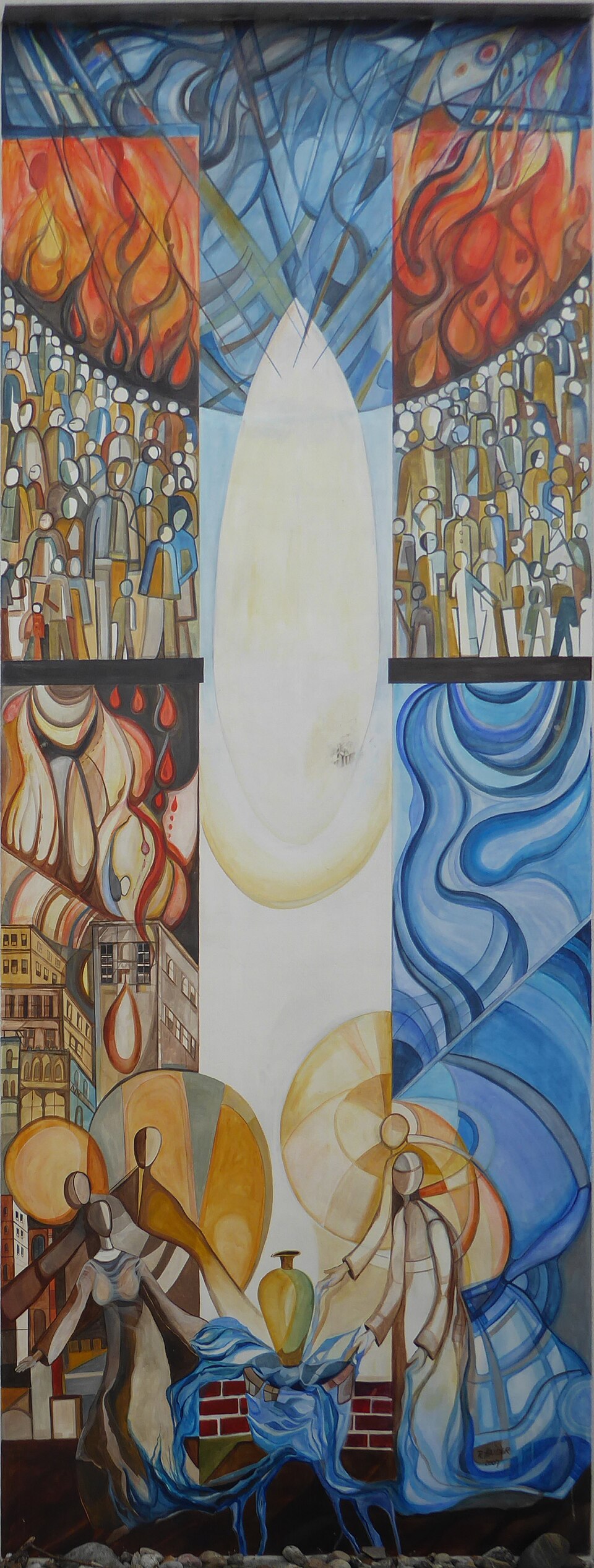
By BSonne – Own work, CC BY-SA 4.0, https://commons.wikimedia.org/w/index.php?curid=62461741
But Jesus does.
Fully human, weary from travel, he sits beside a well in the heat of the day. And a woman approaches alone.
Wells were typically social spaces. Women gathered in the cooler hours of the morning or evening. Coming alone at midday suggests she wanted to (or was forced to) be alone. Maybe she is avoiding whispers, tired of explaining herself, or she simply doesn’t feel like she belongs with the others.
If we’re honest, that feeling isn’t foreign to any of us.
We all thirst for belonging. We want to know we fit somewhere – not because we’ve performed well or curated the right image, but because we are wanted. And yet, so much of our world teaches us that belonging must be earned.
- Be impressive and successful, build that college application.
- Be agreeable, yet have opinions, but not too strong.
- Be fun, but not too fun.
- Be someone your friends love, and their parents approve of.
It can feel like constantly editing yourself – showing certain parts and hiding others – just to fit the mold of who you’re “supposed” to be.
–
Jesus begins by asking the woman for water. But then he offers her living water, the gift that satisfies more than just physical thirst. She wants this. In fact, don’t we all want something that will cure our desire to BE what we feel we have to be?
Then things turn personal. Jesus names her story: her relationships, her complicated past, the parts she might prefer to stay hidden. This would be the moment she expects rejection. When someone knows too much about us, we brace for distance.
But Jesus doesn’t name these to shame her. And he doesn’t withdraw. He stays.
She is fully known, and he stays.
Much to the woman’s credit, instead of hiding, she leans in. She asks questions, she learns, she feels the change. Then she leaves.
After being fully known and not pushed away, she runs back to the very community she may have been avoiding and says, “Come and see.”
She doesn’t offer a polished testimony nor pretend her story is tidy. She simply tells the truth: he knew everything about me. And still, he stayed.
The woman who came to the well alone becomes the one who invites others in.
Belonging with God is not something we earn by fixing our stories. It is something we receive in the middle of them. In Christ, we do not audition for love. We are met in our thirst and told we already belong.
And when we begin to trust that, we stop chasing acceptance everywhere else and we become people who make room at the well. For our own messy stories and for the messy stories of others, all of whom belong to Jesus, the one who doesn’t turn away.
Reflection Questions
- What does Jesus notice about the woman at the well? How does he respond?
- Why is it significant that Jesus crosses cultural and social boundaries to speak to her?
- What does living water represent in this passage? What does living water look like to us?
- How would our world be different if we didn’t feel like we needed to pretend or be better?
- How might this story invite us to make room at the well (in our lives) for others – including those who are different, marginalized, or “messy”?
Closing Activity
We all feel like we don’t belong sometimes – think of things you’ve been told or ways you’ve been treated that help you feel you belong.
- On a sticky note, write one way you can invite someone into belonging this week: at school, home, online. This can be a phrase you may say to someone or something you do.
- Place the slips somewhere in your room or in your Bible as a reminder.
Examples:
- “Invite someone I don’t know well to sit with me.”
- “Give a genuine compliment to someone.”
- “Thank a teacher or parent for something they do that usually goes unappreciated.”
Final Prayer or Blessing
God, in our messiness, in our lowest days, when we feel like we don’t fit – we believe we belong with you. Help us to know ourselves as your beloved and to reflect that belonging and love into the world to show others they belong, too.
Amen.
Bio of Author
Liz Dinkins (she/her) is the Director for Youth and Campus Ministries at Lutheran Church of the Epiphany in Winston-Salem, NC. She’s in her final semester of an MDiv and preparing for call as a Minister of Word and Sacrament (Pastor) in the ELCA. Liz is passionate about helping people discover their identity in God’s grace and live it out in whimsical, courageous, and hopeful ways. When she’s not working, she’s probably discovering new crafting hobbies or hanging out with her four cats, dog, and/or husband, Andrew.