Skip to content
ELCA Blogs

Faith Lens

April 13, 2014–Hope for Youth Without Hope

Contributed by Jocelyn  Breeland, Farifax, VA


Warm-up Question

What are you looking forward to doing or being in your life?

Hope For Youth Without Hope

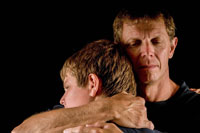
At W.T. Woodson High School in Fairfax, VA, six students have committed suicide in the last three years. Students there, along with school officials, parents and others from the community, have gathered together in recent weeks to grieve, to raise awareness, and to learn about resources to prevent suicides.

shutterstock_126648629editThe numbers at Woodson are unusual, but the CDC reports that suicide is the third leading cause of death for youth between the ages of 10 and 24. It results in roughly 4,600 deaths per year; approximately 157,000 in this age bracket receive medical care each year for self-inflicted injuries.

Why do teenagers, who seemingly have everything to live for, take their own lives? According to the healthychildren.org website of the American Academy of Pediatrics, at least 90% of teens who kill themselves have some type of mental health problem or are dealing with some type of substance. They may also have problems at school, with friends, with family or a combination. Some may have been victims of abuse. Others are struggling with issues related to sexual identity.

Efforts to address the problem of teen suicide include programs to make school officials, parents and teenagers aware of the warning signs and resources for suicide prevention; increasing access to mental health resources and removing the stigma associated with asking for help, and programs to end bullying and other actions that make teenagers feel hurt and isolated. There is no one solution.

One novel approach that has shown results is being offered by ReachOut.com, which connects teens and young adults with each other and with trained professionals via social media to discuss the stressful issues in their lives, increase understanding of mental health issues, and develop resilience and coping skills. For young people who feel alone, as if no one understands or cares about their problems, ReachOut.com can be the antidote.

Other projects, like It Gets Better, which targets LGBT young people, have inspired people across the country with their messages of hope and community.

Resources:

www.ReachOut.com

National Suicide Prevention Hotline 1-800-273-TALK (1-800-273-8255)

National Suicide Prevention Lifeline www.suicidepreventionlifeline.org

Learn the warning signs for suicide prevention at www.suicidology.org


Discussion Questions

  • It would be wrong to suggest that any one individual causes another to contemplate suicide, but what are some things you and your peers do that might make a young person feel isolated and hopeless?
  • Why is it so difficult for young people to seek help from parents, friends and mental health professionals?
  • What would you say to a friend who felt isolated and helpless?
  • How would your faith color that conversation?

Scripture Texts (NRSV) for Sunday, April 13, 2014, Sunday of the Passion/Palm Sunday

Isaiah 50:4-9a

Philippians 2:5-11

Matthew 26:14—27:66

Matthew 27:11-54

(Text links are to Oremus Bible Browser. Oremus Bible Browser is not affiliated with or supported by the Evangelical Lutheran Church in America. You can find the calendar of readings for Year C at Lectionary Readings.)

For lectionary humor and insight, check the weekly comic Agnus Day.


Gospel Reflection

As we endeavor to live Christ-like lives, few passages in scripture can be more challenging than today’s Gospel selection. Jesus was brought up on trumped up charges (with no way to really refute his accusers), tortured, and executed – all for the salvation of sinners who cannot and do not deserve it. We hear stories of extreme courage, in wartime for example, when brave men and women sacrifice their lives for those of their comrades, but we are blessed that most of us never have to face such a situation.

Still, it is an enormous blessing to have someone make such a monumental sacrifice for us, and Christ’s suffering and death are definitely good news for humanity. In fact, this story presents double good news. First, Christ’s death bought us salvation, freedom from sin, and victory over death. Second, this whole episode is an indication of God’s great love for us. As John 3:16 reminds us, “For God so loved the world that he gave his one and only Son, that whoever believes in him shall not perish but have eternal life.”

We can all count many blessings we’ve received in our lives; this is one more piece of evidence which shows how precious we are in God’s eyes. We are all, like Barabbas, guilty; but we gain our freedom through Christ’s sacrifice.

The thought of Jesus’ suffering is sobering, but we rejoice in the knowledge that it has won us forgiveness for our sins and eternal life.

Discussion Questions

  • In verses 11 – 14, why doesn’t Jesus answer the governor?
  • What can we learn from Jesus’ example about how to respond when we are mocked or falsely accused of doing something wrong?
  • In verse 46, Jesus cries out, “My God, my God, why have you forsaken me?” Do you believe God had really forsaken Jesus?
  • What message does this scripture hold for people who feel hopeless and alone?

Activity Suggestions

Ask each person in the group to write down two or three blessings for which he/she is grateful. Then, one at a time, ask each one to read his or her items. When each person finishes, the entire group says together, “[Name], God has blessed you and you are a blessing to us.”  Continue until everyone’s blessings have been shared.

Closing Prayer

Merciful Father, thank you for sending your son, Jesus, as a sacrifice for our sins. Help us to remember to count this among our many blessings and give you thanks for it. In the name of our savior who is and was and is to come.  Amen.

April 6, 2013–It’s a Miracle

Contributed by Angie Larson Clive, IA


Warm-up Question

Do you believe miracles happen today or just in the Bible?

It’s a Miracle

shutterstock_98368505editjp78 year old Walter Williams was a Mississippi farmer known as ‘Snowball’.  He died in hospice care on March 2, 2014. A nurse and a family member called the coroner to say that he had died.  Soon after Coroner Dexter Howard arrived and pronounced him dead at 9 p.m. He was placed in a body bag and transported to the local funeral home.  The coroner began to prepare the body for burial and then a surprising thing happened. The bag started to move.  There was kicking and breathing. Howard called the paramedics who came, found a heartbeat and took Williams to the hospital.

Coroner Howards calls it a miracle; others say that somehow an implanted defibrillator just below the skin on Walter Williams chest must have jump started his heart.  Williams’ daughter thanked Jesus in interviews for the extra time she received with her dad.  Williams, when interviewed, explained that he felt ‘a little weak’ but was talking and surrounded by family members.

Walter Williams lived for two more weeks in his home surrounded by family and friends who saw it as a miracle.  They report being overjoyed and thankful for the extra time.


Discussion Questions

  • What is your initial reaction to this story?
  • Do you think it was a miracle?
  • What is exciting about this story? Does anything cause you to be uncomfortable?
  • If this happened in your family, what would your response be? Would it be gratitude? Anger at the nurse and coroner? Shock?
  • If you were given two more weeks, how would you spend them?

Scripture Texts (NRSV) for Sunday, April 6, 2014 (Fifth Sunday in Lent)

Ezekiel 37:1-14

Romans 8:6-11

John 11:1-45

(Text links are to Oremus Bible Browser. Oremus Bible Browser is not affiliated with or supported by the Evangelical Lutheran Church in America. You can find the calendar of readings for Year C at Lectionary Readings.)

For lectionary humor and insight, check the weekly comic Agnus Day.


Gospel Reflection

Many confusing and exciting things take place in John 11.  Jesus knows Lazarus and his sisters, Mary and Martha.  They are referred to many times in the gospels.  Lazarus is known to Jesus as one “whom he loves.”  In this passage, Lazarus becomes ill while Jesus is away.  When a person finds out that one whom they love is sick, they usually rush to be at their side.  However, in this passage Jesus deliberately waits two more days, until Lazarus has died, to begin his journey.  The reader wonders why.

When Jesus arrives in Bethany Lazarus has already been dead for four days, meaning , in the conventional understanding of the day, that his soul has left his body.  Martha meets the Lord on the road and confesses her faith (and perhaps gently chastises him), “Lord, if you had been here, my brother would not have died.”  Jesus proclaims, “I AM resurrection and the life. “ When  Mary meets Jesus she offers the same statement of faith, “If you had been here, my brother would not have died.” These women believe that Jesus could have prevented the death of Lazarus if he had been present.

He asks where they have buried his body and they proclaim “come and see”.  This “come and see” is thought provoking because in the gospel of John it is frequently used as an invitation to pay attention and respond to what God is doing in Jesus. Jesus is moved (some say by grief, others suggest it is by frustration at the crowd’s blindness) and weeps.   Lazarus is buried in a tomb with a stone blocking the opening and Jesus commands him to “Come out,” raising  Lazarus from the dead.

In John’s gospel the raising of Lazarus solidifies opposition to Jesus and prompts the plot to kill him.  Many believed because Jesus did signs but, in some ways, they led to the events of Holy Week by forcing people to make a decision concerning his claims.

Discussion Questions

  • What part of this narrative stands out to you as interesting? Or exciting? Or confusing?
  • Why do you think Jesus raised Lazarus from the dead? What could have been the meaning of this event?
  • Jesus proclaims that he is the resurrection and the life.  What does this proclamation mean to you?

Activity Suggestions

Play hide and seek with the Gospel of John.  Have the group race to search how many other references to “Come and See” and “I am”.  If your group is large enough have two teams, one searching for “I am” references and one for “Come and See” ask them to write the scripture reference on a white board when they find it.  Give the group 5 minutes to see how many they can find.

Closing Prayer

Dear Lord Jesus, you are the resurrection and the life.  We need not fear death because you are with us and you raise us from the dead.   We sometimes  find this confusing.  As you showed your humanity and compassion through weeping over your friend’s death, so too show us your compassion and empathy and sustain us in the dark times of life.  Thank you for your sacrifice. Amen.

March 30, 2014–Was Blind But Now I See

Contributed by Dennis Sepper, Tacoma, WA


Warm-up Question

Have you ever seen a miracle happen?  What was it and how did it change you or your view of God and/or the world?

Was Blind But Now I See

At 14 years old, Lisa Reid and her family had a hard decision to make.  Lisa had a cancerous brain tumor that was causing her headaches, vomiting and loss of coordination.  Her only choice was a delicate operation to remove the tumor and save her life.  However, as a consequence of the surgery Lisa’s optic nerves were damaged and she became blind.

shutterstock_110721512editDeciding not to let her blindness hold her down, Lisa became a poster child for children with cancer.  She appeared on television shows and in documentaries across New Zealand.  She also made promotional appearances to help raise money for the organization that trained her seeing-eye dog, Amy.

Ten years after her sight was taken away by cancer, Lisa tripped and fell hitting her head on a coffee table and on the floor.  She got up, as she had done before, and went to bed.  The next morning when she opened her eyes she could see the white of her ceiling.  Looking around she saw light shining through the curtains and then she looked and saw her beloved dog Amy.  Lisa’s sight had come back, not perfectly, but it was back.

The doctors were skeptical.  There was no medical explanation for how Lisa regained her sight.  Her optic nerves, which have no power to regenerate themselves, were still damaged.  The doctors tried to explain her sight by saying that Lisa may have recovered from a blindness that had been more psychological rather than physical from the start.  “I don’t believe in miracles,” said Dr. Ross McKay.  That doesn’t matter to Lisa, all she knows is that once she was blind but now she sees.

In this week’s gospel text we meet a man blind from birth who is given back his sight by Jesus.  The religious leaders are skeptical and try to find excuses for the healing.  However, the man knows that it was Jesus who healed him and he knows, like Lisa, that once he was blind but now he sees.  His only response is to worship Jesus.

 More on Lisa Reid’s story

Discussion Questions

  • What do you think of Lisa’s story?  Was it a miracle?  Why or why not?
  • Do you think people are open to miracles or are they skeptical like Dr. Ross?
  • Some would say that miracles are in the “eye of the beholder”.  What do you think that means? Do you agree with that statement?

Scripture Texts (NRSV) for Sunday, March 30, 2014 (Fourth Sunday in Lent)

1 Samuel 16:1-13

Ephesians 5:8-14

John 9:1-41

(Text links are to Oremus Bible Browser. Oremus Bible Browser is not affiliated with or supported by the Evangelical Lutheran Church in America. You can find the calendar of readings for Year C at Lectionary Readings.)

For lectionary humor and insight, check the weekly comic Agnus Day.


Gospel Reflection

The Gospel writer John is a great storyteller.  In this story of the encounter of Jesus and the man blind from birth, John’s major point is that Jesus is the “Light of the World” and the Messiah (here noted as the “Son of Man”).  In order to make his point, John uses a storytelling trick whereby the blind man gains his physical sight and then as the story progresses his eyes of faith become more and more clear until he sees Jesus as the Messiah and worships Jesus.  At the same time, the spiritual eyes of the religious leaders are beginning to dim and finally Jesus hints that the Pharisees are blind to God’s work in the world.

Along the way in this story there are several things that are unique to John and John’s gospel which speak to us today.  Among them are the following:

Notice that Jesus was walking along, saw the blind man and went over to heal him.  In the other Gospels people need to have at least a little faith for the miracle to happen.  In John the miracles happen first and then people are moved to faith.  At first all the blind man knew was that “some guy by the name of Jesus put mud on my eyes and now I see.”  The good news here is that God comes to people even if they do not, at first, have any faith.  God’s love touches all people not just those who are with the “in” crowd.

Next, the blind man’s faith grows as a result of being questioned by the religious leaders (he “sees” even more clearly).  In this story the man goes from calling Jesus just “some guy” to calling him a prophet and then finally seeing Jesus as the Messiah and worshiping Jesus.  There are some Christians in our day who see questions as a bad thing.  However, I would note that Jesus never scolded anyone for asking a question…even when the question seemed to signify that the person did not understand what Jesus was saying.

As Lutherans we welcome questions and discussions and even debates as a way of searching for the truth and growing our faith.  Also note that the man’s faith grew slowly as he came to understand who Jesus really was and what that meant for his life and for the world.  We have to respect the fact that we and others can be at different places along the line of gaining faith and an understanding of Jesus.  Some might say Jesus is person, others that he is a good teacher, some that he is a prophet and then others who say “You are the Christ, the Son of the living God.”  It’s okay to have your faith in Jesus grow slowly.

Finally in John’s gospel miracles are called “signs”.  In John’s gospel the miracles are never an end to themselves but point to something beyond the miracle itself.  Here the healing of the blind man is a sign that points to Jesus as the Light of the World.  Today Jesus is still the Light of the World shining into the dark places of our lives, the lives of those we love and into the life of the world.  By faith we can clearly catch a glimpse of God’s reign and of Jesus’ presence in the world today.

Discussion Questions

  • We often see the Lenten season as a journey of faith.  Given the story of the man born blind where do you see yourself on this journey?  Who is Jesus to you?
  • Do you think questions about faith and religion are a good thing or not?  Why?
  • I did not mention it in the Gospel Reflection but as noted in verse 16 Jesus must have done this miracle or sign on the Sabbath and the Pharisees were not happy about it.  What is your opinion?  Was it okay for Jesus to heal on the Sabbath even though there were rules about working on the Sabbath day (healing would be considered work)?  Why or why not?
  • Since Jesus is the Light of the World, what are some ways we can reflect that light of Jesus into the lives of our friends and neighbors?

Activity Suggestions

If you have midweek Lenten services and maybe soup suppers before worship, take a moment to interview an older adult.  Ask them about their faith journey, how did they come to believe that Jesus is the Messiah and the Light of the World.  Then, next time your youth group or bible study meets, compare notes.  What are the similarities?  Are all of the faith journeys alike?  What do the different stories tell you about how we come to faith in God and Jesus?

Closing Prayer

Amazing God, open the eyes of our faith so that we may come to see clearly that Jesus is the Christ and the Light of the World.  May the light of Christ shine brightly into our darkness and the darkness of the world.  Strengthen and empower our faith so that we might serve you and our neighbors in need by reflecting the light of your Chosen One, Jesus the Christ.  Amen.

March 23, 2014–Crossing Borders

Contributed by Danny Stone, Cedar Rapids, IA


Warm-up Question

Share a time when you were sick and needed someone to care for you?

Crossing Borders

shutterstock_92999659editSanaz Nezam emigrated to Michigan’s Upper Peninsula in the fall of 2013.  The “Yoopee” seems like an unlikely home for a 27-year-old from Iran, but Houghton’s Michigan Tech is a top notch Engineering University.  Sanaz was a graduate of Tehran University, earned a degree in French translation, was fluent in Farsi, French and English and knew a little Spanish, German, Arabic and Swahili.  Like many young adults she had a Facebook page full of inspirational quotes.  She was a newly-wed, active volunteer and was a Muslim who also attended a Christian congregation.

On December 9th, 2013, Sanza was transported from Houghton to a larger regional medical facility, Marquette General Hospital (MGH) in Marquette, Mi. Sanza was brain dead.  Her husband, Nima Nassiri, was in the Houghton County jail facing domestic assault charges.

Nurses researched the special care required for a Muslim woman, but contacting Sanza’s family was difficult. Since the Iranian Hostage Crisis (1979 – 1981), the United States has not had an embassy in Tehran.  However, clever detective work by MGH nurses helped the medical staff  contact Sanza’s family.  Nurses worked with translators to communicate and eventually set up streaming video.  According to MGH nurse, Gail Brandley,  Sanza’s family “actually asked the nurses to stroke her hair, to kiss her forehead and provide that loving touch that they normally would. And it wasn’t just one nurse that they were able to connect with. It seemed like every nurse that came on just really wanted to help this poor family that was helpless 6,000 miles away. And the family could really see and feel the compassion from each and every nurse.”  (NPR’s Here & Now).

After having the chance to say goodbye via the video conference, Sanaz’s family agreed to donate her heart, lungs, kidneys, liver, pancreas and small intestine.  Her husband has been charged with murder, but Sanza’s death allows others to live.

Discussion Questions

  • Nurses have a difficult job.  What difficulties did the Sanaz’s nurses face?
  • What were some of the cultural concerns Sanaz ‘s nurses worked to overcome?
  • Have you met someone who recently emigrated to the United States?  What was their experience like?
  • According to the National Coalition Against Domestic Violence, an estimated 1.3 million women are victims of physical assault by an intimate partner each year.  What are some things we could do to end the violence?

Scripture Texts (NRSV) for Sunday, March 23, 2014 (Third Sunday in Lent

Exodus 17:1-7

Romans 5:1-11

John 4:5-42


(Text links are to Oremus Bible Browser. Oremus Bible Browser is not affiliated with or supported by the Evangelical Lutheran Church in America. You can find the calendar of readings for Year C at Lectionary Readings.)

For lectionary humor and insight, check the weekly comic Agnus Day.


Gospel Reflection

The animosity between Jews and Samaritans can trace its roots Jacob’s  (aka Israel)  troubled family.  Remember the twelve sons, a special coat made for Joseph, jealous brothers selling him into slavery, Joseph’s rise in Egypt and the reunion with his half -starved family.  In his last days, Jacob blessed Joseph’s two sons to be great leaders of the tribes.  Their descendants founded the Northern Kingdom (Israel) and the Southern Kingdom (Judah).

Israel, with its capital Samaria, was the first kingdom to fall.  Assyrians attacked and scattered the tribes in 722 BCE.   Israel’s survivors intermarried with colonists and mingled their religious traditions.  Judah was conquered and taken into Babylonian captivity in 600 BCE, but 43,000 were allowed to return to Judah and Jerusalem in 538 BCE.  The northern Samaritans resented the returning tribes with their religion influenced by time in Babylon, and the southern Jews despised their northern relatives for foreign intermarriage and paganism.  By the time of Jesus, Samaritan and Jewish animosity frequently bubbled over into violent clashes.  Both groups forbade all contact.

Jesus was breaking cultural norms by even talking with a Samaritan, yet alone a woman, yet alone a woman who had several marriages.  During the time of the Gospel, women generally only had contact with other women or male relatives. Women could not worship with men and were not educated.  In today’s Gospel, we see Jesus throwing out all the old cultural rules to model a new way.

Discussion Questions

  • What are some of the social rules that have changed in the last 100 years?
  • Have social rules changed for better or worse?  Why?
  • Do cultures change quickly or over long periods of time?  Try to share concrete examples.
  • Which of today’s social rules or social issues would Jesus challenge?


Activity Suggestions

Option 1:  Gather a wide variety of magazines that feature people of many ages, cultures and sub-cultures. Have small groups make collages that celebrate our cultural diversity.

Option 2:  Allow teens to pull out their phones and research Sanaz Nezam.  Small groups can give brief presentations from information they gather.

Closing Prayer

Dear God, Father of all.  Please, bless the work of nurses and all health care workers.  Their love and compassion is desperately needed in our all too violent world.  Bring comport to those who mourn, understanding to those who are intolerant, peace to those who hate, and forgiveness to those who act in violence.  In your holy and universal name we pray, Amen.


March 16, 2014–In Context

Contributed by Lindean Barnett Christenson, Bozeman, MT


Warm-up Question

Have you ever encountered a teacher on some other “turf” ­(a grocery store, the mall, a movie, some other place you weren’t expecting to see him/her)? What was your reaction? Did it change the way you thought about him/her? How? Why?

In Context

shutterstock_125071088editThere’s a tough math teacher at St. Francis High School in La Cañada, California. Jim O’Connor is a Vietnam veteran, a no-nonsense educator, and not someone his students were likely to think of as “warm and fuzzy.”

It turns out that there’s a lot more to Mr. O’Connor than meets the eye, at least from his students’ perspective. During a field trip to a children’s hospital to learn first-hand about where school blood drive donations would go, a couple of Mr. O’Connor’s students were surprised when people said, “You go to St. Francis? You must know Jim O’Connor. Isn’t he wonderful?” The young men had no idea what people were talking about, until they learned that Mr. O’Connor has given more blood there than any other donor. In addition, the students found out he spends three evenings a week cuddling sick babies, like he has for the past twenty years. They had had no idea.

One of Mr. O’Connor’s students says that where before he respected him, now he tries to emulate him. Evidently, knowing the “softer side” of their tough teacher has not deflated the students’ opinion of Jim O’Connor.

Read more about Jim O’Connor and his students here: http://articles.latimes.com/2013/dec/23/local/la-me-beat-biggest-blood-donor-20131224


Discussion Questions

  • Why do you think Mr. O’Connor never told his students about his work at the hospital?
  • Is there something about you that might surprise people, or influence how they think about you (a hobby, an interest, an interesting experience)?
  • Who are your role models? Is there someone you try to emulate? What is it about that person that inspires you to want to be like him/her?

Scripture Texts (NRSV) for Sunday, March 16, 2014 (Second Sunday in Lent)

Genesis 12:1-4a

Romans 4:1-5, 13-17

John 3:1-17

(Text links are to Oremus Bible Browser. Oremus Bible Browser is not affiliated with or supported by the Evangelical Lutheran Church in America. You can find the calendar of readings for Year C at Lectionary Readings.)

For lectionary humor and insight, check the weekly comic Agnus Day.


Gospel Reflection


This passage from John includes some of the most familiar verses in the Bible. Unfortunately, more often than not, they are taken out of their context: a pretty interesting conversation between Jesus and a Pharisee named Nicodemus. Nicodemus comes to Jesus at night – because he wanted to avoid detection? because that’s when he had time? because he had not yet been enlightened? – and he tries to understand what Jesus is saying in very literal terms (flesh). Jesus, however, keeps pushing him toward a new way of understanding (spirit). That Nicodemus doesn’t quite “get it” makes Jesus’ point: the kingdom of God is not something one can will one’s own way into; it’s not a matter of deciding, or doing all the right things and avoiding all the wrong ones. Being born of water and the Spirit is God’s work in and on us.

While John 3:16 is one of the most familiar verses in all of Christian Scripture, and is usually shared with the intent of demonstrating the love of God for the world (Martin Luther referred to this verse as “the gospel in miniature”), sometimes people hear it not as a word of hope, but as a word of judgment. Many Christians can tell stories about how the word “Christian” is associated not with grace, love, hope or service, but with judgment, hypocrisy, hatred and meanness.

Evidently enough people have had enough negative experiences with self-proclaimed Christians, that sharing even “good news” is seen as suspect. Perhaps we should always make sure that verse 17 follows verse 16 – Indeed, God did not send the Son into the world to condemn the world, but in order that the world might be saved through him. God is in the saving, loving, forgiving, redeeming and rescuing business. For the sake of the whole world.

Discussion Questions

  •  What do you know about Pharisees? What do you know about Nicodemus?
  • In John 3:3, the Greek word which is translated “from above” in the NRSV, is translated “again” in the NIV, and “anew” in the RSV. All three translations are good ones. Which one is most familiar to you? Which one is most helpful in understanding what Jesus is saying? Why?
  • If someone were to ask you if you have been “born again,” how would you answer?
  • How have you seen/heard “Christians” portrayed in the news, TV, movies, etc.? Do you feel those depictions are accurate? Why or why not?
  • Which verse is “better news” to you – John 3:16 or John 3:17? Why?
  • John 3:16 may be the most popular/familiar verse in the whole of Christian Scripture – perhaps you have seen it lifted up on posters at sporting or other events. If you were going to choose a different verse to hold up, to “sum up” your faith, what would you choose? Why?

Activity Suggestions

  • Read the rest of Nicodemus’ story in the Gospel of John: 7:45-51 and 19:39-42. What do you make of these other two mentions of Nicodemus? Does the rest of his story change the way you think about him?
  • Ask several adults in your congregation how they answer the question, “Have you been born again?” See if the answers are different if you re-phrase the question (born from above/born anew).
  • The Rite of Holy Baptism (ELW p. 227; “In baptism our gracious heavenly Father…”) connects baptism with these verses from John. Ask your pastor if your group can create a prayer station or some other way for worshipers to remember their baptism during/after worship this Sunday. If not, come up with a remembrance of baptism for your class/family to use.

Needed: Talk to the pastor ahead of time!

Possible supplies: pitcher and/or bowl; water; towel(s); glass marbles that look like drops of water; ribbon in water colors; shells – there may be no end to the possibilities.

Closing Prayer

Lord Jesus, you taught Nicodemus. Teach us. Fill us with your Spirit and send us into the world God loves. Amen