
Skip to content
ELCA Blogs

Faith Lens

November 15, 2020–Business-wise

Angie Larson, Alexandria, MN

Warm-up Question

How old should you be  to start your own business? What kind of business would you start?

Business-Wise
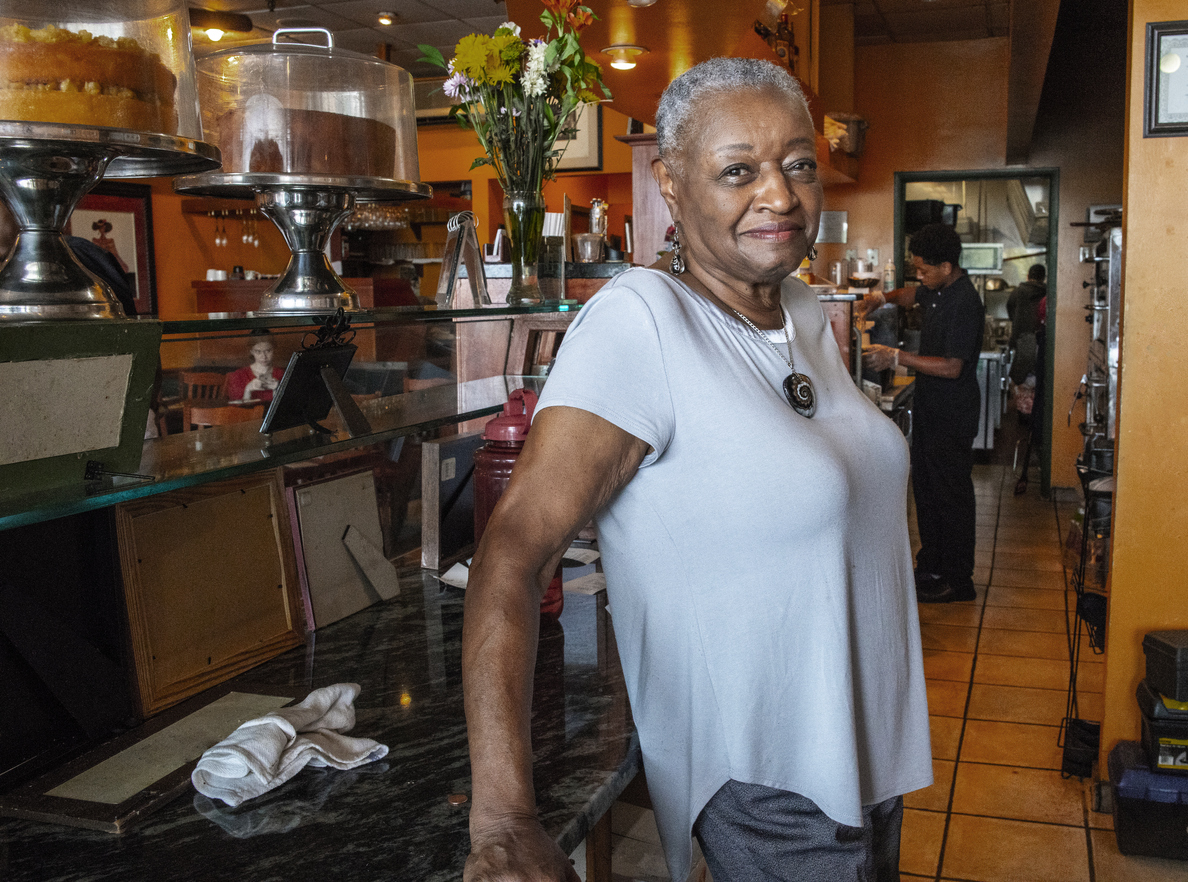
Hundreds of people have used their time during the pandemic to start a new business. Feyi Raimi-Abraham has used the time to start the Black Dementia Company (BDC).  BDC creates  items such as adult coloring books, puzzles, and calendars featuring Afro-Carribean scenes. Paula Grady applied for over 500 jobs after a pandemic layoff, which led her to start a scented candle business in her own home studio called Osme Candles. Kim Brookes started a luxury scented jewelry company which features jewelry carrying essential oil fragrances for the wearer. 

When asked how they went beyond rejections from hundreds of companies and personal discrimination from those who told them they couldn’t be successful, these women cited their previous life experience. They are 52, 57, and 59 years old. Paula says, “I don’t understand why experience isn’t valued more; companies need people who have been around the block and have encountered situations before. You have life experience and working examples to draw on.”

Discussion Questions

  • Why do you think companies rejected Feyi, Paula, and Kim’s endeavors?
  • How would age affect someone’s ability to use their talents to start a business?
  • What emotions would you feel if you were rejected because of your age?

Twenty-fourth Sunday after Pentecost

Zephaniah 1:7, 12-18

1 Thessalonians 5:1-11

Matthew 25:14-30

(Text links are to Oremus Bible Browser. Oremus Bible Browser is not affiliated with or supported by the Evangelical Lutheran Church in America. You can find the calendar of readings for Year A at Lectionary Readings.)

For lectionary humor and insight, check the weekly comic Agnus Day.

Gospel Reflection

This passage is frequently called the parable of the talents. A master, going on an extended trip, delegates responsibility to his employees. He entrusts each of his servants with a great deal of money (a talent is considered more than 15 years salary).  The first invests wisely and makes an equal amount in return. The second receives two talents and returns two more in profit. The third servant plays it safe.  He hides the money so he can return it to the master in the same state as it was given to him. This makes the master angry.

This story is often misused.  It is interpreted to say that if you give yourself out to the world through your gifts, talents, treasures, prayers, you’ll get an equal amount in return. Yet, God isn’t some cosmic vending machine into which you put something and you get something equal back. The truth of this parable is that we’re given gifts to use, not to hide away in fear.  We put them out there with boldness, knowing that they come from God. Our insecurities, our fear of rejection, and our concern about other people’s judgements often get in the way of using what God has given us. When Christ came, he freed us with his love.  We will never be rejected by God and we will always be loved. We can be brave in this freedom!

Discussion Questions

  • How would you feel if you gave someone a really cool present to use and they never used it?
  • What are some of the things that get in the way of us sharing our gifts, talents, and time?
  • Are there ways in which we sometimes expect God to be like a cosmic vending machine? When have you done that? 

Activity Suggestions

Do a mini-talent show. Ask members of your group to show off their talents; this can work if you’re meeting virtually as well. For example, can they touch their tongue to their nose? Lip sync to a song? Drum a beat using pencils? Perform a sock puppet show? Share your talents.

Closing Prayer

Blessed Savior, We thank you that you gave your whole life for us so that we can be free to help our neighbors with the talents you have given us. Help us to see ways to bring your kingdom to earth in service of our neighbors. Forgive us when we err and guide us to care for the least, the lost, the lowest, and the lonely in our communities. Direct us to use our resources for others. In your name we pray, amen.


 

November 8, 2020–Be Prepared

Mary Ellen Helms, Loveland, OH

Warm-up Question

Imagine a world where commerce stopped immediately and you couldn’t just go to the store or order items which you need online.  What is the number one item you’d like to have on hand in large quantities?

Be Prepared

Have you ever known a “prepper”? Preppers are people who prepare for emergencies or disasters by storing large quantities of items they might need. With some stockpiling dehydrated food, water, flashlights, extra batteries, and even ammunition, prepping has become a growing industry in the United States during the past few years.  It has seen an enormous uptick during the Covid-19 Pandemic. In lots of ways, this makes sense.  At the onset of the virus, there were shortages of everyday items such as toilet paper, cleaning supplies, and PPE (personal protection equipment). Fortunately, many of the supply chains have caught up to the extreme demand placed on them earlier this year. 

While we might laugh at the idea of having lots of astronaut ice cream or beef jerky on hand (my favorite prepper snack!), people who prepare for disasters often weather the storm better than those who make no plans. “Be Prepared” is a motto often attributed to the Boy Scouts, but many other groups  prepare us for emergencies and disasters. Check out https://www.ready.gov/kids/teens to learn about some of the ways teenagers can be helpful during the event of an emergency.

Being prepared is an important life skill all can develop. It goes beyond having what you need and extends to planning the response you’ll make when something unexpected happens.

Discussion Questions

  • What are some ways that you and your family prepare for disasters?
  • What unexpected events have happened in your life? How was your family prepared or not prepared for these occasions?
  • How does talking about situations like preparedness increase or decrease your worry? Why might it be important to be prepared for disasters?

Twenty-third Sunday after Pentecost

Amos 5:18-24

1 Thessalonians 4:13-18

Matthew 25:1-13

(Text links are to Oremus Bible Browser. Oremus Bible Browser is not affiliated with or supported by the Evangelical Lutheran Church in America. You can find the calendar of readings for Year A at Lectionary Readings.)

For lectionary humor and insight, check the weekly comic Agnus Day.

Gospel Reflection

 Jesus uses parables to teach us and so we can approach the Parable of the Ten Bridesmaids by asking, “What is Jesus trying to tell us?” We can’t tie a pretty bow on this parable.  This one leaves us struggling.  

Ten bridesmaids gather, waiting for the bridegroom. Five prepare with all they will need; five do not have the necessary oil for lamps. When the unprepared bridesmaids ask those with oil to share, the prepared ones answer, “No, go get some from the dealers!”  The usual Sunday School answer would be,  “We’ll share!”  So, this seemingly selfish attitude tells us something more is going on here than a teaching on generosity. While the unprepared bridesmaids are gone, the door shuts and they lose their opportunity to share the feast . 

This story is not one about sharing resources with the marginalized or outcasts – there are plenty of places where that value is clearly evident in scripture. This parable talks to us about being patient and prepared for the coming of the Messiah. Part of our responsibility is to be ready for the Messiah. 

However, this parable says we can’t be perfectly prepared. “Keep awake, therefore, for you know neither the day nor the hour.” While we can seek to be as prepared as possible, another important message  is to be patient and comfortable with the unknown. The mystery of faith (including the return of the Messiah) is alive!

Discussion Questions

  • How would you have felt if you were one of the prepared bridesmaids? How would you have felt if you were one of the unprepared?
  • What are some ways you are keeping watch for the coming of Jesus? How do our lives look when we are prepared and patient?
  • What about this story leaves you wondering?

Activity Suggestions

  • Using this link, work to make an emergency plan for your family or youth group. Talk about the materials you should have on hand, the important information you’d need, and how you would survive.
  • Invite a speaker over Zoom or in life to talk about emergency preparedness. This could be someone from the Red Cross, an EMT, or someone else who works in disaster response.

Closing Prayer

God, we wait, but God, we can’t wait for you! We give you thanks for your Word which inspires us.  Help us to live in a way that is both prepared and patient. We ask that you would point us to signs of your kingdom and help us light the way for others. In your holy name we pray. Amen.


November 1, 2020–

Jen Krausz–Bethlehem, PA

Warm-up Question

How do you make important decisions? What factors do you consider?

Title

According to articles by Foundation for Economic Education, a libertarian think tank, and Fox News, The World Health Organization (WHO) has revised its position to say that countries around the world should not rely on lockdowns to stop outbreaks of the coronavirus. The advice comes as the number of new COVID-19 cases is rising in the United States and across Europe, with some leaders considering new lockdowns to bring the numbers down.

“We in the World Health Organization do not advocate lockdowns as the primary means of control of this virus,” WHO envoy Dr. David Nabarro said.

The organization said that lockdowns are causing global poverty to skyrocket. They also are believed to cause other problems like increases in mental health issues, addictions, and suicides.  “The only time we believe a lockdown is justified is to buy you time to reorganize, regroup, rebalance your resources, protect your health workers who are exhausted, but by and large, we’d rather not do it,” Navarro said. 

The impact of previous lockdowns on tourism, nations’ economies, and other aspects of life continue to have huge global consequences, and some argue that renewed lockdowns would only interrupt the recoveries that many countries are seeing now.  It seems that we may well have a doubling of world poverty by next year,” Navarro said. “We may well have at least a doubling of child malnutrition.”

Back in March when lockdowns began, health experts thought the death toll from COVID-19 could be as high as 5%. Six months later, the rate is thought to be less than .5%, or 10 to 20 times lower than originally estimated.  Many, however, have argued that it was precisely lockdowns and mandatory masking which have prevented a much worse epidemic.

Back in March, healthcare providers were very worried that hospitals would be overrun and that there would not be enough equipment like ventilators to treat people who needed it. Fewer hospitals than expected in the U.S. were overrun in the way that was feared.  Younger people who are now getting the virus are less likely to need hospital care. 

Because of changes like these, some suggest that lockdowns are less likely to be needed to keep COVID-19 under control. It’s not that WHO or world leaders were necessarily wrong to lock down in March and April.    Some scientists believe the death estimate from COVID is still too low due to under-reporting. The WHO suggests that countries should bolster resources devoted to testing and contact tracing, as a means to avoid future lockdowns.  

“The last thing any country needs is to open schools and businesses, only to be forced to close them again because of a resurgence,” said WHO Director-General Tedros Adhanom Ghebreyesus .

Discussion Questions

  • How were you personally impacted by the COVID-19 lockdown earlier this year
  • How would you react to new lockdowns because of a rise in COVID-19 cases and deaths?
  • Is the doubling of world poverty a sufficient reason not to lock down again, even if more people get COVID-19 in the U.S. and around the world?
  • What factors do you think should go into a future lockdown decision?
  • As the articles cited note, the poor suffer devastating economic impact during a lockdown.  When lockdowns are eased they are also the ones most likely to be be forced to work under unsafe conditions, become ill, and receive substandard treatment.  What does concern for the poor look like in this epidemic?

All Saints Sunday

Revelation 7:9-17

1 John 3:1-3

Matthew 5:1-12

(Text links are to Oremus Bible Browser. Oremus Bible Browser is not affiliated with or supported by the Evangelical Lutheran Church in America. You can find the calendar of readings for Year A at Lectionary Readings.)

For lectionary humor and insight, check the weekly comic Agnus Day.

Gospel Reflection

This is the Jesus’ first recorded sermon  in Matthew, and it is very different from what some rabbis of the time would have said. The sayings commonly known as the beatitudes are not telling people what they have to do to be blessed by God; instead, they are telling them what kind of people and character qualities are already blessed by God.

Instead of requirements, the beatitudes describe what God’s grace looks like for humanity. But it is a radical departure from what the culture says about who God blesses and how those blessings come about.  The blessings described in these verses all take place when God’s kingdom through Jesus comes near. Blessings like comfort, mercy and purity come to those who life humbles, who experience sorrow, and who are merciful to others.

The prophets mentioned in verse 12 shared messages from God to the people of Israel, which parallels the way followers of Christ are called to share the good news of salvation with others. Jesus knows that not everyone is going to be open to hearing about him, and that his followers are going to face persecution.

In America today, Christians have a great deal of freedom to talk about our faith and share it with others, but that doesn’t mean it will always be well-received. Elements of the culture are still hostile toward Christians. Persecution may not include being martyred, but that doesn’t mean you won’t face some sort of negativity for your beliefs.

It may not feel like God is blessing you when you face persecution, but that’s because some of our blessings are not experienced during our life on earth. The kingdom Jesus describes starts now, but its ultimate fulfillment is in heaven.

We can’t wait until heaven to look for the blessings of Christ’s kingdom, but we also can’t expect to fully experience that kingdom in this life either. As Christians, we live in the tension between this life and the next.

Discussion Questions

  • What kind of person is going to be blessed in Christ’s kingdom? What qualities does Jesus say are blessed?
  • How are those different from the world’s view of blessings?
  • What is the difference between being economically poor and being “poor in spirit”?
  • What kind of blessings are available to us even in the middle of a global pandemic?

Activity Suggestions

According to Maslow’s Hierarchy of Needs, it is more difficult to fulfill spiritual needs when physical needs are not met. This is why so many churches have food banks and clothing drives. Together as a group, identify one way that you can meet a specific physical need of one person or a group of people in your community or elsewhere in the world. For example, through the Heifer Project or the ELCA’s Good Gifts program, breeding animals which  produce milk, eggs, or meat can be bought and sent to people in need, so that they can support themselves and their families. 

Closing Prayer

God of heaven, thank you for the physical and spiritual blessings you give us, no matter what is going on in the world around us. Help us to be a blessing to others in turn, and to point them to you as the author of all blessings. Amen.


October 25, 2021–Healthy in Mind and Spirit

Jocelyn Breeland, Sunnyvale, CA

Warm-up Question

What stresses you out?

Healthy in Mind and Spirit

October 10 was World Mental Health Day, sponsored by the World Health Organization to raise awareness of mental health issues around the world and mobilize efforts in support of mental health. Millions of Americans are affected by mental illnesses every year. 

Mental illness among young people is particularly concerning. Suicide is now the second leading cause of death among Americans 10-34 years old. A 2018 Pew Research Center study found that 70% of teens reported signs of depression among their peers. 

The teen years are stressful for many reasons, including a desire for greater autonomy, pressure to conform with peers, increased access to and use of technology, and exploration of sexual identity. The COVID-19 pandemic has only increased these stress factors. Many young people are physically isolated from their peers, dealing with family financial anxiety due to lost employment, or engaging in difficult (but necessary) conversations brought on by the national reckoning with race and lack of equity.

One goal of mental health organizations is to destigmatize mental illness, to remove the barrier of shame which keeps many from seeking treatment. Mental illness is not a personal failing; it is a medical condition for which there are effective medications and other treatments. In one awareness effort, celebrities such as Selena Gomez, Brad Pitt, Gabrielle Union, Katy Perry, Jay Z, and Mindy Kaling  took to social media to share their mental health challenges and their decisions to seek help. Their message is clear: You are not alone.

Another goal of Mental Health Day is to raise awareness of national and local mental health resources. Young people who think they might need help can start by discussing their feelings with their parents, another trusted adult, or a health care professional. If none of these is an option, here are some places to get help:

  • Note:  If you or someone you know is in an emergency, call National Suicide Prevention Lifeline 800.273.TALK (8255) or 911 immediately.
  • National Alliance on Mental Illness (NAMI) HelpLine 800.950.NAMI (6264)
  • The Society for Adolescent Mental Health website includes a list of online resources, websites, apps and guides here.

Discussion Questions

  • Which of the stress factors noted most affects you right now?  Why?
  • Is there a stress factor not mentioned with which you find it hard to deal?
  • Stress is often associated with a sense that one has lost control.  How has COVID affected your sense of control?  What might you do to feel more in control–or at least lower your anxiety when there are circumstances beyond your control?
  • What ways to reduce the stress do you find most helpful (for example, regular exercise or prayer)?

Twenty-first Sunday after Pentecost/ Reformation Sunday

Jeremiah 31:31-34

Romans 3:19-28

John 8:31-36  (Reformation)

Matthew 22:34-46  (Pentecost 21)

(Text links are to Oremus Bible Browser. Oremus Bible Browser is not affiliated with or supported by the Evangelical Lutheran Church in America. You can find the calendar of readings for Year A at Lectionary Readings.)

For lectionary humor and insight, check the weekly comic Agnus Day.

Gospel Reflection

What is the greatest commandment?  Jesus stands before the Sadducees and Pharisees as the wisest and most patient teacher, explaining something which should be obvious to men who have dedicated their lives to studying God’s word.   Of course, Jesus knows they are not really on a quest for insight. They’re trying to trick him into exposing himself as an imposter.

Jesus’ answer to their question is perfect. The greatest commandment is “Love the Lord your God with all your heart and with all your soul and with all your mind.” Love for God is the guiding principle for all believers. This establishes our relationship to God. The second, “Love your neighbor as yourself,” shows how we respond to God’s love in all aspects of our lives. 

Our instruction is pretty simple: love God and share that love in relationships with others. Keep these two commandments and obedience to the other commandments follows naturally. 

Reformation Sunday is this week, a time to consider the message of Martin Luther’s Ninety-Five Theses (Disputation on the Power and Efficacy of Indulgences). Luther argues that God’s favor is not something that we can earn or purchase. Like Jesus, Luther focuses on our relationship to God. We are loved and, therefore, we respond with love.  Obedience does not put God in our debt; it is what we offer to God out of gratitude for what we have first received. The good news of this day is that salvation does not depend on how much money we have, what we eat, what we wear—or even how perfectly we keep the commandments. It comes from a right relationship with God. Yet, having received the gift of God’s care, it is our joy to love God and neighbor.  Jesus is our guide, the light and the way.

Discussion Questions

  • Of the Ten Commandments (Exodus 20:2-17 and Deuteronomy 5:6-17) which is the hardest for you to follow. Why?
  • Many have said that the commands to love god and neighbor are not so much two different commandments as two sides of the same coin.  What does that mean?  Do you think it is possible to love God without loving one’s neighbor….to love the neighbor without loving God?
  • What is the difference between being obedient out of a sense of duty or hope of reward and honoring the commandments out of gratitude for God’s love?
  • Jesus is clear about what he regards as the greatest commandments.  Do you think most Christians act as if those these are the greatest commandments?  If not, what do you think they regard as the signs of a faithful Christian?
  • In verses 41 – 46, what is the meaning of the series of questions Jesus asks the Pharisees?

Activity Suggestions

Together, make a list of ways you – individually or as a group – can support mental wellness. What can you do to help yourself or others relieve stress? How can you establish meaningful connections in the COVID-19 era?

Make plans so that each member of the group can initiate one of these ideas in the next week. 

Next week, compare notes. What went well? What activities would you like to make ongoing projects?

Closing Prayer

Merciful God, thank you for sending your son, Jesus, to show us your love and to teach us how to share your love in our world. Be with us as we learn and grow.  Give us wisdom and strength, individually and as a community, to show compassion to others. In the name of Jesus, amen.


October 18, 2020–Coins Matter

Leslie Weber, Chesapeake, VA

Warm-up Question

Have someone take some coins from their pocket/wallet/purse and talk about them as a group.

  • What do you notice about the coins? What is printed on them?
  • How often do you have coins in your possession? What do you commonly use coins to buy?
  • What is your first memory of coins?
  • If no one or very few people have coins, discuss why that is.

Coins Matter

Due to changes in shopping and banking practices during the COVID-19 pandemic, coin circulation patterns have been disrupted, which has led to many stores preferring exact change and electronic payments. Enough coins exist in the country, they just are not circulating in the same ways, since lockdowns began in March of 2020.  This seems to be the result of a combination of factors—businesses being closed, banks having reduced hours, and people avoiding touching public objects (such as coins) in order to slow the spread of the virus.

The Federal Reserve has formed a task force to “mitigate the effects of low coin inventories caused by the COVID-19 pandemic.”  However, officials believe this to be a temporary issue that will resolve itself as restrictions lift and shopping patterns return to normal.

Discussion Questions

  • The coin shortage does not affect everyone equally.  What populations/groups might might the coin shortage especially impact? (ex: people who do not have credit cards, people who use laundromats, the Salvation Army Red Kettle program, etc.)
  • What are the pros/cons of our society becoming increasingly cashless?

Twentieth Sunday after Pentecost

Isaiah 45:1-7

1 Thessalonians 1:1-10

Matthew 22:15-22

(Text links are to Oremus Bible Browser.  You can find the calendar of readings for Year A at Lectionary Readings.)

For lectionary humor and insight, check the weekly comic Agnus Day.

Gospel Reflection

The saying goes, “The enemy of my enemy is my friend.”  So, two unlikely groups join together “to entrap [Jesus] in what he said”. The Herodians are supporters of the Roman Empire, while the Pharisees are part of the Jewish temple leadership. They disagree about a lot, but one thing they can agree on is that they are not fans of Jesus. They attempt to put Jesus in a lose-lose situation with the question they pose to him. “Is it lawful to pay taxes to the emperor?”   But Jesus answers stealth-fully and ends up entrapping them in the process.  

In order for Jews to comply with the first two of the Ten Commandments (They should  have no other gods or make any graven images), all imprinted money was supposed to be traded in for temple currency before entering the temple complex. The Roman census tax, about which they are speaking, could only be paid with a Roman coin, Most Roman coins contained an image and inscription considered blasphemous by many Jews: Tiberius Caesar Divi Augusti Filius Augustus Pontifex Maximus (Tiberius Caesar, august son of the divine Augustus, high priest) [The New Interpreters Bible Commentary, Volume VIII, p.420].  Therefore, when they hand Jesus a denarius, they show themselves to be breaking the temple rules.  They are trapped instead of Jesus.

Jesus gives a non-answer.  By not giving a “yes” or “no” answer, Jesus avoids angering either those loyal to Rome or the Judean nationalists, who oppose Roman rule. Additionally, his non-answer drives home two points. First, it is lawful, according to the Torah, to pay taxes to foreign governments, like the Roman Empire.  But at the same time, everything is in fact God’s—the creator of everything.  Caesar and everyone else are just temporarily using what is ultimately and always truly God’s.

Martin Luther’s explanation of the Fourth Commandment in the Small Catechism includes “others in authority” (SC I 8) among those whom we are to honor. In the Large Catechism he equates rulers to “fathers of the nation” (LC I 158). However, Luther also charges such authorities to care for those over whom they rule, specifically by ensuring that they receive the daily bread that God provides for them.  

This is why Luther writes, in his explanation to the fourth petition of the Lord’s Prayer, “It would therefore be fitting if the coat of arms of every upright prince were emblazoned with a loaf of bread instead of a lion or a wreath of rue, or if a loaf of bread were stamped on coins, in order to remind both princes and subjects that it is through the princes’ office that we enjoy protection and peace” (LC III 75).

Jesus’s answer is really a “yes-but.”  It is our Christian call to participate in government, because it is one avenue by which God’s provision and protection can be distributed to all in need.  Yet, no government is above God, but is but one of God’s earthly tools.

Discussion Questions

  • As Christians, should we pay taxes? Why or why not?
  • How do you give “to God the things that are God’s”—in other words: How do you use what has been entrusted to you (time, talents, treasures) to do God’s work in the world?

Activity Suggestions

  • Play a board game that includes using money (like Monopoly) but only use a portion of the total bills that are available.  This will cause players to have to get creative about how they save/spend.
  • Asset Mapping—provide each person with a pad of sticky notes and have them write their assets (ex: talents, connections, physical stuff), one per sticky notes.  When everyone has listed as many of their assets as they can think of, have everyone place them up on the wall.  Sit back and appreciate all the gifts God has given to your group.  If time allows—categorize/group them and see if a service project idea emerges.
  • Spiritual Gifts Assessment Tool—have each person complete the linked Spiritual Gifts Assessment Tool (https://www.elca.org/Our-Work/Congregations-and-Synods/Faith-Practices/Spiritual-Renewal/Assessment-Tools). Discuss the results—what did you expect? what was surprising? etc.

Closing Prayer

Creator God, you made all things! Thank you for all the gifts that you have entrusted to us—our time, talents, treasures, and power. Guide us in using all that we have for the good of creation and the in-breaking of your kin-dom. Amen.