
Contributed by Stephanie Opsal, West Des Moines
WARM-UP QUESTION
Have you ever felt hesitant to trust someone or something?
UNTRUSTWORTHY GPS TRAPS COUPLE IN THE SNOW

(AP Photo/Chris O'Meara, File, Yahoo Inc. Dec 23, 2009)
A Nevada couple traveling home from Portland, Oregon faced an unpleasant surprise on their drive Christmas Day. Their SUV’s handy GPS calculated their route based on the shortest distance, and they trusted it without factoring in current weather conditions. John Rhoads and Starry Bush-Rhoads followed their navigation system south until the GPS guided them down Forest Service Road 28 near the town of Silver Lake. Thirty-five miles down this remote road, they plowed ahead and got stuck in about a foot and a half of snow.
After two and a half days, the couple was finally able to get a weak signal on their cell phone and reached a county sheriff. Ironically, they had a GPS-enabled phone which sent their location to 911. A Lake County deputy was able to tow their Toyota Sequoia out of the Winema-Fremont National Forest with a winch. Both John and Starry made it home to Reno, Nevada safely.
Fortunately, the Rhoads were well-prepared for their winter trek, carrying lots of warm clothes, food, water, and supplies. With these goods, they managed the weekend in the snowy car without severe injury. They realized that although their hi-tech GPS gave them direction, it was not foolproof and not to be relied on alone.
DISCUSSION QUESTIONS
- What electronic or technological devices do you use every day?
- How would your life be different if you did not have any of those electronics or if an important device suddenly stopped working properly? (For example, if your computer or phone stopped working or the electricity went out in the winter).
- How might you put too much faith in these things? (For example, a girl saved a bunch of pictures on her computer without also saving them to a memory card or disc, and she lost them when her computer crashed).
- Have you ever gotten stuck in a snow storm? What did you do?
SCRIPTURE TEXTS (NRSV) FOR SUNDAY, JANUARY 24, 2010 (3rd Sunday after Epiphany)
(Text links are to Oremus Bible Browser. Oremus Bible Browser is not affiliated with or supported by the Evangelical Lutheran Church in America. You can find the calendar of readings for Year C at Lectionary Readings.)
For lectionary humor and insight, check the weekly comic Agnus Day.
GOSPEL REFLECTION
The word “epiphany” means “to show”, “to make known”, or “to reveal.” The Church celebrates the season of Epiphany remembering the Wise Men’s gifts to the newborn Christ child. However, this event is much more than gold, frankincense, and myrrh. The Wise Men or Magi were the first Gentiles to accept Jesus as Lord and King and, therefore, the first to “reveal” Jesus as the Christ to the world. This holds huge significance. The Wise Men “showed” that Jesus came not only for the Jews or a few chosen people, but also for all nations and races. This is the first hint that Jesus would fulfill all that the Scriptures had prophesied.
On the Third Sunday after Epiphany, our Gospel tells about Jesus reading Scripture in the synagogue in his home town of Nazareth. He reads from the prophet Isaiah,
“The Spirit of the Lord is on me,
because he has anointed me
to preach good news to the poor.
He has sent me to proclaim freedom for the prisoners
and recovery of sight for the blind,
to release the oppressed,
to proclaim the year of the Lord’s favor.” (Luke 4:18-19)
The Spirit of God is within Him as He speaks, and people stand amazed at the familiar things He is preaching. Although they had probably heard this reading many times, this time it was different. Jesus announced that this prophecy from years ago had been fulfilled on that very day. As Christ stood in Nazareth that day he did much more than merely read the Scripture. He began doing what it said: preaching good news to the poor and lowly, setting all people free, teaching the way to true life, giving sight to the blind and life to the broken. He did all to “show” the glory of God and His presence there with them. Jesus was a bright epiphany to those gathered in Nazareth, because He embodied the living truth of the Scriptures and proclaimed that God was with them.
You too can place our hope in Jesus. Hebrews 13:8 announces, “Jesus Christ is the same yesterday and today and forever.” Jesus will never break His promise to be there for you always. He gives the only true plan and direction for your life which will never fail you.
All of our worldly guides, such as the Rhoad couple’s imperfect GPS or TV messages, can be faulty and lead us to stray onto a troubled path. We dare not put all our trust in any material device in this world; these things were created by imperfect humans. Thankfully, Jesus’ death on the cross for our sins makes us pure again and reconnects us to God. God is faithful, listening to our every prayer and forgiving all our sins. We can always trust Him to save us, fulfill His biblical promises to us, and guide our lives toward our final destination in heaven with Him.
DISCUSSION QUESTIONS
- What things about your day-to-day life show that you are a Christian?
- How can you “make known” to others the truth that Jesus Christ is the Savior and Lord? What are some ways that your actions or attitude could portray the love of Jesus?
- Has anyone ever broken a promise to you? Did that hurt you? Have you ever broken a promise to anyone?
- Have you ever felt hopeless? How did you improve the situation? When things went wrong, how did you find hope in Jesus?
- God keeps every promise that He makes to us in the Bible. What are some of God’s promises to us?
ACTIVITY SUGGESTION
- Brainstorm ideas of ways to show Jesus to your friends or to the community. Even simple things, (such as smiling, forgiving, making cards, and helping even when you don’t get a reward for it), cause you to act like Christ and, therefore, show His presence to your neighbors. Follow through with one of your ideas in the next week and let your group know how it goes.
- Play a game with a Magic 8-Ball: Make a small group of people and take turns asking the Magic 8-Ball some important yes-or-no questions about your life. Write down your responses. Afterward, discuss how crazy your life would be if you believed all those answers and followed through with them, rather than trusting God’s guidance and promises for your life.
(If you don’t have a Magic 8-Ball, you could simply write “yes” and “no” on a bunch of little pieces of paper and draw them out of a bowl on each turn).
CLOSING PRAYER
Lord Jesus, thank you for revealing yourself to us in this 2010 season of Epiphany. Help us to trust that you will lead each of us down paths which will not leave us stuck or broken. Your will is perfect and pleasing, and we rejoice because you never break your promises. Give us the strength to read more of your Word and a hunger to know you more, so we may, in turn, show your powerful, saving love to others. Prepare our hearts to follow you alone, and grant that, rather than judging them, we may pray for those who do not yet know you. Amen.

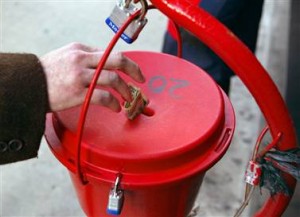 Other charitable organizations in the Charleston area received large checks, supposedly from Force Protection, Inc., a manufacturer of armored trucks, but only the Salvation Army cashed theirs. Force Protection knew nothing about the “gifts,” which were drawn on a bank account closed months before. The case is being investigated, but no arrests have been made.
 California will probably experience a strong earthquake in the future because of movement in the earth’s crust. The
  This was the scene a few weeks ago, until Teka met Veronica at the shelter. Veronica was moving into her own apartment soon. She invited Teka to help her move, in exchange for food and baby clothes. Teka agreed, her hope renewed by the chance to provide for her unborn child. When they arrived at the apartment, things took a turn for the worst. Veronica locked the door and tied Teka’s hands behind her back. She came at Teka with a knife, saying, “You’re strong, you can handle what I’m going to do to you.” Veronica then cut into Teka’s abdomen in an attempt to remove the baby. A few months earlier, Veronica had lied to her friends and family, telling them that she was pregnant. She was trying to remove Teka’s baby and take it as her own.