Skip to content
ELCA Blogs

Faith Lens

January 13-19–Salvation Army Victim of a Hoax

Contributed by Sylvia Alloway, Granda Hills, CA

Warm-up Question

Do you have everything you need? If not, what do you think is lacking? Are all needs physical? List some non-physical needs.

Salvation Army the Victim of a Hoax

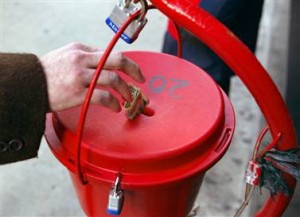
We have all seen the familiar red pot and patient bell ringer in front of stores at Christmas. Collectors for the Salvation Army receive gifts ranging from a few coins to hundreds of dollars. Forty per cent of the aid association’s capital comes from the humble red Christmas pots.This year, however, the Army’s Charleston, S. C. chapter was the victim of a baffling hoax. A seeming act of great generosity turned into a great disappointment as a check for $25,000 bounced after the group had already spent part of it on the needs of some 100 families.

081020-SalvationRedKettle-hmed-456p_hmediumOther charitable organizations in the Charleston area received large checks, supposedly from Force Protection, Inc., a manufacturer of armored trucks, but only the Salvation Army cashed theirs. Force Protection knew nothing about the “gifts,” which were drawn on a bank account closed months before. The case is being investigated, but no arrests have been made.

The loss means a lack of funds that will translate into less help for the poor, even as the recession brings more and people to the door of the nationally known charity.


Source: Associated press article from Yahoo.com

http://news.yahoo.com/s/ap/us_fake_checks_charities 

Discussion Questions 

  1. What motive could someone have for giving bad checks to a charity?
  2. If you came face to face with the person who committed this fraud, what would you say to him/her?
  3. Some believe that fewer and fewer people care about doing right simply because it is right. Do you agree?  If lying, cheating and stealing are on the rise, what, if anything, can the church and/or  individual Christians do to stop this trend?


Scripture Texts (NRSV) for Sunday, January 17, 2010 (Second Sunday after Epiphany)

(Text links are to Oremus Bible Browser. Oremus Bible Browser is not affiliated with or supported by the Evangelical Lutheran Church in America. You can find the calendar of readings for Year C at Lectionary Readings.) 

For lectionary humor and insight, check the weekly comic Agnus Day.

 Isaiah 62:15

I Corinthians 12:1-11

John 2:1-11 

Gospel Meditation 

So there was the wedding party and all of a sudden they ran out of wine. What’s the big deal? Couldn’t they drink something else?  No, they could not. Wedding parties of the day were huge, week-long affairs to which the entire community was invited. By the rules of hospitality, the host was expected to provide generously for his guests. Not to do so was a social error so great that it could ruin a family’s reputation. 

Many people interpret this story to mean that Jesus approves of marriage and he most certainly does. Others say it proves that God has nothing against good times, which is emphatically true, as well. 

But Jesus is also responding to a serious social need. And look how he responds. The “master of the banquet” (similar to what we call the “best man”) is so impressed with the wine that he takes the groom aside to comment on it. “You have saved the best until now.” Jesus can turn the plain and ordinary into his best. In this way he reveals his glory! 

The world can only give us bounced checks – IOUs for happiness and contentment which can never truly fulfill our needs. Depend on worldly glitter and gadgets for lasting satisfaction and you will come away empty every time. But Jesus’ presence can turn the “water” of our lives—broken promises, dead-end ambitions, and foolish desires—into his celebratory wine.  From Him flow new promises, ambitions, and desires, which lead to inner peace and joy that are not dependent on outward circumstances. 

And since we receive both physical and spiritual blessings from God, does it not make sense to share them? Many in our own neighborhoods are physically hungry. Even more suffer from spiritual want. Like the Salvation Army, let us continually give both physical comfort and the message of the Gospel to those in need. 

Discussion Questions 

  1. Think about the benefits of knowing and serving Jesus as our Savior. List and talk about some of them.
  2. What does it mean to be in need? Compare what we think we need to what we really need. Discuss the needs you mentioned in the warm-up question. How do we satisfy these needs?
  3. In a time when more and more people are without even the basics of life, the Salvation Army and other charitable organizations are stretched to the limit as to how many they can help. What can your church, your Sunday school class, and you personally do to help the poor of your community? 

Activities 

  1. Plan a project for your church or youth group that will help the poor of your community. Some examples: You might sponsor a food or clothing drive (especially focusing on clothes for children, babies, or adults going on job interviews).  Cook and serve a monthly evening meal in the church hall.  Offer babysitting service for the children of parents who are searching for work. Try to make it something that will bring you face to face with those in need. 
  2. Plan a project that will fulfill spiritual needs.  Some examples: Go door to door telling people about your church and/or passing out Bibles.  Read or act out Bible stories for children.  Sponsor a youth concert with Christian music. 

Suggested songs: Great Is Thy Faithfulness, Give Thanks (with a Grateful Heart)

 Closing Prayer

Merciful Father, who supplies our needs with your best, turn our hearts outward. Open our eyes to the needs of those around us and, out of the help, love, and encouragement that you have first given us, help us to give generously to all. In the name of your Son, Jesus Christ Our Lord, we pray.  Amen.

January 6-12, 2010–Awaiting the Big One

Contributed by Claudia Bergmann, Eisleben, Germany


Warm-up Question

What does being in an earthquake feel like?

 
Awaiting the Big One

“Did you feel it?” That is the question everyone asks whenever the news in California reports a small earthquake. Most California quakes do not do any visible damage, and only a small percentage are actually felt or heard by the people living in the region. But seismologists predict that there is a 63 percent chance of a strong and destructive earthquake within the next 30 years in the area of San Francisco. Taking all of California together, the chances for what’s called “the Big One” are 99.7 percent.


san francisco earthquakeCalifornia will probably experience a strong earthquake in the future because of movement in the earth’s crust. The Pacific and the North American Plates meet there and grind against each other for hundreds of miles. This is even visible to the naked eye and is called the San Andreas Fault. The movement of the earth’s crust slowly builds up pressure and energy, which is, at some point, released in an earthquake. On April 18, 1906, such a pressure release killed 3000 people in San Francisco and destroyed large areas of the city.  Seismologists from the University of California in Berkley have found that the earth, although solid on the surface, reacts to the movements of sun and moon, just as water does. These mini-tides can be recorded as tremors which make areas like the San Andreas Fault move. Scientists write in the current issue of the magazine Nature (December 2009) that such small tremors do not cause big earthquakes but increase the strength of the movements happening in the San Andreas fault.


Did you feel it? Californians hope that this question will always be answered with “no”. But chances are that one day soon an earthquake and its aftermath cannot be missed. Learning more about how earthquakes originate and what makes them stronger might help us take better precautions. Unlike other animals, which sometimes sense impending earthquakes better than humans, we have to rely on scientific data to have an idea when one might be imminent.


Discussion Questions

1. Do you live in an area where earthquakes are likely? If so, do you ever talk or think about measures which you and your family can take to protect yourself from the effects of an earthquake? If not, would you worry if your parents wanted to move the family to an area where earthquakes are likely?

2. Have you ever experienced an earthquake or another natural catastrophe? Could you sense it coming? What did it feel like?

3. Some people experience pain when the weather changes or say that they can “smell” coming rain. Are you able to predict such changes? If not, do you think that some people are actually able to do it?


Scripture Texts (NRSV) for Sunday, January 10, 2010 (Baptism of our Lord)

(Text links are to Oremus Bible Browser. Oremus Bible Browser is not affiliated with or supported by the Evangelical Lutheran Church in America. You can find the calendar of readings for Year C at Lectionary Readings.)


For lectionary humor and insight, check the weekly comic Agnus Day.

Isaiah 43:1-7

Acts 8:14-17

Luke 3:15-17, 21-22


Bible Reflection

The story we hear today from the Gospel of Luke is one that describes an early part of Jesus’ life. Luke has portrayed the pregnancy of Mary and the birth of Jesus and has continued with the events in the temple when Jesus was just 12 years old. We now meet a new character. John the Baptist, whose mother visited Jesus’ mother when they were both pregnant, begins to baptize people in the wilderness. People flock to John and some even wonder whether he is the long-expected Messiah. But John shatters these hopes and points to the Messiah coming after him. John was not much liked by the government. He was put in prison and later killed. But, before his life came to an end, one of the people he baptizes is Jesus of Nazareth.


Something amazing happens at that particular baptism. Imagine what it must have been like for Jesus. As an adult, he decides to receive the baptism by John, which is supposed to free from sins. He steps down to the river or creek, feeling rocks and sand beneath his worn shoes. He feels both John’s strong hands as the Baptist dunks him into the water and a sense of trust that John will lift him back out. He feels the water—cold and refreshing—cleansing his body and also, in a way, his mind. Then, he sees the heaven open. He sees a dove, the Holy Spirit, coming down towards him.  Maybe he feels and hears the flapping of her wings. Jesus  hears God speaking, telling him that he is the  beloved son with whom God is well pleased. Feeling the water, touching it, being touched by John’s hands, seeing the heavens, hearing God’s voice – Jesus’ baptism addresses most of his senses and, because of it, envelopes him entirely. Unfortunately, Luke does not tell us what it is like for Jesus to hear God and to see the Holy Spirit at his baptism. But he records the effect that this sense-filling event has on Jesus:  right after the baptism, Jesus begins his work.


When the early church began to baptize people into a Christian life, they modeled their practices after the story of Jesus being baptized by John. Of course, there were proclamations of what baptism means, that it is an act of repentance and causes the forgiveness of sins. But more than is often the case in modern churches, baptisms in the early church also addressed the senses of the baptismal candidates. Days of fasting prepared them for their baptism. Several times before and during the baptismal ceremony, the baptismal candidates were anointed with oil. In what was called the “ephphata ceremony”, a mixture of dirt and spittle was put upon their ears and nose to symbolize the opening of ears in Mark 7:33-34. And when the actual baptism happened, a lot of water was used so that the baptismal candidates could be fully immersed. Baptism back then could be truly felt, truly seen, truly heard. It could be experienced with most of the  senses.


In Luther’s day the church had already moved away from some of these more sensual experiences of baptism. The church performed many remaining actions in almost magical ways, as if baptism was not valid unless all of these rituals were performed. While Luther tried to rid the church of some of the more magical looking rituals, he strongly felt that the sensual aspects of baptism should remain. In his early writings about baptism, he even demanded that baptism should be by immersion to symbolize that our old sinful self is drowned and our new baptized self is resurrected. Luther asserted that baptism should be experienced with all our senses, just as God wants to be in our minds, spirits, and body – in all of what makes us human. 


Discussion Questions

1. Are there experiences in life where the senses of smelling, tasting, and feeling might enhance your perception or help you remember? Do you have an early childhood memory which is connected to one of these senses?

2. What senses (hearing, seeing, smelling, tasting, and feeling) do we use in worship and at what parts in the liturgy?

3. Which do you prefer, a worship service where the pastor speaks and the people listen or a worship service where all or most of our human senses are addressed? Why?

4. What are, in your opinion, the pros and cons of worship that addresses our senses?

5. Have you experienced worship in a congregation other than your own? If so, did that service address the human senses more or less than is done in your church?


Activity Suggestions

1. Jesus and the human senses.

Split your group in four small groups and assign each of them one Gospel. Ask your groups to find stories where Jesus not only speaks to the people but addresses their other senses. Share these stories in the large group and talk about what Jesus accomplishes when he helps people to understand his message by letting them smell, taste, feel, or see.


2. Making people understand.

Read the healing story in Mark 7:32-37. Talk about the way Jesus addresses the human senses there and what effect that has on the bystanders watching.


3. Heightening the senses in worship.

If using our senses helps us experience things on a deeper level and helps us remember, why don’t we use our senses more in worship? Think about the way that worship in your congregation could be more sense-oriented. Ask your pastor how he/she plans worship services with the use of our senses in mind.


4. Using our senses.

Here are some suggestions for activities where your youth can try their senses. If you have a small group, let everyone try a few samples. If you have a larger group, split them up so that everybody has a chance to experience this exercise. If you make it a competition, you might have a prize for the winner(s).


a) Smelling: Prepare samples of distinctive smelling things such as communion wine, herbs, flowers, incense and other in containers that are all the same size and are closed with a lid. Then, see who can identify of an object by using only the sense of smell (you need to cover participants’ eyes and have someone else present them with the opened container).


b) Tasting: You can also have a taste test using foods which people try with their eyes covered. In that case, make sure to choose foods which everybody likes and tolerates.


c) Feeling: Have people feel small objects – again, with their eyes covered – and name what they should represent. Cookie cutters or wooden toy animals work well.


d) Hearing: Play the beginnings of famous pop songs (or even hymns) until the first person can name the title. Ask your group to listen to half of them with their eyes open and to the other half with their eyes closed. Ask whether it was easier to guess when they only used their sense of hearing rather than their senses of hearing and seeing.


Closing Prayer

Almighty God, you want to be close to us and be with us in our minds, spirits and bodies. Help us to open our ears so that we can hear your word. Help us to open our eyes so that we can see your marvelous deeds. Help us to open our open our mouths and noses so that we can taste and smell your wonderful gifts of creation with renewed wonder. Help us to open our hands so that we can feel the hands of our brothers and sisters in ours. Amen.

December 30-January 6, Miracle After Mother Assaulted

Contributed by Erik Ullestad, West Des Moines, IA

Warmup Question

 Have you ever witnessed a miracle?  What happened?

 Miracle Born After Mother Assaulted

The temperatures are getting colder, snow is piling up, and homeless shelters are filled to capacity.  Such is the scene in cities the world over.  Washington D.C. is no different, claiming record snowfalls and near all-time highs in unemployment.  Teka Adams is one of the thousands of pregnant women who rest their heads in a homeless shelter.  She is in her third trimester, only a few weeks away from delivering her first child.  It is a time of excitement, fear, and wonder.

women and child This was the scene a few weeks ago, until Teka met Veronica at the shelter.  Veronica was moving into her own apartment soon.  She invited Teka to help her move, in exchange for food and baby clothes.  Teka agreed, her hope renewed by the chance to provide for her unborn child.  When they arrived at the apartment, things took a turn for the worst.  Veronica locked the door and tied Teka’s hands behind her back.  She came at Teka with a knife, saying, “You’re strong, you can handle what I’m going to do to you.”  Veronica then cut into Teka’s abdomen in an attempt to remove the baby.  A few months earlier, Veronica had lied to her friends and family, telling them that she was pregnant.  She was trying to remove Teka’s baby and take it as her own. 

 Before Veronica was able to remove the baby, Teka was able to escape.  Neighbors found her bleeding in a nearby parking lot.  Teka was taken to a hospital where doctors were able to heal her wounds and save the baby.  Both are expected to make a full recovery.  The baby – a girl – was named Miracle.


  DISCUSSION QUESTIONS

  • What do you know about the homeless population in your community?
  • Why do you think someone would fake a pregnancy and try to steal someone else’s baby?
  • If you were related to Veronica, how would you respond to her?

Scripture Texts (NRSV) for Sunday, January 3, 2010 (Second Sunday of Christmas)

(Text links are to Oremus Bible Browser. Oremus Bible Browser is not affiliated with or supported by the Evangelical Lutheran Church in America. You can find the calendar of readings for Year C at Lectionary Readings.)

 For lectionary humor and insight, check the weekly comic Agnus Day.

 Jeremiah 31:7-14

Ephesians  1:3-14

John 1:[1-9] 10-18

GOSPEL REFLECTION

Today is the second Sunday of Christmas, but the gospel lesson is not a traditional Christmas story.  There are no tales of shepherds, angels, mangers, or innkeepers.  Instead, John talks about the Word, which we often assume to represent Jesus.  He traces the Word back to the creation of the world.  He even uses the same phrase as Genesis 1:1 – “In the beginning…” – to indicate that there is a connection between what God created in Genesis and what God created in the birth of Jesus.  The Word was with God, the Word was God, and the word became flesh in the person of Jesus.

 In addition to “the Word” John mentions two other important things in the opening chapter of his gospel.  The first is John the Baptist.  John the gospel writer and John the Baptist were two different people.  The author was “the beloved disciple”, a brother of James and the son of Zebedee.  John the Baptist was the one who pointed the way to Jesus and was eventually beheaded for his blasphemy.  When Jesus was around, there were many people who thought that John the Baptist was the messiah (or “the Word”).  John the writer wants to make sure that readers know that John the Baptist was an important person, but was not the one.

 John also talks about Jesus’ purpose on earth.  On one hand, Jesus will be rejected by the very people he came to save.  On the other hand, he brings “grace upon grace”, truth, and the power to become children of God.  Jesus comes with good news, but not everyone will be ready to receive it.  He will be tested, questioned, beaten, and even put to death.  He comes to teach, to inspire, and, ultimately, to sacrifice his life so that we might live.  What a miracle that God loves us this much!

DISCUSSION QUESTIONS

  • What is the importance of making a connection between God creating the world and God sending Jesus into the world?
  • Why do you think John chose to refer to Jesus as “the Word” instead of just calling him by name?
  • Would you describe Jesus’ coming into the world as a “miracle”?  Why or why not?
  • How does the miracle of Jesus’ arrival on earth inspire you?


ACTIVITY SUGGESTION

Gather colorful paper, markers, glitter, and other decorative items.  Create greeting cards for new mothers in your community.  These could be for women in your neighborhood, church, workplace, or a women’s homeless shelter.  Look for some verses in Scripture that would give hope to someone who had given birth.  (Consider portions of today’s gospel or the Advent and Christmas stories in Matthew or Luke.)  Talk as a group about how you plan to deliver these cards during the week.


CLOSING PRAYER

God, thank you for the miracle of Jesus’ birth.  We praise you for loving us so much that you forgive our sins and give us the promise of eternal life.  Help us to give hope to those who have none.  Give us the inspiration that comes in the form of a baby, born in a feeding trough, who brings light and life to the world.  Amen

December 23-30, 2009

oholynite-1
How silently the wondrous gift is giv’n

Faith Lens is not published this week.


.

December 16-23, 2009–Christmas Greetings

Contributed by Jay McDivitt

Warm-up question:

What things bring you joy during this time of year? What things irritate you during the holiday season?


Story: Congress Wages War…over Christmas

capitol and crecheRepresentative Henry Brown, Jr. (R-South Carolina), has introduced a bill in the House which, if passed, would make it clear that Congress “strongly disapproves of attempts to ban references to Christmas” and “expresses support for the use of… symbols and traditions by those who celebrate Christmas.” Brown believes that it is important for him to have “the right to celebrate Christmas” and that “wishing someone ‘Merry Christmas’ should never be met with disapproval.”

Although this is the first time that the so-called “War over Christmas” has been discussed in Congress, it has become a regular feature of the holiday season to debate how people—especially retail employees and public leaders—should greet one another during this festivetime. As the U.S. becomes increasingly diverse, the growing presence of non-Christian neighbors poses the question of whether “Merry Christmas” is a meaningful, appropriate, or insensitive way to greet strangers who may celebrate something else—or nothing at all—rather than the birth of Christ. “Happy Holidays” is a commonly used alternative.

Opinions vary widely, among Christians and non-Christians alike, about this question of decorum and etiquette. Some think this is an example of “political correctness” gone wild; others think it is a meaningful way to acknowledge religious diversity and offer a gesture of hospitality to non-Christian neighbors.  Still others think this conversation is simply a silly way to bring the “culture wars” into a season that should be filled with peace and good will.


Discussion questions:

  1. What do you think about Rep. Brown’s proposed bill? Would you vote for it?
  2. How do you greet people during this season? Do you have friends or neighbors who you know are non-Christian? Do you treat them differently from your Christian friends during the Christmas season?
  3. Whether “Happy Holidays” or “Merry Christmas,” the greeting implies that this season is joyful. How joyful are you? How do you express joy during this season?


Scripture Texts (NRSV) for Sunday, December 20, 2009 (Fourth Sunday in Advent)

(Text links are to Oremus Bible Browser. Oremus Bible Browser is not affiliated with or supported by the Evangelical Lutheran Church in America. You can find the calendar of readings for Year C at Lectionary Readings.)


For lectionary humor and insight, check the weekly comic Agnus Day.

Micah 5:2-5a

Hebrews 10:5-10

Luke 1:39-45 (46-56)

Gospel Reflection:

            The season of Advent belongs, for the most part, to John the Baptist. This year, we have three weeks in a row where John plays an important role. Today, however, his name doesn’t even appear in the text—but he’s there. John is the baby who jumps for joy inside of Elizabeth’s tummy. Talk about a Christmas greeting!

            John’s main job was to prepare the way for the Messiah—to point out the Christ; and today we learn that even while he was in utero, he was doing his job. Elizabeth is six months pregnant with John when Mary shows up.  All Mary has to say is “hello,” and John does cartwheels in Elizabeth’s womb: “This is it! Pay attention to this one, Mom!” And Elizabeth, rubbing her belly, looks Mary in the eyes and calls her blessed; she recognizes Mary as the mother of her Lord.

            And anyone watching this scene unfold would have been very surprised. Mary? Her? This poor, unmarried girl carrying an “illegitimate child” is blessed? Cursed is more like it. At least embarrassed or ashamed… but blessed? The mother of the Lord?

            But Elizabeth knows—deep inside her own body—that something special is happening in Mary. This child is, indeed, the Messiah. John said so—long before John could even speak.

            And if you’ve been paying attention in Sunday School, you shouldn’t be all that surprised. Everywhere you turn in the Bible, God is doing wild and holy things with unexpected people. In God’s strange way, it makes sense that God would choose to bring the Messiah into the world through the womb of an unremarkable girl, a poor girl who probably wouldn’t have been noticed. Makes sense, of course, if you’re prepared to look in ordinary places for extraordinary things.

            And that’s what John prepares us to do. That’s his job. This important prophet, son of an important priest in the Jerusalem Temple, is only a signpost, pointing to the amazing thing that God is doing in this illegitimate child born to a homely girl from a good-for-nothing corner of Israel. So John points. And Elizabeth blesses. And Mary sings.

And that’s what we do, too.

We point—we look for signs of God’s grace and love in unexpected places.

We bless—we call things “holy” when they remind us of God among us.

And we sing—we greet Jesus with songs of joy and sing those songs in the midst of a world in fear.

We do this, not because we want to shove Jesus down peoples’ throats or to make people uncomfortable. We do it, even if we don’t always use words—even if we find other ways to share joy and life with people who do not share our faith in Christ. We do it, not because we have to or because God tells us to. We do it because we, like John, Mary, and Elizabeth, simply can’t help it. This news is too good not to make us jump for joy—to point, bless, and sing out the good news that God is coming, Christ is here, and joy is real—today and always. And thanks be to God for that. Amen.


Questions:

  1. Where do you see signs of joy in the world around you? Where do you see the “Christ” in all the Christmas stuff that is happening during this season?
  2. Does everything that says “Merry Christmas” on it have something to do with Jesus? What are some parts of the Christmas season that aren’t all that connected to the birth of Christ?
  3. What would be a meaningful way to share the joy of Christmas with people who don’t know or worship Christ? What are some ways you can spread the joy of Christmas with people who aren’t feeling joyful?


Activities:

  1. Go through the Christmas section of the hymnal you use in worship and count all the references to “joy.” What do these hymns say about the reason for joy? What do these hymns say about the reason for Christ’s birth—what it is all about or what it accomplishes? Finish by singing Joy to the World together (ELW 267). Notice that this is in the “Advent” section of the hymnal. Why do you think that is?
  2. Depending on who you ask, either the Third or the Fourth Sunday in Advent is gaudete Sunday—the day when some folks light a pink candle on the Advent wreath. Gaudete means “joy” in Latin, and it traditionally was celebrated on the Third Sunday of Adventwhen the readings were about Mary’s pregnancy and the joyful announcement of Christ’s coming birth. In recent years, those readings now fall on the Fourth Sunday of Advent, leading to some confusion about when it would be appropriate to light the pink candle. Nevertheless, sometime around this day, the church celebrates Joy with a little pink flare—a break from the more solemn, blue season with its focus on repentance.  Introduce the theme of “joy” and gaudete Sunday to the youth and then make something pink—a stole/scarf, banner, t-shirt, etc. Invite the youth to adorn cloth with signs and symbols of things that bring them joy, things they are hopeful for, things they are waiting for in their lives. Invite them to share these projects with each other.


Prayer:

 O God for whom we wait: Fill us with joy as we celebrate your birth among us. Help us to see the joy you are bringing into the world and point it out to those around us. Open our hearts and minds to see your blessings and open our mouths to sing for joy. In the name of Christ we pray. Amen