Contributed by Jose Valenzuela, Alleluia Lutheran Church, Phoenix, AZ
Warm-up Question
What are some of the challenges you face in being both a follower and leader?
Rooted In Baptism
 Some fear that our neighbor to the south, Mexico, is spiraling into a civil war rooted in the drug trade. Since 2006, Mexican president Felipe Calderon has declared war on the drug war in the country, which has, in turn, fueled a bloody war among the different Mexican drug cartels. As one cartel is dismantled, several others battle each other for control in the power vacuum. In September 2009 experts estimated that over 13,000 people had been murdered in Mexico due to drug related activity alone. According to US crime rates, there were approximately 16,000 murders in US in 2008 of all varieties. Last week cartels openly attacked Mexican army posts along the border.
As the violence taking place in Mexico spills over into the United States there has been an increase in kidnappings, weapons trafficking, and murders related to the drug war in Mexico. Making the drug war even more problematic is the fact that most of the drugs produced in Mexico are shipped to the United States to feed our nation’s drug habit. In addition, there seems to be a limitless number of desperate Mexicans seeking a quick way out of poverty. The tempting lure of money in the drug trade seems to bring in more and more members to the powerful cartels.
As Mexico continues its war on drugs, many are becoming fearful and pessimistic that this war can actually be won. A growing number of people in Mexico and the US are considering calling the Mexican war on drugs a failure and going back to the drawing board. Some experts have even suggested that if a new strategy is not crafted soon, Mexico runs the risk of becoming a failed state.
Discussion Questions
- What should the United States’ role be in the war on drugs in Mexico?
- What responsibility, if any, does the United States’ have in the drug war in Mexico? Why?
- Does our country have a drug problem? If so, whose problem is it?
Scripture Texts (NRSV) for Sunday, April 18, 2010 (Third Sunday of Easter)
(Text links are to Oremus Bible Browser. Oremus Bible Browser is not affiliated with or supported by the Evangelical Lutheran Church in America. You can find the calendar of readings for Year C at Lectionary Readings.)
For lectionary humor and insight, check the weekly comic Agnus Day.
Gospel Reflection
I grew up in Arizona. After I graduated from high school I spent the better part of 15 years moving around the country going to colleges, getting married, starting my career, and starting a family. In 2002 I was living in Brooklyn, NY, serving a parish as a Youth Minister, when I started to hear the calling to come home. During the summer of 2002 my family and I moved back to Arizona to be closer to family. Mostly I wanted to be closer to my grandparents as their health declined.
Three weeks after I moved back to Arizona, my grandmother suffered a massive stroke. Three weeks after that she suffered a second “big one” and she died. A few days after her funeral, I had fallen asleep in my recliner while watching TV late at night. I woke to the sound of footsteps near my bedroom and looked to see my grandmother standing in the doorway to my bedroom. She walked out of the room and simply said to me, “Mijo, go to bed and rest. It’ll be fine. Just rest.” I got up, went to bed and wept.
My grandparents were born and raised in Mexico. My grandmother came to Arizona as a child, but she always considered herself to be Mexican. When she became an American citizen, she fully embraced the America life, but she never forgot where she came from. Her life was devoted to her family. At the time of her death, our family understood what we stood for because of her.
As Jesus drew his ministry here on earth to a close, his final interactions with his disciples were intended to communicate what he expects from his followers. Quite simply, his followers are expected to lead by Christ’s example. I find it interesting that Jesus meets the disciples where their lives together started, at their roots.
Many of us find it difficult to come to terms with our roots. I know that as a second generation Mexican-American, part of my identity resides in Mexico, even though I’ve never resided there. And a part of my identity resides in this country, even though I have been regarded by many in my daily life and in my Church as not being American enough. So I often struggle with the question: Whom shall I follow?
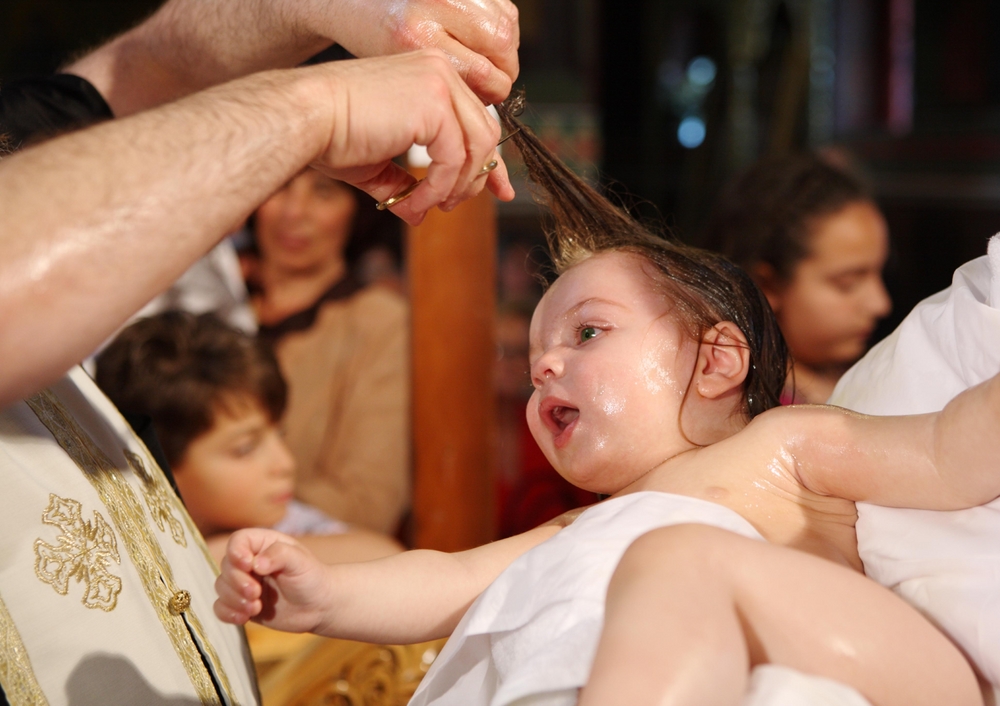
The way I reconcile it all comes down to baptism. Through my baptism I am a child of God. In the sacrament of baptism I receive many acts of grace from God. At the same time God has very high expectations of God’s family. Spending time in community, in prayer, in scripture, working for justice and peace for all of humanity—these are the things that God expects. So how will I do this? How will I get all this done?
I will follow you, Lord…
Discussion Questions
- Describe a time in your life where you felt very lost and were looking for something or someone to grab on to.
- How does understanding or maybe not understanding your roots influence your relationship with God?
- What does it mean to “follow Jesus”?
Activity Suggestion
Make a family tree that goes back to your great grandparents.
Closing Prayer
Holy and mighty God, you have filled us to the brim with life and goodness. You have given us the gift of community and the gift of feelings. Thank you. In the midst of our searching and finding, may we find glimmers of you. Watch over us, lead us, direct us, help us when were lost and keep us humble when we feel found. And help us to be mindful of the many in this world and community who are still searching. May your good news be proclaimed with love, dignity and respect.