Skip to content
ELCA Blogs

Faith Lens

April 19, 2026 – When Easter Hope Isn’t all Shiny and Pastel

Prepare

The Road to Emmaus story is chock-full of theological imagery and imagination. We meet disciples and Jesus on the road and yet something is keeping the disciples from recognizing Christ. There’s a lot that could be explored as to why the disciples don’t recognize Jesus throughout their entire conversation, especially in light of other resurrection stories we have about Christ where folks recognize him immediately. Moreover, it is theologically significant that his identity is revealed through the Eucharist. It is as they break bread that Christ is recognized for who he is. The meal is the disciples “touching of the wounds” moment that Thomas was so desperate for. The meal is where Jesus is the most recognizable version of himself.

The gospel of Luke, more than the other gospels, emphasizes roads and journeys for both Christ and people of faith. It is fitting, therefore, that we meet Christ on the road as the disciples’ doubts, questions, and pain swirl around them. Their movement in the passage reflects where the disciples are in their processing. They are moving and progressing forward as they are vulnerable with each other and this stranger. When they cry out that they had hoped Jesus really was the messiah, they reveal their underlying fear: it now appears he was not. It isn’t until right before Christ is revealed to them that they find a place to stop and sit with their grief. Once he is revealed, the disciples are on the road again, this time to redeem the story that was told as they left. 

Opening Exercise

Are you currently hoping for anything in particular? What does it feel like to hope for something with true hope (something you cannot work towards on your own, but something you have to trust God, or someone else, to come through for you?). 

Read the Text:

Luke 24:13-35

When Easter Hope Isn’t all Shiny and Pastel

A few years ago I was talking with a friend about her husband’s cancer diagnosis. In this conversation I could feel the

The Road to Emmaus (Gang nach Emmaus), 1877, by Robert Zünd. Public domain, via Wikimedia Commons.

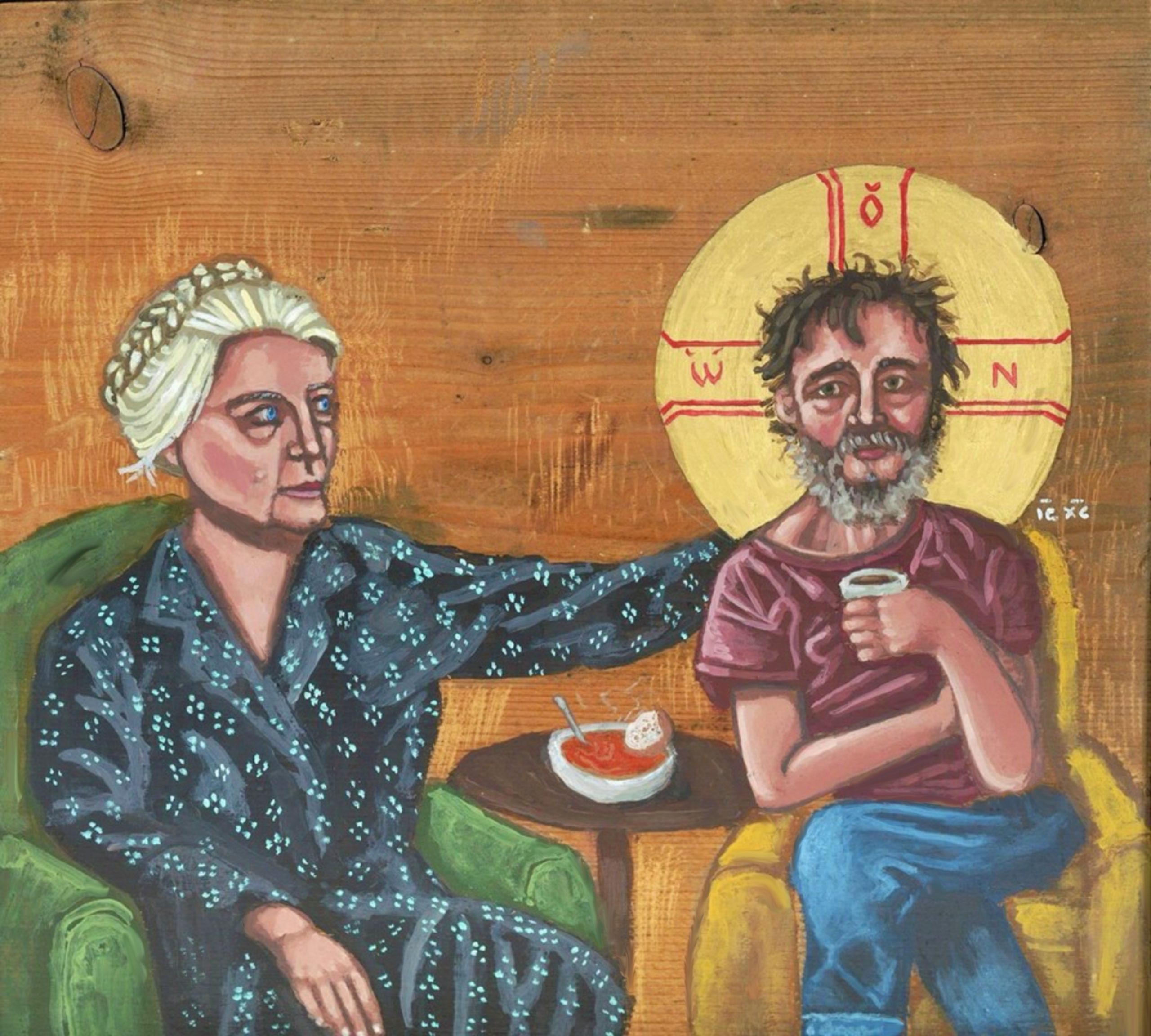
sadness and frustration starting to get me down so I said something along the lines of “but we’re hopeful the next treatment will work!” I am ever the person to add sugar to a terrible situation. Luckily, my friend was willing to be honest and vulnerable with me. She said, “honestly, I’m feeling kind of burned by hope. I’d rather not.” I was stunned…Isn’t hope a good thing? 

But she shared that they’d been hoping. That they had hoped the tumor wasn’t cancer at all and then it was. They had hoped the cancer wouldn’t progress and then it did. They had hoped chemo would work and then it didn’t. She, like the disciples on the road in our story, was tired of hope.

When you think about it, hope sets us up to be burned a time or two because, when we start hoping, our whole demeanor changes. We go from a place of accepting our circumstance to dreaming about what things could be like if God, or someone more powerful than we are, stepped up. It’s the dreaming that makes hope dangerous. The disciples who met Jesus on the road had been hoping that Jesus was going to redeem Israel. When it looks like that hasn’t and won’t happen, they are down worse than they were before they met Jesus. They are more upset than when they had no hope.

Easter Hope

What really gets the disciples is that they assume this is the end of the story. They have left the other disciples, wallowing as they walk back towards their lives before hope. But that isn’t how Jesus works. They stop having hope because they tied their hope to very specific outcomes. They hoped that Jesus would redeem them in an earthly battle. They hoped Jesus would never die. They hoped in far smaller ways than our God works. 

When Jesus is revealed in the meal, what the disciples start to see is that their hope made Jesus way too small. They didn’t need to hope he wouldn’t die, because he overcame death. They didn’t need to hope that Jesus would win some earthly battle leaving some new people to be corrupted by power while others struggled. Christ brings the Kingdom of God in which there is abundance for everyone and nobody is lesser than anyone else. This story shows us the danger of hope in our world, not because we might be disappointed (though that’s always a bummer), but because if we hope with too much specificity we might miss who God is altogether. 

When we hope, we hope in a God who is doing far bigger things than our imaginations can handle. The same God who has kept my friend’s husband alive and well for far longer now than any doctor expected.

Reflection Questions

  • What do you think the disciples had hoped would happen instead of the cross?
  • When have you missed, or almost missed, something really good because you were hoping for something else?
  • How can we hope while being faithful to how gigantic our God is? How do we make sure our hopes aren’t putting God in a box?

Closing Activity 

Have students get into pairs and share their hopes. Invite them to gently “correct” each other until their hope is Christ sized, not limited to our own imaginations.

Here’s an example:

  • I hope my friend gets better.
  • I hope my friend is no longer in pain or the hospital.
  • I hope my friend is able to live a rich and happy life with/without their illness.

Once each student has a God-sized hope, share them with the group.

Closing Prayer

Prayer of Good Courage:

O God, you have called your servants
to ventures of which we cannot see the ending,
by paths as yet untrodden, through perils unknown.
Give us faith to go out with good courage,
not knowing where we go,
but only that your hand is leading us
and your love supporting us,
through Jesus Christ our Lord.  Amen.

Bio

Lindsay Batesmith is the pastor of Rejoice Lutheran Church in Erie, CO. She is consistently in awe of the power of vulnerability to connect us to each other and invite the Holy Spirit to transform lives. When not at church or her favorite coffee shop, Lindsay is usually playing with her dog, Echo, or watching the Great British Bakeoff with her wife, Tillie.

April 12, 2026 – Peace Be With You

Prepare:

Jesus’ disciples are familiar with fear. Throughout the gospel of John, we hear that Jesus’ followers are filled with fear, especially of the Jewish authorities. To proclaim Jesus as messiah is to face expulsion from the synagogue and separation from family and friends. Following Jesus comes with fear and risk. This fear is compounded at Jesus’ death. He tries to prepare his disciples for his death and resurrection, but they are unable to comprehend these predictions.

After Jesus’ death, the disciples’ fears are intensified by grief. They had hoped for Jesus to rebuild Israel into a great nation and end Roman occupation. They also had hoped to be at his side when he did it. But now their leader and friend, as well as their status and hopes for the future, are all lost. They are unsure of their standing in the Jewish community and unable to trust in the news of Jesus’ resurrection. Consequently, the disciples have no idea what to do next.

Into this situation of fear and uncertainty, Jesus shows up. Jesus shows up, gifting the disciples with his peace and the Holy Spirit. These gifts empower the disciples to begin planning for a new future of proclaiming Christ’s love to others.

Opening Exercise:

Listen to the hymn Let There Be Peace on Earth or read the lyrics.

Discuss together what you felt and heard as you listened to the hymn.

  • What lyrics stood out to you?
  • What does it mean for peace on earth to begin with you?
  • The hymn emphasizes seeing others as our family. How does seeing others as family help promote peace on earth?

Text Read Aloud:

John 20:19-31

Peace Be With You

If you are like me and my congregation, you have been praying for peace. A lot. Praying for peace in our world is a regular worship practice. It has certainly felt needed in the last month as we have watched the war between Iran and Israel and the United States. Amid the violence and loss of life, we pray for God’s mercy and presence. Among the fear and chaos of war, we pray for Jesus’ peace, hoping this ceasefire holds.

The time after Jesus’ death was filled with fear and chaos. The disciples were hiding in a locked room. They didn’t trust

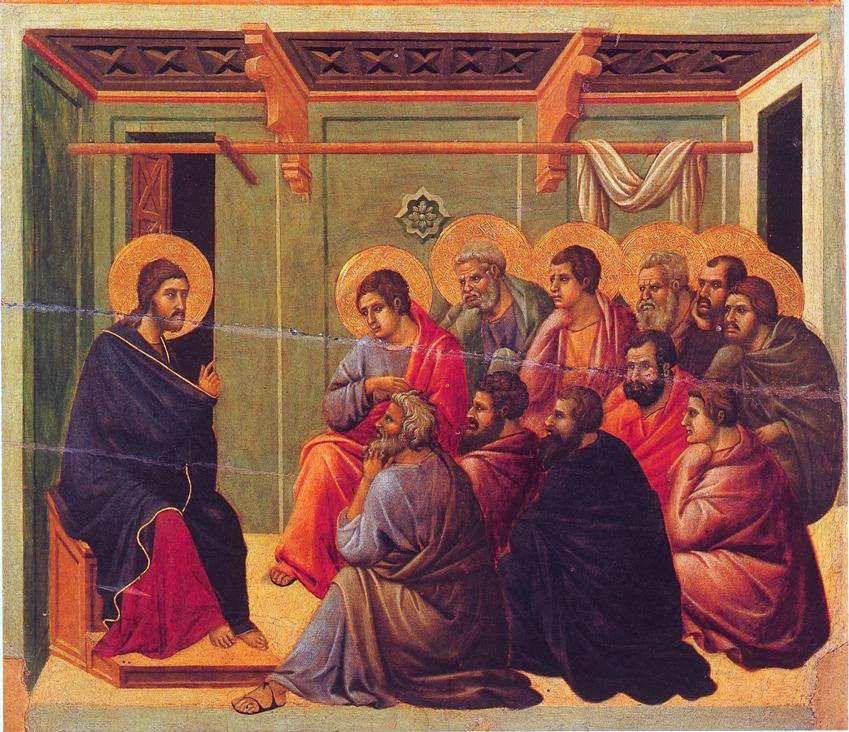
James Tissot, The Appearance of Christ at the Cenacle, 1886–1894. Public domain, via Wikimedia Commons.

the message from Mary Magdalene that Jesus was risen. They were afraid of the religious leaders. They had no idea what to do next. So, alone and afraid, they hid.

Into their fear and chaos, Jesus shows up and proclaims not once but three times, “Peace be with you.” In some ways, we could say Jesus’ proclamation of peace changes nothing. The disciples are still alone in a locked room, afraid of what will come next. Yet, in other ways Jesus’ proclamation of peace changes everything. Jesus’ greeting of peace offers reassurance to the scared disciples. It does not change the disciples’ present circumstances, but it changes the disciples. Blessed with Jesus’ peace, the peace that passes all understanding, the peace that provides calm even in a chaotic world, the disciples are empowered to go out and begin their ministry.

Peace Be With You

Jesus’ peace does not yet equate a world in harmony. We know that on this side of heaven, we will not know a world without war and violence, pain and strife. Unfortunately, this is what we do as humans. This does not mean, however, we are left in fear and despair. Instead, Jesus blesses us with the peace that passes all understanding. Jesus’ peace gives us the ability to trust in God’s presence and provision even when surrounded by fear and chaos. Jesus’ peace gives us hope, even when the world gives us so many reasons for worry and despair. Such a peace moves us to action.

As we await Jesus’ second coming and the redemption of the world, we do not simply accept the violence of the world. We are called to share Jesus’ peace with those around us. As the hymn states, let there be peace on earth and let it begin with me. We, like the early apostles, have received the gifts of Jesus’ peace and are empowered to go out and share that peace with others.

Reflective Questions:

  • How do you think Jesus’ disciples felt before Jesus arrived? How did their emotions change after Jesus arrived?
  • Jesus tells the disciples, “as the Father has sent me, I am sending you.” What are the disciples sent out to do? How are we, as Jesus’ disciples, also sent out?
  • What was a time where you felt at peace? Share what makes this memory special to you. What provided you with peace?
  • What are some ways you find peace when you are feeling anxious?

Closing Activity:

Brainstorm three ways your group can work for peace: one within your congregation, one in your community, and one in our country.

Some ideas to get you started:

  • Write cards to a group or family in need of encouragement
  • Reach out to a different faith community to learn about their ministry and build relationships of understanding
  • Volunteer with an organization working for the good of your community

Let there be peace on earth and let it begin with you!

Final Prayer:

Holy God,

We ask that you draw near to us when we are feeling anxious or afraid. Fill us with your peace and empower us to share your peace with others. Amen.

Bio

Amy Martinell serves as the Associate Pastor of Congregational Care at Gloria Dei Lutheran Church in Sioux Falls, SD. Amy shares her life with her husband, three kids, a disinterested cat, and a disobedient beagle. She loves reading, baking, and swimming.

April 5, 2026 – The Interruption of Easter

Prepare

The gloom and despair of Matthew 26-27 hangs over the beginning of chapter 28. Those who had followed Jesus, who had been welcomed by his grace, had lost everything. All of their hopes had been cruelly nailed to the cross with violent and stunning finality. Many of those close to him, fearing for their own lives and darkened by unspeakable despair, hid in a room. Three women who had followed him, however, forced themselves to bring honor to Jesus one last time, heading out early in the morning to anoint his broken, scarred, dead body for burial.

Jesus had interrupted their lives with the call to follow him. It was an interruption that took them places they never dared dream possible.

But now, his execution put paid to all of that.

Until…

Opening Exercise:

When you hear the word, “Easter,” what memories/feelings/images/stories does it conjure up for you?

Text Read Aloud:

Matthew 28:1-10

A Bike Crash and the Empty Tomb

On March 11, 2019, I was finishing up a 20-mile bike ride. I’d been riding the bike paths of Glendale, Peoria, and Phoenix, AZ for over 13 years. To that point I had cycled over 40,000 miles! Starting out the day with an early morning ride was one of the best parts of my day. In fact, it still is!

But that day, about two miles from my house, riding around a corner I had ridden dozens of times, my front tire slipped on some loose gravel and I fell. Hard. My right shoulder and head did battle against the cement path. Thanks to my helmet, my head won. My shoulder, however, lost. Badly.

I wasn’t in pain, but the first thing I noticed, after getting up off of the ground, was that my right shoulder was several inches higher than it should be.

I had blown up all of the ligaments that held my shoulder together. Two weeks later I was in surgery.

That split second interrupted my life for several months. Being right-handed and now in a harness, it interrupted my eating. My teeth brushing. My sleep­­; I slept in an easy chair for 12 months! My ability to type/text. My bathing habits. My ability to show up and lead worship. My ability to drive and hug my grandkids.

Interruptions are a part of life. Moments that can reset the paths of our lives. Some of those interruptions impact us positively: falling in love; graduating high school; starting a job; gaining new friends; moving to a new city. Others can set us back and negatively impact our lives: cancer; the loss of a loved one; divorce; an injury.

Sometimes those interruptions break us.

Easter’s Interruption

Matthew’s Gospel recounts an interruption that not only changed the trajectory of two women’s lives, but one that continues to reverberate to this day; an interruption that changes everything.

The Women at the Tomb, Novgorod School icon, 15th century. Public domain image via Wikimedia Commons.

2000 years ago God interrupted human history when God’s grace exploded out of a tomb in Jerusalem, interrupting:

  • Death with life
  • Sin with forgiveness
  • Despair with hope
  • Anxiety with peace
  • Grief with the presence of God

For three years, Jesus made his way throughout Israel interrupting people with the call to follow him; to live as loved and forgiven people; to live as loving and forgiving people. It was a call that changed the trajectory of the lives of all who followed him.

Easter’s Interruption

That mission of interrupting people’s lives with God’s grace, however, was seemingly interrupted itself—and finished—when Jesus was crucified.

But God’s grace interrupted that interruption by raising Jesus from the dead. In the process, God interrupted all those interruptions that rob us of life.

Easter, the interruption of God’s grace, changes the orientation of our lives. It roots our lives in God’s love for us. It holds us steady through all the ups and downs and all the interruptions thrown at us in this life.

And that grace, that unconditional love that God has for you and for me, is the one thing in life we can always count on. It’s the one thing that no interruption can ever interrupt.

Today, Jesus, the crucified and risen Savior comes to interrupt your life with grace. He says to you:

  • You are mine
  • You’re my child
  • I love you

No matter what life throws your way, I will always be there for you. I will always have your back.

So follow me as I interrupt your life with my grace!

Reflection Questions:

  • How do you think the women felt when the Angel of the Lord interrupted their visit to the tomb?
  • Think back to one or two positive and negative interruptions in your life. How did they affect you?
  • Why or how does Jesus’ resurrection change everything?
  • How has the call of Jesus interrupted your life?

Closing Activity:

As a group, or as individuals, think about one practical way that you might interrupt the life or lives of someone with a tangible expression of God’s love for them.

Final Blessing:

Choose someone to pray this blessing over the group:

I pray that, according to the riches of his glory, he may grant that you may be strengthened in your inner being with power through his Spirit and that Christ may dwell in your hearts through faith, as you are being rooted and grounded in love. I pray that you may have the power to comprehend, with all the saints, what is the breadth and length and height and depth and to know the love of Christ that surpasses knowledge, so that you may be filled with all the fullness of God. (Ephesians 3:16-19, NRSVue)

Bio

Tim Wright served as an ELCA pastor for 41 years. He and his wife, Jan, have been married since 1979. They have two adult children, five grandchildren, and two dachshunds. They live in Glendale, AZ. You can access Tim’s Reckless Grace Substack at https://recklessgrace.substack.com/ and his Deep-Grace Diving Podcast at https://open.spotify.com/show/4WPRRpqMtUzyPeqcqbqrgv

He is also the author of the middle school series: The Adventures of Toby Baxter. https://www.timwrightbooks.com/

March 29, 2026 – Hosanna: When Salvation Looks Different

Prepare 

Jesus’ entry into Jerusalem in Matthew 21:1-11 marks the beginning of Holy Week. The scene feels celebratory, but it’s actually layered with tension. Jesus enters the city not on a war horse nor in a display of political power, but on a donkey. In doing so, he fulfills the prophecy from Zechariah 9:9. This signals a different kind of kingship: one rooted in humility and solidarity with ordinary people. 

As Jesus enters, the crowds respond with enthusiasm. They spread cloaks on the road, wave branches, and shout “Hosanna,” which means “save us.” This is both praise and protest, a cry for deliverance. Many in the crowds likely expected Jesus to overthrow Roman rule and restore political power to Israel. Their understanding of “salvation” was shaped by their lived oppression. 

Yet, the kind of salvation Jesus brings does not align with their expectations. His path doesn’t lead to a throne of dominance, but to the cross; and the same crowds that shout “Hosanna” will, within days, fall silent or turn away. 

This passage invites us to consider how we recognize, or fail to recognize, God at work. It challenges assumptions about power, leadership, and what it means to be saved. It also raises an important question for today: What kind of change are we hoping for, and are we open to it if it looks different than we imagined? 

Opening Exercise 

Watch this video about a community organization in Minneapolis called Singing Resistance. 

As you watch, pay attention to what you hear in their voices. 

  • What are they carrying? 
  • What are they hoping for?

After the video, ask: 

  • What emotions did you notice? 
  • What do you think they are longing for or crying out for? 
  • Where do you hear something like “Hosanna” in this?

Transition to the text: In Matthew 21, the crowd is also crying out, but the word they use is ‘Hosanna,’ literally: save us. 

Text Read Aloud 

Matthew 21:1–11 

Hosanna: When Salvation Looks Different

It looks like a parade. 

There’s movement, noise, energy. People are lining the road, waving branches, shouting. Cloaks are thrown down like a makeshift red carpet. The crowd is caught up in the moment. 

“Hosanna!” they cry.
“Save us!” 

This is what hope looks like when it spills out into the street.
But look closer.
Jesus isn’t riding in like the kind of king they know. There’s no armor, no horse, no show of force. He comes on a donkey, easy to miss if you weren’t paying attention. 

And still, they cheer.
They cheer because they believe this, this will change everything. 

The crowd has expectations. They are living under occupation. They are tired, burdened, longing for freedom. And here comes Jesus: healer, teacher, miracle-worker. Surely, this is the one who will fix it. Surely, this is the one who will take power, restore order, and make things right. 

But unbeknownst to them, Jesus is not entering Jerusalem to take power. He is entering to give himself away.
That’s the tension of this story. 

The same voices shouting “Hosanna!” are filled with hope. But, it’s a hope shaped by their understanding of how the world works. Power defeats power. Strength overcomes strength. Kings conquer. But Jesus redefines all of it. 

He comes in humility and vulnerability.
He comes in peace. 

And the kind of salvation Jesus brings won’t look like what they imagined. That’s what makes this story so close to us. 

We also carry expectations. We pray for change, for healing, for justice, for things to be made right. And often, we imagine what that should look like. We imagine how God should act, how quickly things should shift, how clearly victory should appear. 

Hosanna: When Salvation Looks Different

But what if God is already moving, and it just doesn’t look like what we expected? 

What if salvation doesn’t come through domination?
What if salvation doesn’t come through force?
What if salvation doesn’t come through winning?
Instead, it breaks in through love that refuses to let go, through relentless presence, or through a commitment to wading through trenches together. 

The crowd saw Jesus.
But they didn’t fully SEE Jesus. 

And maybe that’s where we begin too.
Learning to see again.
Learning to let go of the version of God we’ve constructed.
Learning to recognize that sometimes the most powerful thing God does… is easy to overlook. 

Hosanna still means “save us.”
The question is: are we ready for the kind of saving that actually comes? 

Reflection Questions 

  1. What stands out to you about how Jesus enters Jerusalem in this story? What are the people doing, and how are they responding? 
  2. Why do you think the crowd expected something different from Jesus? What does this tell us about how people understand power or leadership?
  3. What does Jesus’ choice to ride a donkey (instead of a horse) say about the kind of king he is? 
  4. Where in your life might you be expecting God to act in a certain way? What would it look like to be open to something different?

Closing Activity 

Hand out a small piece of paper to each person and invite them to write one word or short phrase they would shout “Hosanna” about. What do they need saving from or for right now? 

When they’re ready, invite them to fold their paper, holding their words with care and privacy, and place it on an altar or in another shared sacred space. 

From there, you have a couple of options depending on the trust and comfort level of your group. You may choose to read some of the prayers aloud, being mindful to protect what feels tender or personal. After each one, the group can respond together: “God, hear our cry.” 

Or, if it feels more appropriate, you can offer a few collective petitions shaped by what surfaced in your conversation, again inviting the group to respond: “God, hear our cry.” 

Final Prayer

Jesus,
you come to us in ways we don’t always expect.
You meet us in humility and presence.
Help us to see you clearly.
Help us to let go of what we think salvation should look like.
And open us to the kind of love that changes everything.
Hosanna.
Save us.
Amen. 

Bio of Author 

Emily Harkins is the Lead Pastor and Founding Developer of The Dwelling in Winston-Salem, North Carolina, a community rooted in belonging, dignity, and shared life alongside neighbors experiencing homelessness. She is passionate about justice, advocacy, and building spaces where people are fully seen and known. Emily is a Colorado native turned Southern Belle who loves Diet Coke, good stationery, and using “y’all” as often as possible.

March 22, 2026 – Can These Bones Live? Practicing Resurrection in a Violent World

Prepare

In Ezekiel 36The prophet Ezekiel stands in a valley filled with dry bones. Not just bones—very dry bones. The scene feels final. Hopeless. Beyond repair. Then God asks a startling question: “Mortal, can these bones live?”

In John 11, Lazarus has been in the tomb for four days. The community has accepted the ending. Grief has settled in. When Jesus arrives, he does not immediately fix the situation. First, he weeps. Then he calls Lazarus out of the tomb.

Both stories begin with what seems irreversible. Death. Loss. Finality. But God’s Spirit moves where life seems impossible.

Romans 8 reminds us that the Spirit who raised Jesus from the dead is still at work. Resurrection is not only something we wait for someday. It is something God is doing even now—bringing life where the world expects only death.

When violence fills the news and war dominates the headlines, it can feel like we are standing in a valley of dry bones. God’s question to Ezekiel is still worth asking today: Can these bones live?

Opening Exercise

In the past week, have you seen or heard news about war or conflict somewhere in the world?

  • Where did you hear about it? (News, social media, school conversations, family discussions.)
  • How did it make you feel: confused? sad? angry? powerless?
  • Where have you seen someone choose peace instead of conflict?
    • It might be something small—a friend standing up for someone being bullied, someone apologizing after an argument, or people from different backgrounds working together.

Transition to the texts: In today’s readings, God brings life to dry bones and calls someone out of a tomb. These stories remind us that even when the world feels broken, new life is still possible.

Text Read Aloud

Appoint one person per reading.

Can These Bones Live?

In Ezekiel’s vision, God asks a haunting question while standing in a valley of dry bones: “Mortal, can

Photo provided by Michael Jannett, taken from public demonstrations of response to racially-charged events and advocacy for working with Muslim neighbors.

these bones live?” It is a question that echoes whenever the world feels overwhelmed by violence.

Recent news about war in Iran has raised fear and concern across the globe. Images of conflict spread quickly through television and social media. For many of us—young, old, and somewhere in the middle—these stories can feel overwhelming. When the world seems filled with violence, it is natural to wonder: Where does peace fit into all of this?

The Christian story speaks directly into that question.

In Ezekiel’s vision, the bones represent a people who believe their future is gone. Yet God breathes life into what appears lifeless. Bones gather. Breath enters. A community stands again.

The same pattern appears in John 11. Lazarus has died. Grief fills the air. Jesus does not deny the pain—he weeps. But the story does not end there. Jesus calls Lazarus out of the tomb. Life returns where death seemed certain.

Peace often begins in moments like this—when people refuse to believe that violence or division must have the final word. Martin Luther King Jr. once said, “Peace is not merely the absence of tension; it is the presence of justice.” (See transcription of that sermon, here.)

In a recent statement responding to the war in Iran, ELCA Presiding Bishop Yehiel Curry urged Christians to pray for those suffering and to continue seeking a just peace that protects human life and dignity. (Click here to read Bp. Curry’s statement. Also see the ELCA’s Social Statement on Peace here.)

For followers of Jesus, peace is not passive. It is the courageous work of building relationships, pursuing justice, and refusing to let fear define how we see one another. Sometimes that work begins with friendship.

Ezekiel 37 dry bones meaning

When I served as a pastor in Murfreesboro, Tennessee, I became friends with members of the Murfreesboro Muslim Youth. I also developed a close friendship with the imam of the local mosque, Imam Ossama Bahloul. These relationships opened my eyes to the depth of Muslim faith, helping me see my Muslim neighbors not as strangers, but as faithful contributors to our community. These friendships changed the way I saw my neighbors and deepened my understanding of how faith can bring people together for the good of a community.

In a world that often feels like a valley of dry bones, friendship can be one way God begins to breathe life again.

Together, we shared meals, gathered for picnics in the park, and worked side by side to feed first responders on Thanksgiving Day. When tensions rose in our community, we stood together in peaceful demonstrations: speaking out against travel bans and resisting efforts by white supremacist groups to recruit followers in our town. Through these experiences, I discovered that peace often begins with small, courageous steps: listening, learning, and refusing to treat others as enemies.

Romans 8 reminds us that the Spirit who raised Jesus from the dead lives within us. That means resurrection is not only a future promise. It is a present calling.

When young people build friendships across differences, speak up for justice, and treat others with compassion, they participate in God’s work of breathing life into places that feel divided or broken.

Ezekiel 37 dry bones meaning

The valley of dry bones may still surround us. But God’s Spirit is still breathing life into the world—often through ordinary people who choose the work of peace. The question God asked Ezekiel still echoes today: Can these bones live? And how might God’s Spirit breathe life through us?

Reflection Questions

  • Why do you think Jesus weeps before raising Lazarus? What does that tell us about how God meets people in suffering?
  • Where do you see “dry bones”, places that feel hopeless or broken, in the world today?
  • How can building relationships across differences be a form of peacemaking?
  • What is one way you could practice peace in your school, friendships, or community this week?

Closing Activity: One Act of Resurrection

Peace can feel like a big idea when we talk about war or global conflict. But peacemaking often begins with small choices.

Ask each participant to think of one situation in their daily life where they could bring peace or justice. Examples might include:

  • Welcoming someone who feels excluded
  • Standing up when someone is mocked or bullied
  • Listening to someone with a different background or opinion
  • Refusing to spread rumors or hateful comments online
  • Learning about another culture or faith tradition

Invite each person to write down one action they will take this week.

Then say:

  • In Ezekiel’s vision, God breathes life into dry bones. In John’s Gospel, Jesus calls Lazarus out of the tomb. Sometimes resurrection begins with a single step toward compassion, courage, or reconciliation.

Ask participants to hold their paper and silently offer that action to God.

Prayer

God of life and hope,

When the world feels filled with conflict, remind us that your Spirit still moves among us. Where there is fear, breathe courage.bWhere there is division, plant understanding. Where there is violence, raise up people who seek peace.

Help us follow Jesus, who wept with the grieving and called new life out of the tomb.

Teach us to build bridges, seek justice, and trust that your Spirit is still breathing life into this world.

Through Christ our Lord.

Amen.

Bio

Rev. Michael Jannett serves as the pastor of Community of Grace Lutheran Church in Grayson, Georgia, and has 25 years of experience in youth ministry. Michael is definitely a Disney nerd, an actual nerd (with a Computer Science degree from Georgia Tech), and will eat all of the Reese’s Peanut Butter Cups in your house. He is a husband, father of three, and a lover of football and playing guitar.

Ezekiel 37 dry bones meaning