Skip to content
ELCA Blogs

Faith Lens

October 27, 2013–How Embarrassing!

Contributed by Bob Chell, Brookings, SD


Warm-up Question

What is the thing you are most ashamed of in your life? Share with the Group. Wait! Don’t do it! Rather, answer this question: Have you ever smiled inwardly at another’s misfortune? Still to personal? Okay, try this; What personality trait do you find most irritating in others?

How Embarrassing!

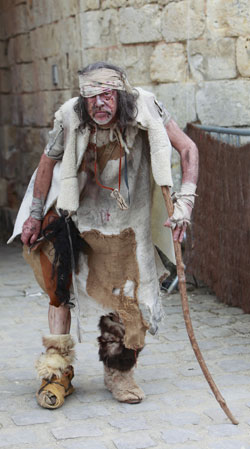
shutterstock_115487677editA 14-year-old boy was charged with breaching the Communications Act after students at Alva Academy in Clackmannanshire,  Scotland set up a Facebook page which school administrators said was “designed to deliberately cause humiliation, defamation and insult to staff.”  The page, contained images of teachers with sexual references written on them.  Officials expressed dismay at the number of students who had visited the page and “liked” some of the images. The page has since been deleted.

Parents were informed of the page and urged  to check their student’s electronic devices.  One Alva Academy pupil tweeted last week: “Ridiculous how far the schools taking this whole thing. Ma mums going nowhere near my phone or laptop [sic]”.  The incident has spurred discussion over whether students are overly technologized, having access to tools which they do not have the maturity to use responsibly.  Many perceive this sort of behavior as becoming more widespread, prompting questions about how much parents can and should limit use of computers.


Discussion Questions

  • Should the person who set up this facebook page be punished? If so, how? What about others who posted or commented, or ‘liked’ posts?
  • What differentiates teasing from humiliating?
  • Have you been embarrassed or humiliated by something someone said, or posted, about you?
  • Have you ever said, or posted, something about another person which you regret posting? If so, have you spoken with that person about it? Why, or why not?

Scripture Texts (NRSV) for Sunday, October 27, 2013 (Twenty-Third Sunday after Pentecost)

Jeremiah 14:7-10, 19-22

2 Timothy 4:6-8, 16-18

Luke 18:9-14

(Text links are to Oremus Bible Browser. Oremus Bible Browser is not affiliated with or supported by the Evangelical Lutheran Church in America. You can find the calendar of readings for Year C at Lectionary Readings.)

For lectionary humor and insight, check the weekly comic Agnus Day.


Gospel Reflection

Schadenfreude is a German word which means pleasure derived from the misfortune of another.  You may not know this word but you do know the feeling. If you’ve been passed on the highway and nearly driven off the road by someone driving 30 miles over the limit only to see them pulled over by the Highway Patrol five miles down the road the feeling you had was Schadenfreude. If the person your parents are always holding up as a good example is arrested for vandalism at Halloween you’ll know the feeling.

I have been a pastor for many years, in congregations, on campuses and currently, in a prison. One of the great privileges of being a pastor is being trusted by others with their stories, especially shameful or humiliating stories. I have heard many stories, shocking stories, scandalous stories, stories so incredulous they demand to be retold—were they not told in confidence to a pastor. Sexy or shameful, they share one thing in common; they are overwhelmingly sad.

Remember the opening warm up question above, the one about sharing the thing you are most ashamed of in your life? The men I work with in prison have had the most shameful thing they have done published in the paper, often in headlines on the front page. They are reminded every day of the worst thing they have ever done by where they wake up and, for some, where they will spend the remainder of their lives.  Not only does everyone know the worst thing they have ever done, it’s the ONLY thing most people know about them.

The Pharisee in the gospel lesson thinks because he follows God’s commandments closely he is better than others. You know people who, because they are smarter than others think they are better. You know people who are more athletic, more popular, more this and more that which provide them reason to look down on others—and when they get their comeuppance, we experience schadenfreude.

Like every parable Jesus told this parable is really about you and me. Sometime’s we’re the Pharisee and sometimes the tax collector. Jesus said, “…those who exalt themselves will be humbled, and those who humble themselves will be exalted.” I don’t believe this means they trade places. I believe it means they end up in the same place, on the same level. The truth is we are no better or worse than anyone else. Have we done shameful things? You bet! The gospel message, the message Jesus brought tells us we aren’t defined by what we have done. Instead, we are defined by what God has done; namely claimed us as sons and daughters in baptism, in spite of what we have done or will do.

Can we hurt others? Of course. Will we mess up? Well, yeah, but we can never wander so far God will give up on us. Like a shepherd in seek of a lost lamb, God will never give up on us.

Discussion Questions

  • What does it mean to “compare your inside to someone else’s outside”? Have you ever done this?
  • Have you ever trusted another person with your deepest pain? If so, how was that. If not, is there someone you could trust that much?
  • Have you experienced grace, acceptance of who you are, as you are, from another person? If parent’s, tell them thanks! If it’s a friend, thank God, friends like that are among God’s greatest gift.
  • Have you been called to be a friend like this to another? Someone whose ‘outside’ is much different than yours?

Activity Suggestion

Make it a point this week to say a kind word to someone you find difficult or challenging to love. Next week talk about what did or didn’t happen as a result.

Closing Prayer

Gracious God, thank you for loving us in spite of our failure to live as you want us to live. Forgive us for the hurtful things we’ve said and the shameful things we’ve done. We thank you for those people who listen and forgive on your behalf.  When we are burdened by guilt and regret open our hearts to those we can trust to speak a word of forgiveness and home. Help us to be that person for another.  Amen.

October 20, 2013–You Gotta Have Heart

Contributed by Scott Moore, Erfurt, Germany


Warm-up Question

When have you wanted something that you wouldn’t give up striving for until you got it?

You Gotta Have Heart

After 41 years, the conviction of Herman Wallace, 71, was finally overturned. In 1972 Wallace immediately was placed into solitary confinement after the murder of a prison guard named Brent Miller. He was finally convicted of the crime two years later in 1974. He was kept in a Louisiana cell that was 6’ X 9’ and only allowed out for one hour each day for solitary exercise and to shower. In addition, he had no meaningful social interaction, work opportunities, or educational classes.  Nor was he part of any rehabilitation program.

Problems with the grand jury in this case are what led Judge Brian Jackson to finally rule to correct this error. Wallace was convicted of this crime along with two others, one of whom was released in 2001; the other is still serving his sentence in solitary confinement. Wallace had appealed over 160 times in the 40+ years. One of his claims was that he and Albert Woodfox (still in prison), were falsely implicated for their political activism in prison as members of the Black Panther Party.

While he is certainly happy that his case was finally heard, there isn’t much time for him to enjoy his new freedom. He has been diagnosed with liver cancer and it is believed that he only has weeks to live. Tessa Murphy, of human rights watchdog organization Amnesty International, said, “The case of Herman Wallace is a tragic example of ‘justice’ gone wrong in the USA.”


Discussion Questions

  • When have you witnessed something that you felt was unjust?
  • When have you acted to stop an injustice or to right a wrong?
  • When have you felt powerless against injustice?
  • When have you seen a conflict between two different versions of what “justice” is?

Scripture Texts (NRSV) for Sunday, October 20, 2013 (Twenty-Second Sunday after Pentecost)

Genesis 32:22-31

2 Timothy 3:14-4:5

Luke 18:1-8

(Text links are to Oremus Bible Browser. Oremus Bible Browser is not affiliated with or supported by the Evangelical Lutheran Church in America. You can find the calendar of readings for Year C at Lectionary Readings.)

For lectionary humor and insight, check the weekly comic Agnus Day.


Gospel Reflection

shutterstock_125593883edit“Pray and do not lose heart” is what Jesus encourages those listening to him in Luke’s gospel, and that includes us right now. Jesus uses once again a parable to make his point clear. He tells us about a widow, one of the most powerless in society at that time, who pleads and pleads with the judge to rule in her favor against her opponent. She turns to the one who can “make things right” for her. She places her life in the hands of the one who has the power and authority to turn things around. We know nothing from this story about what the opponent did or whether or not she deserves the justice she seeks. We do know two things: 1) the judge doesn’t really care about God or about the people he has been appointed to serve, and 2) the woman is persistent and threatens to “wear the judge out.” She keeps coming and coming and coming. He is sick of hearing her pleas. He grants her justice because she doesn’t give up.

Jesus’ hearers know that widows have no chance in society. They are the ones with the fewest chances; they are dependent on everyone. They do, however, have a voice and can speak up. The unjust judge finally hears the widow in Jesus’ story. Jesus sets us up, however. If an unjust judge, who doesn’t care about God or others can break down and give in, how much more likely is it that God, who is just, will hear the cries of God’s chosen ones. God is infinitely more compassionate than this unjust judge. Jesus says, “and will not God grant justice to his chosen ones who cry to him day and night? Will he delay long in helping them? I tell you, he will quickly grant justice to them.”

These words encourage us to persevere. Jesus gives his hears advice based on trusting in God. It’s simple. God wants what’s best for us. Jesus tells us to be like the annoying widow. He promises us that God will act.

Don’t give up in your pursuit of God’s blessings and justice. The asking and the pursuit alone strengthen your relationship to God even when things don’t happen as timely as you want. Ask for what you need. Demand it: day and night.

Discussion Questions

  • When have you prayed for something that you were convinced was answered positively?
  • When have you not received what you asked for in prayer?
  • What is the longest you have ever prayed for something before you got an answer?
  • What are you praying for that is still unanswered?
  • What do you not dare to ask for in prayer? Why not?

Activity Suggestion

 “Blind” Dominoes

You will need lots of dominoes or blocks that can be stood up to fall like a domino chain.  Participants are asked to choose a pattern to build with their dominos/blocks but there’s a catch.  Choose one catch. If you choose more than one and if time permits, reflect on the differences.

  1. Participants must build the agreed upon pattern together but blindfolded.  Start over if they are knocked over.
  2. Participants must build the pattern with two people “holding” each domino together pressed between just one finger of one hand of each participant.  Starting over if they are knocked over.
  3. Participants must build a pattern under a per-determined time limit.  Start over, of course, when the dominos fall.

Reflection:  What was frustrating about the “catch”?  How did you overcome it?

Closing Prayer

God of justice, God of abundance, we wait upon you and your goodness. We do not always act in the name of justice. We do not always share the blessings we have with others. In spite of all that, you turn your ear to us. You hear our cries both day and night. Hear us now as we plead for justice, peace, and wholeness for ourselves and for the whole world. We ask this in the name of the one who encourages us to pray and not lose heart, Jesus Christ our Lord. Amen

October 13, 2013–The Cost of Healing

Contributed by John Wertz, Blacksburg, VA

Warm-up Question

Think about the last time you were really sick.  Who helped you to deal with your illness?  How did you express your gratitude to that person?

The Cost of Healing

Everyone will get sick at some point in their lives, however, since a visit to the doctor or the emergency room, can cost hundreds or thousands of dollars, it has not always been possible for those who are sick to see a doctor, especially if they lack insurance.   According to the Health Insurance Coverage Estimates produced by the Centers for Disease Control and Prevention, “In the first 3 months of 2013, 46.0 million persons of all ages (14.8%) were uninsured at the time of interview, 57.4 million (18.5%) had been uninsured for at least part of the year prior to interview, and 34.5 million (11.1%) had been uninsured for more than a year at the time of interview.”   When the statistics are examined more closely, it becomes clear that the uninsured rate is even higher for those on the lower end of the socio-economic scale.  For people who are considered poor (those earning up to $23,550 in income for a family of 4) or near poor (those earning up to $47,100 in income for a family of four), the uninsured rate rises to nearly 30%. (accessed Sept. 30, 2013 – http://www.cdc.gov/nchs/data/nhis/earlyrelease/insur201309.pdf and http://aspe.hhs.gov/poverty/13poverty.cfm#guidelines).  For those struggling to make a living, therefore, adequate health care can be out of their financial reach and a major medical event can mean financial disaster.

In an attempt to provide access to health care to all Americans, the Federal government passed the Affordable Health Care Act in 2010.  After three years of lawsuits and political wrangling, the Act went into effect at the beginning of this month.  While it will be years, before the success or failure of this law can be accurately measured, in the short-term millions of our most vulnerable neighbors will now have access to medical insurance and the care that they need when they are ill.


Discussion Questions

  •  Do you think that access to health care is a right or a privilege?
  • Do you think a certain level of care should be available to everyone regardless of their financial resources?
  • For many people, money is at the heart of the discussion over health care.  How much do you think it should cost to go to the doctor?  How does that compare to what you are willing to pay for other goods and services?

Scripture Texts (NRSV) for Sunday, October 13, 2013 (Twenty-first Sunday after Pentecost)

 2 Kings 5:1-3, 7-15c

2 Timothy 2:8-15

Luke 17:11-19

(Text links are to Oremus Bible Browser. Oremus Bible Browser is not affiliated with or supported by the Evangelical Lutheran Church in America. You can find the calendar of readings for Year C at Lectionary Readings.)

For lectionary humor and insight, check the weekly comic Agnus Day.


Gospel Reflection

shutterstock_112584377edit

Photo by Radu Razvan / Shutterstock.com

“Jesus, Master, have mercy on us!” (Lk 17:13)  If there was ever a group of people who could use God’s mercy and the healing presence of Jesus, it was definitely the lepers.  These men and women, who were battling the affects of a long-term, debilitating disease, were outcasts from society and essentially unemployable.  Regardless of their social standing or skill set before they became ill, lepers were forced to survive on the charity of others and to live in a colony with those coping the disease.

Their cry, Luke says, came from a distance.  Lepers always kept their distance from the rest of society, because to get too close was to risk subjecting someone else to the pain and suffering that dominated their lives.   “Jesus, Master, have mercy on us!” was their plea, but what form did they expect Jesus’ mercy to take?  Were they seeking a financial donation from him like the donations they had sought from travelers before him?  Were they looking for a gift of food like the 5,000 had received?  Were they hoping for healing like the crippled woman who could now walk again?  Obviously, we cannot know everything that was racing through the minds of those ten lepers as they called out to Jesus, but Jesus’ response to their cry is immediate and clear, “Go and show yourselves to the priest.”(Lk 17:14)  He doesn’t ask them to jump through any hoops.  He doesn’t call them over so he can perform a ritual.  Jesus hears their cry for help and acts to restore health and wholeness to their lives.

The healing, it is worth noting, didn’t happen immediately.  It was only after the lepers obeyed Jesus’ command and began walking toward the priests who could certify their healing and release them from their unclean status that they noticed a change in their health.  As they walked, as they obeyed Jesus command, they experienced God’s healing power and were made well.

It’s hard to blame the nine who didn’t come back to thank Jesus and to praise God.  After all, Jesus told them to go to the priest and once they were declared clean, they could go home.  Almost anyone in their shoes would have raced to share the good news with their family and friends, but one leper returned.  One former leper gave glory to God in a loud voice and prostrated himself at Jesus’ feet.  One newly healed Samaritan understood that Jesus offered more than simply a path back into the world.   One man of faith believed in Jesus and discovered not simply physical healing, but the key to a whole, healthy life of faith.  Jesus command, “Get up and go on your way; your faith has made you well” (Lk 17:19) is not the end of the story, but  a new beginning for this once ailing man who now returns to the world free from the horrors of leprosy and connected to the new life that comes from faith in Jesus.

Discussion Questions

  • If you were one of the ten lepers who were made clean, do you think you would have returned to thank Jesus?
  • Even though leprosy is not a major disease in the world today, there are still millions of people who are isolated and left out of society.  What are some of the ideas, situations and circumstances that make someone a ‘leper’ in today’s world?  What do you think it is like to live on the edges of society?
  • How can we follow Jesus’ example and show mercy to those who are in need of healing and hope?

Activity Suggestions

  • Work with your church to assembly Personal Care Kits or Baby Care Kits which can be distributed by Lutheran World Relief to people around the world in need of healing and help. More information on LWF kits can be found at: http://lwr.org/getinvolved/kits
  • “Thank You Day” – pick a day to go out of your way to say, “Thank You!”  Pay special attention to all the ways that people assist and help you throughout the day.  Acknowledge their help with words of thanks and consider writing a personal note to those who make the biggest impact in your life.

Closing Prayer

Gracious God, you reach out to us with your compassion and caring.  Bless all those who use their gifts to bring healing and health to others.  In our times of need, help us to experience your merciful presence and make us always thankful for the gifts you have given us.  In your name we pray.  Amen.

October 6, 2013–Are Christians Christ-like?

Contributed by Jen Krausz, Bethlehem, PA

Warm-up Question

What do you consider great faith or devotion to look like? Share an example with the group.

Are Christians Christ-like?

shutterstock_125972684editThroughout his ministry, Jesus repeatedly criticized the religious leaders of his time, the Pharisees, for being self-righteous and judgmental of others, while not seeing their own sins. The Pharisees loudly condemned people for breaking God’s laws and made it clear that they were different, were more righteous. Jesus, on the other hand, did not hesitate to spend time with sinners and eat with them if it gave him an opportunity to show God’s love to them and gently encourage them to follow God’s ways. With sinners who knew their broken state, Jesus was merciful.  On the arrogant Pharisees, he heaped contempt and judgment.

A recent study by Barna Group shows that while some Christians model Christ-like attitudes and behaviors, many are more like the Pharisees in their viewpoints and actions. 51% of the self-identified Christians surveyed had behaviors and attitudes consistent with those of the Pharisees, such as avoiding those people they consider to be sinful and thinking that “people who follow God’s rules are better than people who do not.”

Only 14% of self-identified Christians had behaviors and attitudes consistent with those Jesus modeled during his life (as written about in the scriptures), such as caring about persons for who they are rather than what they’ve done and having compassion for people doing immoral things. A slightly higher percentage, about 21%, had a mixture of attitudes and behaviors, some Christ-like and some Pharisaic.

In a time when many people outside the Christian church consider Christians to be hypocrites, it is significant to consider whether our attitudes and actions mirror Jesus or a group for whom he had many harsh words.


Discussion Questions

  • When you look around at the Christians you know, do they seem more like the Pharisees (focused on rules and appearances) or like Jesus (focused on God’s love and on showing compassion to others)?
  • What steps do you think your church could take to be more Christ-like?
  • Many non-Christians see Christians as being hypocrites. How do you think Jesus would answer such an accusation?
  • What is the difference between accepting a person as they are and accepting an immoral behavior? Can we as Christians “love the sinner but hate the sin”? How?

Scripture Texts (NRSV) for Sunday, October 6, 2013 (Twentieth Sunday after Pentecost)

Habakkuk 1:1-4; 2:1-4

2 Timothy 1:1-14

Luke 17:5-10

(Text links are to Oremus Bible Browser. Oremus Bible Browser is not affiliated with or supported by the Evangelical Lutheran Church in America. You can find the calendar of readings for Year C at Lectionary Readings.)

For lectionary humor and insight, check the weekly comic Agnus Day.


Gospel Reflection


To understand these verses, we need to realize that saying that we have faith and acting according to our faith are two totally different things. When Jesus tells the disciples that if they had faith as tiny as a mustard seed they could make a tree throw itself into the ocean, he isn’t talking about reciting the Apostles Creed.

The kind of faith Jesus talks about is faith that gets into your life and changes you from the inside out, faith that compels you to treat those society thinks are the lowest of the low with dignity and respect. He means faith that leads you to stand up for what is right without putting down those you think are wrong, faith that takes you far out of your comfort zone to be the hands and feet of Jesus to all those people who think Christians are hypocrites.

This kind of faith isn’t primarily about doing things, although it ends up that way. This kind of faith is about being someone who gets to know Jesus in the most personal, give-away-your-heart kind of way. It’s about becoming a person who does what Jesus would do because you just love Jesus so much that you can’t help but follow in his footsteps. It’s about transforming from a self-centered person into a God-centered person. God can really work through a person like that.

The verses about the servant (7-10) don’t appear to have much to do with these verses about faith. A deeper look, however, does show a connection. Jesus is making a point here. He’s saying we can’t do good deeds and think that God somehow owes us some kind of reward. That’s not how God’s kingdom works. We can get caught up in the “servant” or “slave” language and start thinking it doesn’t apply to us today. We don’t have slaves and not many people have servants anymore either.

In the time when this was written, a servant was someone who was totally devoted to another person. Is it making more sense now? That’s us, or it should be us—totally devoted to God, right? In our devotion to God, do we feel like God should thank us or reward us? It’s good to remember that in reality, we are all unworthy of what God has already given us. When we get to thinking we deserve rewards for doing what God wants, we can’t focus on knowing Jesus and following him. The focus shifts back to ourselves, and God can’t use us as well.

Both these passages, seemingly very different, show what it is like to be a disciple–challenging, difficult, and yet so rewarding.

Discussion Questions

  • If faith only counts when it is backed up by actions, do you consider yourself a person with great faith or little faith? Why?
  • Why is it so difficult for the church as a whole to follow Jesus’ example?
  • Why is it difficult for you to follow Jesus’ example?
  • What steps could you take to be more Christ-like in your daily life? Do these steps seem difficult or easy? Why?

Activity Suggestions

  • In most parts of the country, the weather is changing from summer into fall. What a great time to take a prayer walk, enjoy God’s creation, and draw near to God. Thank God for making everything, and ask God to reveal what you can do to impact the world around you for Christ.
  • With your class or youth group, explore the attitudes Jesus would have toward different groups of people you come into contact with regularly. What would Jesus think of the cheerleaders? Of the football players? Of the kids on the fringe of middle or high school life? How do you think Jesus would want you to approach them with the love of God? Try to come up with some concrete ideas for actions to take.

Closing Prayer

Lord God, bring us into an ever deeper relationship with you. We pray that we would allow that relationship to transform us to be more like your son, Jesus. Help us to take Jesus’ attitudes and actions into the world around us and love people with your love. Amen.

September 29, 2013–The Widening Gap

Contributed by Erik Ulstead, West Des Moines, IA

Warm-up Question

What is the biggest house you’ve ever seen?  Describe it.

The Widening Gap

shutterstock_139268702editThe wealthiest 1% of Americans have 36% of the money.

This, and many other startling facts have come from a recent study conducted at the University of California, Berkeley.  The top 1% is defined as families with incomes above $394,000 in 2012.  The study also shows the income gap between the top 1% and the remaining 99% is as wide as it’s been in nearly 100 years.

Between 1993 and 2012, the incomes of the 1% grew 86.1%, while the 99% grew 6.6%.  More recently, as the country’s economy has begun to recover from The Great Recession, the divide has become more significant.  From 2009-2012 the incomes of the top 1% grew more than 31%, while the incomes of the 99% grew 0.4%.

The Berkeley study attributes the trend not just to technology and job outsourcing, but to the reduced power of progressive tax policies and unions, along with “changing social norms regarding pay inequality.”  Another study published by the University of California, Santa Cruz indicates that the bottom 80% earn 11% of the money.  As the American economy continues to improve some economists believe the wealthiest people will continue to benefit the most.

 Discussion Questions

  •  There were a lot of numbers in the article.  Which of the facts and figures caught your attention?  Were there some that confused you?
  • The United States is the 94th ranked nation in the world when it comes to having an even distribution of wealth.  How does that make you feel?
  • Why do you think the recent economic recovery has been better for the wealthy than for everyone else?


Scripture Texts (NRSV) for Sunday, September 29, 2013 (Nineteenth Sunday after Pentecost)

Amos 6:1a, 4-7

1 Timothy 6:6-19

Luke 16:19-31

(Text links are to Oremus Bible Browser. Oremus Bible Browser is not affiliated with or supported by the Evangelical Lutheran Church in America. You can find the calendar of readings for Year C at Lectionary Readings.)

For lectionary humor and insight, check the weekly comic Agnus Day.


Gospel Reflection

Heaven and hell — what’s it like and who’s going there?  These are the questions that have gnawed away at humankind since the beginning of time.  It’s a tough topic for pastors and other religious leaders.  Most religions address the notion of an afterlife, yet people are endlessly curious about the specifics.  Some people claim to have first-hand knowledge of heaven, either through near-death experiences or clairvoyant conversations with people who have died.

The parable of “The Rich Man and Lazarus” addresses the concept of the afterlife in terms of wealth and poverty.  The nameless rich man lives a life of luxury while poor Lazarus is lying destitute at the rich man’s gate begging for table scraps.  Only the dogs pitied Lazarus, which gives us the unpleasant image of open sores being licked by stray animals.  Both men die.  Lazarus is whisked away to the bosom of Abraham while the rich man is being consumed in the flames of Hades.

There is tough justice for the rich man.  There is no “get out of Hades free” card for him.  The rich man is being punished because he disregards Lazarus as being less than him.  Even in hellish agony the rich man wants Lazarus to be his errand boy.  He asks for Lazarus to give him water or warn his family about their impending doom.  However, Abraham (functioning as the God-figure) won’t permit it.  The story is about more than rich vs. poor, it’s about seeing all people as beloved children of God.

Beware of reading this story too literally, lest we see it as a simple condemnation of the super-wealthy.  We who are among the 99% might get a little cocky about ourselves while heaping coals on the rich.  Martin Luther reminds us that there’s more going on here:

“Therefore we conclude that the bosom of Abraham signifies nothing else than the Word of God,…. the hell here mentioned cannot be the true hell that will begin on the day of judgment. For the corpse of the rich man is without doubt not in hell, but buried in the earth; it must however be a place where the soul can be and has no peace, and it cannot be corporeal. Therefore it seems to me, this hell is the conscience, which is without faith and without the Word of God, in which the soul is buried and held until the day of judgment, when they are cast down body and soul into the true and real hell.”

The complexity of this parable is confounding to many, especially young people who may desire a clear interpretation.  It’s good to wrestle with this text and pray for clarity.  In the meantime, let us be encouraged to free others and ourselves from the bondage of wealth and seek to reach out in love to those in need.

Discussion Questions

  • What is Jesus saying about wealth and poverty in this story?
  • How does this story sound if you’re a rich person?
  • 80% of the world lives on less than $10 per day.  A person making minimum wage in the United States is $7.25 an hour.  Most of us are wealthy among the world’s population.  Do you hear this story differently if you think of yourself as “the rich man”?
  • What are ways you can work toward financial equality for all?

Activity Suggestions

  • Have a Hunger Meal to simulate the disparity between rich and poor.  Consider having your group plan a larger Hunger Meal event for your whole congregation.
  • Play Hunger Jeopardy using this PowerPoint file.
  • Take a Hunger Quiz.  Download and print copies for each person.

Closing Prayer

God, we grieve the inequalities in our world.  Help us to be agents of change and ambassadors of love.  Thank you for loving us.  Amen.