
Editor’s Note: Many churches and youth groups embark on summer service trips. This Faith Lens post is a reflection we hope you’ll use with your group prior to your trip to spark conversation not only about what you are doing, but also why you are doing it and what outcomes you hope for.
This post is the first in a two-part series designed to help groups reflect on their service work both before and after their trip. The second post, a post-service trip reflection guide, will be published in early July.
Prepare
So you’re leading your youth group on a summer service trip, that’s great! As people of faith, freed by God’s grace, we are sent into the world to love and serve our neighbors. Whether we’re painting houses, stocking pantries, working in gardens, or cleaning up blight, we hope not only to serve but also to learn, listen, and reflect God’s love.
But is it safe to say that all service is good?
Are there forms of service that are not actually good, even when they are well-intentioned? There are forms of service that can perpetuate systems of inequality. For example, a food drive may provide temporary relief without ever addressing why families are food insecure in the first place. Other acts of service can give the appearance of humility while subtly reinforcing the superiority of the server, who serves out of freedom, while others receive out of necessity. Still others may make us feel good without accomplishing much good at all. Before engaging in service, it is important to talk about both the kind of service we are doing and why we are doing it.
Often we assume we know why we serve. We serve because Jesus calls us to love our neighbors. Yet if not all service is good, then good intentions alone cannot be enough. We need to think carefully not only about what we are doing, but also why we are doing it. Are we serving in ways that genuinely help our neighbors? Are we listening before acting? Do we understand our own motivations? If we hope to serve faithfully, these are questions worth asking before we ever leave for our trip.
A thought-provoking article that can help frame this conversation is Adam Davis’ “What We Don’t Talk About When We Don’t Talk About Service.” Give it a read, and then use this guide as an opportunity to reflect on service before engaging in it. My hope is not that this conversation will discourage service, but that it will help us serve more faithfully, thoughtfully, and lovingly.
Opening Activity
- Tell about your favorite service experience or service trip. What made it meaningful? Was it the work itself, the people you met, something you learned, or something else?
- If the upcoming trip will be someone’s first service experience, ask: What are you hoping for on this trip? What would make it meaningful? What do you hope will be different because you went?
Read Aloud
Motivations, Inequality, and Good Service
Summer service trips are great for lots of reasons. They are a wonderful opportunity to make or deepen friendships, travel to new places, engage in new experiences, and live out one’s faith in new ways. But what about the service itself? Is all service good service?
It sounds like a crazy question, right? Of course service is good, we think. Everyone tells us to do service: churches, schools, clubs, parents, and more. In fact, we assume that all service is good so much that we don’t feel the need to talk about it before or after we engage in it. But I think we are overlooking two aspects of service that require our attention: motivation and inequality.
Maybe you are going to stock shelves in food pantries, work in community gardens, clean up neighborhood blight, build or repair homes, or help with kids or senior citizens. Whatever service you are doing, we need to ask ourselves why we are doing it. It is easy to say, “Because Jesus tells us to serve.” That’s true, and that may be your primary motivation. But it’s rare, if not impossible, to have only one motivation.
Yes, you are doing this because your faith encourages you to do so. But maybe you’re also doing it because it sounded fun, which isn’t a bad thing! Or maybe you are doing it because you genuinely care about hunger and people who suffer from it. Empathy is a powerful emotion. Perhaps you feel like you need to, as if God won’t love you if you don’t. Or maybe you’d feel guilty or worry about how others might see you if you stayed home. It’s likely that more than one of these motivations is at play. And that’s okay, because that’s human! We will have both good and not-so-good motivations because we are, as Luther reminds us, at the same time both saints and sinners. What matters is recognizing the complexity of our motivations rather than pretending they are perfect.
What’s also complex is the relationship between service and inequality. When we think about it, inequality is often at the heart of the service work we do. We have time, money, and resources that we are choosing to share. The person on the other end of the service lacks one or more of those things. A church group may spend a week repairing homes because homeowners cannot afford the repairs themselves. That need reflects an inequality in resources and opportunity. The server chooses. The served often does not. The server acts from relative freedom. The served often acts out of necessity. That is inequality. We need to ask ourselves: Does our service work perpetuate that inequality or challenge the systems that create it?
So if service is more complicated than we often admit, how should we view the people we are serving?
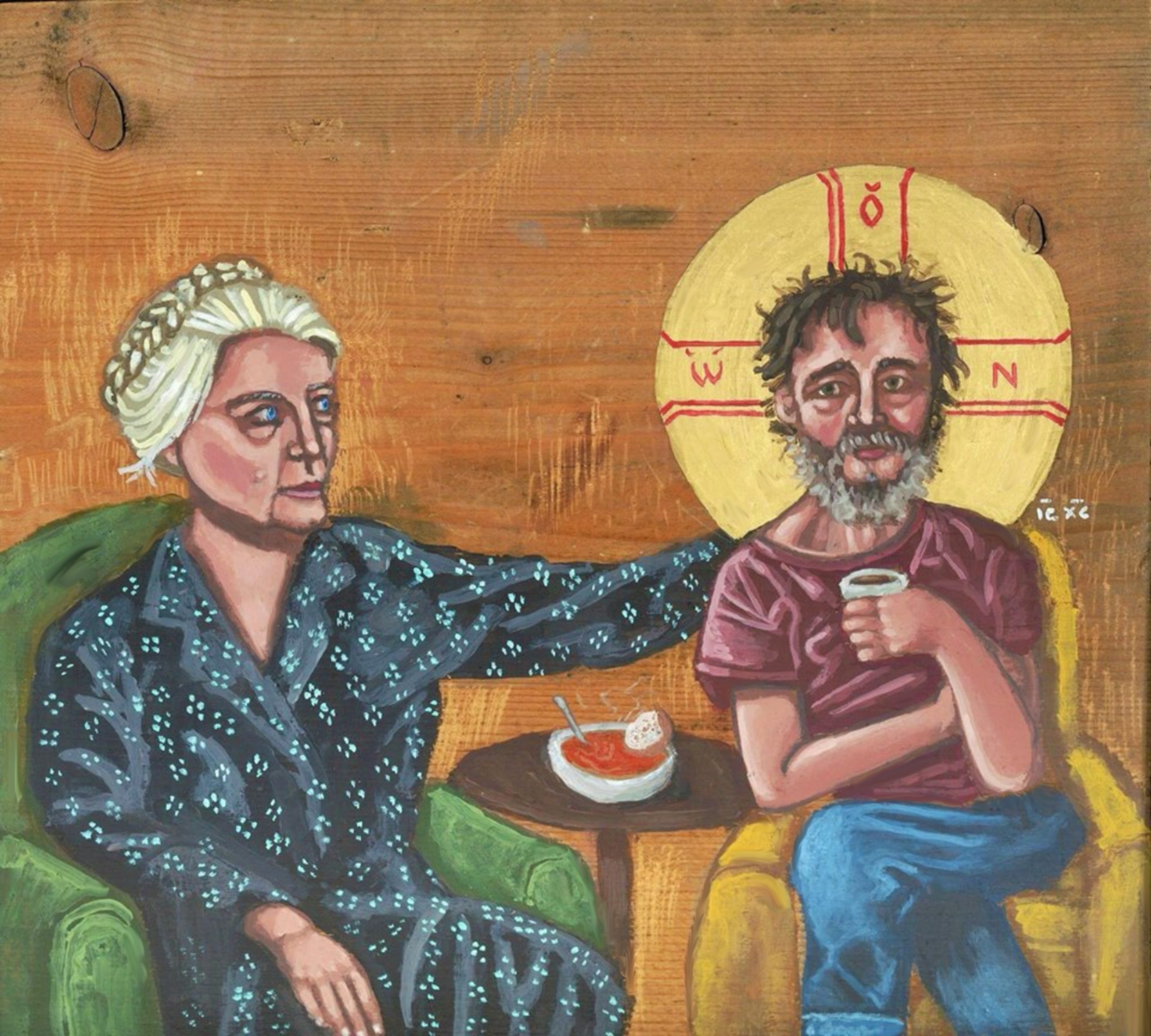
Image by Kelly Latimore. Used with permission. Copyright Kelly Latimore Icons.
Dorothy Day, the founder of the Catholic Worker movement, dedicated her life to living beside and serving neighbors in need. When asked how she saw Christ in the people she served, many of whom were impoverished, she responded, “The mystery of the poor is this: That they are Jesus, and what you do for them you do for Him. It is the only way we have of knowing and believing in our love.”
Perhaps what matters most is remembering that the people we encounter are not projects to complete or problems to solve. They are our neighbors, and they bear the image of God. When we begin there, our motivations become clearer and our service is more likely to challenge inequality rather than reinforce it.
Reflection Questions
- Is all service good? Why or why not?
- How does service work relate to inequality? Can you think of examples where service might challenge inequality? Can you think of examples where it might reinforce it?
- What do you think Jesus and Dorothy Day mean when they say that serving those in need is the same as serving Jesus himself?
- What are your motivations for going on this trip? Which motivations feel strongest for you right now?
- What good do you hope comes from this service trip—for you, your church, and the people you will encounter?
- How might seeing the people you meet as neighbors, rather than projects or problems to solve, change the way you approach this trip?
Closing Activity
- Look at the icons of Jesus created by Kelly Latimore. As a group, choose the icon that best reflects the service you are preparing to do or the neighbors you hope to encounter on your trip.
- Share why you chose that image. What does it reveal about how you see the people you will serve alongside? What does it teach you about seeing Christ in your neighbors?
- If your budget allows, consider purchasing a digital download of the icon and printing a copy for each participant. Encourage students to keep it with them throughout the trip as a reminder that in serving their neighbors, they are serving Christ himself.
Final Prayer
- Pray this over your group:
- Holy God, prepare our hearts, our minds, and our bodies for the work that you have called us to. Root our motivations for service in love, humility, and faith. Help us to see you in each person we encounter. May our work not perpetuate inequality, but reveal its causes and ignite a passion to work toward justice in your name. We pray all this by your grace and for your glory. Amen.