
Skip to content
ELCA Blogs

Faith Lens

March 5, 2017–Temptation

Sonja Gerstenberger, Grimes, IA


Warm-up Question

When you think of the word “temptation” what is the first thing that comes to mind?

Temptation

A recent Belfast Telegraph article explored the differing responses by men and women when asked if they thought various scenarios were acceptable, like increasing the amount of an insurance claim beyond what was needed for repairs, not reporting a bank error made in their favor, or allowing someone to take the blame for something that was their fault. The survey of 2,000 people conducted by the Chartered Institute for Securities and Investment found:

  • 29% of men and. 19% of women felt it was okay not to point out a bank error.
  • 17% of men and 11% of women felt it was okay to increase the amount of an insurance claim beyond what repairs would cost.
  • 10% of men and 5% of women felt it was okay to let a colleague take the blame for their error.
  • 47% of men and 33% of women felt it was okay to use information discovered about a competitor for their own employer’s gain.
  • 17% of people felt it was okay to buy an item of clothing, wear it once with the tags on and return it to an online retailer while only 11% felt this would be okay to do with an item purchased from a local retailer.

The findings of the survey indicate there is some difference between men and women in terms of how they respond to temptation. The survey also revealed we feel differently about transactions made in person (like with the local retailer) and our online purchases. Without a face-to-face transaction, it can seem okay to give in to the temptation to cheat and return an item because it seems to affect only  a faceless corporation.

Full Article: http://www.belfasttelegraph.co.uk/business/news/temptation-likelier-for-men-than-women-in-moral-dilemmas-over-cash-or-job-35406225.html

Discussion Questions

  • Do you find the results of this survey surprising? Why or why not?
  • Have you ever received too much change from a cashier or not been charged enough for a restaurant bill? What did you do? Did you have to think about it, or was your response immediate?
  • Do you think it is unethical to respond as did the people cited in the article? Why or why not?

First Sunday in Lent

Genesis 2:15-17; 3:1-7

Romans 5:12-19

Matthew 4:1-11

(Text links are to Oremus Bible Browser. Oremus Bible Browser is not affiliated with or supported by the Evangelical Lutheran Church in America. You can find the calendar of readings for Year B at Lectionary Readings

For lectionary humor and insight, check the weekly comic Agnus Day.

Gospel Reflection

In the story for today’s Gospel reading, Jesus has just been baptized in the river Jordan by John. The story moves directly from Jesus’ baptism to his temptation in the wilderness. This is an important to know because we need to think of what it means that just two verses earlier, Jesus came up out of the water, the Spirit of God descended like a dove, and a voice from heaven said, “This is my son, the beloved, in whom I am well pleased.” That very same Spirit led Jesus into the wilderness where he was tempted by the devil.

In the temptation, the devil first offers Jesus the material things of the world, tempting Jesus (likely hungry and thirsty) to command the stones to turn to bread. The devil is tempting Jesus to use the power of the Spirit given to him to get worldly things. Jesus responds by quoting Deuteronomy, “It is written, ‘One does not live by bread alone, but by every word that comes from the mouth of God,’” (see Deuteronomy 8:3). Jesus responds to the Devil’s temptation by reminding the devil he is called to speak God’s word.

Next the devil tempts Jesus to prove God is faithful, telling Jesus to throw himself down so God will send angels to save Jesus. To this Jesus responds again with words from the Old Testament, “Again it is written, ‘Do not put the Lord your God to the test,’” (see Deuteronomy 6:16). Jesus does not offer proof, but faith that God will provide without needing proof.

Finally the devil tempts Jesus to conquer the kingdoms of the world by worshipping the devil. Jesus responds again by quoting scripture, “For it is written, ‘worship the Lord your God, and serve only him,’” (see Deuteronomy 5:6-7). Jesus does not choose glory, but the way of suffering love by rejecting the devil’s offer of the glory of being a conquering king. Instead he serves God, which will eventually lead Jesus to his death on the cross.

One way to read the story is that it is not just about temptation but about what kind of messiah Jesus will be. The Jews would be waiting and looking for a conquering king, able to provide material things, protected by angels, a ruler and conqueror of kingdoms. The messiah revealed in the temptation is one who will not be controlled by the devil and will not put God to the test. This Jesus chooses the way of suffering and compassion.  He will eventually bring about the promised kingdom through these means and not through glory and might.

When we think about being tempted to take what is not ours or not owning up to our mistakes, we give in to a desire to have things that aren’t ours. Jesus, our messiah, calls us to follow a different path. The path Jesus calls us to may mean giving up some material things for the good of our neighbor. It may mean risking our own safety for the sake of community. And it certainly means denying entities that promise to bring wealth, safety, and a secure kingdom in exchange for worshipping and serving a ruler instead of our one, true God, revealed in the life, death and resurrection of Jesus.

Reference: “Basic Bible Commentary.” Ministry Matters. Accessed February 15, 2017. MinistryMatters.com.

Discussion Questions

  • If the temptations of Jesus are about what kind of Messiah he will be, what does it mean to say our temptations are about what kind of person we will be?
  • Does giving into temptation mean God will not forgive or love us? Does it mean we are not a good person?
  • If we are forgiven by God’s grace through the life, death, and resurrection of Jesus, why do we resist temptation? What does resisting temptation mean for God’s good and gracious will for our lives and for living together in beloved community? What happens when we give in?

Activity Suggestions

  • Create a modern retelling of the temptation of Christ, either a narrative or pictures that depict the three temptations. What would represent material things to a believer today? What would represent being tempted to offer proof that God would deliver? What would represent a temptation to worship something other than God?
  • Consider creating your own “What would you do?” experiments (patterned after the ABC televised specials, http://abc.go.com/shows/what-would-you-do) to use with adults in the congregation. Consider using simple exercises (like leaving a dollar out in the open on the floor as if someone dropped it) and just observing (not recording) the behavior of people as they respond. Have the observation team report back to the class and talk about what they observed and how they may have made a similar or different choice.

Closing Prayer

Gracious God, we are tempted in every way to give in to a world that tells us the way to fulfillment is power, and riches, and might. In response, you sent Jesus, a humble, suffering servant who would eventually die on the cross, mistaken and misunderstood. May we feel the power of your presence when we are tempted. Help us make choices that bring life for us and for the world which you so love. Amen.

February 26, 2017–Down From the Mountain

Herb Wounded Head, Brooking, SD


Warm-up Question

Were you ever in or have you seen a natural disaster (fire, flood, hurricane, tornado)?  Describe the experience.

Down from the Mountain

Perhaps you have heard about the Dakota Access Pipeline (DAPL) project and subsequent protests. There’s plenty of controversy surrounding DAPL and plenty of questions surrounding what’s happening in North Dakota near the Standing Rock Reservation. People have come from around the globe to protest or support the project. Many people think that the Native leaders from the Standing Rock had plenty of time to respond to the proposal. Others have said that only certain people had been approached and that the informational meetings were not made widely available to the tribal members.  Proponents believe the pipeline is necessary and a safer way to transport oil than additional trucks on the road.

Arguments against the DAPL include protecting clean water, respecting tribal sovereignty, and even protecting the creation as a whole. But did you know that the very first protest of the DAPL was from a group of High School students? Standing Rock youth launched a petition called Rezpect our Water, and in mid-July set out on a 500-mile relay run to Washington, DC to deliver a petition of 160,000 signatures. http://billmoyers.com/story/need-know-dakota-access-pipeline-protest/

This isn’t the first time that the Standing Rock and Cheyenne River tribal peoples have had disagreements with the government over land and water rights. In 1944, Congress approved the Pick-Sloan Plan for flood control and navigation of the Missouri River, which cuts through the heart of North and South Dakota. The plan involved the construction of four dams, which impacted twenty-three Native reservations. As a result, one thousand Native families were forcibly displaced. Many Native leaders charged that the project selected Native lands rather than non-Native lands while also ignoring tribal sovereignty, Indian law and treaty rights.

https://en.wikipedia.org/wiki/Pick%E2%80%93Sloan_Missouri_Basin_Program

This is a complex story which began long before the current controversy. Natives have had difficulty dealing with government entities since before the days of colonization in the United States. When we come with much baggage and hard feelings, working together can be impossible. It’s almost as if the two parties have such a scarred relationship that they are unwilling to listen to one another’s needs and wants, let alone be able to work together.

Discussion Questions

  • What do you think about the Dakota Access Pipeline? What are some of the larger issues at play?
  • Have you ever had troubling coming to an agreement with someone in a group project? How did you resolve that issue?
  • What sort of baggage are you carrying that you need to recognize?

Transfiguration of Our Lord

Exodus 24:12-18

2 Peter 1:16-21

Matthew 17:1-9

(Text links are to Oremus Bible Browser. Oremus Bible Browser is not affiliated with or supported by the Evangelical Lutheran Church in America. You can find the calendar of readings for Year B at Lectionary Readings

For lectionary humor and insight, check the weekly comic Agnus Day.

Gospel Reflection

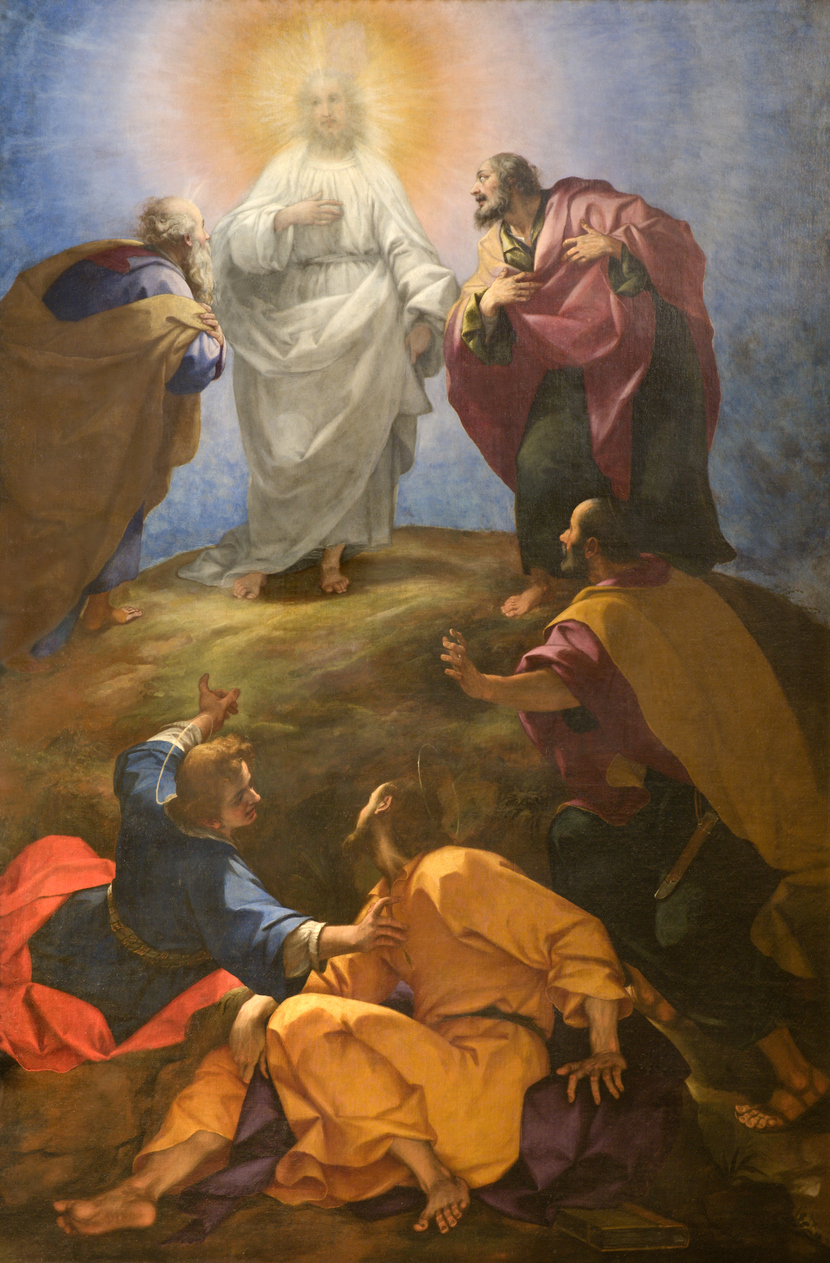
The Gospel reading from this week is commonly called “The Transfiguration.” It can be a confusing text to read, because we simply don’t have a way to easily describe what’s going on here. The text is pretty clear, but what actually happens and what it means is kind of confusing. Matthew writes, “Jesus was transfigured before them, and his face shone like the sun, and his clothes became dazzling white.” That’s pretty remarkable. Jesus’ true heavenly self is revealed, and he is not alone; Elijah and Moses are there as well.

I would think that if I saw something like that, it would leave me speechless. It’s almost like Peter, James and John are seeing something like a natural disaster. Our first response to such a sight is shock and awe.

One person, is so moved by this awesome experience that he wants to spend time in the moment.  Peter proposes that they build tents, or places to stay, there on the mountain for all three people—Jesus, Moses and Elijah. Seems like a smart thing to do. Stay put in this heavenly, awesome moment and soak it all in.

But then a voice interrupts Peter and makes the proclamation of who Jesus really is.  “This is my beloved Son, with whom I am well pleased.  Listen to Him.”

This is an important moment in the Gospel of Matthew, and it echoes back to similar elements from Jesus’ baptism.  A voice from the heavens says pretty much the same thing, “This is my son, the beloved, with whom I am well pleased.” This transfiguring moment makes the connection between the Old Testament prophets, and who Jesus is.  Jesus further develops what God has done in the stories of Israel.

Jesus continues to show the world is doing in and among the people that he loves.  Jesus is and will continue to be the fulfillment of the hope for redemption for the people of Israel and the whole world. A big moment indeed, but that means there is work to be done. Jesus and his disciples cannot stay on the mountain. They must come down, even to work among and with the people who are beginning to not like this Jesus and what he is about. But now, these three disciples know that Jesus is the Son of God, and as Jesus’ disciples, they must answer the calling to continue to do the work of God, even if it means doing things that they do not wish to do, like come down from the mountain.

Discussion Questions

  • When have you experienced an awe inspiring moment? When have you experienced something that took your breath away?  Where were you?
  • Studies on the brain have shown that awe-inspiring moments are spiritual experiences which, if repeated, make it easier for us to think and work with our thinking brain.  Do you think there are ways to cultivate awesome experiences?  If so, how might you do that?

Activity Suggestions

For this activity, you will need a gym-type ball (a mid-sized dodgeball works best, but a basketball or volleyball will do) and a space large enough to do a relay race without running into any obstacles.  Divide your group into two teams and have each team member find a partner. The object of this game is to carry the ball from one end of the space to another while holding the ball with only your foreheads. Once one team finishes, they pass the ball to the next pair, continuing on until everyone is finished. If you’d like an extra challenge, if time allows, you can also carry the ball only using your back (no locking arms!)

  • What was it like carrying the ball that way? What gave you the most success?
  • How can this activity help our day-to-day lives?
  • Who do you need to listen to and work with this next week?

Closing Prayer

God of reconciliation and hope, you inspire us each and every day to see the world as you see it, as a place bursting with love, and care for each other and creation. Inspire us to come down from our mountains of isolation into the midst of your world’s greatest needs to be the voice of those we can’t hear, and the hands of those who need your compassion. In the name of our revealed Lord and Savior, Amen.

February 19, 2017–Love Your Enemies

Jen Krausz, Bethlehem, PA

 Warm-up Question

Who do you consider your enemies?

Love Your Enemies

A group of prominent conservative voices that loudly opposed President Donald Trump’s candidacy are now fearful that he might take revenge over their lack of support now that he is president.

It may seem a little paranoid to be worried about the President of the United States coming after you, but Trump has talked frequently about getting revenge on people he feels has wronged him and even written about it in some of his books. “My motto is: Always get even,” he wrote. “When somebody screws you, screw them back in spades.”

When asked about his favorite Bible verse last year, he said it was “an eye for an eye.” “The question is not whether he’s vengeful,” conservative columnist Ben Shapiro told The Atlantic. “The question is how willing he is to use the levers of government to exact that revenge.”

Shapiro was a columnist for right-wing Breitbart News, but he quit last March when he felt the site had become a place where Trump could not be criticized. Shapiro said he has installed a state-of-the-art security system in his home and purchased a shotgun in case anyone tries to harm him.

“They can fight very ugly and very nasty,” he said of Trump and former Breitbart boss Steve Bannon who is now a Trump advisor. “And they do have power now, where if they feel like destroying you, they can.”

Conservative talk show host Glenn Beck says he has received multiple death threats from Trump supporters and now travels with two bodyguards to protect himself. “It is not fun,” Beck said. “I don’t cherish it, but I value the truth more than I’m afraid of retribution.” Beck has said that Trump is putting some “disturbing people” in his inner circle and that his treatment of the press is alarming.

Discussion Questions

  • How do you react when someone says something negative about you or does something against you?
  • What are the pros and cons of keeping an “enemies list” or looking to get revenge?
  • Can a politician always afford to be “nice” to everyone?

Seventh Sunday after Pentecost

Leviticus 19:1-2, 9-18

1 Corinthians 3:10-11, 16-23

Matthew 5:38-48

(Text links are to Oremus Bible Browser. Oremus Bible Browser is not affiliated with or supported by the Evangelical Lutheran Church in America. You can find the calendar of readings for Year B at Lectionary Readings

For lectionary humor and insight, check the weekly comic Agnus Day.

Gospel Reflection

Jesus turns President Trump’s favorite scripture verse on its head in this passage. Instead of “an eye for an eye,” Jesus says we need to give up our right to get back at someone who wrongs us. In Old Testament law, these rules were a deterrent that kept people from hurting each other, because they knew they would receive the same hurt as punishment for their actions.   In addition, “an eye for an eye” was a limiting factor—one could exact no more than an eye for eye.

In the Kingdom of God, however, grace reigns—unmerited favor shown to us by God that we then show to others . Think about it: if Jesus’ commands were followed by his people, they would really stand out as different from others in the extent of their love. And that’s the point, isn’t it? Elsewhere in scripture, Jesus says that his followers will be known by their love for others.

The command to love your enemies is one of the hardest in all of scripture. It goes against every grain of our nature to love our enemies. And it’s even more difficult to show love to someone when you expect you will only get more hate in return. What if your enemies take advantage of your kindness? What if they hurt you even more? Loving makes us vulnerable, and that’s scary.

Our leaders have a responsibility to protect the people as well as they can. Are they supposed to make the whole country vulnerable by not acting against our enemies? They doubtless wrestle with the best way to treat those that have made themselves enemies. But Jesus wasn’t preaching to leaders or governments—he was talking to individuals that want to follow him.

On a personal level, we are called to show God’s love in radical ways. If we make ourselves vulnerable, rather than reacting angrily or seeking self-protection, we need to trust God to be our protection. God may have purposes which we do not understand in the present moment. Operating out of self-protection may seem logical.  We don’t need to put ourselves in harm’s way unnecessarily, but we do need to follow God’s call to love our enemies even when it scares us and makes us feel like we might be in danger.

Discussion Questions

  • How do you think the world might be different if all of Jesus’ followers obeyed his commands in this passage? Use your imagination and really dream here.
  • Have you ever reached out in love to someone who’s hurt you—maybe someone you consider an enemy? What was the result?
  • What are some concrete ways you can love your enemies—in school, at home, or in your neighborhood?
  • Is there a difference between what leaders and we as individuals are called to do in response to Jesus’ command to love our enemies?

Activity Suggestions

Random (or Not-So-Random) Acts of Kindness:  As a group, decide on a day to perform random acts of kindness, focusing specifically on people who have mistreated you in the past or who you might consider an “enemy.” Pray for each other for strength to complete the random act and report back after that day to talk about how it went.

Closing Prayer

God of us and of our enemies, help us to love those who persecute and mistreat us. Soften their hearts toward us and our hearts toward them, so that we may find ways to reconcile and seek your peace together. In Jesus’ name we pray, amen.

February 12, 2017–Love is Greater

Bryan Jaster, Winchester, VA


Warm-up Question

What’s something that has happened in your life that has made you feel afraid or uncertain?

Love is Greater

The end of January has been pretty intense for the United States and likely for neighbors around the world.  The transition from one president to another is normally a time of leadership upheaval and of fulfilling promises made during presidential candidacies. In addition, at this time high levels uncertainty, fear, and anxiety have taken root for many.  Relationships with our neighbors in Syria, Iraq, Sudan, Mexico, and other communities around the country are stretched and strained.    Tension is high in the Congress.

A recent executive order fulfilled the promise our new president made when he said, “We’re going to build a wall.”  This new wall is designed to keep America separate from Mexico so that fewer people come into America.  Regardless of whether this will be an effective strategy to stem immigration, building the wall would keep people apart.    See http://www.npr.org/2017/01/25/511619026/donald-trumps-moving-forward-with-his-wall-is-it-really-going-to-happen) for the story.  The president’s press secretary reported that Mexico will be forced to pay for this wall.

Many scientists are feeling the weight of fear and uncertainty.  Recently employees of the EPA and departments of Health and Human Services, Agriculture, and the Interior have received notices to remove web pages and limit communication to the public.  See (http://www.businessinsider.com/nasa-scientists-are-launch-rogue-twitter-account-to-defy-trump-2017-1).  These scientists and government employees have been ordered to post only public safety information and to avoid anything that might influence political or national policy.

In response, many of these agencies have setup “rogue” Twitter accounts where anonymous government employees or scientists post to respond to censorship.  They provide a space where scientific facts about climate change, information about swearing-in day attendance, immigration stories, and civil rights advocacy can be shared.  Persons post anonymously for fear of being disciplined or fired.

Discussion Questions

  • Have you ever been a leader of a group, a sports team, or a school assignment? What made leading difficult?  What did you learn from it?
  • Why would being the president of the US be difficult? Would you want to be president?
  • Do you agree with the orders recently made?  Why or why not?

Sixth Sunday after Epiphany

Deuteronomy 30:15-20

1 Corinthians 3:1-9

Matthew 5:21-37

(Text links are to Oremus Bible Browser. Oremus Bible Browser is not affiliated with or supported by the Evangelical Lutheran Church in America. You can find the calendar of readings for Year B at Lectionary Readings

For lectionary humor and insight, check the weekly comic Agnus Day.


Gospel Reflection

Matthew’s Jesus says you are given the fires of hell for being angry with someone?…that you should rip out your right eye and throw it away if it offends?…or cut off your right hand if it causes you to sin?

What?  Jesus, are you serious?   Jesus was all about cuddling sheep and blessing children, right?

Let’s take another look at this story.

There are four sayings in our reading and each one refers to another biblical story.  Four times Jesus says, “You have heard it was said…”   The stories referenced are from the Ten Commandments in Exodus.  See Exodus 20: 13, 14 and 7 to see what commands Jesus is talking about.  When Jesus talks about divorce he quotes from Deuteronomy 24:1-4.

These commands to which Jesus refers are central to what is often called “the Law of Moses”.  The Law is designed to keep good order and relationships between people in the world.  The prohibitions against murder, adultery (having sexual relations with someone you are not married to), and swearing falsely are given to ensure the health of relationships, as was the demand that a certificate of divorce be provided.

Back now to the fires of hell and the ripping and cutting off of body parts….Scholars think that rather than being interested in people becoming physically maimed, Jesus is caring deeply and passionately about our relationships.  Jesus uses hyperbole to emphasize that God loves us so much that God cares about how we treat each other.  God’s love is greater than our anger, our lust, our fractured marriages, and the words we use to hurt.

Think about murder.  Jesus wants more than the killing to stop.  He wants us to treat one another as God’s beloved and to not speak hate.

Think about adultery.  Avoiding the physical, sexual act isn’t enough.  We also do not make other people objects by lusting after them.

Think about divorce.  People aren’t like trash to be discarded with a certificate; instead we provide for and protect the most innocent and vulnerable.

Think about swearing falsely or lying.  Jesus urges us always to speak and act truthfully so that we don’t need to make oaths at all.

Jesus says these things because God’s love for us is greater than all the things that might rip us apart.

Discussion Questions

  • Why do you think Jesus reinterprets Moses’ law? Wasn’t it good enough the first time around?
  • What is the impact on people of murder? Of divorce?  Of married people having sex with others?  Of lying to one another?
  • Give an example of where staying connected in a relationship overcame something negative like hate, hurt, or deception? Is love really greater?

Activity Suggestions

LOVE IS GREATER DAY.  Today is February 12th.  Tuesday is February 14th.  Let’s turn Valentine’s Day into “Love is greater day.”  (See oldlutheran.com for tshirts, mugs and bumper stickers to spread the word).  Maybe sharing God’s love with the world is great than all that rips us apart!

In pairs or as a small group come up with some actions you can do to share God’s love. Some examples to get you started:

  • Support Refugees and Immigrants around the world who need help. http://blog.lirs.org/5-ways-to-support-lirs-in-new-year/
  • Visit your local police department and thank an officer.
  • Get to know someone who has angered you. Who would that be?
  • Pay someone’s bill at a restaurant.
  • Write a letter or encourage a public servant like your congressman or representative.
  • Talk to someone in person who disagrees with you about an issue of science, immigration or religion.

Closing Prayer

God who loves us so deeply.  Help us to NOT murder, hate, divorce, commit adultery, lust or speak falsely but instead to love, honor, serve and support all people.  Help us to hold onto your love which is greater than everything else.  Amen!