
Skip to content
ELCA Blogs

Faith Lens

March 6, 2016–Surely There’s Limit–Isn’t There?

Jake Bourma, West Des Moines, IA

Warm-up Question

Are there any actions you consider unforgivable?

Surely There’s a Limit–Isn’t There?

The word infamous was made for a person like Martin Shkreli. In September of 2015, Shkreli went from being the founder and CEO of Turing Pharmaceuticals to national front-page villain when news broke that his company had recently acquired the rights to a life-saving drug and then raised its price from $13.50 to $750 per tablet. Among other uses, the drug (called Daraprim) is prescribed to treat AIDS and cancer patients, and the new 5,555% price increase would prohibit a great many patients from affording the new cost of treatment, which would now be in the range of hundreds of thousand dollars per year.

Soon after it broke, news of the price hike spread on social media like an infectious disease. On Twitter, Facebook, and elsewhere people were not shy about heaping scorn upon Shkreli. And while most incendiary current events are chewed up and spit out by the Internet Outrage Machine within a day or two, contempt for Shkreli has managed to endure. And just when it didn’t seem like his situation could sink any lower, Shkreli was arrested by the FBI and charged with federal securities fraud for unrelated activities at his previous companies—after which he resigned as CEO of Turing Pharmaceuticals. Most recently, he was subpoenaed to appear before congress to answer questions about the price increase of Daraprim. Shkreli exercised his Fifth Amendment right to remain silent during his testimony and then—as if inviting disdain upon himself—sent out a tweet that read, “Hard to accept that these imbeciles represent the people in our government.”

It’s safe to say that Martin Shkreli hasn’t had the best run in the past few months.

Discussion Questions

  • Have you heard about Martin Shkreli or Turing Pharmaceuticals before? If so, what have you heard?
  • During his appearance in front of congress, lawmakers referred to Shkreli and Turing Pharmaceuticals as “disgusting” and “disgraceful.” Do you agree? Why or why not?
  • Have you ever made a decision that made lots of people upset? How did it make you feel?

Fourth Sunday of Lent

Joshua 5:9-12

2 Corinthians 5:16-21

Luke 15:1-3, 11b-32
(Text links are to Oremus Bible Browser. Oremus Bible Browser is not affiliated with or supported by the Evangelical Lutheran Church in America. You can find the calendar of readings for Year B at Lectionary Readings
For lectionary humor and insight, check the weekly comic Agnus Day.

Gospel Reflection

shutterstock_293225366 C.S. Lewis once wrote, “Real belief in [the forgiveness of sins] is the sort of thing that very easily slips away if we don’t keep on polishing it up.” With the parable of the prodigal son, Jesus gives us just the sort of story that helps us polish up our belief in God’s extravagant forgiveness.

Jesus tells this particular parable in response to a group of scribes and Pharisees, who are criticizing Jesus for befriending the tax collectors and sinners. Like the older brother in the text, the scribes and Pharisees are both self-centered and self-righteous—they only have eyes for the apparent injustice of the situation, so much so that they’re blinded to the beauty and expanse of God’s love in Jesus. As the reader, we are invited in this story to identify with both the older brother and the younger brother. In the older brother’s incredulity at the father’s response upon the younger brother’s return we see ourselves full of disbelief at who God chooses to forgive. And in the younger brother’s disastrous exile and homecoming we see ourselves for the paradoxical sinners and saints that we truly are.

The father forgives the younger brother without blinking an eye, even sprinting out to greet him with a hug and a kiss. Does this counterintuitive understanding of forgiveness mean anything goes? That we can throw our understanding of right and wrong out the window? Absolutely not! It’s true that Martin Luther said “Sin boldly”—and the younger brother certainly did just that—but Luther didn’t just leave it at that. “Be a sinner and sin boldly,” he wrote, “but believe and rejoice in Christ even more boldly.” In other words, God’s grace cannot me outmatched. And in fact the “biggest” sins serve to reveal just how big God’s grace really is, so big that when we feel our most unworthy, God prepares for us a feast. So big that when we feel another is unworthy, God adorns them in God’s most elegant robe. This is the forgiveness we proclaim when we confess “I believe in the forgiveness of sins.”

In this story we are reminded that God’s grace is as wide as it is deep. It is for those whose offenses fill us with outrage—even Martin Shkreli—as much as it is for us. It is a grace that reminds us, as famed theologian Dietrich Bonhoeffer once wrote, “You are a sinner, a great, desperate sinner; now come, as the sinner that you are, to God who loves you.”

Discussion Questions

  • Why do you think this parable is one of the more well-known that Jesus told?
  • Are there any sins you think God considers unforgivable?
  • Have you ever been jealous of a sibling or family member? What did that feel like?
  • Who do you identify with more in this story? The older brother or younger brother? Why?

Activity Suggestions

Do a Google Image search for “sinner/saint” to find different ambigrams of those two words (an ambigram is a word that can be read both right-side-up and upside-down). Print the image and using another piece of blank paper, trace it and color it in to hang on a wall in your church or home. If you are extra ambitious, project the ambigram onto a piece of butcher paper taped to the wall and trace an extra-large version. Let the sinner/saint image be a reminder of the story of the prodigal son.

Closing Prayer

Good and gracious God, we thank you for your boundless grace. We thank you for always welcoming us home even after we wallow in sin. Help our hearts would grow in their capacity for mercy and forgiveness. In Jesus’ name, amen.

February 28, 2016–How Do You Know?

Paul Baglyos, St. Paul, MN

Warm-up Question

What is the Good News when there isn’t any big news?

How Do You Know?

shutterstock_372616234

photo: a katz / Shutterstock.com

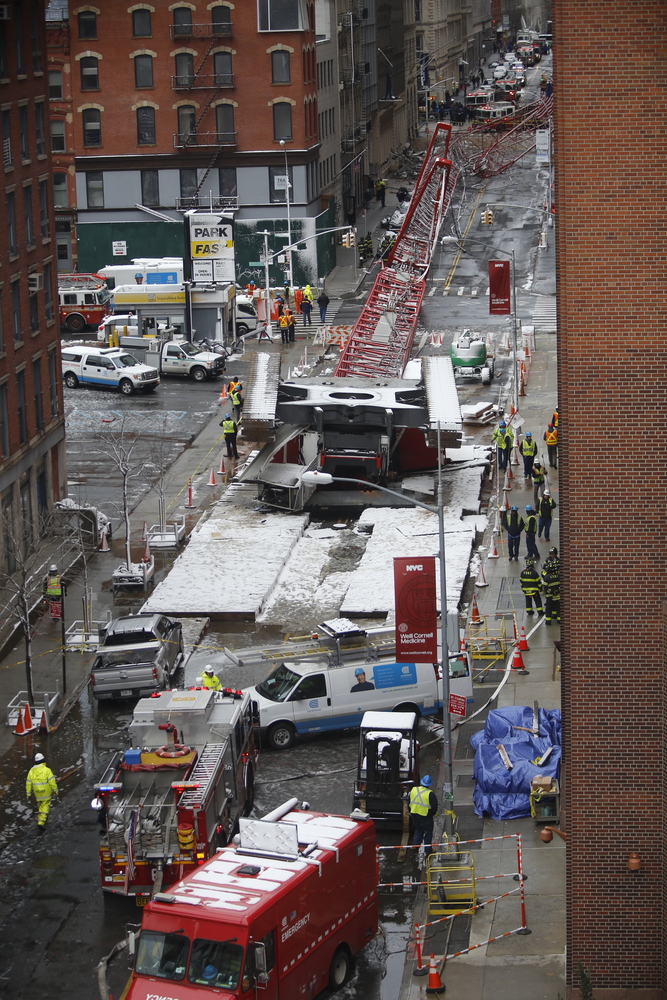
On February 5th a construction crane collapsed in New York City, killing one person and injuring three others. The name of the person killed in the collapse was David Wichs, 38 years old.  He was sitting in a parked car at the time.  According to news stories Wichs was a brilliant mathematician who lived a life of giving.”  He had no connection to the construction site and was on his way to work at the time.

Discussion Questions

  • Besides all the accidents that might befall any of us on any given day, against which we might take some preventative precautions, what sorts of freak occurrences are theoretically possible but so unlikely that we never give them the slightest thought or concern?
  • What kinds of things do you suppose people might say to David Wichs’ widow in the face of her grief and loss? What would you say to her if you had the opportunity?
  • If you were David Wichs’ widow, what might people say to you that you would find helpful? What might people say that you would not find helpful?

Third Sunday in Lent

Isaiah 55:1-9

1 Corinthians 10:1-13

Luke 13:1-9
(Text links are to Oremus Bible Browser. Oremus Bible Browser is not affiliated with or supported by the Evangelical Lutheran Church in America. You can find the calendar of readings for Year B at Lectionary Readings
For lectionary humor and insight, check the weekly comic Agnus Day.

Gospel Reflection

In another gospel passage (Matthew 16:13-15), Jesus asks his disciples, “Who do people say that I am?” and then, more pointedly, “Who do you say that I am?” Presumably, everyone together at the right time and the right place shared the same information about Jesus. They could all see him and the things he was doing; they could all hear him and the things he was saying. But very different interpretations of Jesus abounded. Was Jesus perhaps John the Baptist somehow come back from the dead? Was he Elijah or Jeremiah or one of the other prophets in a new appearance? People interpreted the information about Jesus in many different ways. Finally Peter said, to Jesus, “You are the Messiah, the Son of the living God” (Matthew 16:16).

Religious skeptics claim that faith in God is a distortion of reality, an example of confirmation bias, which is the tendency to interpret new evidence as confirmation of one’s existing beliefs or theories. Confirmation bias impairs judgment and critical thinking. People of faith often make the same claims about skeptics, thereby participating in a tired and pointless argument that only manages to perpetuate itself endlessly. People of faith might ask, for example, “How can anyone look upon the grandeur of nature and not see the existence of God?’ while skeptics might ask, “How can anyone look upon the extent of suffering and not see the absence of God?” Each side engages in its own form of confirmation bias to support its claims and to denounce its detractors.

Confirmation bias, however, does not always or necessarily produce a distortion of truth and reality. The fact that our perceptions are shaped by our beliefs does not necessarily mean that our perceptions are false and unreliable. The Gospel of John deals with this matter extensively with regard to faith in Jesus. Everywhere in John (with the exception of the story about Thomas in chapter 20!) believing precedes seeing and is necessary to it. “You will see me,” Jesus promises those who believe in him.

But if belief leads to seeing, what leads to belief? Jesus answers that question in our gospel text when he talks about “keeping my commandments.” Here we have to do with the behaviors and practices that pertain to the Christian community, the church. The church is called to do as Jesus does, to do as Jesus says, to do as Jesus teaches. Such doing incubates belief, and belief incubates seeing.

Discussion Questions

  • Which Christian practices and behaviors have you found to be most supportive of your faith in Jesus?
  • When have you had an experience of seeing Jesus? Describe the context of that experience.
  • What is your greatest challenge or obstacle to faith? How might you best meet and seek to overcome that challenge or obstacle?
  • How do you help others to see Jesus? How do or how might others see Jesus in you?

Activity Suggestions

As a group, describe ways that you have seen Jesus in each person of the group or ways that each person helps others to see Jesus. What, for each person in the group, is the most surprising about what others have said?

Closing Prayer

Pray together the prayer for “Enlightenment of the Holy Spirit” on page 86 in Evangelical Lutheran Worship.

February 21, 2016–What’s in the Pipes

John Wertz, Blacksburg, VA

Warm-up Question

If you could only have one beverage to drink for the next month, what would it be and why?

What’s in the Pipes

The last time you turned on the water to brush your teeth or wash your hands or get something to drink, were you worried about the quality of your water? Thankfully, most water systems in the United States are regularly tested and are fairly safe, but unfortunately for the residents of Flint, Michigan a series of governmental decisions and cost-cutting measures combined to create a water system with ” abnormally high levels of e. coli, trihamlomethanes, lead, and copper,” which caused severe health problems for many local residents.

shutterstock_99487787  For years, Flint enjoyed excellent water pumped from Lake Huron. But under pressure from rising water costs, a shrinking tax-base, and an overwhelming debt, leaders in Michigan and Flint made the decision to begin pumping water from the Flint River. In April 2014, Flint made the switch and residents began to notice a bad taste in the water and a nasty smell. Initial tests revealed there were dangerous levels of bacteria and other compounds present. Flint issued boil orders and increased the amount of chlorine in their water to try and address the issues, but those measures didn’t resolve all the problems. While some local officials attempted to raise the alarm, the process of addressing the issues with Flint’s water was extremely slow.

As concern about the water quality grew among residents, local officials assured residents that the problem was under control, but a local mother, Lee Anne Walters, and others continued to ask questions about the quality of the water and to push for increased water testing. The initial results from the local testing agencies seemed to indicate that the level of lead in Flint’s water was acceptable, but Ms. Walters and others doubted the results of the local tests and continued to push for more and better testing. Determined to discover the truth about her water, Ms. Walters contacted an independent researcher from Virginia Tech University, Marc Edwards, who quickly discovered that Flint’s water contained extremely unsafe levels of lead. Ms. Walters and Professor Edwards contacted state and local officials and media outlets to make it clear that the danger was real. Thanks to the persistence of Ms. Walters, the research of Professor Edwards, the work of other researchers, and the pressure from the media, the water problems in Flint have finally been properly identified and the process of bringing safe drinking water back to the residents of Flint is now underway. An extensive timeline detailing all the events in the Flint, Michigan water crisis can be found here.

Discussion Questions

  • The residents of Flint make up a tiny, tiny percentage of the population of the United States, so why do you think the water crisis in Flint became a major national news story?
  • God calls us to be good stewards of all our gifts. What can you do to care for the gift of water?
  • Ms. Walters was determined to find out the truth and would not stop asking questions until she got answers. Why do you think she was so persistent in her pursuit of the truth?

Second Sunday in Lent

Genesis 15:1-12, 17-18

Philippians 3:17-4:1

Luke 13:31-35
(Text links are to Oremus Bible Browser. Oremus Bible Browser is not affiliated with or supported by the Evangelical Lutheran Church in America. You can find the calendar of readings for Year B at Lectionary Readings
For lectionary humor and insight, check the weekly comic Agnus Day.

Gospel Reflection

The Pharisees come to Jesus with a warning – “Get away from here, for Herod wants to kill you” (Lk 13:31). While you or I might be worried or intimidated by these words, Jesus seems entirely unconcerned by the threat. There is ministry to be done. There are people to heal. There are demons to be cast out. Jesus won’t be rushed. Jesus won’t be sidetracked by the threat of death. He knows that his death will not be caused by Herod’s anger. Jesus knows what awaits him in Jerusalem. “Jerusalem, Jerusalem,” Jesus says, “the city that kills the prophets and stones those who are sent to it!” (Lk 13:34). Jesus knows how his story will end and he accepts his impending death because he trusts that his crucifixion and resurrection will be the final step in accomplishing his mission to love, bless, and save God’s people.

Trusting in God’s power, Jesus lives without fear. He is focused on who he is called to be and what he is called to do. As powerful as Herod is, God’s power is far, far stronger. Nothing, not even mighty Herod, will prevent Jesus from helping the afflicted, teaching God’s Word and completing is ministry of salvation.

It’s easy sometimes for us to get sidetracked when we feel pressure from those in power, from our peers or from the world around us. It’s easy to doubt ourselves or the goal we are trying to accomplish, but just like Jesus, we too know how our story will end. As children of God, united to Jesus’ death and resurrection by the waters of baptism, we know the promise of hope and salvation for all God’s people. You and I may not be casting out demons or healing people in the same way that Jesus was doing, but just like Jesus, we too can live without fear and focus on our calling to be God’s heart and hands and voices in the world. Using our gifts to take part in Jesus’ mission to love and bless the world.

Discussion Questions

  • How do you think the Pharisees expected Jesus to respond when they told him about Herod’s threat? How do you think the Pharisees responded when Jesus basically ignored their warning?
  • Fear is a powerful emotion. Name a resource (scripture verse, friend, mentor, music, book, blog, twitter feed, etc) that helps you know that God is with you when you are afraid?
  • What is one way that you can participate in God’s mission to love and bless the world?

Activity Suggestion

Use some of the activities in the ELCA World Hunger: Water and Hunger toolkit to learn more about water we use on a daily basis without realizing it and to raise awareness of the gift of water.

http://download.elca.org/ELCA%20Resource%20Repository/Water_and_Hunger.pdf?_ga=1.26250941.1043638550.1454503920

Closing Prayer

O God, you are a source of help and strength in times of trouble. Comfort us with your Spirit in our times of fear and trouble. Inspire us by Jesus’ example and by your powerful love to care for creation, to love our neighbor and to be your hearts and hands and voices in the world. Amen.

February 14, 2014, Lead Me Not Into Temptation

Erik Ullestad, Des Moines, IA

Warm-up Question

What’s one thing you couldn’t live without for a month?

Lead Me Not Into Temptation

The hit television show The Biggest Loser is wrapping up its 17th season. The premise of the show is simple – a group of people compete in a contest to lose weight. Different challenges and mini-contests are introduced throughout a given season. Most often the group is secluded in a boot-camp setting, removed from the distractions and bad habits of their normal life. This season’s theme is temptation, which means contestants will spend more time off-campus than in previous seasons. They will learn to deal with temptations and indulgences of daily life, ranging from food to money to electronic devices.

shutterstock_350734811-1  Critics of the show throughout the years have expressed concern that the producers put entertainment ahead of health. Former contestants, like season three winner Kai Hibbard, did not appreciate some of the tactics employed by the show. “It was the biggest mistake of my life,” Hibbard confessed. Another former contestant, Suzanne Mendonca from season two, believes some of the style-over-substance approaches don’t help contestants in the long run. “We’re all fat again,” she lamented. The producers of Season 17 hope that bringing the gap between the Biggest Loser gym and the real world will help contestants navigate the many challenges that can be stumbling blocks to living a healthy lifestyle.

Discussion Questions

  • Have you ever watched The Biggest Loser? What do you think of the show?
  • In 2014, Gallup indicated that 27.7% of adults in the U.S. are obese. What factors do you think contribute to such a high obesity rate?
  • The people on The Biggest Loser face significant temptation to eat unhealthy amounts of food. What unhealthy habits tempt you to do things you know are unhelpful?

First Sunday of Lent

Deuteronomy 26:1-11

Romans 10:8b-13

Luke 4:1-13

Text links are to Oremus Bible Browser. Oremus Bible Browser is not affiliated with or supported by the Evangelical Lutheran Church in America. You can find the calendar of readings for Year B at Lectionary Readings
For lectionary humor and insight, check the weekly comic Agnus Day.

Gospel Reflection

Jesus begins his ministry in a rather strange way. After he was baptized and filled with the Holy Spirit, Jesus went into the wilderness and fasted for 40 days. Throughout those six weeks, he was tempted by the devil. At the very end of this fast, the devil tried to take advantage of Jesus’ extreme hunger. The devil poses three tests — turn a stone into bread, worship the devil, throw himself down from the temple — as an attempt to demonstrate his power. Jesus rebukes the devil each time. So the devil goes away. And Jesus returns to Galilee.

There is a lot happening beneath the surface of this war of words between Jesus and the devil. One of the fascinating aspects of their duel is that they both quote Scripture. Jesus references Deuteronomy in Luke 4:4 and 4:8, and the devil invokes Psalm 91 in Luke 4:10-11. This is a cunning attempt on the part of the devil to bait Jesus into doing something he shouldn’t do. It seems that Luke wants us to know that there’s more to knowing Scripture than simply reciting it. The devil uses Scripture for an inward, selfish purpose, whereas Jesus realizes that Scripture compels us to a life of obedience and self-sacrifice.

This story ushers lectionary-minded Christians into the season of Lent. It is no accident that Lent is forty days long; the same number of days Jesus was tempted in the wilderness. People often observe a Lenten discipline by fasting from something (candy, soda, social media, etc.) or by starting a new habit (writing a daily thank-you card or giving money to a good cause). Sometimes people refer to this as “giving something up for Lent.” The purpose of these disciplines is not to show how holy a person is or to draw attention to oneself. The goal of a Lenten discipline is to follow Christ’s example of humility, self-denial, and reflection.

Discussion Questions

  • What’s the hungriest you’ve ever been?
  • How did the devil try to tempt Jesus?
  • Have you ever gotten into a Scripture-quoting argument with someone? How did it end up?
  • What do you think is the purpose of a Lenten discipline?

Activity Suggestions

Develop a Lenten discipline for your group. Solicit input from everyone to come up with something that will be attainable and meaningful for everyone. Perhaps you’ll all decide to read from the Bible every day. (There are lots of good Lenten reading plans online.) or encourage daily prayer. The group may want to commit to giving time or money to a local organization that fights hunger. Whatever you decide, encourage everyone in the group to participate earnestly and honestly. Having this kind of accountability can add a sense of camaraderie among your group and may help breathe new life into the season of Lent.

You know about Advent calendars, right? How about making a Lenten calendar. The season of Lent is the 40 days between Ash Wednesday and Easter, not counting Sundays. Individuals can make their own Lenten calendar by using two pieces of cardstock, an exacto-knife, and a glue stick. This simple craft will help people observe a ritual of daily walking through the journey of Lent. It might help them with a Lenten discipline as well.

Closing Prayer

Holy God, we give you thanks for the witness of your son, Jesus. Help us to fix our eyes on him as we journey to the cross. Turn our thoughts from selfish desires toward your will for our lives. Help us to love others as you have loved us. In Jesus’ name, amen.

February 7, 2016, Power Revealed

Jen Krausz, Bethlehem, PA

Warm-up Question

What is the last thing you asked Jesus to do for you? Did he do it?

Power Revealed

According to the National Cancer Institute (www.cancer.gov), you now have a 39.6% chance of developing cancer in your lifetime. An estimated 14 million Americans have some form of cancer right now, including thousands of children and teens with leukemia.
shutterstock_69976633   Leukemia is a blood cancer. Instead of affecting a part of the body like the lungs or the brain, leukemia makes a person’s white blood cells sick so that they don’t work right. Our white blood cells help the body fight infections. People with leukemia get sick easily and can die from a simple infection if they don’t get help.
Doctors have found different ways of treating cancers, including chemotherapy and radiation treatment. Cancer cells multiply too quickly, which makes tumors grow and spread around the body. Many cancers can be put into remission or cured with the current treatments available, but some cancers are too advanced or aggressive. Scientists are looking for new ways to treat cancers that are easier for the body to handle and can work for even the most aggressive cancers.

In an amazing turn of events, some of the newest scientific advances use other viruses to kill cancer cells. Recently, scientists have exposed the polio virus to a cold virus, then used it to attack cancer cells in the brain where it is too sensitive to operate. Turns out the polio virus isn’t harmful to healthy cells once it catches a cold, but it appears to be quite harmful to cancer cells.

A new treatment for leukemia involves changing a donor’s white blood cells so that they act like an attack dog and go after the leukemia cells. Doctors tested this new treatment on a few patients who basically had no hope of survival even after bone marrow transplants, and they all survived at least 30 months with no new cancer activity. One even went into complete remission.

Discussion Questions

  • How has cancer touched your family or friends?
  • Why do you think so many more people are getting cancer today than 50 years ago?
  • Do you have hope that someone will someday find a cure for cancer? Why or why not?

Transfiguration of our Lord

Exodus 34:29-35

2 Corinthians 3:12–4:2

Luke 9:28-36 [37-43]
(Text links are to Oremus Bible Browser. Oremus Bible Browser is not affiliated with or supported by the Evangelical Lutheran Church in America. You can find the calendar of readings for Year B at Lectionary Readings
For lectionary humor and insight, check the weekly comic Agnus Day.

Gospel Reflection

On the surface, the two events described in the gospel lesson couldn’t be more different. In one, Jesus brings Peter, John and James to a mountain and lets them see his conversation with long-dead prophets Moses and Elijah, blowing their minds in more ways than one. In the other account, Jesus heals a demon-possessed boy after grumbling about his disciples’ lack of faith.
What the two events have in common, though, is that they both reveal who Jesus is in a miraculous way. In the first account, we see the glory of Jesus as he is supernaturally changed and is able to speak with heavenly figures. Not only does he speak with them, but they talk about what is going to happen in the future with his life and death. The Transfiguration shows that Jesus is God’s son and that he shares God’s glory and sovereignty (which means his power over the whole world).
The second account also shows the power of Jesus in being able to do what no one else could do, heal the man’s demon-possessed son. This showed that not only did Jesus have power over the heavenly realms, but that he had more power than the evil spiritual realms as well.
Both of these stories show Jesus’ power over the supernatural realm, and proved to the disciples that he was God’s son. The disciples often doubted and wavered in their faith even though Jesus showed them his power over and over again.
Even now, we find it hard to understand why things happen the way they do in our lives. Why does one sick person get better and another doesn’t? We seek God’s power in our own lives, with varying results. Through God’s word, we see the power of Jesus and we choose to put our faith in him. Then we need to put that faith into action in the world so that others can also see it and be changed.

Discussion Questions

  • What evidence do you see of the supernatural in the world today?
  • Compare Jesus’ power to the growing ability of science to treat and cure diseases. How does Jesus’ power still surpass anything that people can accomplish?
  • What ideas do you have for how to put your faith into action in the world?

Activity Suggestions

If your church doesn’t already have a prayer team that prays for the spiritual needs of the congregation, your class/group can collect information about those prayer needs and pray about them in your meetings. If a prayer team does exist, you can use the existing information about prayer needs to make a calendar for your group so that you can pray for each need on a different day. The calendar can also be distributed to the whole congregation if the pastor/leadership are on board.

Closing Prayer

Sovereign God, your power is displayed in our world today even as it was when your son walked the earth. We ask your Holy Spirit to help us put our faith into action so that your glory is revealed even more each day. In Jesus’ name, amen.