
Skip to content
ELCA Blogs

Faith Lens

October 25, 2015, I Can See Clearly Now

Lindean Barnett Christenson, Bozeman, MT

Warm-up Question

In what contexts have you heard or used these phrases? What do they mean?

“Ignorance is bliss.”
“I can’t unsee that.”
“I once was blind, but now I see.”

I Can See Clearly Now

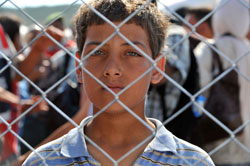
Multiple aid organizations credit intense media coverage of the refugee crisis in Syria for record-breaking contributions to their relief work in September. One photo in particular, of a Syrian child who drowned and whose body was recovered on a Turkish beach, was widely distributed and commented upon.
shutterstock_239387365edit

Jane Martinson, head of the media desk at the Guardian, was quoted by NPR as saying of the photo, “It really did put a human face on this awful humanitarian crisis. It has the power to change the nature of the debate on what is happening and what our reaction should be and how we should deal with it.”

Violence, poverty, and political instability have forced millions of Syrians, Iraqis, and others to flee their homes, seeking safety and hope in countries that are not always prepared to welcome them. Radio, television, print and digital media have made it nearly impossible for many to remain ignorant of, or to ignore, the situation.

For more information:
Record setting donations in September 2015:
https://philanthropy.com/article/September-a-Record-Setting/233694

Consideration of media coverage of the refugee crisis:
http://www.npr.org/sections/thetwo-way/2015/09/03/437336063/image-of-dead-syrian-child-shakes-up-media-coverage-of-refugee-crisis

The work of Lutheran World Relief: https://www.kintera.org/site/c.dmJXKiOYJgI6G/b.9206825/k.D21E/Europe_and_the_Syrian_Refugee_amp_Migrant_Crisis/apps/ka/sd/donor.asp?c=dmJXKiOYJgI6G&b=9206825&en=4dIxEFPfG3JGKPMiF2IDILOsHnIKKKOpHbIFIMNmG9JKKPNqFrH

Overview of refugee/migrant crises around the world:
http://www.nytimes.com/interactive/2015/06/09/world/migrants-global-refugee-crisis-mediterranean-ukraine-syria-rohingya-malaysia-iraq.html

Discussion Questions

  • What do you know about the refugee crisis in Europe? How did you learn what you know?
  • Did you see the photo referred to above? If yes, describe your reaction.
  • Do you prefer to know about current events outside of your community? Why or why not?

Twenty-second Sunday after Pentecost (Some may observe Reformation Sunday)

Jeremiah 31:7-9

Hebrews 7:23-28

Mark 10:46-52

(Text links are to Oremus Bible Browser. Oremus Bible Browser is not affiliated with or supported by the Evangelical Lutheran Church in America. You can find the calendar of readings for Year B at Lectionary Readings

For lectionary humor and insight, check the weekly comic Agnus Day.


Gospel Reflection

At first glance, the story of Bartimaeus is a straightforward account of Jesus healing a blind man, restoring his sight. Upon closer reading, in the context of Mark’s whole gospel account, the healing of Bartimaeus calls to mind another healing of a blind man (Mark 8:22-26) and the healing of a bleeding woman (to whom Jesus also said, “your faith has made you well” (Mark 5:34).  The answer Bartimaeus gives to Jesus’ question indicates that he had more insight into Jesus than disciples, James and John, when asked the very same question, “What do you want me to do for you?” (Mark 10:35-45).

In addition to Bartimaeus and Jesus, an anonymous crowd has a speaking part in the story. In the span of two short verses, the “many” change their tune, from sternly ordering Bartimaeus to be quiet, to calling him to “Take heart; get up, [Jesus] is calling you.” What happened? Bartimaeus cried to Jesus with even more resolve, and Jesus stood still. He stopped walking out of Jericho toward Jerusalem, and told the crowd to call Bartimaeus to him. Perhaps, in seeing Jesus’ pay attention to Bartimaeus and then call for him, the crowd received new eyes to really see and appreciate the humanity of Bartimaeus. Thanks to the mercy of Jesus, Bartimaeus, the blind beggar, was not the only one whose sight was restored that day.

Many commentators note that in addition to being a healing story, the story of Bartimaeus is also a call story. Jesus told Bartimaeus to go, but Mark tells us that Bartimaeus followed Jesus on the way – the way to Jerusalem, the way to the cross.

Discussion Questions

  • What shows you that Bartimaeus “saw” Jesus, that is, really understood him, before he received his sight?
  • What might have motivated the “many” to sternly order Bartimaeus to be quiet?
  • Describe a time when you weren’t really seen. Describe a time when someone really did “see,” or “get” you. What was that like?
  • Describe a situation where you “saw” someone, but didn’t really see him/her.
  • Who brought you to Jesus? Of whom might Jesus be saying to you, “Call him/her here?”
  • How would you answer Jesus’ question, “What do you want me to do for you?” Why?

Activity Suggestions

  • Brainstorm a list of hymns/songs that reference seeing or blindness. Use your congregation’s worship books, or invite a musician, to help you.  (To help you get started: Be Thou My Vision; Open the Eyes of My HeartOpen Our Eyes Lord, Amazing Grace; Holy, Holy, Holy, Lord God Almighty (check out verse 3)). What do you notice?
  • Watch this YouTube video of Paul Baloche telling the story of how Open the Eyes of My Heart was written: https://www.youtube.com/watch?v=gA9Tg2CK6ZA

Closing Prayer

Lord Jesus, it is easy to look without really seeing.  Give us grace to slow down and notice those who might be healed and uplifted by experiencing your love–and give us wisdom and compassion to be the instruments of that love.

October 18, 2015, Who Do You Hang With?

Seth Moland-Kovash, Palatine, IL

Warm-up Question

If you had the opportunity to have lunch with any living person on Earth, who would it be?

Who Do You Hang With?

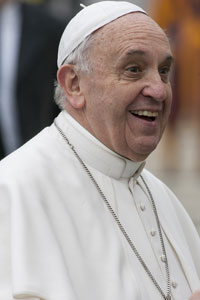
In a highly-publicized visit (to understate the case) Pope Francis recently completed a visit to the United States. He met with the President, he addressed a joint session of Congress (the first Pope in history to do this), he held a gathering of families in Philadelphia, he addressed the United Nations, and he met with countless church and national leaders. He had a very tight schedule. Following his historic address to Congress, he had been invited to lunch with Congressional leaders. He turned down that invitation to eat at a Catholic Charities’ center that serves the homeless in Washington, DC instead.

IMG_5500edit

There were reports that, originally, the organization had wanted to invite major donors to the luncheon to meet the Pope. This is not a bad idea. It’s something groups do a lot – thank people who have given generously over the years. Instead, a few such dignitaries were there, but most of the crowd were the homeless who eat at this center on a regular basis. And the Pope met with them, sat with them, and ate with them

Discussion Questions

  • Why do you think the Pope (and those who planned his visit) chose to eat at this center rather than with national or church leaders?
  • What does it say about priorities of all those involved?

Lectionary 29 / Twenty-first Sunday after Pentecost

Isaiah 53:4-12
Hebrews 5:1-10
Mark 10:35-45

(Text links are to Oremus Bible Browser. Oremus Bible Browser is not affiliated with or supported by the Evangelical Lutheran Church in America. You can find the calendar of readings for Year B at Lectionary Readings

For lectionary humor and insight, check the weekly comic Agnus Day.

Gospel Reflection

We all have to make choices every day about who is important. We have to choose who is worth our time and our attention. Do we talk to this friend or that friend? Do we do homework for that class or this class? Do we join this team or that club? We make choices based on our own values, based on what seems important to us and also, what seems fun to us.

James and John wanted to feel important. They wanted Jesus to say they were important. They wanted Jesus to promise they would get seats of honor at any banquet table Jesus was sitting at. Jesus, as he so often does, flipped the table on them. He flipped what it means to be important in his kingdom. It’s not about having friends in high places. It’s about serving anyone.

Discussion Questions

  • Who can you serve in your life? How can you serve them?
  • What kind of attitude does Jesus want his followers to have?

Activity Suggestions

Serve together with your youth group is some way that serves the homeless or those in poverty in your community. It might be a homeless shelter, a food pantry, etc. Whatever it is – serve together.

Closing Prayer

Good and gracious God, we thank you for the example that you give us in Jesus’ life and teachings. Help us to serve others first. Amen.

October 11, 2016, If I Were Rich…

Sylvia Alloway, Granada Hills, CA


Warm-up Question

Do you ever dream about being rich? If you were rich what would you do?

If I Were Rich…

The Monaco Yacht Show features the Silver Fast – In case you don’t know what to do with your money.

Every September, yacht manufacturers sail their newest and best “super yachts” to Port Hercules in the principality of Monaco for the annual yacht show. Millionaires are not invited. To afford the craft displayed here one must be a billionaire several times over.

shutterstock_148304000-2edi

After paying an admission of £150 (about $225), patrons are invited to examine over 120 superyachts and megayachts.

The star of this year’s show is the Silver Fast, constructed by Silveryachts of Perth, Australia. According to the description released by the company, this vessel is 77 meters (252.6ft) with a top speed of 27 knots (about 30 mph), and has “striking new all dark silver paint.” The price is not mentioned, but as the saying goes, “If you have to ask you can’t afford it.”

Yachts like the Silver Fast are meant to allow the owner and guests to explore the world in any way they want without sacrificing comfort or being tied to a cruise ship’s itinerary. While most of us will never experience such luxury, it is fun to imagine what a cruise on the Silver Fast would be like.

Discussion Questions

  • Do you receive an allowance or income from a job?
  • On what do you spend most of your money? If you save it, for what are you saving?
  • Individually list the top five most important things in your life.
  • Would your priorities change if you were rich? If so, in what way?

Lectionary 28/Twentieth Sunday after Pentecost

Amos 5:6-7, 10-15

Hebrews 4:12-16

Mark 10:17-31

(Text links are to Oremus Bible Browser. Oremus Bible Browser is not affiliated with or supported by the Evangelical Lutheran Church in America. You can find the calendar of readings for Year B at Lectionary Readings

For lectionary humor and insight, check the weekly comic Agnus Day.

Gospel Reflection

People often quote St. Paul as saying “Money is the root of all evil,” but those aren’t quite Paul’s words. What he actually said was “The love of money is the root of all evil” (1 Timothy 6:10). This brings to mind a stingy miser, or a covetous schemer.

The rich man of today’s Gospel was not either of these. He was not an evil person by anyone’s standards. While he was probably exaggerating when he claimed to have kept all the commandments from his youth, he truly was seeking eternal life from Jesus. Somehow he knew that keeping the commandments wasn’t enough.

In fact, his sincerity impressed Jesus. We read that he loved the man. However he saw one obstacle to this seeker’s goal. Riches. Would this fellow give up that beautiful embroidered coat, those shining leather sandals, that jingling purse to serve God? So Jesus asked, and was no doubt saddened by the answer – the man turned away. He loved his wealth more than the promise of eternal life.

When we think of obstacles to eternal life, we might picture terrible sins, slavery to addictions, or ruthless tactics to gain success. But Jesus says the greatest obstacle can be the very thing we consider the greatest blessing – wealth. Dependence on money for meaning in our lives can block us off from Christ’s kingdom more effectively than the ugliest sins.

Some commentators suggest that Jesus’ teaching about the camel and the needle’s eye refers to a gate into the city of Jerusalem called “the needle’s eye.” The gate was so narrow that if merchants wanted to enter they first had to unload all the goods off their camels.

What “goods” are blocking our way to God’s Kingdom? How can we “unload” them?

Discussion Questions

  • Even people who aren’t rich can put “stuff” between themselves and God. Friends, games, social media and other things can dull our spiritual senses and crowd God out of our lives. How can we discover what is keeping us from full commitment to Christ?
  • Give some examples of things that can replace God in our lives. How can we overcome these obstacles?
  • Does God want everyone to give away all they have? Why or why not?

Activity Suggestions

Go back to the lists students  made of the top five most important things in their lives.  Ask students to share their answers and from them compile a list of the five things mentioned most. Could any of these things interfere with our relationship to Christ? How? Must we give these things up completely, or can they still have a place in our lives?

Closing Prayer

Father God, you have given us objects and activities that give us pleasure. We thank you for all that we have and ask you to keep us alert to anything that would crowd out the Lord as the center of our lives. Give us wisdom to use all you have given us for your glory.  Amen.