Skip to content
ELCA Blogs

ELCA Racial Justice

Co-chairing a meeting with Sen. Barack Obama as equals – Guest Blogger Rev. Terrance A. Jacob

In honor of International Day for People of African Descent, which is observed internationally on August 31 each year, ELCA Racial Justice Ministries invited Rev. Terrance Jacob to share some thoughts about being a person of African descent. For more…


Co-chairing a meeting with Sen. Barack Obama as equals

A case of faith-based community organizing laying the ground for a North-South relationship of mutual respect and the power it wields

By Terrance A. Jacob

In July 2006, I received an unexpected call from Sen. Barack Obama’s office in Washington, D.C. He was visiting South Africa for the first time and wanted to meet with me. At the time, I was serving as the Africa director of the Gamaliel Foundation, a faith-based organizing network focused on justice, equity and grassroots empowerment.

Sen. Obama had also worked with Gamaliel, in the 1990s on the South Side of Chicago — though we didn’t overlap, he was intrigued that a former activist, imprisoned under apartheid, was doing church organizing across the continents.

At first, his staff requested a meeting in Pretoria. I declined because I was too busy organizing local communities, building participative democracy in the new South Africa. A colleague in Chicago warned me, “You just turned down the future president of the United States!” I laughed and said, “I’ve got democracy to build. What can a U.S. senator add to that?” (I was half joking.)

Eventually I agreed to meet the senator in Cape Town, where he was also visiting Archbishop Desmond Tutu. I made one request: I wanted to bring along some housewives and local clergy — real people from the communities I did organizing with.

We met at a hotel boardroom on the Cape Town Waterfront. Before Obama arrived, his staff approached me and said, “Reverend, the senator would like you to co-chair the meeting with him.” When he entered the room, Obama greeted us with warm hugs. At the long boardroom table, he and I sat at the head, my delegation on one side, and his — including the U.S. ambassador to South Africa, the U.S. consul general, and their spouses — on the other.

My delegation laid out our concerns: crime, drugs, unemployment and especially the devastating impact of HIV and AIDS in our communities. We shared how we had visited the U.S. embassy in Pretoria in 2005 with a delegation that included U.S. and South African Lutheran bishops, clergy and lay leaders — 20 people in total — seeking funding from the U.S. President’s Emergency Plan for AIDS Relief (PEPFAR) for churches working with AIDS orphans and patients.

We were turned away. Our U.S. partners were charged with returning home to get leaders to write letters to the U.S. ambassador in South Africa. In South Africa, we continued to organize, which involved calling even cabinet members and Health Ministry staff to meetings with congregations across the country.

As we shared this, Obama leaned over and whispered, “Reverend, I turned out the targets. You do the pin.” (That’s organizing-speak for: “I got the right people in the room — now make the demand.”)

So we did. When the ambassador didn’t immediately respond, Obama asked, “Mr. Ambassador, if you received letters from U.S. church leaders requesting this funding, what would you do?” The ambassador replied, “Then I would have to act.”

I said, “Then we’ll organize hundreds of letters.” He agreed.

After the meeting, Obama and I embraced again to acknowledge our “win.” Within weeks, he launched his presidential campaign. One year later, in July 2007, I moved to the United States to serve the ELCA, where I was called to bridge the divide between the church’s activist and devotional streams — linking deep spirituality with public action.

But there was a twist.

Despite over 500 letters, we heard nothing from the ambassador. So my U.S. partners contacted Candidate Obama. He wrote directly to the ambassador: “Last year, when Rev. Jacob and I met with you in Cape Town, you promised to act if U.S. church leaders wrote to you …”

Soon after, the ambassador released a paltry grant of $10,000 for Diakonia AIDS Ministry in Soweto — a project of the Lutheran Diocese of Johannesburg. Then the South African Ministry of Health — through organized pressure — contributed $40,000, quadrupling the U.S grant.

That ministry continues to do powerful work to this day. I visited them in 2024, and the fruits of grassroots organizing and North-South relationships of mutual respect are still visible.

This wasn’t just a meeting with a senator. It was a moment that revealed what’s possible when faith meets justice with mutual respect.
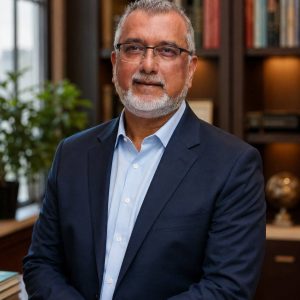
 

The Rev. Terrance A. Jacob is an ELCA pastor who emigrated from South Africa, his country of birth, when he accepted an invitation by the ELCA bishops in Minneapolis-St. Paul, with whom he had done global community organizing as CEO of Church Based Community Organizing, South Africa. He served on the central staff of the Gamaliel Foundation (Network) out of Chicago and has taught and done organizing in Kenya, Tanzania and Zimbabwe.  He now serves St. Andrew Lutheran Church in Franklin, Tenn., as senior pastor.


Hate Won’t Win: Commemorating the Emanuel Nine

To commemorate the 11th anniversary of the martyrdom of the Emanuel 9 – the Rev. Clementa C. Pinckney, Cynthia Graham Hurd, Susie J. Jackson, Ethel Lee Lance, the Rev. Depayne Middleton-Doctor, Tywanza Kibwe Diop Sanders, the Rev. Daniel Lee Simmons Sr., Sharonda Coleman-Singleton and Myra Singleton Quarles Thompson, our beloved siblings in Christ who were murdered by a self-professed white supremacist and ELCA parishioner while they were gathered for Bible study and prayer at the Emanuel African Methodist Episcopal Church (often referred to as Mother Emanuel) in Charleston, South Carolina on June 17, 2015 – we asked the Rev. Dr, Herman Yoos, former bishop of the South Carolina synod to share some thoughts about this day of repentance.

For more ELCA resources visit:  Commemoration of the Emanuel Nine — June 17 – Evangelical Lutheran Church in America (elca.org)


I was on vacation in the mountains of North Carolina in June 2015 when I received the call about the massacre at Emanuel African Methodist Episcopal Church in Charleston, S.C. I couldn’t believe it at first. Then, later that day, came the shocking news that the massacre had been committed by a young man whose family belonged to one of our ELCA congregations, who was a white supremacist and whose intention was to start a race war that would spread across the nation.

He might have succeeded except for the unexpected words of forgiveness spoken directly to him in court. When the family members of the nine shooting victims were invited by the judge to address the killer, no one was prepared for the words they spoke. Instead of condemning the shooter, each of the nine family representatives said things such as “We hate what you did to our loved one, but we won’t let sin and hate win the day. We forgive you, and we pray that God forgives you too.”

When their words were reported in the media, total strangers, both Black and white, embraced and prayed together on the streets of Charleston. Thousands of people held hands to form a human chain across the Arthur Ravenel Jr. Bridge between Mount Pleasant and Charleston, expressing their mutual humanity and support. Around the clock, people gathered in front of Mother Emanuel Church with wreaths of flowers, sharing their grief. Several months later, the state leaders of the Republican and Democratic parties appeared on TV, calling for the removal of the Confederate flag from the top of the Capitol, which overwhelmingly passed. It is hard to put into words, but I also felt something deep inside stirring and changing me as well.

A week later, I attended the funeral of the Rev. Clementa C. Pinckney, one of the victims. He was pastor of Mother Emmanuel, a South Carolina state senator and a graduate of Lutheran Theological Southern Seminary. There I sat, behind all the AME bishops and ELCA Presiding Bishop Elizabeth Eaton, listening to amazing tributes about his life and the deep faith he so freely shared with others. While listening, I focused on Mrs. Pinckney, her arms around her two daughters. Her dignity and grace were as powerful a witness as the words being preached about her husband.

As I watched her, I felt as if God were saying, “Herman, you see those two girls? You have two daughters also, don’t you? Yet these girls will never again have their daddy read them bedtime stories or pray with them as you did with yours. These girls will never have their daddy wait for them after their first prom, as you did. They will never have their dad proudly walk them down the aisle on their wedding day nor show up at the hospital with flowers when their first baby is born. All because of the sins of white supremacy and racism.” The scales fell from my eyes, scales of white southern privilege that I had never fully recognized until that day. Along with many tears, there came over me a deep sorrow and repentance that changed how I look at everyone.

Over the next four years, I worked with some synod leaders to host 35 screenings of the movie Selma. We began each session by dedicating our time to the families of the nine martyrs and asking God to help us honor them through our words and actions. Their names were read aloud as we prayed for each family. After the movie, in small groups, we asked, “What is God saying to us through this movie, and how can we build bridges of friendship and respect across our racial divides?” Racial reconciliation became the new lens through which I experienced my deepest call as bishop.

In retirement, I hoped that I would never again be faced with this kind of hatred. But here we are again, living in such a time. When the only immigrants admitted to our country legally are white South Africans, then we are facing that same old hate. When other immigrants are violently arrested, placed in unsanitary detention centers or flown to other countries and incarcerated there, then we are captives of that same old hate. When Black, Brown and women officers in the armed forces are fired or discriminated against for promotion, then we are living with that same old hate. When conservative justices of the Supreme Court vote to gut the Voting Rights Act in the name of being “colorblind” while permitting extreme partisan gerrymandering, then we are experiencing that same old hate and just calling it by another name.

My biggest fear for the church today is not declining worship attendance nor lack of financial resources for pursuing God’s mission in the world. No, it is the rising influence of white Christian nationalism in our culture and politics. This reality runs so much deeper than who currently holds office. Presidents come and go, and policies change. But these attitudes of racial hatred, exclusion and fear, reinforced by dominant white male leadership, is a soul sickness that infects not just our country but our congregations as well. Like stubborn weeds that are easy to grow but hard to uproot, these attitudes can be eliminated only by soul-searching, repentance, deep prayer and clinging to the forgiveness and grace of God in Jesus Christ.

My prayer is that we will never forget the martyrs of Mother Emanuel: the Rev. Clementa C. Pinckney, Cynthia Graham Hurd, Susie J. Jackson, Ethel Lee Lance, the Rev. Depayne Middleton-Doctor, Tywanza Kibwe Diop Sanders, the Rev. Daniel Lee Simmons Sr., Sharonda Coleman-Singleton and Myra Singleton Quarles Thompson. May we always remember their families’ forgiveness and join them in their commitment to not let hate win our day.

The Rev. Dr Herman Yoos served as Bishop of the SC Synod from 2008-2020. He is married to Cindy and they have three children and 7 grandchildren.  In retirement, he is a Spiritual Director who works as a group mentor with the Lutheran Theological Southern Seminary (LTSS) of Lenoir-Rhyne University Spiritual Direction program under Dr. Melanie Dobson and teaches Centering Prayer classes to Lutheran Congregations.

Honoring Asian American, Native Hawaiian, and Pacific Islander Heritage Month

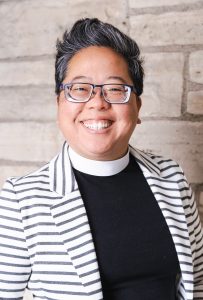
In honor of Asian Pacific American Heritage Month, ELCA Racial Justice Ministries invited Pastor Jill Rode to reflect on this topic. For more information on AAPI Heritage Month, visit Asian & Pacific American Heritage Month.


Asian American and Pacific Islander Heritage Month brings me pride but also a complex mix of emotions. As a Korean American adoptee raised by a white Midwestern family, I have always felt my sense of culture, identity and belonging to be layered and, at times, uncertain. Though I celebrate this month, I also wrestle with where I fit within the broader Asian American narrative.

I was raised in a distinctly Midwestern way—rooted in traditions such as hot dish, a strong work ethic and the Lutheran Church. My parents were open about my adoption but didn’t actively explore or celebrate my Korean heritage. Not until I was in my 40s did I visit South Korea for the first time. That experience awakened something profound within me: grief, longing, connection and a growing sense of wholeness. Traveling alongside other Korean adoptees, I felt truly seen for the first time. Returning home brought a sense of reverse culture shock and marked the beginning of a deeper journey into my identity.

As an adopted Korean American, I often feel caught between worlds. In my family, church and community in Minnesota, I am perceived as Asian but feel culturally American. In Korean or Asian spaces, I share an ethnic identity but lack the language, cultural fluency and lived experience. This “in-between” identity can feel isolating.

That sense of being an outsider resurfaced during recent immigration enforcement activity in Minneapolis-St. Paul, where I live. Despite having been a U.S. citizen for nearly my entire life, I found myself double-checking my adoption paperwork and carrying my passport—reminders of how fragile belonging can feel.

In such moments, I turn to my faith. The Bible and church history are filled with stories of people shaped by adoption, migration and the search for home—people who lived in-between identities. These stories remind me that there is space for everyone, including me.

My path as a Korean adoptee may not be traditional, but it is meaningful. My in-betweenness is not a deficit—it is a bridge between cultures, a testament to resilience and an invitation to keep learning and growing.

During this Heritage Month, I choose to engage more intentionally with my roots. I plan to attend cultural events, connect with other Korean adoptees and seek out stories that reflect my journey. I celebrate the richness and diversity of Asian and Pacific Islander communities, recognizing that my story is one unique thread in a larger tapestry.

Ultimately this month reminds me that identity is not fixed—it evolves. I can honor both my Korean origins and my American upbringing while embracing the path adoption has shaped for me. I am grateful for the chance to reflect, connect and grow, and for the hope that all adoptees can find belonging and pride in their stories. In faith, I believe there is a place for all of us at God’s table.


Jill Rode (she/her) is a lifelong Lutheran with more questions than answers. She currently serves as co-pastor of St. Anthony Park Lutheran Church in St. Paul, Minn. As a Korean adoptee who has only recently started to untangle her adoption story, and as a queer female, she is interested in the intersections of the various identities we each hold and what those intersections can teach us about God’s character.


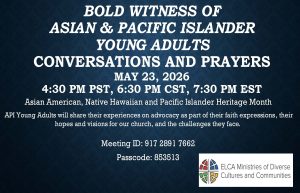
For more information on ELCA API Ministries, visit:  Asian & Pacific Islander Ministries in the ELCA and About | Association of Asian and Pacific Islanders of Evangelical Lutheran Church in America, AAPI-ELCA

From Rev. Teresita “Tita” C. Valeriano, Program Director, Asian and Pacific Islander Ministries

API Ministries Second Quarter 2026

Truth, Honor and Remembrance: National Day of Awareness for Missing and Murdered Indigenous Women (MMIW) in the ELCA

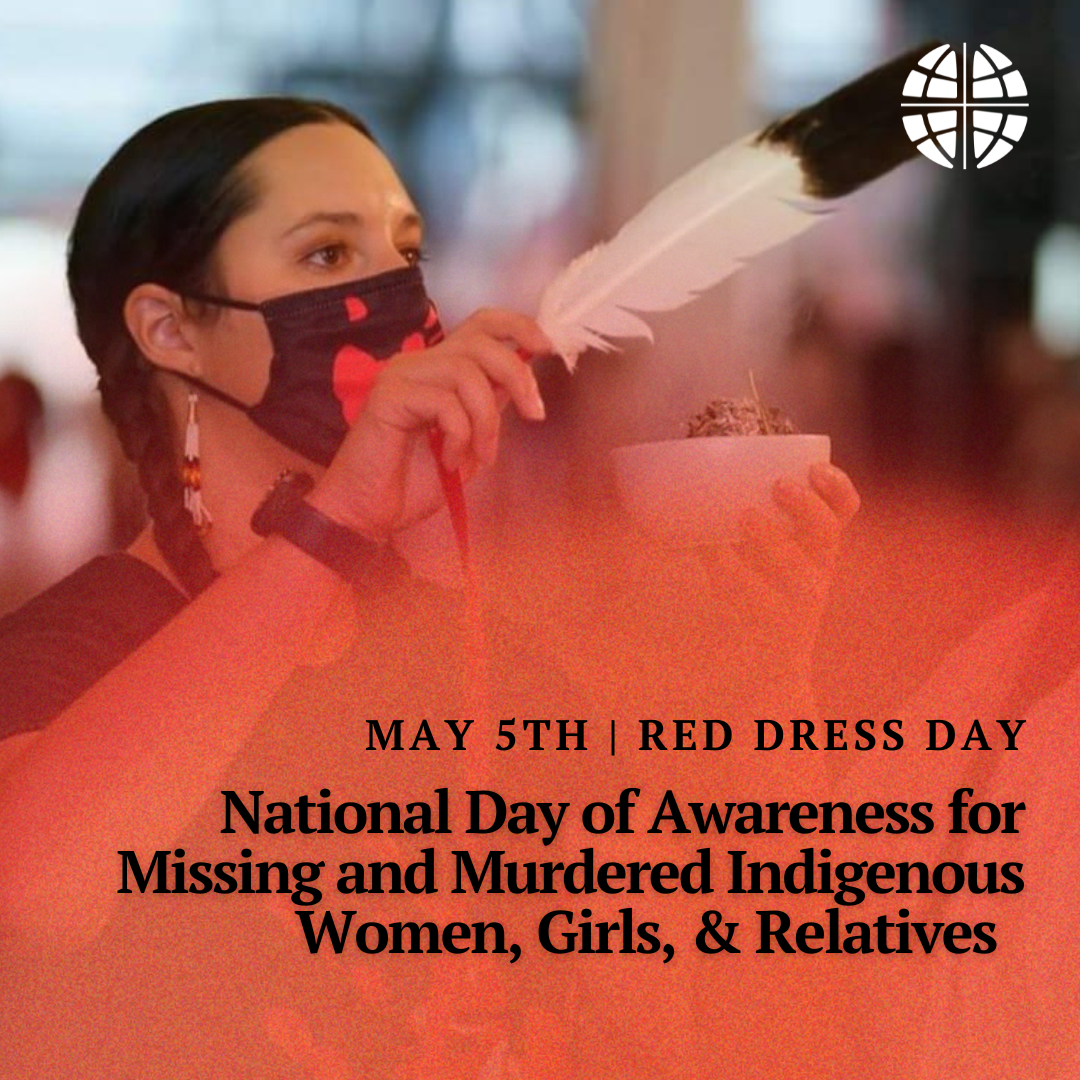
In honor of National Day of Awareness for Missing and Murdered Indigenous Women, Girls, and Relatives (MMIWGR), which is observed on May 5 each year, ELCA Racial Justice Ministries invited Isabell Retamoza to write on this topic.


Truth, Honor and Remembrance: MMIW Awareness Day in the ELCA

By Isabell Retamoza

On May 5, communities across the United States will gather in remembrance and solidarity to honor missing and murdered Indigenous women (MMIW), girls and Two-Spirit people[1].

The alarming rates of abduction, disappearance and murder of Indigenous women, girls and Two-Spirit people represent one of the most devastating and ongoing injustices facing tribal nations and Indigenous communities. On some reservations, Native women experience murder rates more than 10 times the national average.[2] Two-Spirit individuals face exceptionally high levels of violence, with studies indicating that between 78% and 85% have experienced gender-based violence, sexual assault or physical violence.[3] These disappearances and deaths are frequently connected to domestic and dating violence, sexual assault, stalking, sex trafficking and other longstanding harms impacting Indigenous communities. Nearly 96% per of the time the perpetrators of this violence are non-Native men.[4] 

To honor and remember those lost, many people wear red or paint red handprints across their faces as symbols of visibility for those who have been made invisible. But MMIW Awareness Day is not only about remembrance; it is also a call to truth-telling and advocacy.

MMIW Day of Awareness calls us to:

  • Honor the lives of missing and murdered Indigenous women, girls and Two-Spirit people.
  • Raise awareness of the disproportionate levels of violence experienced by Indigenous families and communities.
  • Support community efforts of grassroots advocacy and organizing to change laws, policies, protocols and resource allocation at the tribal, federal and state levels.
  • Share and discuss the history of state-sanctioned violence perpetrated by the U.S. government against Indigenous people and communities to better understand the roots of this crisis and drive meaningful legal reform.

This crisis is neither isolated nor random. It is the result of centuries of state-sanctioned and structural violence. Rooted in colonization and genocide, U.S. policies forcibly removed Indigenous peoples from their ancestral lands, fractured families and kinship systems, and devalued Indigenous culture. These harms continue today through jurisdictional failures, underfunded services, extractive industries built near tribal lands, and systems that repeatedly fail to protect Indigenous women, girls and Two-Spirit people or that hold perpetrators accountable.

For the church, MMIW Awareness Day is also a moment of moral reflection. Christian institutions were often complicit in the systems that enabled this violence, including forced assimilation and boarding schools. Honoring this day meaningfully requires more than acknowledgment; it calls us to recognize the truth expressed through action, solidarity and sustained commitment to justice.

Honoring MMIW Awareness Day in Your Congregation

ELCA congregations can mark May 5 in meaningful and respectful ways, including:

  • Wearing red (T-shirts available from the ELCA) and taking pictures.
  • Using social media to raise awareness. Use the hashtags #MMIW, #NoMoreStolenSisters, #TruthandHealing and #ELCA 2.
  • Organizing a prayer vigil (with this resource).
  • Including MMIW in your congregation’s prayers for the day.
  • Saying the names of MMIW (especially meaningful if you research and identify MMIW specific to your region or locality) and lighting candles for them during worship.
  • Inviting (and compensating) a local Indigenous expert to share on this topic as part of your educational time.
  • Inviting (and compensating) local Indigenous musicians to play or sing during worship.

As members of the Evangelical Lutheran Church in America, we are called to bear public witness to truth, even when that truth challenges us. On May 5, may we commit ourselves not only to remembrance but to action that honors Indigenous lives.

For more information on how your congregation can get involved and honor MMIW Day of Awareness on May 5, please visit the ELCA website and download the MMIW Toolkit.

Isabell Retamoza is a citizen of the Cherokee Nation, a law student at the University of Illinois Chicago School of Law and is a member of St. Andrew Lutheran Church in San Diego.


[1] “Two-Spirit is a term used by some Indigenous people to describe roles, responsibilities, and identities that exist outside colonial understandings of gender and sexuality. For many, Two-Spirit is interrelated to expression, language, tradition, and/or ceremony, often carrying inherent responsibilities to the well-being of the land and community.” Understanding The Term ‘Two-Spirit’ — Wabanaki Two-Spirit Alliance, https://w2sa.ca/two-spirit-library/understanding-the-term-two-spirit.

[2] National Indigenous Women’s Resource Center, www.niwrc.org/mmir-awareness.

[3] Balsam, Kimberly F., et al., “Culture, Trauma, and Wellness: A Comparison of Heterosexual and Lesbian, Gay, Bisexual, and Two-Spirit Native Americans, Cultural Diversity & Ethnic Minority Psychology, 2026, vol. 32, issue 2 (April), doi.org/10.1037/1099-9809.10.3.287.

[4]   The National Congress of American Indians Policy Research Center, Key Statistics | NCAI, https://www.ncai.org/section/vawa/overview/key-statistics.


Happy Arab American Heritage Month by guest author Dr. Ryan LaHurd

In observance of Arab American Heritage Month, ELCA Racial Justice Ministries invited Dr. Ryan LaHurd to share his thoughts on this topic with our readers.


April is Arab American Heritage Month. As an Arab American, I might be expected to write about all the great things Arab Americans have contributed to our culture. But as I think about anti-Arab attitudes in the United States and the massive destruction of innocent lives in the Middle East, I must focus on something more substantial.

We used to hear that Inuit people have hundreds of words for snow. The later correction is that they have dozens. But the principle remains: people have words for things that are important to them. In the U.S., we have no useful word for prejudice against Arabs. Some people speak of “anti-Arab racism.” But Arabs are not a race. Arabs are a cultural group from many different countries whose primary language is Arabic. Others describe such prejudice as “orientalism.” But that term denotes anti-Arab stereotypes from early colonialism: the belly dancer, the “camel jockey.” People uneducated, uncultured and unclean.  Since 9/11, we have heard about “Islamophobia.” This word refers not to Arabs but to the religion of most Arabs. Unhelpfully, using it reinforces a common misunderstanding that all Arabs are Muslims and that all Muslims are Arabs. In fact, an estimated two-thirds of Arab Americans are Christian.

So what’s the problem with our having no word for such prejudice? Back to linguistics. We have words for things that are important to us. No word = not something we care about. Furthermore, studies have demonstrated that we notice the things for which we have names. For example, study participants who spoke Russian — which has separate words for blue, light blue and dark blue — were much more likely than English speakers to distinguish lighter or darker hues on blue-colored paint chips.

Prejudice against Arabs and Arab Americans tends to be ignored — except, of course, by its victims. But it exists, and, like all ethnic and racial prejudice, it matters. In the U.S., such prejudice goes back to the earliest Arab immigrants, considered nonwhite and from “inferior” cultures. For example, my family name is transliterated from the Arabic as “Lahoud” (rhymes with “the food”). It means “the one who stands alone” and refers to Jesus, identifying our family’s roots in early Christianity. My grandfather had so much trouble getting jobs because of anti-Arab prejudice that he changed our name to “LaHurd” to make it look and sound French.  He got jobs but lost our history.

People whose lives we do not see, attend to or care about are much less likely to be considered the neighbors Jesus commands us to love and are much more easily dehumanized.  We have seen the tragic effects of such dehumanization recently in Israel, Lebanon and Palestine, where tens of thousands of innocent people, mostly children and women, have died and where millions more lives have been disrupted. Israel encouraged such dehumanization when it built walls and passed laws that eliminated contact between Jews and Arabs. Studies have unfailingly shown that having even a single personal connection with someone of another religion, race or ethnic group significantly reduces one’s prejudice against that group. Social psychologists call this the “contact theory.”

So I urge you to meet an Arab American, preferably a recent immigrant, and to hear their story. If that’s not possible, read such a story. Just be sure it’s a story written by an Arab. In his book The Message, U.S. writer Ta-Nehisi Coates argues, “If Palestinians are to be truly seen, it will be through stories woven by their own hands — not by their plunderers, not even by their comrades.”

As the great 12th-century Muslim philosopher Ibn Rushd wrote: “Ignorance leads to fear, fear leads to hatred, and hatred leads to violence. That is the equation.” That word “equation” reminds me of one last thing — Arabs invented algebra! We’re awesome.


Ryan LaHurd is president of the ELCA’s Association of Lutherans of Arab and Middle Eastern Heritage (ALAMEH). He retired as president of the James S. Kemper Foundation in Chicago. Previously he was president of the Near East Foundation, an operational foundation doing development work in the Middle East and Africa.  From 1994 to 2002 he served as president of Lenoir-Rhyne University in Hickory, N.C.


For more information: please visit Arab & Middle Eastern Ministries in the ELCA

Honoring International Day for the Elimination of Racial Discrimination: Guest Blog writer Dr. Robin Lauermann

In honor of International Day for the Elimination of Racial Discrimination (March 21), ELCA Racial Justice Ministries invited the Dr. Robin Lauermann, Ph.D. to share some thoughts about the annual board retreat held in Montgomery, AL of the ELCA Association of White Lutherans for Racial Justice and their work to end racism and dismantle white supremacy.


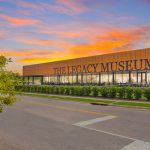
Front exterior of The Legacy Museum, a civil rights museum, explaining the civil rights movement in the US, in Montgomery Alabama, United States. Photo: Equal Justice Initiative

One of the first exhibits in the Legacy Museum. Photo: Equal Justice Initiative/Human Pictures

One of the first exhibits in the Legacy Museum. Photo: Equal Justice Initiative/Human Pictures

The National Memorial For Peace and Justice. Photo by Equal Justice Initiative https://legacysites.eji.org/about/memorial/

The National Memorial for Peace and Justice. Photo by Equal Justice Initiative https://legacysites.eji.org/about/memorial/


In late January, as part of the annual board retreat of the ELCA Association of White Lutherans for Racial Justice, I moved attentively through the Legacy Museum, established in Montgomery, Ala., by the Equal Justice Initiative (EJI). With my mind spinning from its stark and stimulating exhibits, which present the history of white supremacy from slavery to segregation to mass incarceration, I entered the final exhibit hall to see a familiar face: that of Anthony Ray Hinton. My heart leaped in instant recognition, with a mix of lament and joy.

I had learned about Hinton when I first visited Montgomery in 2016 as part of a multistate civil rights tour, meeting with veterans of the movement and visiting such important sites as the EJI offices. Staff members there explained the initiative’s work challenging injustice in the legal system, through both legal representation and policy advocacy. Their remarks expanded what I had learned from the book Just Mercy: A Story of Justice and Redemption, whose author, Bryan Stevenson, is founder and executive director of the EJI.

Due to mistaken identity, Anthony Ray Hinton was wrongly convicted of two murders and spent 30 years on death row. Ultimately EJI secured his release. Most poignant to me was a video that covered Hinton’s reentry into society: the scope of the years taken from him was shown by his learning to use technology unavailable before he was incarcerated — not a cell phone, not satellite radio, but an ATM. An ATM! As soon as Hinton’s book, The Sun Does Shine: How I Found Life, Freedom, and Justice, was published in 2019, I read it and reflected anew on the challenges his story revealed about the criminal justice system.

When I saw Hinton’s face in a museum display, he gazed at me from a row of visitation carrels. He wore prison scrubs and sat in a stark room. I approached the display, lifted a phone handset from the wall and listened as Hinton briefly recounted his story, his gaze never breaking from mine. His visual state contrasted with my knowledge of his freedom, and I thought again of him learning to use the ATM.

I continued around the room, stopping to hear from others. I listened intently to Kuntrell Jackson, who shared how his sentencing to life in prison at age 14; EJI would later represent him before the Supreme Court in a case that would overturn mandatory life sentences for children. Monica Washington told me about her sexual assault by a prison guard; EJI’s complaint would lead to a federal investigation of widespread abuse and to prosecutions of corrections staff. Hinton, Jackson and Washington were just three of the people whose stories were shared in the exhibit and for whom EJI has advocated.

The retreat weekend was both intense and inspiring. In addition to the museum, we visited EJI’s National Memorial for Peace and Justice, which commemorates of racial terror lynchings that began in the South at the end Reconstruction. These visits renewed my lament at the way white supremacy has dehumanized others, disregarding their creation in the image of God. However, the visit also inspired hope, even amid backsliding government policies designed to protect the rights of marginalized communities.  Encounters with history provide us with models of courage and strategy by leaders. The work of EJI shows the possibility of contemporary nonprofit and other collective efforts to promote change. Hinton’s story likewise stands at the crossroads of two legacies: one of disregard and violence, the other of advocacy and hope.


Robin Lauermann holds a Ph.D. in political science and is currently completing a certificate in theological studies at United Lutheran Seminary. She teaches and researches political behavior, institutions and change in U.S. and comparative politics. Robin currently serves as a board member of the ELCA Association of White Lutherans for Racial Justice.