Skip to content
ELCA Blogs

ELCA Racial Justice

Voices of Faith: The Timbre of Black Joy

In celebration of Black History Month which is celebrated in the United States in February, we share the following article which is cross-posted from Living Lutheran. The original post can be found here.


THE TIMBRE OF BLACK JOY

The timbre of my voice rumbles at the back of my throat, and my mouth opens as a roar of laughter fills the space. Laughter is good for the soul. Too often, our brown bodies feel the tension of the world, and it dulls us. It quiets us, and its load weighs our shoulders down. Time and time again, the broken world shatters our being. So we must grip joy despite our pain because living in those joyous moments refuses pain the power of finality.

In a world that can be painful, Black joy is a sacred breath of insistence that flows through life. It is refreshing, breathtaking and enveloping, washing over us with peace, love and happiness. Its melody carries through the community, bringing people together and connecting them. It is love—love that protects us, and memories that give us strength. It is generations of praises that refuse to be silenced or erased. Black joy withstands. Black joy heals. It weaves through places of agony, bringing a balm of Gilead. It is quiet and audacious in our harsh world, turning struggle into beauty.

Far too often, we don’t celebrate and honor Black joy because it feels out of reach or fleeting. Its tempo is temporary. We put it off, telling ourselves we’ll get to it after finishing other tasks. Then it slips away, and life’s struggles weigh heavily, leaving us barely able to remember the last time we heard that sweet melody of peace. Sometimes we don’t even notice the absence of joy in life until it becomes blaringly urgent rather than a regular hush of our daily routines. Yet, when we recognize that we need sparks of happiness throughout our lives, to find the hope that keeps us pushing, the love that reminds us to care for ourselves, and quiet spaces that feed our souls, we realize joy is the marrow in our bones that gives us strength. Joy in Black bodies is essential. It shields us, protects us and gives us spaces to simply be. In those moments where pain and suffering are so tangible, we need these deep breaths of happiness to permeate our souls, swaying us to move past the hurt and twirl past the negativity.

In this state of being, we are free—free to be, free to thrive without looming pressures or expectations. It’s choosing tenderness and gentleness with oneself. In this space, our coiled locks spring freely and bounce in the wind, our faces feel the warmth of the sun, and our lives are fully lived.

Black joy is transformative and healing. Embrace it today. Lean into the delights of life and let it flow and form around you. Let it inspire you to be creative. Let it empower you to laugh loudly and often.

Voices of Faith: Black Joy

In celebration of Black History Month which is celebrated in the United States in February, we share the following article which is cross-posted from Living Lutheran. The original post can be found here.


BLACK JOY

My mother had the most sumptuous deep dark chocolate skin, full lips, large African nose and big beautiful eyes. She had a unique sense of style and a calming way of being. She chose the best fragrances that finished the whole experience—touching all the senses. I remember watching people come to her as a child. Some wanted to drink from her wisdom. Some were struck by her confidence and beauty. Others just wanted to laugh at her clever, inviting jokes. She made them feel both seen and safe. She had a fair share of friends, family and fans.

I witnessed her taking the last of what she had and using it to care for multiple people. Even as she figured out how to be a daughter and caregiver to her mom while raising two girls, she helped other people—giving them a place to stay and healing them with her Black joy. She seemed unstoppable. She made a way out of no way.

I remember a time when she took in my two cousins who are around my age. It felt like fun to us. We were too young to appreciate the financial, physical or mental weight it brought with it. It was just fun-having two extra siblings. Watching the world continue to lean toward her, we felt invincible and blessed. She worked at Goodwill that year as a supervisor and, when Christmas rolled around, we got the best gifts. I still wonder how she did it. We still nostalgically think back to the “Goodwill Christmas” with fondness—not just for the gifts but for the time together.

Looking back, I think it had to be Black joy. It eclipsed the weight and heartache of the reality of a woman coming out of the pain of divorce and welcoming added responsibility. She emulated the example that her mother showed her as a young widow when her husband died leaving her alone with two small children. She embraced the possibility and crushed the seemingly insurmountable odds.

Black joy is God-breathed. It’s the mystical resilience of African ancestry. It’s the personification of hope. It seeps up from the ground beneath our feet. It pours down from the sky. It blows every way the wind goes and glides through the stillness of when the wind stops. It leaps in the darkness of night and in the brightness of day. It’s edified by all things because it extracts the good from all it encounters. It is unmistakable. It has nourished millions and has not been depleted by even a drop. Black joy is so immense and so powerful that it cannot be destroyed. It walks in the surreal balance of arrogance and humility from the power and promise of God.

It’s easy to be distracted by other things and forget the access we have to Black joy. Then we get glimpses to remind us. Like Venus Williams who was the oldest player in the Australian Open women’s singles. Or like the passing away of Claudette Colvin, who at the tender age of 15 defiantly refused to give up her seat on the bus nine months before Rosa Parks did. Or like the election of Yehiel Curry as presiding bishop, an African descent person serving in the whitest denomination in the United States.

Black joy is an undercurrent that makes the good times better and the hard times bearable. It’s infectious and cannot be imitated no matter how hard one tries. It is the laughter, joy, love and excitement of God showing up as amazing energy in people of African descent who tend to let it flow to anyone in reach. It’s the Vibranium (from Black Panther) of real life and explains the unmitigated gall of Black people to excel irrespective of circumstance. It’s the rhythm of the earth in step with the rhythm of God’s heartbeat. Can you feel it? Black joy.

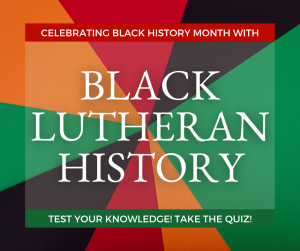
Take the Black Lutheran History Quiz!

In case you missed it:  In honor of Black History Month, ELCA Racial Justice Ministries will be elevating the voices of our African Descent peers and reposting their works from others sources around the ELCA. The following article is cross-posted from Living Lutheran online. The original post can be found here.


Take the Black Lutheran history quiz

A celebration of Black History in the ELCA

February 27, 2025

To honor and celebrate the contributions of Black Lutherans, Nicolette Peñaranda, ELCA program director for African Descent Ministries, created a quiz that highlights key figures, congregations and milestones in ELCA history. This interactive challenge is an opportunity to test your knowledge and deepen your understanding of the rich legacy of Black Lutherans in the ELCA.

How well do you know this history? Take the quiz and find out!

My take: Still Black. Still Lutheran

In honor of Black History Month, ELCA Racial Justice Ministries will be elevating the voices of our African Descent peers and reposting their works from others sources around the ELCA. The following article is cross-posted from Living Lutheran online. The original post can be found here.


My take: Still Black. Still Lutheran

By Nicolette Peñaranda |February 3, 2025

It wasn’t long ago that Gov. Tim Walz was first announced as the Democratic nominee for U.S. vice president, alongside presidential candidate Kamala Harris. Moments after Harris declared her running mate, posts about Walz being a Lutheran began to pop up across social media.

“One of us!” I remember cheering as I sat on the couch in the faculty lodge of Pinecrest Lutheran Leadership Ministries. This ticket would be one of those rare moments when my identity would be fully displayed to the American people. A powerful, competent, multiethnic Black woman and a Midwest Lutheran represented the Democratic Party for the highest offices. What a rare and divine moment!

I know I wasn’t alone in this sentiment. One of my colleagues is, like Harris, a Black woman from Northern California who attended a Historically Black College and University (HBCU), pledged to a Black sorority and has had to work twice as hard as her white counterparts to get where she is today. Her story is my story. Our story is the story of thousands of other Black women in this church.

Many of us in ministry are aware that the odds are stacked against us. We intern in ministerial contexts that counter our lived experiences. Some of us complete second master’s degrees while waiting for a call or a work opportunity. If we attend a Lutheran seminary, we spend most of our education completing coursework while acting as racial justice translators in the classroom, fielding questions about our blackness and Lutheran identity.

Our nonclergy sisters do the same in their contexts. Black women in medicine must explain that they are the doctor and not the social worker. Black women in education must teach their 22-year-old counterparts from Teach for America about trauma-informed approaches to learning. Because of the additional work we are tasked with while working or completing our education, we are experts in both the content and in navigating white mediocrity, the truth that many professional settings are skewed in favor of white Americans.

This story is not about who won the presidential election nor about political parties. Rather, it’s about holding in tension the struggle that Black women face in the professional world. Regardless of our qualifications and professional experience, we aren’t considered for leadership positions, a situation not exclusive to the secular world.

An abusive relationship

I bring up Walz, a lifelong Lutheran who said yes to supporting a Black woman for president. Walz accepting the vice presidential nomination was more countercultural to most ELCA congregations than we realize. For over a decade, Black women candidates for ministry have waited three to five years for their first call. This means that if they were fortunate enough to interview at even four congregations a year, 1 out of every 12 to 20 congregations affirms a Black woman’s call to word and sacrament ministry. After nearly 40 years of Black women being ordained in the ELCA, only three have been elected as a synod bishop.

Since the inception of the ELCA, only two Black women have served as executive director for a home area. One of them saw her position eliminated, and the other works in People Solutions, which is mostly a human resources team. Wyvetta Bullock, an ELCA pastor, has held one of the highest offices in the ELCA as the executive for administration, but no ELCA seminary, college or university has had a Black woman as president. In 2022 at least four Black women were forced out of their ELCA congregations within two months.

The sobering truth is that Black women have been in an abusive relationship with the ELCA for a long time. Perhaps that is why the Walz announcement for the Harris ticket felt so special. Maybe this would start a trend in our denomination.

The reality is that Harris did not win the presidency. It didn’t matter that she was only the second presidential candidate ever to have worked inside all three branches of government. It didn’t matter that she had clear and concise policy proposals or that some of her positions even aligned with the Republican Party. She lost support in most demographics except the Black community and millennials. It’s challenging to find hope for ministry in a church with the same demographics as those who didn’t see one of the people most qualified for office as fit to serve.

What does this mean?

What, then, does this mean for those of us asked to educate the masses within the ELCA? At what point do we just become a broken record for racial justice to ears that refuse to hear it? When is it appropriate to call the time of death for these DEI (diversity, equity and inclusion) workshops and cultural competency talks?

I’m not quite sure how we move forward to pay homage to Black leaders in our church when we refuse to address the elephant in the room. Some leaders still don’t think we should be in the pulpit nor the Oval Office. For years we have documented, celebrated and named the historic contributions Black leaders have offered our church, and still we have not seen our white counterparts build a base of people to support our ministry and advocate for equitable work opportunities.

So, rather than provide more resources and community discussions, I hope congregations will watch all three seasons of “Talks at the Desk” this Black History Month. Use the discussion guides and pledge to make a special offering all month for the African Descent Lutheran Association or the 66th Synod Reparations Fund. But until we start using the resources we already have and apply change, then we will never be free.

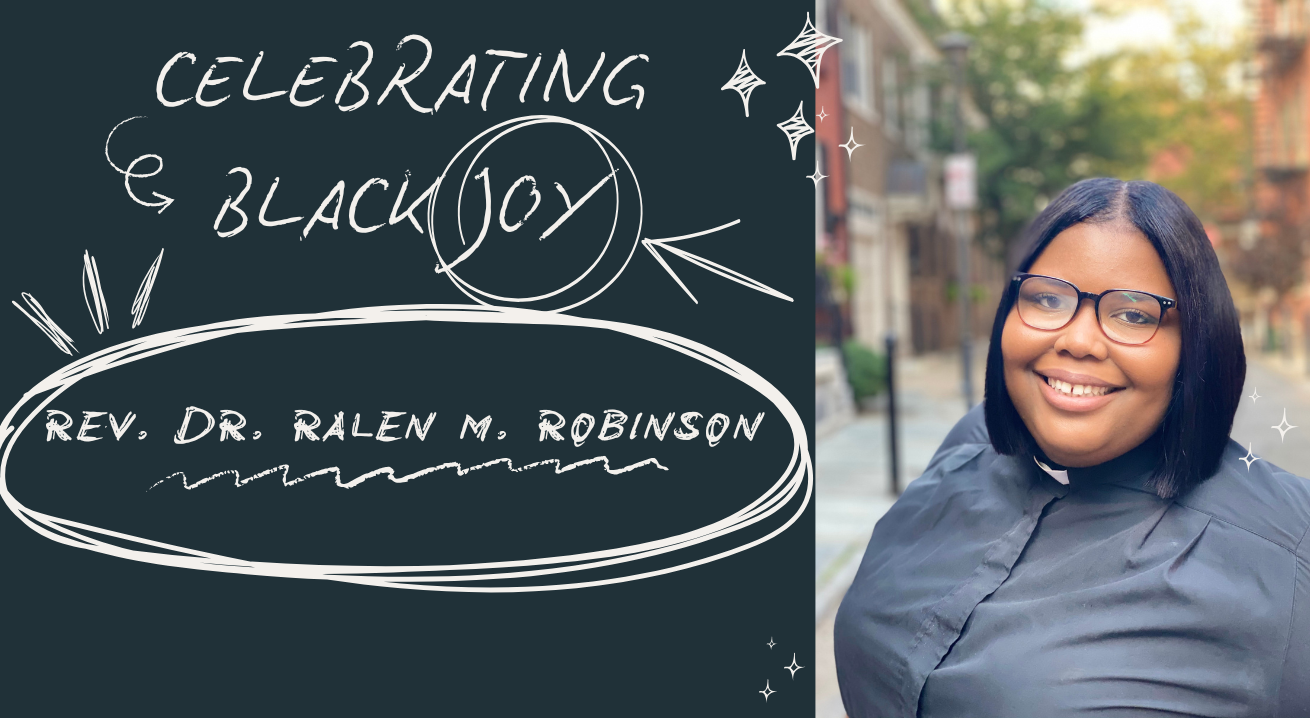
Talks At The Desk Season 3 Premieres TONIGHT!

Celebrate Black History Month with season three of “Talks at the Desk,” a four-part video series by African Descent Ministries of the ELCA. This season focuses on the Reclaim Gathering and will explore its themes: reclaim, embolden, embody and liberate. A new video will premiere each Wednesday in February at 7:30 p.m. Central time beginning Feb. 7. Watch live at https://youtube.com/ELCA.

(more…)

Black History Month: What It Means to Me by Guest Author Clair Minson

In honor of Black History Month, ELCA Racial Justice Ministries invited Seminarian Clair Minson to share some thoughts about this topic with our readers.


What began as “Negro History Week” in 1926 — created by historian Dr. Carter G. Woodson out of his concern that young African Americans lacked an education about their own heritage and ancestors — has since expanded to what we now know and observe as “Black History Month.”[1] Woodson, a life-long educator, understood the power of knowing one’s history and one’s ancestral heritage. Knowing that you are part of a long legacy of people who have the capacity to create whole societies can ground you in the belief that you too can do anything. Not knowing this history can become a seeding ground for internalized oppression.[2]

As Nikole Hannah-Jones writes in her book The 1619 Project: A New Origin Story, “The vision of the past I absorbed from school textbooks, television, and the local history museum depicted a world, perhaps a wishful one, where Black people did not really exist. This history rendered Black Americans, Black people on all the earth, inconsequential at best, invisible at worst.”[3] I suspect that this erasure of Black his- and her-story is what Woodson was confronting through the development of Negro History Week.

As people of faith, steeped in the tradition of remembering and honoring our ancestors, we know the power of hearing, repeating and internalizing the miraculous stories of Moses, Joshua, Mary and Paul. Despite thousands of years of separation, we rely on these stories to help us cling to our faith and to a God who can at times feel very distant, despite always being with us. Understanding this, we perhaps also understand that recalling the stories of our Black ancestors is equally as powerful and necessary.

In preparation for this blog, I sat with the question “What does Black History Month mean to me?” and after some time an answer surfaced. To me, Black History Month is not just an obligatory nod to African American people; it’s a reminder of the strength and resilience of a people who, despite being erased from history and relegated to the margins of society, continue to contribute to the flourishing of our society. It’s a reminder of who we are and whose we are. It’s a reminder from “whence we came” and a vision for where we can go. It’s a clarion call to those who feel lost and need a reminder that their stories and their lives matter.

Black History Month is an opportunity for us as Christians to live into our call to be countercultural and share histories that many in society want to censure. It is an opportunity to live into the commitments we have made as a denomination to honor, protect and value the lives of people of African descent. I ask you, as people of faith, steeped in the tradition of remembering and honoring our ancestors, the same question: What does Black History Month mean to you?


Clair Minson, founder and principal consultant of Sandra Grace LLC, is a nonprofit leader, racial equity consultant, and theologian who leverages her decade-plus experience in workforce development and mental health counseling to maximize the impact of forward-thinking institutions across the United States.

Anchored in her faith in the human capacity for change and propelled by a critical analysis of systemic and institutional racism, Clair works with clients in the public and private sectors to develop and implement sound strategies that address the root causes of social inequity. She first entered the field as a counselor, directly supporting formerly incarcerated people in identifying and developing their skills and passions upon reentry into their communities, and later transitioned into the role of philanthropic strategist, in which she was charged with positioning workforce development as a catalyst for economic justice.

In 2019, Clair founded Sandra Grace, a change-management firm that provides training, consulting and thought-partnership to nonprofit, for-profit and public organizations in embedding racial equity practices in their policies, operations and programs. Sandra Grace serves clients in Baltimore, Boston, Chicago, New Orleans and San Francisco, among other cities.

Clair completed her B.A. in psychology at Clark Atlanta University and her master’s degree in community counseling from Argosy University; she is currently pursuing a Master of Divinity degree at Lutheran Theological Southern Seminary at Lenoir-Rhyne University. She is a nationally certified counselor (NCC) and a licensed clinical professional counselor (LCPC) in the state of Maryland.

Clair is from the Bahamas and currently lives in Colorado with her two daughters.


[1] www.history.com/news/the-man-behind-black-history-month
[2] www.forbes.com/sites/janicegassam/2022/01/28/exploring-the-ways-internalized-oppression-shows-up-in-the-workplace/?sh=56abf6755f09
[3] Nikole Hannah-Jones, The 1619 Project: A New Origin Story (New York: Random House, 2021), xvii.