
Skip to content
ELCA Blogs

ELCA Racial Justice

Honoring International Migrants Day: “Where Are You From?” by Rev. Menzi Nkambule

In honor of International Migrants Day, Racial Justice invited guest writer Rev. Menzi Nkambule to share some thoughts on being a migrant in the United States.


What is your response when someone asks, “Where are you from?” Mine is a joke and reality. I often reply with my Eswatini accent, “I am from Decorah, Iowa.” I was raised in Eswatini, attended Luther College in Decorah and Luther Seminary in St. Paul, Minn., and am now a Lutheran pastor in Jersey City, N.J. For most people in America, “Where are you from?” is a tricky question. We need a different question if we are to be hospitable to one another.

When you ask people where they are from, you receive complex answers. Many Americans have lived in several parts of the country and, in some cases, the world. For example, some grew up in military families, moving from one base to another. Others grew up in a pastor’s family, moving from one church location to another. Like a plant, they were dug out of the ground and transplanted to a new place. Therefore, whether you were born in the United States or Eswatini, the question “Where are you from?” is, at best, challenging. At worst, it feels invasive and presumptuous, especially if asked of those born outside the U.S.

But do not worry; with generosity of spirit, there is nothing we cannot get past. Humor and genuine curiosity can generate a good conversation and help us connect in our similarities and differences. However, I find that, instead of “Where are you from?,” the question “Where is home for you?” embodies the generosity needed to spark instant connection.

In my experience, this alternative question reflects the kind of generosity that Leviticus 19:33-34 asks of us when it says, “When an alien resides with you in your land, you shall not oppress the alien. The alien who resides with you shall be to you as the native-born among you; you shall love the alien as yourself, for you were aliens in the land of Egypt: I am the Lord your God.” Ask someone “Where are you from?” or “Where are you really from?,” and that person may hear you saying that they don’t belong. But ask someone where home is, and you will have treated them as if they belong. You will have given them the joy and ease they need to put down roots in your community.

When I first came to the United States, I was 22, had never seen the doors of a Lutheran church and never in my life thought I wanted to be a pastor. Understandably, I was feeling out of place. But then the question “Where is home for you?” transformed me. My campus pastors were the first to ask me this question. It brought a much-needed shift in perspective, from home as a data point to home as the people with whom I feel safe attaching roots and exploring.

As time passed, I began to see Decorah as a community of belonging. By my senior year in college I had explored Lutheranism and gotten baptized at Good Shepherd Lutheran Church in town. I spent so much time with the pastors that I began to think I, too, could be a pastor. I studied management and made a leap to seminary and ordained ministry. Because I felt at home in Decorah, I belonged, planted roots and thrived.

Ultimately I am from Decorah and other places because I feel at home there. I believe that those transplanted across the globe or from one state to another need nothing more than for us to be their home. They need us to be what God calls us to be — the soil where the immigrants among us can take root and be at home in our communities.
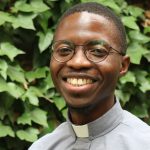


The Rev. Menzi Nkambule is an ELCA Fund for Leaders alum serving as pastor of St. Matthew’s Lutheran Church, Jersey City, N.J. He enjoys cooking and cycling.


Vine Deloria Jr. Theological Symposium

Vine Deloria Jr. Theological Symposium

In 2013 the annual American Indian and Alaska Native Symposium at the Lutheran School of Theology at Chicago was renamed in honor of Vine Deloria Jr., an alum of Augustana Seminary, Rock Island, Ill., a predecessor school of LSTC. The symposium has been held in November each year since it began 15 years ago and is co-sponsored by the Pero Center for Intersectionality Studies at LSTC and the ELCA’s Indigenous Ministries and Tribal Relations. All events will be accessible online, and the theme is tribal sovereignty.

At the height of the American Indian Movement and beyond, Vine Deloria Jr. played a significant role in strengthening tribal sovereignty for federally recognized tribes in the United States. Throughout his work — from serving as executive director of the National Congress of American Indians to serving as a law professor at the University of Arizona during his retirement and so much in between — Deloria influenced how Native Nations, Indigenous people and non-Indigenous people understand Indigenous self-determination and explore ways to further tribal sovereignty. During this year’s Vine Deloria Jr. Theological Symposium, participants will hear from scholars and leaders who continue this work. Attendees will learn what tribal sovereignty means and how securing sovereignty is justice work.

Learn more about this year’s speakers

DOWNLOAD FLYER


Monday, Nov. 13

Symposium Chapel Service
11:30 a.m. Central time

The Rev. David Wilson (Choctaw), Preaching
Bishop of the Great Plains Conference of The United Methodist Church

JOIN CHAPEL

Symposium Lecture
6 p.m. Central time

Stacy Leeds (Cherokee)
Willard H. Pedrick Dean and Regents Professor at the Sandra Day O’Connor College of Law, Arizona State University

JOIN LECTURE


Tuesday, Nov. 14

Symposium Panel Presentation
6 p.m. Central time

Dr. Aaron Payment (Chippewa)
Vice President of Tribal Relations and Learning for Kauffman and Associates

Fawn Sharp (Quinault)
President of the National Congress of American Indians

JOIN PRESENTATION


Wednesday, Nov. 15

Symposium Chapel Service
11:30 a.m. Central time

Vance Blackfox (Cherokee), Preaching
ELCA’s Director of Indigenous Ministries and Tribal Relations

The Rev. Dr. Linda Thomas, Presiding
Director of the Pero Center for Intersectionality Studies

JOIN CHAPEL

Preregistration is not required to participate. Just click the “join” buttons to attend.

Honoring Indigenous Peoples and Alaska Natives in November

In the United States, November is Native American Heritage Month. Racial Justice Ministries would like to elevate the voices and work of our Indigenous siblings by bringing attention to the multitude of events by the ELCA’s Indigenous Ministries and Tribal Relations. A full list of offerings for this month can be found here, but there are two events that we would especially like to highlight:

Vine Deloria Jr. Theological Symposium

In 2013, the Annual American Indian and Alaska Native Symposium at the Lutheran School of Theology at Chicago was renamed in honor of Vine Deloria Jr., an alum of Augustana Seminary, Rock Island, Ill., a predecessor school of LSTC. The symposium has been held in November each year since it began over 10 years ago. The symposium will be fully virtual this year, and the theme is tribal sovereignty.

Monday, November 13, 2023 – Symposium Chapel Service:

Preaching – The Rev. David Wilson, Bishop of the Great Plains Conference of The United Methodist Church
Symposium Lecture: Stacy Leeds, Willard H. Pedrick Dean and Regents Professor at the Sandra Day O’Connor College of Law, Arizona State University

Tuesday, November 14, 2023 – Symposium Panel Presentation: Dr. Aaron Payment, Vice President of Tribal Relations and Learning for Kauffman and Associates; Fawn Sharp, President of the National Congress of American Indians; Host – Vance Blackfox

No pre-registration is required to participate. Just click “join the class” to attend.

Day of Mourning

Since 1970, an annual march and rally organized by the United American Indians of New England (UAINE) have taken place on the fourth Thursday in November, a day known as Thanksgiving holiday in the United States, but a day that many Indigenous people and supporters have come to know and commemorate as the National Day of Mourning. This tradition and commemoration serve as a solemn occasion to honor Native ancestors and Wampanoag stories, while fostering greater awareness and understanding among the American public about the destructive presence of pilgrims and settlers in around Patuxet, currently also known as Plymouth.

You are invited to Plymouth to stand in solidarity with the Wampanoag people and the United American Indians of New England at this year’s National Day of Mourning and gain deeper insights into their vital mission.

Thursday, November 23, 2023

Day of Mourning
Gathering Time: 11:00 AM
Location: Pebbles Restaurant – 76 Water St, Plymouth, MA 02360

Click here to register