
Sermón
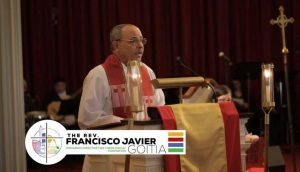
Francisco Javier Goitía Padilla
Capilla IELA – 19 de Febrero de 2020
Mateo 5:21-37
Gracia y paz del Uno y Trino Dios
por los siglos de los siglos. Amén.
Esta es la segunda ocasión que vivo en Chicago.
Del 2001 al 2005 viví en Hyde Park.
Ahora vivo en West Dundee,
y viajo todos los días al trabajo aquí en el Centro Luterano.
Una diferencia entre Chicago y Puerto Rico
es la manera en que damos direcciones.
Chicago es una ciudad cuadriculada.
Las calles son líneas rectas y perpendiculares.
Aquí, cuando usted pregunta,
¿cómo llego al Parque Milenial?,
la gente contesta de la siguiente manera:
Vaya hacia el Norte por tres cuadras,
luego al Este por cuatro cuadras,
y encontrará el parque paralelo a la Avenida Michigan.
En Puerto Rico no damos direcciones así.
Si uste pregunta en Puerto Rico, ¿dónde está el parque de béisbol?
Las personas le contestan más o menos así:
Siga derecho por un buen rato, hasta que encuentre un palo[1] de mangó.
Cuando llegue al palo de mango, vire a la izquierda.
Siga drecho hasta que encuentre tres muertos[2].
Después del tercer muerto va a ver una casa amarilla a su izquierda.
Vire a la izquierda y pregúntele a alguien en la esquina.
Allí le ayudarán.
La manera en que damos direcciones es importante.
Ellas nos ayudan, o no, a llegar a un lugar seguro.
El texto de Mateo esta mañana nos provee direcciones.
Pueden ser direcciones cuadradas y perpendiculares,
o más aventureras, las cuales nos llevan a un nuevo lugar
mientras nos deleitamos con un rico olor a mangó.
Creo que esta es gran dificultad que enfrentamos hoy.
Cómo obtenemos direcciones. Cómo intepretamos.
Este texto de Mateo. La Iglesia. El país dónde vivimos.
Necesitamos discernir una hermenéutica que produzca vida,
Y que esta vida sea una abundante.
El marco hermenéutico general de hoy son las bienaventuranzas.
Bienaventuradas las personas…pobres, humildes, compasivas.
Este marco hermenéutico general nos dice
que Jesús aquí nos está sofocándonos con un literalismo rígido
- con líneas rectas y perpendiculares –
sino retándonos con una ética intensificada.
Con una etica liberadora.
El texto de Mateo nos presenta cuatro situaciones
dirigidas a las personas que tienen poder,
para protegenr a quiénes no lo tienen.
Para que las personas bienaventuradas
sean dignificadas y protegidas.
Aquellas que lloran. Las pacificadoras.
Las perseguidas por causa de la justicia.
El texto comienza hablando de hermanos y hermanas.
Se dirige a la familia, a la comunidad, a la iglesia.
Nos matar es dignificar.
No matar es no destruir, no promover la violencia,
no abusar ni despreciar a nadie.
Martín Lutero explica el quinto mandamiento
de esta manera en el Catecismo Mayor:
Primeramente que no se hará mal a nadie, en primer término, ni con la mano,
ni con la acción. Después, que no se use la lengua para causar daño al prójimo, hablando o dando consejos malignos. Además, no se emplearán ni se consentirán medios o maneras de ninguna clase que pudieran ofender a alguien. Y, finalmente, que el corazón no sea enemigo de nadie ni desee el mal por ira o por odio, de tal modo que el cuerpo y el alma sean inocentes con respecto a cualquiera y especialmente con respecto a quien te desea o haga el mal.
Nuestras palabras y acciones deben invitar a la familia, a la comunidad
y todas las personas a la mesa del Señor.
Quiénes tienen poder, quienes pueden,
llegan a la mesa pensando solo en ellos mismos.
Quiénes piensan que pueden vivir sin comunidad,
quiénes creen que con sus recursos pueden vivir sin los demás,
deben pensar y actuar de otra manera.
Debemos añadir, no excluir, gente a la mesa.
El texto continúa, ahora dirigiéndose a la situación de las mujeres.
Atiende asuntos de objetivación.
Denuncia abusos y privilegios.
El poder en nuestra sociedad,
y en la sociedad de los tiempos bíblicos,
está en manos de los hombres.
Po la ley. Por la cultura. Por la fuerza.
Quiénes desean, quiénes lujurian, aquí, son los hombres.
Hombres con poder. Hombres que pueden.
Hombres que se salen con la suya.
Porque sí.
Jesús lo sabe, e intensifica su ética.
Si tu ojo derecho mira con deseos inapropiados y hace que abuses a una mujer,
Sácatelo y bótalo.
Si usas tu mano para sobar sin permiso una mujer
Como si fuera una libra de pan,
Córtatela y bótala.
Si extendemos esta hermenéutica en su dirección liberadora,
Podemos decir que las mujeres no son objeto de la lujuria ni del deseo de nadie.
Podemos decir, hoy, que las mujeres son libres.
Libres para hacer. Para vestir. Para decidir.
Ellas no necesitan protección ni permiso. Necesitan poder.
Necesitan afirmar lo que YA consiguieron.
Más parece que, en estos días que vivimos,
aún necesitan que defendamos lo que ellas han logrado
y por lo que tanto han luchado.
Como Jesús,
que las protegé en su comentario acerca del divorcio.
De la misma forma que los hombres usaban, y usan, la ley,
para controlar y objetivizar a la mujer,
así mismo usaban, y usan, su poder para casarse y divorciarse.
En este texto de Mateo,
Jesús amarra a los hombres al matrimonio, para defender las mujeres.
Las proteje de la pobreza y la marginalización.
Las cuida para que no queden indefensas ni lugar social.
Expuestas a la burla y el chisme.
Porque el divorcio, para las mujeres,
significaba marcarlas y olvidarlas socialmente.
Porteger y cuidar, como Jesús lo hace en este texto,
Significa hoy paga igual por igual trabajo.
Significa las mismas oportunidades por las mismas competencias.
Proteger y cuidar, como Jesús lo hace en este texto,
significa, hoy, defender y luchar por los derechos y dignidad
de todo ser humano que es usado y esquineado por el patriarcado.
Significa abrazar a quiénes sienten que tienen que ser invisibles para sobrevivir.
Como ven, dar direcciones es complicado.
Es un asunto de poder y control.
Dar direcciones es ayudar a decidir hacia dónde y cómo dirigir a las personas,
si de norte a sur transitando popr calles rectas y perpendiculares,
o si llegamos al parque de beísbol sobellevando muertos en la carretera.
El texto de hoy termina con Jesús hablándonos acerca de juramentos.
Del poder de la palabra empeñada.
Se trata de contratos. De acuerdos laborales y sociales.
Jesús nos dice que nuestro ‘sí’ sea ‘sí’, y que nuestro ‘no’ sea ‘no’.
Quiénes podían cambiar su ‘sí’ a ‘no’ y su ‘no’ a ‘sí’,
quiénes podían manipular sus juramentos,
eran, y son, los dueños de los contratos.
Esos que nos hacen firmar sin leer.
Que nos hacen firmar porque no tenemos alternativa.
Esos que manosean el sistema.
Jesús nivela la mesa.
No se puede cambiar. El ‘sí’ es ‘sí’ y el ‘no’ es ‘no’.
Aún para quienes están acostumbrados a cambiar su palabra para beneficiarse.
Aún para quienes tienen padrinos que los bautizan[3].
Jesús nos exhorta a que nuestras acciones confirmen nuestras palabras.
Jesús nos llama a que nuestro lenguaje sea inclusivo.
No nos escondamos en nuestras palabras ni en vana propaganda.
No usemos nuestras influencias para sacar ventaja de la gente,
O para beneficiarnos, o benenficiar a un amigo o familiar, a cualquier costo.
Que nuestro ‘sí’ sea ‘sí’, y nuestro ‘no’, ‘no’.
Que nuestras relaciones y la manera en que somos sociedad
Se fundamente en la verdad.
En lo que realmente es.
No decidamos leyes laborales, mores sociales, o nuestro futuro común,
A partir de la manipulación, o santificación, de data nebulosa.
Que nuestras relaciones se fundamenten en la honestidad y el carácter.
En integridad y esperanza.
Martin Luther King. Hijo, lo dijo de esta manera:
El ser humano debe desarrolla un método para lidiar
Con los conflictos que rechase la venganza, la violencia y el desquite.
El fundamente de un étodo así es el amor.[4]
Y dijo más:
He decidido aferrarme al amor.
El odio es un peso muy grande para cargar.[5]
Hermanos y hermanas,
nuestra vocación hermenéutica hoy
es la manera en que damos direcciones.
No es un asunto de literalismos rígidos.
Se trata de desafiar con esperanzada a partir de una ética intensificada.
Esta hermenéutica liberadora,
está ética intensificada, es la cruz, en medio nuestro,
proveyendo lugar seguro para quiénes no tienen poder.
Un lugar seguro para quiénes les quitan lo poco que tienen.
Es la oportunidad de aventurarnos a viajar a nuevos lugares
difrutando el olor de los mangoes a la orilla del camino.
Las bienaventuranzas lo dicen bien:
Bienaventurados sois cuando por mi causa os vituperen y os persigan,
y digan toda clase de mal contra vosotros, mintiendo.
Gozaos y alegraos, porque vuestro galardón es grande en los cielos;
porque así persiguieron a los profetas que fueron antes de vosotros.
Amén.
Información biográfica:
Francisco Javier Goitía Padilla es pastor ordenado del Sínodo del Caribe de la IELA. Ha trabajado como pastor en Puerto Rico y Chicago. Actualmente trabaja como Director de Formación Teológica para Seminarios y Escuelas de la IELA Trabajó como profesor de homilética y teología sistemática en el Seminario Evangélico de Puerto Rico del 2005 al 2017.
[1] Árbol.
[2] Regulador de velocidad. Tiene diferentes nombres en diferentes países: guardias tumbados, rompemuelles, lomo de burro, policia acostado, topes, etc. En inglés es speed bump.
[3] Este es un refrán popular. Ver https://cvc.cervantes.es/lengua/refranero/ficha.aspx?Par=58681&Lng=0.
[4] Man must evolve for all human conflict a method which rejects revenge, aggression and retaliation. The foundation of such a method is love. Traducción mía.
[5] I have decided to stick with love.Hate is too great a burden to bear. Traducción mía.