
Skip to content
ELCA Blogs

Ecumenical and Inter-Religious Perspectives

Amplifying the Message in Word and Deed: Liberation not Annexation


By Kathryn Mary Lohre

The government of Israel has declared its intention to annex West Bank settlements and the Jordan Valley, as soon as July 1. Israel Prime Minister Benjamin Netanyahu depends on the backing of the US presidential administration to legitimize what would be considered illegal under international law.

The Palestinian people, who have lived under Israeli military occupation for nearly 53 years, are crying out once again. They are calling us to recognize yet another looming pandemic: the dissolution of prospects for peace with justice for Israelis and Palestinians – Jews, Christians and Muslims.

In recent weeks, these pleas from our Palestinian Christian family have included:

To our Palestinian family, and especially our Palestinian Lutheran family: the ELCA hears your cries. This cannot be overstated – to you, and to anyone else who is listening. Presiding Bishop Elizabeth Eaton has spoken out clearly on behalf of the ELCA, and also with ecumenical partners. This is critical.

At the same time it falls to all of us to work to amplify your call for “liberation not annexation,” and to accompany you in being a “disturbing presence” for peace through prayer, action, and advocacy with our elected leaders (For Peace in God’s World, 1995). Consistent with our social teaching, we denounce beliefs and actions that “ordain the inherent right of one people, race, or civilization to rule over another” and that “despair of any possibility of peace.” Therefore, as an act of Christian witness, we denounce the government of Israel’s plans for annexation and the political and theological beliefs that falsely justify it as a viable solution for peace.

When we are a disturbing presence for peace, our focus is on justice. Thus, we make a clear distinction between our critique of unjust Israeli government policies and our commitments to anti-Semitism and right relationship with the Jewish community. Our Churchwide Strategy for Engagement and Israel and Palestine can and does coexist with A Declaration of the ELCA to the Jewish Community. As Lutherans we live faithfully in the tension of this “both/and,” as justice is at the heart of both sets of commitments.

When we are a disturbing presence, we work to uncover the deep, systemic connection between the oppression of one people and the oppression of another, and between the liberation of the oppressed and the liberation of all. The racism that has kneeled on the necks of Black Americans for 400 years is part of the same global pandemic as the racism that has been kneeling on the necks of Palestinians for 53 years of military occupation, and that has been even more suffocating under Israel’s nation state law, adopted in 2018. The Palestinian cry for justice cannot be heard apart from the Black cry for justice. For those of us who are not crushed under the weight of anti-Black racism or military occupation, we must redouble our efforts to learn, listen, and be transformed for the sake of the liberation of our whole human family.

When we are a disturbing presence, we put people front and center. This means we look to our Palestinian partners, and especially our Lutheran family, to guide our work and witness for just peace. We also engage with our ecumenical and inter-religious partners to amplify these voices, and to enhance the impact of our collective advocacy. Importantly, it also means that we build strong relations with our Jewish partners so that when our church’s decisions, policies, and public witness cause misunderstanding, tension, or conflict, we can interpret as we seek to accompany both the Palestinian people and the Jewish community in seeking justice for all.

500 years ago, Martin Luther wrote the treatise “The Freedom of a Christian.” In it, Luther summarizes the Christian life, also reflected in Galatians 5:1: “For freedom Christ has set us free.” Our freedom in Christ is not a freedom for ourselves, but for the sake of our neighbors, lived out in love. As an expression of the liberating love we share in Jesus Christ, we join our Palestinian family, and our partner Bishop Azar, in calling for “liberation not annexation.”

Please join in ELCA advocacy through Peace Not Walls: June action alert
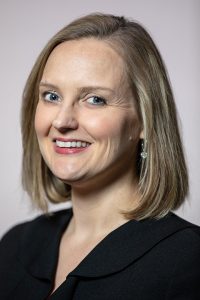
 

Kathryn Mary Lohre serves as Assistant to the Presiding Bishop and Executive for Ecumenical and Inter-Religious Relations & Theological Discernment for the ELCA


Treating the Underlying Conditions


By Kathryn Mary Lohre

Is there no balm in Gilead? Is there no physician there?
Why then has the health of my poor people not been restored?
Jeremiah 8:22

On May 24, the National Council of the Churches of Christ in the USA hosted a memorial service for lives lost to COVID-19. In a time of physical distancing, the church ecumenical gathered online for “A Time to Mourn,” drawing thousands together to remember and lament. Grounded in our hope in the resurrection, the Rev. Elizabeth A Eaton, presiding bishop of the Evangelical Lutheran Church in America, declared, “The body of Christ is COVID-positive.”

The very next day, a black man named George Floyd was killed by police in Minneapolis, Minnesota. Onlookers to his arrest quickly became protestors to his death, filming it for all the world to see. The footage of a white police officer kneeling on the neck of a black man on the street until he became lifeless went viral. In their public statement, “Lynching Justice in America,” the officers of The United Church of Christ, asked “Is this how white supremacy prays? The original pandemic of our nation – structural racism and white supremacy – has reasserted once again itself as the deadliest virus among us.

Thus, as the country passed the grim marker of more than 100,000 lives lost to COVID-19 last week, the death of one man became the focus of our national attention. George Floyd’s last words, “Please, I can’t breathe,” are a stark reminder that a severe respiratory virus is not the only illness plaguing us. But we need to be clear in our diagnosis. This it is not about two unrelated ailments: COVID-19 and racism. Rather it is about how the coronavirus, as an acute disease, is aggravating many of our society’s underlying conditions in these, and other ways:

  • Stay-at-home orders have exacerbated gender-based-violence.
  • Private health care systems have magnified economic injustice, as those who cannot afford it have limited access and quality of care.
  • Under-resourced public education systems have provided unequal opportunities for remote learning during school shut-downs, and contributed to food insecurity in many families.
  • Disproportionate rates of infection and death from COVID-19 in communities of color have exposed racialized health disparities, including pre-existing conditions.
  • The classification of “essential workers” has laid bare the racialized hierarchies of labor in our society, and our dependence on low or no-wage migrant workers.
  • The return of wildlife to urban areas has revealed our addiction to habits of consumption, travel, and transit that gravely contribute to climate injustice.
  • Unchecked discriminatory police practices targeting black and brown bodies, compounded by racist criminal justice systems have led to several killings of unarmed black and brown people during the COVID-19 pandemic, including not only George Floyd, but also Dreasjon (Sean) Reed, Breonna Taylor, and Ahmaud Arbery, and others unnamed, and delayed or denied justice for their killers.

None of these conditions are new since the onset of COVID-19. They are more severe. We, the people of the United States, are very ill. We, the ecumenical family in the United States are very ill. “If one member suffers, all suffer together with it” (I Corinthians 12:26). Whether we are experiencing the symptoms, or contributing to them, none of us are well. You know that, you have seen it, and you have reached out in love and solidarity with us. For this, we give thanks to God for the continued accompaniment of the ecumenical family on the pilgrimage of justice and peace.

Every day since George Floyd’s death, protestors have taken to the streets in cities across the country. Risking arrest and violence, and COVID-19, they are demanding justice – undeterred by those with evil, ulterior motives. Like they prophet Jeremiah, they are crying out, “Black lives matter!” Our churches – our clergy and lay people – are amongst them, and also supporting them with service, care, and sanctuary in our communities. The protestors are enraged by the death of George Floyd, yes, but their rage is also pointing to the 401 years of anti-black structural racism and white supremacy undergirding it, and creating barriers justice. We are at a tipping point as a nation. We feel this whether we are watching and working from self-quarantine, or seeing and joining in with our bodies in the streets.

The status quo has been weakened by COVID-19, and it is susceptible. The question we are wrestling with is, what role will the churches have in treating the underlying conditions – of making lasting change for building racial justice and dismantling white supremacy? The African Methodist Episcopal Church, for one, has been clear: “White supremacist business as usual, is no longer acceptable.” This is work we must engage within our churches, but also together, ecumenically. The Act Now to End Racism initiative of the National Council of Churches will be vital in these next steps, including its recently adopted work focused on white supremacy.

United in Christ, and by the power of the Holy Spirit, we must undertake a comprehensive and aggressive treatment plan against structural racism and white supremacy, even and especially while we flatten the curve and seek treatment for COVID-19. Our life together in Christ depends on it because if you can’t breathe, I can’t breathe.


Kathryn Mary Lohre serves as Assistant to the Presiding Bishop and Executive for Ecumenical and Inter-Religious Relations & Theological Discernment for the ELCA