
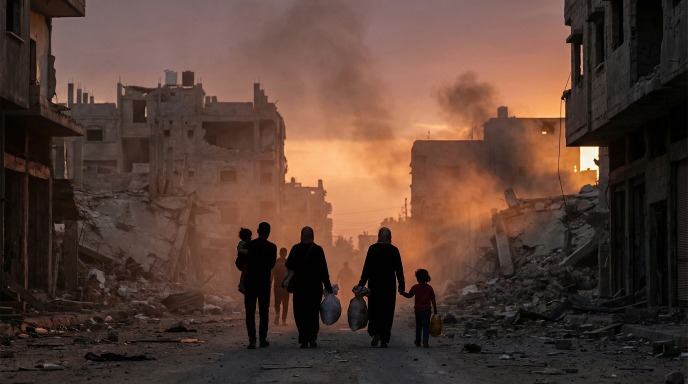
Photo Credit: Armando Loho | Generated with AI
June 2026 offered a sobering reminder that humanitarian emergencies rarely occur in isolation. Around the world, armed conflict, climate-related disasters, economic instability, hunger and disease are converging to create unprecedented levels of human suffering. At the same time, humanitarian organizations are being forced to do more with less as global funding continues to decline.
Today, an estimated 266 million people face acute food insecurity, while 13 major hunger hotspots are at risk of further deterioration in the months ahead.
Yet humanitarian funding has fallen by roughly 59% compared with 2022 levels, forcing agencies to scale back critical programs including food assistance, health care and protection services. Millions of people are being left without the support they need to survive.
Sudan: The World’s Most Severe Hunger Crisis
Nowhere is the intersection of conflict and hunger more evident than in Sudan. The country remains the world’s most severe hunger emergency, with famine risks continuing in Darfur and other regions.
In June, escalating violence in Blue Nile State coincided with the onset of the rainy season, displacing more than 200,000 people and creating critical shortages of food, clean water, shelter and medicine. The combination of armed conflict and seasonal weather is accelerating displacement while increasing the risk of disease outbreaks.
Across the broader Sahel region, conflict, climate shocks and economic instability have pushed more than 24 million people into urgent humanitarian need. Families already struggling with insecurity are facing repeated climate-related setbacks that make recovery increasingly difficult.
Gaza and Myanmar: Humanitarian Systems Under Strain
In Gaza and the Occupied Palestinian Territory, the humanitarian situation remains fragile and continues to deteriorate. Ongoing insecurity, severe water shortages, growing waste accumulation, widespread displacement and overcrowding are straining already fragile systems. Access constraints and shrinking financial resources are making it increasingly difficult for humanitarian organizations to reach those most in need.
Meanwhile, Myanmar’s humanitarian crisis continues to deepen after five years of conflict. Civilian casualties from airstrikes persist, local humanitarian networks are under immense pressure and reductions in international funding are further limiting lifesaving assistance. In many communities, shrinking aid resources and escalating conflict are contributing to the breakdown of local support systems.
A World Facing Record Levels of Conflict
Beyond these headline crises, humanitarian needs continue to grow across numerous conflict zones. More than 60 active armed conflicts are currently ongoing worldwide, the highest level seen in decades.
In Ukraine, civilians continue to bear the burden of a prolonged war. Haiti faces escalating gang violence and displacement, while communities in the Democratic Republic of Congo and throughout the Sahel continue to experience insecurity, hunger and mass displacement. These emergencies may receive different levels of global attention, but each represents lives disrupted and communities struggling to endure.
Climate Disasters Compound Vulnerability
As conflicts continue, climate-related disasters are creating new humanitarian emergencies and worsening existing ones.
In late June, two major earthquakes struck Venezuela, measuring between 7.1 and 7.5 magnitude. Hundreds of deaths were reported, infrastructure suffered widespread damage and millions of people may have been affected. International search-and-rescue teams mobilized rapidly to support response efforts.
Flooding also caused significant impacts across multiple regions. Eastern Syria experienced some of its worst flooding in decades, damaging homes, farmland and camps housing internally displaced people. Heavy rainfall across West Africa and South Africa increased flood risks and threatened already vulnerable populations.
Europe faced a different climate challenge as record-breaking heat swept across the continent. The United Kingdom recorded its hottest day on record twice during the month, and multiple heat-related fatalities were reported.
At the same time, persistent drought conditions in East Africa, including Somalia, continue to worsen food insecurity. Crop failures, declining water supplies and increased migration pressures are affecting millions of people whose livelihoods depend on predictable weather patterns.
Hunger and Health Risks Continue to Grow
The cumulative effects of conflict, climate shocks and funding shortages are driving a worsening hunger crisis.
The World Food Programme has warned that conflict-related disruptions to shipping and energy markets are contributing to higher food prices and limiting access to food for vulnerable populations. Countries including Afghanistan, Somalia and parts of the Middle East are experiencing growing food insecurity as conflict, climate impacts and reduced humanitarian assistance converge.
Looking ahead, anticipated El Niño conditions later in 2026 could intensify extreme weather patterns, potentially placing additional pressure on food systems and vulnerable communities around the world.
Health threats are also increasing. Ebola outbreaks continue in parts of the Democratic Republic of Congo and Uganda, while displacement, flooding and limited access to health care create conditions that can accelerate the spread of disease.
Hope Amid Growing Challenges
The humanitarian landscape in June 2026 illustrates the complex reality facing communities around the world. Conflicts are becoming longer and more complex. Climate shocks are growing more frequent and severe. Hunger and disease continue to threaten millions. And humanitarian organizations face the difficult challenge of responding amid shrinking resources.
Yet even in these circumstances, local communities, faith-based organizations and humanitarian partners continue to respond with resilience, compassion and determination. As Lutheran Disaster Response accompanies communities affected by disaster and conflict, we remain committed to supporting efforts that save lives, restore dignity and strengthen hope in the midst of crisis.
The challenges are immense, but so too is the calling to stand alongside our neighbors when they need it most.
Supporting Communities Through Lutheran Disaster Response
In the face of these compounding emergencies, Lutheran Disaster Response continues to walk alongside communities as they respond to immediate needs and rebuild with dignity and hope. Through trusted international partners, LDR supports emergency relief, recovery, and long-term resilience efforts, addressing food security, shelter, livelihoods, psychosocial support, and disaster preparedness.
Supporting Lutheran Disaster Response enables timely, locally led responses that prioritize the most vulnerable and strengthen communities against future crises. As climate impacts intensify and conflicts persist, sustained solidarity and partnership are essential. Together, we can help ensure affected communities are not only supported in times of crisis, but also empowered to recover, rebuild, and thrive. Learn more about how to support the work of LDR here.
