Skip to content
ELCA Blogs

Lutheran Disaster Response

Global Humanitarian Crises: Fall 2026

August through October 2026 brought a convergence of humanitarian emergencies unlike any seen in recent years. From devastating floods and earthquakes to protracted conflicts and mass displacement, communities across Asia, Africa, the Middle East, Europe and the Caribbean faced mounting challenges as humanitarian needs continued to outpace available resources. 

Humanitarian organizations entered the final months of 2026 facing a difficult reality. Extreme weather events fueled by climate change are becoming more frequent and severe, while ongoing armed conflicts continue to displace families, disrupt livelihoods and restrict access to lifesaving assistance. At the same time, funding shortfalls and rising operational costs are limiting the ability of aid agencies to respond effectively to growing needs. 

Climate Disasters Leave Millions in Need

Several major climate-related disasters struck during these months.

In Myanmar, severe monsoon flooding affected approximately 600,000 people after weeks of intense rainfall, river overflows and dam releases inundated large areas of the country. Communities already facing instability and displacement were especially vulnerable as homes, infrastructure and livelihoods were damaged. 

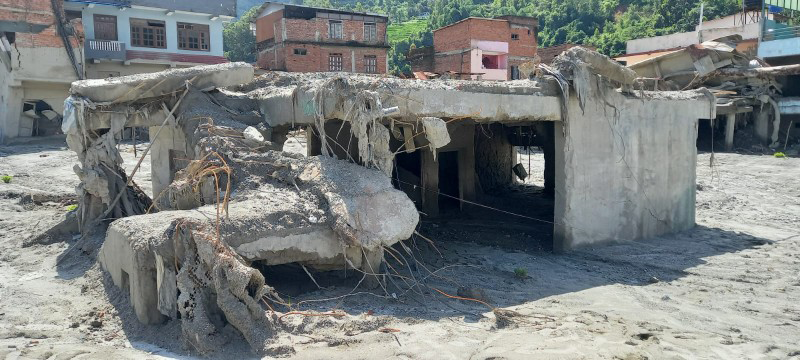
Along the Nepal-China border, a catastrophic glacier and bedrock collapse triggered a massive flash flood that swept away communities, roads, bridges and hydropower infrastructure. The disaster highlighted the growing humanitarian risks associated with glacial melt and climate-driven instability in the Himalayas. 

In Indonesia, a powerful 7.7 magnitude earthquake struck near Flores in August, killing about 100 people, damaging more than 73,000 homes and forcing approximately 180,000 people to evacuate. Survivors faced urgent needs for shelter, healthcare, food, water and psychosocial support. 

Meanwhile, severe flooding affected millions across the Philippines, where enhanced monsoon rains and multiple tropical cyclones impacted more than 8 million people. Entire communities were inundated, forcing thousands into evacuation centers and causing significant damage to homes and infrastructure. 

Elsewhere, heavy seasonal rains brought widespread flooding and landslides in Guatemala, while prolonged drought conditions deepened food insecurity across Central America’s Dry Corridor, affecting tens of thousands of farming households already struggling with crop losses and rising costs. 

Conflict Continues to Drive Humanitarian Needs

While climate-related disasters captured headlines, armed conflicts continued to create immense suffering.

In Ukraine, attacks on civilian areas and critical infrastructure resulted in hundreds of civilian deaths and thousands of injuries during August and September. Humanitarian priorities included shelter repairs, winterization efforts, healthcare, food assistance and support for displaced families as winter approached. 

The humanitarian situation in Gaza remained extremely precarious. Continued violence, displacement and restrictions on humanitarian operations left nearly one million displaced people living in areas vulnerable to flooding as the rainy season approached. Humanitarian agencies warned of significant gaps in shelter assistance and basic services. 

In Sudan, conflict between the Sudanese Armed Forces and the Rapid Support Forces continued to fuel one of the world’s largest humanitarian crises. Fighting, displacement, food shortages and restricted humanitarian access have heightened famine risks in several regions, while drought conditions further compounded the emergency. 

The Democratic Republic of the Congo also experienced escalating insecurity. Fighting among armed groups led to additional displacement, reports of violence against civilians and growing food insecurity as families lost access to farmland and livelihoods. 

In Haiti, expanding gang violence continued to force families from their homes, disrupt essential services and deepen an already severe humanitarian crisis. 

Climate Change and Humanitarian Crises Are Increasingly Interconnected

One of the most concerning trends emerging from the reporting period is the growing intersection between climate shocks and conflict. Countries such as Myanmar, Nigeria, Sudan and the Democratic Republic of the Congo faced overlapping crises where environmental hazards compounded existing vulnerabilities caused by violence, displacement and poverty. 

Looking ahead, humanitarian agencies are closely monitoring a strengthening El Niño event that the World Meteorological Organization warned could become exceptionally powerful. Forecasts suggest heightened risks of flooding in East Africa, drought across Southern Africa and Central America, and increased heat and wildfire threats in parts of Southeast Asia through early 2027. 

Responding to a Growing Humanitarian Challenge

As needs continue to rise, humanitarian organizations such as Lutheran Disaster Response are emphasizing both lifesaving assistance and long-term resilience. Priorities include emergency food assistance, shelter, water and sanitation services, healthcare, protection programming and psychosocial support. Investments in disaster preparedness, early-warning systems, livelihood recovery and community resilience are also essential to help vulnerable communities withstand future shocks. 

The humanitarian challenges witnessed between August and October 2026 serve as a reminder that today’s crises are increasingly interconnected. Climate change, conflict, displacement and economic instability are reinforcing one another, creating complex emergencies that require coordinated, sustained global action. Without increased humanitarian support and investment in resilience, millions of people around the world will continue to face deepening hardship in the months ahead. 

Supporting Communities Through Lutheran Disaster Response

In the face of these compounding emergencies, Lutheran Disaster Response continues to walk alongside communities as they respond to immediate needs and rebuild with dignity and hope. Through trusted international partners, LDR supports emergency relief, recovery, and long-term resilience efforts, addressing food security, shelter, livelihoods, psychosocial support, and disaster preparedness.

Supporting Lutheran Disaster Response enables timely, locally led responses that prioritize the most vulnerable and strengthen communities against future crises. As climate impacts intensify and conflicts persist, sustained solidarity and partnership are essential. Together, we can help ensure affected communities are not only supported in times of crisis, but also empowered to recover, rebuild, and thrive. Learn more about how to support the work of LDR here.
 

Mud on my Boots on Ash Wednesday

Cleaning the mud off my boots after a recent flood response, I noticed the grittiness of it.

It reminded me of preparing the ashes for Ash Wednesday. Burning last year’s celebratory palms, sieving them fine, mixing them with oil.

I see the impermanence of things, of even life itself, in the mud and ashes.

Ash Wednesday, a day when we acknowledge our mortality and our own return to dust.

Mucking out after a flood, removing what was once treasure that has now become trash.

Too often we overlook the physicality of the Christian faith in our anticipation of Heaven. We focus on the promise of our spiritual future, and, yes, that will be a wonderful thing. No more tears and reunions of all sorts. Wholeness that we can only wonder and dream about.

And yet, though we worship and celebrate God With Us, a peculiar God that took on the stuff of their own creation to be with their creation, we sometimes forget that there is more to the promise than “pie in the sky, by and by”.

The Kingdom of God is now, in the wine and bread, in the water and ashes, in our call to serve and love our neighbor.

The Kingdom of God is even found in flood mud.

No, really.

When we are more like Christ, do we become more human or less?

I believe we become more human, specifically, we become the humanity that God hoped we would be. Loving, caring, invested in one another’s well-being. Trusting in the abundance of God.

Watch what happens after a flood. Neighbors take each other in and make sure everyone is accounted for. Strangers show up to clean out houses, to offer hugs and listening hearts. Food is shared. Help is accepted and reciprocated. Communities mourn their losses as communities.

To quote a recent Welch, WV flood survivor: “We become human again.”

When we take on the ashes of Ash Wednesday or the mud from another flood, we become human again. We recognize our place in the Kingdom; we accept the invitation to participate in it.

Remember you are dust and to dust you shall return. Now, go out there and get muddy.


Reverend Deacon Mary Sanders and serves as a minister of word and service in West Virginia and western Maryland. Prior to seminary, she served as an environmental inspector for the West Virginia Department of Environmental Protection. Her sense of call is to serve the people and environment of Appalachia. She lives on her great grandma’s farm with two dogs and two cats and is surreptitiously planting a food forest around her cabin.


Rest and Forget: Syrian Refugee Crisis in Europe


By the end of December 2015, more than a million migrants and refugees crossed into Europe, according to the International Organization for Migration, with more than half coming from Syria. More than 3,500 refugees and migrants lost their lives in the Mediterranean Sea in 2015, reports say. The scale of the current refugee crisis in the Middle East and North Africa is unprecedented in recent times. The UN estimates more than 15.5 million people in those regions (Syrians, Afghanis, Iraqis, Palestinians, and others) have been displaced by violence.

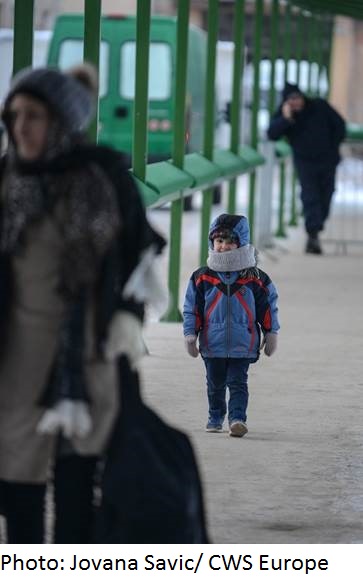
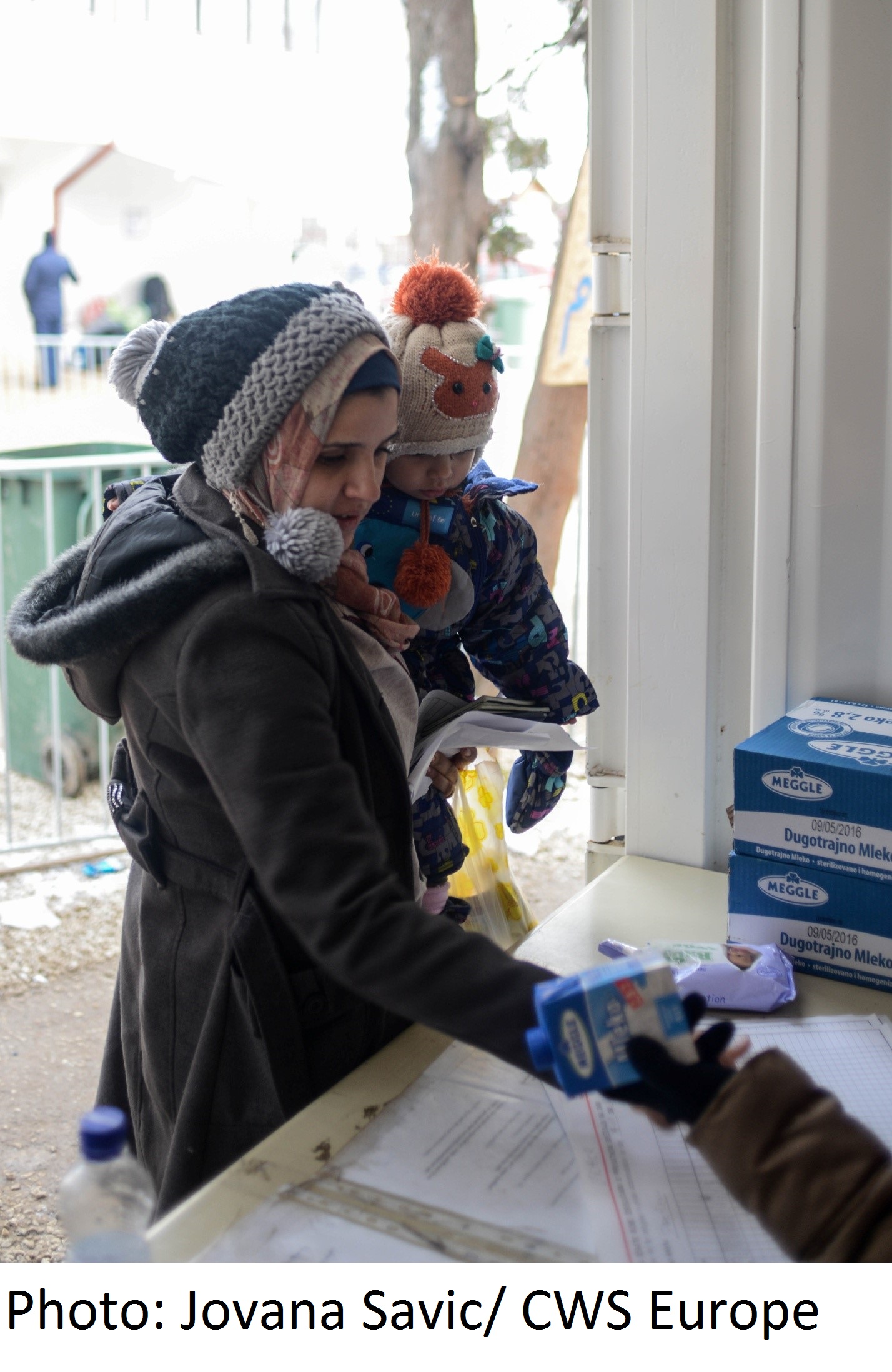
In an update from Jovana Savic, Church World Service-Europe Senior Program Manager, we learned that hundreds of thousands of refugees have passed through the registration center in Presevo, Serbia – the entry point for refugees passing through Serbia from Macedonia. Jovana said, “I have been organizing CWS’s response to the refugee crisis in Europe since September, and I have seen hundreds of families come through Presevo. Thousands of faces, each with a story to tell.”

She goes on to speak of three young women, Hala, Bothain, and Nadia, who have been traveling together. They are traveling to seek asylum in Germany. Jovana said, “I asked about their hopes, and their responses were both simple and human. They want the same things that have been taken from them and that we take for granted, including security, happiness, and a sense of normalcy. In the meantime, though, they just want to rest and forget the sounds of war that are all too familiar.”pic3 w credit

In Matthew 11:28 Jesus says, “Come to me, all you that are weary and are carrying heavy burdens, and I will give you rest.” The Lutheran Disaster response recognizes that, as part of the body of Christ, we must provide rest for those who are seeking. To date, the ELCA has received $834,000 for the Refugee Crisis. $50,000 was given to Church World Service in Serbia, partnering with the International Red Cross for food, sanitation items, and helping with emergency winter shelter.

With the help of ELCA members, in addition to Serbia, we’ve given $55,000 to Hungarian Interchurch Aid for immediate emergency needs; $50,000 to the Za’taari refugee camp in Jordan to help improve conditions; $60,000 to Lutheran World Federation for assistance to refugees in northern Iraq, and now an additional $70,000 to Lutheran World Federation for vulnerable women and children refugees, in Jordan, outside the camp for education and cash assistance.  We continue to explore ways to be involved in the crisis, including pending funding for efforts in East Central Europe and the Middle East.

Here is how you can be a part of the ELCA’s response:

Pray

Please pray for all those affected by the refugee crisis. Remember those who have lost everything and all those who are working to respond. You can use these prayers and resources in your worship services.

Give

Your gifts are needed now to help with immediate relief. Gifts designated for the Middle East and Europe Refugee Crisis will be used in full (100 percent) to assist those directly impacted and have fled for safety.

Connect

To learn more about this situation and other LDR response:

  • Sign up to receive Lutheran Disaster Response alerts.
  • Subscribe to the Lutheran Disaster Response blog.
  • Like our Facebook page.
For More Information

To learn more about Hala, Bothain, and Nadia story, Click Here.

Introduction from New Lutheran Disaster Response Program Interpreter

Greetings!

My name is Megan Brandsrud, and I am both excited and thankful to be the new Program Interpreter for Lutheran Disaster Response. As I begin my second week at the ELCA Churchwide office, I am grateful for all of the welcoming colleagues who continue to help me orient myself into this role.

Coincidentally, the flooding in Colorado occurred just before I started working in this role, so I had the opportunity to be a part of initial conversations and meetings between staff and affiliates in the impacted area. It was humbling and impressive to hear of the dedication and efforts being carried out by leaders in the areas affected by the flooding.

I look forward to sharing Lutheran Disaster Response’s powerful stories with you as we put God’s work into action and help those impacted overcome the effects of disaster.

Hurricane Sandy: Mark on the Caribbean

Greetings to All!

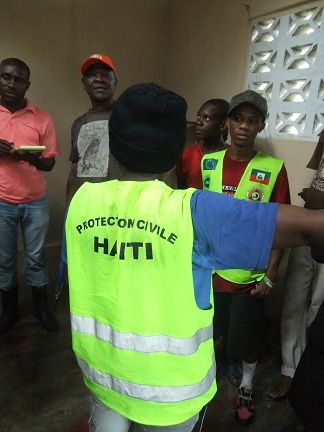
Last week the world was just hearing about Hurricane Sandy.  I was in Haiti visiting our companions and discussing work still underway from other large disasters from recent years. The rain was pouring from the time I touched down in the country early Tuesday until I left late Thursday.  Haiti typically gets stints of rain that last a few hours, but a few days?  In the context, a little bit of rain can go far and a lot of rain can destroy people’s livelihoods, health and well-being. 

FNGA, partner of the Lutheran World Federation, mobilizing their emergency team.

Upon my departure from Haiti, I began to hear stories of towns under water and people missing.  Now, four days after the storm has passed Haiti more accurate information on Sandy’s destruction is known.  Haiti has reported over 50 people dead and many more missing.  For Cuba that was more directly hit by the storm, Sandy is the second deadliest storm to hit the island nation in fifty years killing 11 people.  Elsewhere, Jamaica has confirmed one person dead and the Bahamas two. 

The ELCA has been gifted with relationships and networks of actors all around the world that can pull together in times of need.  As we work with our companions to respond to the needs of under-served families devastated by Hurricane Sandy in the Caribbean, we are also in thought of our communities in the US that are bracing for the impact of the storm. 

I encourage you to find time in your day to give thought in prayer to those who have already experienced loss and for those that will in the days to come.  Please also participate in the response either through your giving of time, prayer or resources.  Tomorrow we will be issuing an appeal with ways to give and more information about the response of your church, the ELCA.

Peace,

Megan Bradfield, Director for International Disaster Response

___________
Gifts to ELCA Disaster Response allow the church to respond domestically and internationally in times of need. Donate now.

Sudan: Sounding the Trumpet

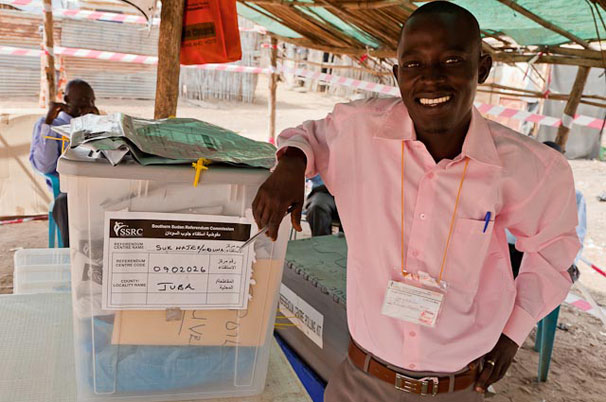
Sudan referendum comes to a close. ACT/DCA/Nils Cristensen

Voting in South Sudan concluded this past weekend, possibly marking the birth of Africa’s newest country.  An article published by the ACT Alliance accounts the story of Anglican Bishop Paul Yugusuk and his pledge to be last person to vote at his station.  “And once I have cast my vote, I’ll blow my trumpet to mark the end of slavery and oppression in southern Sudan.”

While the voting was overall very peaceful, painful memories were revived this week as 10 southerners were killed as they tried to move from the north, a low point in a referendum week otherwise dominated by hope and joy. The killings also reminded everyone that while the voting process appeared to have been successful, a very complicated, difficult and dangerous period still lay ahead for all of Sudan, regardless of the outcome.

Archbishop Paulino Lukudu Loro recounted how the church led southerners in 101 days of peace prayers up to the referendum – a prayer for a change in our hearts and a prayer for a change in Sudan, he said.

Pointing to a mock ballot box placed at the alter, the archbishop promised the congregation he would pray at the ballot box for continued peace every day until July 9, the day the six year-long peace agreement between north and south Sudan expires.

Click here to read the full article.

Please continue prayer petitions for peace and security for those in Sudan.  Click here for Worship Resources from the ELCA.

Peace ~ Megan