Skip to content
ELCA Blogs

Lutheran Disaster Response

World Water Day 2014

Megan Brandsrud

​​Lutheran Disaster Response has a long history of providing clean, unpolluted water for drinking, cooking and cleaning in areas that have experienced disaster. We have many water programs around the world, from places impacted by drought to refugee camps where potable water is scarce.  Below are two programs where your gifts helped provide clean water.

Uganda

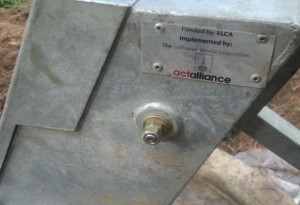
Working with The Lutheran World Federation (LWF), we have implemented a safe water project among Congolese refugees in Rwamwanja Settlement of the Kamwenge District in Uganda. Ten deep boreholes were drilled and installed in and around the settlement, and water source committees were formed to provide education about sanitation and to help maintain the boreholes.

borehole - Uganda

Providing additional water sources reduced the distance and time taken to access clean water, and they increased the level of safe water consumption in households. This meant that there was a decrease in the number of waterborne diseases and an improvement in overall health and diet. The reduced distance also meant that traveling to get water became safer for women and girls, who are often vulnerable to sexual and gender-based violence.

Some water points were provisioned near the camp’s host community, which also promoted a peaceful co-existence between the refugees and the host community members.

Kenya

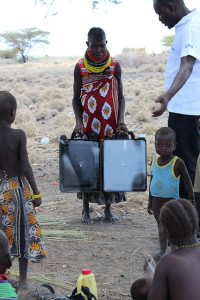
In partnership with TheLWF introducing solar water filter Lutheran World Federation, we have been a part of a pilot solar safe water system in Kakuma refugee camp in Kenya. The project aims to support environmental conservation through alternative energy and to reduce the number of waterborne diseases.
The device is specially designed to use heat, UV light and a built in filter to clean contaminated water. The system generates approximately 40-60 liters of safe water per household every day. This water has had a profound impact on the community. Children suffer from less illnesses and eye infections by having easy access to clean, warm water. Firewood use has decreased by 20 percent since water no longer has to be boiled to make it potable. People have also said that the easy access to safe water gives them more free time, which is now spent on income-generating activities, such as agriculture.

Water is a precious resource. The United Nations reports that 783 million people do not have access to clean water, and almost 2.5 billion people do not have access to adequate sanitation. Because of this, 6-8 million people die every year from water-related diseases. Potable water programs have a huge impact on communities. Thanks to your generosity, Lutheran Disaster Response is able to help implement clean water programs in areas that have been impacted by disaster. We continue to pray for those who thirst, and we will continue to walk with those who are dealing with the vast consequences of disasters.

The poor and needy search for water, but there is none; their tongues are parched with thirst. But I the Lord will answer them. – Isaiah 41:17


Pictured:

Above: Pump head of a drilled borehole. Below: Member of LWF introducing the solar water filter.

Central African Republic: Companion Church Distributes Food and Clothing

Megan Brandsrud

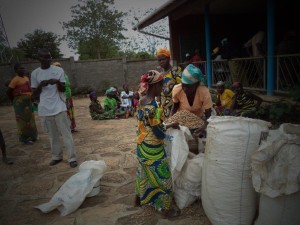
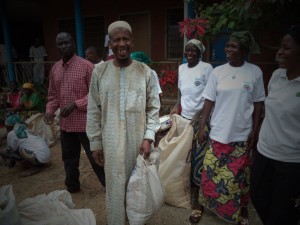
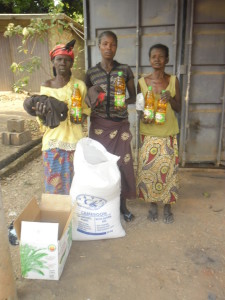
Beneficiaries of Food and Clothing Distribution in CAR

March 3, 2014

Violence and security continue to be concerns for our brothers and sisters in the Central African Republic (CAR). Of the country’s 4.6 million people, approximately 2.5 are in need of assistance, according to a recent report from the United Nations.

On Feb. 8 and 9, members of the Evangelical Lutheran Church of the Central African Republic (EELRCA) distributed rice, vegetable oil and clothing to 10,202 people impacted by violence in the country. With funds from Lutheran Disaster Response – International and Mission Afrika, a total of 50 tons of rice, 4,890 liters of vegetable oil and 41 packages of gently-used clothing were distributed from the EELRCA head office and the main mosque in the Haoussa neighborhood of Bouar.

The food distribution was a long process of purchasing the food, measuring out rations, and delivering the food under the risks of security and personal safety. However, the EELRCA is committed to serving and assisting people in CAR, despite the obstacles. Amidst the crisis, the church is still living and acting as the church as the Gospel continues to be proclaimed through word and deed.

After listening to the joys of the beneficiaries, Rev. André Golike of the EELRCA said, “When you live and share in people’s lives, you know them and understand what they need. Others give us soy, which is not something we eat very often. Our partner [the ELCA] gave us rice and clothing. This is what we eat. Many people have lost everything. Now they have clothes to wear.”

People of the region continue to show up at the church head office seeking assistance, as the church is looked to as a great source of support during this crisis. We will continue to pray for peace as we walk with our brothers and sisters in the Central African Republic and provide assistance to those who remain impacted by the on-going violence.

The EELRCA provided food and clothing to 10,202 individuals:

  • 2,984 children ages 0-5 years
  • 3,727 children ages 6-15 years
  • 3,491 adults

South Sudan: Providing Relief to People Displaced by Violence

Megan Brandsrud

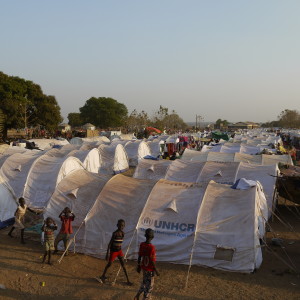
Dzaipi Reception Centre, Adjumani 22 January 2014. Photo by Mai Gad, DCA,LWF,ACT

Feb. 12, 2014

For several months, there has been tension within the South Sudanese ruling party, the Sudan People’s Liberation Movement (SPLM). When President Salva Kiir, an ethnic Dinka, dismissed his vice president, Riek Machar, an ethnic Nuer, tensions increased and evolved from a power struggle into an ethnic clash. In the evening of Dec. 15, 2013, heavy armed fighting broke out. There have been reports of mass killings and other human rights violations.


More than 868,000 South Sudanese have fled their homes since the violence started. While neighboring countries have opened their borders to receive refugees, resources are running thin. We are a church that is committed to peace and justice, and Lutheran Disaster Response – International has committed more than $700,000 to support those who have been affected by this crisis. Working through our local partners, we will respond in:


South Sudan

Working with Lutheran World Federation (LWF), we will be assisting 20,000 IDPs in Fangak and will begin to support IDPs in Benui. We will also continue to provide assistance to 90,000 refugees across five camps. Assistance includes distributing non-food items and providing protection.


Uganda

Uganda has accepted many South Sudanese refugees (85 percent being women and children), and the transit centers are full. The severe overcrowding means new arrivals must sleep outside, which leaves them unprotected and at risk of disease and dehydration. We are working with LWF to ramp up water, sanitation and hygiene services.


Kenya

South Sudanese refugees have been arriving daily at Kakuma camp since early January. Two-thirds of the arrivals are children, and 20 percent of them are unaccompanied and separated. We will work with LWF to provide child protection and education programs. LWF partners will also help expand the water system at Kakuma.


Ethiopia

Ethiopia has seen the largest surge in newly-arrived refugees. Through LWF, we will provide potable drinking water and improve sanitation facilities and hygiene services to refugees in Lietchor and Tongo refugee camps.


Chad:

Through LWF, we will be working with the World Food Program (WFP) to respond to the influx of people and distribute food to the newly arrived refugees and those sheltering in transit centers.


We are committed to walking with our brothers and sisters affected by this crisis, and we will continue to pray for peace. Your gifts will help us continue to care for the most vulnerable.

New Jersey: Lutheran Disaster Response Affiliate Hosts a “Hand in Hand” Sandy Service Day

Megan Brandsrud

HandinHandGarden

On Jan. 20, Martin Luther King, Jr.’s National Day of Service, Lutheran Social Ministries of New Jersey (LSMNJ) organized more than 50 volunteers who offered a helping hand to the many people in the area still dealing with impacts from Superstorm Sandy. Volunteers, ranging in age from 7 to 65 years old, hauled debris, prepared the community garden at the Visitation Relief Center in Brick, N.J., helped insulate pipes in a home impacted by the storm, tore out damaged flooring at an American Legion Hall, and assisted in several other projects.

Every month, LSMNJ Disaster Response organizes a “Hand in Hand” Sandy Service Day in coordination with area long-term recovery groups and other partnering recovery organizations.

Assistant Disaster Recovery Coordinator Alex Elefante is impressed by the selflessness of the volunteers that show up at the monthly events. “They amaze me each time,” Elefante says. “The positive impact they have on the lives of those still affected by Superstorm Sandy, even if for a little while, is tremendous.

The next “Hand in Hand” Sandy Service Day will be Feb. 15. To sign up or learn more about the volunteer event, visitwww.lsmnj.org.

Central African Republic – Running from Violence

Megan Brandsrud

​January 27, 2014

CAR refugee camp

Approximately 2.2 million people in the Central African Republic are in need of humanitarian assistance due to insecurity and intense violence occurring in the country. The United Nations estimates that 935,000 of these people have been forced from their homes due to the severity of fighting in their area. Some of these people have found refuge in various locations, such as churches, and some of these people are living in the bush, running from fighting groups as they attack nearby villages.


For Fredd and his family, the violence in their area started on a late Friday morning. As the violence continued that night, he and his family decided to move into the bush away from the village to spend the night in a friend’s field about 10 kilometers away. As they traveled, they came across several other people who were also fleeing.


“A Muslim man came and told us that someone had informed the Seleka that all those who lived on the east side of the village were Christian and those to the west were Muslim, so the Seleka were planning to move into the east and search for people even in the bush,” Fredd says. “We decided to walk under the cover of darkness through the bush to the west side of town.”


Fredd and his family continued to walk to the next village since they could hear heavy gunfire from behind them. Within the group, there were several children, including three babies all under five months old. “The older children, including my eight-year-old daughter, all walked, while we carried the smaller ones,” Fredd says.


After walking through the next day and night, they decided to stop for a half hour to rest. Fredd’s wife then caught a high fever and she couldn’t walk. “We wrapped her in thick cloth, but she was still trembling very hard and complaining of cold,” Fredd says. “We knew she had malaria.”


Fredd started to worry about what would happen to his wife if she died. Would he be able to bury her, or would he have to leave her body behind and follow the rest of the group? The group made a small fire and put her feet by it and prayed. After a couple of hours, Fredd’s wife felt better and she could walk again.


“This was a miracle for me,” Fredd says. “She had been treated with prayer and a small fire. We walked for 12 days and finally made it to the clinic. Had it not been for the Muslim man, I believe this story would be different. I might not be telling this story.”


The Seleka rebel group is a largely Muslim alliance that seized the capital in March 2013. The group is now referred to as ex-Seleka rebels because the alliance has officially, but not actively nor effectively, disbanded. A mostly-Christian alliance, known as the anti-Balaka, formed in response to the Seleka rebel group and has also played a large role in attacks in the country. While both of these groups tend to be labeled by their religious affiliation, the fighting in the Central African Republic is not bound by the lines of religious war. The conflict in the country is a result of political power and economic grievances. Fredd’s story illustrates the understanding that peace cannot be achieved alone—an inter-faith response is needed.


Lutheran Disaster Response – International is working with Lutheran World Federation and our companion church, the Evangelical Lutheran Church of the Central African Republic (EELRCA), to provide food assistance to IDPs in the CAR. We are also working with our companion church to play a role in peace-building and reconciliation between Muslim and Christian communities in the country.


Your gifts allow us to continue to address the needs of the most vulnerable and walk with our brothers and sisters toward peace.

Upstate New York Flooding- Lutheran Congregations Unite to Repair Church

Megan Brandsrud

kitchen floor removal - POP volunteers

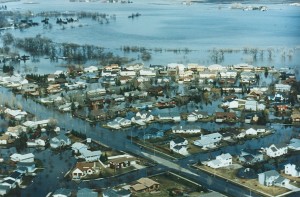
In June 2013, central New York was impacted by flooding. Trinity Lutheran Church, an ELCA congregation in Herkimer County, suffered severe damage. Through the efforts of Patsy Glista, the Lutheran Disaster Response Coordinator for Upstate New York, and several congregations from the Central Crossroads Conference of Upstate NY Synod, work has been well underway to clean out damage in Trinity and rebuild. Lutheran Disaster Response – U.S. invested in the recovery of this area by giving $25,000 for flood relief efforts.

Below, Pastor Ann Zimmerman shares updates on work being done at Trinity Lutheran Church and the story of other Lutheran congregations helping Trinity rebuild. Whenever Lutherans come together to respond in times of need, Lutheran Disaster Response is in action in its purest form.

“As I reflect on this last year, it has been challenging to say the least. Our village community of Herkimer was affected by localized creek flooding in June 2013. Never before had flood waters come down German St and engulf the church like an island. The water seeped into the foundation and an underground spring that was dormant for decades bubbled water for three weeks after the flooding ended. Our three Faith Formation rooms, nursery, fellowship hall, storage areas and kitchen were heavily damaged.

We knew that this would take some time to recover and rebuild. Calls were quickly made to Patsy Glista, Lutheran Disaster Response Coordinator for Upstate New York Synod and Jeff Spann, ELCA Building Consultant for their advice. Their prompt response started us on the road to recovery. Even though we never had standing water from prior heavy rains, we noted that there was water seeping behind the walls, causing mold and mildew in all of the ground level rooms. The sheetrock on all of the walls had to be cut up four feet on interior walls and six feet on exterior walls. The kitchen was gutted and appliances removed. The wooden flooring in the kitchen was removed, as well as the carpet in the fellowship hall. Next came the planning, visioning and rebuilding phase so Trinity could move “Forward in Faith.”

Initial cost estimates were more than $100,000, and our congregation, with a very small endowment fund and just meeting the mission needs of the budget, knew that this could be a time of trial and tribulation. Praise God from whom all blessings flow… just as the Good News of the Gospel is spread person to person, so was word of our flood issues. Other Lutheran and ecumenical congregations sent funds totaling more than $11,000. Our own congregation held a quick building fund match and raised more than $10,000 in two months. Donations from individuals who heard of our plight gave more than $8,000 from their abundance, and we received three grants totaling almost $5,000. We are well on our way to recovery.

God’s Work, Our Hands has a new meaning, as so many folks have rallied to help us in our time of need. Work teams from Lutheran churches in Clay, Liverpool, Syracuse, Utica and Clifton Park have come through our doors and many folks more than once. We still have a way to go, but we know that God is with us. We give thanks and are grateful to so many folks who share from the blessings God has given them.  When you pass through the waters, I will be with you; and through the rivers, they shall not overwhelm you.  (Isaiah 43:2)  Thanks be to God!”


Rev. Ann Zimmerman

Trinity Lutheran Church