Skip to content
ELCA Blogs

Lutheran Disaster Response

Helping Our Neighbors in Denny Terrace

Martin Luther Quick, TEEM Candidate and Mission Developer of Impact, Northeast Columbia

​This is an article reprinted from the South Carolina Synod website.

Over 5.6 trillion gallons of water fell on South Carolina. They called it the 1000 year storm. My family was blessed because our home was unscathed. Our family members were safe but I yearned to help my fellow neighbors.

We went to check on a church in Denny Terrace and were hit by detour after detour because of washed away roads and breached dams. On our journey down the back roads of North Columbia, we saw remnants of the storm everywhere. Trees strewn all over the roads, debris in the yards and abandoned cars with large orange X’s were all along our path. We saw community members helping each other remove memories from their waterlogged homes. Then, we spotted the man along Crane Creek Road lying in a ditch. He explained that since there was no bus and he had no car, he had to walk, he had fallen into the ditch and may have remained there if we had not passed by. What are the chances that 3 Ministers would be in the car? God was certainly in the midst.

The further we drove, the more we realized the tremendous need in the area. We loaded up the truck and starteddelivering water throughout the community. Who knew that the same water that we drank so freely the week before would be such a commodity. We delivered more than 200 cases of water. While in the community, the one on one conversations revealed the tremendous need that still exist. Houses had been completely covered in water and businesses completely destroyed.
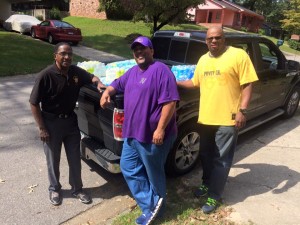
ginny-flood-6-300x225

We opened the doors of Christ Mission, a synodically authorized worshiping community, and began accepting donations and distributing the items to the community. While helping the residents with the FEMA applications, we began hearing the stories of the residents who had to be rescued from their attic, picked up by boat, and swam to safety. We helped an elderly man who owned his home and 2 mobile homes, when that was complete he brought his tenant who was deaf and could not speak. 2 hours later, we had his application completed but realized that there were so many services that were needed in the community that were not being provided.

As a mission developer, my favorite scripture is Acts 2:44-47 “All who believed were together and had all things in common; they would sell their possessions and goods and distribute the proceeds to all, as any had need. Day by day, as they spent much time together in the temple, they broke bread at home and ate their food with glad and generous hearts, praising God and having the goodwill of all the people. And day by day the Lord added to their number those who were being saved.” As long as there is a need in the community, the church will be present in the community re-presenting Christ.

Find out more about how you can help here.

There are many more heartwarming stories of how members of the South Carolina Synod accompany survivors of the South Carolina flooding through their congregations and the synod, go to the South Carolina Synod website.

Also visit the Lutheran Disaster Response website and Facebook page for more information.
Nepal Earthquake: More than $1.9 million given for response

Megan Brandsrud

​Thanks to your generosity, Lutheran Disaster Response has collected more than $1.9 million to respond directly to the Nepal Area Earthquakes. Together, we were able to provide $527,700 to respond to the immediate needs of the people and communities affected, and we will continue to walk with our brothers and sisters in Nepal to rebuild lives and livelihoods as long-term response projects get underway.

We continue to work with our trusted partners, The Lutheran World Federation, Lutheran World Relief and United Mission to Nepal, to respond and provide assistance in the affected areas. Immediate response efforts have been in action since the day after the earthquake and many emergency distributions have been completed.

The Lutheran World Federation

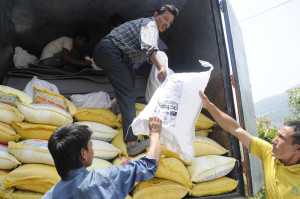
Working with The Lutheran World Federation, we have distributed shelter repair materials, ready-to-eat food, blankets and hygiene kits to more than 21,000 households in 27 towns and villages in Nepal. Next phases of response are being rolled out, which includes distributing corrugated iron sheets in addition to tarps for families to use for shelter repair against the heavy monsoon rains.

While recovery of physical property is important for the safety of families who were affected by the earthquakes, care for the all-around well-being of those impacted is something that cannot be overlooked. With The Lutheran World Federation, we will provide community-based psychosocial support that will reach approximately 14,000 people. Working with community leaders, community-based psychosocial support will help people build their strength and build resilience in their villages, which will help improve their coping mechanisms.  These community-led groups will be able to serve as sustainable structures that will continue to help improve life for people who face hard times as recovery from the disaster moves into the future.

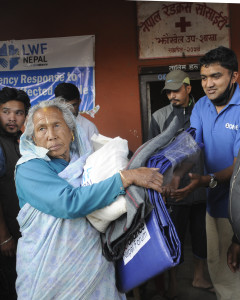
LWF_RMD_Bhirkot_Dolakha-04

Lutheran World Federation (LWF) delivers relief supplies in Bhirkot Dolakha area, Nepal


Volunteer distributes relief materials to earthquake victim at Jhaukhel in Bhaktapur. Photo: Dipesh Shrestha/LWF

Volunteer distributes relief materials to earthquake victim at Jhaukhel in Bhaktapur.
Photo: Dipesh Shrestha/LWF

Lutheran World Federation (LWF) workers distribute relief materials in Bhirkot Dolakha area, Nepal

Lutheran World Relief

Together with Lutheran World Relief, we have provided temporary shelter and emergency food assistance to nearly 30,700 individuals. Nearly 10,000 quilts, 1,000 personal care kits and 100 water filtration units have also been distributed. As we move into the next phase of recovery, soybean seeds are being distributed to families who rely on agricultural livelihoods to help support the livelihood recovery and food security after the monsoon season passes. In addition, a cash-for-work program focusing on repairing roads throughout the rural areas is being implemented. The program will not only provide families with much needed cash but will also help improve road conditions in the region.

United Mission to Nepal

Working with United Mission to Nepal, all planned distributions of emergency food, kitchen utensils, tarps and blankets in Dahding district of Nepal have been completed. Community-based health trainings have also taken place in three Village Development Committees in Dhading.

Moving to long-term response, we are working with United Mission to Nepal to support 90 families that are members of a savings and credit cooperative that started in 1999. The ELCA has supported this co-op over a number of years. As part of the earthquake response, we will work to assist families in the co-op by:

  • Distributing hygiene kits
  • Distributing kitchenware and utensils lost in the quake
  • Providing for psycho-social counselling
  • Helping create income-generating activities
  • Providing financial support for home rebuilding and repair

We will also work with United Mission to Nepal to help with repairs and rebuilding projects for Elim Kids Academy, a Christian school that the ELCA helps support by providing for scholarships and teacher training programs.

As we transition from immediate relief to long-term response, we will continue to keep you updated as we work with our partners in the regions to assist those who were affected by the earthquakes to recover and rebuild. Please continue to hold the people of Nepal in your prayers as they continue on this journey of disaster recovery.

Please support the Nepal Earthquake Response by visiting the Lutheran Disaster Response giving page.

Ohio: Responding to spring and summer flooding

Megan Brandsrud

​Ohio experienced 20 consecutive days of rain and 3 major storms that produced flash flooding during those 20 days this spring and early summer. On May 29, heavy rainstorms hit Ohio that caused flooding in 6 counties. On June 14, another series of storms swept across Ohio, causing flood damage in 3 different counties. 17 homes were left totally inaccessible due to damage of private bridges. In total, 365 homes were destroyed or suffered major damage, and 1,598 homes experienced minor damage.

Local long-term recovery groups have been meeting to make plans for recovery efforts, and our affiliate in the area, Lutheran Social Services of Central Ohio, has been a part of these meetings. Working with our affiliate, Lutheran Disaster Response is providing for three case managers to help families who were affected by the severe weather navigate their way through the recovery process. There are many components to managing one’s recovery from disaster, and processes can be overwhelming and confusing. Case managers help people with some of these processes, such as filing insurance claims and helping arrange for unmet needs.


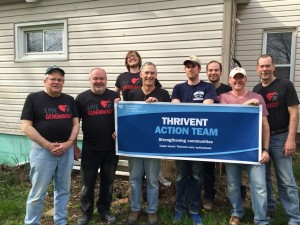
MaryB 185

Ohio’s Lutheran Disaster Response volunteers rebuild a survivor’s house with their Thrivent Action Dollars

The three case managers that will be working with our affiliate will provide assistance to approximately 365-400 families over the course of 6-12 months.

When disasters occur in the U.S., Lutheran Disaster Response works with a network of social ministry organization affiliates that are located around the country. Because Lutheran Disaster Response believes that every disaster is local and every response should be rooted in the community, our affiliates help Lutheran Disaster Response to respond on a local level as they are based in communities around the U.S. where our disaster responses occur.

We will continue to work with our trusted affiliate in the area and will keep you updated on new response developments. Please hold the people in Ohio who were affected by the severe weather in your prayers as they navigate their way through recovery to post-disaster renewal.

Please support the disaster response work in Ohio by visiting the Lutheran Disaster Response giving page.

10 years after Hurricane Katrina

Megan Brandsrud

​On August 29, 2005, Hurricane Katrina slammed into the Gulf Coast of the United States. Damage and destruction sprawled from Florida’s panhandle to western Louisiana. 1,833 people died and many more were injured. With approximately 90,000-square miles of federally-declared disaster areas and one million homes and building destroyed, Hurricane Katrina is in the books as the most destructive and costliest disaster in U.S. history.

Lutherans around the world watched as news reports displayed images of the destruction and aired interviews with people who had lost so much due to the storm, and they turned to their church to respond. Immediately after Katrina hit, people started offering to volunteer in the affected areas and giving to Lutheran Disaster Response. More than $27 million was given to Lutheran Disaster Response to directly assist families that had been affected by Hurricane Katrina.

Lutheran Disaster Response started recovery efforts by working with its social ministry organization affiliates that were located in the affected area or had networks in the area. Lutheran Disaster Response also became involved with Katrina Aid Today (KAT) National Consortium, a coalition of secular and faith-based organizations that helped provide disaster case management, which provided $8 million to Lutheran Disaster Response for case management. In the end, Lutheran Disaster Response was able to provide case management to 11,000 households with the support from KAT.

A major component of our Hurricane Katrina response was volunteer coordination. With an unprecedented number of people who wanted to volunteer, local congregations in the affected areas started serving as volunteer hosting centers or setting up volunteer camps that would end up running for years after Katrina hit as volunteers continued to pour in from around the country. One example is Christus Victor Lutheran Church in Ocean Springs, Miss., that started Camp Victor, a volunteer camp that housed 50,000 volunteers from all 50 states and 20 countries. In total, these volunteers provided 1 million service hours as they helped to gut, repair and rebuild more than 2,000 homes.

In addition, “What a Relief!” formed as an alternative Spring Break volunteer program with Lutheran Disaster Response. During the program’s first year, more than 800 college and university students from 34 U.S schools participated in Spring Break service projects in the areas affected by Hurricane Katrina. For the next four years, Lutheran Disaster Response continued to coordinate more than 50,000 volunteers through “What a Relief!” as it expanded beyond the alternative Spring Break program.

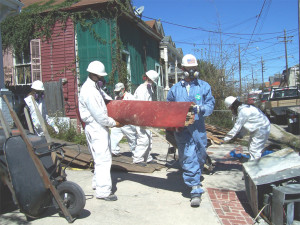
katrina blog post

Students from Valparaiso University help clean out a house damaged by Hurricane Katrina as part of the What a Relief! alternative spring break program.

Throughout the Hurricane Katrina response, special attention was paid to providing emotional and spiritual care for those who were affected by Katrina.

Hurricane Katrina is Lutheran Disaster Response’s largest disaster response to date, and it helped shape the way Lutheran Disaster Response does its work, in addition to connecting people from around the country together to do disaster work with their church.

Follow Lutheran Disaster Response on Facebook for more Hurricane Katrina anniversary information this week.

Devastating floods in Arauca, Colombia

Megan Brandsrud

​The 2015 rainy season took its toll on Colombia. Heavy rains caused rivers to overflow in the Arauca Department of Colombia in late May. Approximately 30,000 people were affected. Houses, schools and health clinics, which were also being used as evacuation shelters, were flooded, leaving communities without shelter.

The flooding wiped out most of the crops and livestock pastures, which devastated the rural areas where most families depend on small-scale farming and livestock farming for livelihoods. The effects of the floods on farming also produced food insecurity situations that mostly affected women, children and elderly people who have a hard time traveling outside of their communities. Municipal water structures, as well as household and community wells were also damaged or destroyed by the severe weather.

Lutheran Disaster Response has committed $80,000 and is working with The Lutheran World Federation to respond to the humanitarian needs of the people who were affected by the flooding in Colombia. With The Lutheran World Federation, we have been distributing food vouchers to 2,730 families. In addition, water filters, buckets and tank cleaning kits will be distributed to 934 families. Approximately 860 families will receive vouchers for non-food items that can be used to purchase items such as mosquito nets, mattresses, kitchen utensils and household repair kits. Providing vouchers gives families the chance to decide what items they acquire based on their own individual needs.

Please remember in your prayers the people who have been affected by this flooding and who not only have lost their homes but also their livelihoods. Lutheran Disaster Response will continue to work with our partners to help those who were affected rebuild and recover.

Please consider supporting the response in Colombia by visiting the Lutheran Disaster Response giving page.

Lutheran Disaster Response at the 2015 ELCA Youth Gathering

Megan Brandsrud

​During July 14 – 19, the Lutheran Disaster Response team and several dedicated volunteers were in Detroit for the 2015 ELCA Youth Gathering. Lutheran Disaster Response had the great opportunity to have an activity space in the Interactive Center as part of the Proclaim Community Youth Gathering event.

Lutheran Disaster Response’s activity space was titled “Hope for the Refugee,” and the interactive activity gave participants a chance to have a simulation experience of the journey that refugees face. Participants were grouped into “family” units and assigned family roles that they portrayed throughout the activity. Stations included discussing and determining what materials families might need with them to make the journey to a refugee camp, learning about challenges encountered along the journey and how to adapt, and learning about the hope found at refugee camps and what Lutheran Disaster Response does to support refugees around the world.

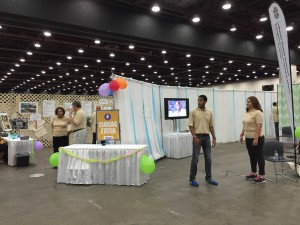
LDR booth

The entrance to the “Hope for the Refugee” activity space at the 2015  ELCA Youth Gathering

Approximately 1,200 youth participants and adult leaders visited the “Hope for the Refugee” activity space and learned more about the work of Lutheran Disaster Response.

Lutheran Disaster Response also worked with Campus Ministries and Habitat for Humanity at the Youth Gathering  to build house frames for Habitat for Humanity homes in Detroit.

LDR build

A message written by a 2015 ELCA Youth Gathering Participant on a house frame built for a Habitat for Humanity home in Detroit.

More photos of participants at the “Hope for the Refugee” activity space and of the dedication of the house frames can be found on the Lutheran Disaster Response Facebook page.

We were blessed to have the opportunity to be a part of the 2015 ELCA Youth Gathering and to meet and interact with so many wonderful youth from around the country!