Skip to content
ELCA Blogs

Lutheran Disaster Response

Florida & Caribbean: Tropical Storm Isaac

Path of Tropical Storm Isaac. Click to see full image.

————–
Yesterday afternoon Tropical Storm Isaac swept through Haiti’s southern peninsula, bringing with it heavy rains (over a foot in some areas) and hundred-plus mile per hour winds. It wreaked havoc on the nation as it still works to recover from the massive earthquake of 2010. The storm is also threatening to bring the same level of rain and wind to Cuba and southern Florida.

ELCA Disaster Response has been in contact with our companions in Haiti as they assess the situation and possible needs and responses. In Florida we have also been in contact with our Lutheran Disaster Response affiliates as they work to prepare for potential damages.

Please keep all those affected by this new tropical storm in prayer as they work to perpare and respond. As we learn more about the situation and possible responses we will keep you informed.

If you would like to support the response to these disasters, or those like them, you can donate to either Haiti Relief or U.S. Hurricanes. These gifts help us to respond immediately and effectively when disasters strike domestically and internationally.
Haiti: Groundbreaking at Gressier Model Village & ELCA Cholera Work

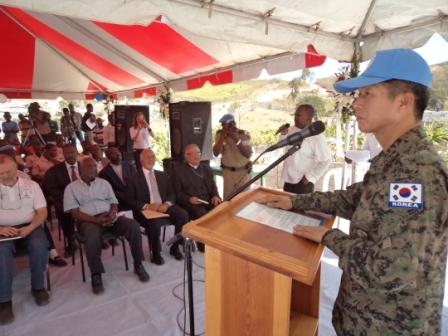
Colonel Hong Woo Lee, ROKENGCOY Engineering Unit of MINUSTAH, speaking at groundbreaking. MINUSTAH is the UN's stabilization mission to Haiti and helped build the roads and prepare the land for the Gressier Model Village. Credit: LWF-DWS/Haiti

Last Thursday a fairly momentous occasion happened in Haiti. A new project, that has involved many months of conversation, negotiation, community input and planning came together with the groundbreaking for the Gressier Model Village. This village of 200 housing units and community space will provide some of the hardest hit families of the 2010 earthquake with a new home and a new start.

Built with community involvement and depending on community management once up and running, it empowers residents to have an active role in building and owning their future. Built with green technologies, it is finding better ways to integrate people with their environment. Built to be earthquake resistant the building practices, it brings a focus on disaster risk reduction. Built in conversation with the national government, local and international non-governmental organizations, it has support and a common understanding from all concerned parties.

And these are just a few of the amazing benefits why the ELCA has committed $3.5 million dollars to the project and has played a leading role in its creation. As the work in Haiti continues to transition from short-term relief to long-term development, it is projects like this that are leading the way. Makes one proud to say this is our church at work and puts a tangible ring to the phrase “God’s work. Our hands.”

To read more about this project, as well as the amazing work to stave off a cholera epidemic being doing by the ELCA and our partners in Haiti, check out the ELCA news release: Lutherans break ground for a new resettlement village in Haiti.

Haiti: From Old Sugar Factory to A Center of Hope

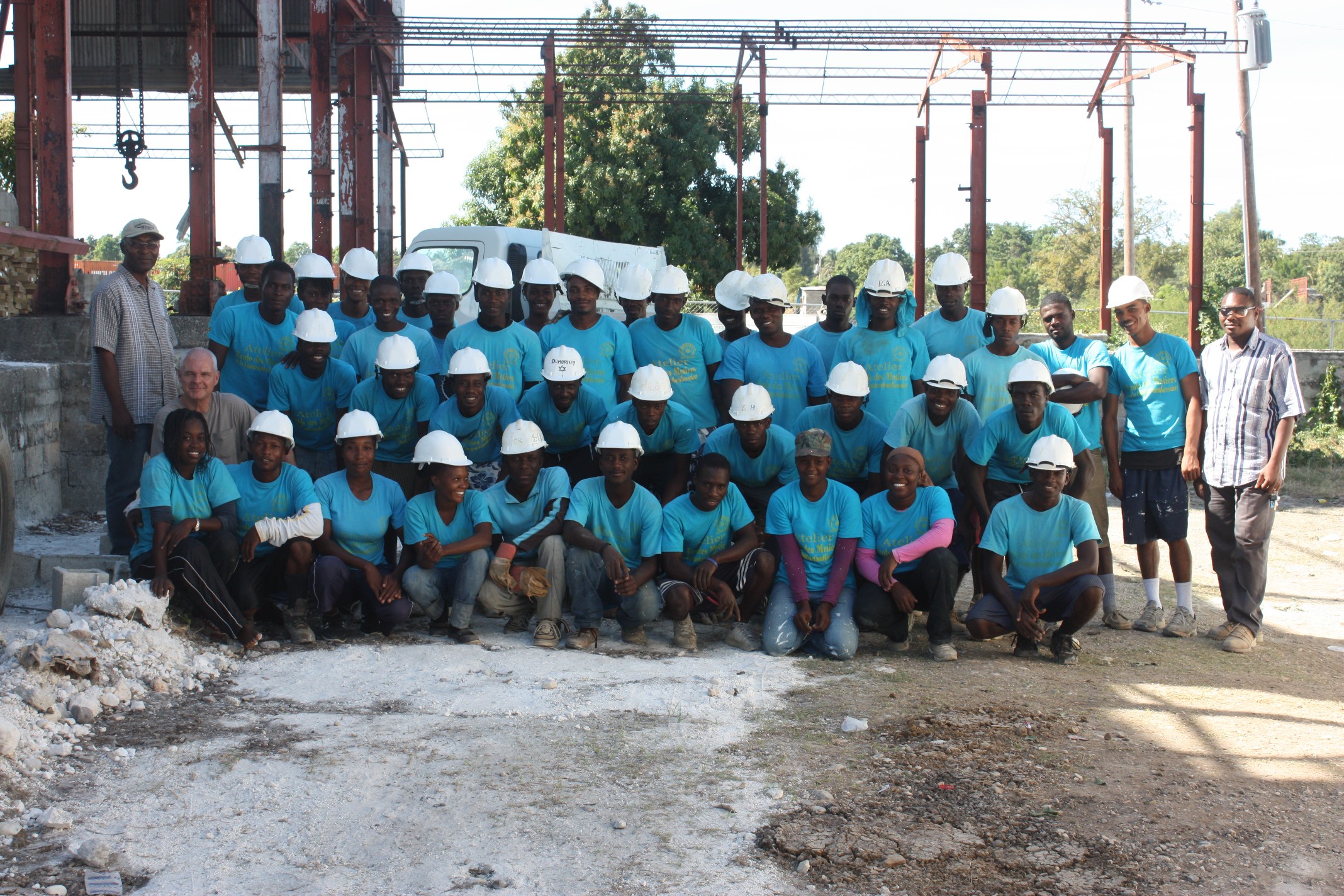
First class of the new vocational center in Gressier. Credit: ELCH

Last February ELCA Presiding Bishop Mark Hanson visited Haiti and was escorted by the president of the Lutheran Church of Haiti, Pastor Joseph Livenson Lauvanus. As part of that trip Pastor Livenson walked Bishop Hanson up to an old building outside of Gressier, just west of Port-au-Prince. Pastor Livenson asked the bishop what he saw, to which he replied, “An old sugar factory.” Pastor Livenson replied that what he saw was:

A place of hope for my community. I see a community center where my brothers and sisters are learning.

(more…)

Haiti: 2-Years Later, Looking Back to Look Forward

Two years ago today the largest earthquake in over two hundred years struck Haiti. Mixed with the already impoverished conditions of the country, the powerful quake left 220,00 dead (including ELCA seminarian Ben Larson), 300,000+ injured and 1.5 million homeless. The immediate response was overwhelming in size and scope as relief agencies around the world began to respond and people began to give. In the ELCA alone more than 13 million was given through ELCA Disaster Response.

Yet, as the full extent of devastation became known, people realized that much more was at play here than the aftereffects of a major disaster. Part of the issue was that relief work is focused on bringing people back to normalcy as they put their lives back in order after a tragedy. In Haiti the “normalcy” prior to the earthquake was over 70% of the country living on less than $2/day, 86% of the people in the capital Port-au-Prince living in slums where half of the city had no access to latrines and only one-third had access to clean water. As people began relief (short-term) efforts they quickly realized their actions could also contribute to development (long-term) opportunities in the country.

Haiti relief efforts has become a watershed moment in how we understand disaster relief and international development as part of a holistic response. As we look back today in somber remembrance of those lost and the lives impacted by this tragedy, I believe it a fitting tribute to see what we have learned about creating better capacity to mitigate the effects of disasters and learning how to connect this work with longer-range development.
(more…)

Colombia: LWF Update on Floods and Conflict

Colombia has had more than its fair share of rain this year. This has also been a region-wide issue with Colombia’s neighbors to the north in Central America (Nicaragua, El Salvador and Guatemala) and southern Mexico, also being it by over 10 days of heavy rain in October. This led to widespread flooding and mudslides. One of the major effects was that much of the year-end harvest and seedlings for next year’s planting were destroyed.

A Lutheran World Federation (LWF) blog posts about Colombia gives an update on how the initial emergency relief work has finished up there. The response was made more difficult because of the armed conflict that has been ongoing for 20 years between guerrillas, paramilitaries and the army in the Choco district of the country. This means that for many in the region it is not safe to venture far from their village. This in a district that is home to some of the hardest hit and poorest people in the country.

To help meet the need the LWF was part of an immediate relief effort to deliver 200 food kits to the hardest hit families in the region. They also helped distribute seeds for subsistence crops to help restore food security. This is particularly important for the indigenous populations subsist off of exchanging food.

You can find the full post here: Food, seeds and hope in the ACT Colombia flood response

Also, check out the ACT Alliance overpage Colombia: Conflicts and Floods to see pictures and a video of situation.

To learn more about the ELCA response in Central America see the ELCA Disaster webpage Central America Flooding.

————-
Gifts to ELCA International Disaster Response allow the church to respond globally in times of need. Donate now.

Central America Floods: It’s Not the Rain, But the Type of Rain

The following report from the LWF (Lutheran World Federation) gives an update of the situation following the deluge that has been hitting Centeral America since early this month. The issue is not just that it has been raining consistently but that the rains have been extremely intense. This has caused massive flooding and mudslides throughout the region that have led hundreds of thousands to be displaced and over 100 fatalities.

Please remember the people of the region in their time of need.

LWF post: LWF and ACT Take Action as UN Office Says 150,000 Affected in Salvador

ELCA Disaster Page: Central America Flooding

————-
Gifts to ELCA International Disaster Response allow the church to respond globally in times of need. Donate now.