
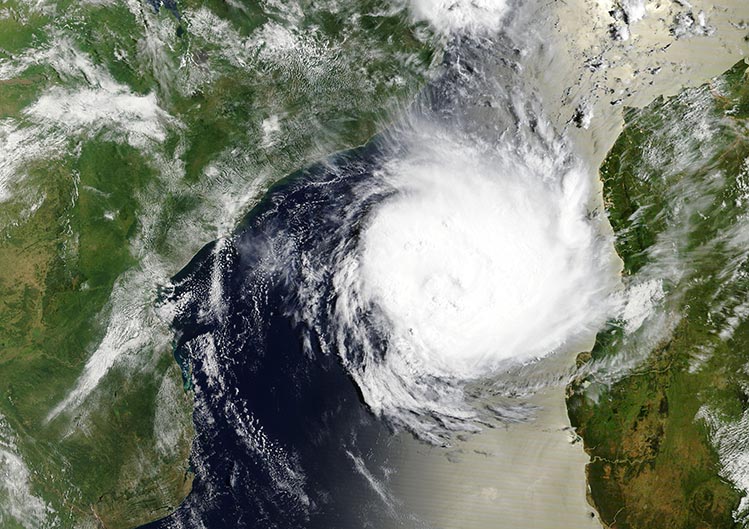
Tropical Cyclone Gezani | Image credit MODIS Land Rapid Response Team, NASA GSFC
February and March 2026 were marked by a series of devastating climate-induced disasters and escalating conflicts across the globe. Together, these crises have profoundly impacted lives, livelihoods, health, housing, and the environment—placing millions of people in urgent need of humanitarian assistance. During this period alone, national and international agencies reported seven medium and large-scale weather and climate-related disasters, highlighting the growing intensity and frequency of such events.
Major Climate and Natural Disasters
- Brazil – Floods and Landslides: In late February, relentless rainfall triggered catastrophic flooding and landslides in Minas Gerais, particularly in Juiz de Fora. More than 70 lives were lost, and nearly 10,000 people were displaced, leaving communities devastated and in need of urgent relief.
- Madagascar – Tropical Cyclone Gezani (Early February): Cyclone Gezani struck Madagascar with destructive force, claiming over 30 lives and displacing thousands. It was the second major cyclone to hit the country within just two weeks, compounding vulnerability and damage.
- Southern Africa – Regional Flooding: Persistent heavy rains worsened flooding across Mozambique, Malawi, Zimbabwe, and South Africa. The widespread inundation caused severe damage to infrastructure, agriculture, and homes, deepening regional humanitarian needs.
- Colombia – Widespread Floods: Continuous rainfall from early February led to flooding across 17 municipalities, damaging more than 12,000 homes and disrupting thousands of lives.
- Kenya – Floods (March): Beginning March 6, intense rains triggered deadly flooding across parts of Kenya, resulting in more than 70 reported deaths and widespread displacement.
- India – Tornado and Floods (March 15): A powerful tornado struck Odisha’s Mayurbhanj district, killing two people and injuring dozens. The disaster was followed by extensive flooding, further exacerbating local hardship.
- Philippines – Canlaon Volcano Eruption (Mid-March): A moderate eruption of Canlaon Volcano sent a 5-kilometer ash plume into the sky, affecting at least 54 villages with ashfall and disrupting daily life.
Escalating Conflicts and Humanitarian Crises
Alongside natural disasters, ongoing conflicts continue to force millions from their homes and deepen global instability. In Ukraine and Gaza, displacement remains widespread as civilians continue to flee in search of safety. Meanwhile, intensifying conflict in Iran and other parts of the Middle East is claiming thousands of lives and rendering vast areas uninhabitable. These conflicts are not only humanitarian tragedies but are also straining the global economy and worsening living conditions far beyond the immediate regions. Fear, uncertainty, and psychological stress have become part of daily life for affected populations.
According to recent reports from UN and UN-supported platforms:
- Lebanon: Over 1.2 million people—nearly one-fifth of the population—have been displaced.
- Somalia: Rising fuel costs and supply disruptions linked to Middle East conflict threaten to worsen conditions for children already suffering from prolonged drought.
- Afghanistan: Nearly two-thirds of families affected by severe drought report increased child labour, while only about one in five children is attending school.
- Yemen: An estimated 18.3 million people are facing acute food insecurity, highlighting one of the world’s most severe humanitarian crises.
A Growing Global Emergency
These overlapping crises—climate disasters and armed conflicts—are placing unprecedented strain on vulnerable communities and humanitarian systems worldwide. The scale and complexity of needs underscore the urgency for coordinated global action, sustained funding, and long-term resilience-building efforts.
Without immediate and collective response, the gap between humanitarian needs and available support will continue to widen, leaving millions at risk.
Supporting Communities Through Lutheran Disaster Response
In the face of these compounding emergencies, Lutheran Disaster Response (LDR) continues to walk alongside communities as they respond to immediate needs and rebuild with dignity and hope. Through trusted international partners, LDR supports emergency relief, recovery, and long-term resilience efforts, addressing food security, shelter, livelihoods, psychosocial support, and disaster preparedness.
Supporting Lutheran Disaster Response enables timely, locally led responses that prioritize the most vulnerable and strengthen communities against future crises. As climate impacts intensify and conflicts persist, sustained solidarity and partnership are essential. Together, we can help ensure affected communities are not only supported in times of crisis, but also empowered to recover, rebuild, and thrive. Learn more about how to support the work of LDR here.